DRIFT AUDIO
Listen to this story
Choose a voice, then press play.
A month after walking away from & Other Stories, Jonathan Saunders is heading to New York to rebuild Kate Spade from the inside out.
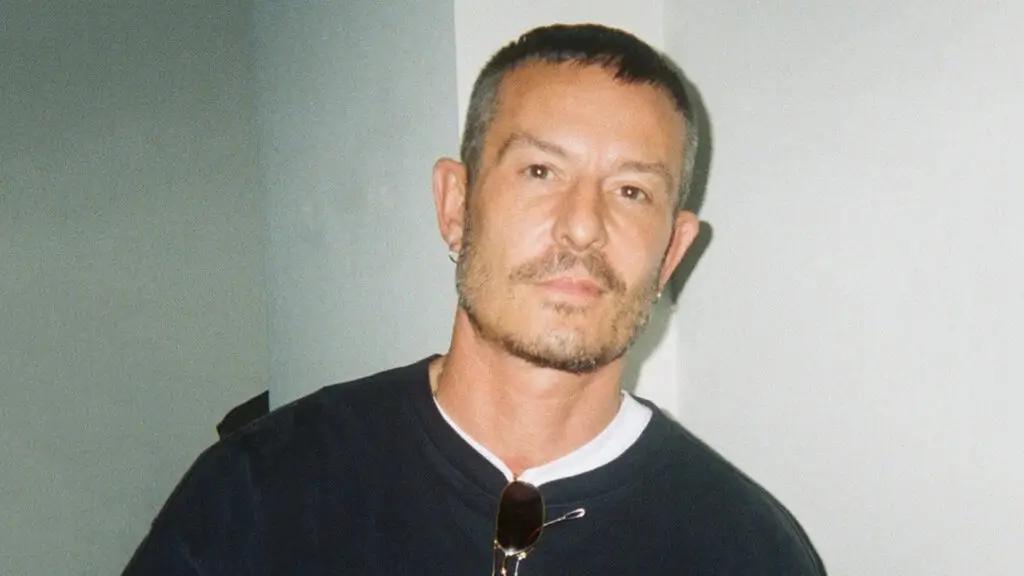
Six weeks ago, Jonathan Saunders was still chief creative officer at & Other Stories, the H&M-owned label he’d been steering for barely a year. Then, without much warning to the wider industry, he was gone. Now the reason for that exit has a name and an address: Kate Spade New York has appointed him executive creative director, effective August 26, and he’ll be working out of the brand’s Hudson Yards offices in Manhattan.
View this post on Instagram
The timeline is tight enough to raise eyebrows. Saunders’ departure from & Other Stories broke as a surprise story in trade press, framed at the time as an abrupt split rather than a planned transition. Barely a month later, Kate Spade had him signed, sealed, and photographed for a company announcement. That kind of speed usually means talks were already well underway before the & Other Stories exit became public, though neither company has confirmed that directly.
What’s clear is the shape of the new job. Saunders will direct product design and the brand’s overall visual identity, reporting to Kate Spade brand president and chief executive Eva Erdmann. It’s a broad mandate, closer to the classic single-creative-lead model that used to define houses like this one, and it marks Kate Spade’s return to that structure after roughly five years spent without one person holding the whole creative brief.
stir
For anyone who hasn’t followed the back half of his career closely, Saunders isn’t a newcomer trying to prove himself. Born in Glasgow in 1977, he trained at the Glasgow School of Art before earning a master’s in printed textiles at Central Saint Martins in London. His graduate collection, a run of chiffon kaftans printed with imagery lifted from the Beatles’ Yellow Submarine artwork, won him early industry recognition and set the tone for a career built on color and print work rather than minimalism.
He launched his own label in 2003 and ran it as an independent house for roughly a decade, dressing Michelle Obama, Kylie Minogue, and Sienna Miller along the way, before folding it and moving into leadership roles at bigger companies. From there the resume reads like a tour of the industry’s most storied names: creative direction at Diane von Furstenberg, design leadership stints tied to Calvin Klein, Tiffany & Co., Pucci, and a run at Alexander McQueen earlier in his career. That’s more than two decades spent moving between houses that each demanded something different from him, print heavy ready to wear at one stop, hard luxury at another, heritage tailoring at a third.
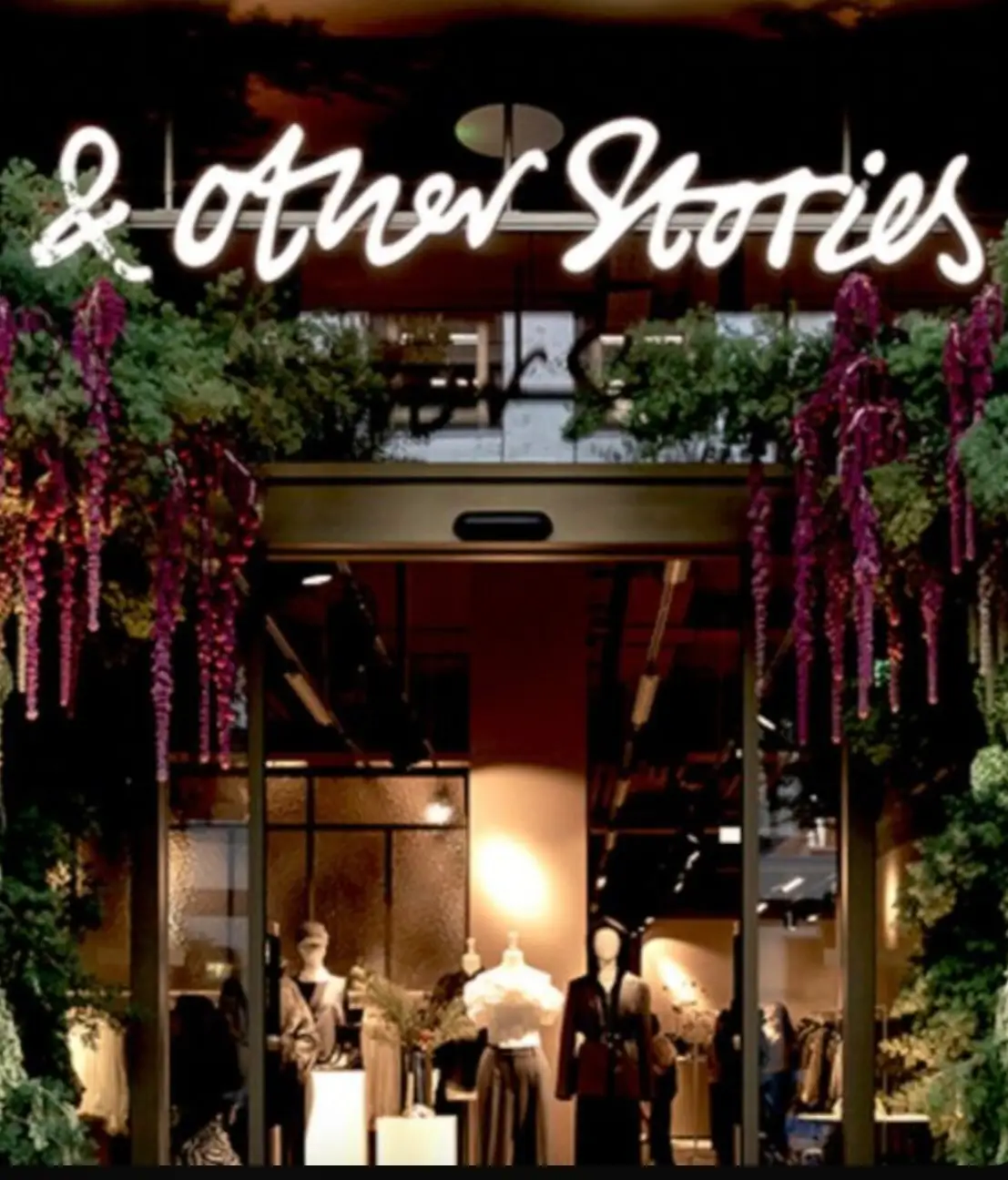
The show entrance of an & Other Stories store, surrounded by cascading floral installations and a warmly lit retail interior.
What ties it together isn’t a signature sil so much as a reputation for walking into a brand with existing codes and finding a way to modernize them without erasing what made the place recognizable in the first place. That’s precisely the skill Kate Spade says it’s hiring for.
absolute
Saunders’ own statement, released through the company, leans hard into that idea of continuity. “Kate Spade is iconic, and it’s an honor to step into a brand that has such a strong identity and deep emotional connections,” he said. “The brand has a genuine point of view, rich brand codes steeped in its 30-year history, and infinite potential. I’m looking forward to immersing in the brand heritage and connecting that soul with today’s consumers. I’m thrilled to join the team that’s shaping Kate Spade’s joyful future.”
It’s the kind of quote every incoming creative director gives, respectful of the archive, forward-looking about the audience, careful not to promise a specific aesthetic before he’s even unpacked his desk. But there’s a detail worth sitting with: Saunders is explicitly frames this as a homecoming of sorts. People close to the move have said he wanted to return to the United States to be nearer to family after several years split between London and Stockholm-adjacent H&M business trips. Hudson Yards, in that sense, isn’t just a corporate address, it’s a life decision as much as a career one.
Erdmann’s side of the announcement is more pointed about what she expects operationally. “Kate Spade has always stood for positivity, femininity and a touch of wit,” she said. “Jonathan shares our consumer obsession, and he understands the heart of our brand. He’s also a collaborative leader and I’m excited to work together to introduce an uplifting view of luxury to a new generation of consumers.” Read closely, that’s less a statement about clothes and bags and more a statement about culture and process: connective, consumer obsessed, generationally minded. Erdmann has been in the CEO seat since October 2024, brought over from a beauty background specifically to reposition a brand that had stray.
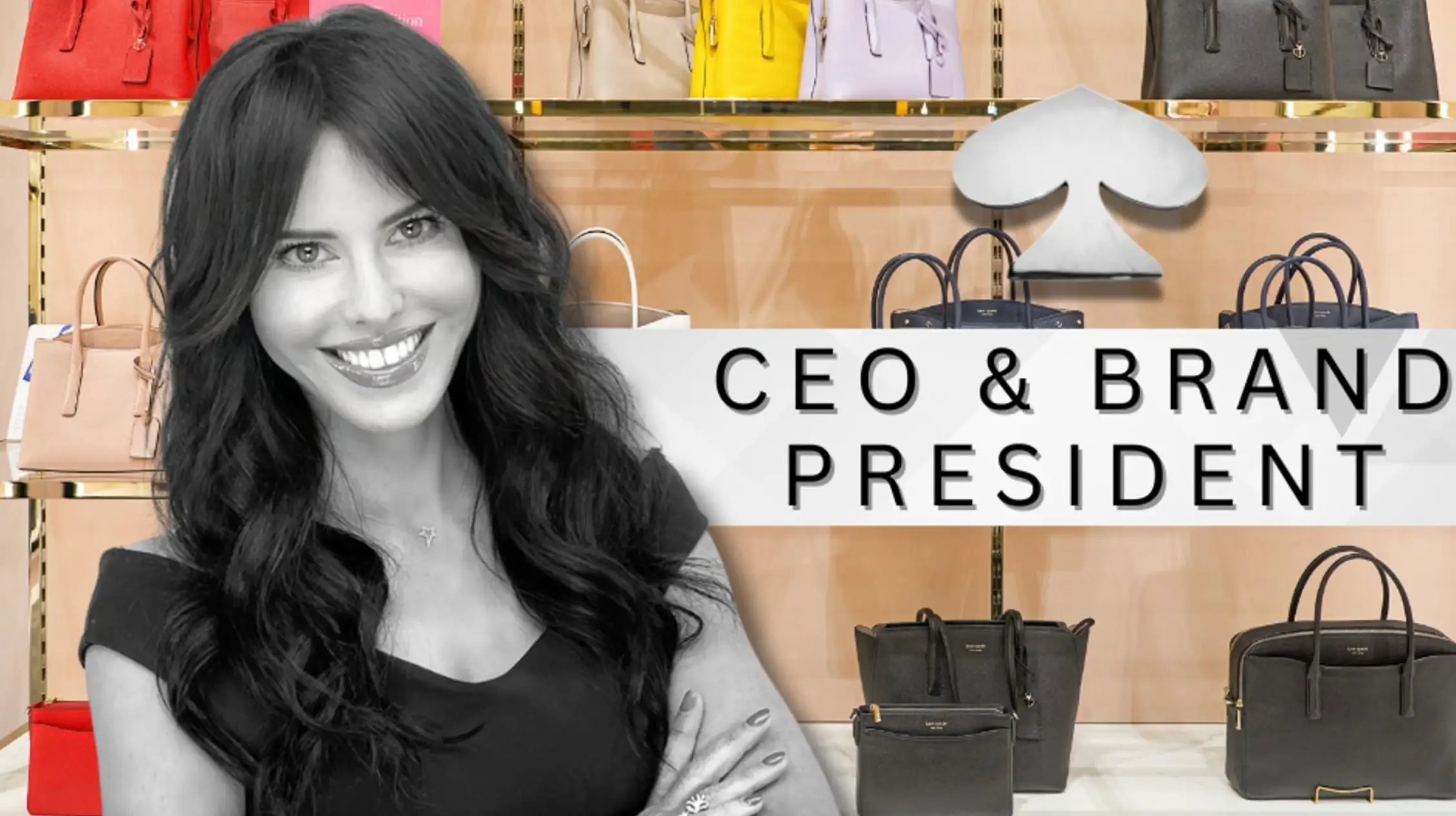
A promotional graphic featuring a retail executive Erdmann in front of a Kate Spade boutique display filled with colorful handbags.
huh
Kate Spade’s story over the last decade and a half is a familiar one in American accessible luxury: white hot in the 2000s and early 2010s, then gradually diluted by licensing deals, outlet expansion, and a design language that stopped feeling distinct. The brand has cycled through creative leadership more than once trying to solve that, and for the better part of five years it operated without a single person holding the full creative brief across categories. Design decisions were distributed rather than centralized, which tends to produce competent collections and rarely produces a moment anyone talks about.
Erdmann, in comments to trade press around the announcement, described the archive as the actual asset here. “We have such rich archives,” she said, pointing to material going back to the brand’s 1993 founding. The pitch to Saunders, in other words, wasn’t build something new, it was go into the vault and figure out what’s been buried that a new generation hasn’t seen yet. That’s a different brief than the one he had at & Other Stories, which never carried three decades of brand equity to begin with, and it plays more to his documented strength: taking codes that already exist and finding the version of them that reads as current rather than nostalgic.
It’s worth noting how specific that framing is compared to the language most brands use when they bring in a new creative lead. Plenty of appointments get announced with vague talk of evolution or elevation, phrases that could describe almost any hire at almost any company. Erdmann instead pointed to a concrete asset, three decades of archived product, and a concrete gap, a customer base that has aged past the brand’s original moment without a clear successor cohort stepping in behind them. That’s a narrower and more testable bet than the usual appointment language, which also means it will be easier to judge in a year or two whether it actually worked.
She also used a phrase that’s likely to become the unofficial mission statement for this era of the brand: an uplifting view of luxury. Not luxury as exclusivity, but luxury as mood, positivity translated into product at a price point people can actually reach. Whether that survives contact with an actual design process remains to be seen, but it’s a clearer articulation of intent than the brand has offered in a while.
quant
None of this is happening in a vacuum. Kate Spade’s parent company, Tapestry, disclosed in its most recent trading update that Kate Spade revenue fell 10 percent to 219.6 million dollars for the quarter, continuing a stretch of decline that has stood out even inside a portfolio that also includes a much healthier Coach. Coach has spent the last several years absorbing most of Tapestry’s growth story, which has left Kate Spade looking increasingly like the sibling brand in need of a rescue plan.
Erdmann has been candid in interviews that she’s proud of the repositioning work done so far, trimming back the promotional discounting that had trained shoppers to wait for markdowns and hollowed out the brand’s premium positioning. But pulling back on promotions without a compelling enough product story to fill the gap is a short term drag on the top line, which is roughly what the sales figures reflect. Saunders’ hire reads as the second half of that plan: having stable pricing discipline, the brand now needs a reason for people to want the product at full price again.
That’s a lot of weight to put on one creative hire, and it’s worth being honest about the scale of the ask. Saunders is walking into a company mid turnaround, with investors watching quarterly numbers and a boss who has publicly tied his arrival to a specific inflection point. It’s a higher stakes seat than the one he just left.
There’s also a comparison sitting right next door inside Tapestry’s own portfolio. Coach has spent recent years demonstrating what a successful accessible luxury reset can look like, tightening its own product story while leaning into limited drops and collaborations that kept the brand feeling current without abandoning its core customer. Kate Spade doesn’t need to copy that playbook outright, its brand codes are built on a different emotional register, playful rather than downtown cool, but the internal pressure to show comparable results is real. Tapestry’s leadership has effectively run one experiment already and gotten a result; the Saunders hire is the next attempt at the same underlying problem with a different designer and a different brand voice.
transition
The relocation itself is a smaller story but not a meaningless one. Saunders will be based full time at Kate Spade’s Hudson Yards headquarters, putting him inside Tapestry’s broader New York operation rather than commuting in from an outpost. For a brand trying to tighten the loop between design, merchandising, and marketing, having the creative lead physically embedded with the rest of leadership matters more than it might for a house where the creative office has traditionally sat apart from corporate.
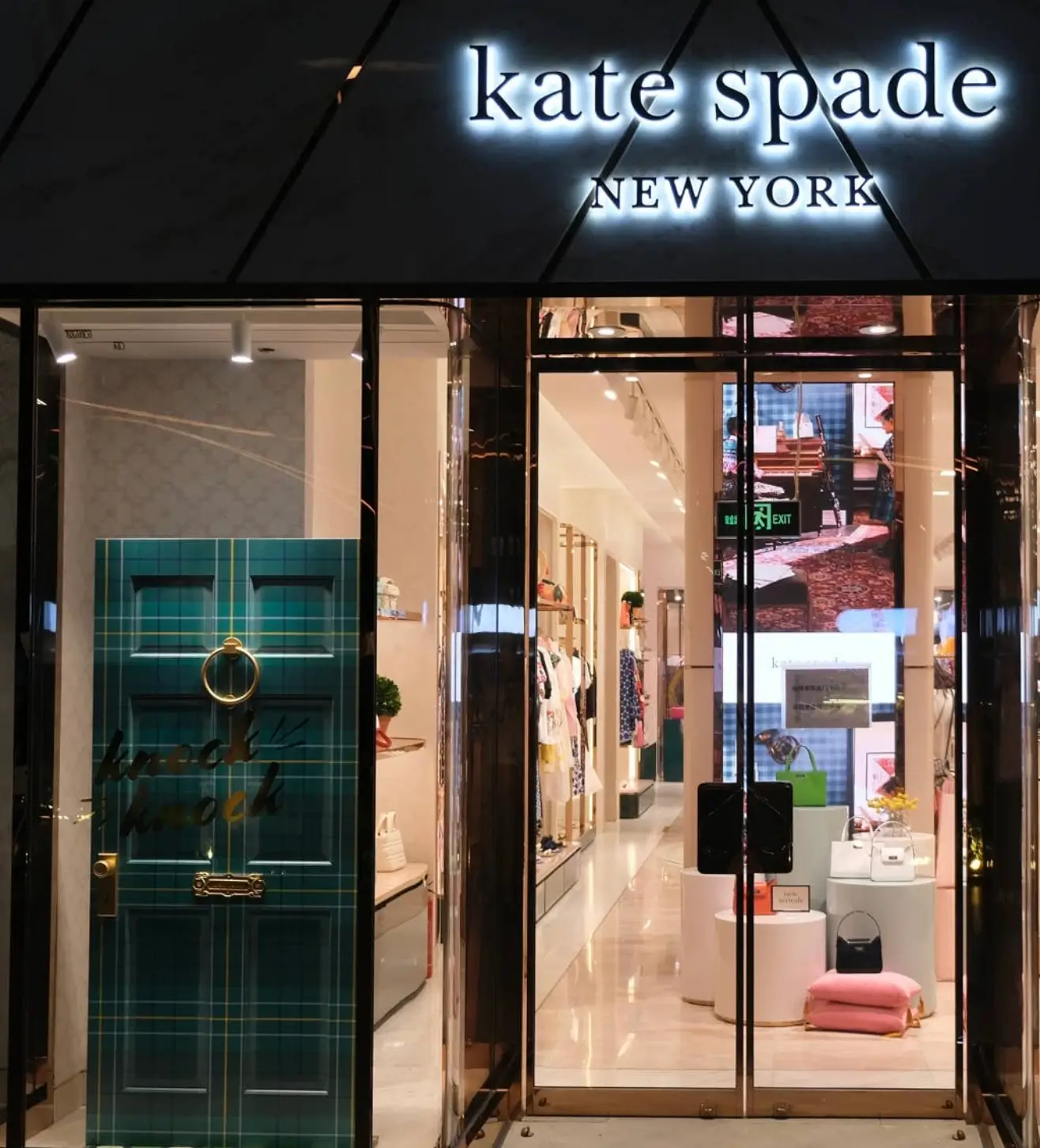
A Kate Spade New York storefront with a signature tartan-inspired entrance and a warmly illuminated retail space displaying the brand’s latest collections.
It also underscores how deliberately domestic this hire is. Where his last two creative director posts, at Diane von Furstenberg and then & Other Stories, kept him oriented partly toward European retail calendars and partly toward Scandinavian corporate ownership, this role plants him back in an American, Manhattan based operation for the first time since his own label folded. Whether that proximity translates into faster decision making or simply a shorter commute is the kind of detail that will only become visible once product actually starts shipping.
look
Saunders’ effective start date, August 26, puts him in place well ahead of the wave of retail activity that builds toward Kate Spade’s holiday and spring cycles, but design timelines being what they are, any collection that carries his full creative fingerprint is more likely to surface in 2027 than this year. In the near term, expect a quieter runway: internal reviews of the archive, meetings with licensing partners, probably a public facing moment or two designed to introduce him to the brand’s existing customer base before any product changes are visible on shelves.
The bigger question is one only time will answer. Saunders has a long track record of walking into brands with strong existing identities and finding a contemporary read on them, but he’s never before taken on a brief this explicitly tied to a public turnaround story, with a parent company’s stock performance and a CEO’s own repositioning narrative both riding on the outcome. Kate Spade’s last fifteen years have included plenty of attempts to recapture what made the label a phenomenon in the first place. This is simply the newest one, with a designer whose resume suggests he’s built for exactly this kind of assignment, even if the pressure attached to it is unusually public.