CHANEL Names Pedro Pascal — A Natural Ally, Not a Muse

April 16, 2026
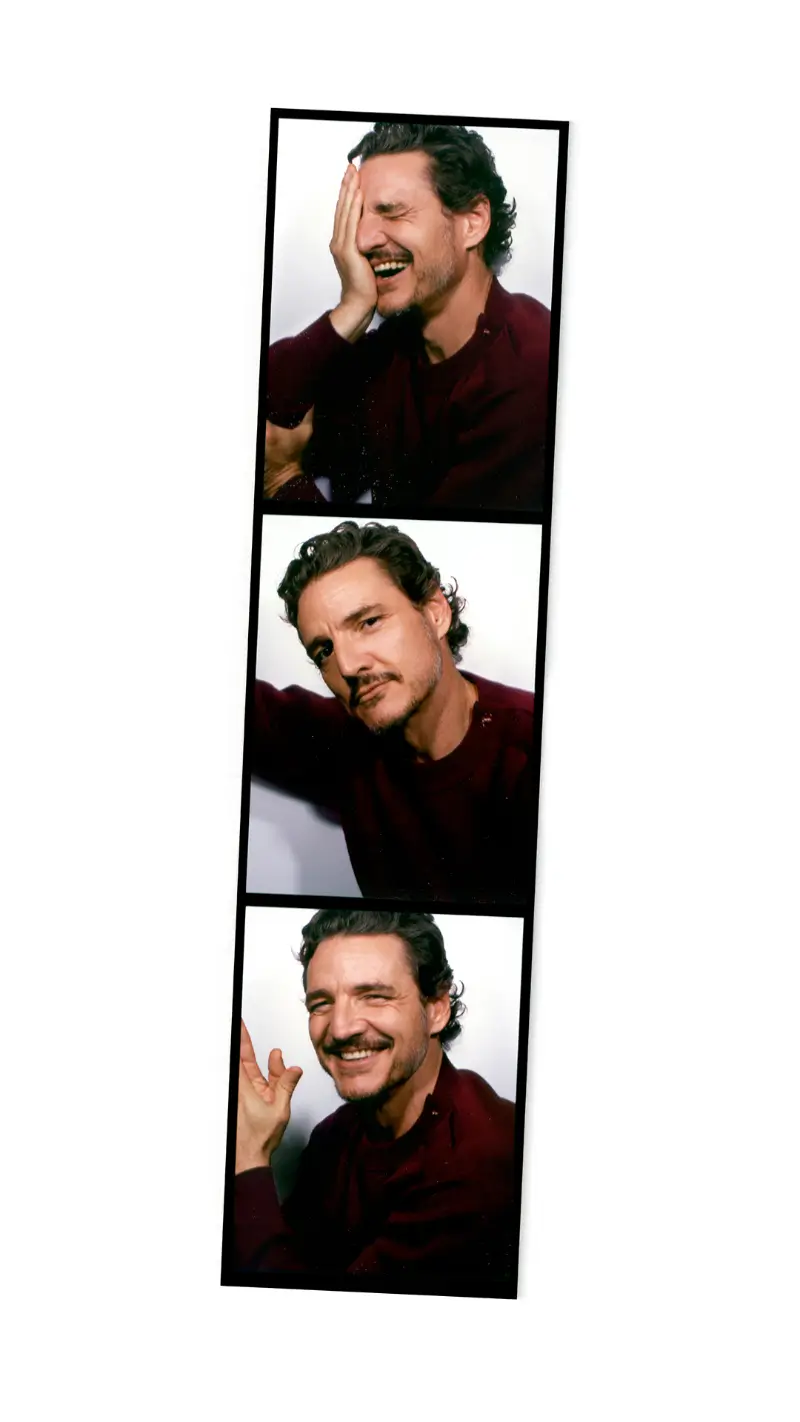
Sometimes appointments assume in sense as like announcements, and then there are those that register as inevitabilities. Chanel naming Pedro Pascal as House Ambassador belongs to the latter category—a move that feels less like a pivot and more like a quiet confirmation of where the house already is, culturally and emotionally.
Pascal, whose trajectory has unfolded across prestige television, blockbuster cinema, and internet-era iconography, arrives not as an interloper stepping into opulent fashion, but as a figure already operating within its gravitational field. His presence—unforced, responsive, and often disarmingly human—mirrors a shift Chanel has been refining over the past decade: a movement away from distant idealization toward something more relational, more lived-in, more attuned to the way audiences actually engage with image and identity today.
Chanel’s own description of Pascal as “a natural ally” is telling. Not a muse. Not a face. An ally. The lang reframes the relationship entirely. It suggests alignment over adornment, dialogue over display.
flow
The significance of Pascal’s appointment, well it helps to look not just at his roles, but at how those roles circulate. Given within series, “The Last of Us or The Mandalorian”, Pascal operates within narratives that are themselves about connection—across distance, across difference, across systems that often resist intimacy.
But beyond the screen, there is something else at work. Pascal has become, almost inadvertently, a kind of cultural conduit. His interviews travel widely, clipped and reshared. His humor—dry, self-aware, occasionally chaotic—lands across demographics. His public persona resists polish in favor of something more porous, more accessible.
For a house like Chanel, this matters.
Because luxury today is no longer sustained solely by distance. It requires proximity—not physical, but emotional. The ability for audiences to feel not just admiration, but recognition.
Pascal offers that without diminishing the aura of the brand. He doesn’t flatten Chanel into relatability; he expands the space in which it can be understood.
View this post on Instagram
the remote
Chanel has always been selective in its ambassadors, building a constellation rather than a roster. From Keira Knightley to Margot Robbie, and more recently Timothée Chalamet, the house has consistently engaged figures who exist at the intersection of craft, visibility, and cultural fluency.
What distinguishes Pascal’s inclusion is not simply that he is male—Chanel has long engaged male ambassadors—but the particular kind of masculinity he represents.
It is not rigid. Not performative. Not anchored in dominance or distance.
Instead, Pascal’s presence suggests a masculinity that is collaborative, expressive, and emotionally literate. One that aligns with Gabrielle Chanel’s original disruption of restrictive codes—not just for women, but for how identity itself could be constructed.
In that sense, the appointment feels less like an expansion and more like a return to principle.
framework
Charisma is often treated as an abstract quality, something ineffable. But in Pascal’s case, it operates with a kind of structure.
It’s in the way he listens as much as he speaks.
In the way humor becomes a form of connection rather than deflection.
In the way vulnerability is allowed to coexist with authority.
This matters for Chanel because the house itself has been recalibrating its own form of charisma. Under evolving creative directions, the emphasis has shifted toward subtlety—toward gestures rather than declarations, toward texture rather than spectacle.
Pascal’s energy fits within this architecture.
He doesn’t overwhelm the frame. He inhabits it.
midst between
One of the enduring tensions in luxury fashion is the gap between image and person. Campaigns construct idealized versions of individuals, often smoothing out the inconsistencies that make them human.
Pascal complicates that dynamic.
His public presence is defined, in part, by its refusal to fully resolve into a single image. He moves between seriousness and humor, between intensity and softness, between leading-man gravitas and something closer to everyday awkwardness.
For Chanel, this creates an opportunity rather than a risk.
It allows the house to engage with a figure who can hold contradiction—who can carry the codes of elegance while also allowing space for imperfection.
And in a cultural moment increasingly attuned to authenticity, that contradiction reads not as instability, but as credibility.
steward
Chanel’s relationship with cinema is longstanding, rooted in Gabrielle Chanel’s own collaborations with filmmakers and actresses. The house has consistently positioned itself within the language of film—not just as costume, but as narrative participant.
Pascal extends this dialogue.
His work spans genres, but more importantly, it spans modes of storytelling. From serialized television to large-scale cinematic universes, he operates within systems that shape contemporary myth-making.
This aligns with Chanel’s own narrative ambitions.
Because Chanel does not simply produce garments; it produces stories—about identity, about movement, about the way clothing interacts with the body and the world around it.
Pascal becomes a carrier of those stories, not through overt branding, but through the accumulation of associations.
conduit
No contemporary appointment can be understood without considering the role of the internet—not as a platform, but as an environment.
Pascal’s relationship with online culture is both organic and strategic. He is memeable without being manufactured for memes. His moments of spontaneity—whether in interviews or public appearances—translate easily into the fragmented, looping formats that define digital circulation.
For Chanel, this is significant.
Because the house’s imagery, historically controlled and meticulously composed, now exists within a landscape where it can be reframed, remixed, and redistributed almost instantly.
Pascal acts as a bridge between these two modes.
He carries the weight of traditional celebrity while remaining permeable to digital reinterpretation.
ideation
While Pascal is not primarily known as a fashion figure, his style has evolved into something quietly distinctive. It resists the rigidity of trend adherence in favor of a more intuitive approach—tailoring that feels lived-in, silhouettes that prioritize movement, occasional gestures that disrupt expectation without announcing themselves.
This aligns with Chanel’s own philosophy.
Clothing, for Chanel, has always been about liberation—about creating forms that move with the body rather than constraining it.
Pascal’s approach to dressing echoes this. It suggests an understanding of style not as performance, but as extension.
mood
Haute operates within an emotional economy as much as a financial one. It trades not just in materials and craftsmanship, but in feeling—in aspiration, in memory, in the subtle ways objects and images become part of personal narratives.
Pascal’s appeal is rooted in emotion.
Audiences respond to him not just as a performer, but as a presence. There is a sense of familiarity, of approachability, that coexists with his status.
For Chanel, this emotional resonance is valuable.
It allows the brand to connect without diluting its identity. To engage without over-explaining.
obstacle
One of the challenges facing legacy houses is maintaining continuity while remaining responsive to change. Too much adherence to tradition risks irrelevance; too much deviation risks fragmentation.
Chanel’s appointment of Pascal navigates this tension.
It reinforces the house’s ongoing engagement with cinema and cultural figures while introducing a new tonal register—one that feels less formal, more conversational.
But crucially, it does so without abandoning the core codes of the brand.
Tweed remains tweed. Black remains black. The silhouette remains considered.
What shifts is the way these elements are inhabited.
written
Pascal’s presence also contributes to an ongoing redefinition of masculinity within luxury fashion.
Where previous eras often emphasized control and distance, the current moment allows for something more fluid—more open to emotion, to humor, to contradiction.
Chanel, historically associated with redefining women’s fashion, now participates in this broader conversation.
Pascal becomes a figure through which these ideas can be explored—not through overt statements, but through the accumulation of images and moments.
View this post on Instagram
fwd
Ambassadorships are often evaluated in immediate terms—campaigns, appearances, visibility. But their deeper impact unfolds over time.
With Pascal, the potential lies in duration.
In the gradual layering of associations.
In the way his presence becomes integrated into the broader narrative of the house.
In the way audiences come to understand Chanel not just through garments, but through the people who inhabit them.
end
Chanel’s decision to appoint Pedro Pascal as House Ambassador does not resolve into a single message. It remains open, deliberately so.
It suggests alignment rather than definition.
Possibility rather than conclusion.
Pascal, with his ability to move between registers—serious and playful, distant and familiar—offers the house a new kind of elasticity.
And Chanel, in turn, offers him a framework within which that elasticity can be refined, articulated, and extended.
Not a transformation.
Not a reinvention.
Something quieter.
A continuation, adjusted.
Related Articles

Rose Byrne and Mary Bronstein Are Doing It Again, and This Time They Brought Jenna Ortega
A coach and her prodigy are about to become the most dangerous relationship in a […]