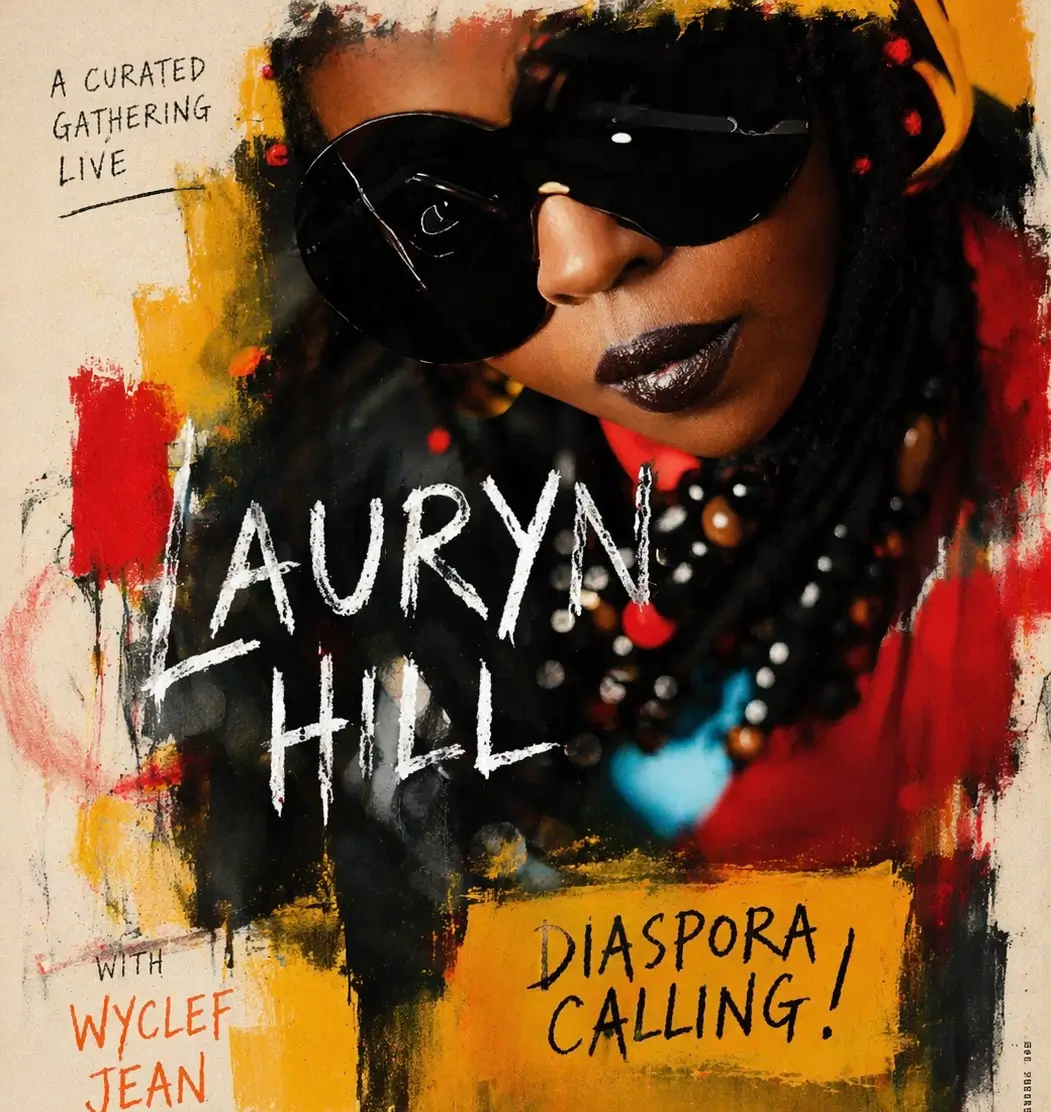
On August 7, at Milton Keynes National Bowl, Lauryn Hill will headline “Diaspora Calling!”, a large-format outdoor event that resists being described as part of a tour. There are no surrounding UK dates forming a corridor, no sequence of cities that gradually builds momentum. Instead, there is one fixed point on the calendar, set within a venue that has historically been reserved for scale.
The distinction is not semantic. It changes how the event is structured, how it is attended, and how it will be remembered. A tour relies on repetition; this does not. It is designed to stand on its own.
That alone explains much of the current confusion around Hill’s August schedule. Audiences are accustomed to announcements that arrive in grids—dates stacked across continents, tickets released in phases, a campaign that builds predictably. Here, the information is sparse because the format is selective. The absence of additional dates is not a gap waiting to be filled; it is the point.
venue
The National Bowl is not a neutral backdrop. It is an open-air site built to accommodate tens of thousands, with a layout that stretches the audience across a wide, sloping field. This type of venue imposes its own logic on the event.
In a theater, attention is concentrated. In an arena, it is amplified but contained. At the Bowl, it disperses. The stage remains the focal point, but the experience is distributed—groups spread out, movement is constant, and the atmosphere shifts throughout the day as the light changes and the crowd builds.
Programming an event here means accepting that it will unfold over hours, not minutes. It requires a structure that can sustain that scale. That is where the “curated” aspect becomes practical rather than abstract.
meant
In this context, “curated” does not imply an elaborate thematic statement. It means that Hill has shaped the lineup and the order in which the day progresses. Instead of a promoter assembling a bill based on market reach, the selections reflect proximity—artists whose work aligns with her own history, connectors, and figures operating within adjacent musical spaces.
The presence of Wyclef Jean is the clearest example. It signals a direct connection to Hill’s past without formally announcing anything beyond that. There is no requirement that they share the stage, but the association reframes the event. It anchors the lineup in a specific lineage.
Other artists on the bill—either formally announced in advance or revealed closer to the date—are likely to follow that same logic. The range will not be wide for the sake of diversity; it will be contained enough to maintain coherence across the day.
From an audience perspective, that creates continuity. The performances are not isolated segments but parts of a longer progression that leads to the headlining set.
anti-tour
A typical arena show compresses the experience. Doors open, a support act plays, the headliner arrives, and the evening concludes within a defined window. “Diaspora Calling!” operates on a broader timeline.
Gates will open earlier in the day. The first performances will begin in the afternoon. The audience will arrive in waves rather than all at once. By the time Hill takes the stage in the evening, the environment will already be established.
This pacing alters expectations. The event is not built around a single moment but around accumulation. The earlier sets are not simply preliminary; they establish the tone, shape the crowd, and extend the duration of engagement.
It also changes how people attend. Some will arrive at opening, treating the day as a continuous experience. Others will time their entry closer to the headliner. Both approaches are accommodated, but the structure clearly favors the former.
assort
One of the defining characteristics of Hill’s live performances is their variability. While her catalog is relatively concise, its presentation is not fixed. Songs are frequently reinterpreted with live instrumentation, extended introductions, and altered tempos.
In a tour setting, these variations settle into a pattern over time. In a standalone event, they remain more fluid. Without the pressure of consistency across multiple dates, the set can shift more freely.
The core material—drawn largely from The Miseducation of Lauryn Hill—will remain central. That album continues to anchor her live identity. But the way it is performed can change from one appearance to the next.
This is not unpredictability for its own sake. It is a function of performing with a live band and allowing arrangements to evolve. In a venue like the National Bowl, those arrangements will also respond to scale. Songs may be extended to fill the space, transitions may be elongated, and the overall pacing may be adjusted to suit an outdoor setting.
listen
Because this is a single major date rather than part of a wider tour, the audience will be geographically diverse. Attendees are likely to travel—from across the UK and from nearby countries—because there are no alternative dates to choose from.
This concentrates demand. Instead of multiple cities each hosting a segment of the audience, one location gathers a larger share. The result is a crowd that is both broader and more varied.
There will be long-time listeners who have followed Hill’s work since the late 1990s, as well as younger audiences encountering her music through its continued cultural circulation. The mix is not unusual for an artist with her longevity, but the scale amplifies it.
That diversity affects the atmosphere. It introduces different expectations into the same space. Some arrive with a precise sense of what they want to hear; others are there for the broader experience. The event has to accommodate both.
role
The inclusion of artists like Wyclef Jean invites a specific question: will there be collaborative moments on stage?
The answer is intentionally uncertain. Nothing in the event’s framing guarantees joint performances. At the same time, the proximity of these artists on the same bill makes such moments possible.
This ambiguity is part of the structure. It allows for the possibility of shared performances without committing to them in advance. If they occur, they will feel unannounced rather than scheduled. If they do not, the lineup still holds its coherence.
From a production standpoint, this flexibility requires coordination. Sets must be structured in a way that can accommodate guest appearances without disrupting flow. That often means leaving space—both literally in the schedule and figuratively within arrangements.
mix
An event at the National Bowl demands a different technical approach than an indoor venue. Sound must travel across a wide area, and visual elements must be scaled to remain legible at a distance.
Hill’s performances are built around live instrumentation, which translates well to this environment. A full band configuration provides the depth and volume needed to fill the space without relying heavily on pre-recorded elements.
Lighting and staging will also reflect the outdoor setting. As the day transitions into evening, the visual emphasis will shift. Early performances rely more on daylight; the headlining set benefits from the full range of stage lighting.
These are practical considerations, but they shape the experience. They determine how the event feels at different points in the day.
proximate
Hosting this event in the UK fits within a broader pattern of large-scale, one-day concerts. The infrastructure supports them, and the audience base is accustomed to traveling for singular events.
The National Bowl, in particular, has a history of accommodating major gatherings. Its use here signals that the event is intended to operate at that level.
There is also a practical dimension. A single European date can draw from multiple markets. It becomes a focal point rather than one stop among many.
attend
From a practical standpoint, attending “Diaspora Calling!” means planning for a full day. The experience is not limited to the headlining set. It unfolds over several hours, with multiple performances contributing to the overall arc.
Arrival time becomes a choice. Early arrival offers the complete experience; later arrival focuses on the headliner. Both are valid, but they produce different impressions of the event.
The open-air setting also introduces variables—weather, movement, and spacing—that do not apply in indoor venues. Preparation extends beyond the usual considerations.
hint
In the end, the simplest way to understand “Diaspora Calling!” is to recognize it as a standalone format.
It is:
- a single-date event
- shaped by Lauryn Hill
- built for a large outdoor venue
- structured over the course of a day
It is not:
- part of a multi-city tour
- a standardized festival with unrelated acts
- a repeatable template
That distinction clarifies everything else. The scale, the lineup, the schedule, and the limited number of dates all follow from it.
For August, this is the focal point. Everything around it is secondary or separate.
Previous article
← CHANEL Names Pedro Pascal — A Natural Ally, Not a MuseRelated Articles

Rose Byrne and Mary Bronstein Are Doing It Again, and This Time They Brought Jenna Ortega
A coach and her prodigy are about to become the most dangerous relationship in a […]