The Browns’ Quarterback Equation: Shedeur Sanders, Competition and the 2027 Class

May 19, 2026
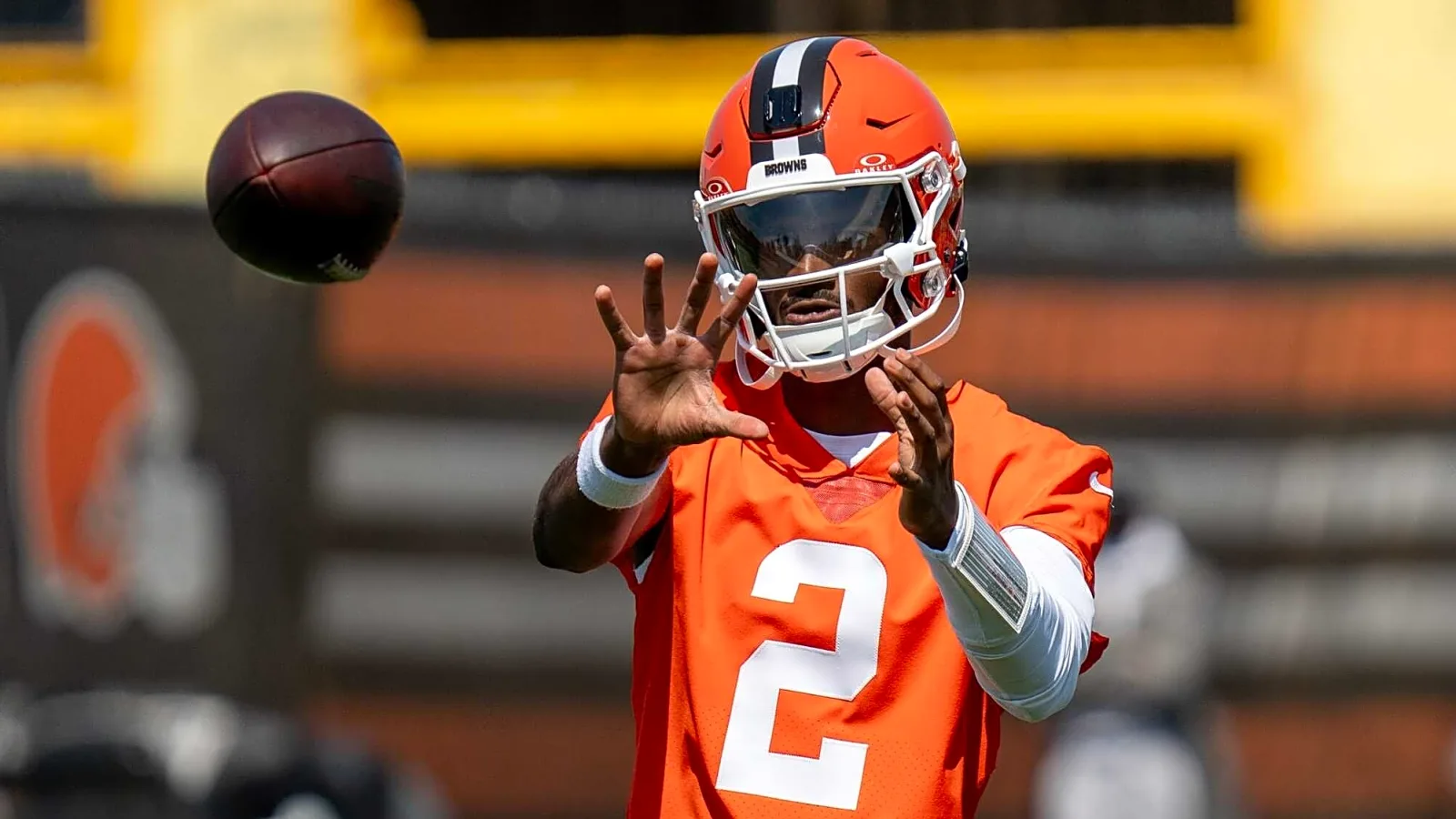
The Cleveland Browns have four quarterbacks heading into the 2026-27 season, but the one who seems to get most of the attention is Shedeur Sanders. The Browns drafted Sanders in the fifth round as the 144th overall pick in the 2025 NFL draft despite being expected to get drafted much earlier, even as early as the first round.
That slide turned into a steal for Cleveland. Sanders, the polished pocket passer out of Colorado with elite accuracy and football IQ, has already shown flashes as a starter. He took over late in his rookie year and enters 2026 as a leading candidate for the starting job under new head coach Todd Monken. Yet the Browns’ quarterback room remains crowded and uncertain: Deshaun Watson (still on the books with a massive cap hit despite restructures), Dillon Gabriel (a 2025 draft pick himself), and rookie Taylen Green (a developmental sixth-rounder with intriguing size and athleticism).
Browns predicted to draft Shedeur Sanders replacement no one saw coming – Newsweek https://t.co/lz5VwvfTZY
— Susan Henderson (@SusanHe02044156) May 19, 2026
This isn’t a one-man show. It’s a competition that could define the franchise’s next decade—or force it to pivot aggressively in the 2027 NFL Draft.
grad
Shedeur Sanders arrived in Cleveland with pedigree, production, and poise. As the son of Hall of Famer Deion Sanders, he thrived at Jackson State and then Colorado, posting record-setting numbers and displaying the kind of pre-snap command and touch that NFL coaches covet. His fall to the fifth round stemmed from concerns about arm strength in contested situations, pocket presence under duress, and translating college success amid massive expectations.
In 2025, Sanders started the final seven games and showed promise. Reports from the 2026 offseason highlight his diligence in the facility, clean mechanics, and ability to operate Monken’s scheme, which favors timing and rhythm over raw athleticism. He’s been added to the Pro Bowl roster as a replacement and is frequently discussed as the presumptive Week 1 starter or at least the early leader in camp.
However, durability, deep-ball consistency, and winning under pressure remain unproven at the NFL level. The Browns’ offense improved with 2026 draft additions at wide receiver, tight end, and offensive line, giving any starter better tools. But if Sanders posts another middling season—say, efficient but not explosive, or plagued by turnovers in key moments—the front office led by GM Andrew Berry won’t hesitate to look ahead.
The cap situation with Watson adds urgency. While restructured, his presence creates a bridge (or a headache) rather than a long-term answer. Gabriel offers mobility and experience but lacks elite traits. Green is raw but has upside as a tall, athletic project. This quartet gives Cleveland flexibility in 2026 without committing fully to one guy.
reset
The 2027 NFL Draft class is shaping up as potentially historic for quarterbacks—one of the deepest and most talented in recent memory. Way-too-early mocks consistently project the Browns selecting a QB high if 2026 doesn’t yield a clear franchise face. With multiple first-round talents available, Cleveland could land a blue-chip prospect without needing to trade up aggressively, especially if they accumulate more picks through savvy maneuvering (they already project 10 selections).
Top names dominating discussions:
- Arch Manning (Texas): The nephew of Peyton and Eli, Manning combines prototypical size (6-4, ~220 lbs), arm talent, mobility, and pedigree. His college production improved steadily, blending pocket poise with athletic plays. Many scouts view him as a potential No. 1 overall talent with Manning family intangibles.
- Dante Moore (Oregon): A smooth operator with excellent accuracy, quick release, and decision-making. Moore returned for another year to refine his game after strong production. He’s often mocked in the top 5 and praised for processing speed in complex schemes—perfect for Monken’s system.
- C.J. Carr (Notre Dame): Steady, high-floor leader with good size and arm. He’s climbed boards as a reliable game manager who can make big throws.
- Others like Julian Sayin (Ohio State), Sam Leavitt (LSU), and rising prospects such as Drake Lindsey (Minnesota) round out a class with both high-ceiling stars and solid starters.
This depth allows the Browns to address other needs in 2026 (as they did with offensive weapons and line help) while keeping an eye on 2027. If Sanders excels, they can draft a high-upside developmental piece later or trade down. If he falters, they sit in prime position for a transformative talent.
replace
What would the “perfect” Sanders replacement look like? Someone who complements—or elevates—the current pieces. Sanders is a rhythm thrower with anticipation. An ideal successor might bring more arm talent or escapability to open up the offense vertically while fitting Monken’s emphasis on protection and timing.
Arch Manning fits like a glove: elite processor with mobility to extend plays, strong enough arm to attack all levels, and leadership that could galvanize a young locker room. Pairing him with improved weapons (Jerry Jeudy, new draft picks like Denzel Boston or KC Concepcion) and a bolstered line could accelerate his development. Dante Moore offers precision and scheme fit, potentially allowing a smoother transition if Sanders remains a backup or trade piece.
Cleveland’s history with quarterbacks is checkered—Watson’s contract saga, earlier misses like Baker Mayfield and Johnny Manziel. Drafting Sanders in 2025 was low-risk/high-reward. A 2027 high pick would be higher stakes but backed by better resources: more cap flexibility post-Watson, young talent around the QB, and a coach in Monken with proven offensive acumen.
imply
Fans in Cleveland are weary of QB instability. The 2026 season is pivotal. If Sanders balls out—posting top-20 numbers, leading winning drives, and showing growth—the narrative shifts to building around him. Monken’s system, bolstered by 2026 additions, gives him every chance.
But the front office’s draft history (trading up for Sanders, adding Green) shows proactive planning. Accumulating picks and maintaining flexibility positions them perfectly for 2027. Berry has navigated cap hell and roster rebuilds adeptly; a loaded QB class is a gift.
Critics might worry about another high draft pick at QB creating more competition or locker room tension. Yet the current room proves depth is valuable—multiple starters emerged in 2025. A top prospect in 2027 wouldn’t displace a proven winner; he’d challenge or succeed a bridge option.
Injuries, development curves, and scheme fits are unpredictable. Sanders could still emerge as the long-term answer. His work ethic, pedigree, and early flashes suggest upside. But prudent organizations prepare for contingencies. The Browns appear to be doing exactly that.
sum
As training camp heats up and the 2026 season looms, all eyes are on Shedeur Sanders. Can he silence doubters and cement himself as QB1? Or will the Browns’ patient, layered approach pay off with another high-profile addition in 2027?
The franchise has the pieces—a talented if unsettled room, improving supporting cast, and draft capital. Whether Sanders is the guy or the catalyst for the next chapter, Cleveland is better positioned than in years past. A perfect replacement might already be on the board for 2027: a dynamic leader ready to lead the Dawg Pound into contention.
The next 12-18 months will tell the tale. For a fanbase starving for stability, hope springs eternal in Berea—fueled by competition today and blue-chip talent tomorrow.
Related Articles
AJ Dybantsa’s Rookie Summer: Inside the No. 1 Pick’s First Weeks in Washington
Basketball’s most-watched teenager is now a Wizard, a Nike cornerstone, and a Summer League headliner […]