DRIFT AUDIO
Listen to this story
Choose a voice, then press play.
Every story has a place where it begins and one it naturally leads back to. For C.P. Company, that place is Bologna.
Located in Via Castiglione 5/e (corner Via Clavature), the brand unveiled its new flagship store in May 2026, a space shaped by Bologna’s urban identity. Inspired by the city’s iconic portici, the architecture reflects their characteristic red bricks, a lasting symbol of local history and heritage.
Over time, Bologna has continued to play a defining role for C.P. Company. From the Massimo Osti Archive to the ongoing partnership with Bologna FC 1909, the connection between the brand and the city has evolved over more than five decades, shaped by creative research, experimentation, and sporting culture.
This opening is more than a retail milestone—it is a full-circle moment for a brand born from the inventive spirit of one of Italy’s most dynamic cities. Bologna, known as La Dotta (the Learned), La Grassa (the Fat), and La Rossa (the Red), provided the perfect backdrop for Massimo Osti’s view: a blend of intellectual curiosity, material innovation, and everyday functionality that would redefine sportswear.
View this post on Instagram
stir
To establish a better know from the significance of this Bologna flagship, one must return to 1971. That year, in the heart of Emilia-Romagna, graphic designer and view Massimo Osti (1944–2005) founded what would become C.P. Company. Initially named Chester Perry—after a comic strip character—the brand started with screen-printed T-shirts that captured pop culture and youthful rebellion. Legal challenges from British brands forced a rename in 1978 to C.P. Company, but the essence remained: clothing that told stories through fabric, cut, and tincture.
Osti was no ordinary designer. Trained with an engineer’s mindset, he drew inspiration from military uniforms, workwear, and functional garments. He pioneered garment dyeing, a technique that creates unique, tone-on-tone effects by dyeing finished products rather than fabric rolls. This innovation became the hallmark of C.P. Company, turning ordinary jackets and trousers into canvases of subtle variation and depth. By the early 1980s, the brand had expanded into full collections, including outerwear that blended utility with experimental aesthetics.
Bologna was the crucible. The city’s university, one of the oldest in the world (founded in 1088), fostered an environment of inquiry. Its industrial heritage and vibrant culture scene—think leftist politics, rich cuisine, and a passion for football—aligned perfectly with Osti’s ethos. He wasn’t just making clothes; he was engineering a lifestyle. The C.P. Magazine, launched in 1985, was an oversized catalog that doubled as culture commentary, selling 40,000 copies per issue and influencing how brands communicate identity.
The brand’s growth was meteoric. By the mid-1980s, it produced hundreds of thousands of garments annually. Osti also launched sister lines like Stone Island (initially under C.P. Company) and Boneville, further cementing his reputation as a pioneer of Italian sportswear. His departure from day-to-day management in the 1990s didn’t diminish the Bologna connection. The Massimo Osti Archive, now a culture institution in the city, preserves over 5,000 pieces—garments, prototypes, fabric samples, and notebooks—that continue to inspire.
flow
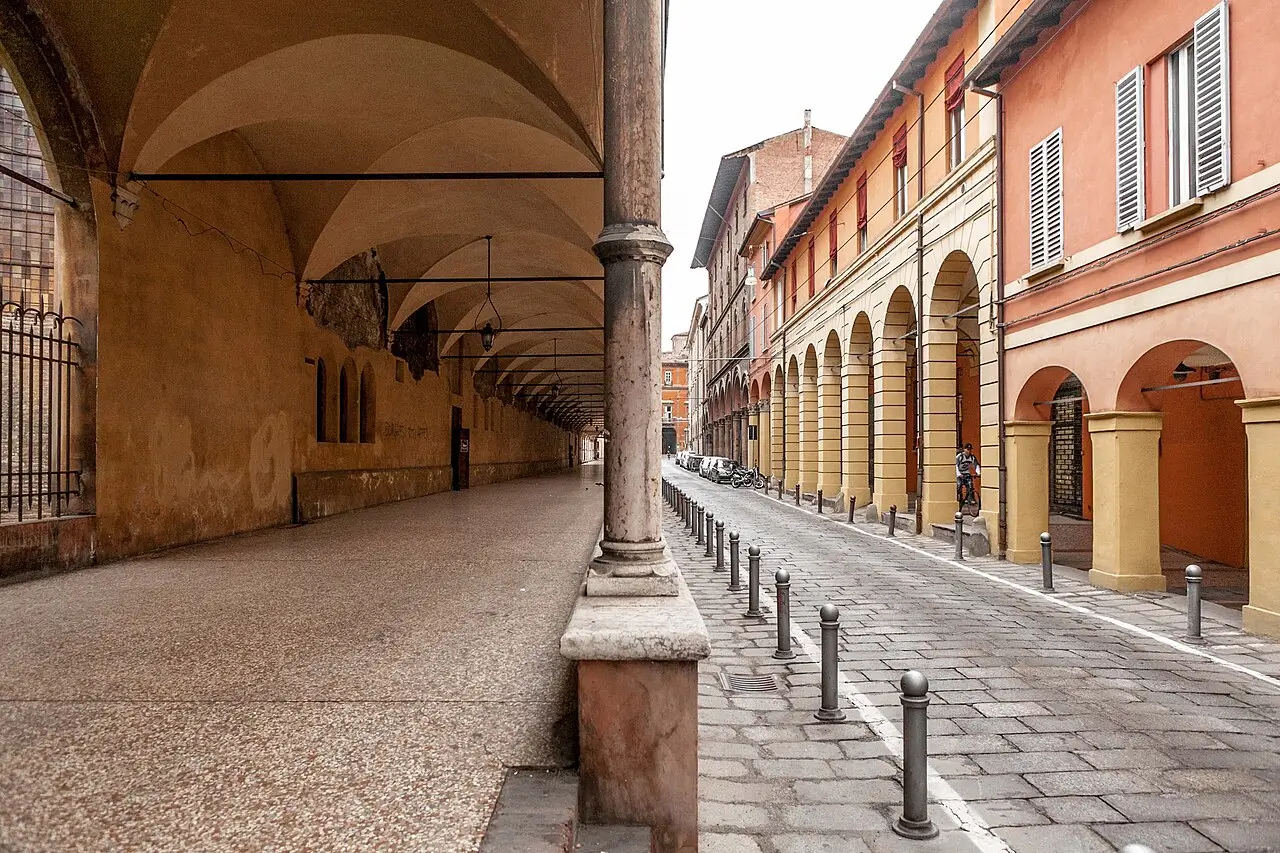
The new store’s design pays direct homage to Bologna’s most distinctive feature: its portici, or porticoes. These covered walkways, stretching over 62 kilometers and inscribed as a UNESCO World Heritage Site in 2021, have defined the city since the Middle Ages. Built initially in wood and later in brick and stone, they provided shelter from rain and sun while creating social spaces where citizens could gather.
The portici are not merely functional; they embody Bologna’s layered history. Many feature the city’s signature red bricks, fired from local clay, giving the urban landscape its warm, earthy tone—hence “La Rossa.” Architect Andrea Caputo, who designed the store (as he has for other C.P. Company flagships in Milan and elsewhere), integrated these elements seamlessly. The roughly 100-square-meter space uses red brick motifs, arched rhythms, and textured surfaces to dialogue with the surrounding streets.
Inside, the environment is essential and contemporary yet deeply contextual. Archive pieces are displayed on walls, bridging past and present. Garment-dyed jackets, technical outerwear, and iconic goggles (a C.P. signature) stand out against the brick-inspired backdrop. The layout avoids spectacle in favor of coherence: clothing and architecture in quiet conversation. Large windows invite passersby under the portici to glimpse the brand’s world, reinforcing the store as an extension of Bologna’s public life rather than a detached retail box.
This approach reflects Caputo’s philosophy, seen in previous projects: stripped-back industrial elements, modular displays, and pops of color from gradient-dyed volumes that nod to Osti’s dyeing techniques. In Bologna, these elements feel particularly resonant, grounding the brand in its origins.
archive
No discussion of C.P. Company’s Bologna ties is complete without the Massimo Osti Archive. Housed in the city, it serves as more than a repository—it is a living lab. Visitors (through private tours) and connectors can explore Osti’s military-inspired collections, early experiments, and notebooks filled with sketches and ideas.
Recent exhibitions, such as “Ideas from Massimo Osti. From Bologna, beyond fashion” at Palazzo Pepoli (2025), have brought this heritage to wider audiences. Curated in collection with the archive, these shows highlight how Osti’s work transcended fashion into culture commentary on technology, society, and identity.
Lorenzo Osti, Massimo’s son and current President of C.P. Company, has emphasized Bologna as the brand’s “culture center.” Plans for a foundation offering training on Osti’s methods underscore a commitment to education and continuity. The flagship store acts as a public-facing extension of this archive ethos, where customers can experience the continuity of design thinking.
straddle
Sport has always been integral to C.P. Company’s identity. Osti drew from athletic and military wear, and the brand’s utilitarian style found a natural home on football terraces. The multi-year partnership with Bologna FC 1909, announced in 2025, elevates this connection. C.P. Company serves as the club’s Fashionwear Partner, dressing players and staff in pre-match and lifestyle pieces.
Collections inspired by the Rossoblù (red-and-blue) feature custom red lenses on goggles, half-zip sweaters, and garments blending club tinctures with technical fabrics. Lorenzo Osti described the partnership as a “full circle moment,” linking his family’s love for the team with the brand’s heritage. Players attended the store’s opening, blending football culture with fashion in a celebration of shared Bologna pride.
This alliance resonates in a city where football is community glue. Bologna FC, founded in 1909, embodies resilience and local identity, much like C.P. Company. The partnership extends beyond sponsorship into cultural storytelling, with films and activations highlighting generational ties between fans, the club, and the brand.
evolve
The Bologna opening fits into C.P. Company’s broader retail strategy. Under Tristate Holdings (acquired in 2015), the brand has grown its direct-to-consumer presence. With monobrand stores in Milan, Paris, London, Amsterdam, and others, retail now accounts for about 30% of revenue, projected around €130 million for 2026.
Bologna marks the rollout of a new store concept designed for scalability while maintaining territorial sensitivity. Future expansions target the UK and Spain, markets receptive to premium sportswear with heritage depth. The store also showcases full collections, including Metropolis Series, Under Sixteen kids’ line, and connections.
This homecoming strengthens brand authenticity at a time when consumers seek genuine stories over hype. In an era of fast fashion and digital saturation, a thoughtfully designed flagship in the founding city offers tactile, emotional connection.
xp
Stepping into Via Castiglione 5/e feels like entering a chapter of living history. The corner location maximizes view along the portici, drawing both locals and tourists. Interiors balance minimalism with warmth: exposed structural elements, brick accents, and lighting that highlights fabric textures.
Shoppers find signature pieces—iconic lenses on jackets, brushed cloth fabrics, and weather-resistant shells—alongside archive-inspired selections. The space encourages exploration: touch the dyed fabrics, examine details, and understand how Bologna’s environment shaped them. Staff, knowledgeable about the heritage, enhance the visit.
For football fans, limited Bologna FC pieces provide a direct link to the pitch. The store doubles as a cultural hub, potentially hosting events, talks, or pop-ups tied to the archive.
imply
This opening highlights fashion’s relationship with place. Brands increasingly recognize that authenticity stems from roots. For C.P. Company, returning to Bologna isn’t nostalgia—it’s a strategic reaffirmation of values: innovation grounded in research, functionality with beauty, and community over individualism.
It also speaks to Bologna’s evolving identity. As a UNESCO creative city and food capital, it attracts global attention. The store contributes to this vibrancy, linking heritage industries (textiles, design) with contemporary culture.
Challenges remain: balancing growth with craftsmanship, navigating global markets while honoring local essence, and innovating without losing Osti’s experimental spirit. Yet the flagship suggests confidence. By embedding itself in the portici’s red-brick embrace, C.P. Company positions itself for the next chapter.

leg
More than five decades after its founding, C.P. Company’s story continues where it began. The Via Castiglione flagship is a physical manifestation of resilience, creativity, and return. It invites visitors to trace threads from Osti’s first prints to today’s technical masterpieces, all under Bologna’s timeless arches.
In a world of transient trends, this store stands as a testament to enduring values. Either browsing a garment-dyed jacket, admiring a lens detail, or simply sheltering under the portici outside, one feels the continuity: a brand and a city, intertwined, moving forward together.
As Lorenzo Osti noted, it is “back to the place where we belong.” For enthusiasts, historians, and the fashion-curious alike, the new C.P. Company store in Bologna is essential visiting—an invitation to experience not just clothing, but the living narrative of Italian ingenuity.
Related Articles
A Tiger On The Denim / Human Made
HUMAN MADE Shinsaibashi PARCO, full renewal 17 October 2026. Tiger jacket, hoodie, keyholder. Wasted Youth popup, two days. App lottery 10:00 to 17:00.