Dalí’s Rare Watercolors Resurface in an Immersive Show—Save for One Long-Lost Piece

October 12, 2024
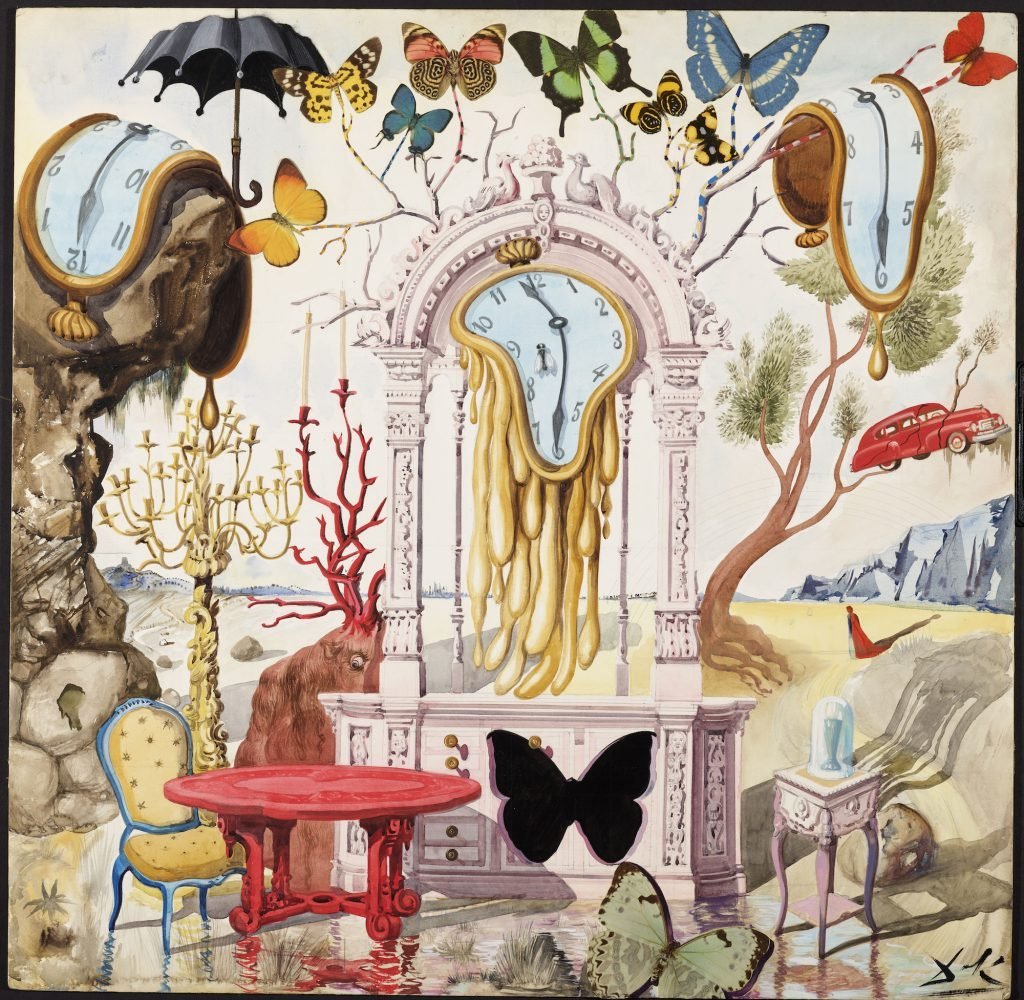
Salvador Dalí, one of the most eccentric and influential artists of the 20th century, left an indelible mark on the worlds of painting, sculpture, and even stage design. Among his many creative ventures, Dalí once produced a series of five rare watercolors for a controversial and notorious opera. These exquisite pieces, characterized by their surreal imagery and dreamlike quality, have resurfaced in a new immersive show that offers audiences an opportunity to experience Dalí’s works in an innovative way. However, one piece from the series remains conspicuously absent, its whereabouts unknown, adding an air of mystery to the exhibit.
The Opera and the Watercolors
Dalí’s foray into opera design was marked by his work on the avant-garde production of “Salome”, a bold and controversial reinterpretation of the classic Biblical tale. Known for pushing boundaries in both art and performance, Dalí’s watercolors captured the psychological intensity and surrealism of the opera, blending rich, symbolic imagery with the fluidity and spontaneity that watercolor offers. The works were lauded for their unique ability to complement the opera’s themes of seduction, betrayal, and madness.
Each of the five watercolors reflects Dalí’s genius in translating complex, often disturbing emotions into visual form. His use of dreamlike symbolism—characteristic of his broader body of work—draws the viewer into the strange and unsettling world of “Salome”. The watercolors are striking for their vibrant colors and fluid compositions, invoking a sense of both beauty and unease. Yet despite the brilliance of these pieces, the series has long remained fragmented, with only four of the five works residing in the same museum collection.
The Long-Lost Piece
The fifth watercolor, which completes the series, has never made it to the museum where its counterparts are displayed. Its disappearance has puzzled art historians and Dalí enthusiasts for decades. There are various theories about the missing watercolor’s fate—some speculate it was lost in transit, others believe it was stolen or sold privately, disappearing into the backgrounded world of underground art markets. Whatever its fate, the absence of this final piece leaves a gap not only in the series but in the full realization of Dalí’s vision for “Salome”.
The intrigue surrounding the missing watercolor adds to the mythology of Dalí as an artist whose life and work were often shrouded in mystery and controversy. The piece’s disappearance has inspired endless speculation, with some believing it could resurface in a private collection or at an auction house. Others hold onto the hope that it may eventually be recovered and restored to its rightful place alongside the other four.
The Immersive Experience
Despite the absence of the fifth watercolor, the immersive show brings Dalí’s remaining works to life in a way that transcends traditional exhibitions. Using cutting-edge technology, the exhibit allows visitors to step inside the surreal landscapes and rich symbolism of Dalí’s watercolors. Projections of the four known pieces are magnified onto large, interactive screens, creating an environment where the viewer is enveloped by Dalí’s vivid and chaotic imagination.
The experience goes beyond merely viewing the works; it’s designed to evoke the emotional and psychological intensity of Dalí’s vision. The immersive format uses sound, light, and motion to replicate the opera’s dramatic themes, allowing the audience to experience the interplay between Dalí’s art and the opera’s narrative. The result is a multi-sensory journey that honors the complexity of both Dalí’s watercolors and the avant-garde spirit of “Salome”.
Visitors can explore each watercolor in intricate detail, with curators providing context about the relationship between the visuals and the opera’s storyline. The exhibit also features rare footage and commentary about the opera itself, delving into how Dalí’s surrealist approach enhanced the production’s emotional depth and visual spectacle.
Impression
The absence of the fifth watercolor continues to haunt the exhibit, with curators dedicating a portion of the show to the missing piece’s lore. A digital reconstruction of the artwork, based on Dalí’s notes and sketches, is presented to offer viewers a glimpse of what the piece might have looked like. However, the curators emphasize that this reconstruction can never replace the original, and the mystery of its whereabouts remains an open question.
This unresolved gap in the series adds an extra layer of allure to the show, drawing in not only Dalí enthusiasts but also those fascinated by art history’s unsolved mysteries. For many, the missing watercolor serves as a reminder of the fragile and transient nature of art itself, where pieces can be lost, stolen, or destroyed over time.
Dalí’s rare watercolors, created for one of the most controversial operas of his time, are once again in the spotlight, thanks to this innovative immersive show. The exhibit offers a fresh perspective on Dalí’s genius, allowing visitors to engage with his work on a deeper level through technology and interactive design. Yet, the absence of the fifth watercolor continues to cast a shadow over the exhibit, reminding us of the many mysteries that still surround Dalí’s life and work.
As the search for the missing piece continues, the exhibition stands as a testament to Dalí’s enduring influence on both the art and performance worlds. His ability to push boundaries, challenge conventions, and evoke powerful emotions through his surrealist vision is on full display, even as one part of his work remains tantalizingly out of reach.
Related Articles
Down the Hole: Tohé Commaret Turns a Bristol Gallery Into a Waiting Room Between Two Lives
In “Mijitas,” the Franco-Chilean filmmaker splits her audience between a haunted hotel and a telenovela […]