Designer Xenomorph Popcorn Bucket: Fandom, Consumerism, and the Novelty Popcorn Craze

September 18, 2024
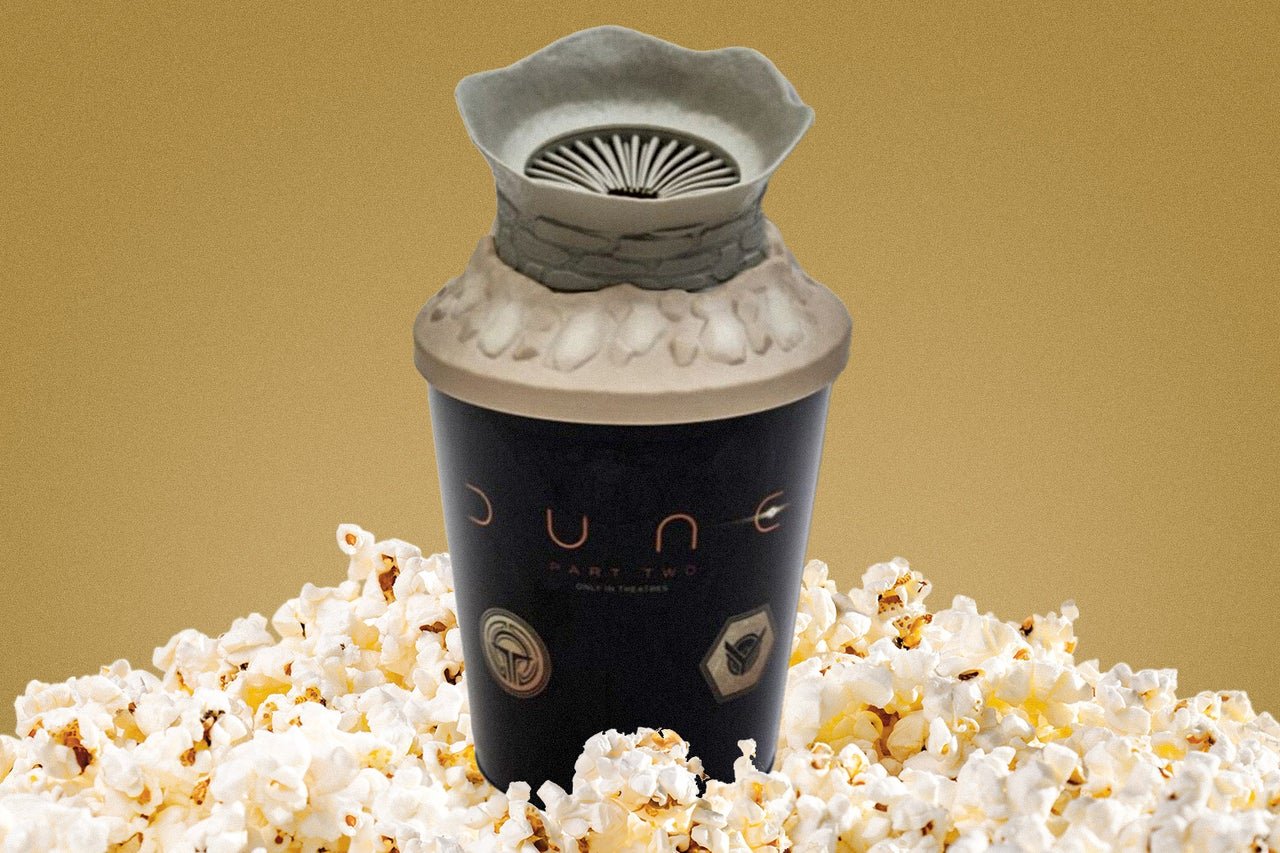
In recent years, novelty popcorn buckets have become a significant part of the moviegoing experience, adding an extra layer of entertainment for superfans and collectors alike. One such item that has made waves is the Xenomorph popcorn bucket, released in tandem with the film “Alien: Romulus” and available at Cinemark and AMC theaters. This matte-black, intricately designed canister, shaped like the menacing Xenomorph from the Alien franchise, has captured the imagination of film enthusiasts and collectors—despite its hefty price of $28.99. The bucket is not only a testament to the power of fandom, but also a case study in consumerism, where form often trumps function. In this critique, we will explore the aesthetic value, cultural significance, and commercial implications of the Xenomorph popcorn bucket, while examining the broader phenomenon of novelty items in fandom culture.
Aesthetic Value: Form Over Function
The Xenomorph popcorn bucket is a striking object, designed with aesthetics as the primary focus. Its sleek, matte-black exterior is both haunting and alluring, perfectly mimicking the Xenomorph’s iconic head from the Alien franchise. Fans of the series will immediately recognize the elongated skull, sharp ridges, and detailed sculpting that give the bucket an ominous, yet undeniably cool, presence. For superfans, owning this piece is akin to possessing a slice of the Alien universe—a tangible connection to the beloved franchise that goes beyond traditional movie memorabilia.
However, while the bucket’s visual appeal is undeniable, its practicality leaves much to be desired. At its core, the Xenomorph popcorn bucket is meant to be a functional object—a receptacle for holding snacks during a movie. Yet, its design is far from practical. The bucket’s shape makes it awkward to carry, and its size is not conducive to holding a large quantity of popcorn. The latch at the top of the skull, which opens to reveal the interior, is small and difficult to access, making it challenging to fill the bucket with snacks, let alone enjoy them during the film. In this sense, the Xenomorph popcorn bucket is more of a collectible than a functional item, prioritizing aesthetic value over utility.
This emphasis on form over function is emblematic of a broader trend in novelty popcorn buckets, where the primary goal is to create visually striking, Instagram-worthy objects that appeal to superfans and collectors. From Star Wars droids to Marvel superheroes, these popcorn buckets are designed to tap into the visual and emotional appeal of beloved franchises, often at the expense of practicality. The Xenomorph bucket is a perfect example of this trend, offering a product that looks great but falls short in terms of usability.
Impression
The Xenomorph popcorn bucket’s success speaks to the power of fandom culture and the willingness of fans to invest in items that enhance their connection to a beloved franchise. For many fans, owning a piece of Alien memorabilia is more than just a purchase—it is an expression of their passion and dedication to the series. The Xenomorph popcorn bucket allows fans to engage with the Alien universe in a new and tangible way, providing them with a unique collectible that captures the essence of the franchise’s aesthetic.
This phenomenon is not unique to the Alien series. In recent years, fandom culture has become increasingly commercialized, with companies offering a wide array of products designed to capitalize on fans’ emotional attachment to their favorite films, TV shows, and video games. From limited-edition action figures to themed clothing lines, fandom-driven merchandise has become a multi-billion-dollar industry, with companies like Zinc Group leading the charge in creating innovative and eye-catching products that cater to superfans.
The Xenomorph popcorn bucket is a perfect example of this trend. It is not just a piece of movie merchandise—it is a symbol of the growing intersection between fandom and consumerism. Fans are willing to pay a premium for items that allow them to express their identity and passion, even if those items are not particularly practical. The bucket’s success, both at the theater and on secondary markets like eBay (where it is commanding a premium), highlights the extent to which fans are willing to invest in memorabilia that offers them a deeper connection to their favorite franchises.
Commercial Implications: The Rise of Novelty Popcorn Buckets
The rise of novelty popcorn buckets, like the Xenomorph bucket, can be seen as part of a broader trend in the entertainment industry, where companies are increasingly focusing on experiential merchandise as a way to enhance the moviegoing experience. For years, theaters have struggled to compete with the convenience and affordability of home streaming services. In response, they have sought to create added value for moviegoers by offering unique, limited-edition merchandise that enhances the overall experience of going to the theater.
Novelty popcorn buckets have emerged as one of the most successful strategies in this regard. These items offer moviegoers something they cannot get at home—a tangible, collectible piece of memorabilia that enhances the experience of watching a film on the big screen. The Xenomorph bucket is a prime example of this strategy. By offering fans a unique, film-specific collectible, theaters are able to create an added layer of excitement and engagement around the moviegoing experience.
However, while the Xenomorph bucket and other novelty items have been a commercial success, they also raise questions about the nature of consumerism in fandom culture. At $28.99, the Xenomorph bucket is priced significantly higher than a standard popcorn container, yet its appeal lies not in its functionality, but in its status as a collectible. Fans are paying for the brand association and the emotional connection to the Alien franchise, rather than the product itself. This kind of branding taps into fans’ nostalgia and desire for exclusivity, encouraging them to spend more on items that may ultimately have limited use beyond their status as collectibles.
The secondary market for the Xenomorph bucket further underscores this point. As soon as the bucket became available in theaters, it began appearing on eBay at inflated prices, with some listings asking for double or even triple the original retail price. This trend is not unique to the Xenomorph bucket—many novelty popcorn buckets from popular films are resold for a premium on secondary markets, creating a sense of scarcity and exclusivity that further drives demand. This creates a cycle where fans are willing to pay increasingly higher prices for items that, in many cases, are little more than glorified popcorn containers.
The Role of Zinc Group: Masters of Novelty Design
The Xenomorph bucket’s success is a testament to the expertise of Zinc Group, the international advertising firm behind its design. Zinc Group has carved out a niche in the entertainment industry by creating eye-catching, maximalist popcorn receptacles that cater to fandoms. From Star Wars-themed buckets shaped like R2-D2 to Marvel-inspired designs featuring characters like Iron Man and Thor, Zinc Group has become a master at tapping into the emotional connection fans have with their favorite franchises.
Zinc Group’s approach to novelty popcorn buckets is rooted in their understanding of fandom as a form of identity. Fans of major franchises are not just casual consumers—they are deeply invested in the worlds and characters they love, and they are willing to pay a premium for products that allow them to express that passion. By creating high-quality, visually striking popcorn buckets, Zinc Group is able to tap into this demand, offering fans a unique way to engage with their favorite films in a tangible way.
The Xenomorph bucket is a prime example of Zinc Group’s expertise. The design is both faithful to the original Alien franchise and innovative in its execution, capturing the menacing aesthetic of the Xenomorph while also serving as a functional (albeit unwieldy) popcorn container. This balance between form and function is key to Zinc Group’s success—they understand that fans are willing to overlook practicality if the design is compelling enough.
Critique of Novelty Consumerism
While the Xenomorph popcorn bucket and similar items have proven to be commercially successful, they also raise important questions about the role of consumerism in fandom culture. As more and more companies capitalize on fans’ emotional attachment to their favorite franchises, there is a growing concern that fandom is being commodified in a way that prioritizes profit over genuine fan engagement.
The Xenomorph bucket is a perfect example of this trend. While it offers fans a unique and visually striking collectible, it is also a product designed to maximize profits for theaters and the companies behind its creation. At $28.99, the bucket is priced far higher than a standard popcorn container, yet its appeal lies not in its functionality, but in its status as a collectible. This kind of branding taps into fans’ nostalgia and desire for exclusivity, encouraging them to spend more on items that may ultimately have limited use beyond their status as collectibles.
Moreover, the fact that the Xenomorph bucket has become a hot commodity on secondary markets like eBay underscores the extent to which fandom culture has become intertwined with consumerism. Fans are willing to pay increasingly higher prices for items that, in many cases, are little more than glorified popcorn containers. This trend raises questions about the impact of consumerism on fandom culture and the extent to which companies are exploiting fans’ emotional attachment to their favorite franchises.
The Xenomorph popcorn bucket is, without question, a marvel of design and fandom-driven marketing. Its aesthetic appeal and connection to the Alien franchise make it a must-have for superfans and collectors, while its success highlights the power of fandom culture to drive consumer demand. However, it also serves as a reminder of the increasingly commercialized nature of fandom, where companies capitalize on fans’ emotional attachments to maximize profits.
Ultimately, the Xenomorph bucket, like many novelty items, is a double-edged sword. On the one hand, it offers fans a unique and tangible way to engage with their favorite franchise, enhancing the moviegoing experience and providing a lasting memento. On the other hand, it reflects the growing commercialization of fandom culture, where fan engagement is increasingly tied to consumerism and the pursuit of profit. As the popularity of novelty items continues to grow, it will be important for fans and companies alike to consider the implications of this trend and strike a balance between genuine fan engagement and the pressures of consumerism.
Related Articles

A 1.2 Million Pound Machine Is Making Grown Men Cry, and Nobody Warned the Midwest
Union Pacific’s Big Boy No. 4014 is deep into a coast to coast tour, and […]