DJ Snake: The “Noventa” Moment And The Shape Of Global Sound, Pre-Summer

April 16, 2026

On Sunday, April 12, 2026, DJ Snake returned to the stage in a live performance setting that carried the scale of a broadcast moment, even without an official tie to the MTV Video Music Awards. During the set, he brought out J Balvin, and together they introduced their collaboration “Noventa” to a crowd for the first time. The track—rooted in reggaeton but driven by Snake’s electronic precision—didn’t arrive as a formal premiere so much as a live ignition, quickly translating from stage energy into online momentum across social platforms.
This wasn’t just a performance—it was a strategic re-entry. After a relatively low-profile 2025, where Snake focused on studio work and private connections, the moment signaled his intent to remain a central figure in the dance and Latin crossover space.
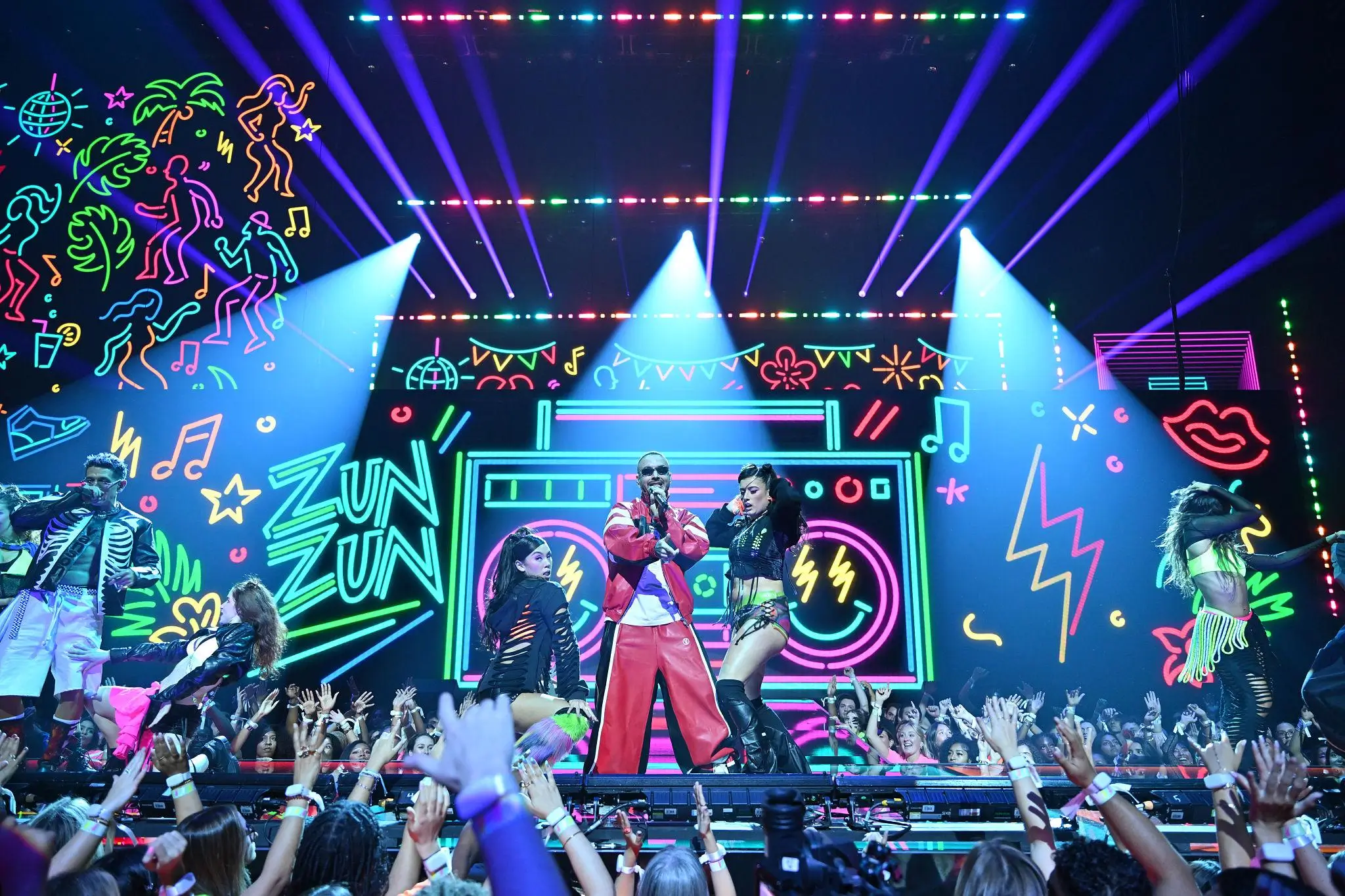
2025 MTV Video Music Awards
stir
The title “Noventa” (Spanish for “ninety”) is widely understood to reference the 90s—a nod to the era that shaped both artists’ early musical sensibilities. The song blends vintage Latin house rhythms with modern, trap-influenced drops, creating a sound that feels both nostalgic and forward-facing. Critics have described it as “a bridge between eras and continents.”
Musically, the track opens with a hypnotic synth line reminiscent of 90s French house, before layering in Balvin’s smooth vocals and rhythmic cadence. The drop introduces a heavy, bass-driven structure, accented by Middle Eastern melodic flourishes—a signature element in Snake’s production language, where global influences are integrated rather than simply referenced.
sting
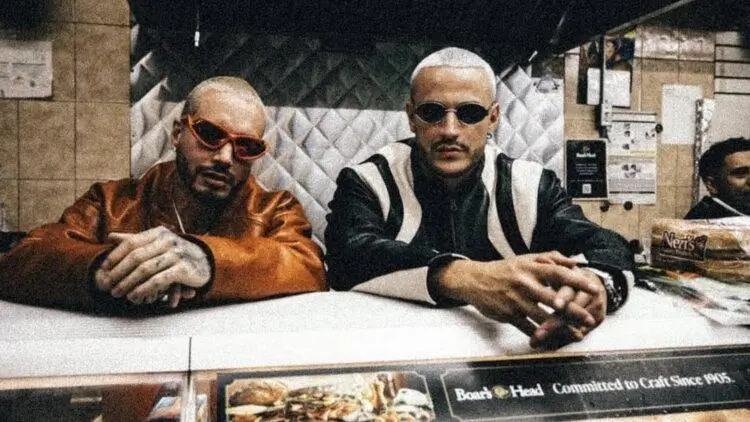
This isn’t the first time DJ Snake and J Balvin have worked together, but it is their most vie collabo since 2021’s “Celoso.” Their partnership remains strategically aligned: Balvin brings a massive Latin American and U.S. Latino audience, while Snake contributes global EDM reach and production precision.
More importantly, both artists have consistently championed cross-cultural music. Their continued collaboration reinforces the idea that language and genre boundaries are no longer constraints, particularly in a landscape where global hits emerge as readily from Nigeria, South Korea, and Colombia as they do from the U.S. or U.K.
culture
The VMAs performance functioned as more than a musical moment—it operated as a cultural signal. At a time when award shows face increasing pressure to reflect global diversity, the presence of a French producer alongside a Colombian artist on a major stage underscored the internationalization of pop.
Online response was immediate. Fans framed the performance as “a win for global music,” with hashtags like #SnakeReturns and #NoventaChallenge gaining traction across platforms. Dance crews began posting choreography, while early remixes circulated across SoundCloud and Beatport, extending the track’s reach into club culture almost instantly.
View this post on Instagram
new
While no official tour has been announced, industry speculation points to a potential 2026 festival run, with appearances at events such as Coachella, Lollapalooza Paris, and Primavera Sound being discussed.
There are also strong indications of a forthcoming album, tentatively titled “Global Heartbeat,” reportedly featuring collaborations spanning Brazil, India, and South Africa. In a recent interview snippet, Snake noted: “I want to make music that feels like the world—connected, loud, and full of life.”
show
Hailing from Paris, DJ Snake (William Sami Étienne Grigahcine) has consistently positioned himself as a connector—between underground and mainstream, between regional identity and global scale, between electronic structure and pop accessibility. His trajectory from early SoundCloud releases to Grammy recognition has influenced a generation of producers to think beyond fixed borders.
In 2026, he isn’t simply maintaining relevance—he’s refining his approach. By favoring high-impact moments over constant output, he continues to operate through precision rather than saturation, sustaining anticipation around each release.
fin
DJ Snake’s 2026 return is less about reinvention than reaffirmation. With “Noventa,” he reinforces a long-standing methodology: music as movement, as connection, as a system that resists staying in one place.
The result is not just a track, but a continuation—one that reflects a global audience increasingly defined by fluidity, where sound travels faster than identity can fix it.
Related Articles

Rose Byrne and Mary Bronstein Are Doing It Again, and This Time They Brought Jenna Ortega
A coach and her prodigy are about to become the most dangerous relationship in a […]