DNA Reveals a Surprise Twist About Christopher Columbus

October 14, 2024
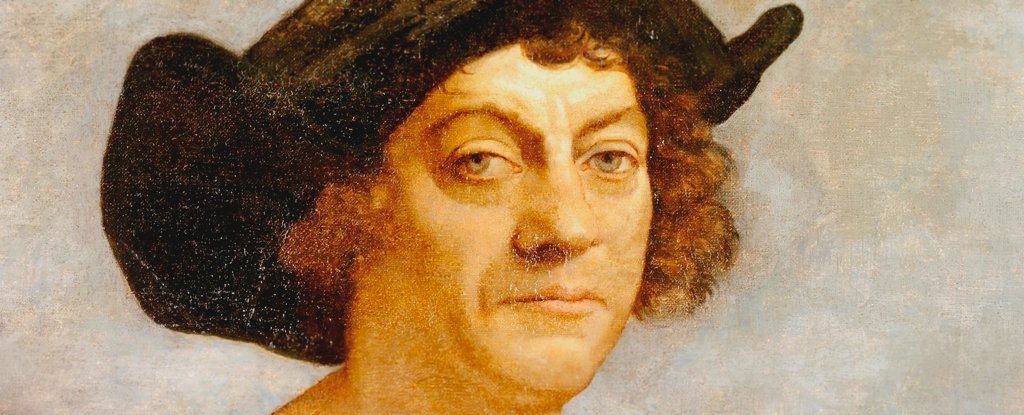
Christopher Columbus is a historical figure who has long occupied a central place in discussions about exploration, colonization, and the formation of the modern world. Traditionally celebrated for his “discovery” of the Americas in 1492, Columbus has also been the subject of increasing scrutiny, especially in recent years, as scholars and the public alike have reevaluated his legacy. Now, new developments in genetic research are adding an unexpected layer to the story. DNA analysis has revealed surprising information about Columbus’s origins, challenging previously held beliefs about his ethnicity, nationality, and identity. This critical exploration will examine the implications of these findings, the controversies they provoke, and what they mean for our understanding of history, identity, and scientific inquiry.
The Legend of Christopher Columbus: Hero or Villain?
Before diving into the recent DNA revelations, it’s important to contextualize the legacy of Christopher Columbus. For centuries, Columbus has been mythologized as a visionary who bravely sailed across the Atlantic Ocean and opened the door to European colonization of the Americas. His voyages, financed by Spain’s Catholic Monarchs, Ferdinand and Isabella, were celebrated as monumental feats of navigation and perseverance, emblematic of a new age of discovery.
However, in the last several decades, Columbus’s legacy has come under fire. His arrival in the Americas marked the beginning of European conquest, enslavement, and genocide of Indigenous peoples. Columbus himself was a key figure in initiating the transatlantic slave trade and exploiting the native populations he encountered, particularly in the Caribbean. As a result, many have called for a reevaluation of the narratives surrounding Columbus, with some arguing that he should no longer be revered as a hero.
This context is essential to understanding the cultural and historical weight behind the latest scientific revelations. Columbus’s identity has always been a topic of fascination, and new information about his background could shift the conversation in ways that go beyond the man himself, touching on themes of nationality, ethnicity, and the construction of historical narratives.
The DNA Discovery: A Genetic Twist in the Tale
The new twist in the Columbus story comes from advancements in DNA research. For years, historians have debated Columbus’s true origins. While it is widely accepted that he was born in Genoa, Italy, there has been speculation over whether he could have been from other parts of Europe, including Spain, Portugal, or even Greece. The questions about his origins are complicated by the fact that Columbus himself was somewhat evasive about his background, and very few primary sources from his time survive.
Recent DNA analysis has, however, shed some light on the matter. According to researchers, genetic testing conducted on remains believed to belong to Columbus and his family suggests that he may not have been of purely Italian descent, as previously thought. Instead, his genetic profile aligns more closely with a group of people from the Iberian Peninsula, specifically from Spain or Portugal. This finding challenges long-held assumptions about his Italian heritage and adds complexity to the narrative of Columbus as a representative of Genoa.
These genetic revelations raise important questions about historical identity. What does it mean if Columbus was, in fact, from Spain or Portugal rather than Italy? How does this change our understanding of his voyages, which were commissioned by Spain but ostensibly led by an Italian navigator? Furthermore, what implications does this have for the broader narrative of European exploration, particularly in relation to national pride and the competition between European powers during the Age of Discovery?
The idea that Columbus might not have been Italian challenges not only historical accounts but also modern notions of national pride and identity. In Italy, particularly in Genoa, Columbus has long been celebrated as a local hero. Statues, monuments, and schools are named in his honor, and he has been viewed as one of Italy’s greatest explorers. If DNA evidence suggests that Columbus was not Genoese, what does this mean for the city’s cultural heritage? Does it diminish his importance as an Italian icon, or does his legacy transcend national boundaries?
Similarly, Spain and Portugal may lay new claims to Columbus’s identity based on this genetic evidence. If Columbus was indeed of Iberian descent, it could be seen as a point of pride for either nation, particularly given the rivalry between Spain and Portugal during the Age of Exploration. This raises broader questions about the role of national identity in shaping historical narratives. How much of our understanding of history is shaped by modern political and cultural concerns? If Columbus’s origins turn out to be different from what was long assumed, it forces us to confront how history is constructed, not only based on facts but also on the narratives we choose to emphasize.
These revelations also call into question the importance of genetic identity in historical analysis. While DNA can offer new insights into the biological origins of historical figures, it is important to recognize the limitations of such data. Genetic identity does not necessarily equate to cultural or national identity. Columbus, regardless of his DNA, lived and operated in a specific historical and cultural context, and his actions were influenced by the political, economic, and social factors of his time. The fact that he may have had genetic ties to Spain or Portugal does not necessarily change the fact that he was regarded as Genoese by many of his contemporaries, and it certainly does not alter the impact of his voyages on the world.
The use of DNA analysis to uncover the origins of historical figures like Columbus highlights the intersection of science and history in ways that challenge traditional methods of historical inquiry. For centuries, historians have relied on documents, artifacts, and other forms of primary evidence to piece together the lives of important figures. However, scientific advancements, particularly in genetics, are providing new tools for exploring the past.
The Columbus DNA revelations are part of a broader trend in which scientists are using genetic testing to uncover hidden histories. From uncovering the true causes of death for historical figures like King Tutankhamun to determining the ancestry of ancient human remains, DNA analysis has become an increasingly valuable tool in historical research. In the case of Columbus, genetic data adds a new layer of complexity to our understanding of his life and background, but it also raises questions about the role of science in shaping historical narratives.
One of the challenges of integrating DNA evidence into historical analysis is that genetic data can sometimes conflict with established historical narratives. In the case of Columbus, the discovery that his genetic profile may align more closely with Spain or Portugal than with Italy does not necessarily mean that he was not Genoese. It is possible that his family migrated from the Iberian Peninsula to Italy, or that he had mixed ancestry. As such, the DNA findings should be seen as one piece of the puzzle rather than a definitive answer.
Another challenge is that DNA evidence can sometimes overshadow other forms of historical inquiry. In the case of Columbus, the focus on his genetic origins risks reducing his legacy to a question of biology rather than exploring the broader historical and cultural context in which he lived. While DNA can provide valuable insights, it is important to remember that history is about more than just genetics. Columbus’s voyages were shaped by the geopolitical landscape of the 15th century, the ambitions of Spain’s rulers, and the economic pressures of expanding European trade routes. These factors are just as important, if not more so, in understanding his legacy.
The revelations about Columbus’s DNA also touch on broader issues of identity politics, particularly in the context of the modern world. In recent years, there has been a growing movement to reevaluate historical figures who have traditionally been celebrated as heroes. Columbus has been at the center of this debate, with some arguing that his legacy should be viewed in light of the atrocities committed during his expeditions. In the United States, for example, Columbus Day has become a contentious holiday, with some cities and states replacing it with Indigenous Peoples’ Day as a way of recognizing the impact of European colonization on Native American populations.
The discovery that Columbus may have been of Iberian descent rather than Italian adds another layer to this conversation. It challenges the idea that Columbus belongs to any one nation and raises questions about the ways in which national identity is constructed in relation to historical figures. In a world where identity politics plays an increasingly important role in shaping public discourse, the Columbus DNA revelations serve as a reminder that historical figures are often claimed by multiple groups, each of whom may have a different perspective on their legacy.
At the same time, the focus on Columbus’s DNA could be seen as a distraction from the more important conversations about his impact on the world. Regardless of his genetic background, Columbus’s voyages had far-reaching consequences for the peoples of the Americas, Europe, and beyond. The emphasis on his DNA risks reducing the conversation to a question of nationality or ethnicity rather than engaging with the deeper issues of colonization, slavery, and exploitation that define his legacy.
The discovery of Columbus’s potential Iberian origins through DNA analysis offers a fascinating twist in the story of one of history’s most controversial figures. It challenges long-held assumptions about his nationality and raises important questions about the role of genetic identity in shaping historical narratives. At the same time, it is important to recognize the limitations of DNA evidence in historical analysis. While genetics can provide new insights into the past, history is ultimately about more than just biology. It is about understanding the complex interplay of culture, politics, and economics that shape the lives of historical figures and their legacies.
As we move forward, the Columbus DNA revelations should be seen as an opportunity to rethink the ways in which we construct historical narratives. Rather than focusing solely on questions of identity, we should use this discovery as a springboard for broader discussions about the impression of European colonization, the politics of historical memory, and the ways in which science and history can work together to uncover new truths about the past. In doing so, we can move beyond the myths and legends of Columbus and engage with the more complex realities of his legacy.
Related Articles

A 1.2 Million Pound Machine Is Making Grown Men Cry, and Nobody Warned the Midwest
Union Pacific’s Big Boy No. 4014 is deep into a coast to coast tour, and […]