DRIFT AUDIO
Listen to this story
Choose a voice, then press play.
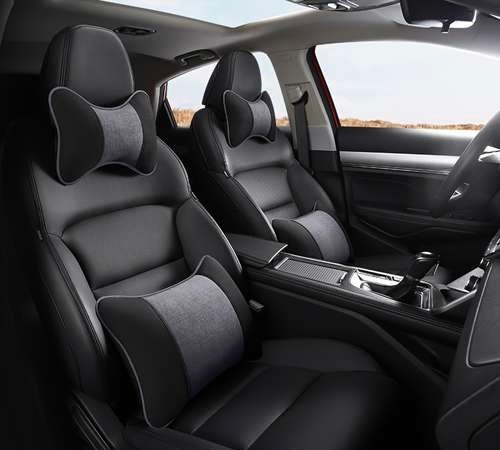
Lumbar support technology in automotive seating has undergone significant advancements over the past few decades. These innovations aim to enhance driver and passenger comfort, reduce fatigue, and improve spinal health during long drives. Among the various developments, dynamic lumbar support systems have emerged as a critical component, adapting to the vehicle’s movements to maintain optimal support. This article delves into the creation, evolution, and current state of dynamic lumbar support technology, identifying key innovators and highlighting the companies leading in advanced control systems.
The concept of lumbar support in vehicle seats dates back several decades. Initially, car seats were equipped with basic adjustments, such as manual levers to control the seat’s tilt and height. These early systems provided minimal lumbar support, often limited to a simple cushion or slight arch in the seat back. The primary focus was on enhancing comfort rather than addressing ergonomic needs.
Beginning of Ergonomic Considerations
During the 1960s and 70s, automotive manufacturers began to recognize the importance of ergonomic design in vehicle seating. This era saw the introduction of more sophisticated seat designs, incorporating adjustable lumbar supports. These early systems allowed for basic adjustments, such as moving a lumbar pad up or down, but they lacked the dynamic functionality seen in modern vehicles.
The 1980s marked a significant
with the introduction of power-adjustable seats. Companies like General Motors (GM) and Ford began integrating electric motors into their seats, allowing drivers to adjust the lumbar support with the push of a button. This advancement provided greater convenience and customization, but the systems still did not adapt to the vehicle’s movements or the driver’s posture dynamically.
The 1990s saw the first significant advancements towards dynamic lumbar support. Engineers began exploring ways to create seats that could adjust in real-time to the vehicle’s dynamics. Key developments included the incorporation of sensors and actuators to monitor and respond to changes in the vehicle’s motion and the driver’s posture.
Ford and GM: These companies were at the forefront, developing early versions of dynamic lumbar support. Ford’s introduction of the “Active Motion Seat” in the 1990s, featured systems that adjusted lumbar support based on the vehicle’s movement. GM’s innovations included the incorporation of sensors that monitored the driver’s posture and adjusted the lumbar support accordingly.
Key Patents: During this period, numerous patents were filed, laying the groundwork for modern dynamic lumbar support systems. For instance, patents by GM and Ford in the mid-90s described systems that used pressure sensors and actuators to adjust lumbar support dynamically.
The 2000s brought significant advancements in sensor technology. Companies began using accelerometers, gyroscopes, and pressure sensors to create more sophisticated lumbar support systems. These sensors provided real-time data on the vehicle’s movements and the driver’s posture, allowing the lumbar support to adjust dynamically.
BMW introduced advanced seating technologies in the early 2000s, incorporating dynamic lumbar support that responded to the vehicle’s movements. The technology was integrated into models like the 7 Series, featuring sensors and actuators that provided continuous support based on real-time data.
Mercedes-Benz developed the “PRE-SAFE” system, which included dynamic lumbar support that adjusted based on the vehicle’s dynamics and the driver’s movements. This system was designed to enhance comfort and safety, reducing the risk of back pain and fatigue.
Research and Distribution
Patents by Major Suppliers: During this decade, key patents were filed by major suppliers like Johnson Controls and Lear Corporation. These patents covered innovations in sensor integration, actuator design, and control algorithms for dynamic lumbar support systems.
The 2010s marked a new era in automotive seating technology. Advances in artificial intelligence (AI), machine learning, and software development enabled the creation of smart seats that could learn from the driver’s preferences and adjust the lumbar support accordingly.
Smart Sensors and Actuators: Modern systems utilize advanced sensors and actuators, including piezoelectric actuators and smart fabrics, to provide precise and responsive lumbar support.
GM has been a pioneer in automotive seating technology. Their advancements in dynamic lumbar support are reflected in patents and technologies developed over the years. Key innovations include:
Active Motion Seat: Introduced in the 1990s, this system featured adjustable lumbar support that responded to the vehicle’s movements.
Advanced Sensor Integration: GM’s use of sensors and actuators in the 2000s laid the foundation for modern dynamic lumbar support systems.
Active Seat Systems: BMW’s systems in the 2000s included dynamic lumbar support that responded to the driver’s posture and vehicle dynamics.
Innovative Sensor Technology: Mercedes-Benz’s use of sensors and AI has set new standards in automotive seating technology.
Audi’s Smart Seats: Audi’s integration of AI and machine learning in their seating systems has set new benchmarks in comfort and personalization.
Tesla’s Advanced Seating: Tesla’s use of AI and real-time data processing in their seats provides unparalleled comfort and support.
Volvo’s Ergonomic Seats: Volvo’s focus on reducing back pain and enhancing comfort through advanced lumbar support systems is a testament to their commitment to driver well-being.
Integration with Autonomous Driving: Future dynamic lumbar support systems will likely integrate with autonomous driving technologies, adjusting seats based on the vehicle’s driving mode and the driver’s state.
Biometric Monitoring: Advanced systems may incorporate biometric sensors to monitor the driver’s health and adjust lumbar support accordingly, enhancing both comfort and safety.
Predictive Algorithms: AI algorithms will continue to evolve, predicting the driver’s needs and adjusting lumbar support in real-time based on driving conditions, posture, and individual preferences.
Personalized Comfort: Future systems will offer even more personalized comfort, learning from the driver’s habits and preferences to provide optimal support at all times.
Eco-Friendly Materials: The development of sustainable materials and manufacturing processes will play a crucial role in the future of dynamic lumbar support systems.
Collaborative Innovations: Continued collaboration between automakers, suppliers, and technology companies will drive innovation, leading to new advancements in automotive seating technology.
Dynamic lumbar support technology in vehicles has come a long way, from simple manual adjustments to advanced systems that respond to the vehicle’s movements and the driver’s needs. Companies like General Motors, BMW, Mercedes-Benz, Audi, Tesla, and Volvo have been at the forefront of this innovation, developing technologies that enhance comfort, reduce fatigue, and improve spinal health. As we look to the future, the integration of AI, biometric monitoring, and sustainable materials promises to revolutionize automotive seating, providing an even higher level of comfort and support for drivers and passengers worldwide. The journey of dynamic lumbar support technology continues, driven by a commitment to innovation, comfort, and driver well-being.
Related Articles
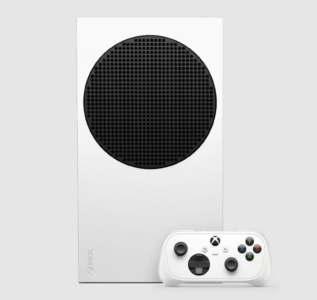
Pocket-sized Xbox Ctrl
Xbox Nano Controller. Announced 14 October 2026 by James Hunter. $49.99. Rechargeable battery. Programmable Action Button. Xbox Wireless and Bluetooth.