DRIFT AUDIO
Listen to this story
Choose a voice, then press play.
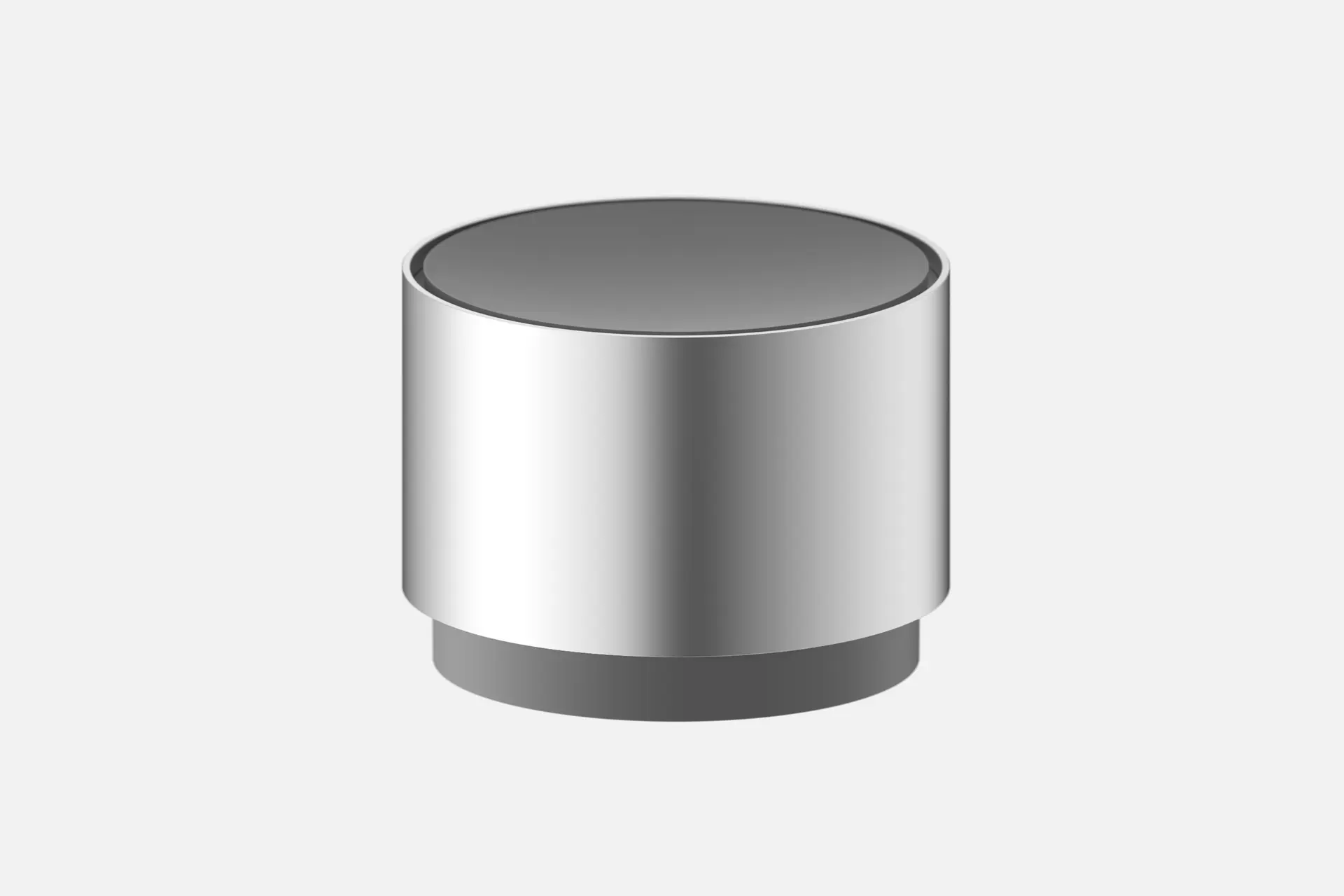
A ring of ABS, silicone and aluminum that wakes when the car moves and sleeps after five still minutes. New Grey’s Halo treats a gas-station staple as hardware.
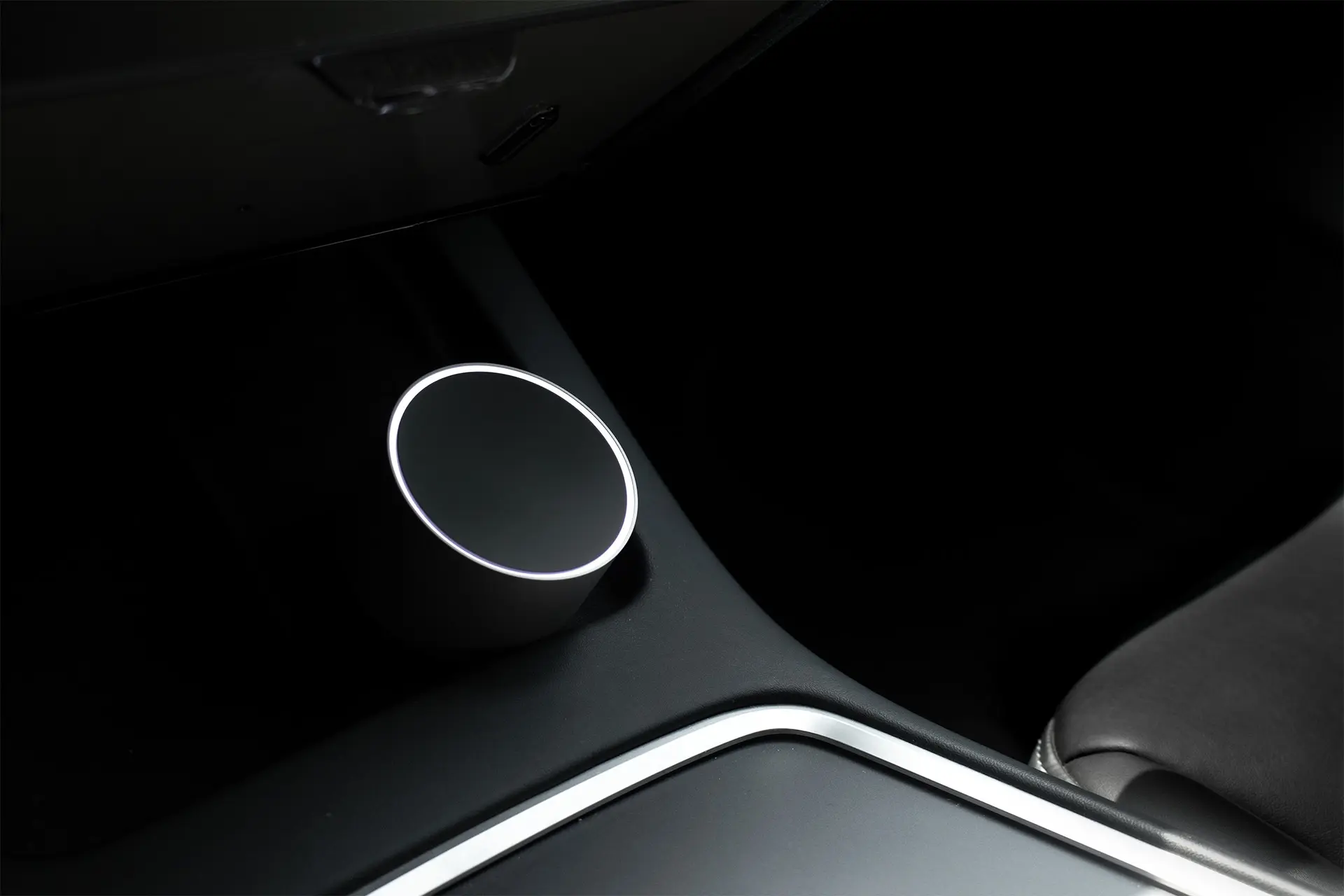
Halo does its most important work when nobody is touching it. Pull away from the curb and the diffuser, a circular car fragrance unit designed by New Grey, registers the motion and starts working. Park, lock up and walk off, and after five minutes without movement it puts itself to sleep. None of the published material describes a power button in that loop, a companion app or a schedule to program. The car’s own movement is the switch.
The project went public on October 8, with a credit line that divides the work in two: design by New Grey, development at Mayton, images by New Grey. Reduced to its category, Halo is a car air freshener, one of the cheapest and most disposable things a driver ever buys. Its ambition lies in refusing that status. Most car scent is made to be used up and thrown out. Halo is made to stay put, with only the fragrance inside it treated as temporary.
Signal. What happened: a smart car fragrance diffuser designed by New Grey, on October 8, 2026, with developom ABS, silicone and aluminum, with magnetic construction, replaceable fragrance cartridges and motion sensing that wakes it when the vehicle moves and sends it to sleep after five minutes of stillness. When and where: show through a project page on New Grey’s website; no price, SKU, retail partner or on-sale date had been published at the time of writing. Source: New Grey’s project listicle. Why it matters: car scent remains one of the most disposable categories inside a vehicle, and Halo makes the case for treating it as durable interior hardware with a swappable consumable.
journey
The category Halo is stepping into began with a complaint about spoiled milk. In 1952, a milk truck driver in Watertown, New York, told chemist Julius Sämann that his vehicle stank of spilled dairy. Sämann had spent years extracting aromatic oils in Canada’s pine forests, and his answer was to load fragrance into an absorbent blotter material and cut it into an abstract evergreen. The result is what Little Trees, the company that grew out of that conversation, describes as the first car air freshener. The opening scents were Royal Pine, Spice and Bouquet, and the trees are still produced in Watertown and in DeWitt, Iowa. The list has since grown to include Vanillaroma, New Car Scent and Black Ice, and the company now sells vent wraps, sprays and fiber cans alongside the tree, all of them built on the same premise of a scent that runs out.
That shape has barely changed in more than seventy years, a measure of how completely it solved the problem it was built for. It costs little, weighs almost nothing, needs no power and hangs from the one fixture every car shares, the rearview mirror. It also fades. Once the scent is gone the tree goes in the trash and a fresh one goes up, and nearly everything that followed it, from vent clips to gel cans to clip-on pods, has kept the same rhythm of buying, using up and discarding.
At the other end of the market, carmakers have been building scent into the vehicle itself for years. Mercedes-Benz offers its AIR-BALANCE package as optional equipment, with fragrance supplied in 15 ml glass flacons that are bought and replaced separately, each one listicle on the brand’s Australian accessories store at A$125.40. The scents carry names like Freeside Mood and Forest Mood, and the Forest flacon lists pine among its heart notes, a faint echo of Sämann’s first tree. The logic there is already the one Halo borrows: a permanent system in the car, and a replaceable scent that changes inside it.
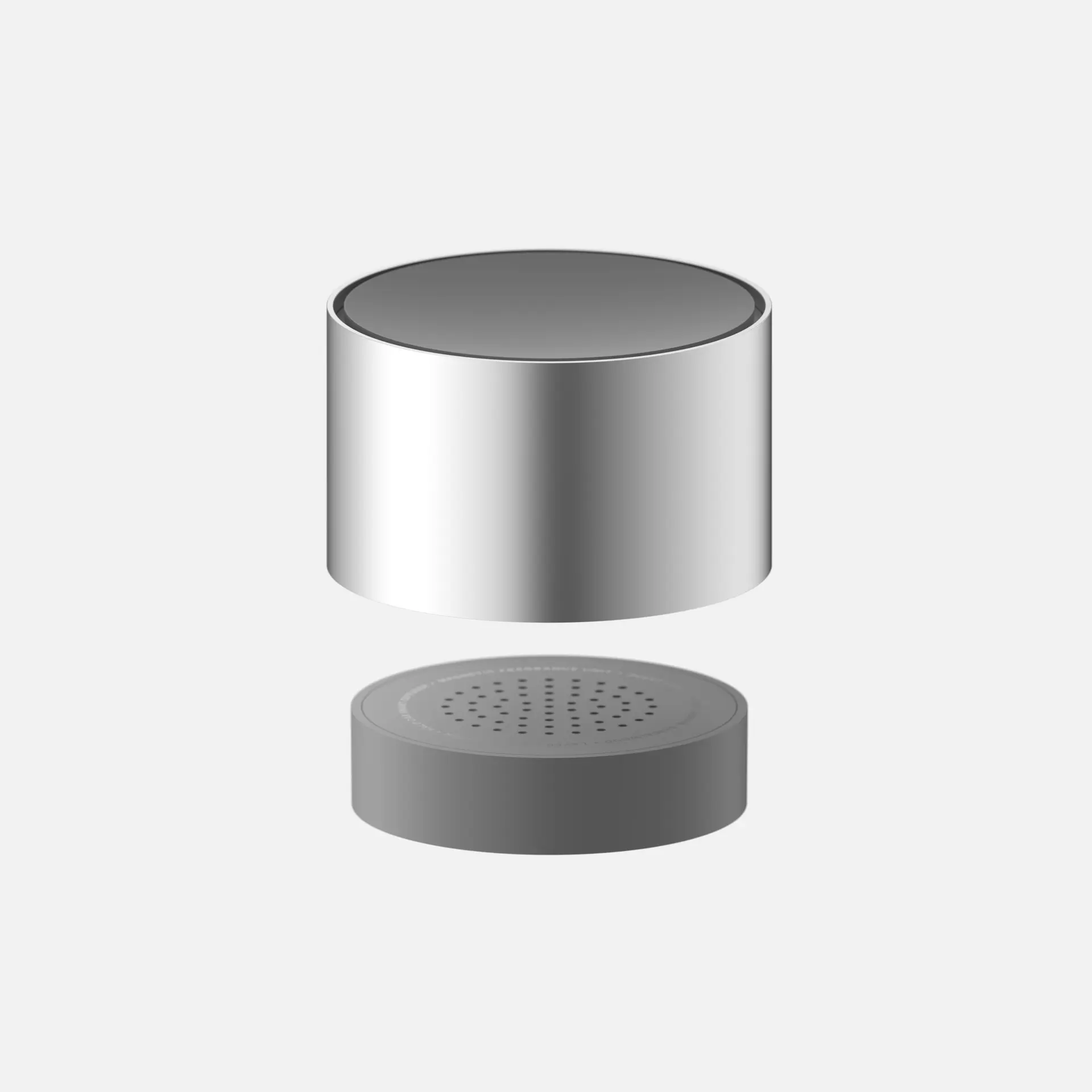
Halo proposes the same split for an aftermarket object, one that would sit in any car rather than in a single carmaker’s flagship. The housing becomes the permanent part, chosen with roughly the care given to a phone mount or a good key ring, and the fragrance becomes the consumable that slots into it. The same division between a lasting body and a replaceable insert reshaped razors and espresso machines long ago. Applied to car scent, it turns a throwaway accessory into a small piece of interior equipment, and it shifts the design question from what a freshener should smell like to what it should look like after three years in the same spot.

mat
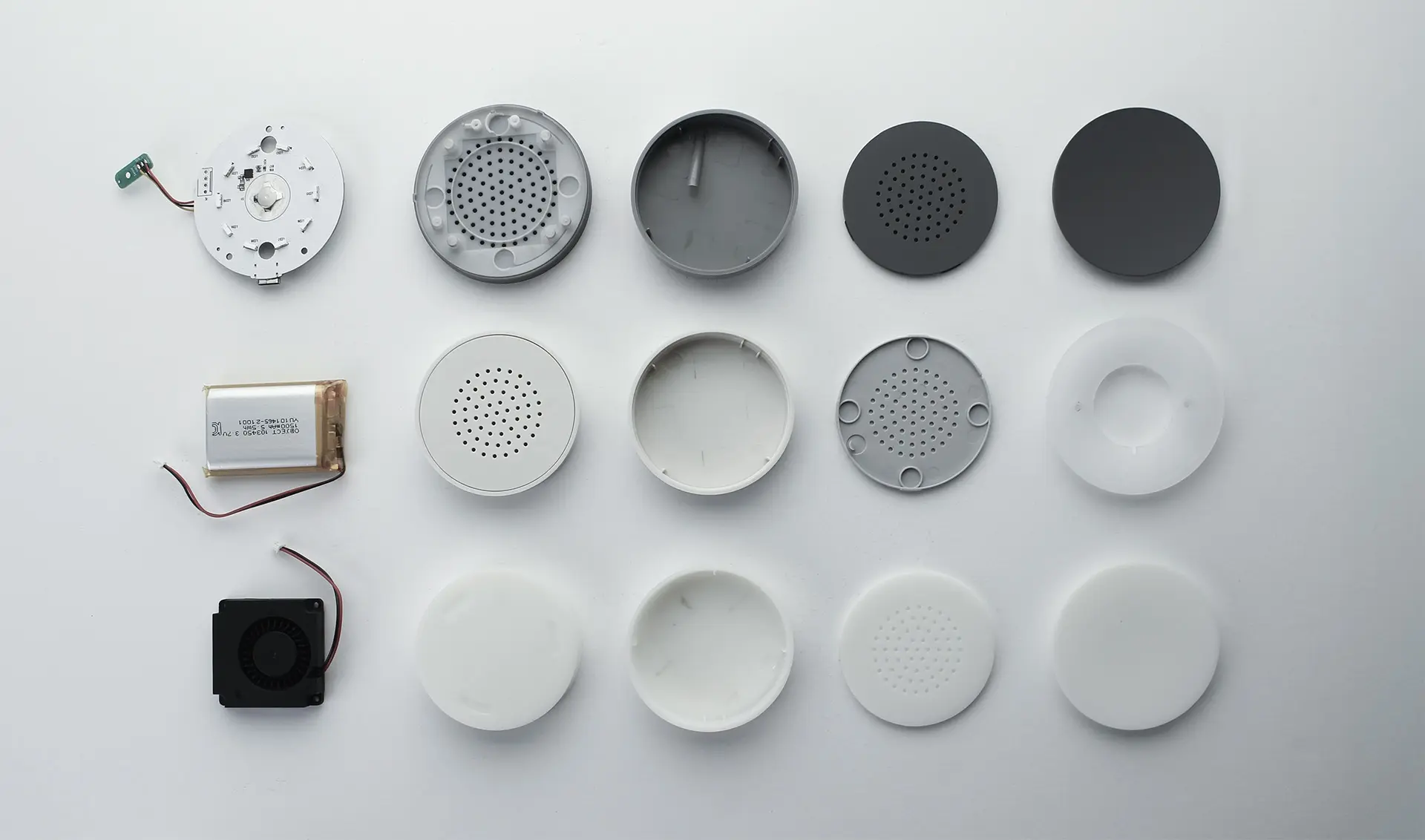
New Grey’s materials list runs to three entries: ABS, silicone and aluminum. Each makes more sense in a car than it would on a bedside table.
ABS is the workhorse plastic of everyday hardware. Tough, impact resistant and easy to mold to a clean finish, it is the material behind the Lego brick and a long list of car interior parts, from instrument panels to console boxes. It reached the market commercially in the 1950s, the same decade Sämann cut his first paper tree, so the two halves of this story are roughly the same age. That gives Halo’s body a material kinship with the cabin around it, which goes some way toward explaining why an object built this way can read as native to the car rather than added afterward.
Silicone is the material of grip and seal. It stays flexible across a wide temperature range, which counts for a lot in a cabin that bakes in August and freezes in January, and it is the natural choice for any surface that has to cushion, hold or close. Aluminum brings rigidity and a cool metallic surface, the cue that separates a finished object from the molded plastic around it. The published description lists the three materials without assigning them to specific parts, so how they divide the work on the finished unit is not yet spelled out in writing.
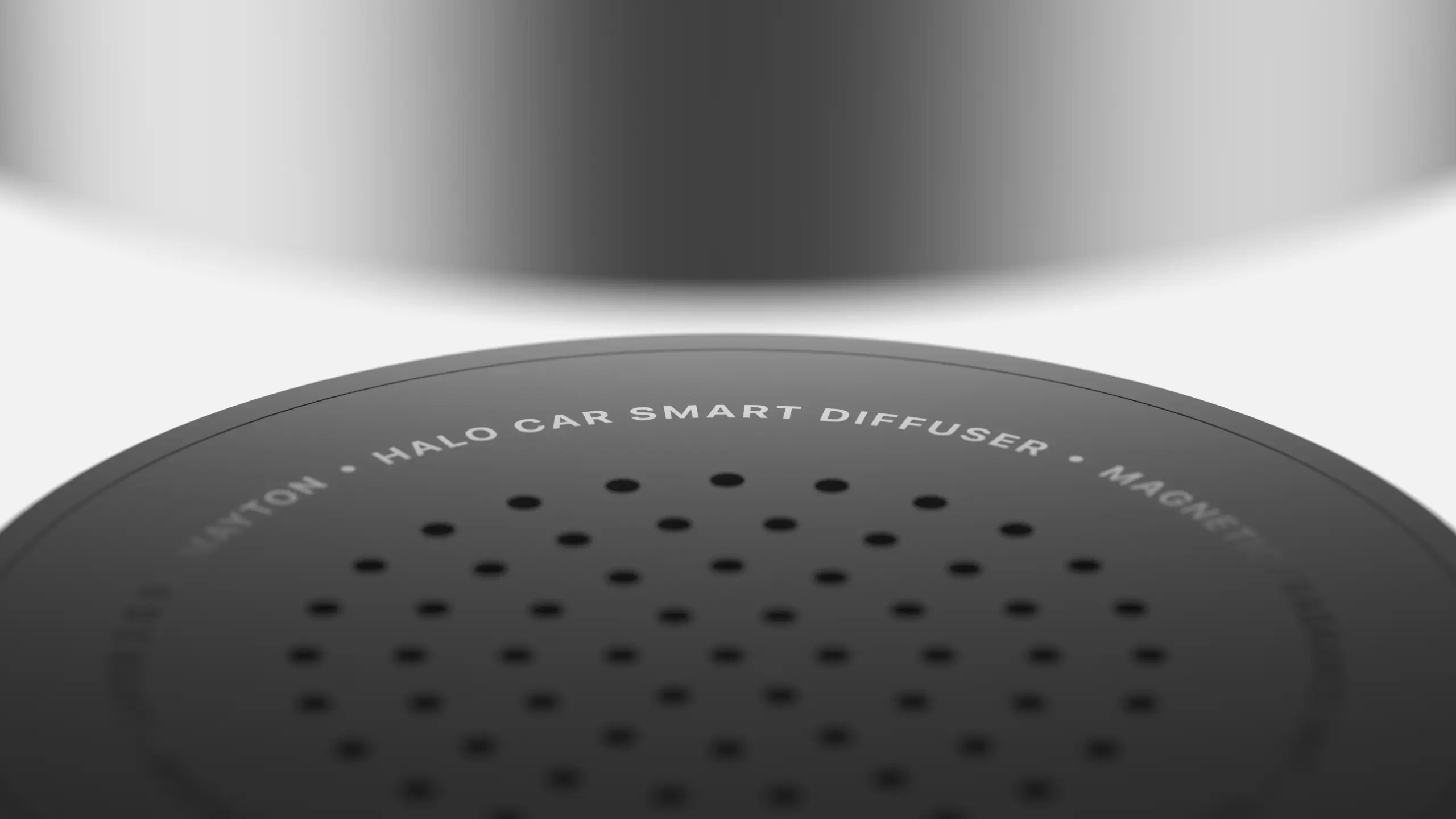
The circle is the most legible decision. A circle has no top or bottom, so it reads the same however it is oriented, and it settles easily among the round vents, dials and speaker grilles that still populate most cabins even as screens take over the center stack. The name does the rest of the explaining. Halo describes the silhouette about as plainly as a product name can.
The magnetic construction follows the same instinct toward ease. Published coverage pairs it with effortless installation without saying whether the magnets hold the unit to a mount, hold the cartridge inside the body, or both. Either reading lands on familiar ground. Magnets have become the default grammar of in-car accessories over the past several years, largely through phone holders, and a part that clicks home by magnet asks for no tools, no adhesive and no instructions.
show
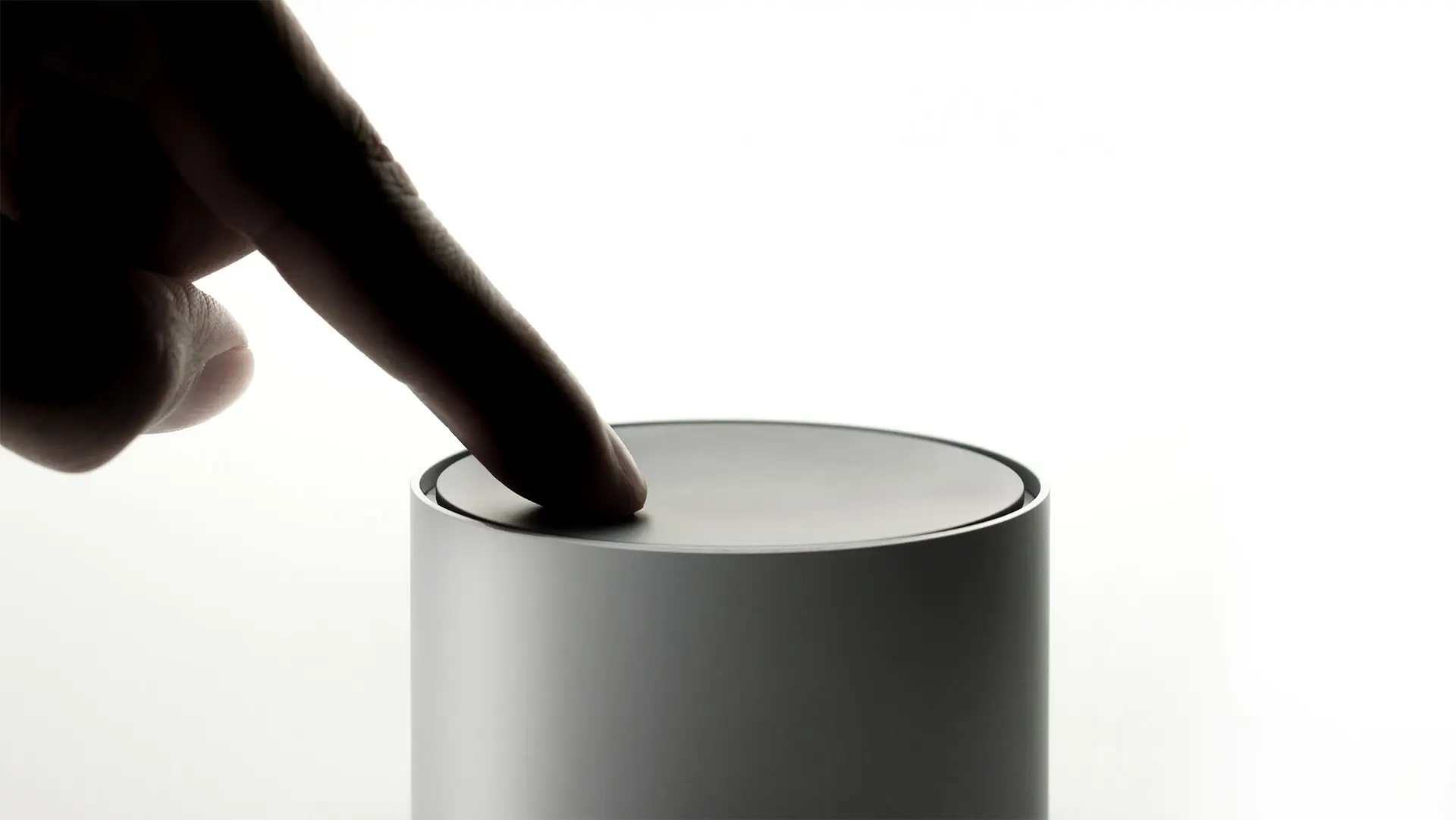
Motion sensing is what earns Halo the word smart, and on its own terms the feature is not new. Aroma360 already sells a Smart Car Diffuser that switches on automatically when the vehicle starts, and automatic start and stop has become close to standard at the upper end of the category. Halo’s distinction is less the feature than how little of it shows. Nothing in the published description mentions a display, an intensity dial or a row of mode buttons. The sensing simply lives inside the circle.
Five minutes is a considered number. It is long enough to ride out a red light, a slow drive-through lane or a quick stop at a pickup curb without the unit shutting down and restarting, and short enough that a parked car does not go on scenting an empty cabin for long. Set the threshold at thirty seconds and the diffuser would stutter through city traffic. Set it at half an hour and it would spend lunch breaks perfuming a parking garage.
The closer comparison is the dome light. Nobody thinks about the lamp that comes on when a car door opens and dims a few seconds after it shuts. It behaves the way a person would want without asking for anything. Car interiors have moved in the opposite direction for much of the past decade, with climate controls, seat heating and a growing list of basic functions migrating into touchscreen menus. Against that drift, a fragrance unit keyed to the car’s movement alone makes a small case for objects that read their situation instead of waiting for an instruction.
extend
Replaceable fragrance cartridges are the second half of Halo’s argument, and the least documented. Coverage so far names the cartridge system without saying which fragrances it launches with, who produces them, how long one lasts or what a replacement costs. The same silence covers power. There is no published word yet on whether Halo runs on a rechargeable battery or draws from the car, how long a charge holds, or whether scent intensity can be adjusted.
Those details are not trivia. For an object whose whole case rests on permanence, the refill economics will decide how it actually lives in a car. A beautifully resolved housing paired with cartridges that are hard to find, expensive or short-lived becomes a disposable again by another route. One that gets the supply right becomes the opposite of the paper tree: a fixture bought once, with the scent changed as casually as a playlist.
Whatever those answers turn out to be, the format carries a practical advantage. Swapping a cartridge is a tidier act than refilling a reservoir, and it means a change of scent never requires a change of hardware.
extend
Halo’s restraint has an obvious ancestor. Dieter Rams, who led design at Braun for decades and compressed his outlook into the phrase “less, but better,” set out ten principles for good design, and one holds that good design is unobtrusive: objects made to serve a purpose should behave like tools, neutral and restrained, leaving room for the person using them. When Vitsœ, the furniture company Rams has designed for since 1959, illustrates that principle, it reaches for the cylindric T 2, a table lighter Rams designed for Braun in 1968.
The pairing is apt. The T 2 is a small round object built around a small, repeated habit, designed so the ritual matters more than the device. Halo occupies the same territory: a minor sensory routine wrapped in geometry plain enough to recede into its surroundings, governed by a behavior simple enough that its owner never has to think about it.
View this post on Instagram
The comparison also marks what remains open. Rams’s list asks for more than restraint. It also asks that good design be long-lasting and environmentally friendly, and on those counts Halo’s record will be written by the parts nobody has described yet: the battery, the cartridge supply and how long the system is supported. A durable housing is a start on longevity. The rest depends on details still to come.
fin
The credit line is the least explained part of the story. Halo is designed by New Grey and developed at Mayton, and beyond this project neither name has much of a public footprint in English-language design coverage. New Grey presents Halo through a project page on its own site. No retail listing, price or launch window has surfaced alongside it, and no account of how the work was divided has appeared in coverage so far.
The split itself is common in industrial design, where a design team shapes an object and a development partner carries it through engineering, tooling and production. What that meant for Halo specifically, including whether Mayton is building the diffuser for sale or developed it to prototype stage, has not been made public.
For now, Halo exists as a set of New Grey photographs and a specification short enough to memorize: three materials, a magnetic build, swappable scent and a five-minute rule for deciding when the car has stopped.
Related Articles

Inside the Ferrari Line Where V12s, Hybrids and the Electric Luce Share One Workforce
In Maranello, the electric Luce, a hybrid V8 and a twelve-cylinder Purosangue now share one assembly line and one workforce.