DRIFT


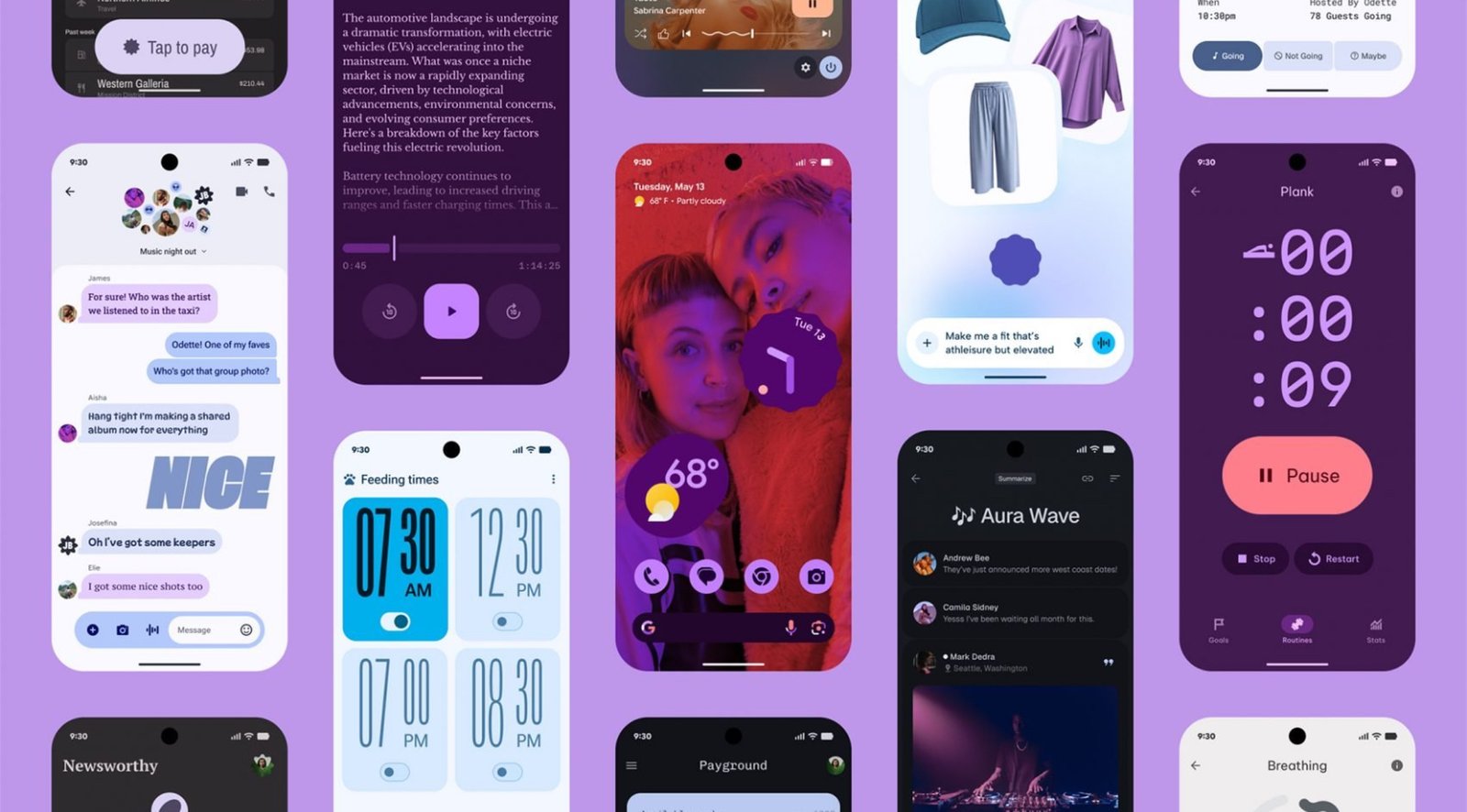
In a world increasingly shaped by sterile minimalism, Google has made a striking pivot with its latest iteration of design philosophy—Material 3 Expressive. Unveiled in May 2025, this fourth major evolution of Google’s Material Design system channels a newfound appetite for vibrant, playful interfaces. Gone are the days of rigid geometry and subdued palettes; in their place emerges an interface that breathes, emotes, and occasionally bursts with the energy of a graphic novel panel.

As Vanessa Cho, Vice President of Google Design, revealed in an interview with Dezeen, the update was shaped by the desires of users who craved not just functional clarity but “wild and way-too-playful” interactions. And this was not merely whimsy—it was substantiated by exhaustive user testing. In response, Google launched Material 3 Expressive as both a stylistic liberation and a strategic reframing of UI/UX, aligning itself with evolving design sensibilities that emphasize personality, accessibility, and human emotion.

From Order to Expression: The Material Design Journey

Material Design has always served as Google’s visual framework for digital coherence, offering developers a system of patterns, components, and motion principles. Initially introduced in 2014, the original Material Design emphasized tactile surfaces and realistic lighting, echoing physical materials like paper and ink. It evolved steadily, through Material Theming and Material You, each layering more options for customization and accessibility. But Material 3 Expressive represents more than an update—it is a philosophical shift.

Whereas Material You focused on user-driven customization, allowing device owners to tailor color schemes based on wallpapers and system-wide aesthetics, Expressive turns the dial from introspection to extroversion. It encourages developers to embrace emotion—a concept often underexplored in UI—and to consider design not just as a system of affordances but as a canvas for emotional resonance.

Designing with Feelings: The Rise of “Emotive Interfaces”

Material 3 Expressive introduces new principles for designing emotion-first interfaces. The key visual drivers? Bolder hues, exaggerated curvature, dynamic shadows, and elastic motion. It’s a rejection of the flat, grayscale interfaces that once dominated mobile and web environments. Interfaces now move more organically—cards expand with bounce, buttons glow with ambient gradients, and shapes asymmetrically flex under interaction.

Google’s update proposes that interface elements don’t need to disappear into the background to be successful. Instead, by making them pop, animate, or even amuse, they become more than tools—they become companions in the digital journey. It’s an ethos reminiscent of postmodern graphic design, where clarity doesn’t always mean uniformity.

And yet, Expressive is no free-for-all. Every design cue has been codified in a highly detailed update to the Material Design Guidelines. The new design tokens include parameters for expressive typography, responsive iconography, and fluid animation libraries. Developers aren’t left to their own devices; they are empowered with a toolkit that balances experimentation with usability.

Color as Character: A Radical Expansion of Palette

Central to Material 3 Expressive is a dramatic expansion of color use. While previous iterations allowed for personalization and dynamic theming, Expressive opens the floodgates to chromatic vibrancy. Google now encourages designers to think in terms of emotional palette mapping: what does joy look like in a UI? What hue communicates confidence, or calm, or creativity?

The update leverages the Tonal Palette System from Material You but retools it for broader range and expression. Colors now have more latitude to clash, contrast, and delight. Vibrant pinks, cobalt blues, toxic greens, and even warm beige tones can exist not in isolation, but as part of holistic moodboards for apps and services.

Google’s internal research suggested that users—especially Gen Z and Gen Alpha—found these colors to be more inviting, relatable, and reflective of their real-world experiences, from fashion to gaming to digital art. Where once the neutral gray might have symbolized professionalism, it now suggests sterility. The future is coded in high saturation.

Shape Language: From Geometric Restraint to Fluid Whimsy

Another major shift in Expressive lies in its updated shape language. Material 3 Expressive reimagines basic UI containers—not as rectangles or circles alone—but as playful, adaptive forms that shift depending on content and device context. Corners are often exaggerated, buttons stretch or shrink with purpose, and cards float with a softness that implies personality.

It’s an aesthetic choice, but also a usability one. These changes stem from a deeper understanding of how human cognition interacts with shape recognition. Research shows that softer, more organic shapes reduce perceived tension and increase user affinity. This insight led Google to adopt ‘comfort-first ergonomics’ in shape rendering, particularly on smaller screens like Wear OS watches and foldable Android devices.

The result is not merely an abstract improvement in visuals but a tangible gain in touch fidelity, reducing misclicks and improving flow. The whimsical now serves the practical.

Kinetic Delight: Reclaiming Animation as Function

One of the cornerstones of Material 3 Expressive is its embrace of motion design as both form and function. Animation was always part of the Material system, but in this version, it takes on a more emotional tone. Transitions have bounce. Feedback glimmers. Scrolls wave. The line between navigation and animation is thinner than ever.

Expressive’s animation updates are governed by a new motion framework that Google calls “Kinetic Expressivity.” This system includes:

  • Elastic interpolations for transitions,
  • Micro-animations on hover, press, and swipe,
  • Multi-stage gesture mapping, and
  • Customizable temporal pacing based on app context.

Such additions are more than mere visual enhancements; they are strategic UX decisions. Google’s user testing discovered that delightful micro-movements reduce abandonment rates and make apps feel more “alive.” These kinetic gestures act like digital body language, offering feedback, emotion, and charm without text.

The Broader Cultural Context: UI as Personality Statement

Google’s pivot toward playful expressivity doesn’t emerge in a vacuum. It mirrors a wider cultural appetite for authenticity, creativity, and personal agency in digital environments. As more of our lives are mediated by screens, users—particularly younger demographics—expect those screens to reflect their values, moods, and aesthetics.

This movement has precedent. The resurgence of skeuomorphism in niche applications, the explosion of UI trends on TikTok and Instagram, and even the rise of digital fashion all suggest that functionality alone is no longer enough. Users crave expression.

Material 3 Expressive taps into this desire, inviting developers to create with narrative in mind. Apps can now embody playfulness (Duolingo), calm (Headspace), or even rebelliousness (Reddit). Visual design becomes a storytelling device, and in turn, brands can better distinguish their identities in a saturated market.

Implications for Developers and Designers

For developers, Material 3 Expressive is both a gift and a challenge. It democratizes high-fidelity UI options through its open-source toolkit, while raising the bar for visual storytelling. Google has released extensive design documentation, Sketch and Figma component libraries, and updates to Jetpack Compose and Flutter to streamline adoption.

The real test lies in implementation with restraint. Not every app needs a circus of color or squishy buttons. Google’s guidelines offer clear caveats: use expressive design where it aligns with brand personality, user intent, and content context. It’s an invitation to emotive design, not an imperative.

Designers, on the other hand, are now faced with infinite stylistic latitude, which comes with its own perils. Balancing emotion with legibility, novelty with familiarity, and performance with creativity will become the new mark of a master UI artist.

Future Forward: What Material 3 Expressive Signals

Material 3 Expressive represents not just the future of Google’s platforms, but perhaps a redefinition of how we understand interface design altogether. It suggests that interfaces are no longer just invisible bridges between user and task—they are expressive surfaces, full of personality and intention.

Looking ahead, this update may inspire competitors—Apple, Samsung, Huawei, and others—to rethink their own design languages. More broadly, it places emotion and joy at the forefront of software aesthetics, signaling a new era of digital craft where beauty, accessibility, and individuality converge.

Related Articles
Modern data center facility with a solar-panel-clad exterior, bright green administrative offices, and secure perimeter fencing, showcasing sustainable digital infrastructure and renewable energy integration

Lombardy’s Data Center Boom: Balancing Digital Ambition with Environmental Responsible

Lombardy has emerged as Italy’s primary hub for new digital infrastructures, particularly data centers—vast complexes […]

In a highly anticipated reunion after 24 years, Adidas Originals and Coca-Cola have joined forces once again to celebrate the FIFA World Cup 2026™. The collaboration revives their iconic 2002 partnership from the Japan-South Korea tournament, now reimagined for the biggest global sporting event of 2026, co-hosted by the United States, Canada, and Mexico. Set to launch on June 6, 2026, this collection masterfully blends Adidas' streetwear heritage with Coca-Cola's timeless branding, creating a vibrant fusion of football culture, nostalgia, and modern style. The drop arrives at a perfect moment. With the World Cup kicking off on June 11, 2026, fans worldwide are gearing up for a summer of football excitement. This collaboration isn't just merch—it's a cultural statement that merges two legendary brands under the banner of "Originals are the Real Thing," a clever twist on Coca-Cola's famous slogan. Historical Context: A Reunion 24 Years in the Making Adidas and Coca-Cola first collaborated during the 2002 FIFA World Cup, producing limited-edition pieces that captured the era's energy. That partnership helped define early 2000s football-streetwear crossover culture. Fast-forward to 2026, and the brands are back with fresh energy, leveraging Adidas' deep FIFA ties (as an official partner) and Coca-Cola's long-standing sponsorship of the tournament. The 2026 edition promises to be historic as the first 48-team World Cup, spanning three countries and generating unprecedented global hype. This collab taps into that momentum, offering fans wearable pieces that celebrate both brands' legacies while looking forward to the future of football fashion. Collection Overview and Design Philosophy The Adidas Originals x Coca-Cola collection fuses 2000s street style with classic sporting aesthetics. Expect bold reds, creams, whites, and silver accents inspired by Coca-Cola's iconic packaging—think classic script logos, droplet detailing, and can-inspired motifs. The lineup spans footwear, apparel, and accessories, divided into two visual directions: one logo-heavy and graphic-forward, the other drawing from vintage advertising aesthetics. Designs pay homage to Coca-Cola's visual language while staying true to Adidas Originals' archival roots. High-quality materials, attention to detail, and versatile silhouettes make these pieces suitable for both match-day wear and everyday street style. The campaign, featuring young football star Lamine Yamal and a diverse cast in everyday scenes building anticipation for the tournament, reinforces themes of originality and shared cultural moments. Footwear Highlights Footwear takes center stage in this collaboration, with reimagined takes on iconic 2000s Adidas silhouettes: Samba and Superstar Models: These classics get Coca-Cola treatment with white/cream/red colorways and prominent script branding. The Samba blends street heritage with football roots, while the Superstar II features weathered bases and bold side panels. Expected pricing around $110–$130. Adistar Control 5: A standout with droplet detailing mimicking condensation on a cold Coke can. This model brings performance-inspired design into lifestyle territory. Predator Sala: Indoor/hybrid style with silver-and-red accents, nodding to predatory precision on the pitch and Coca-Cola's bold energy. Climacool 1: Revived with breathable tech and Coke-inspired graphics, perfect for warm summer days. Megaride F50: A highlight paying tribute to the iconic Coca-Cola glass bottle, with unique contours and refreshing design cues. Each pair incorporates thoughtful details like embroidered logos, custom insoles, and packaging that mimics vintage Coke crates or cans. These shoes are built for durability and comfort, appealing to sneakerheads, football fans, and casual wearers alike. Apparel and Accessories Beyond kicks, the collection offers a full lifestyle range: Track Tops and Jerseys: Standout jerseys fuse retro Coca-Cola advertising from different eras into cohesive football designs. Track jackets feature signature three stripes alongside Coke branding, in vibrant reds and classic whites. Shorts and T-Shirts: Relaxed fits with graphic prints, ideal for casual wear or layering. Expect motivational football motifs blended with refreshing beverage references. Accessories: A bright red airliner bag stands out as a functional statement piece. Additional items may include caps, socks, and tote bags carrying the collaborative spirit. The apparel emphasizes comfort with premium cotton blends, mesh panels for breathability, and oversized silhouettes popular in contemporary streetwear. Unisex sizing and inclusive fits make the collection accessible to a broad audience. Cultural Impact and Fan Appeal This collaboration resonates on multiple levels. For football fans, it represents national pride and global unity ahead of the 2026 tournament. Sneaker enthusiasts will appreciate the nostalgic 2000s revival mixed with modern execution. Streetwear collectors see it as a prime example of how heritage brands can innovate through partnerships. In an era where sports and fashion increasingly intersect, Adidas and Coca-Cola deliver pieces that transcend the pitch. Wear them to watch matches at home, attend watch parties, or hit the streets in any host city—New York, Los Angeles, Toronto, or beyond. The designs are versatile enough for gym sessions, festivals, or daily commutes. The timing aligns perfectly with rising interest in football in North America, boosted by the co-hosting nations. Young talents like Lamine Yamal in the campaign help bridge generational gaps, attracting newer fans while satisfying longtime supporters. Where to Buy and Release Details The collection launches globally on June 6, 2026, via: Adidas CONFIRMED app (for early access and raffles) Adidas.com Select retailers and flagship stores worldwide Some regions may see staggered drops, with Japan and other markets getting early access. Prices are expected to range from $50–$150 depending on the item, making it relatively accessible compared to ultra-limited drops. Pro Tips for Copping: Enable notifications on the CONFIRMED app. Check local stock at Adidas stores in major cities. Monitor resale platforms post-drop for exclusive colorways, but be wary of markups. Size up slightly for oversized apparel fits. Given the World Cup hype, popular items like the Sambas and jerseys are likely to sell out quickly. International shipping is available, but factor in potential customs delays. Styling Suggestions Match Day Look: Pair a collaborative jersey with classic black shorts and Samba sneakers for effortless fan style. Streetwear Rotation: Layer a track top over a graphic tee with wide-leg pants and the Megaride F50 for a bold urban ensemble. Casual Summer: White Superstar with denim shorts and the airliner bag for a refreshing, vacation-ready vibe. These pieces mix seamlessly with existing Adidas or neutral wardrobes, maximizing versatility. Broader Context in 2026 Fashion and Sports The Adidas x Coca-Cola drop is part of a larger wave of high-profile collaborations tied to the World Cup. Adidas continues its dominance in football kit design, while Coca-Cola leverages its sponsorship with collectibles, bottles, and experiential activations like the Trophy Tour. In the sneaker industry, this collab exemplifies the ongoing trend of lifestyle reinterpretations of performance silhouettes. It also highlights how global brands use major events to drive cultural conversations around unity, originality, and joy—core values for both companies. Sustainability notes (based on Adidas' broader initiatives) suggest some pieces may incorporate recycled materials, aligning with modern consumer expectations. Looking Forward: Legacy and Excitement As the countdown to kickoff continues, this collection serves as the perfect prelude to an unforgettable summer of football. Whether you're a die-hard supporter, a fashion-forward collector, or someone seeking motivation through style, the Adidas Originals x Coca-Cola FIFA World Cup 2026 lineup delivers. Expect potential restocks, special event exclusives in host cities, and continued campaign content featuring more athletes. This isn't just clothing—it's a ticket to participate in the global celebration of the beautiful game. Mark your calendars for June 6, 2026. Refresh your wardrobe, lace up those Sambas, and get ready to cheer on your team in style. The "Real Thing" meets the Originals in what promises to be one of the most talked-about releases of the year. This collaboration captures the essence of football's universal appeal: bringing people together through shared passion, iconic brands, and unforgettable moments. As the world prepares for 2026's expanded tournament, Adidas and Coca-Cola remind us that some partnerships are truly timeless.

Adidas Originals x Coca-Cola Collection: FIFA World Cup 2026

In a highly anticipated reunion after 24 years, Adidas Originals and Coca-Cola have joined forces […]

Loewe shoulder bag crafted in brown and black leather with minimalist lion face detailing and a matching fur tail charm

180 Years Unfolded: The Full Story Behind Loewe’s New Campaign

The year was 1846. Queen Victoria was on the British throne and the telephone, the […]