




DRIFT AUDIO
Listen to this story
Choose a voice, then press play.
The Florence house pairs photographer Johnny Dufort with sculptor Willie Cole’s 1994 pump throne to reframe its oldest view wry: a woman surrounded by more shoes than she could ever wear.
There is a specific image that keeps surfacing whenever anyone writes about early Hollywood glamour: an actress standing in a closet or a studio backlot, dozens of pumps fanned out around her feet, as if shoes were simply a substance that accumulated around famous women the way dust collects on a shelf. Ferragamo has been trading on some version of that picture for decades, mostly because the house’s own founder built shoes for the women who posed for those photographs in the first place. For its Fall/Winter 2026 campaign, titled “La Mania Delle Scarpe,” or roughly “the shoe obsession,” the house has gone back to that image and pulled it apart until it stops looking familiar.
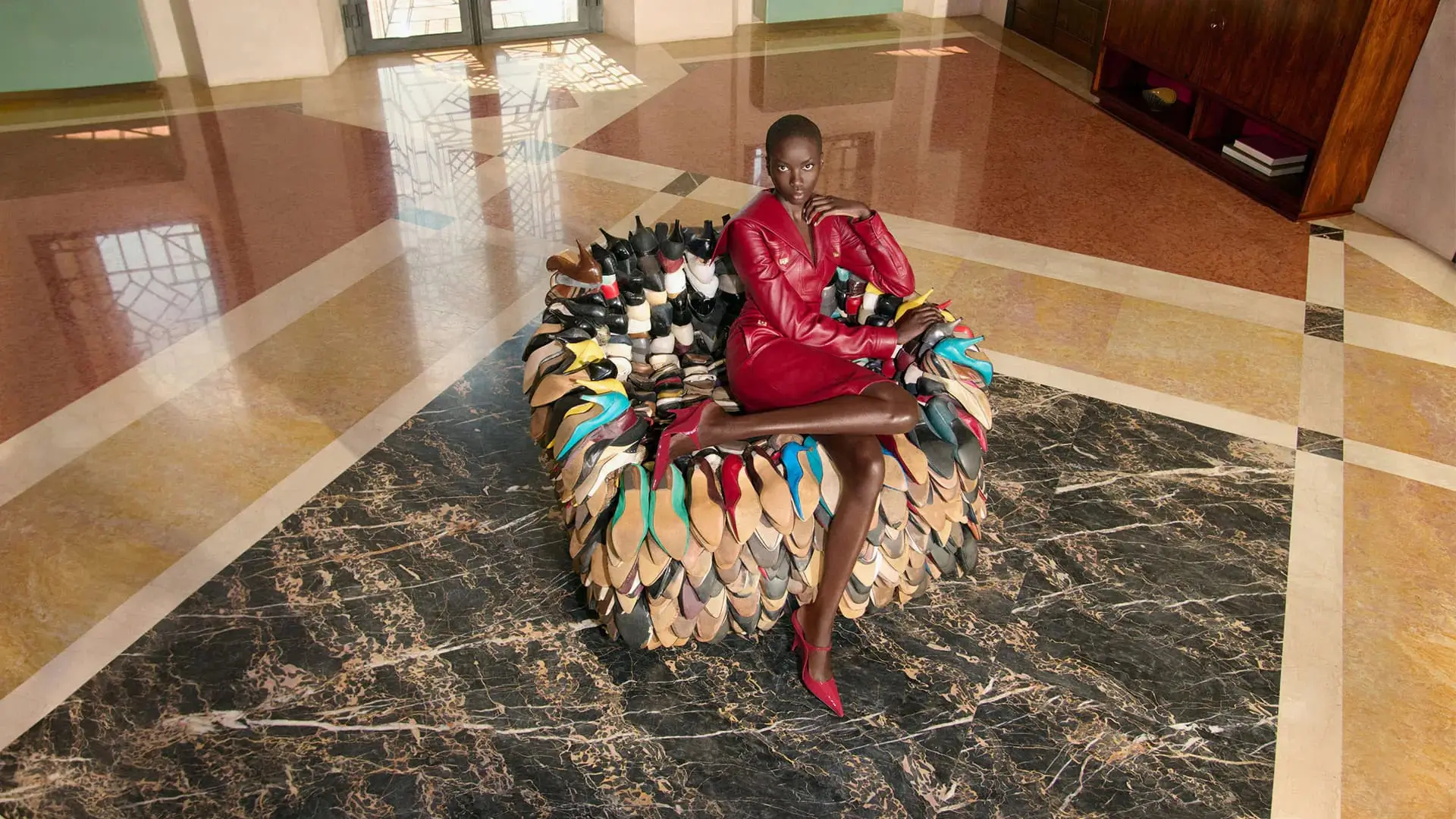
The Ferragamo Fall/Winter 2026 campaign pairs a sleek crimson leather look with an artful chair constructed from archived footwear, transforming the brand’s own shoes into a sculptural centerpiece that celebrates Ferragamo’s enduring legacy of craftsmanship and design innovation.
The centerpiece is not subtle. Model Anok Yai is seated on a 1994 sculpture by American artist Willie Cole, a piece built entirely out of tinted pumps and arranged into the shape of a chair. It is functioning here as a literal throne, and the campaign leans into the strangeness of that rather than smoothing it over. A stack of shoes becomes furniture becomes a set piece becomes, eventually, the whole argument of the campaign: that a shoe is never just something you put on your foot.
stir
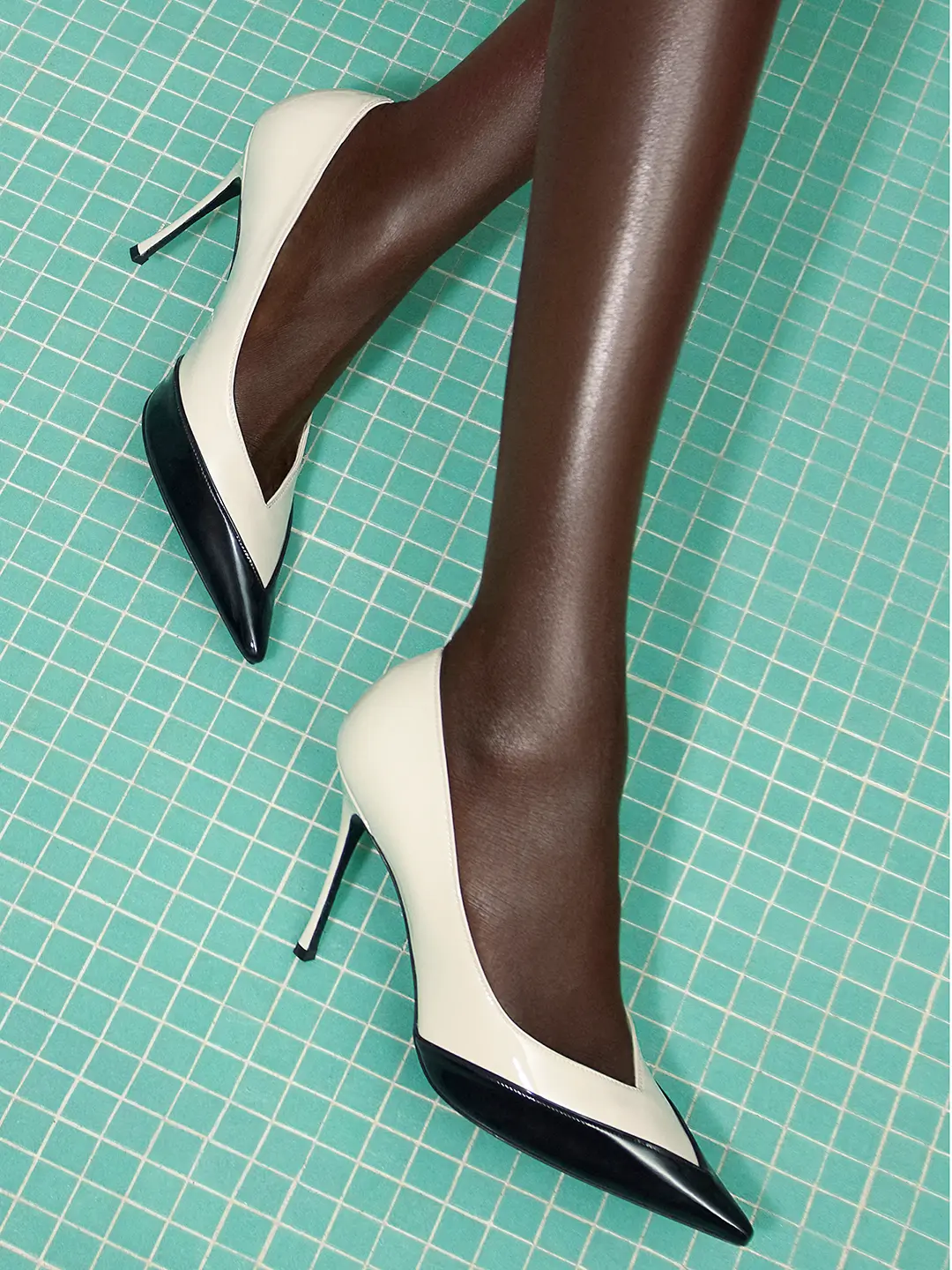
The photographer behind the images is Johnny Dufort, whose fashion work tends toward the theatrical rather than the clean and commercial. According to the house, Dufort built the campaign’s view world directly out of archival images of actresses photographed amid piles of shoes, a motif that has followed Ferragamo since its earliest Hollywood clients. Rather than restage that scene as nostalgia, Dufort pushes it toward something closer to a fever dream: hue saturated, cluttered, faintly absurd. Models are shown scattered among stilettos rather than posed neatly beside them, and the overall effect reads less like an advertisement for footwear and more like a set from a film that never got made.
That distinction matters, because it is the difference between a brand simply repeating its own history and a brand using that history as raw material. Dufort’s read on the shoe pile motif treats it the way a director treats a recurring symbol: not as decoration but as something to be reinterpreted every time it reappears. In interviews accompanying the campaign, the house has described the resulting images as bridging Ferragamo’s archive with a distinctly contemporary, faintly surreal visual language, which is a fairly accurate description of what Dufort delivers. The shoes are still the subject. They just no longer sit still.
flow
Willie Cole did not arrive at shoe sculpture by way of fashion. Born in Somerville, New Jersey, in 1955 and raised in Newark, Cole trained at the School of Visual Arts in New York and spent the late 1980s building a reputation for work made from scorched steam irons, a motif he has said points toward branding, labor, and the domestic work historically assigned to Black women. The shoes came later, and somewhat by accident. Cole has described going to a thrift store in the early 1990s in search of shoe for a different sculpture and instead finding himself drawn to a bin of discarded high heels, a detour that opened up what has become one of the defining threads of his career.
Since then, Cole has built an extended body of work, including the long running Mother and Child series, out of high heeled shoes bolted, wired, and stacked into forms that recall traditional African masks and figures. His piece Shine, an assemblage of women’s shoes shaped into a man’s head, is held by the Metropolitan Museum of Art. He has also worked directly in fashion before, designing shoe inspired headpieces for a Comme des Garcons runway show during a pandemic era connection with designer Rei Kawakubo. Cole’s own explanation for the appeal of heels as material is disarmingly personal: he has said most of the women in his childhood wore and loved them, and that his mother, now in her nineties, still keeps a cabinet of miniature high heels in her home.
Ferragamo creative director Maximilian Davis has framed the collide as a natural extension of what Cole already does. “Willie takes everyday objects, objects that you feel connected to, that you can relate to, and distorts them,” Davis said of the artist’s practice, adding that the resulting throne “feels very surreal, but immediate.”
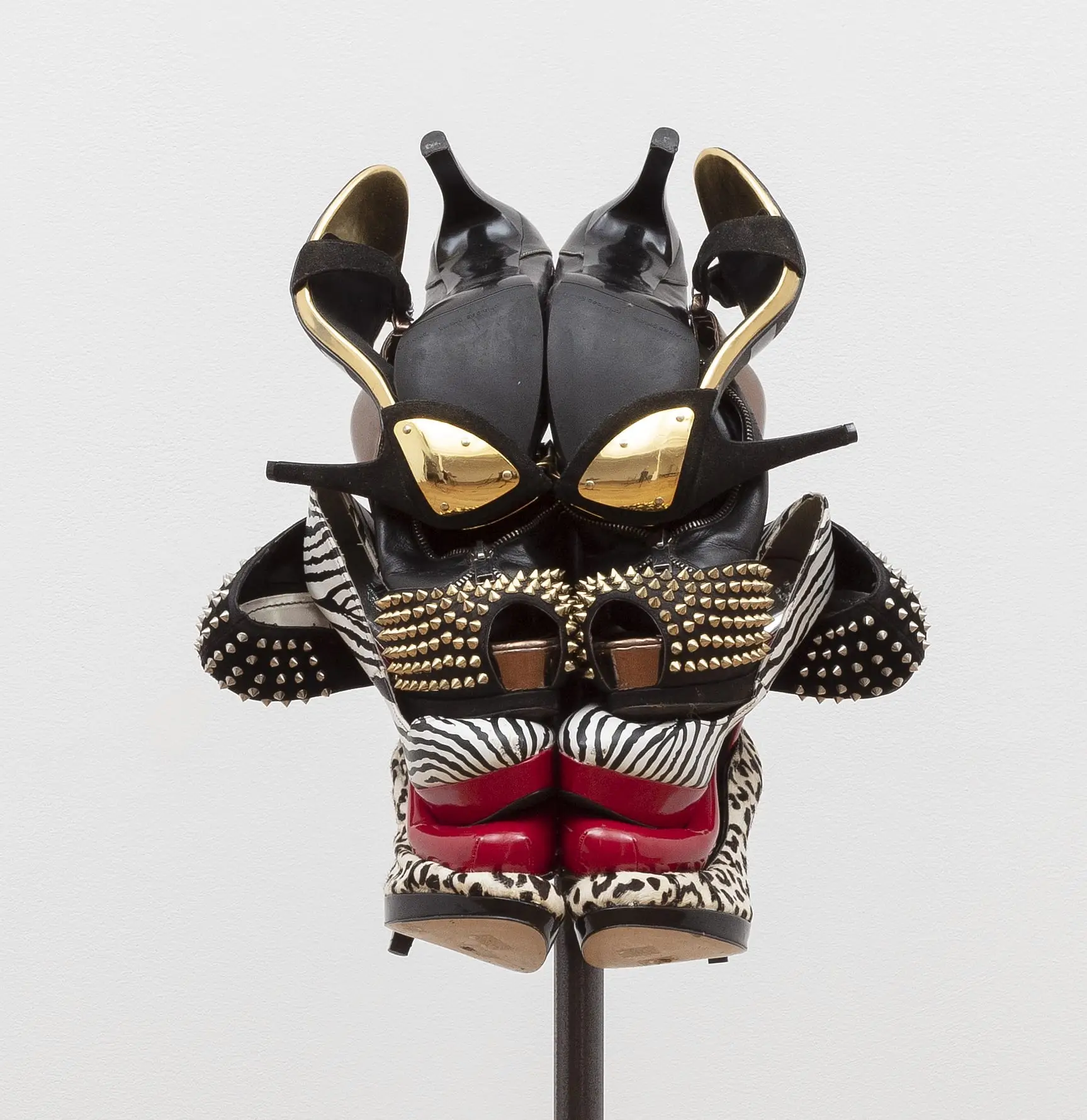
The shoe sculpture transforms an eclectic collection of high heels into a bold mask-like artwork, combining animal prints, polished metallic finishes, studded leather, and vivid red soles to explore fashion, craftsmanship, and the expressive potential of footwear as contemporary art.
ambass
Yai shares the campaign with model Vittoria Ceretti and model and actor Thibaud Charon, alongside actors Jingyu Huang and Ning Chang, both of whom were recently named global brand ambassadors for the house and are appearing in a Ferragamo campaign for the first time. The full cast was styled by Lotta Volkova, whose past work spans Vetements and Balenciaga and who tends to favor styling choices that sit somewhere between elegant and slightly off. That sensible fits a campaign built around a chair made of shoes.
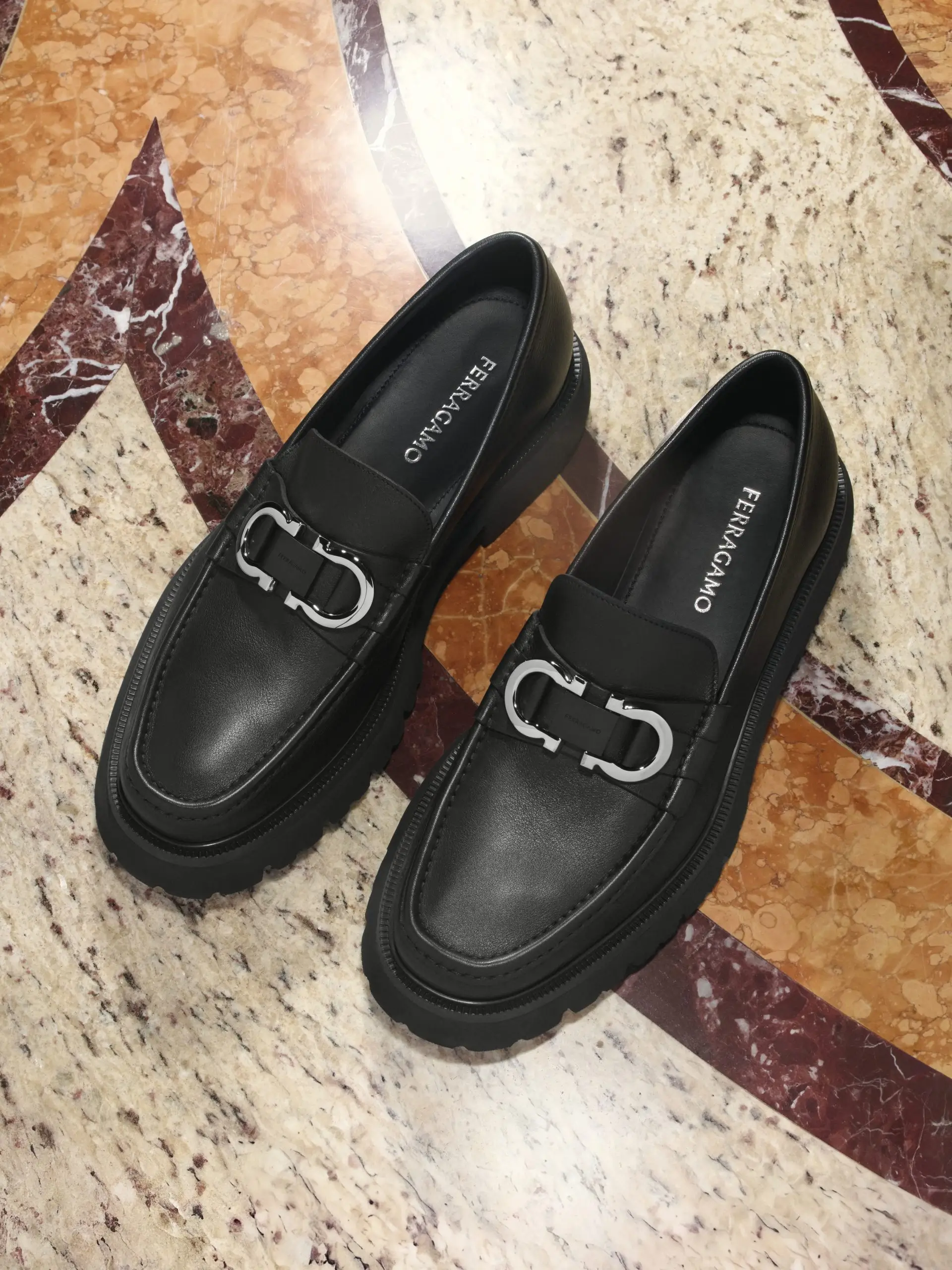
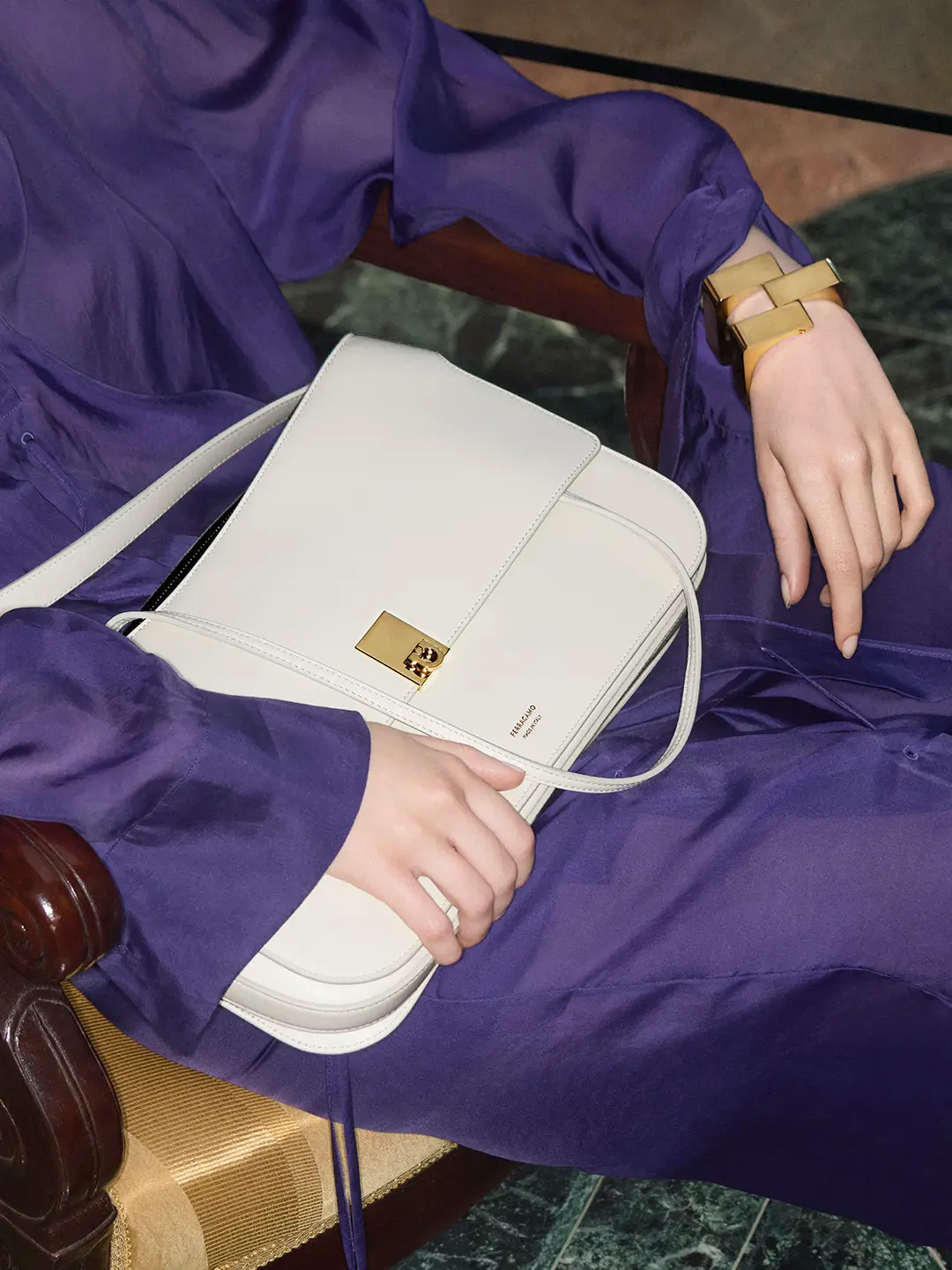
The images also move beyond footwear into the season’s leather goods, most notably a new Cara bag rendered in soft calf leather and closed with the house’s signature Ganci hardware, the interlocking gold clasp that has appeared across Ferragamo bag designs for years. Formal menswear also gets a showing, worked into the same surrealist arrangements as the women’s footwear rather than photographed separately.
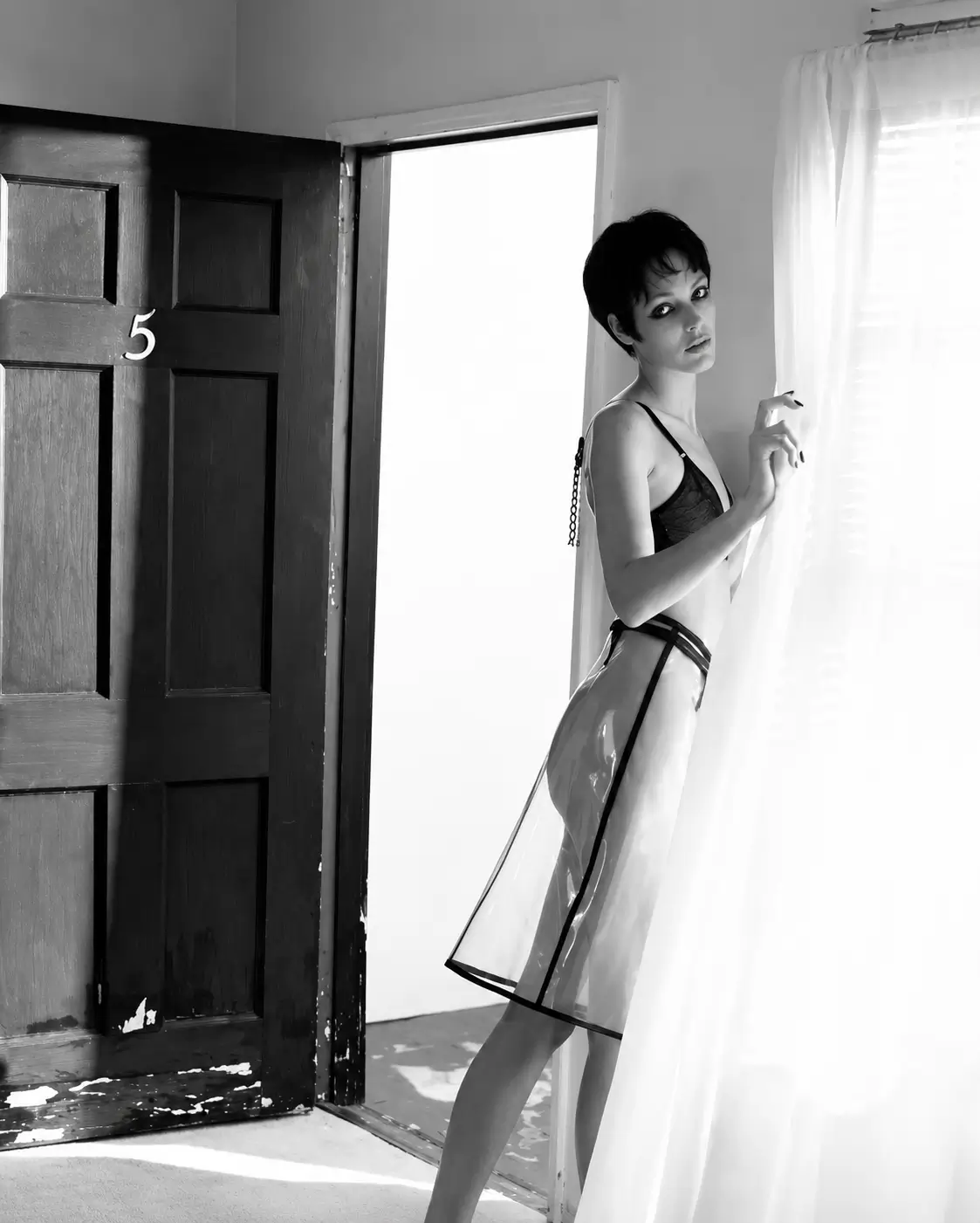
The monochrome fashion portrait blends natural light, minimalist styling, and cinematic composition, capturing a quiet moment as the model stands beside a sheer curtain in a refined interior that emphasizes elegance, texture, and timeless editorial photography.
resurface
Davis, a Manchester born designer who graduated from the London College of Fashion and worked as a junior designer for Grace Wales Bonner before launching his own eponymous label in 2020, took over Ferragamo’s creative direction in March 2022 at the age of 26, following the departure of Paul Andrew. He was, at the time, one of the youngest and least conventional choices a heritage Italian house of Ferragamo’s size had made in years, and the appointment was widely read as an attempt by then new chief executive Marco Gobbetti to shake loose a brand that had grown a little too polite.
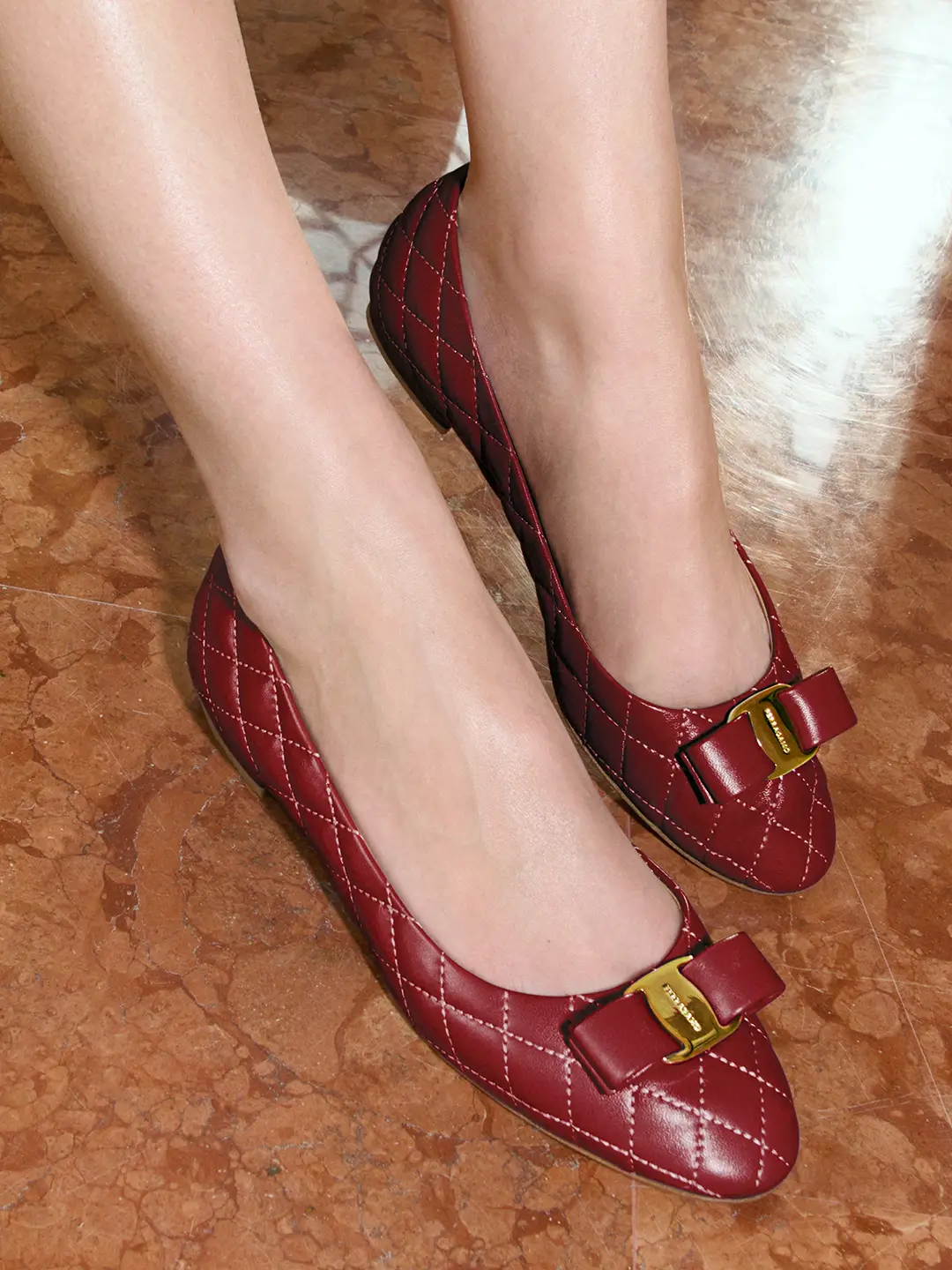
Since then, Davis has returned repeatedly to Surrealist and Dadaist reference points, an interest that shows up again in this campaign’s willingness to treat a pile of shoes as a chair rather than an accessory display. He has described the throne concept as feeling immediate despite its strangeness, and has connected Cole’s found object practice directly to his own approach of taking the house’s established codes, its Vara bow, its Ganci hardware, its archive of sharp Florentine heels, and pushing them toward something less literal than a straightforward reissue.
extent
None of this works as a campaign concept if the underlying shoe obsession is not real, and in Ferragamo’s case it is. Salvatore Ferragamo was born in Bonito, Italy, in 1898, emigrated to the United States as a teenager, and by the 1920s was building shoes for the film industry in Santa Barbara and Hollywood, earning the nickname “shoemaker to the stars” for a client list that eventually included Audrey Hepburn, Sophia Loren, and Marilyn Monroe. He returned to Italy in 1927 and opened a workshop in Florence that became the foundation of the company that still carries his name. Among his patented innovations were the cork wedge heel, developed during wartime material shortages, and a steel reinforced shank that let heels stand taller without losing structural support.
After Ferragamo’s death in 1960, his wife Wanda took over the company, and it was his eldest daughter, Fiamma Ferragamo, who designed the house’s most enduring shoe, the low heeled, round toed Vara pump, in 1978. According to family accounts, the grosgrain bow that defines the Vara was something of a happy accident, added to a prototype almost as an afterthought and then kept after what Fiamma later described as a miscommunication with the shoemaker over which material the bow should be made from. Roughly forty seven years and more than a million pairs later, the Vara is still handmade at the company’s factory outside Florence, and it is difficult to look at a campaign built around an excess of Ferragamo shoes without that history sitting somewhere underneath it.
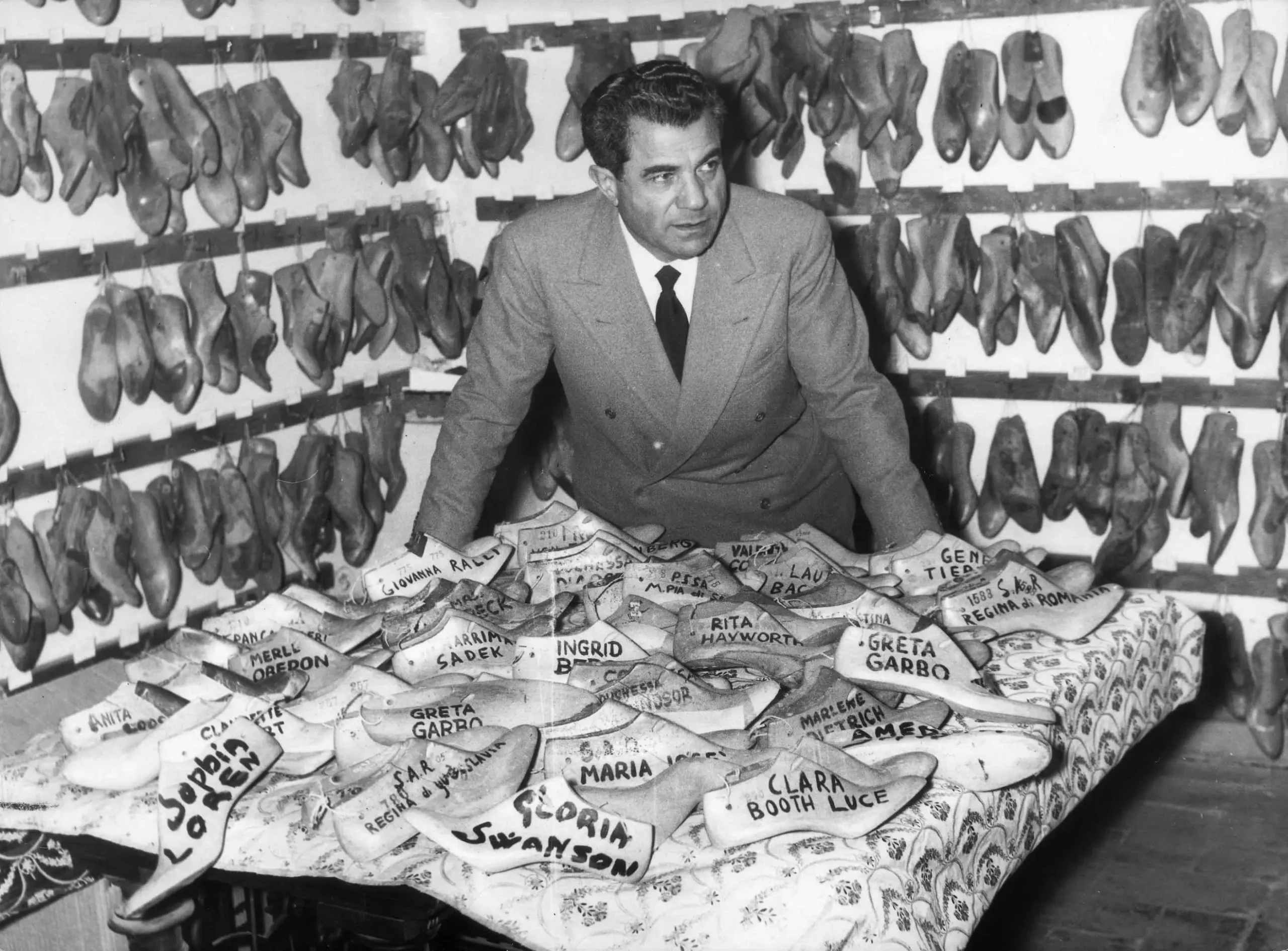
The historic Ferragamo workshop photograph captures Salvatore Ferragamo surrounded by hundreds of handcrafted wooden shoe lasts, including those created for celebrated clients, offering a rare glimpse into the meticulous craftsmanship and bespoke shoemaking that established the house’s enduring legacy.
stride
Footwear carries the campaign, but it is not the only thing being sold. The new Cara bag, shown in a soft calf leather and closed with Ferragamo’s interlocking Ganci hardware, gives the campaign a second product story running alongside the shoe imagery, and formal menswear pieces appear woven into the same surreal set pieces rather than photographed in a separate, more conventional lookbook style. It is a small detail, but a telling one: rather than isolating its accessories in a clean studio shot, the house folded them directly into the same chaotic, shoe strewn world built around Cole’s sculpture, treating a handbag clasp with roughly the same visual weight as a throne made of pumps.
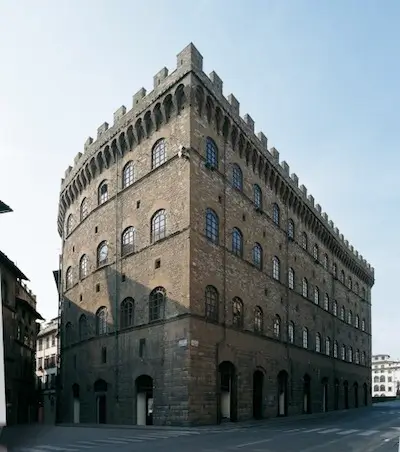
The Palazzo Spini Feroni has served as the home of Ferragamo since 1938, its monumental medieval architecture housing the brand’s headquarters and museum while standing as one of Florence’s most recognizable historic landmarks.
The house has framed the campaign as a look back at its own archive filtered through a contemporary lens, and on the evidence of the images that is a reasonably accurate description. What began, generations ago, as a straightforward photograph of a famous woman surrounded by shoes has been rebuilt, piece by piece, into something closer to a set for a play about that same photograph. Cole’s sculpture sits at the center of it, doing what his work has done for three decades: taking an object nobody thinks twice about and making it impossible to look away from.
Related Articles
Ten Bags Sitting In The Same Week As The Shows
Pearl egg. Fringe mini. Kelly Doll. Holdall. Pigeon. Speedy. Alex tote. Aluminum case. Cassandre pouch. […]