DRIFT AUDIO
Listen to this story
Choose a voice, then press play.
At the Nine Orchard hotel in Dimes Square, the 22 year old rapper and producer talks Discord basements, some based know, and why he might need a Volvo.
Xavier Lopez has a bowl of hard candy in front of him and a World Cup match playing somewhere behind his shoulder, and he is paying serious attention to neither. We are sitting in a corner of the Nine Orchard hotel, the restored Jarmulowsky Bank building on the eastern edge of Canal Street where the Lower East Side folds into Chinatown, in the stretch of blocks that got tagged Dimes Square a few years back and never quite shook the name. He is dressed like someone who got ready in under four minutes and nailed it anyway: Dior jeans, checkered Vans, a white Element Skateboards sweatshirt with a detachable hood that he eventually unclips and drapes loose over one shoulder, like a scarf that used to have a job.
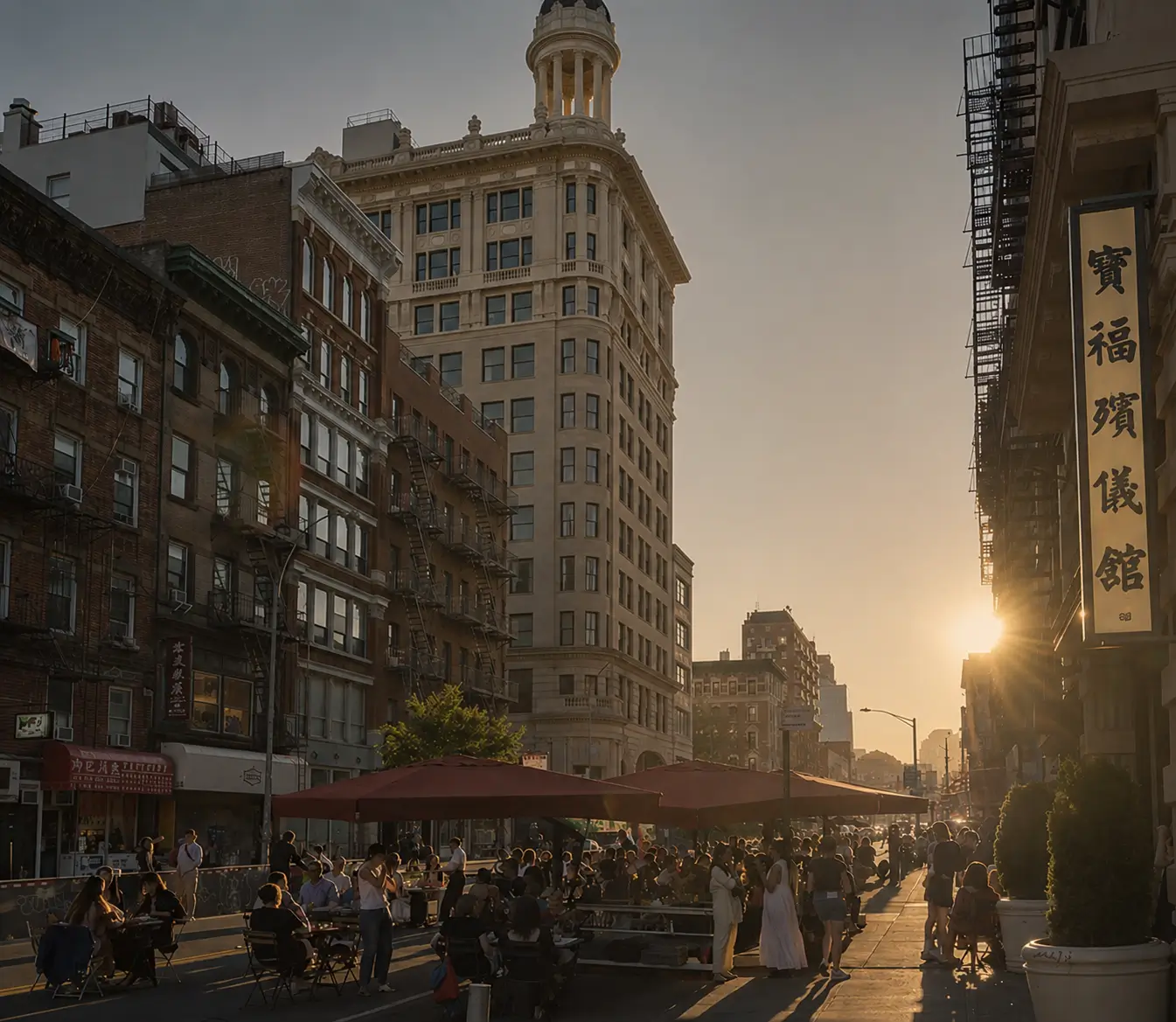
The golden-hour streetscape captures Manhattan’s Chinatown in warm evening light, where historic architecture, bustling outdoor dining, and dramatic sunlit shadows create a cinematic portrait of one of New York City’s most vib neighborhoods.
He is 22, unhurried, and mildly delighted by the whole setup of doing an interview, which he treats less like a pro oblige and more like a conversation he happened to wander into. Under the name xaviersobased, he has become one of the more argued about young musicians in New York, a rapper and producer whose sound moves through eras and genres the way a kid moves through a skate park, hitting whatever ledge is closest without much regard for either it connects to the last one. Ask him to explain any of it and he tends to shrug, laugh, and land on some version of trust it even if beyond dare.
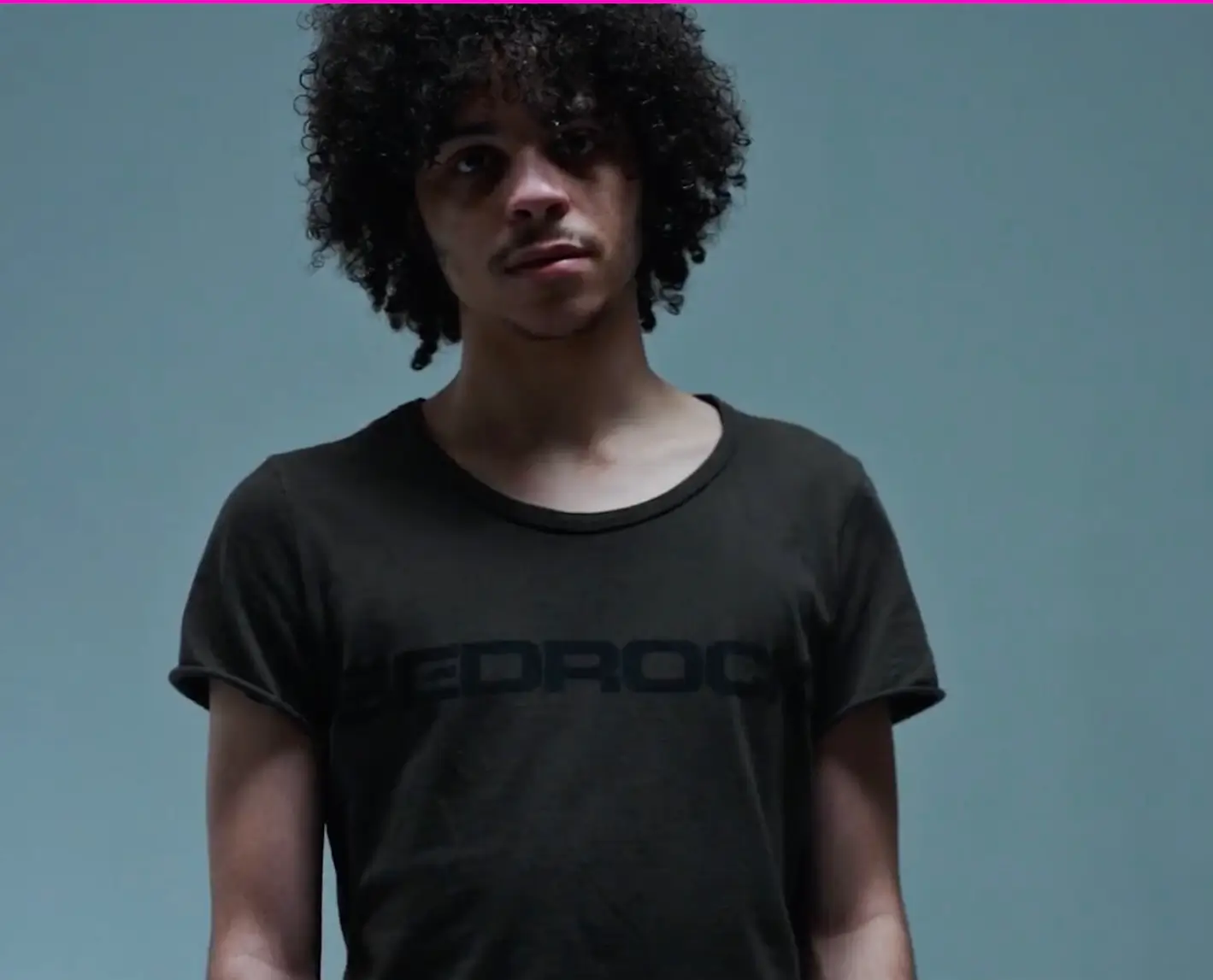
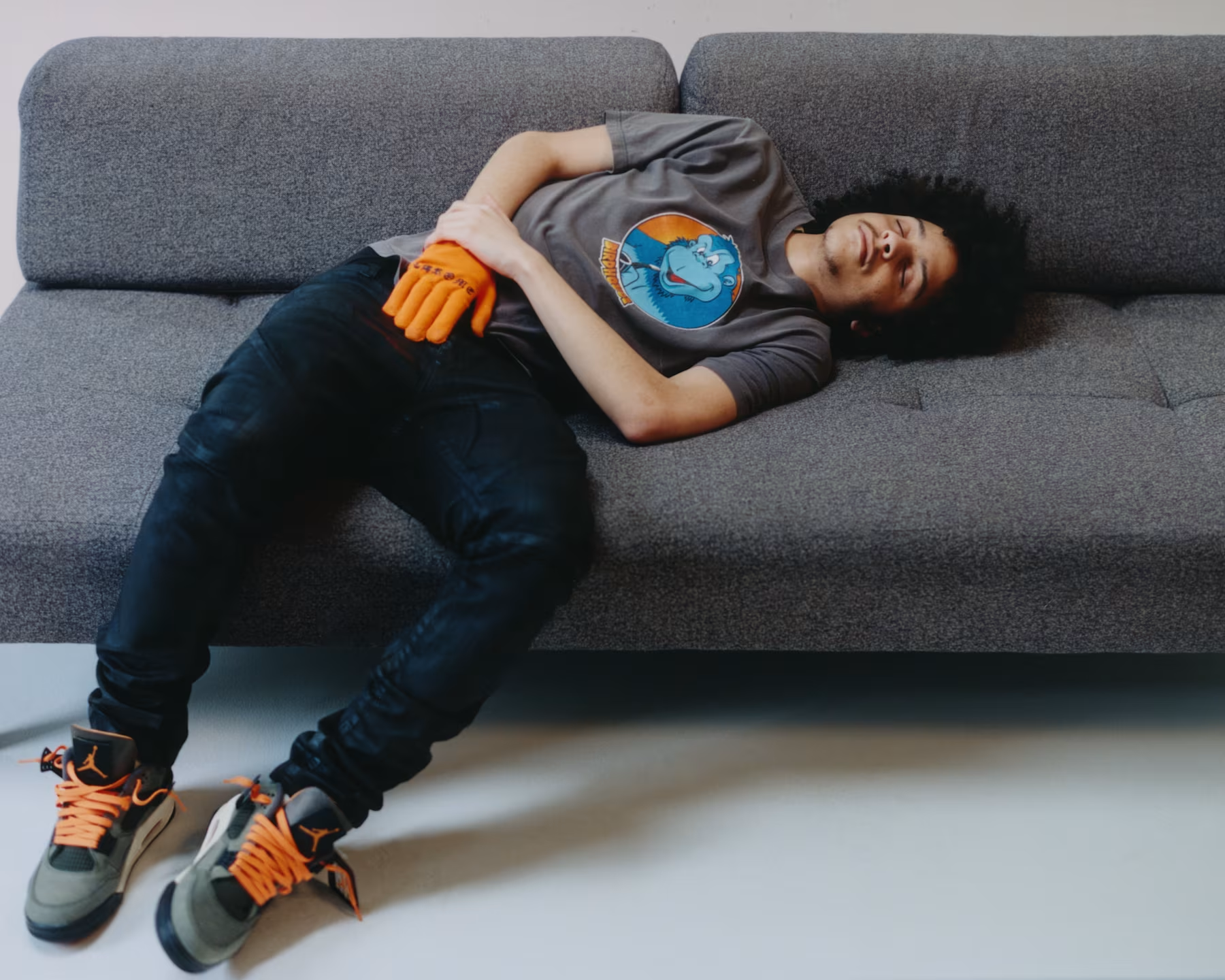
The minimalist portrait pairs soft studio lighting with a faded graphic T-shirt and natural curls, creating an understated editorial image that emphasizes quiet expression and contemporary style.
Nine Orchard is an odd but fitting place to catch him. The hotel opened in 2022 inside the old Jarmulowsky Bank, a building that spent most of a century as a strange, ornate outlier in a neighborhood of tenements and Chinese grocers, and it has since become something like the unofficial living room for whatever downtown culture is calling itself right now. It is a five minute walk from Scarr’s Pizza and the restaurants clustered around Canal Street, and close enough to the old Metrograph theater that half the people buzzing through the lobby who probably came from a screening. None of that seems to register with Lopez, who treats the marble and the vaulted ceilings the same way he treats everything else, as scenery for whatever he is actually paying attention to, which today is mostly just about anything happening somewhere on a screen he is not quite facing.
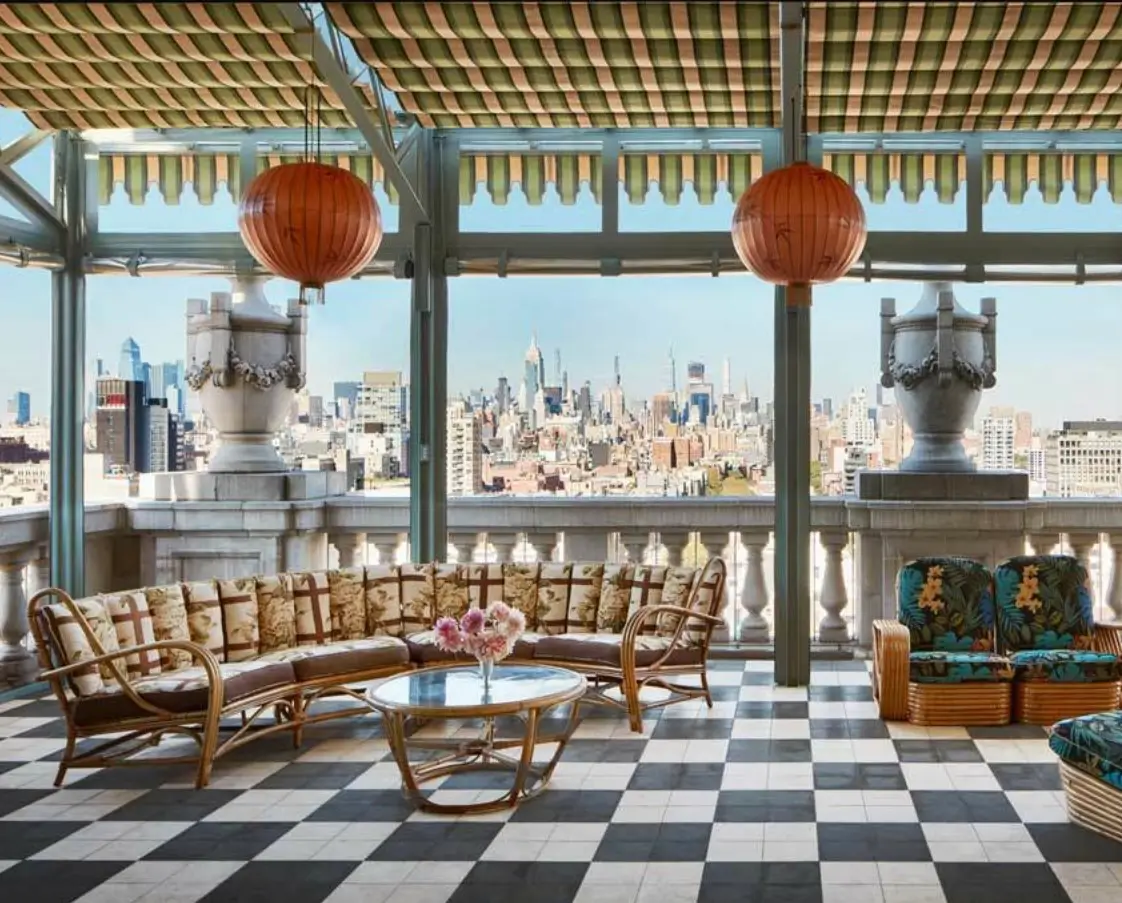
The rooftop terrace blends vintage-inspired rattan furnishings, striped awnings, and oversized lanterns with sweeping Manhattan skyline views, creating a timeless indoor-outdoor lounge that balances classic hospitality design with New York City elegance.
flow
The music resists tidy comparison, though that has not stopped people from trying. Some hear a strain of Max B filtered through Yung Lean’s blue tinted sadness. Others point to Lil B, whose based know is not just an influence but sits inside Xavier’s own stage name. None of it is quite right, and all of it is a little bit sketchy, which might be the point.
His debut studio album, titled simply Xavier, arrived on January 30 through 1 chance, Surf Gang, and Atlantic Records, twenty tracks deep with the lead single “iPhone 16” and a streaming exclusive closer called “Party At My Place,” co produced with Skrillex and Dylan Brady of 100 gecs. The video for that one starts as a warehouse party and slides, without warning, into a black lit sequence fans have taken to calling Bellymode. “Worth It” leans into street level New York visuals and a verse about staying outside while everyone else is stuck scrolling. “Uncomfy,” a connection with OsamaSon, drapes his cadence over a bed of shoegaze guitar. Then there is “Negative Canthal Tilt,” a title that is pure internet joke and somehow still a real song.
What ties it together is range rather than consistency. He can do a breathy, almost Ma$e like show, then flip into a Lil B stream of consciousness cadence, then detonate into rage production with no seam showing between any of it. Critics have started slotting him into a lineage of New York’s more left field experimentalists, the ones who never much cared about commercial polish: Rammellzee, Kool Keith, the Company Flow and Cannibal Ox axis.
The look matches the sound. Designer denim over a skate brand hoodie, a Discord raised internet brain wired directly into very physical New York City energy. If there is a name for the scope, it might be swag dadaism: high and low mixed together until the seam disappears, coherence treated as optional.
What makes the compare to those older New York experimentalists hold up is not really the sound of the music, which owes plenty to internet forums and hyperpop as it does to any rap tradition. It is the posture. Rammellzee built an entire cosmology around graffiti letters and never once explained it in terms anyone outside his orbit could fully parse. Kool Keith invented a rotating cast of alter egos rather than settle on one version of himself worth marketing. Company Flow and Cannibal Ox made records that sounded actively hostile to the idea of radio play. Lopez is friendlier than any of that, genuinely so, but he shares the same basic refusal to smooth himself out for an audience that has not already met him halfway. The based in his name, borrowed from Lil B’s old know of unbothered self acceptance, is doing real work. It is less a brand than an operating instruction.
lean
Lopez was born and raised on the Upper West Side. His mother worked as a house DJ, and by the time he was a kid he was already on a skateboard, absorbing Supreme’s Cherry video the way other kids absorb cartoons. His older brother, who records as Nurse and produces hardstyle and gabber under the BODxBAG banner, pulled him further into DIY and experimental circles, the kind of scenes that exist mostly through word of mouth and shared links rather than posters and venues.
Then COVID hit, he was sixteen, and the world outside his apartment closed. What followed was less a hobby than a total relocation. Discord servers became his neighborhood: digicore communities, Novagang, Surf Gang, Slayworld, the outer orbit of Drain Gang. He locked in during a period when most of his peers were just trying to get through remote school, and came out the other side with the foundation of everything he makes now.
It is worth sitting with how strange that path actually is compared to the tradition New York rap origin story, the block, the corner, the local mixtape circuit. Lopez’s entire early education happened inside voice channels and shared folders, trade of half finished beats with people he had never met in person and in some cases still has not. That online first upbringing shows up constantly in the music, in the willingness to let a song swerve genre entirely halfway through, in the inside jokes buried in song titles that only make sense if you were already in the group chat. By the time he started jure out actual rooms, he had already spent years building an audience that existed almost entirely on the other side of a screen.
View this post on Instagram
show
The person most responsible for turning that foundation into an actual career is a DJ and manager named Rennessy, 33, who came up in an earlier era of New York’s underground, one shaped by the lean dealing circles A$AP Yams once moved through. Ren met Lopez at an unsanctioned rave deep in Inwood forest, thrown, fittingly, on Ren’s own birthday. By his own account he did not immediately get the sound. He got it soon enough.
From there Ren became the connective tissue: booking shows, managing logistics, and, in one of those very 2020s career accelerants, posting Instagram flexes of label executives showing up at the studio, which did as much to spark industry interest as any single song did. Together they helped build out a live scene anchored by Trans Pecos, the Ridgewood, Queens venue where crowds scaled from a few dozen kids in a room to something closer to an actual community, a farm team for whatever New York’s next rap generation turns out to be.
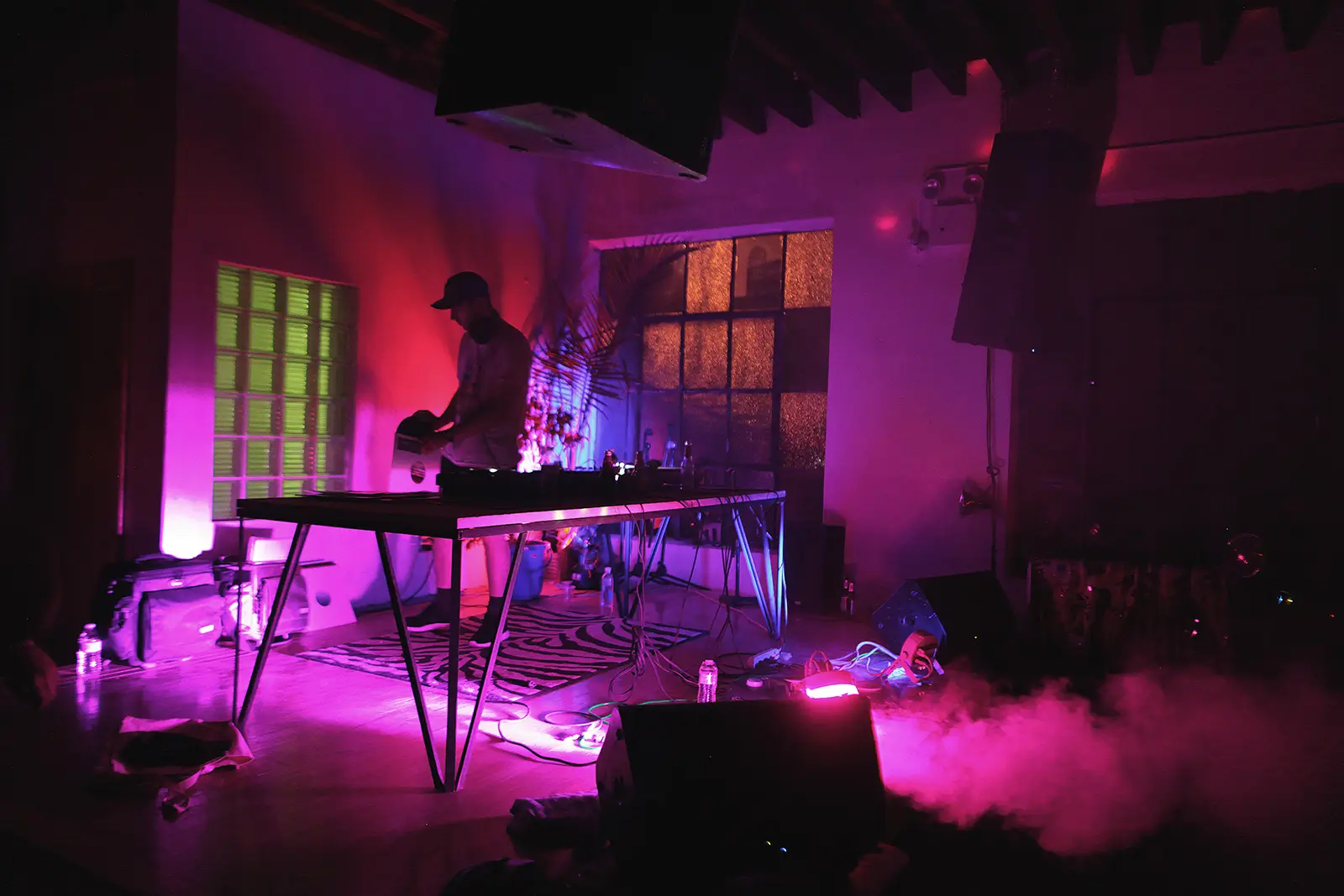
The late-night DJ session transforms an industrial interior into an immersive club environment, where saturated magenta lighting, low-lying fog, and min stage creation as electronic muse experience.
vib
The major label debut has done real numbers since it dropped, and Lopez is now headlining his own shows, topping festival bills, and opening for Ken Carson, a lineup jump that would have seemed unlikely a couple of years back when he was still mostly a name inside Discord servers. He gets grouped, not unreasonably, with Nettspend and OsamaSon as part of a new wave of New York rap that grew up entirely online before it ever grew up on a stage. Right now he is running neck and neck with Cash Cobain for the title of hottest young rapper the city has produced lately, and the two of them share an emphasis that separates them from the more nihilistic corners of the genre: this music, whatever else it is, is supposed to be fun.
n
From the DRIFT archive: Inside the World’s Most Iconic Ski Experiences
Related Articles
Ten Bags Sitting In The Same Week As The Shows
Pearl egg. Fringe mini. Kelly Doll. Holdall. Pigeon. Speedy. Alex tote. Aluminum case. Cassandre pouch. […]