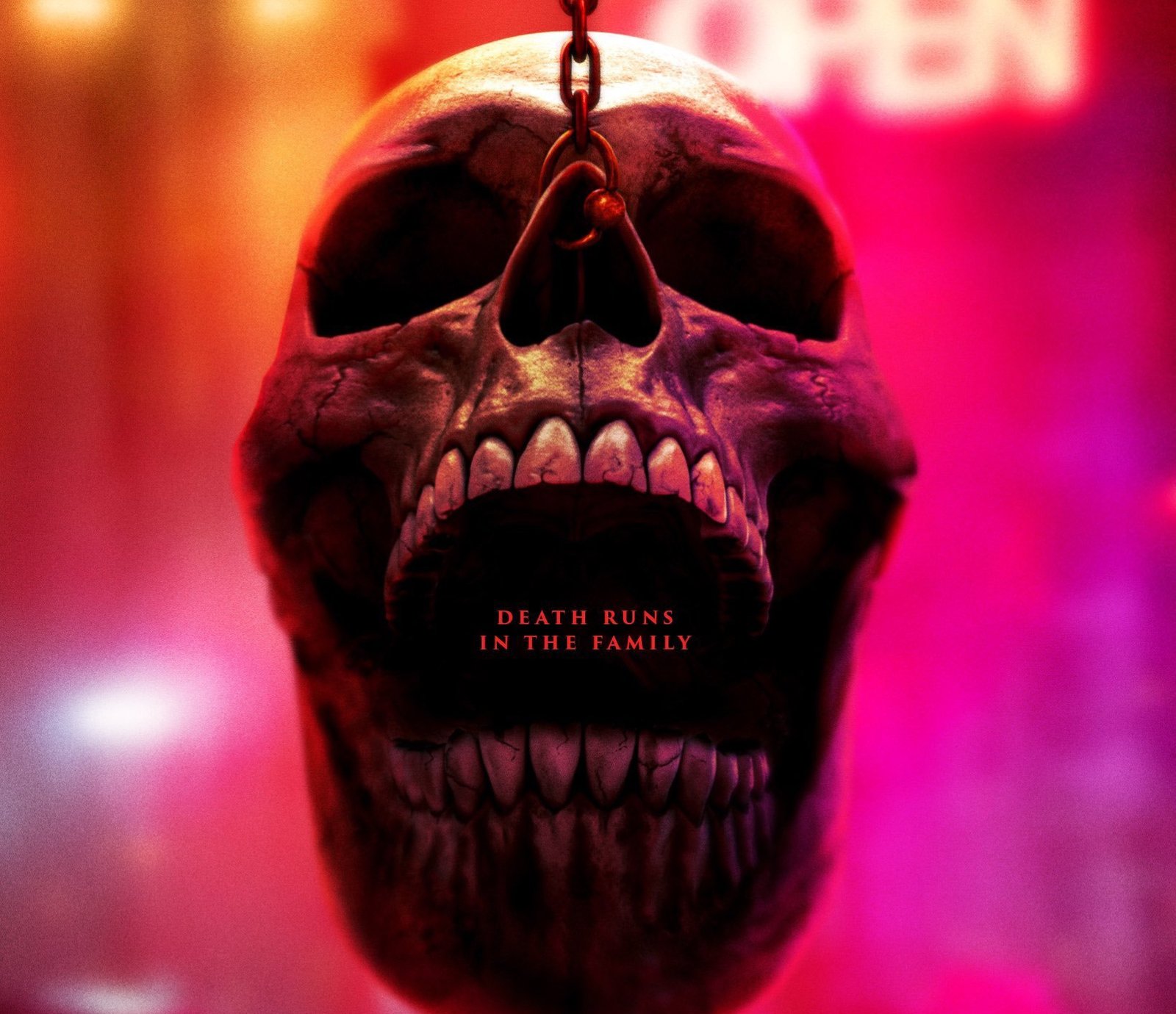
Final Destination: Bloodlines (2025)

May 6, 2025
Death’s Legacy, Generational Trauma, and the Horror of Inevitability
In 2000, Final Destination landed with a scream and a question that has haunted audiences for decades: What if you cheated death—and it came back for you? Now, a quarter century later, Final Destination: Bloodlines resurrects the core fear of the franchise with a fresh angle, building on a mythos steeped in dread, inevitability, and the invisible design of mortality. Rather than a simple reboot or nostalgia play, Bloodlines offers a new narrative rooted in familial connection, generational trauma, and the slow realization that you may have inherited more than just your grandmother’s eyes.
Directed by Zach Lipovsky and Adam B. Stein, with a script penned by Scream scribe Guy Busick and The Conjuring universe writer Lori Evans Taylor, Bloodlines retools the formula while keeping the heartbeat of the series intact. This sixth installment doesn’t just retread the past—it seeks to add depth to the franchise, expanding the question from “What if death has a plan?” to “What if that plan runs through your blood?”
The Premise: A Legacy of Survival—and Doom
At the center of Bloodlines is Stefani Reyes, a college student plagued by cryptic nightmares of a tragic tower collapse in the 1960s. What begins as an anxiety-fueled mystery soon evolves into a horrifying family revelation: her grandmother, Iris, survived a catastrophic accident decades ago, and now the descendants of those who “cheated death” are being stalked by its wrath.
This premise reframes the core conceit of the franchise—survivors of freak accidents hunted by a malevolent, unseen force—not as isolated freak events but as part of a multi-generational reckoning. This is a significant departure from the previous films, which typically followed groups of teenagers or young adults bound by fate but not by blood. In Bloodlines, death isn’t just stalking individuals—it’s unraveling a bloodline.
This shift breathes new life into a formula that risked becoming stale. Where earlier entries relied on escalating set pieces and shock value, Bloodlines infuses its horror with meaning, rooting it in the unsettling realization that trauma, fate, and fear can be inherited just as much as genetics.
Narrative and Structure: Reinventing the Cycle
The structure of Final Destination films has always followed a recognizable rhythm: a character foresees a catastrophic event, saves a group from death, and then the survivors are picked off one-by-one in elaborate, often Rube Goldberg-like sequences. Bloodlines keeps this structure but overlays it with a mystery-thriller format that gives the story more narrative propulsion.
Stefani’s visions are not simply psychic dreams—they are ancestral echoes, fragments of a past disaster seeping through time. As she unravels the truth about her grandmother’s past, the film explores themes like memory, repression, and guilt, subtly weaving in elements of psychological horror. Her journey is both external (evading death) and internal (confronting a hidden family history). In this way, the film uses death not just as an external antagonist, but as a metaphor for unresolved generational trauma.
The screenplay doesn’t shy away from exposition, but it rarely feels heavy-handed. Through cleverly layered flashbacks, journals, and conversations, the audience is pulled into a timeline that spans decades. This multigenerational approach echoes recent horror films like Hereditary and The Babadook, though Bloodlines remains committed to its roots in high-concept carnage and pulpy thrills.
Characters and Performances: Fresh Faces, Final Farewells
Leading the cast is Kaitlyn Santa Juana as Stefani, who brings a grounded vulnerability to the role. Her performance anchors the film with a sense of realism that helps balance its more outrageous set pieces. As she transitions from curious student to terrified target to reluctant heroine, the transformation feels earned and affecting.
Teo Briones plays her younger brother Charlie, serving as both comic relief and emotional foil, while Rya Kihlstedt brings a stern, layered performance as Darlene, Stefani’s mother, who knows more about the past than she initially reveals. The dynamic between the three feels lived-in and authentic, raising the emotional stakes of the inevitable deaths.
The film also marks the final screen appearance of Tony Todd as the enigmatic William Bludworth, a franchise staple whose cryptic warnings have guided (and unsettled) audiences since the beginning. Todd’s last scene is haunting, poignant, and appropriately ambiguous. His presence here not only ties the film to its legacy but also serves as a symbolic passing of the torch—death, after all, never really dies.
Visuals and Effects: Practical Terror Over Digital Flash
Where some horror franchises have leaned heavily into CGI, Bloodlines distinguishes itself with an emphasis on practical effects. From collapsing towers to kitchen explosions to body-impaling freak accidents, the deaths feel real—tactile, grotesque, and disturbingly plausible.
One of the most buzzed-about scenes involves 71-year-old stuntwoman Yvette Ferguson, who performs a full-body burn in a flashback sequence set in the 1960s Skyview Tower. This record-setting stunt wasn’t just for spectacle; it symbolizes the inescapability of fate—regardless of age, time, or place.
The tower set itself is an engineering marvel. With rotating floors, tilting structures, and massive rigging, the location becomes a character in its own right. Director Zach Lipovsky, who has a background in visual effects, uses the space masterfully, creating disorienting sequences that blur the line between hallucination and reality. The result is an atmosphere of constant unease: even the quiet moments feel like preludes to disaster.
Themes and Subtext: The Horror of Inheritance
While the Final Destination films have always dabbled in fatalism, Bloodlines leans hard into the idea of hereditary doom. The title isn’t just a clever subtitle—it’s a thesis. This installment asks what happens when you inherit not only genetics, but cosmic debt. Is it possible to be cursed by proximity? To die for something your ancestors escaped?
In this way, Bloodlines draws from deeper horror traditions, connecting it thematically to Gothic literature and ancestral ghost stories. Yet it stays true to the franchise’s DNA by never losing sight of its central antagonist: Death itself. Not a figure in a cloak, but an invisible force, omniscient and patient, always one step ahead.
There’s also a pointed commentary on intergenerational silence—how families pass down trauma not through conversation, but through omission. The sins of the past linger not because they are taught, but because they are buried. Stefani’s journey is not just about survival; it’s about revelation. Only by confronting the truth can she hope to break the cycle.
Reception and Cultural Moment
When the trailer for Final Destination: Bloodlines dropped, it racked up over 178 million views globally, making it one of the most-watched horror trailers of all time. Audiences were split—some thrilled, others genuinely terrified. On social media, fans confessed to shutting off the trailer midway through, overwhelmed by its intensity. This visceral reaction proves that the Final Destination formula, when done right, still hits a nerve.
The film is arriving in a cultural landscape hungry for horror that says something more than “Boo.” Viewers today expect scares with substance, and Bloodlines delivers. It doesn’t just make you fear death—it makes you fear your own family tree.
Legacy and Future: A Rebirth, Not a Reboot
By centering the film around a family, Bloodlines opens new doors for the franchise. Where previous entries felt like closed loops—each one starting fresh with a new group of doomed characters—this film plants seeds for a shared universe of interconnected destinies. It raises the tantalizing possibility that there are entire family trees walking around, unaware that death is still doing the math, still closing the ledger.
This could lead to a future where we trace multiple families back to a singular, forgotten event. Or where survivors from past films return, older, wiser, and still looking over their shoulders. The possibilities are endless—and terrifying.
But most importantly, Bloodlines doesn’t just try to set up sequels. It earns its place in the canon by respecting what came before and evolving where it matters most. It asks a new question and lets it fester: What if death is not the end, but the beginning of something older, deeper, and completely out of your control?
Final Verdict
Final Destination: Bloodlines is more than just a return to form—it’s a reimagining with purpose. It preserves the visceral thrills that made the franchise iconic while injecting it with emotional weight and psychological depth. It’s scary, smart, and sinister in equal measure.
In confronting the fear of death through the lens of lineage and memory, the film taps into something primal: the idea that we are born into stories we don’t fully understand, and sometimes those stories end in blood.
As the credits roll and the screen fades to black, one thing becomes clear: you can’t cheat death—but you can challenge its script. And in doing so, Final Destination: Bloodlines writes a new chapter worth reading.
Related Articles

France Just Banned Social Media for Kids Under 15, and the Fight Over Anonymity Is Only Getting Started
France becomes the first EU nation to bar under 15s from social platforms, and critics […]