DRIFT AUDIO
Listen to this story
Choose a voice, then press play.
A library inside a former psychiatric hospital will soon hold Italy’s first center built specifically to treat digital addiction to the young.
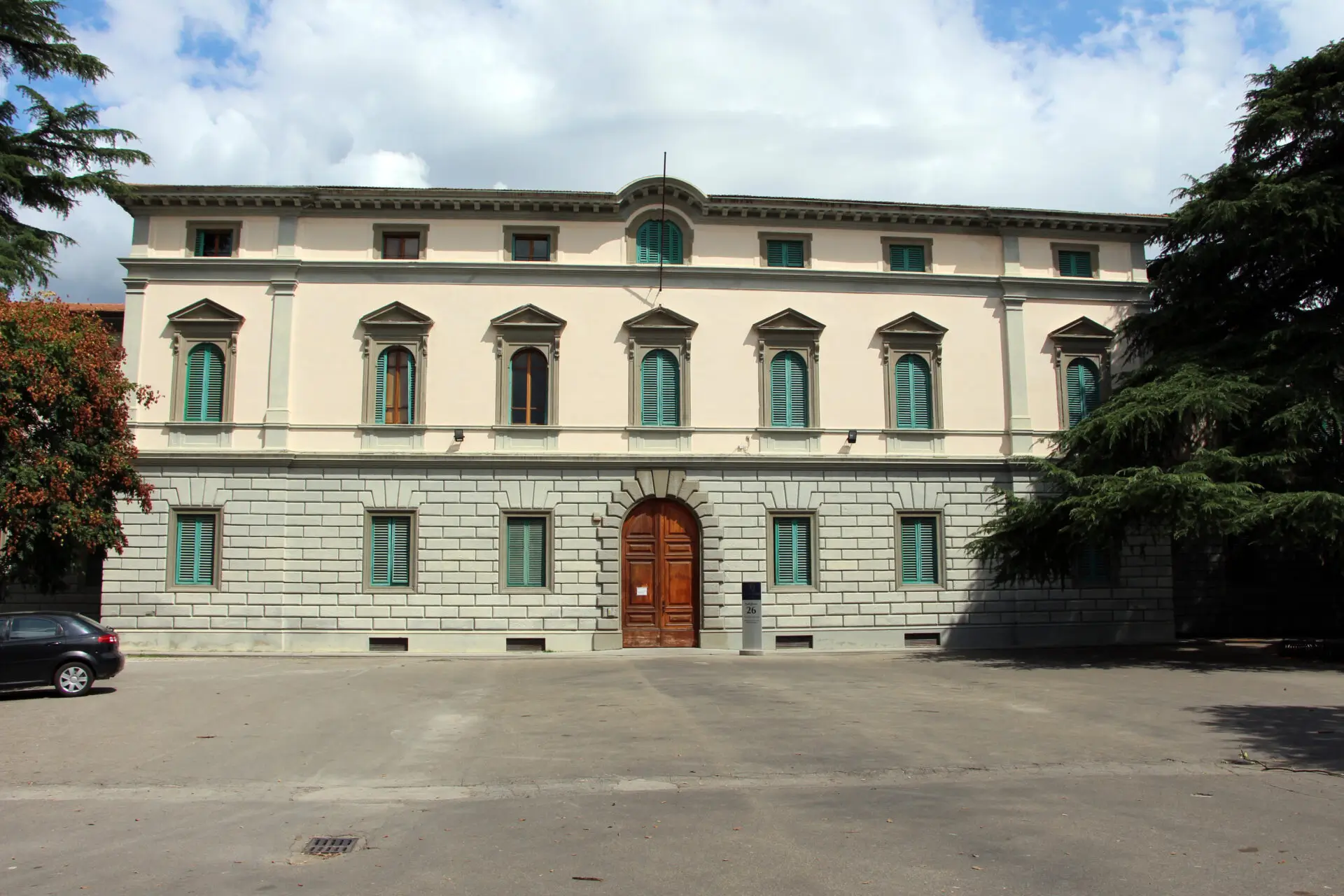
The Biblioteca Chiarugi sits inside the grounds of San Salvi, on the eastern edge of Florence, in what used to be one of Italy’s largest psychiatric hospitals before it closed under the reforms of the late 1970s. That history is not incidental to what is about to happen there. Sometime after the summer of 2026, the library will open its doors to a new kind of patient: teenagers and young adults whose relationship with their phones, their feeds, and their group chats has become something closer to compulsion than habit. The project is called Discover, Fuori dal guscio (“Discover, Out of the Shell”), and it is being described by its founders as the first stable, dedicated center of its kind anywhere in Italy.
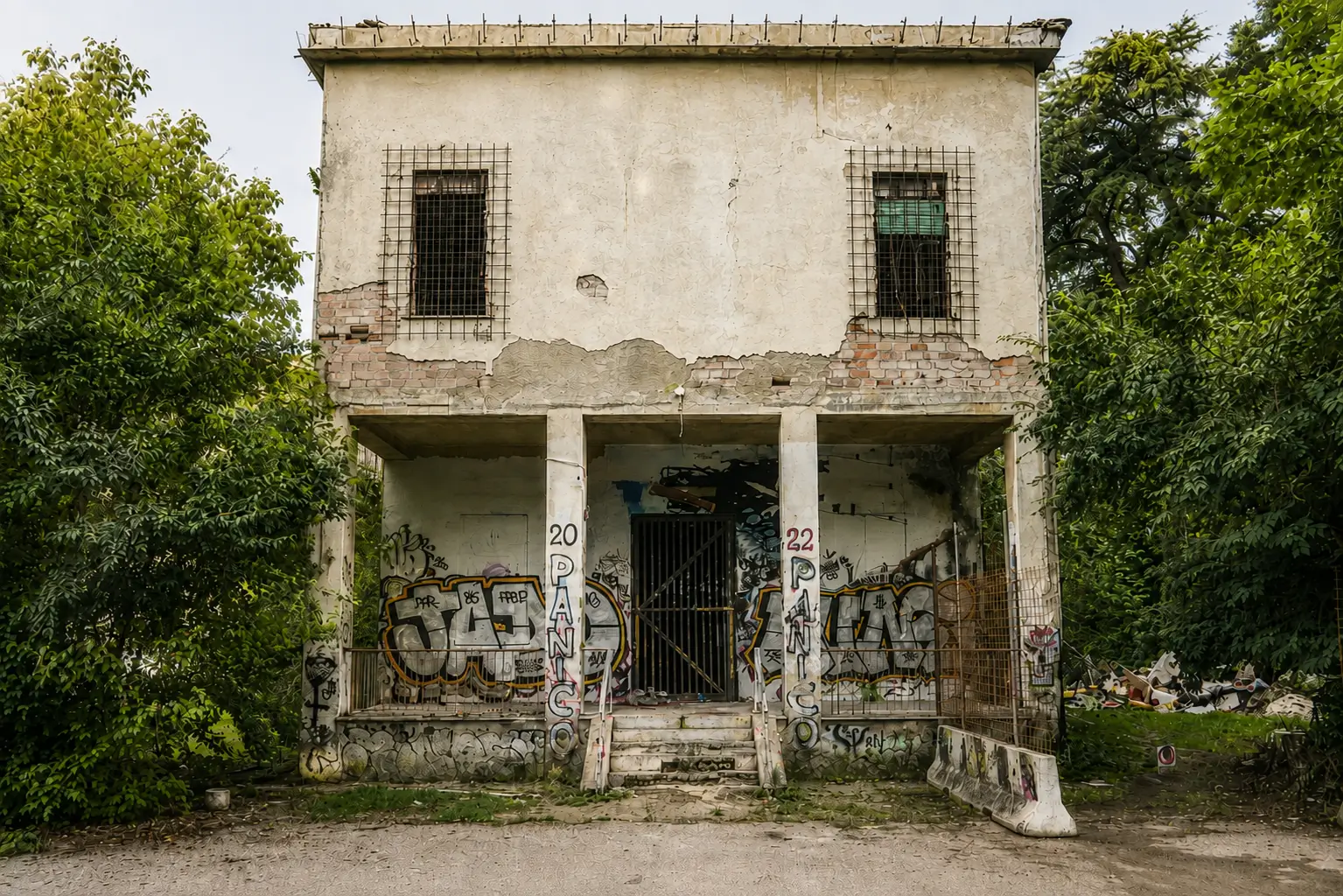
An abandoned two-story build, The San Salvi complex in Florence, formerly one of Italy’s largest psychiatric hospitals, will house the new center inside its library building.
The choice of site was practical as much as symbolic. San Salvi already belongs to the regional health system, which meant the space could be handed over without a lengthy real estate negotiation, and the neighborhood has spent decades being slowly reclaimed for civic use, from sports fields to cultural associations. But nobody involved in the announcement pretended the symbolism was accidental either. A building once associated with institutional confinement is being reopened as a place designed explicitly around freedom of movement, informal contact, and disconnection by choice rather than by force.
stir
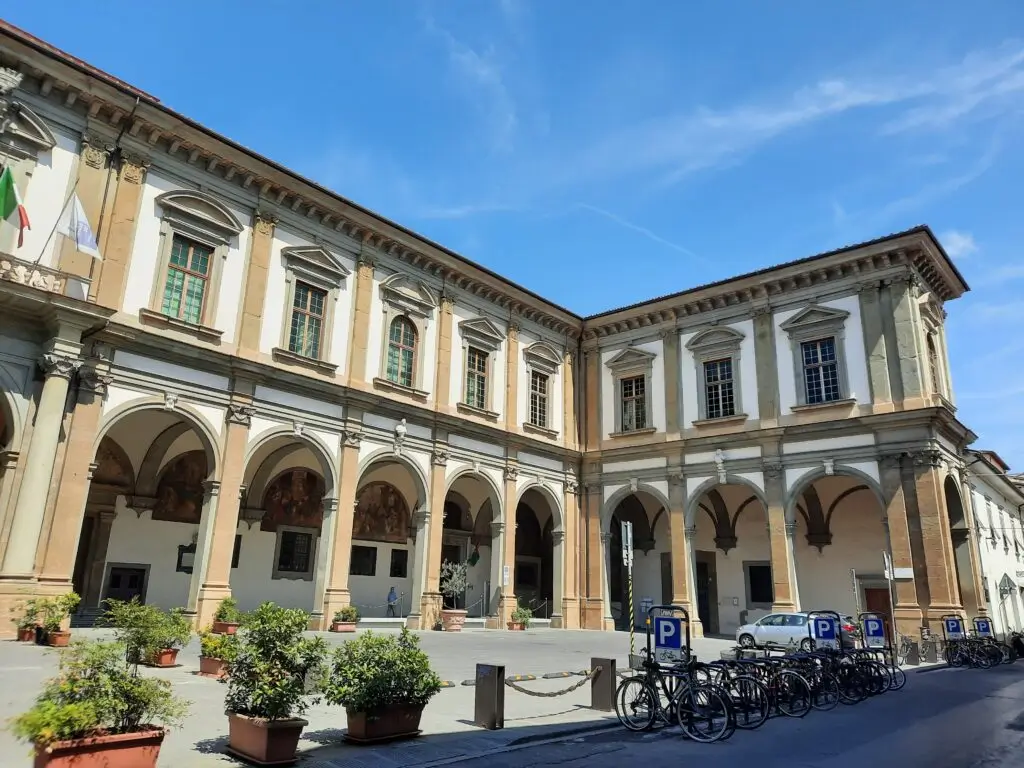
The collaboration agreement behind Discover was signed on July 22, 2026, at the Santa Maria Nuova hospital complex in central Florence, between three parties: Azienda USL Toscana Centro, the regional health authority; the Comune di Firenze, the city government; and ReteSviluppo, a social cooperative that has spent close to two decades working on digital literacy projects inside Tuscan schools. Each party has a defined and fairly narrow job. The health authority is providing the physical space at San Salvi and connecting the center to the broader clinical network, so that any case requiring an actual diagnosis or treatment plan has somewhere to go beyond the library’s walls. The city government is acting as a connector, pushing the project outward into youth centers, schools, sports clubs, and civic spaces across Florence rather than keeping it contained to one address. ReteSviluppo, working with support from Kinoa Innovation Studio, a technology offshoot it co-founded in 2016, will actually run the place day to day, staffing it with employees, convincers, and trained volunteers.
It matters that this is described as a pilot. The first operating cycle is scheduled to run only through December 2026, a deliberately short runway that lets the three institutions test the model, gather data, and decide either to fund a longer commitment. Nobody involved has framed this as a permanent fixture yet, which is a fairly unusual amount of institutional caution for a launch that has already attracted national press coverage and the public approval of Tuscany’s regional president, Eugenio Giani.
huh
Discover’s target population spans from age 10 to age 25, a fifteen year window that covers early adolescence through the tail end of what researchers now often call emerging adulthood. That breadth is a statement in itself, and it echoes a wider argument playing out across Italy right now, one that has already reached individual schools debating whether to restrict phones on campus and parents weighing whether stricter household rules do more good than harm. Most existing addiction services in Italy, digital or otherwise, are structured around either minors or adults, with the two systems rarely talking to each other. By collapsing that boundary, the center is effectively arguing that the compulsive relationship many people develop with screens does not respect the administrative line between childhood and adulthood, and that a nineteen year old university student scrolling through the night has more in common with a twelve year old doing the same thing than either group has with an unrelated peer their own age who has a healthier relationship with a phone.
The age group was also, according to several outlets covering the launch, chosen because it maps closely onto the population that saw the sharpest deterioration in digital habits during and after the Covid pandemic, when remote schooling and enforced isolation pushed an entire generation’s social life onto screens at the exact moment their brains were still developing the capacity for impulse control and face to face social calibration.
flow
Discover is built around board games, hands on craft projects, outdoor sport, group activities, and a dedicated no tech room where smartphones are simply not allowed inside. Several outlets have described workshops in podcasting, game design, digital storytell, and what is being called a creative AI challenge, framed explicitly as ways to turn young people from passive consumers of digital content into people understand and can produce it themselves. The idea, according to the founders, is not to demonize screens outright but to widen the range of things a young person knows how to do without one.
Ecco quanto la Fondazione Santa Maria Nuova ETS
What sets this apart from the loose category of general purpose youth centers is the presence of a listening desk, a walk in service where a young person or a parent can talk to someone before anything gets formalized into a clinical file. Councillor for Youth Policies Letizia Perini, one of the officials who presented the project, has described the underlying goal as helping young people find their own balance between time online and time spent on relationships, sport, culture, and shared experience, rather than imposing a fixed rule on how much screen time is acceptable.
know
The workshops sit under a broader discipline the founders keep returning to: media education, an established field concerned with teaching people, especially young people, how to read digital content critically rather than absorb it passively. It is a deliberately different register from the language of addiction treatment, and the center’s own materials lean into that distinction. Discover is not being presented as a rehab clinic. It is being presented as an educational space that happens to sit inside a health authority’s building, staffed by a cooperative whose core expertise is teaching digital literacy in classrooms rather than running clinical intake.
That framing lines up with how ReteSviluppo describes its own history. Founded in Prato in 2008 by a group of University of Florence graduates with backgrounds in data science and social research, the cooperative has spent much of the past decade building programs that teach teenagers how platforms like Instagram and TikTok actually shape behavior, running what it calls Social Challenge campaigns inside Florentine high schools well before Discover existed as an idea. Becoming a fully recognized social enterprise in 2023, on its fifteenth anniversary, ReteSviluppo has positioned itself less as a critic of technology and more as a group trying to help young people use it with more intention.
Kinoa, the technology arm ReteSviluppo co-founded in 2016, factors into that history too. Much of the cooperative’s earlier classroom work involved running what it called Social Challenge campaigns, structured exercises in which students learned to spot the mechanics behind viral content by producing and analyzing it themselves, rather than being lectured about screen time limits from the front of a classroom. That same instinct, teaching through participation instead of prohibition, appears to be the connective thread running from those earlier school programs straight through to Discover’s own workshop schedule.
Where Discover departs from that earlier work is scale and permanence. A school partnership lasts a semester and ends when the program does. A physical address inside a health authority’s own building, staffed year round with a listening desk, is a different kind of commitment, and one that puts ReteSviluppo’s methodology to a longer test than any single classroom project has before.
there
Not every case that walks through Discover’s doors will stay at the level of a board game night or a storytelling workshop, and the project’s designers have built in an explicit branch point for that. Where the listening desk identifies signs of social withdrawal or genuine psychological distress, rather than simply heavy device use, the case is routed to the specialists available through Azienda USL Toscana Centro’s existing clinical network. Discover itself is not equipped, and is not trying to be equipped, to diagnose or treat conditions like clinical depression or an anxiety disorder that happens to present through compulsive phone use. Its stated ambition is narrower and, in some ways, harder to pin down: guided disconnection paired with education in conscious technology use, aimed at shifting a young person from being a passive consumer of digital content to being someone who understands and directs their own time.
That distinction between an educational intervention and a medical one runs through nearly every public statement about the project. Nobody involved has used the word “ban.” The stated approach is closer to teaching someone to recognize when a habit has stopped serving them, and giving them somewhere physical to go and something else to do about it, rather than confiscating a device and calling the problem solved.
from
The project’s name conjure on a small piece of wordplay that only really lands in Italian. “Discover” doubles as “dis cover,” or removing a cover, in this case the protective screen a smartphone puts between a person and their surroundings. Combined with “Fuori dal guscio,” literally “out of the shell,” the full title is built around the same image twice: something enclosed, something worth stepping out of. It is a softer metaphor than most public health campaigns reach for, and notably free of the moralizing tone that tends to accompany conversations about teenagers and their phones, choosing instead to frame the center as a place you walk toward rather than a problem you are being extracted from.
straddle
What makes Discover worth watching past its opening week is less the programming itself, which resembles youth center activities that already exist in some form across Italy, and more the institutional structure holding it up. A regional health authority, a city government, and a specialized social cooperative rarely share day to day operational responsibility for a single site this cleanly, and the fact that all three signed onto a defined pilot with a hard end date in December suggests a genuine intent to evaluate rather than simply launch and move on.
n
From the DRIFT archive: Nike & Chipotle: How a Young Cancer Patient’s Burrito Ritual Became a Once-in-a-Lifetime Sneaker
Related Articles

Ten Bags Sitting In The Same Week As The Shows
Pearl egg. Fringe mini. Kelly Doll. Holdall. Pigeon. Speedy. Alex tote. Aluminum case. Cassandre pouch. […]