DRIFT AUDIO
Listen to this story
Choose a voice, then press play.
WME has sold the name, the logos and the digital footprint of New York Fashion Week to Signet Fashion. The CFDA says nothing about who runs the actual shows is changing.
On August 3, a talent agency best known for representing movie stars and Grammy winners quietly walked away from one of the fashion industry’s most recognizable properties. WME Group, the Beverly Hills based agency that manages actors, musicians, athletes and creative talent across entertainment, sold the intellectual property behind New York Fashion Week to a company most people outside the fashion press had never heard of a week ago: Signet Fashion.
The transaction covers the trademarks, logos and digital assets tied to “New York Fashion Week,” the “NYFW” acronym and “NYFW: The Shows,” along with the event’s official website and its social media accounts. It closes out roughly two years of WME shh shopping the property, according to sourcing in WWD’s report on the sale. Neither company has disclosed the price, and WME told the trade press it had no comment beyond confirming the deal happened.

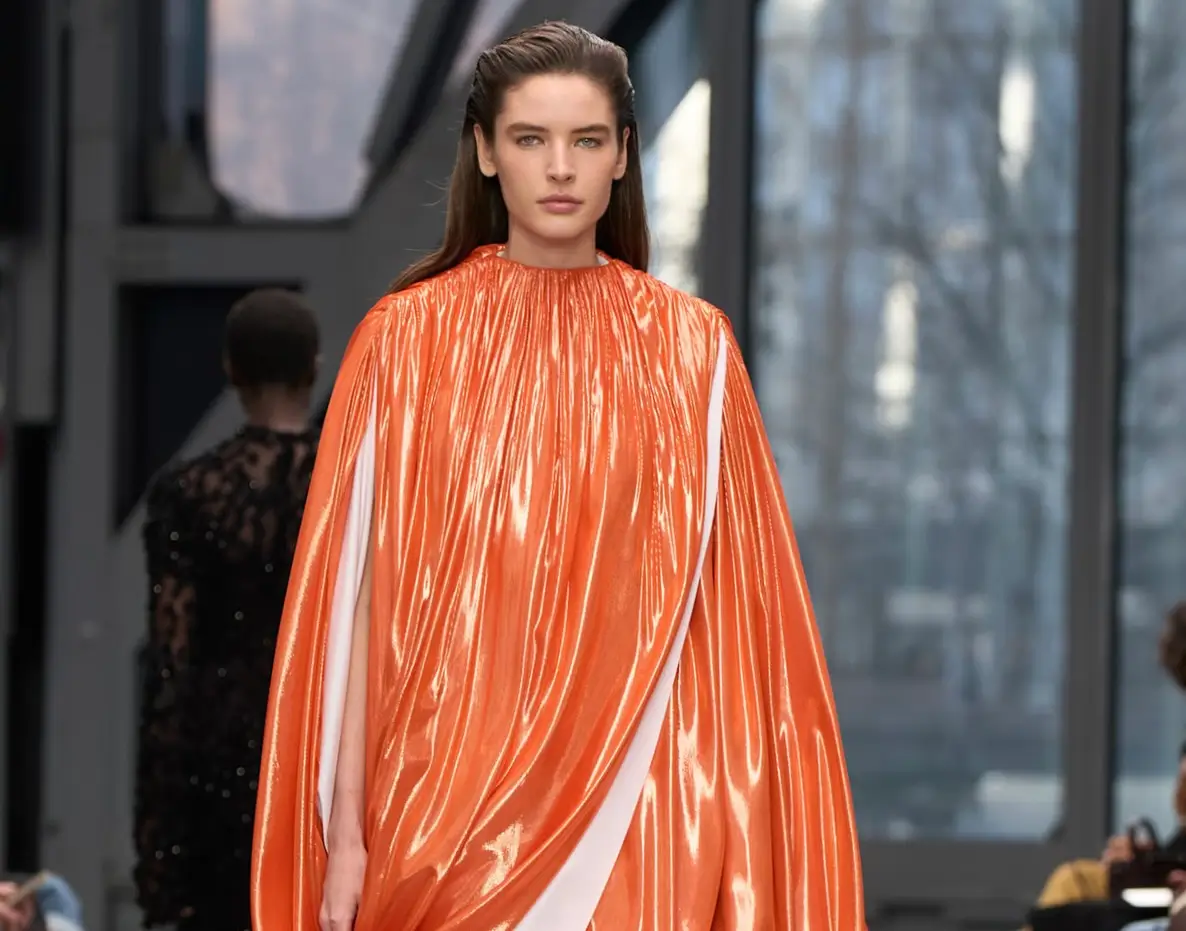
Bold red tailoring commands the runway under dramatic lights, highlighting the precision and elegance of contemporary fashion.
stir
It helps to be precise about what actually traded hands, because it is easy to read a headline like this one and assume the shows themselves got sold off. They did not. What Signet acquired is the brand: the name, the wordmark, the social handles, the domain, the licensing rights tied to the phrase “New York Fashion Week” itself. What it did not acquire is any authority over who shows, when they show, or where the official calendar points people’s attention twice a year.
That distinction matters because it is the exact thing the deal’s architects went out of their way to clarify. Signet described its plans in broad strokes rather than specifics, telling WWD it intends to build on “New York Fashion Week’s global legacy through expanded live programming, digital content, media production, brand partnerships and year round audience engagement,” with more detail promised for later. Reporting from several rely sources frame the sale as separating the event’s commercial identity from the event’s actual operation, a split that has been years in the making even if this is the moment it became official on paper.
who
Signet Fashion describes itself as a media and entertainment company built around developing, acquiring and monetizing intellectual property across film, television, live experiences, gaming and digital media. That is a broad mandate, and at the time of this piece there is no public roster of executives, no funding history, and no prior fashion industry track record attached to the company that has surfaced in trade coverage. What is confirmed is the scope of its ambition for NYFW specifically: live programming beyond the twice yearly show weeks, original digital content, and partnerships that extend the brand’s reach past the runway calendar it doesn’t control.
Fordham University’s Fashion Law Institute founder Susan Scafidi told WWD that anyone using “New York Fashion Week” brand going forward will need to be careful about trademark boundary now that ownership has shift, a detail that hints at how contested this specific piece of intellectual property has been over the years. More on that in a moment.
One detail buried in WWD’s reporting is worth pulling out on its own: a source close to the deal put the actual value in perspective by pointing out that “the social channels are what’s actually valuable,” meaning the audience attached to NYFW’s existing Instagram, X and website footprint may matter more to Signet’s business plan than the wordmark itself. That framing lines up with a company whose stated focus is digital content and year round audience engagement rather than physical show production, which it has no rights to touch anyway.
It also lands at a moment when the commercial side of fashion week production is already crowded with new entrants trying to carve out space alongside the CFDA’s official schedule. Earlier this year, a company called N4XT Experiences launched something it named NYFW Collections, lining up a slate of contracted venues across the city after splitting from a prior media partner. That effort has nothing to do with Signet’s trademark purchase, but it illustrates how many parties are currently circling the commercial opportunity around fashion week programming, official schedule or not.

flow
The Council of Fashion Designers of America did not waste time responding. In a statement issued the day after the sale became public, the organization said the transaction “does not change the CFDA’s role” and that it will keep organizing and stewarding what it calls the Official New York Fashion Week Schedule, which it describes as the authoritative calendar for American designers. CFDA president and chief executive officer Steven Kolb went further in comments to WWD, calling the schedule “the authoritative calendar” while welcoming Signet’s investment in the platform.
The CFDA also posted its response through its own Instagram Stories, telling followers directly that the trademark sale does not touch who runs the calendar. It is a message the organization has clearly been careful to repeat across every channel available to it, which says something about how much confusion a headline like “WME sells NYFW” can generate among designers, buyers and press who don’t follow the industry’s ownership structure closely.
Kolb’s statement leaned into that framing directly: “New York Fashion Week, under the CFDA’s leadership, is at its best when others contribute through events, partnerships and experiences that support designers and strengthen our industry. We welcome Signet’s investment and look forward to seeing how its efforts help create new opportunities for designers and contribute to the continued success of New York Fashion Week.”
The CFDA’s authority here rests on something specific: it owns and maintains what it calls the Fashion Calendar, the master scheduling document that designers, showrooms and press actually rely on to avoid overlapping show times each season. That calendar itself has a long institutional history, originally built by Ruth Finley decades before the CFDA eventually acquired it, and it has functioned as the industry’s real coordination mechanism regardless of who held the “New York Fashion Week” trademark at any given point. That is the part of the machine Signet’s purchase does not touch, and it is also the part that actually determines whether a show happens at 10am or 2pm on a given Tuesday in September.
hx
What makes this sale interesting to anyone who has followed New York Fashion Week’s business side for a while is that the trademarks themselves were never a simple, uncontested asset. According to reporting cited by WWD, roughly a decade ago an entrepreneurial outfit calling itself Fashion Week Inc. registered trademarks on “New York Fashion Week” and “NYFW” before either IMG or the CFDA had bothered to lock down the full phrase, then sued both parties collectively for using terms they had been using publicly for years. The resulting legal fight ran for about five years before settling in 2020, with the trademarks ultimately assigned to IMG, the operating company WME had acquired years earlier.
That history is part of why Scafidi’s warning about trademark carefulness carries some weight. Whoever controls “New York Fashion Week” as a registered mark has, in the past, been willing to defend it in court, and the industry has already lived through one prolonged dispute over exactly this kind of naming rights question.
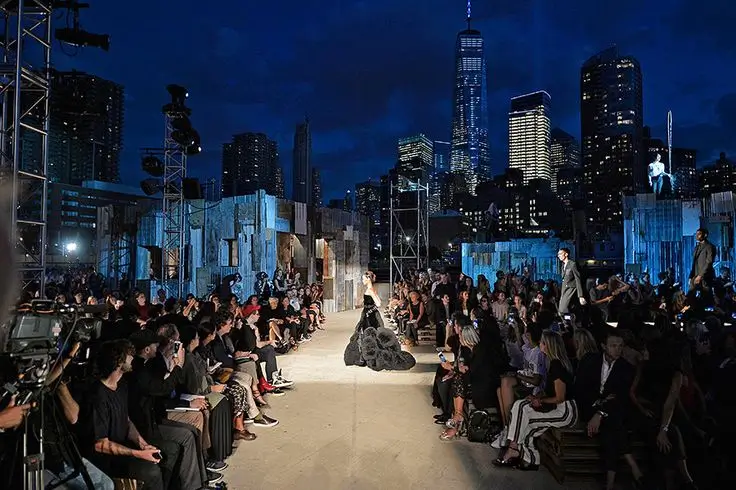
A striking runway set against New York City’s glowing skyline transforms fashion into an unforgettable urban spectacle.
transition
The trademark’s roots go back further than most people realize. What is now called New York Fashion Week descended from an event called Press Week, started in 1943 by publicist Eleanor Lambert to draw attention to American designers while wartime disruptions kept editors from traveling to Paris. That loose citywide format persisted for decades until 1993, when CFDA president Stan Herman and executive director Fern Mallis consolidated the scattered shows into a single, centralized event staged under white tents in Bryant Park. They called it Seventh on Sixth, a nod to the fashion district’s Manhattan cross streets.
In 2001, Seventh on Sixth was sold to IMG, the sports, media and talent conglomerate, and Mallis moved over to become a senior vice president at IMG Fashion, eventually helping the company expand fashion week formats into cities like Miami, Los Angeles, Berlin and Melbourne. IMG itself changed hands in December 2013, when William Morris Endeavor and private equity firm Silver Lake acquired it for roughly $2.3 billion, a deal that closed the following year and put the fashion week trademarks under the umbrella that eventually became today’s WME Group. The event itself later moved out of Bryant Park to Lincoln Center in 2010, and has since scattered across venues throughout the city as the tent model gave way to a more decentralized production approach, one further indication of how much distance had already grown between “who owns the name” and “who actually stages the shows.”
That distance is essentially what got formalized this month. WME has spent recent years pulling back from live event production generally, a shift underscored by its 2024 move to explore selling off IMG’s live event portfolio, including tennis tournaments like the Miami Open and Madrid Open, and its parent company’s broader restructuring around Silver Lake’s go private transaction. In a related but separate move that same year, TKO Group, the holding company behind UFC and WWE, agreed to acquire other IMG live event properties, including Professional Bull Riders and On Location, in a deal valued around $3.25 billion, further illustrating how much of IMG’s original live events portfolio has been broken apart and redistributed since WME first bought the company. The agency’s remaining fashion business now centers on talent representation through subsidiaries like IMG Models, The Wall Group and Art + Commerce, rather than producing runway programming itself. Selling off the NYFW name lines up with that trajectory rather than breaking from it.
For designers and the buyers, editors and stylists who show up twice a year regardless of who owns the trademark, the practical reality announced by both sides is the same: the calendar the CFDA publishes is still the calendar that matters, and nothing about how a show gets scheduled or sanctioned has moved an inch. What has moved is control over the brand wrapped around all of it, now in the hands of a company with plans it has not yet detailed and a name the industry is only just learning.
That gap between announced intention and view execution is where most of the open questions sit right now. Signet has said it wants to expand into live programming, digital content and year round audience engagement, language broad enough to cover almost anything from a streaming platform to a licensed merchandise line to entirely new events staged under the NYFW banner outside the CFDA’s official window. None of that has been specified, and the company has given no timeline for when specifics might arrive. What it has done is confirm, through the trade press, that details are coming “at a later date,” a phrase that tends to mean different things depending on how quickly a new owner wants to move on an asset it just spent an undisclosed sum acquiring.
In the meantime, the split the industry is now operating under is a clean one on paper even if it took a decade of legal disputes, corporate restructuring and a five year trademark lawsuit to arrive at it. The CFDA runs the show. Signet owns the name people use to talk about it. WME, the company that held both roles for more than ten years, is out of the fashion week business entirely, at least in name.
n
From the DRIFT archive: Letterboxd Video Store Marks a New Era for Movie Discovery and Digital Rentals · Dunkin’ Revisits the Munchkins’ Origin Story in a Tender, Holiday-Bright Animated Tale
Related Articles
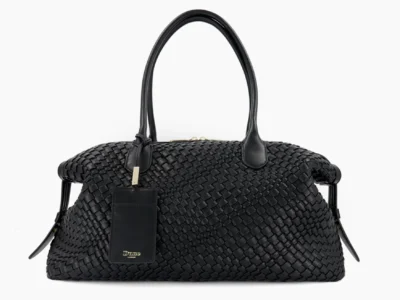
Ten Bags Sitting In The Same Week As The Shows
Pearl egg. Fringe mini. Kelly Doll. Holdall. Pigeon. Speedy. Alex tote. Aluminum case. Cassandre pouch. […]