
DRIFT AUDIO
Listen to this story
Choose a voice, then press play.
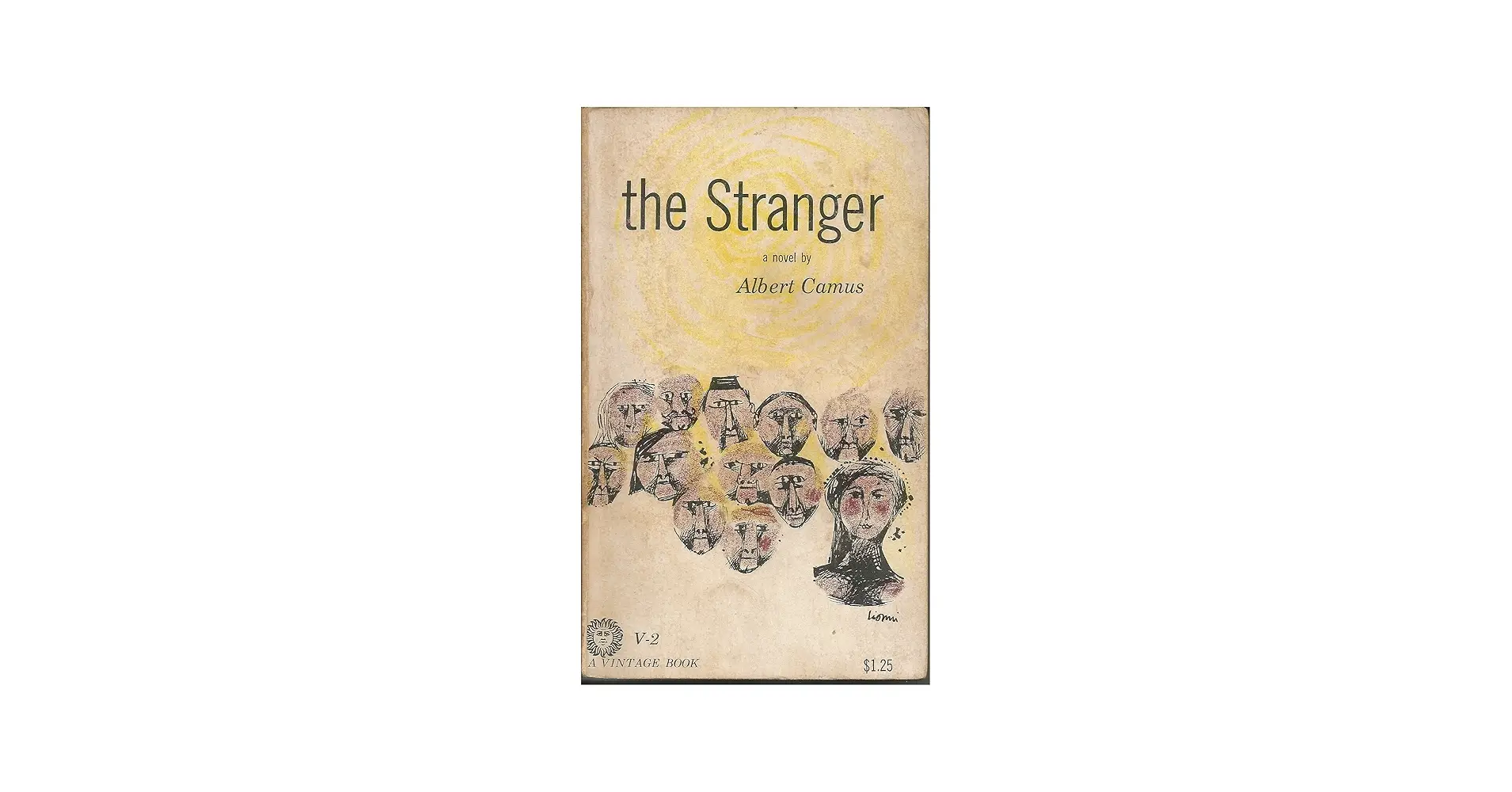
In the searing light of Algiers, where the Mediterranean sun beats down without mercy, a man walks through life as if observing it from a distance. He does not weep at his mother’s funeral. He makes love without passion. He kills without hatred. And in the end, he faces the guillotine not for the murder, but for his refusal to perform the expected rituals of grief and remorse. This is Meursault, the anti-hero of Albert Camus’ 1942 masterpiece L’Étranger (The Stranger or The Outsider), one of the most influential and slippery novels of the 20th century.
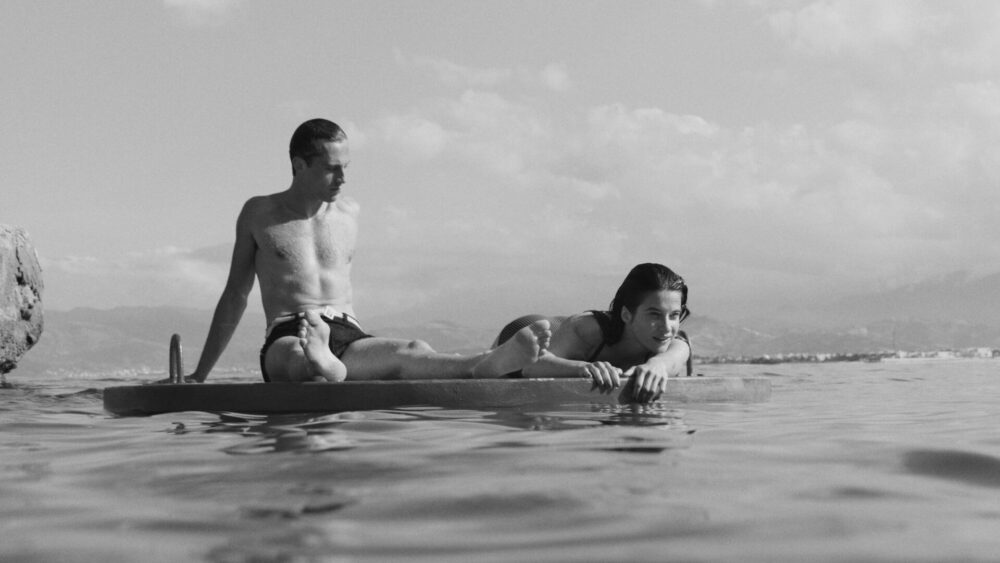
More than eighty years after its publication, French auteur François Ozon—known for his bold, genre-fluid cinema ranging from the frothy musical 8 Women to the devastating Everything Went Fine—has brought this existential touchstone to the screen in a 2025 black-and-white adaptation that has sparked both acclaim and controversy. Shot in brooding, high-contrast monochrome by cinematographer Manu Dacosse, Ozon’s The Stranger (running 122 minutes) premiered in competition at the 2025 Venice Film Festival and offers a sensual, politically attuned reading of Camus that feels both faithful and provocatively fresh.
stir
Camus’ novel is notoriously difficult to film. Its power lies in the spare, flat prose that mirrors Meursault’s emotional detachment. The first-person narration creates an intimacy that is simultaneously alienating. How do you view indifference? How do you dramatize the absence of drama?
Ozon, speaking in a BFI interview, admitted he once thought he would “never” adapt it. But after a stalled project about a young man confronting the absurdity of existence (again with Benjamin Voisin), he returned to the text and found it “still powerful, strong and mysterious.” He saw in it a challenge perfectly suited to his interests in human behavior, sexuality, and the collision between individual truth and societal expectation.
“I had in mind the Alain Delon of the 60s, in Le Samouraï,” Ozon explained of casting Voisin. The young actor, who had worked with Ozon on the sun-drenched queer romance Summer of 85, brings a magnetic, almost feline physicality to Meursault—charming yet remote, alive to sensations but numb to meaning.
The film opens with archival footage of 1930s Algiers before sliding into meticulously recreated streets and beaches. Ozon’s Algeria is tactile and oppressive: the glare of the sea, the itch of sand, the sticky sweat on skin. Where the novel’s prose is cool and clipped, the images are hot and languid. This is no dry philosophical treatise; it is a film of bodies under pressure.
arch
Ozon has described his approach as making “a very erotic movie.” This might surprise readers who remember the novel’s mechanical sex scenes between Meursault and Marie. But in Ozon’s hands, the physical world becomes the primary language of the film. Benjamin Voisin and Rebecca Marder (as Marie) share scenes of sun-soaked desire that pulse with a carnal energy rare in literary adaptations. The famous beach sequence leading to the murder crackles with tension—not just the blinding sunlight that triggers Meursault’s fatal shots, but the charged atmosphere of colonial friction and male posturing.
The black-and-white cinematography is key. It strips away the postcard exoticism of North Africa, turning the landscape into something stark and mythic. Light and silhouette play across faces like moral judgment itself. Ozon and Dacosse draw from masters like Bresson and Melville, but the sensuousness feels distinctly Ozon: the camera lingers on skin, fabric, the curve of a shoulder, the ripple of water. The sun is not just a setting; it is an antagonist, a force that exposes and punishes.
extent
One of Ozon’s boldest choices is expanding the roles of the female characters. In the novel, Marie is charming but largely reactive, and the murdered Arab man has no name or backstory. Ozon gives Marie more interiority and agency, allowing her to become a counterpoint to Meursault’s detachment. Even more significantly, he introduces Djemila (Hajar Bouzaouit), the sister of the murdered man (named Moussa in a nod to Kamel Daoud’s 2013 counter-novel The Meursault Investigation). These choices shift the film from pure existential fable toward a subtle interrogation of gender and colonialism.
This has not been uncontroversial. Camus’ daughter Catherine reportedly accused the film of “wokeism,” arguing it imposes contemporary politics on a work that transcends them. Ozon, for his part, insists he is simply honoring the ambiguities already present in Camus. The author, born in Algeria to poor French settlers (pieds-noirs), was deeply shaped by the land and its contradictions. He opposed both colonial brutality and certain strains of Algerian nationalism, advocating for a multicultural future that never materialized.
Ozon’s film subtly foregrounds the Arab presence that the novel keeps at the periphery. Meursault moves through a world where the “strangers” are not just himself but the indigenous population rendered invisible by the colonial system. The trial scenes gain additional layers of irony: a Frenchman is judged less for killing an Arab than for failing to cry at a funeral. The system’s hypocrisy is laid bare without didacticism.

show
At the center is Voisin’s remarkable performance. He captures Meursault’s peculiar mix of passivity and quiet rebellion. In the second half of the film, as the trial unfolds and Meursault confronts the prison chaplain (Swann Arlaud), the character’s famous outburst—“I opened myself to the gentle indifference of the world”—lands with devastating force. It is not nihilism, but a hard-won acceptance of absurdity. Ozon stages this confrontation with Bressonian austerity: long takes, minimal score (the atmospheric music by Fatima Al Qadiri is used sparingly), and an emphasis on faces.
Supporting turns add texture: Pierre Lottin as the pimp-like Raymond, Denis Lavant as the grieving neighbor Salamano (whose relationship with his mangy dog mirrors Meursault’s own emotional limitations), and the ensemble of Algerian actors who populate the margins.
impression
Upon release in France in late October 2025, the film earned strong box office returns and mixed-to-positive reviews. Praise centered on its view beauty, Voisin’s lead performance (which won at the Lumière Awards), and Ozon’s ability to make a canonical text feel urgent. Critics like those at The Wrap called it “one of Ozon’s richest and most satisfying works in years,” noting its success as a rare literary adaptation that both honors and interrogates its source.
Detractors found it overly reverent or, conversely, too revisionist. Some argued that no film can replicate the novel’s chilling first-person interiority. Others felt the eroticism and political shading distracted from the pure philosophy. Yet even skeptics acknowledged the film’s craft and its invitation to reread Camus in light of today’s debates around identity, colonialism, and authenticity.
The adaptation arrives at a moment when Camus is experiencing renewed attention. His ideas about revolt, the absurd, and moral clarity resonate in an era of political polarization and existential anxiety. Ozon’s version does not simplify these ideas; it sensualizes them, making the abstract physical and the know visceral.
endeavor
For Ozon, the project seems to have been a reckoning. Like many French students, he first read The Stranger as a teenager. Returning to it later in life, he discovered new depths. His film reflects that maturation: it is less a cool intellectual exercise than a passionate engagement with a book that refuses easy answers.
In one memorable scene, Meursault stands on the beach, the sun hammering his skull, the sea shimmering like a mirage. He fires the gun almost as if the environment itself demands it. Ozon slows the moment just enough for us to feel the weight of the heat, the salt, the inevitability. It is the novel’s most famous passage made cinematic without losing its mystery.
The film ends, as the novel does, with Meursault’s embrace of the “gentle indifference of the universe.” But Ozon adds a view coda that lingers on the Algerian landscape—beautiful, indifferent, contested. It is a reminder that the stranger is not only the man on trial, but anyone who refuses the comforting lies society demands.
fin
Previous attempts at adapting The Stranger—notably Luchino Visconti’s 1967 version with Marcello Mastroianni—struggled with the material’s restraint. Ozon succeeds by leaning into his strengths: view elegance, emotional precision, and a willingness to complicate the text without betraying its spirit. His Stranger is sun-bleached yet within silhouette sensical, languid yet tense, faithful yet personal.
In an age of franchises and IP, a major director devoting himself to a dense literary classic feels almost radical. Ozon has not made a museum piece. He has made a film that breathes, sweats, and provokes. It invites viewers to confront their own indifference, their own absurdities, and the quiet rebellions available in everyday life.
As Meursault faces execution, he wishes for a crowd that greets him with “cries of hate.” In Ozon’s film, that final image carries both despair and strange liberation. The director has captured something essential about Camus: the courage to stare into the void without blinking, and to find, if not meaning, then at least the raw flow of existence under a pitiless sun.
From the DRIFT archive: Utqiaġvik Begins 65-Day Polar Night: Life Without Sunlight Returns · Nike & Chipotle: How a Young Cancer Patient’s Burrito Ritual Became a Once-in-a-Lifetime Sneaker
Related Articles

Under Rue de Castiglione, Liaigre Gives Hôtel Costes a Spa With No Hard Corners
A 20-meter lap pool, eight treatment rooms and not one sharp angle: Studio Liaigre’s spa […]