DRIFT AUDIO
Listen to this story
Choose a voice, then press play.
The ‘Too Many Cooks’ auteur returns with a killer-unicorn spoof of ’90s kids’ TV that stormed Sundance and now heads toward theaters nationwide.
In This Story
- The Trailer and the Premise
- Casper Kelly’s Career of Trapped Worlds
- Building Buddy: From Pitch to Production
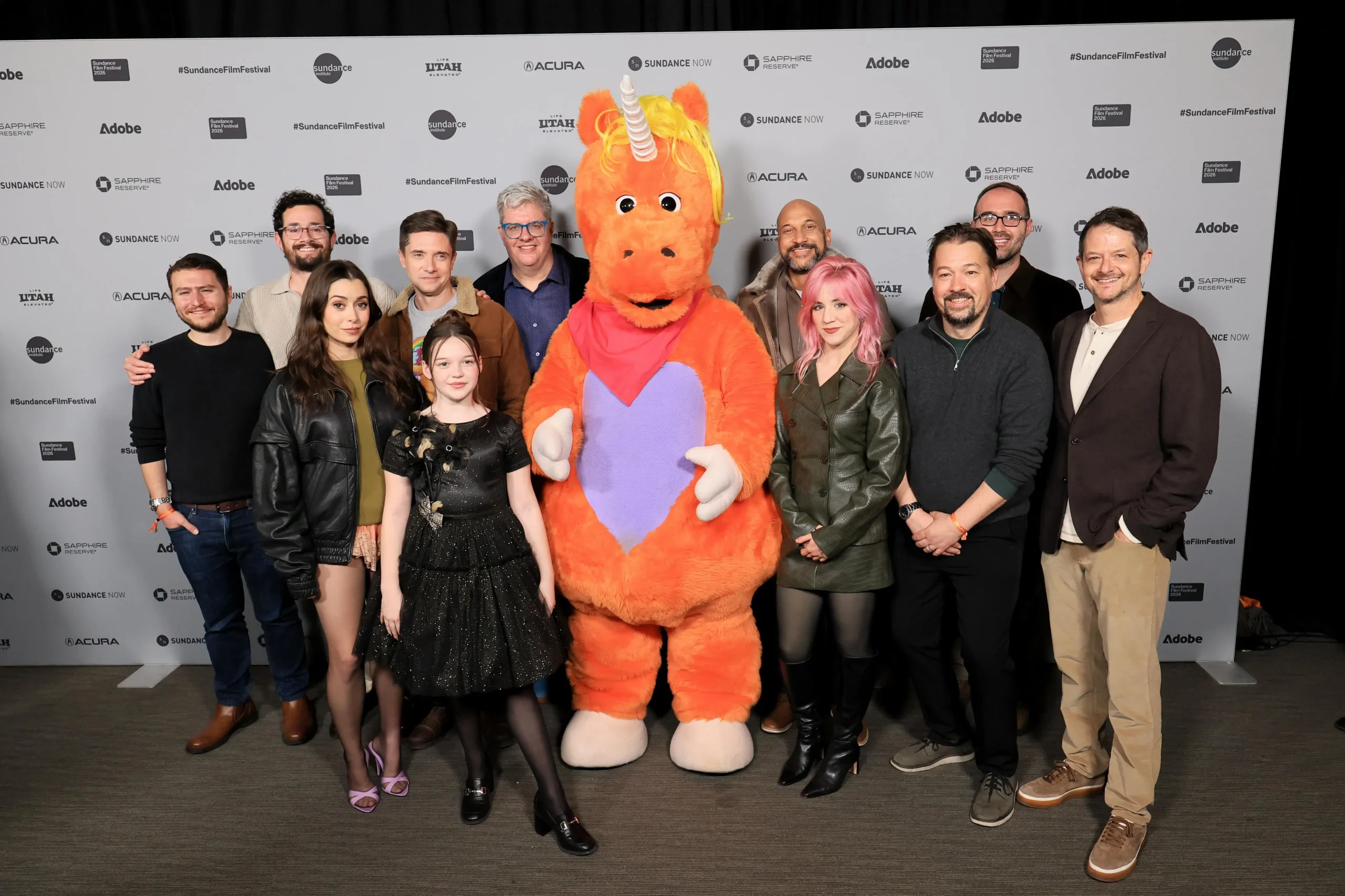
- Cast, Crew, and Sundance Reception
- Distribution and Release
- Why It’s Landing Now
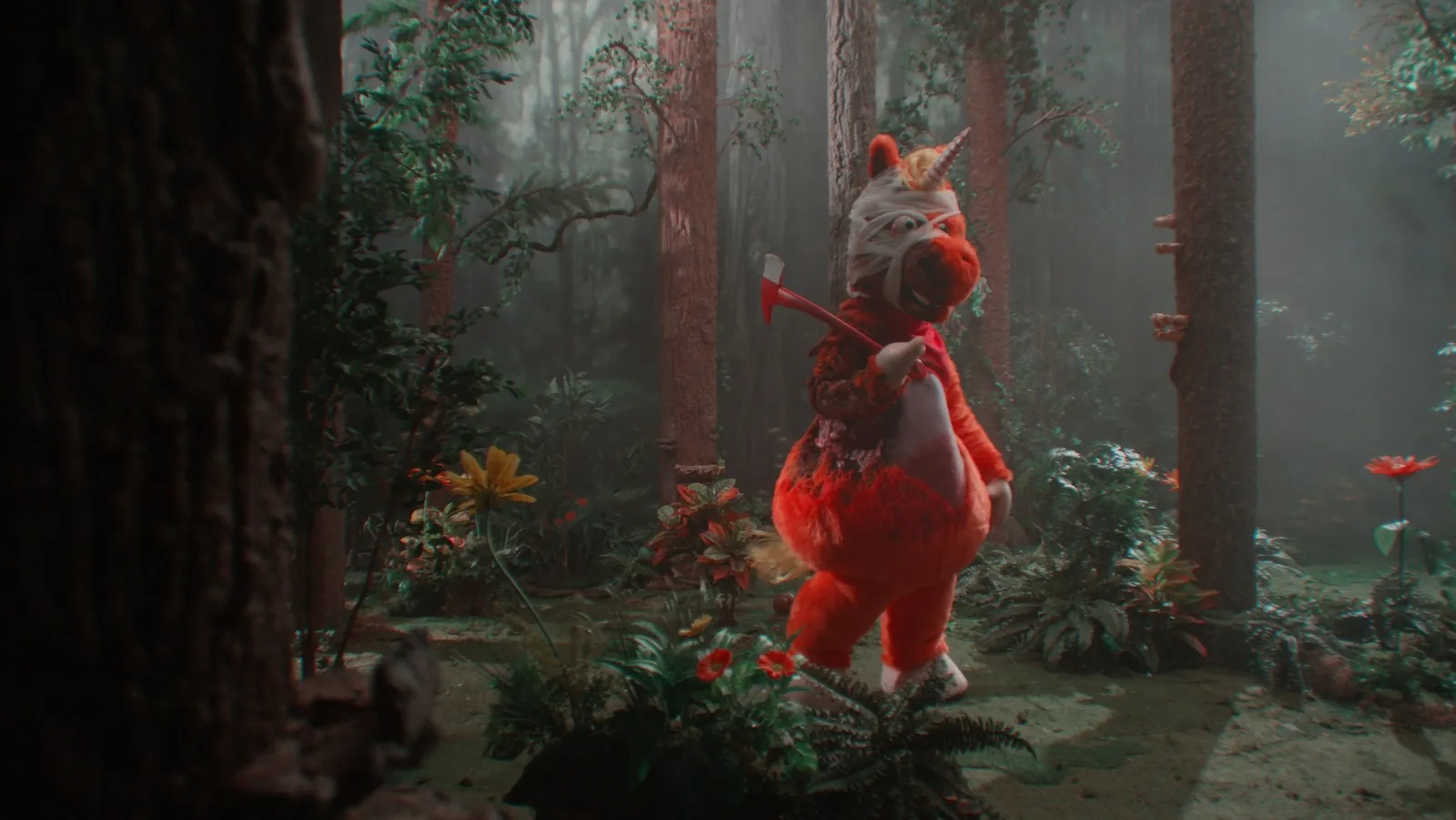
Somewhere between “Pee-wee’s Playhouse” and a slasher movie sits “Buddy,” the new feature from Casper Kelly, the writer-director best known for turning a sitcom-credits parody into a viral fever dream more than a decade ago. The official synopsis centers on a bright orange unicorn mascot who hosts a children’s program called “It’s Buddy!,” where a group of kids spend their days singing, dancing, and helping the titular character spread happiness in a candy-colored world that looks warm and inviting on its surface. The teaser trailer reveals a world that seems bright and shiny while something feels deeply, profoundly, and unsettlingly wrong beneath that gloss. That wrongness surfaces when one child in Buddy’s orbit refuses to go along with the program, and the cheerful unicorn responds badly, with cracks beginning to appear across the seemingly perfect world he presides over.
The unicorn’s voice belongs to Keegan-Michael Key, and critics who caught the film’s festival run have described his performance as a note-perfect send-up of the nasal, over-earnest cadence associated with a certain purple dinosaur, right down to a reflexive little chuckle at his own jokes. The film spoofs 1990s children’s television, particularly Barney & Friends, casting the title character as a large orange unicorn who teaches his young companions lessons about chores, baseball, and dancing before revealing a psychopathic streak once one of them stops participating. It’s a premise that could have stayed a one-note internet sketch, but reviewers are largely in agreement that Kelly built something stranger, larger, and more structure ambitious out of it than the elevator pitch suggests.
stir
To slow absorb register why “Buddy” is landing with this much industry attention, it helps to know what Kelly has spent the last decade quietly building toward. His 2015 Adult Swim viral hit mimicked the endless, increasingly deranged opening credits sequences of old sitcoms, growing more surreal until a madman broke loose in the meta-world of the show itself. That short, of course, is “Too Many Cooks,” and it remains the reference point virtually every outlet reaches for when trying to describe Kelly’s particular sensible to newcomers.
Kelly followed that breakout with two more genre experiments that flew a bit further under casual viewers’ radar. His 2022 feature was a surreal riff on slasher-movie conventions, and its 2024 sequel took an outrageous, gleeful swing at Hallmark-style holiday romance formulas. Across all three projects, critics and Kelly himself have circled back to a single recurring obsession: characters trapped inside constructed worlds they can’t quite escape. Kelly has said the pattern wasn’t something he set out to build deliberately — it was pointed out to him by a production company he was being interviewed by, and once he heard it named, he couldn’t stop noticing it in his own work afterward.
That thematic throughline gives “Buddy” a strange kind of continuity with Kelly’s earlier, smaller-scale projects, even though it operates on a dramatically larger canvas than anything he’s directed before. Where “Too Many Cooks” crammed the entire cosmos of network television into eleven minutes, “Buddy” attempts something comparable at feature length, expanding a single genre gag into a full dream-kitsch satirical fantasy that eventually spills out of its TV-show setting entirely.
show
“Buddy” began, notably, as someone else’s idea rather than Kelly’s own. He has said the project originated with JD Lifshitz at BoulderLight Pictures, who wanted to make a horror movie built around a Barney-like character. Kelly was initially hesitant, given how crowded that particular lane of horror-comedy already felt to him — he’s pointed to “Five Nights at Freddy’s,” “The Banana Splits Movie,” and “Willy’s Wonderland” as territory he worried had already been sufficiently mined. What changed his mind was landing on the idea of trapping the children literally inside the television show itself, rather than simply having a killer mascot terrorize a cast from outside the frame. He co-wrote the eventual script with Jamie King, and the finished film marks his first theatrical directorial feature after years spent in shorts, prestige-adjacent TV work, and streaming-native projects.
The production also pushed Kelly technically in ways he’s been vocal about appreciating. He has credited cinematographer Zach Kuperstein, who also shot “Barbarian,” with an unusual blocking and shot-listing process built around aging, soon-to-be-unsupported software, which forced him past his usual comedic coverage habits of over-the-shoulder setups and simple wide shots. Kelly has described the experience as addictive enough that it’s left him newly eager to keep making features, framing every new production as its own puzzle regardless of how much experience accumulates from the last one.
The world of “It’s Buddy!” itself extends well past its title unicorn. Within the show-within-the-film, Buddy is joined by an anthropomorphic rabbit roommate and a household of talking objects, including a backpack named Strappy, giving the production’s puppetry and practical-effects teams a genuinely dense cast of handmade characters to build out. Multiple reviewers singled out the production design and puppetry work as some of the strongest technical achievements in the film, regardless of how they felt about its narrative structure overall.
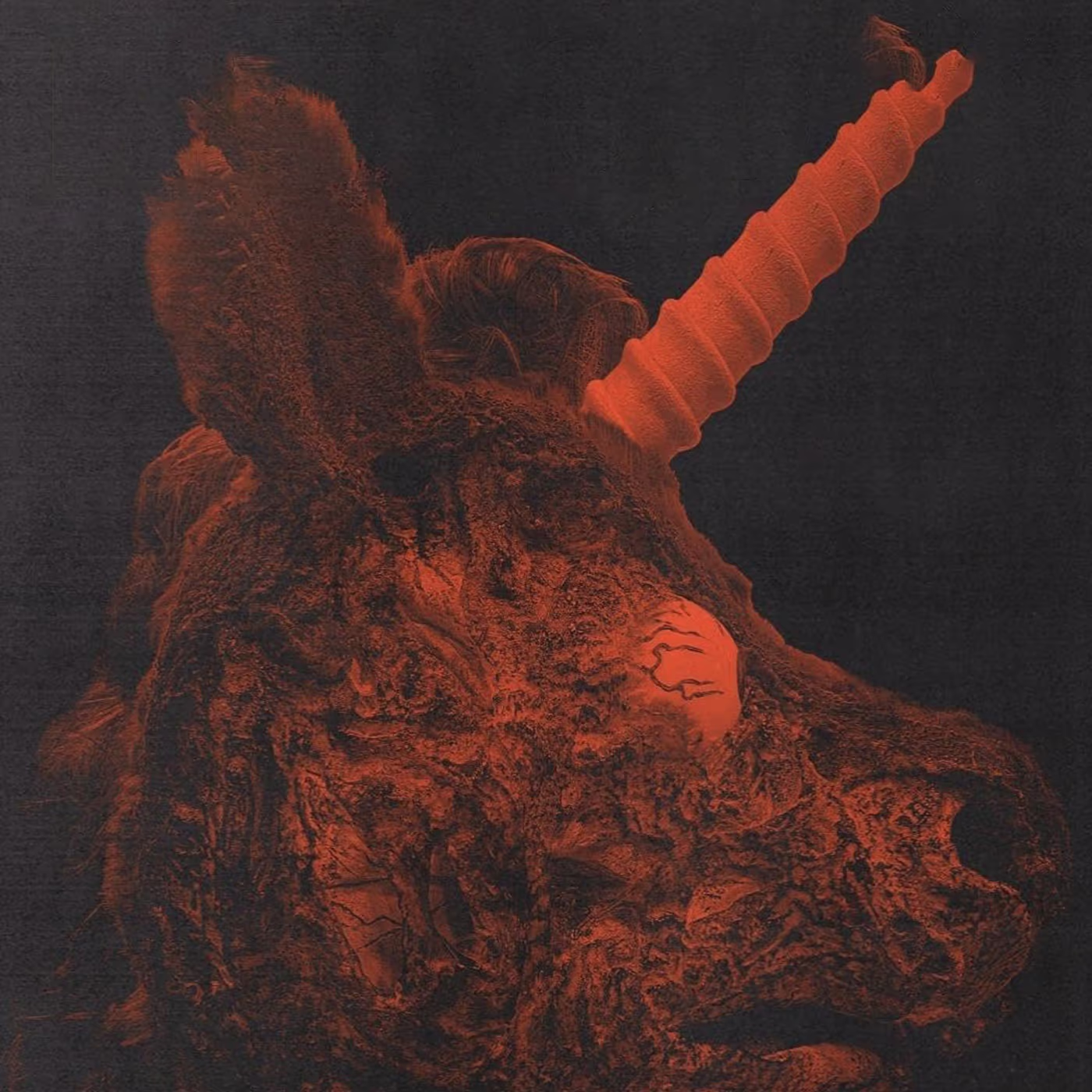
A deteriorated unicorn mascot head with tangled fur, a weathered horn, and a damaged glowing eye creates an unsettling horror image bathed in deep red light.
flow
“Buddy” found distribution quickly out of the festival circuit, a notable outcome for a film built around such a specific, potentially niche premise. The film was acquired by Roadside Attractions and Saban Films following its Sundance premiere and was immediately described in coverage as a hit with both critics and audiences in the room. Release-date reporting has varied somewhat depending on the outlet and the date of publication, which is worth flagging directly here rather than committing to a single figure without further confirmation (see Pre-Publish Notes below for specifics).
Kelly’s evolution as a filmmaker is also being read by trade press against a broader horror-market trend. Commentary around the trailer has framed “Buddy” as arriving at a moment when analog horror has proven it can find a genuine mainstream audience, pointing to the runaway box-office success of “Backrooms” as evidence that the timing may be unusually favorable for Kelly’s own foray into the format.
why
Not every critic is convinced the underlying joke still has teeth after all these years. One review pointed out that Barney has functioned as a target of contempt and misanthropic humor for essentially the character’s entire existence, dating back at least to “Death to Smoochy” more than two decades ago, and argued “Buddy” arrives somewhat late to that particular cultural pile-on. Even that same review, however, conceded the film is exquisitely designed as a piece of satirical world-building, crediting Kelly’s ability to keep the horror embedded within the pasteboard-and-fuzzy-fur texture of the show it’s spoofing rather than breaking from that texture too early or too crudely.
Other critics have drawn comparisons well beyond Barney itself. One festival dispatch described the show-within-the-film as closer in spirit to “Pee-wee’s Playhouse,” complete with a talking couch functioning as a nervous Greek chorus and a cheerful mail carrier standing in for the absent adult supervision typical of the genre. That same piece noted Kelly explicitly described the project as “Barney horror” at its Park City premiere, and linked the film’s underlying thesis to work like “I Saw the TV Glow,” suggesting Kelly is working through ideas about how the pop culture consumed in childhood quietly teaches lessons that aren’t always benign — even though his own execution leans further into gross-out comedy than into gender-bending surrealism or psychological ambiguity.
From the DRIFT archive: Dunkin’ Revisits the Munchkins’ Origin Story in a Tender, Holiday-Bright Animated Tale