Frank Leder: Crafting Identity Through the Language of Cloth

April 15, 2026
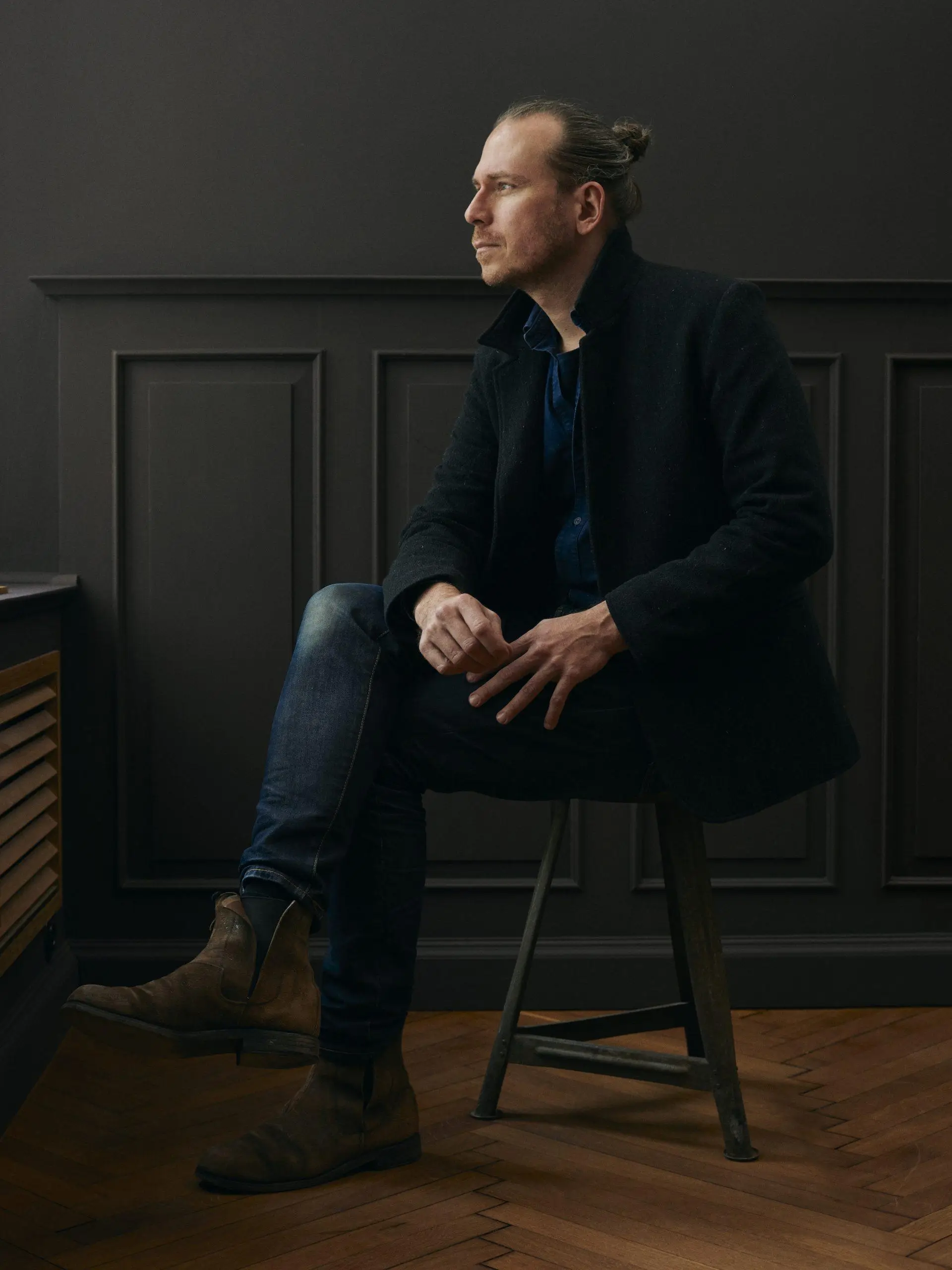
Frank Leder does not emerge from fashion in the conventional sense—he arrives through it, using it as a medium rather than a destination. Born in Nuremberg in 1974, his early life unfolded within a Germany still negotiating its layered past, a context that would later define the emotional and intellectual terrain of his work.
His formal training at Central Saint Martins College of Art and Design positioned him within one of the most conceptually driven fashion environments in the world. Yet even within that space, Leder’s instincts diverged. Where many pursued spectacle or abstraction, he moved toward narrative—toward grounding fashion in something slower, denser, and more rooted.
During his years in London, he began shaping his eponymous label, not as a brand in the commercial sense, but as a framework for storytelling. His early runway presentations signaled this shift: garments were not isolated objects but parts of a larger system, connected through theme, material, and context.
show
The decision to relocate to Berlin in the early 2000s marked a turning point. Berlin offered distance—from London’s immediacy, from trend acceleration—and proximity to something else: history as lived experience.
From this base, Leder shifted toward Paris Men’s Fashion Week, positioning his work within an international framework while maintaining a distinctly German core. His collections began to solidify into thematic explorations, each one functioning like a chapter—self-contained yet connected.
This dual positioning—local in production, global in presentation—remains central to his practice. It allows the work to retain specificity while engaging a broader audience.
idea
Leder’s collections are often described as “stories,” but the term can feel insufficient. They operate more precisely as constructed environments, where garments function as artifacts within a larger narrative field.
Themes emerge from both personal and collective histories: his father’s life, small-town German rituals, labor identities, and institutional structures. Fire brigades, bakers, miners, student societies—each becomes a lens through which clothing is reconsidered.
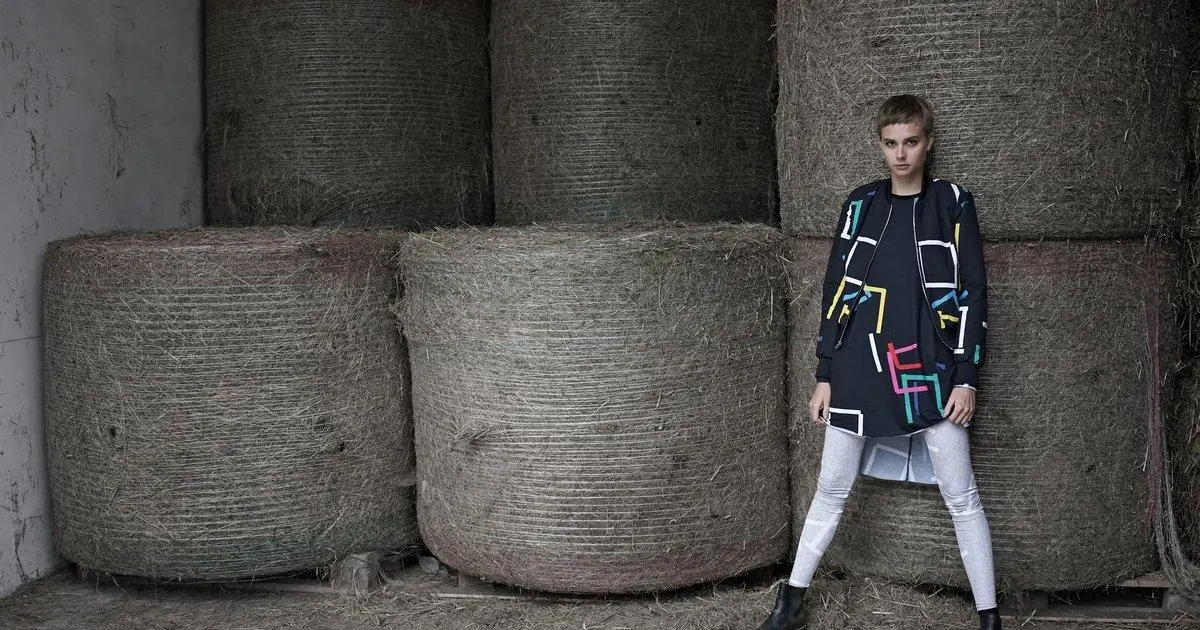
The garments themselves carry this narrative quietly. A coat may reference traditional tailoring but shift proportion just enough to disrupt expectation. A shirt may echo workwear but feel softened, reinterpreted through fabric choice or finishing.
This approach avoids literalism. The goal is not reproduction, but translation.
flow
Material is where Leder’s work becomes most tangible—and most specific.
He sources primarily from German textile producers, often working with traditional fabrics such as Deutschleder and Schladminger wool. These materials are not selected for nostalgia, but for their capacity to carry history within their structure.
Вижте тази публикация в Instagram.
delineation
Presentation, in Leder’s practice, extends the logic of the collection itself.
Rather than relying on traditional runway formats, he has consistently explored alternative modes. A show staged for a blind audience reframed fashion as sensory experience beyond vision. Inviting guests to his father’s hometown introduced geography as part of the narrative structure.
Collaborations with photographer Gregor Hohenberg further expand this dimension. The imagery does not simply document the clothing; it constructs atmosphere, reinforcing the themes embedded in the garments.
These choices position presentation not as an afterthought, but as an integral component of the work.
shape
All of Leder’s collections are produced in Germany. This decision shapes everything—from sourcing to construction to scale.
Working within this framework requires constraint. It limits access to certain materials and production efficiencies, but it also ensures consistency and control. The garments retain a clear lineage, traceable from concept to completion.
This commitment also supports local craftsmanship, sustaining techniques and industries that might otherwise disappear. It aligns production with philosophy, reinforcing the idea that how something is made is inseparable from what it becomes.
together
Leder’s work often incorporates his immediate creative circle—artists, musicians, and collaborators who appear within his publications and presentations.
This approach shifts the dynamic away from traditional fashion hierarchies. Models become participants. The boundary between creator and subject softens.
It also situates the clothing within a lived environment. The garments are not abstract—they exist in relation to people, to spaces, to moments.
subtle
Despite its intellectual grounding, Leder’s work resists becoming overly serious.
There is a consistent presence of humor—subtle, understated, often emerging through proportion, styling, or unexpected detail. A structured garment might feel slightly off-balance. A reference might be gently exaggerated.
These gestures introduce flexibility into the system. They prevent the work from becoming rigid or didactic, allowing space for interpretation.
View this post on Instagram
commitment
Related Articles

Rose Byrne and Mary Bronstein Are Doing It Again, and This Time They Brought Jenna Ortega
A coach and her prodigy are about to become the most dangerous relationship in a […]