Rory McIlroy’s Rise, The Night Shift and Victory Earned For Green Jacket

April 14, 2026
rel
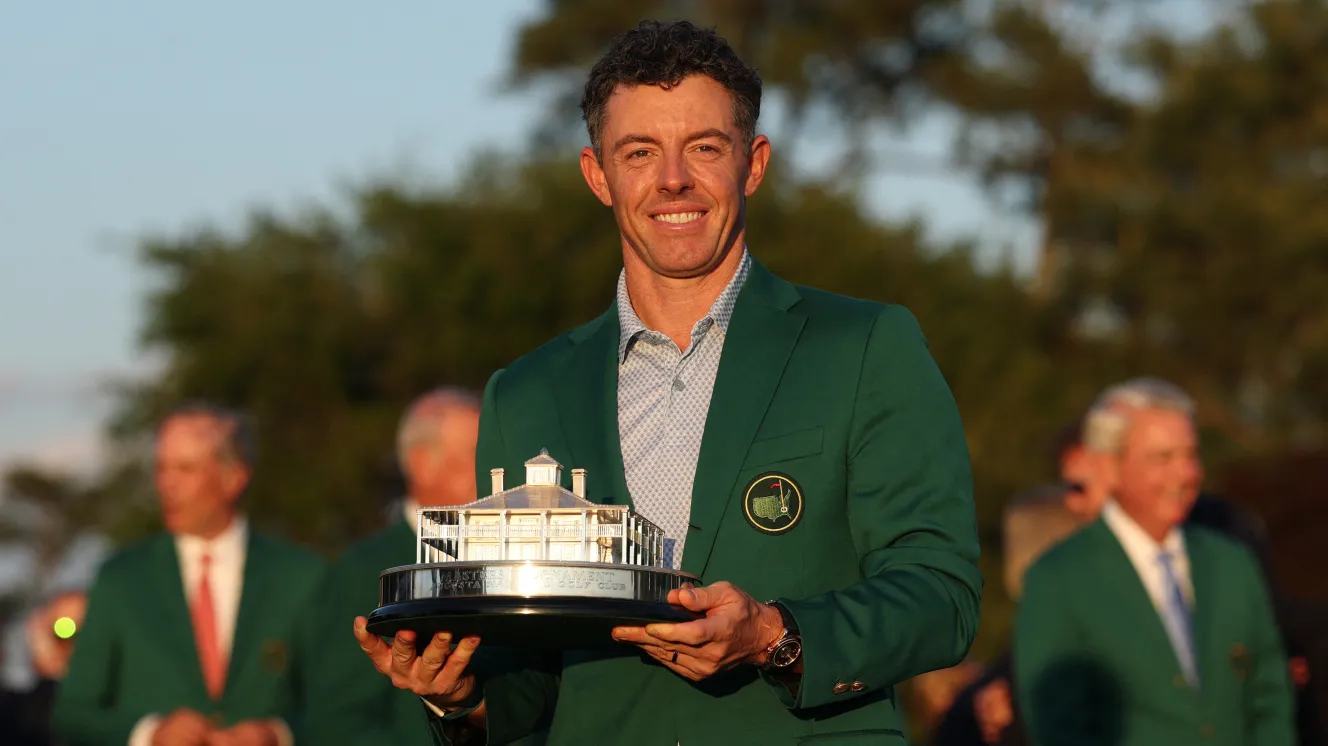
The roar of the Augusta crowd still echoes—the moment Rory McIlroy sank the final putt to claim his first green jacket in 2026. It wasn’t just a victory; it was a release. After years of near-misses and mounting pressure, he had finally conquered the Masters, completing the career Grand Slam and etching his name alongside golf’s immortals. But behind that triumph was a quieter, more enduring story—one that began not on the fairways of Augusta, but in a factory in Holywood, Northern Ireland, where his mother, Rosie, worked night shifts to pay for his clubs and coaching.
McIlroy’s journey is more than a sports narrative. It’s a powerful reminder that talent alone doesn’t build legends. Access, sacrifice, and opportunity do. His rise from a working-class family to a $250 million icon challenges the myth of pure meritocracy in sports and highlights the invisible labor—often by parents like Rosie—that fuels greatness. Now, as a two-time champion, McIlroy isn’t just playing for trophies. He’s playing to open doors for the next generation.
Every shot from Rory McIlroy’s final round. #themasters pic.twitter.com/fvwWI4bkHJ
— The Masters (@TheMasters) April 13, 2026
early
Rory McIlroy wasn’t born into privilege, but into purpose. Growing up in Holywood, a small town just outside Belfast, his passion for golf was evident by age two, when he used a cut-down 7-iron to swat balls across the living room. By age seven, he was conjuring full rounds. But nurturing that talent came at a cost—one his parents, Gerry and Rosie, willingly shouldered.
Gerry, a club professional, coached Rory for free, but equipment, tournament fees, travel, and coaching clinics added up fast. To help cover expenses, Rosie took on grueling night shifts at a local textile factory. While other kids’ parents watched evening games, she worked the late shift, returning home exhausted, knowing each paycheck brought Rory one step closer to his dream.
Their sacrifices weren’t just financial—they were emotional, temporal, and physical. Weekends became road trips to junior tournaments. Vacations were planned around qualifying events. The McIlroys poured everything into their son, not for fame, but for the chance to see him thrive. And Rory, aware of the weight behind every swing, churned with a quiet determination. He wasn’t just representing himself—he was playing for his parents, for their belief, and for the love that fueled his journey long before the world was watching.

myth
Golf, like many elite sports, often sells itself as a meritocracy—where hard work and talent alone determine success. But the reality is far more complex. For every Rory McIlroy, there are countless young athletes with equal potential who never get the chance to rise, simply because their families can’t afford the entry fee.
Youth golf is expensive. Green fees, private coaching, tournament travel, equipment upgrades—costs can easily exceed $5,000 a year, placing the sport out of reach for most working-class families. According to studies, over 70% of elite junior golfers come from households earning above the national median income. Talent may be universal, but opportunity is not.
This economic gatekeeping creates a cycle: only those with resources can access high-level training, which leads to college scholarships or pro pathways, reinforcing the dominance of the privileged. McIlroy’s story is exceptional not because he worked hard—many do—but because his parents made extraordinary sacrifices to bypass those barriers.
His success exposes a truth the sports world often ignores: merit doesn’t exist in a vacuum. It needs support, access, and investment. And when those are missing, potential goes unrealized. McIlroy’s journey isn’t proof that the system works—it’s proof that it doesn’t. And that’s why his next mission—democratizing access—matters more than any trophy.
flow
Rory McIlroy’s 2026 Masters win wasn’t just a triumph—it was a redemption. For over a decade, Augusta National had been a house of heartbreak. Close calls, final-round collapses, near-misses—each one deepening the narrative that McIlroy, for all his brilliance, couldn’t conquer the course. But on that April Sunday, everything changed.
In a dramatic playoff against Justin Rose, McIlroy held his nerve. His final approach to the 18th—firm, precise, rolling to within three feet—was the culmination of years of pressure, doubt, and relentless preparation. When the putt dropped, he dropped to his knees, overcome. No words, just emotion. The curse was broken.
Statistically, the win was improbable. He recorded four double-bogeys during the tournament—the most ever by a Masters champion—and hit just two fairways on the front nine of the final round, the fewest by a winner in at least 30 years. Yet, his short game and mental resilience carried him through. He didn’t win by playing perfectly. He won by enduring.
That victory wasn’t just about completing the career Grand Slam—joining legends like Nicklaus, Woods, and Faldo. It was about proving that persistence can outlast failure. And when he returned in 2026 to win again, it wasn’t a fluke. It was confirmation: Rory McIlroy wasn’t just a great player. He was now a dominant force, finally at peace with the course that once haunted him.
bequest
Rory McIlroy’s net worth—estimated at $250 million—isn’t just a number. It’s a reflection of his global influence, built through tournament wins, major endorsements with Nike, TaylorMade, and Bose, and savvy investments in tech and real estate. But more than his wealth, it’s how he’s using his platform that defines his legacy.
Unlike athletes who retreat into celebrity, McIlroy has leaned into advocacy. He’s become a vocal critic of golf’s exclusivity, calling it “a game that still feels closed to too many.” In response, he’s partnered with organizations like Youth on Course, which offers $5 rounds at thousands of courses across the U.S., Canada, and Australia. He’s also supported Bank of America’s “Golf with Us” initiative, which funds free annual memberships for kids ages 6–18, removing even the smallest financial barriers.
Beyond access, McIlroy champions mental health, speaking openly about his own struggles with anxiety and pressure. He’s backed programs that provide counseling for young athletes and pushed for more humane scheduling on tour.
And he’s not just funding change—he’s modeling it. By staying connected to his roots, honoring his parents’ sacrifices, and refusing to let fame erase his empathy, McIlroy is redefining what a modern sports icon looks like. He’s not just winning tournaments. He’s working to ensure the next generation gets the same shot he did—no matter their background.
spectrum
Rory McIlroy’s story isn’t unique in its struggle—but it is rare in its success. For every child who breaks through, hundreds are left behind, not for lack of talent, but because the system isn’t built for them. Youth sports, especially in golf, tennis, and swimming, remain heavily stratified by income. A single season of elite training can cost more than a family’s monthly rent, effectively pricing out entire communities.
But McIlroy’s advocacy highlights a growing movement toward equity. Programs like Youth on Course, First Tee, and The First Tee of Metro Atlanta are proving that access can be reimagined. With $5 rounds, donated equipment, and scholarship-funded coaching, they’re creating pipelines for underrepresented youth to compete. Corporate partners are stepping in too—Bank of America, Rolex, and American Express now fund access initiatives, recognizing that diversity strengthens the sport.
McIlroy doesn’t just lend his name—he participates. He’s visited youth clinics, mentored teens from low-income backgrounds, and used his social media reach to spotlight these efforts. He knows that representation matters: when a kid sees someone like him—someone with a factory-worker mom—holding a green jacket, it changes what they believe is possible.
True legacy isn’t measured in trophies or net worth. It’s measured in opportunity created. And by pushing for a more inclusive game, McIlroy is ensuring that the next gen won’t need a miracle—or a parent’s night shift—to chase their dream.
fin
Rory McIlroy’s journey is more than a sports story—it’s a human one. It’s about a boy with a dream, a mother who worked the night shift to keep it alive, and a man who, upon reaching the top, turned back to pull others up with him. His two green jackets are symbols of triumph, but the real victory lies in the doors he’s opening.
Talent got him noticed. Sacrifice got him started. But it’s his commitment to equity that will define his lasting impress. In a world where opportunity too often follows wealth, McIlroy is helping rewrite the rules—proving that with support, access, and belief, greatness can come from anywhere.
His bequest is not just in the records he’s broken, but in the barriers he’s dismantling. And as long as there’s a kid with a cut-down club and a big dream, his story will stand as a reminder: sometimes, the most powerful swing isn’t the one that wins the tournament—it’s the one that changes the game.
Related Articles

Rose Byrne and Mary Bronstein Are Doing It Again, and This Time They Brought Jenna Ortega
A coach and her prodigy are about to become the most dangerous relationship in a […]