DRIFT

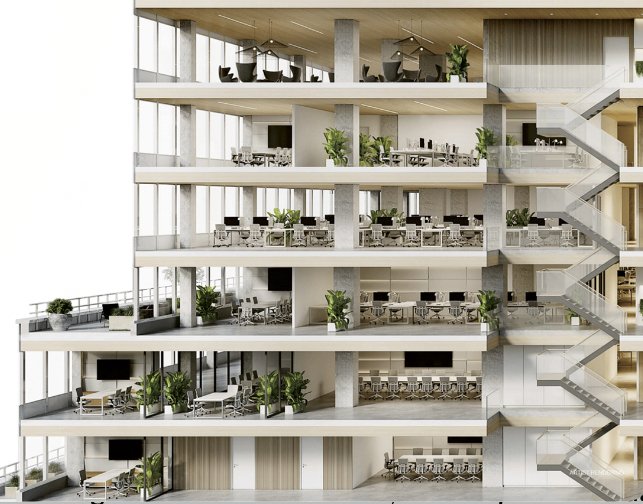
Promotional rendering for 135 West 50th Street, former Sports Illustrated building, 2024.

In 2024, the sale of the 22-story office tower at 135 West 50th Street for a measly $8.5 million—a staggering 97.5% markdown from its previous valuation—barely registered as a blip in the news cycle. But the implications of that sale are seismic. This isn’t just about one distressed Midtown asset. It’s a warning shot. An omen. A mirror reflecting the fading mirage of 20th-century corporate New York.

What happened at 135 West 50th isn’t merely financial; it’s symbolic. It offers a glimpse into the city’s emerging identity in 2025: not industrial, not financial, but something new, still half-formed and undefined. The question now is whether this moment becomes a collapse—or a catalyst.

Ghost Towers of Manhattan

To understand what’s happening to Midtown, you need to look up. The skyscrapers still scrape the sky, but what’s inside them has changed. Vast floors sit mostly empty. Companies have given up their leases. Others cling on, stubbornly downsizing. The street-level buzz that once defined the city’s tempo has dimmed.

The post-pandemic hybrid work revolution didn’t just upend where we work—it shattered why office space was valuable in the first place. The sale of 135 West 50th at such a steep loss isn’t just a fire sale; it’s a recalibration. It confirms what many suspected: the white-collar office economy, long seen as the bedrock of NYC’s GDP, is now in structural decline.

This building—once the home of Sports Illustrated, emblem of postwar media swagger—now symbolizes a wider decoupling. Just as the city’s industrial base evaporated in the late 20th century, its financial base may now be diffusing into data centers, remote Slack channels, and borderless Zoom rooms.

Echoes of the Industrial Exodus

There’s precedent for this shift. In the 1960s and ’70s, New York watched its industrial lifeblood—garment factories, printing presses, meatpacking warehouses—bleed out to the South, then Mexico, then Asia. At first, this exodus was seen as a civic death. But in the decaying infrastructure of post-industrial New York, something wild and unplanned took root.

The cheap, cavernous lofts left behind became the cradle of the downtown art scene. Soho, Tribeca, and the East Village birthed experimental movements in music, painting, performance, and identity itself. The city didn’t die. It mutated—creatively, chaotically, unpredictably. What was lost in commerce was gained in culture.

Now, with commercial office real estate collapsing under the weight of its own obsolescence, the question isn’t whether New York is dying. It’s whether it’s mutating again.

The Rise and Fall of the Midtown Dream

Let’s talk about 135 West 50th specifically. Built in the mid-1960s, the tower embodied the postwar promise of vertical corporate order. Its glassy facade mirrored the sleek ambitions of the publishing empires that once ruled Midtown. Sports Illustrated, at its peak, wasn’t just a magazine—it was an American institution. Its headquarters reflected that power: an emblem of authority, aspiration, and aesthetic control.

By 2020, that authority had evaporated. The print era had long collapsed into digital uncertainty. Media conglomerates had downsized, merged, rebranded, and relocated. The pandemic accelerated the inevitable: mass vacancies, remote-first policies, and the dissolution of place-based corporate culture. The editors and writers who once commuted daily to 135 West 50th now sign in from Brooklyn, Austin, Berlin, wherever.

When the building finally sold for less than the cost of a penthouse apartment, it wasn’t shocking. It was overdue.

From Collapse to Possibility

So what now? The default playbook—already in motion—is to convert these ghost towers into luxury residences. The logic is as clear as it is uninspired: shrink supply, stabilize values, attract high-income tenants, rinse, repeat. It’s safe, predictable, and depressingly familiar.

But what if the future could be weirder?

What if, instead of simply reformatting office towers into glass-box condos, we used them to seed a new form of civic infrastructure? What if 135 West 50th became not another fortress for the rich, but a space of experimentation—like the lofts of the 1970s, only vertical?

Vertical Lofts, Urban Laboratories

Here’s a vision: reclaim 135 West 50th as a vertical village. Convert floors into mixed-use, cooperative spaces—part studio, part live-work, part maker space, part public lab. Let artists, urban farmers, hackers, educators, and local nonprofits inhabit the void. Not as a short-term activation stunt, but as a structural rethinking of what Midtown could be.

Instead of a luxury pipeline, imagine a civic feedback loop. Instead of scarcity economics, imagine spatial abundance. Empty square footage isn’t failure—it’s potential. If the financial class has migrated to the cloud, let the city itself become a new kind of platform.

There’s precedent for this, too. Look at Berlin’s post-reunification squat scene. Or Tokyo’s reuse of former office towers for gaming collectives and innovation hubs. Or the Werkstätten in Vienna, where old commercial buildings are used as hybrid production-education centers. The key is legal flexibility, creative governance, and cultural permission.

Could New York allow itself to be that free again?

Zoning, Red Tape, and Imagination

Of course, vision is one thing. Bureaucracy is another. Current zoning laws in Midtown make adaptive reuse prohibitively complex. Converting commercial space to mixed-use or residential isn’t just a renovation—it’s a labyrinth of approvals, permits, and compliance. The city knows this and is beginning to explore pathways to make the process easier. But policy alone won’t get us there.

What’s missing is a cultural shift—a collective reimagining of what these buildings are for. We need to unlearn the idea that towers must be offices or condos, cubicles or closets. We need to embrace the unknown. To think like squatters. Like artists. Like opportunists.

The loft scene of the ’70s didn’t start with permits. It started with people walking into unused space and making it matter.

A Post-Financial City?

If the 20th century taught us to measure a city’s health by its GDP, its corporate footprint, and its global competitiveness, the 21st is challenging that logic. What if success isn’t scale, but texture? Not profitability, but vitality?

A post-financial New York wouldn’t be poorer—it would be redefined. Its value wouldn’t come from rent-per-square-foot but from use, exchange, and serendipity. From the people who can afford to make things, not just buy them.

This isn’t a utopian fantasy. It’s a practical necessity. The city cannot afford to leave millions of square feet dormant. Nor can it survive as a museum of wealth. Something has to give. And 135 West 50th may be the first building to blink.

The Tension Between Real Estate and Reality

Of course, real estate capital isn’t just going to step aside. Developers have a clear motive: extract maximum profit with minimum risk. Turning 135 West 50th into luxury units is an easy pitch. But it’s also an unimaginative one.

The challenge—and opportunity—is for the city to intervene not just with incentives, but with intention. To direct this moment not toward private consolidation but public experimentation.

Could the next era of New York architecture be about inversion? Taking buildings designed to exclude, and opening them up? Repurposing skyscrapers not as status symbols, but as social infrastructure?

That’s the tension now at play. One future is exclusive. The other, expansive.

Lessons from the Building That Once Housed a Legend

It’s fitting that this transformation begins with the Sports Illustrated building. SI was a brand that turned mass culture into myth. It shaped American masculinity, idealized athleticism, and sold a vision of victory. That brand collapsed under the weight of its own legacy, failing to adapt to a decentralized media world.

So too might Midtown, if it clings to its past identity as the command center of finance and publishing.

But legacy isn’t a prison. It’s a palette. And New York has always excelled when it stops preserving the past and starts playing with it.

135 West 50th, once a monument to corporate permanence, now floats in limbo. But that’s the nature of liminal spaces—they invite reinvention. In the ruins of certainty, new patterns emerge.

The Real Estate of Ideas

If New York is to remain a capital—not just of capital, but of culture, creation, and contradiction—it needs to treat space as an idea, not just an asset. 135 West 50th is more than a building. It’s a question: What kind of city do we want now?

Do we repeat the mistakes of sterile luxury, privatized everything, and monoculture? Or do we improvise, reclaim, and build something that doesn’t yet exist?

The 1960s and ’70s taught us that crisis can spark cultural explosion. That abandonment can become abundance. The only thing that needs to change is our willingness to get uncomfortable.

And maybe, just maybe, it starts with a bankrupt office tower in Midtown.

Related Articles
Modern data center facility with a solar-panel-clad exterior, bright green administrative offices, and secure perimeter fencing, showcasing sustainable digital infrastructure and renewable energy integration

Lombardy’s Data Center Boom: Balancing Digital Ambition with Environmental Responsible

Lombardy has emerged as Italy’s primary hub for new digital infrastructures, particularly data centers—vast complexes […]

In a highly anticipated reunion after 24 years, Adidas Originals and Coca-Cola have joined forces once again to celebrate the FIFA World Cup 2026™. The collaboration revives their iconic 2002 partnership from the Japan-South Korea tournament, now reimagined for the biggest global sporting event of 2026, co-hosted by the United States, Canada, and Mexico. Set to launch on June 6, 2026, this collection masterfully blends Adidas' streetwear heritage with Coca-Cola's timeless branding, creating a vibrant fusion of football culture, nostalgia, and modern style. The drop arrives at a perfect moment. With the World Cup kicking off on June 11, 2026, fans worldwide are gearing up for a summer of football excitement. This collaboration isn't just merch—it's a cultural statement that merges two legendary brands under the banner of "Originals are the Real Thing," a clever twist on Coca-Cola's famous slogan. Historical Context: A Reunion 24 Years in the Making Adidas and Coca-Cola first collaborated during the 2002 FIFA World Cup, producing limited-edition pieces that captured the era's energy. That partnership helped define early 2000s football-streetwear crossover culture. Fast-forward to 2026, and the brands are back with fresh energy, leveraging Adidas' deep FIFA ties (as an official partner) and Coca-Cola's long-standing sponsorship of the tournament. The 2026 edition promises to be historic as the first 48-team World Cup, spanning three countries and generating unprecedented global hype. This collab taps into that momentum, offering fans wearable pieces that celebrate both brands' legacies while looking forward to the future of football fashion. Collection Overview and Design Philosophy The Adidas Originals x Coca-Cola collection fuses 2000s street style with classic sporting aesthetics. Expect bold reds, creams, whites, and silver accents inspired by Coca-Cola's iconic packaging—think classic script logos, droplet detailing, and can-inspired motifs. The lineup spans footwear, apparel, and accessories, divided into two visual directions: one logo-heavy and graphic-forward, the other drawing from vintage advertising aesthetics. Designs pay homage to Coca-Cola's visual language while staying true to Adidas Originals' archival roots. High-quality materials, attention to detail, and versatile silhouettes make these pieces suitable for both match-day wear and everyday street style. The campaign, featuring young football star Lamine Yamal and a diverse cast in everyday scenes building anticipation for the tournament, reinforces themes of originality and shared cultural moments. Footwear Highlights Footwear takes center stage in this collaboration, with reimagined takes on iconic 2000s Adidas silhouettes: Samba and Superstar Models: These classics get Coca-Cola treatment with white/cream/red colorways and prominent script branding. The Samba blends street heritage with football roots, while the Superstar II features weathered bases and bold side panels. Expected pricing around $110–$130. Adistar Control 5: A standout with droplet detailing mimicking condensation on a cold Coke can. This model brings performance-inspired design into lifestyle territory. Predator Sala: Indoor/hybrid style with silver-and-red accents, nodding to predatory precision on the pitch and Coca-Cola's bold energy. Climacool 1: Revived with breathable tech and Coke-inspired graphics, perfect for warm summer days. Megaride F50: A highlight paying tribute to the iconic Coca-Cola glass bottle, with unique contours and refreshing design cues. Each pair incorporates thoughtful details like embroidered logos, custom insoles, and packaging that mimics vintage Coke crates or cans. These shoes are built for durability and comfort, appealing to sneakerheads, football fans, and casual wearers alike. Apparel and Accessories Beyond kicks, the collection offers a full lifestyle range: Track Tops and Jerseys: Standout jerseys fuse retro Coca-Cola advertising from different eras into cohesive football designs. Track jackets feature signature three stripes alongside Coke branding, in vibrant reds and classic whites. Shorts and T-Shirts: Relaxed fits with graphic prints, ideal for casual wear or layering. Expect motivational football motifs blended with refreshing beverage references. Accessories: A bright red airliner bag stands out as a functional statement piece. Additional items may include caps, socks, and tote bags carrying the collaborative spirit. The apparel emphasizes comfort with premium cotton blends, mesh panels for breathability, and oversized silhouettes popular in contemporary streetwear. Unisex sizing and inclusive fits make the collection accessible to a broad audience. Cultural Impact and Fan Appeal This collaboration resonates on multiple levels. For football fans, it represents national pride and global unity ahead of the 2026 tournament. Sneaker enthusiasts will appreciate the nostalgic 2000s revival mixed with modern execution. Streetwear collectors see it as a prime example of how heritage brands can innovate through partnerships. In an era where sports and fashion increasingly intersect, Adidas and Coca-Cola deliver pieces that transcend the pitch. Wear them to watch matches at home, attend watch parties, or hit the streets in any host city—New York, Los Angeles, Toronto, or beyond. The designs are versatile enough for gym sessions, festivals, or daily commutes. The timing aligns perfectly with rising interest in football in North America, boosted by the co-hosting nations. Young talents like Lamine Yamal in the campaign help bridge generational gaps, attracting newer fans while satisfying longtime supporters. Where to Buy and Release Details The collection launches globally on June 6, 2026, via: Adidas CONFIRMED app (for early access and raffles) Adidas.com Select retailers and flagship stores worldwide Some regions may see staggered drops, with Japan and other markets getting early access. Prices are expected to range from $50–$150 depending on the item, making it relatively accessible compared to ultra-limited drops. Pro Tips for Copping: Enable notifications on the CONFIRMED app. Check local stock at Adidas stores in major cities. Monitor resale platforms post-drop for exclusive colorways, but be wary of markups. Size up slightly for oversized apparel fits. Given the World Cup hype, popular items like the Sambas and jerseys are likely to sell out quickly. International shipping is available, but factor in potential customs delays. Styling Suggestions Match Day Look: Pair a collaborative jersey with classic black shorts and Samba sneakers for effortless fan style. Streetwear Rotation: Layer a track top over a graphic tee with wide-leg pants and the Megaride F50 for a bold urban ensemble. Casual Summer: White Superstar with denim shorts and the airliner bag for a refreshing, vacation-ready vibe. These pieces mix seamlessly with existing Adidas or neutral wardrobes, maximizing versatility. Broader Context in 2026 Fashion and Sports The Adidas x Coca-Cola drop is part of a larger wave of high-profile collaborations tied to the World Cup. Adidas continues its dominance in football kit design, while Coca-Cola leverages its sponsorship with collectibles, bottles, and experiential activations like the Trophy Tour. In the sneaker industry, this collab exemplifies the ongoing trend of lifestyle reinterpretations of performance silhouettes. It also highlights how global brands use major events to drive cultural conversations around unity, originality, and joy—core values for both companies. Sustainability notes (based on Adidas' broader initiatives) suggest some pieces may incorporate recycled materials, aligning with modern consumer expectations. Looking Forward: Legacy and Excitement As the countdown to kickoff continues, this collection serves as the perfect prelude to an unforgettable summer of football. Whether you're a die-hard supporter, a fashion-forward collector, or someone seeking motivation through style, the Adidas Originals x Coca-Cola FIFA World Cup 2026 lineup delivers. Expect potential restocks, special event exclusives in host cities, and continued campaign content featuring more athletes. This isn't just clothing—it's a ticket to participate in the global celebration of the beautiful game. Mark your calendars for June 6, 2026. Refresh your wardrobe, lace up those Sambas, and get ready to cheer on your team in style. The "Real Thing" meets the Originals in what promises to be one of the most talked-about releases of the year. This collaboration captures the essence of football's universal appeal: bringing people together through shared passion, iconic brands, and unforgettable moments. As the world prepares for 2026's expanded tournament, Adidas and Coca-Cola remind us that some partnerships are truly timeless.

Adidas Originals x Coca-Cola Collection: FIFA World Cup 2026

In a highly anticipated reunion after 24 years, Adidas Originals and Coca-Cola have joined forces […]

Loewe shoulder bag crafted in brown and black leather with minimalist lion face detailing and a matching fur tail charm

180 Years Unfolded: The Full Story Behind Loewe’s New Campaign

The year was 1846. Queen Victoria was on the British throne and the telephone, the […]