

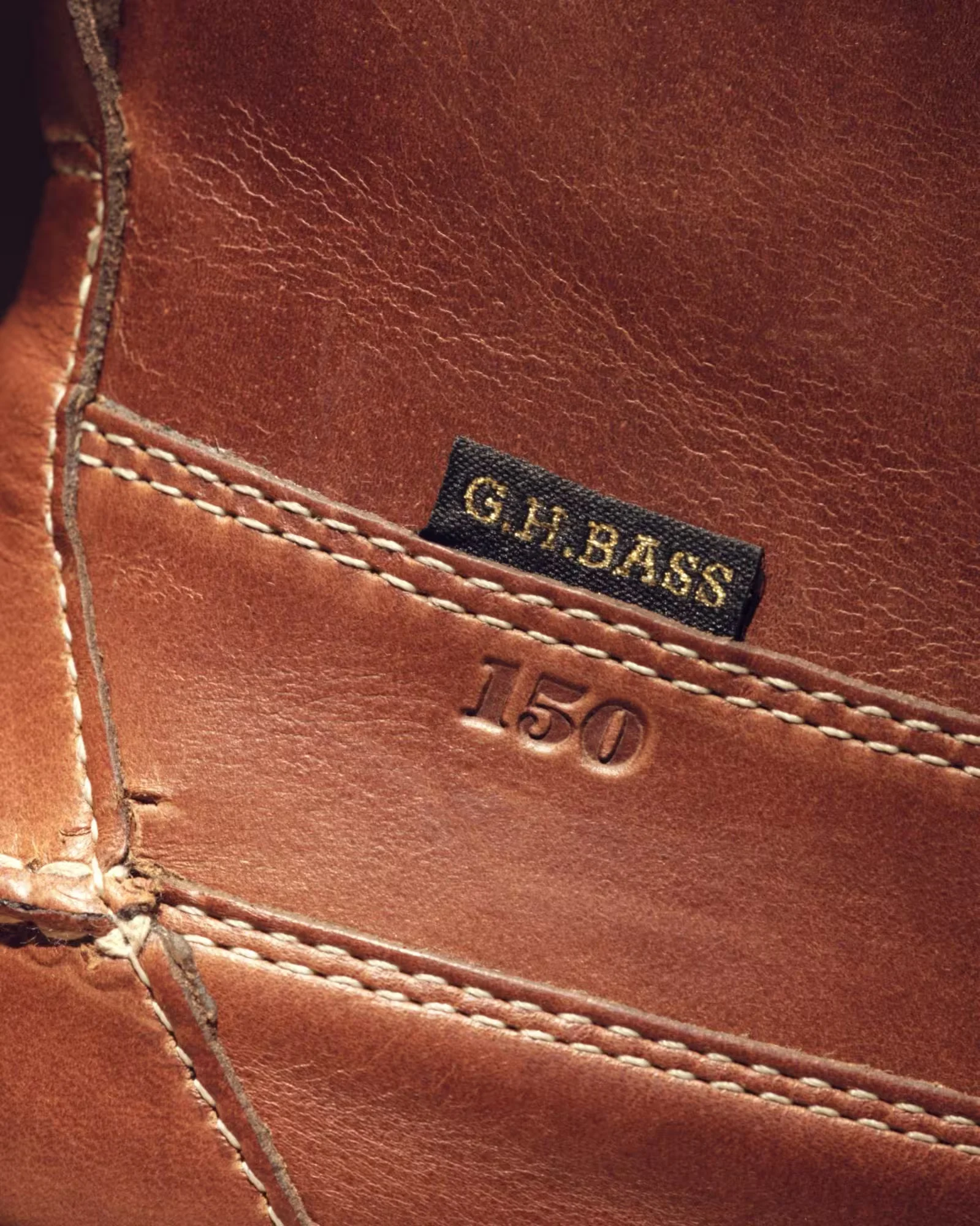
DRIFT AUDIO
Listen to this story
Choose a voice, then press play.
In 1936, G.H. Bass turned a Norwegian farm shoe into the first penny loafer. Ninety years and one moonwalk later, it’s still the shoe everyone recognizes.
Wilton, Maine is not a place most people could find on a map, and in 1876 it produced something that would eventually end up on the feet of presidents, jazz musicians and a pop star mid-moonwalk: a shoemaker named George Henry Bass, who started as a junior partner in a small local shoe firm and took full ownership of it within three years. He built the company that still carries his name, G.H. Bass, around one unglamorous idea: a shoe should be built to survive whatever it’s asked to do.
That idea produced a run of genuinely useful footwear long before it produced anything fashionable. The National Plow Shoe arrived in 1892 for farmers working fields in bad weather. The Bass Moccasin Cruiser followed in 1906, light enough for woodsmen to wear all day without their feet giving out. By 1910 there was the Rangeley, a moccasin named for a lake region in western Maine, and in 1918 the United States government contracted Bass to build an official aviation boot, rated to hold up at altitude in extreme cold. Polar explorer Richard Byrd wore Bass gear on his expeditions. Aviator Charles Lindbergh reportedly did too. Golfer Bobby Jones was an early customer. None of this had much to do with style. It had to do with whether the shoe worked, and for sixty years, that was the entire pitch.
It took decades for the company to formally acknowledge that one of its shoes had become bigger than the rest of the catalog. In 1988, Bass unveiled a Signature Collection built around three core styles, the Buc, the Rangeley and the Weejuns, an admission that by that point the loafer wasn’t just another item in the lineup but one of the three things the entire company stood for. Five years later, in 1993, the Classic Penny style within the Weejuns range was renamed the Leavitt Penny, a smaller piece of internal housekeeping that nonetheless shows a brand still actively tending to a shoe it had introduced nearly six decades earlier rather than letting it coast on reputation alone.
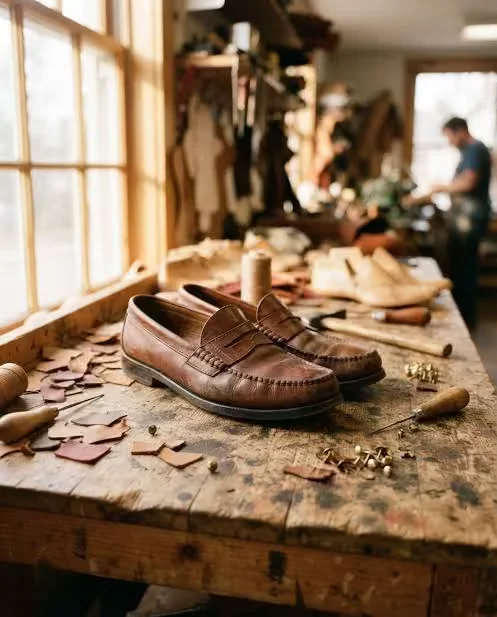
Handcrafted leather penny loafers on a cobbler’s workbench
stir
The shift happened in 1936, and depending on which version of the story you hear, it started with an Esquire editor who spotted something interesting on vacationing Norwegian farmers in Palm Springs: a slip-on moccasin, unlined, built to be stepped into without bending down to tie anything. The original was, by most accounts, a genuinely utilitarian piece of Norwegian farmwear, built for loafing around a field rather than for anywhere formal, which makes Palm Springs an almost accidental staging ground for the idea. It was a resort town built on the premise that people could dress down without dressing badly, and a low, unlined slip-on fit that mood better than anything with laces. Bass took the sil and reworked it, a little sturdier, a little dressier, into something that read as American even though the idea behind it plainly wasn’t. The name it landed on, Weejuns, was a coltish shortening of “Norwegian,” an inside joke about where the shoe had come from, stitched right into what it was called.
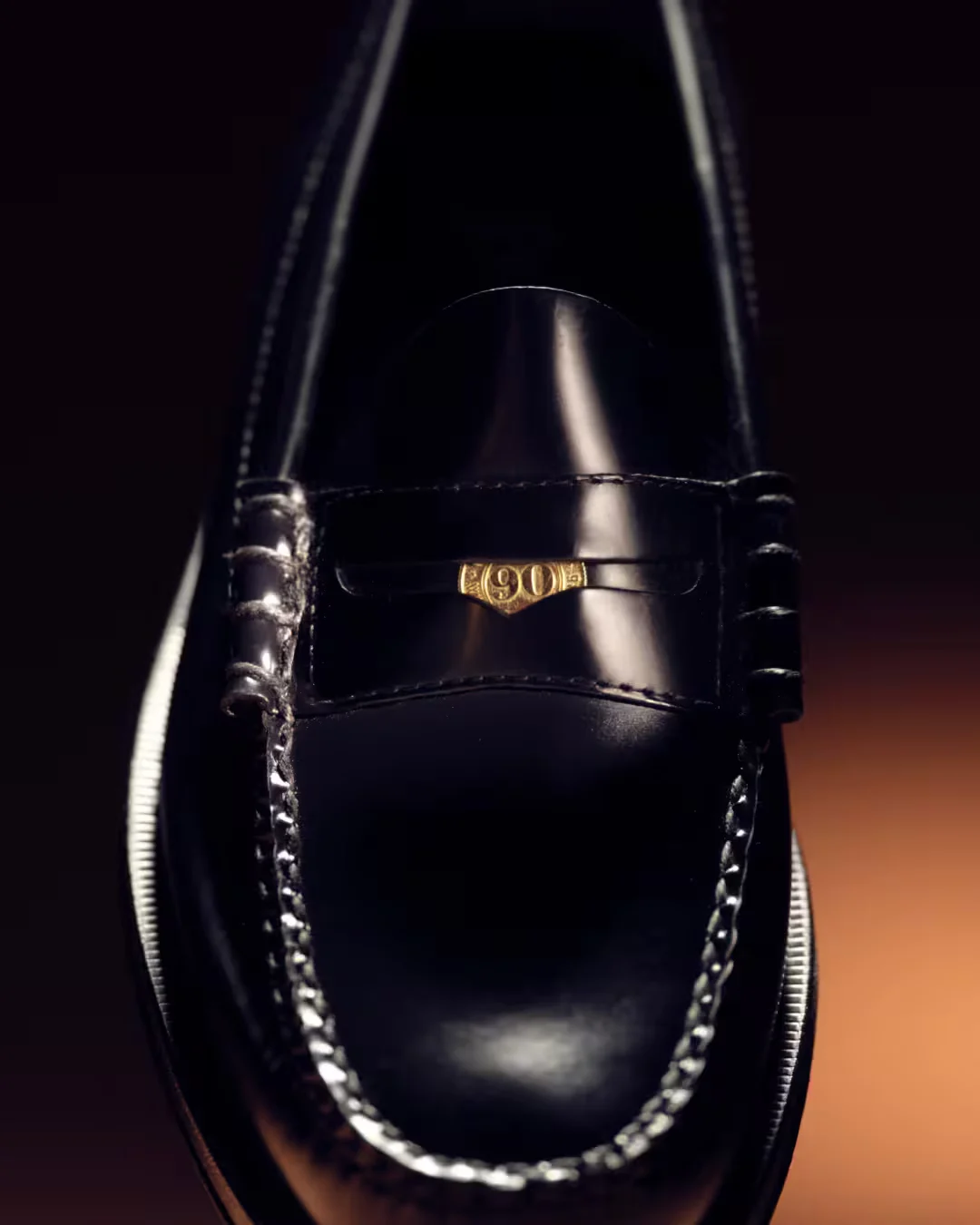
The detail that actually made the shoe famous had nothing to do with Bass. Sometime in the 1950s, college students started slipping coins into the diamond-cut slot on the Weejuns’ saddle strap, a purely decorative detail that had no function until students gave it one. Some say it was a penny for luck. Others say it was meant to be a dime, kept on hand for a payphone call in an era before anyone carried a phone in their pocket. Whichever version is true, the habit stuck hard enough to rename an entire category of footwear. There were loafers before the Weejuns. After the 1950s, the world mostly just had penny loafers, and Bass had accidentally built the shoe that defined the term.
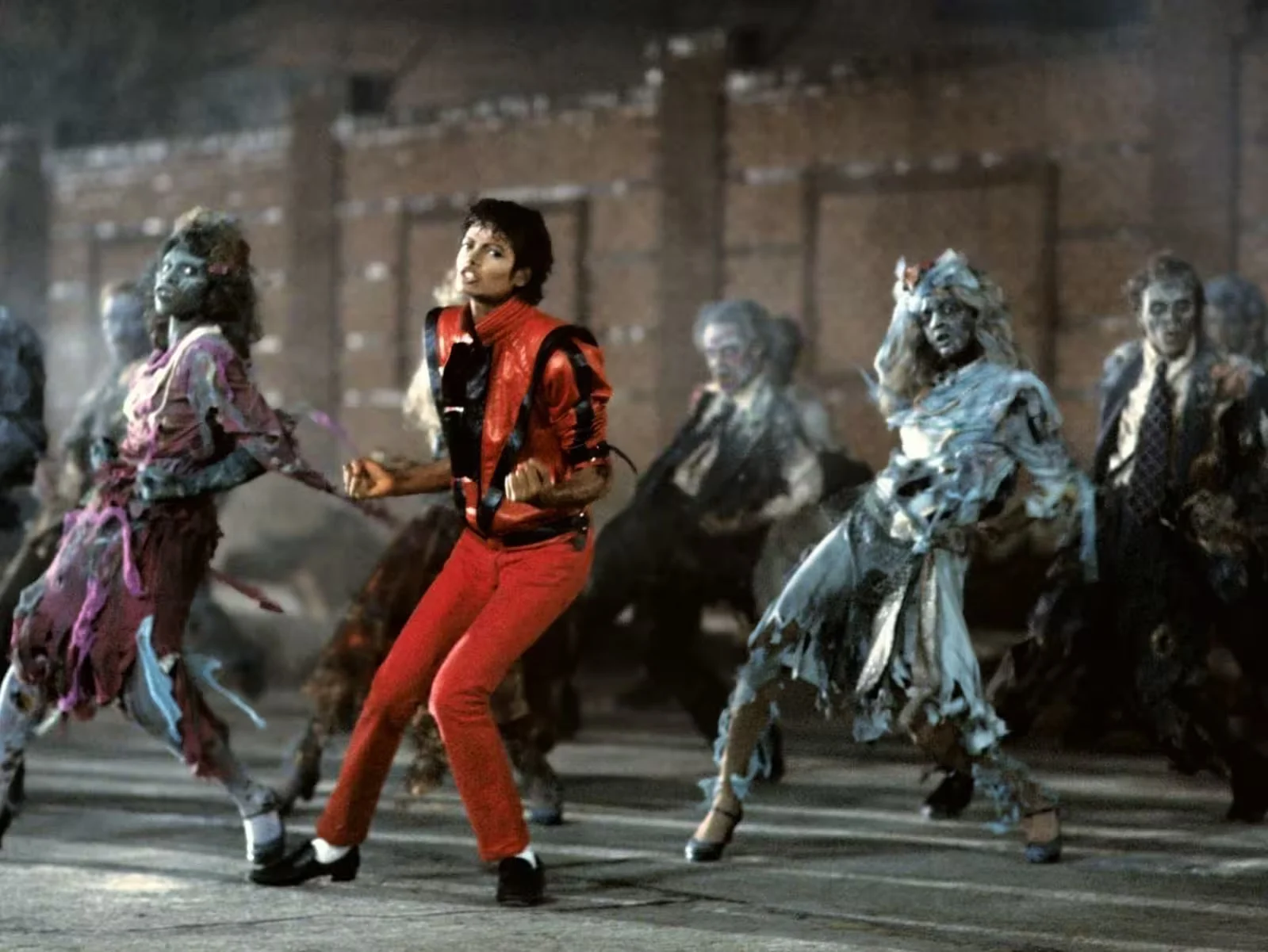
Michael Jackson performing the “Thriller” dance with zombies in the iconic 1983 music video.
show
Once the penny loafer had a name, it needed a wardrobe, and it found one first on East Coast college campuses, where Weejuns became close to a uniform for a certain kind of student through the 1950s. From there it moved fast and moved everywhere. John F. Kennedy wore them. So did Audrey Hepburn and jazz trumpeter Miles Davis, whose own relationship with tailoring made the loafer’s move from campus to stage feel inevitable rather than surprising. In Britain, Mod culture picked up the shoe in the early 1960s as part of a sharp, scooter-and-suit uniform built around imported American and Italian style, and the Northern Soul scene that followed later in the decade, built around all-night dancing to obscure American soul 45s at venues like Wigan Casino, kept the loafer in circulation as part of its own strict, understated dress code. By the 1970s, the shoe had also found its way into Britain’s Rude Boy scene, and in Italy, the Paninari subculture of the 1980s did something different again, pairing Weejuns with the kind of logo-heavy, brand-literate dressing that made the loafer read as a status symbol as much as a practical one, worn as proudly as any visible label. It’s a strange path for a farm shoe to take, moving from campus quads to dance halls to street-style capitals, but it’s also the same path most enduring pieces of American clothing eventually walk: invented for one purpose, adopted for another, then claimed by whichever subculture needs a shorthand for looking sharp without looking like they tried too hard.
Then Michael Jackson wore a pair of black Weejuns in the 1983 video for Thriller, directed by John Landis. It’s a small detail in a fourteen-minute short film built around werewolves and the walking dead, and it’s also the moment most often credited with moving the penny loafer permanently out of the collegiate box it had lived in for three decades. Thriller reshaped what a music video could be, went on to be recognized by Guinness World Records as the best-selling music video of all time, and in 2009 became the first music video inducted into the Library of Congress’s National Film Registry for its cultural significance. Every frame of it, including the ones with Jackson’s feet in them, got studied and restudied by an audience that eventually ran into the tens of millions. A shoe doesn’t need a marketing budget when it gets that kind of exposure. It just needs to already be good.
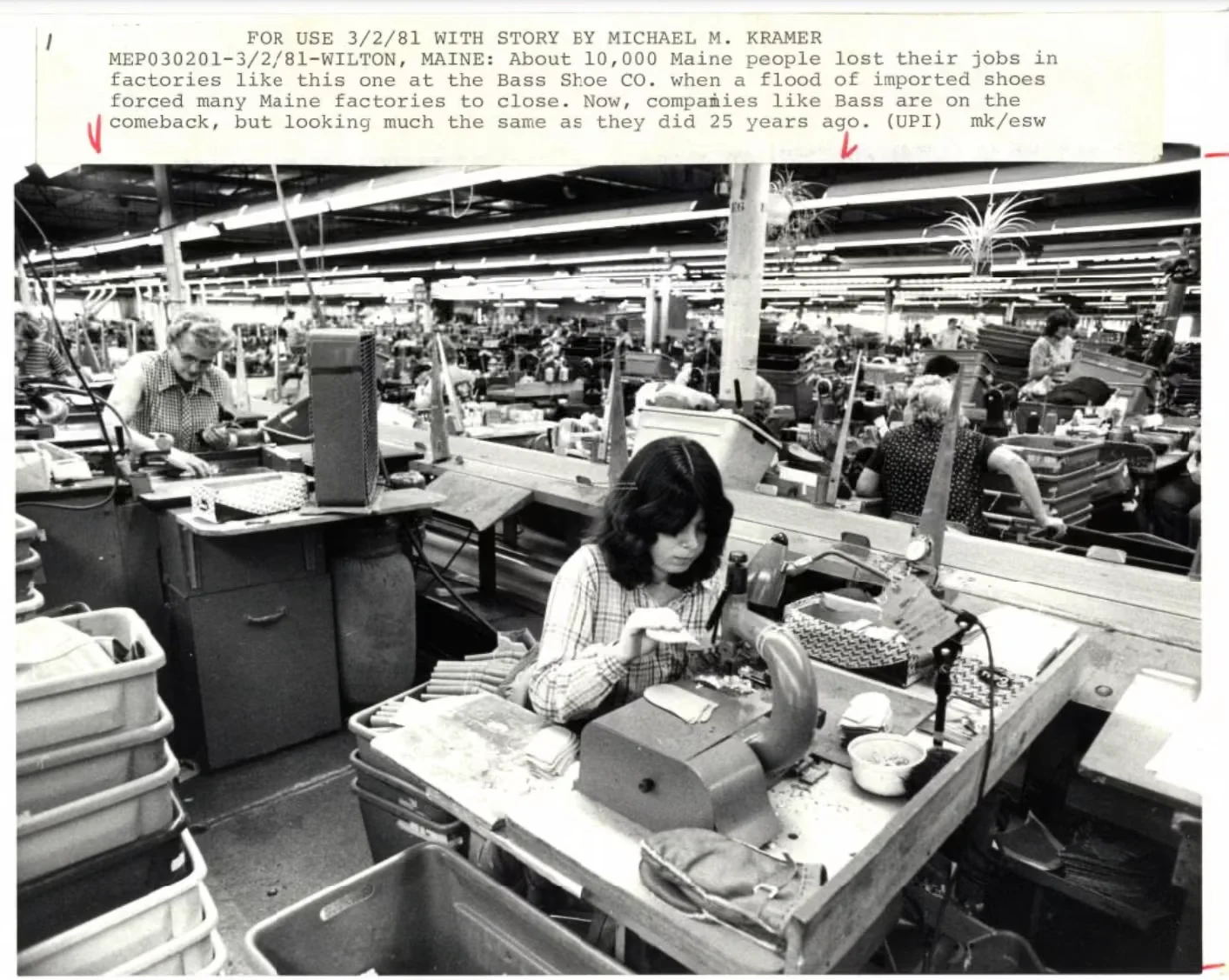
Workers at the Bass Shoe Co. factory in Wilton, Maine, March 2, 1981.
extend
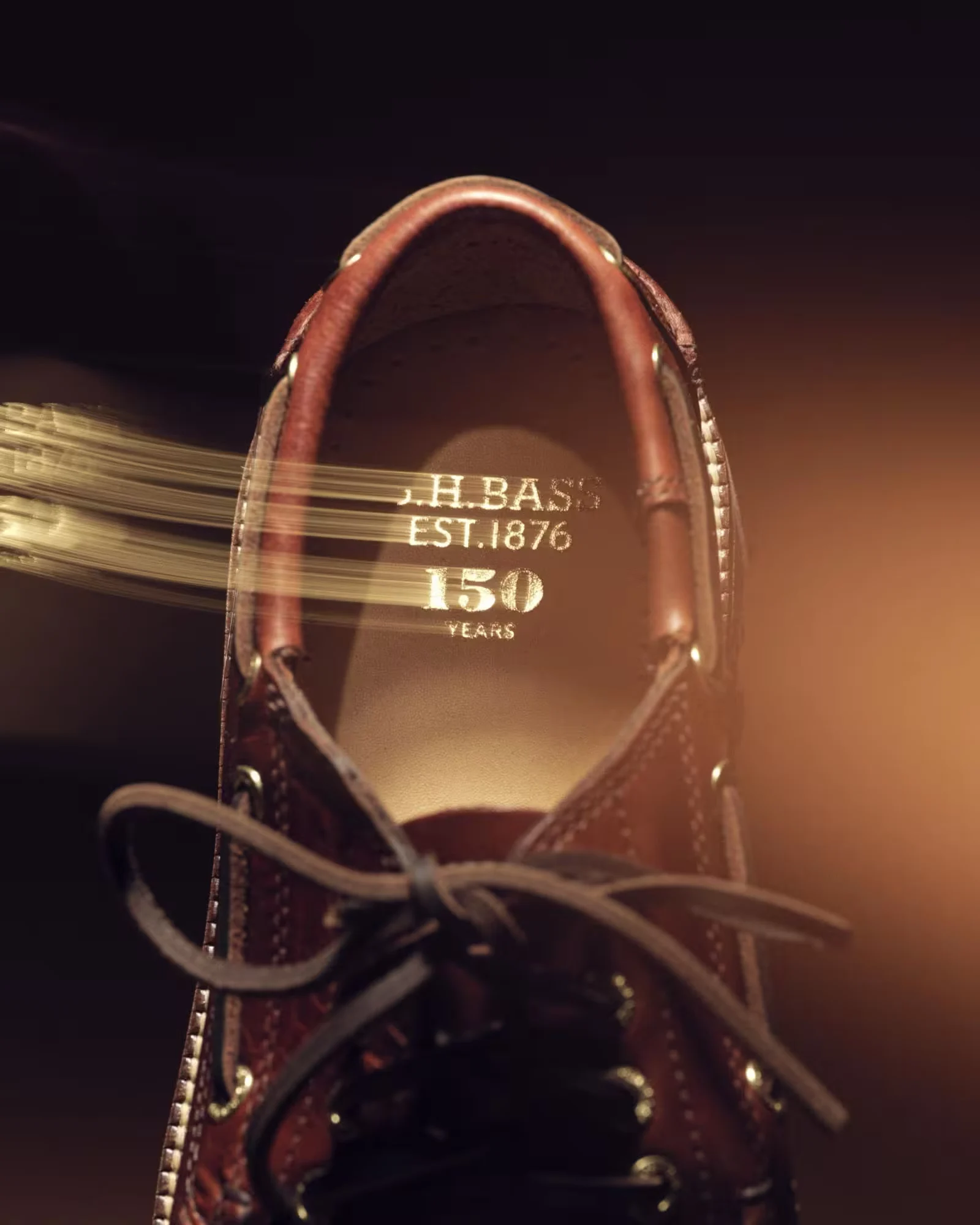
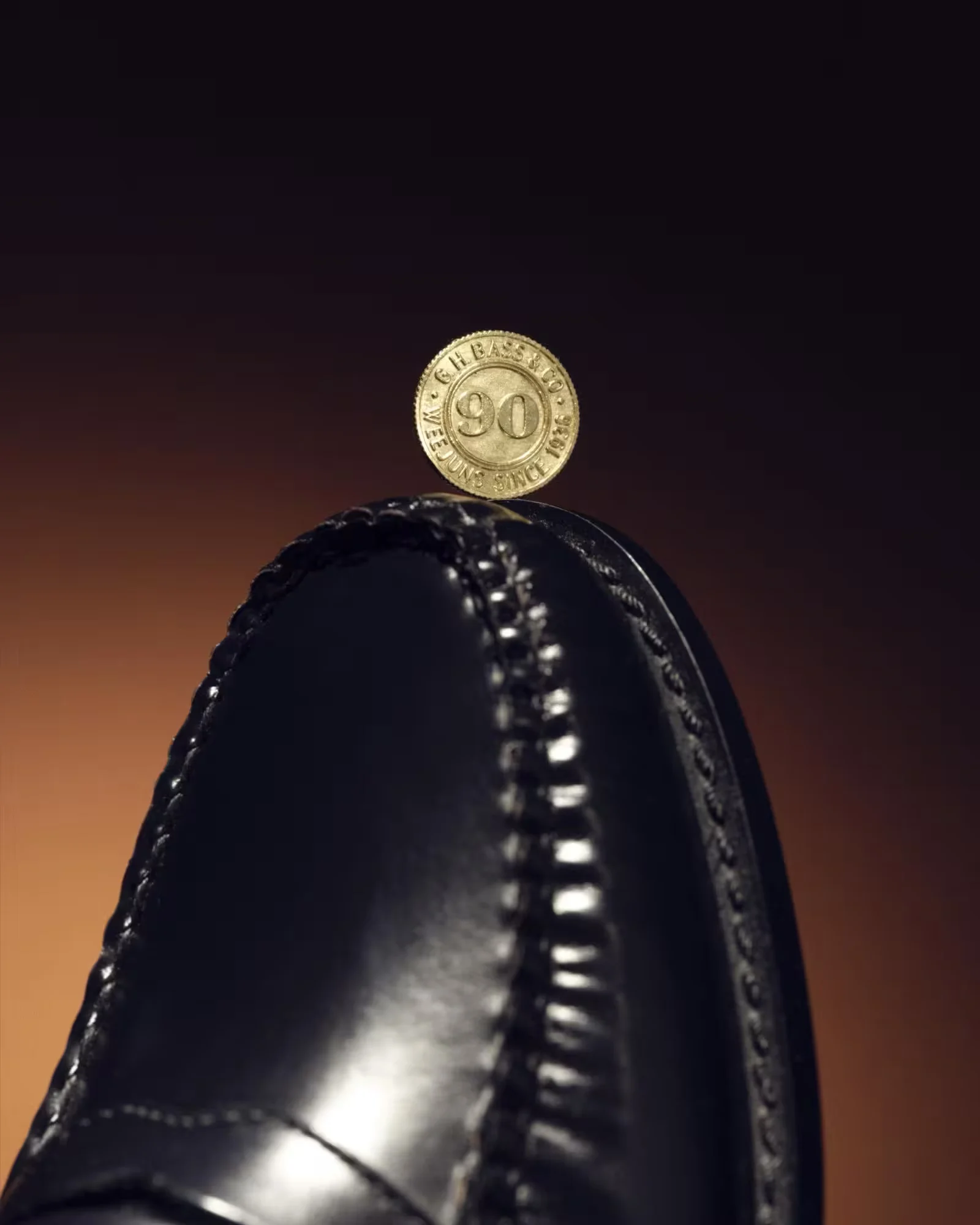
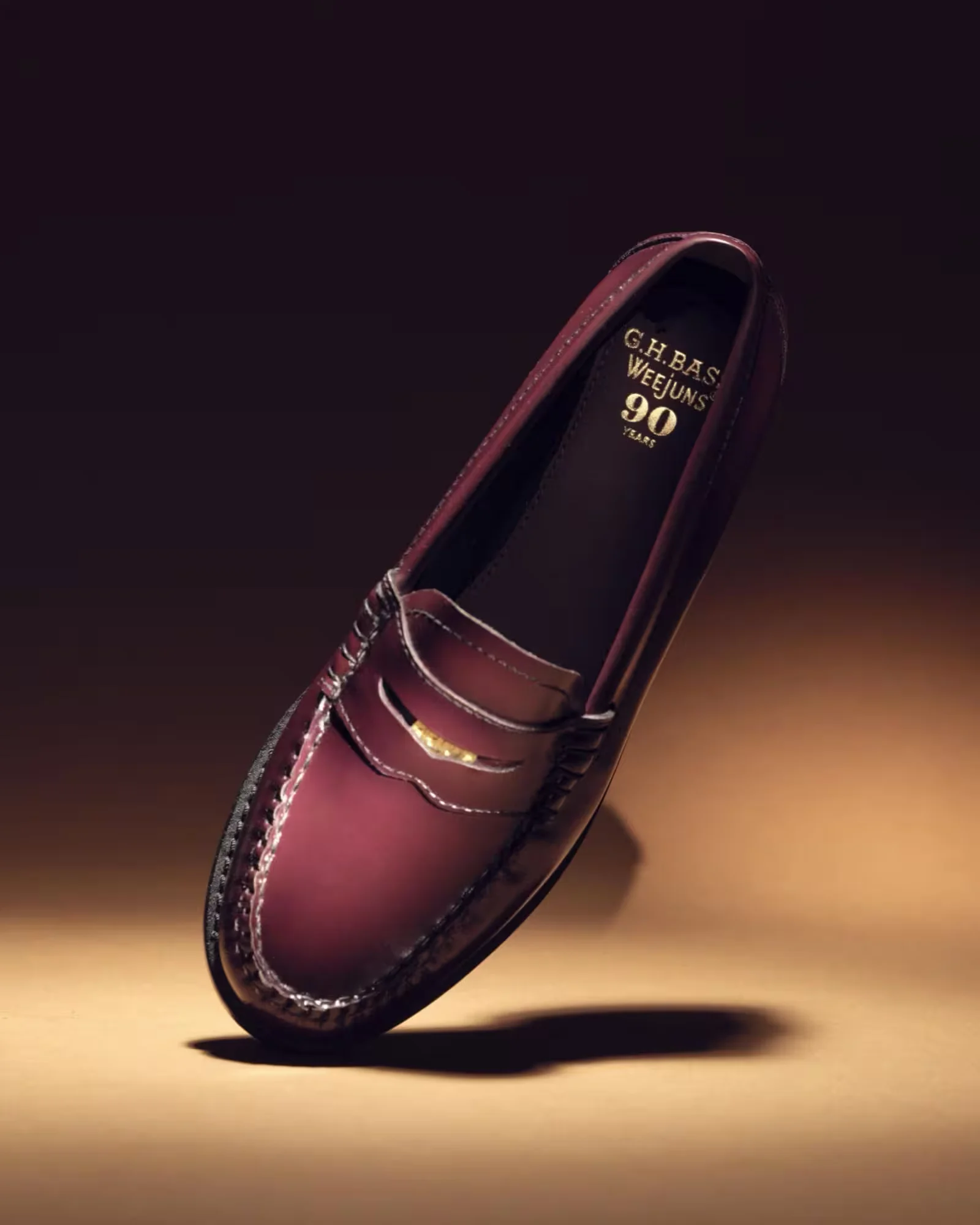
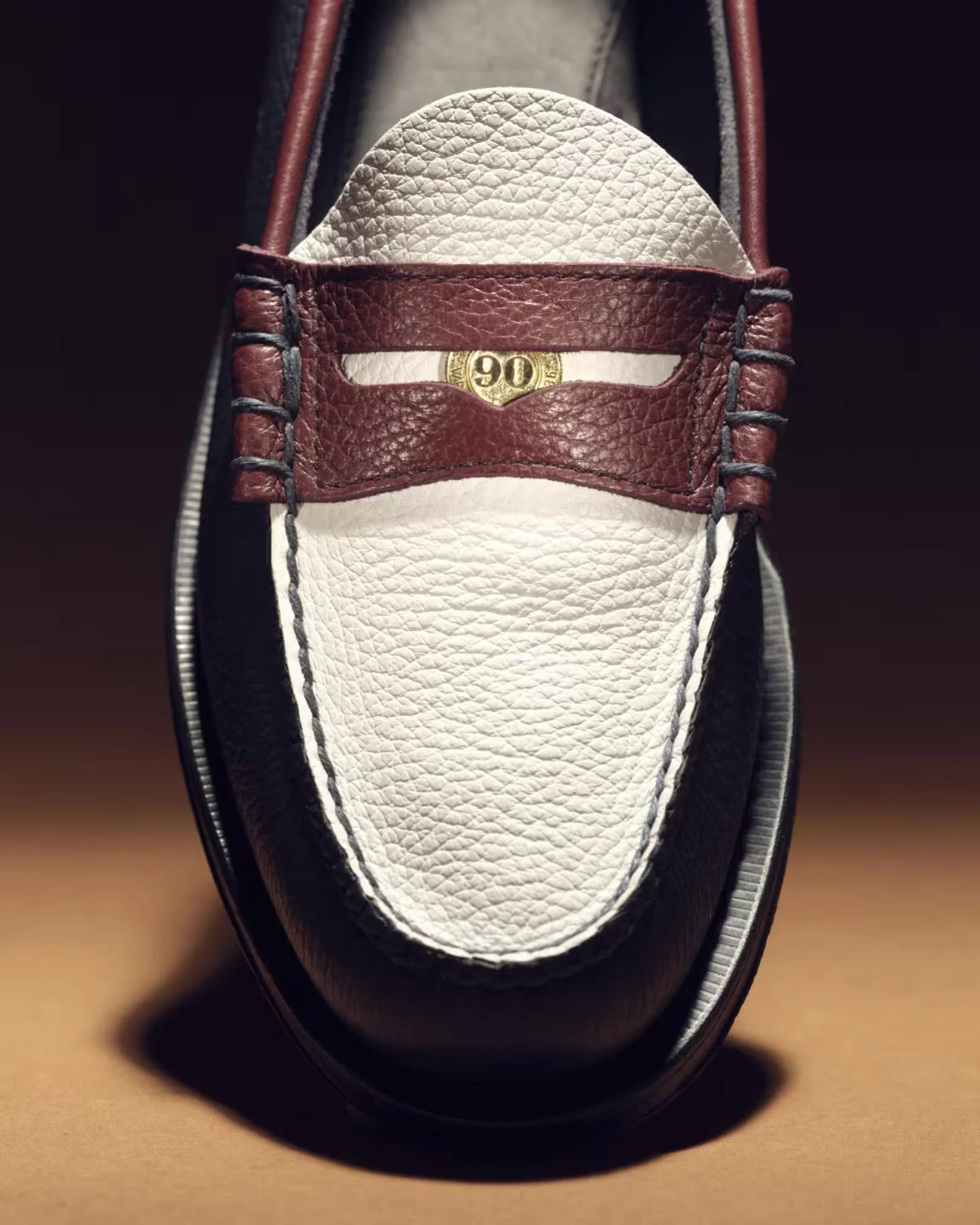
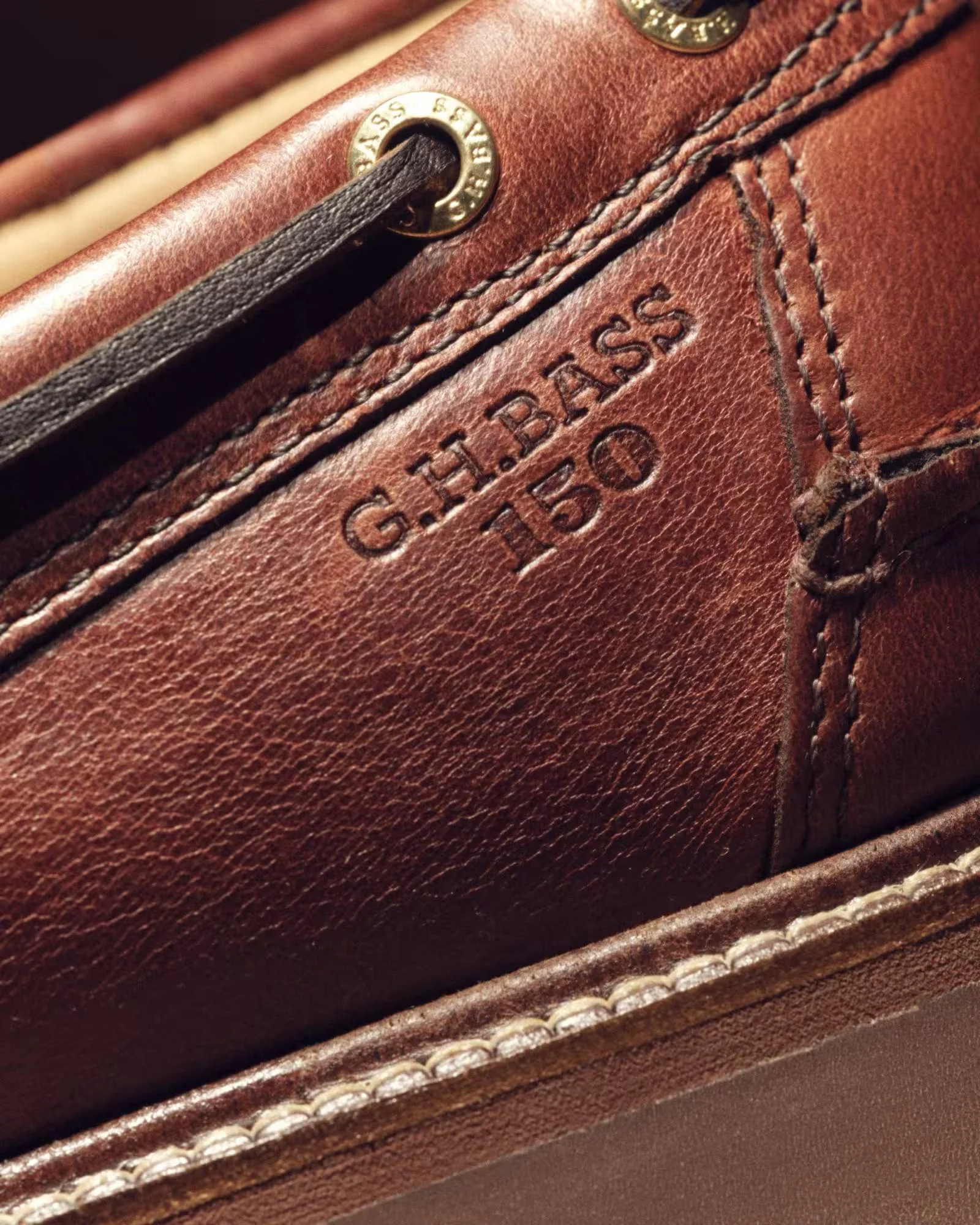
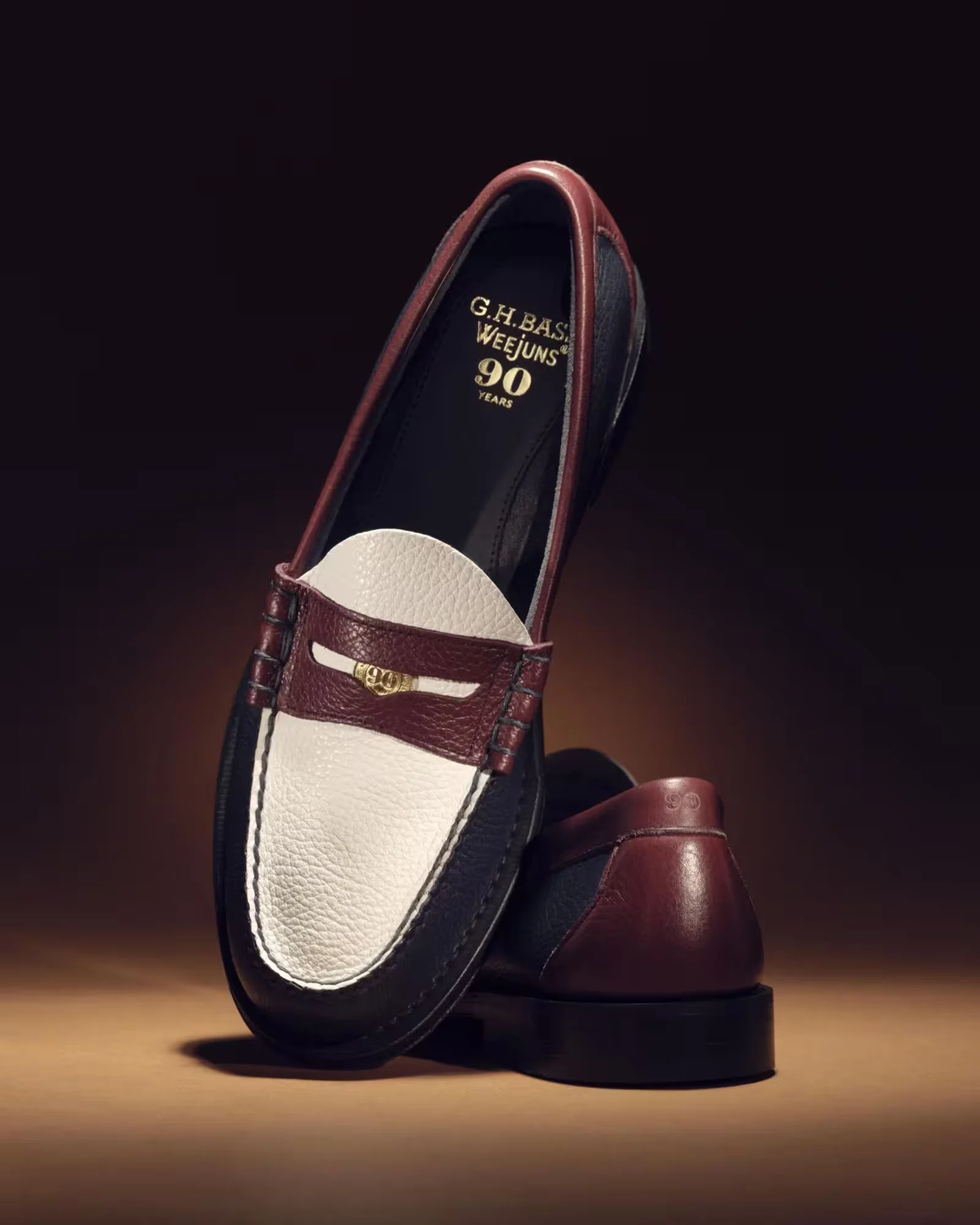
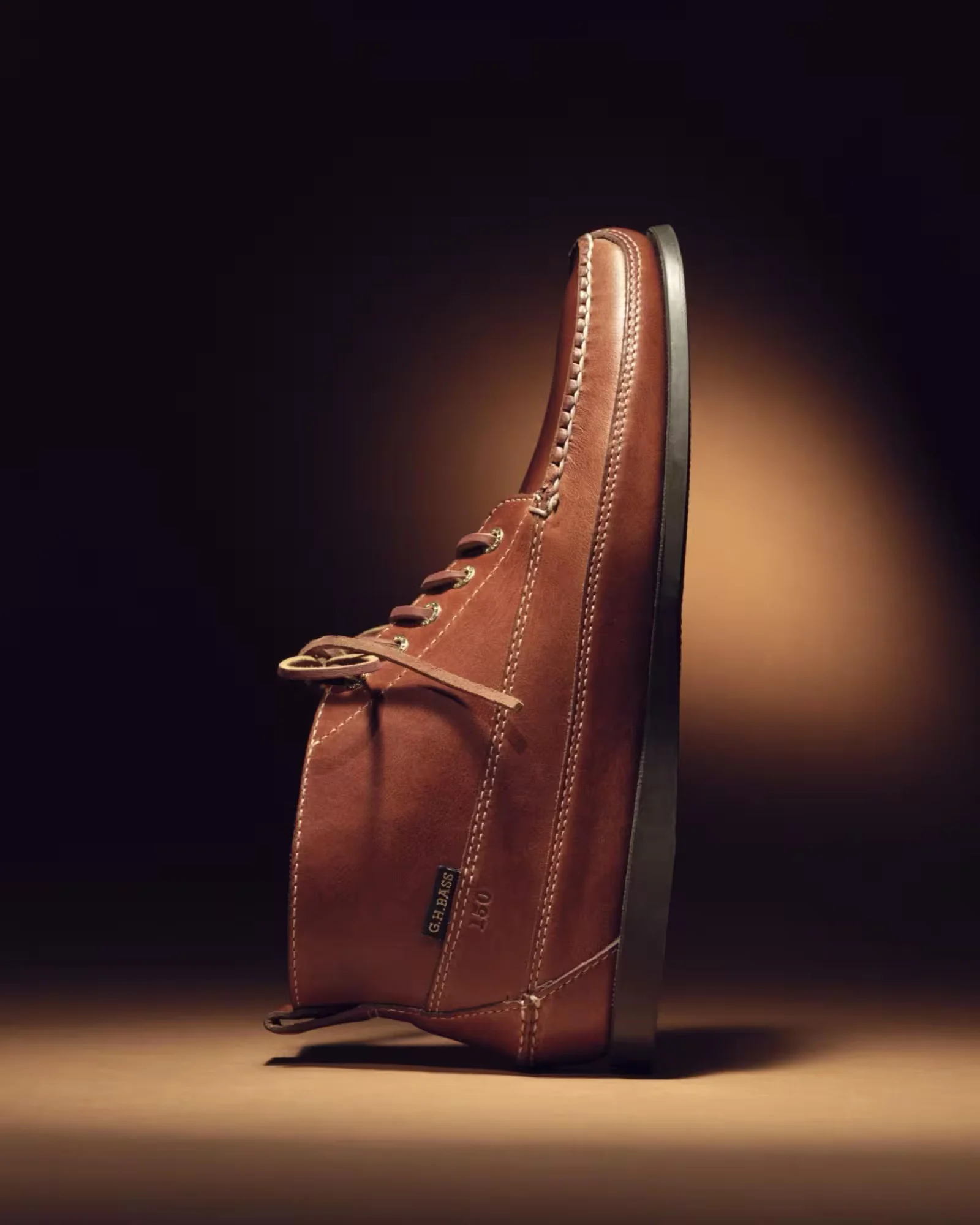
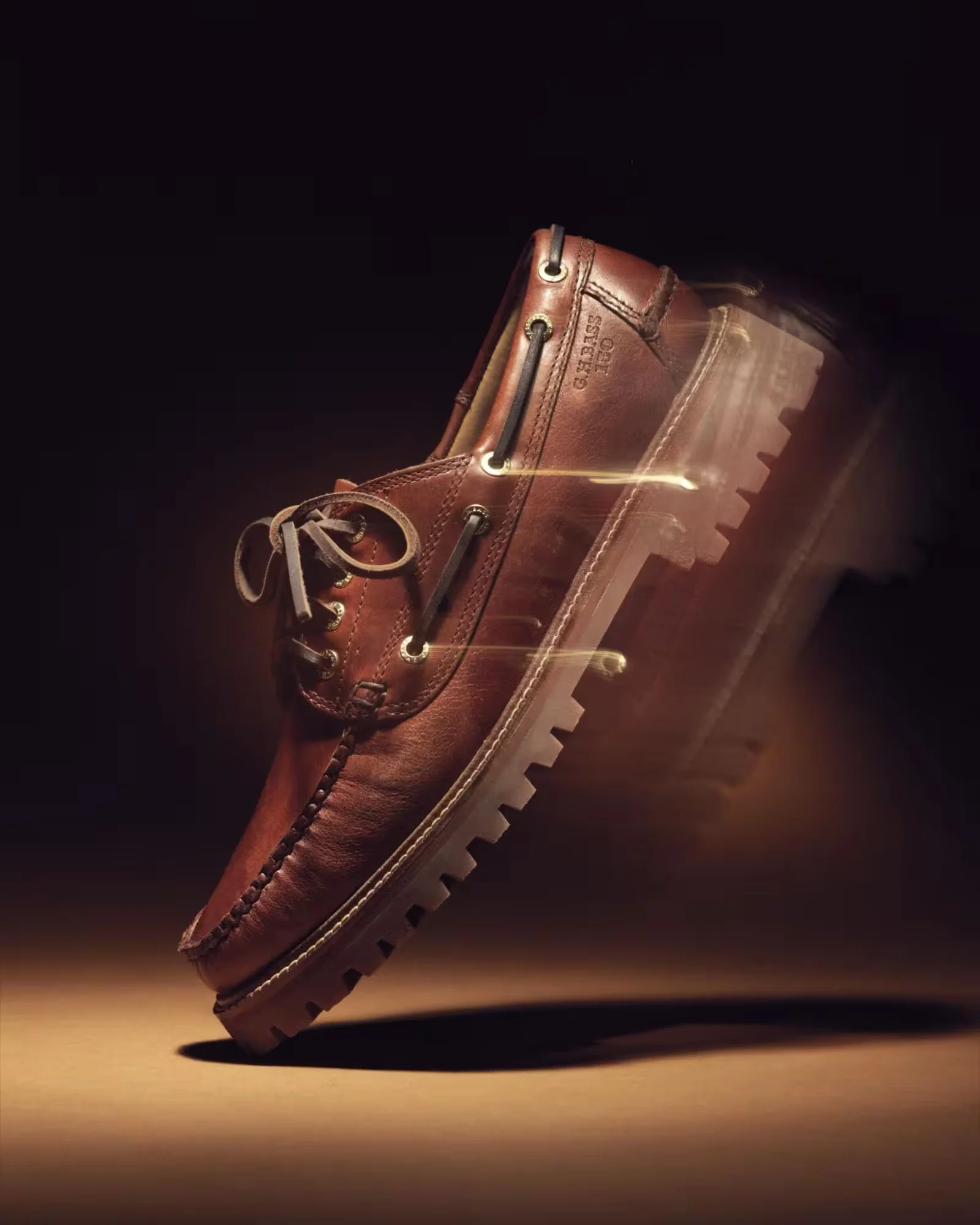
For 2026, Bass is marking both anniversaries with a single limited-run capsule rather than treating them as two separate stories. The centerpiece is the Larson Anniversary, offered in black and wine polished leather along with a tricolor version in wine, navy and white, each pair carrying a dedicated coin set into the saddle strap to mark the Weejuns’ ninetieth year specifically. Two boots return alongside it, the Ranger Moc and the Camp Moc, both tied to Bass’s outdoor-first origins rather than to the Ivy League chapter of the brand’s history. The penny detail gets its own spinoff too, in the form of a series of Anniversary Coins that revive historic Bass logos and graphics as small collectibles, a fairly literal way of returning to the coin-in-the-strap habit that gave the shoe its name in the first place.
The rollout is bigger than a product drop. The capsule launched during Paris Men’s Fashion Week and anchors a year-long program of events running through Paris, Milan, Berlin, London and New York, paired with archive storytelling and a run of collaborations that include Nepenthes’ Woburn Walk, Dover Street Market and Karl Lagerfeld. It’s a broader guest list than a single loafer typically pulls, and it points to how Bass wants the anniversary read: less a nostalgia lap for one product, and more a case for why a 150-year-old company still has a seat at the table.
It’s also not the first time Bass has treated the Weejuns’ birthday as an occasion worth marking. The brand released a 75th anniversary Weejuns collection in the years before this one, and has periodically revisited the archive through designer collaborations in between, including limited collections with Rachel Antonoff and Mark McNairy for women’s and men’s styles, plus an internationally distributed 2011 Weejuns collection designed with Tommy Hilfiger that reached some of Europe’s most prestigious fashion retailers. The habit of going back into its own history for new ideas isn’t new here. What’s different this time is the scale, with two anniversaries landing in the same calendar year and a company willing to treat that overlap as the whole campaign rather than a coincidence to work around.
The anniversary has already made it off the press release and onto the ground. In early August, the menswear shop Peggs & Son hosted G.H. Bass in Brighton to mark both milestones, pulling together pieces spanning from the foundational Weejuns through more experimental recent styles, with the Bass team walking guests through the archive and the thinking behind each iteration. It was a small, local version of the same argument the global campaign is making at scale: that a loafer this old isn’t a relic sitting still, it’s a shape that keeps finding new reasons to get reinterpreted.
Outside the anniversary capsule itself, the standing Weejuns range has grown well past the original two eyelets and a strap. Current styles run from the Lincoln to the 90s-influenced Layton II kiltie loafer, lug-soled builds aimed at a heavier winter rotation, and fisherman-style versions that borrow more from boat shoes than from the original Norwegian silhouette. None of that expansion changes the detail that still identifies the shoe at a glance, the slotted strap across the vamp, which is exactly why a capsule built around a coin in that same slot works as a birthday gift rather than a gimmick.
fin
Bass hasn’t been independently owned for most of its history. Chesebrough-Ponds bought the company in 1978, sold it to PVH in 1987, and PVH held it until 2013, when G-III Apparel Group acquired Bass for fifty million dollars. That ownership structure shifted again this year: Aldo Product Services, a division of the Aldo Group, signed a seven-year exclusive licensing agreement to design, manufacture, distribute, market and sell Bass footwear, bags and small leather goods starting with the spring and summer 2026 season, along with rights to manage the brand’s e-commerce platform and its distribution across authorized retail channels in North America. It’s the kind of structural change that rarely makes it into anniversary coverage, but it’s happening in the same year as the 150th, which makes it part of the same story rather than a footnote to it. The new range under APS got its first public look at an event during Paris Men’s Fashion Week in June, with the fuller spring and summer 2026 assortment shown to buyers at FFANY market week in New York in August, including a Bass x Corridor Hampton Boat Shoe and a Kiltie Ranger Moc built on the same silhouette carrying anniversary detailing into the new collection.
The market data backs up the timing. In Germany, one of the brand’s fastest-growing markets in Europe, year-over-year sales are up 99 percent and digital traffic is up 148 percent, with retail partners including Breuninger, VooStore, BSTN, HHV and Suppa expanding Bass’s wholesale footprint alongside its own direct-to-consumer business. Bass has pointed to younger, fashion-conscious shoppers drawn in by trends like “Dark Academia” and “Preppy Chic” as part of that growth, aesthetics that treat the penny loafer less as a relic of 1950s campus life and more as a building block for a current, deliberately referential wardrobe. Recent collaborations, including a run of colorways with Corridor and an upcoming project with Pop Trading Company, suggest Bass is betting the loafer has more decades left in it than the ninety it’s already logged, and that a new licensing partner with retail muscle behind it is meant to help make that bet pay off.
Related Articles

Spotify Let Parents Omit Nursery Rhymes Out Of The Taste File
15 September 2026. Toggle off kids and family music. Wrapped, Discover Weekly, Daily Mix. Retroactive. […]