DRIFT AUDIO
Listen to this story
Choose a voice, then press play.
Three Sega franchises are becoming three unrelated Netflix projects, with The Naked Gun’s writers driving the first one.
Netflix and SEGA announced a new multi-title partnership on September 14, and the three projects attached to it share almost nothing beyond the SEGA logo: a live-action Crazy Taxi comedy, a new animated Sonic the Hedgehog series built for a far younger audience than the one already watching Sonic Prime, and a live-action crime drama pulled from Stranger Than Heaven, the fifty-year Yakuza prequel RGG Studio has been building toward since 2024. SEGA’s own frame draws a line through three different eras of its catalog at once, from a 1999 arcade racer to a game that hasn’t shipped yet, and none of the three projects has a director, cast, or release window attached so far beyond the writers and producers named at announcement. Crazy Taxi goes first, and it arrives with an unusually specific credential attached: the writers are Dan Gregor and Doug Mand, who spent the last two years turning The Naked Gun into 2025’s biggest studio comedy.
stir
The Crazy Taxi movie is the first project moving under the new deal, and Netflix has described it as a live-action comedy built to preserve the game’s “chaotic, comedic spirit.” Writing duty falls to Dan Gregor and Doug Mand, who co-wrote The Naked Gun’s 2025 reboot alongside director Akiva Schaffer. That film, starring Liam Neeson and Pamela Anderson as a new generation of the Drebin family, opened on a $42 million budget and closed its run at $102.1 million worldwide, making it the rare studio comedy that actually turned a profit in theaters last year. Gregor and Mand have worked with Schaffer before, on 2022’s Chip ‘n Dale: Rescue Rangers, and their credits also include the sitcom Crazy Ex-Girlfriend. Producing Crazy Taxi are Neal H. Moritz and Toby Ascher of Original Film alongside SEGA’s Toru Nakahara, the same trio behind the Sonic the Hedgehog film franchise, which suggests SEGA is routing its movie business through people it already trusts rather than starting fresh with each new title. Moritz’s own producing credits stretch well beyond Sonic, anchored by decades on the Fast & Furious franchise, which makes him an unusually heavyweight producer to have attached to a project built around a twenty-seven-year-old arcade game rather than an established blockbuster property.
Crazy Taxi itself is a genuine relic of a specific console era. Developed by SEGA’s in-house Hitmaker team and released to arcades in February 1999, it landed on the Dreamcast the following year and became one of the best-selling games the system ever had, moving more than a million copies in the US alone. The premise, popularized by creator Kenji Kanno’s own account of a traffic jam that inspired the pitch, put players behind the wheel of a cab driver racing an unforgiving clock, rewarded for reckless driving rather than penalized for it. The game became almost as well known for its soundtrack, licensed tracks from The Offspring and Bad Religion, as for its gameplay, and it was an early, aggressive user of in-game brand placement, sending players toward a Pizza Hut or a Tower Records for bonus fares. SEGA even patented the core gameplay loop, which led to a lawsuit over The Simpsons: Road Rage that was eventually settled out of court. The franchise had been dormant on the console side for over two decades before SEGA revealed Crazy Taxi: World Tour at the Xbox Games Showcase this past June, again led by Kanno, with returning driver Axel chasing down a crew of masked thieves who steal his taxi and drag him into a globe-spanning pursuit across five new cities. It’s the series’ first entry with online multiplayer, and it arrives as part of a broader SEGA effort to revive dormant franchises that has also brought back Shinobi. With World Tour set for 2027, the movie is on a track to arrive close to the same window as the game reboot rather than trailing years behind it, the more typical pattern for adaptations like this.
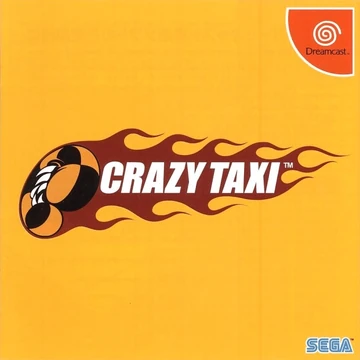
Crazy Taxi for the SEGA Dreamcast.
huh
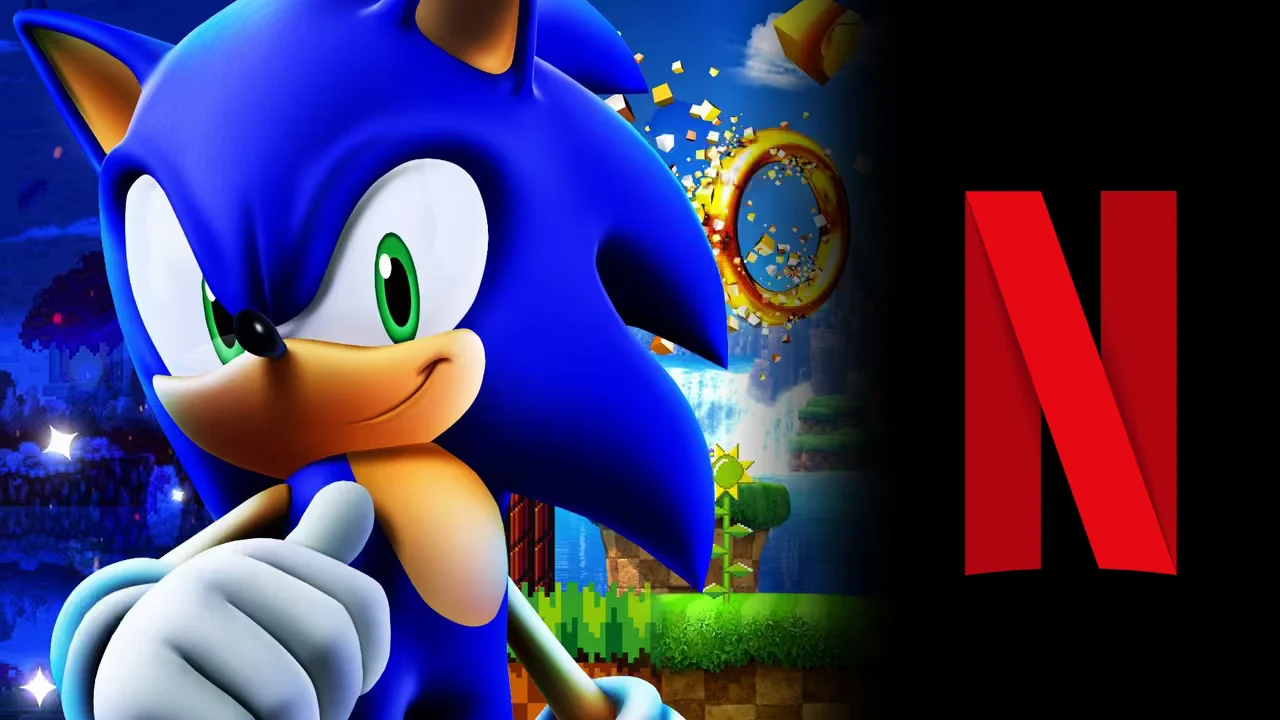
The second project is a new animated Sonic series, currently in development with Carlos Stevens and Toru Nakahara, aimed at what Netflix and SEGA are calling an “upper pre-school” audience, a meaningfully younger target than Netflix’s existing Sonic show. That existing show, Sonic Prime, ran three seasons and twenty-three episodes between December 2022 and January 2024, produced jointly by SEGA of America, Netflix Animation, WildBrain, and Man of Action Entertainment, and built its story around a shattered multiverse Sonic has to piece back together after a battle with Dr. Eggman goes wrong. It skewed toward kids six to eleven and the franchise’s longtime fan base. The new series is being pitched in noticeably different terms, described internally as high-energy and comedic but emotionally grounded, built for a crowd that wants a little attitude without the multiverse-scale stakes Sonic Prime leaned on. Sonic Prime itself was run by Man of Action Entertainment, the studio behind Ben 10 and the Big Hero 6 spin-off series, working alongside WildBrain’s Vancouver animation team; neither studio has been confirmed yet for the new pre-school-focused show, which is currently attached only to Stevens and Nakahara. It’s a narrower, younger show rather than a sequel or replacement, which lets Netflix run two active Sonic properties aimed at two different age brackets simultaneously rather than picking one lane. That kind of doubling-up tracks with how big Sonic has gotten as a property generally: series sales and free-to-play downloads across every game and platform passed 1.77 billion by 2024, and the live-action Sonic film series alone had crossed $1 billion worldwide by January 2025. Very few SEGA properties get that kind of format-spanning treatment, which is part of why the new Crazy Taxi and Stranger Than Heaven projects stand out as a departure rather than more of the same.
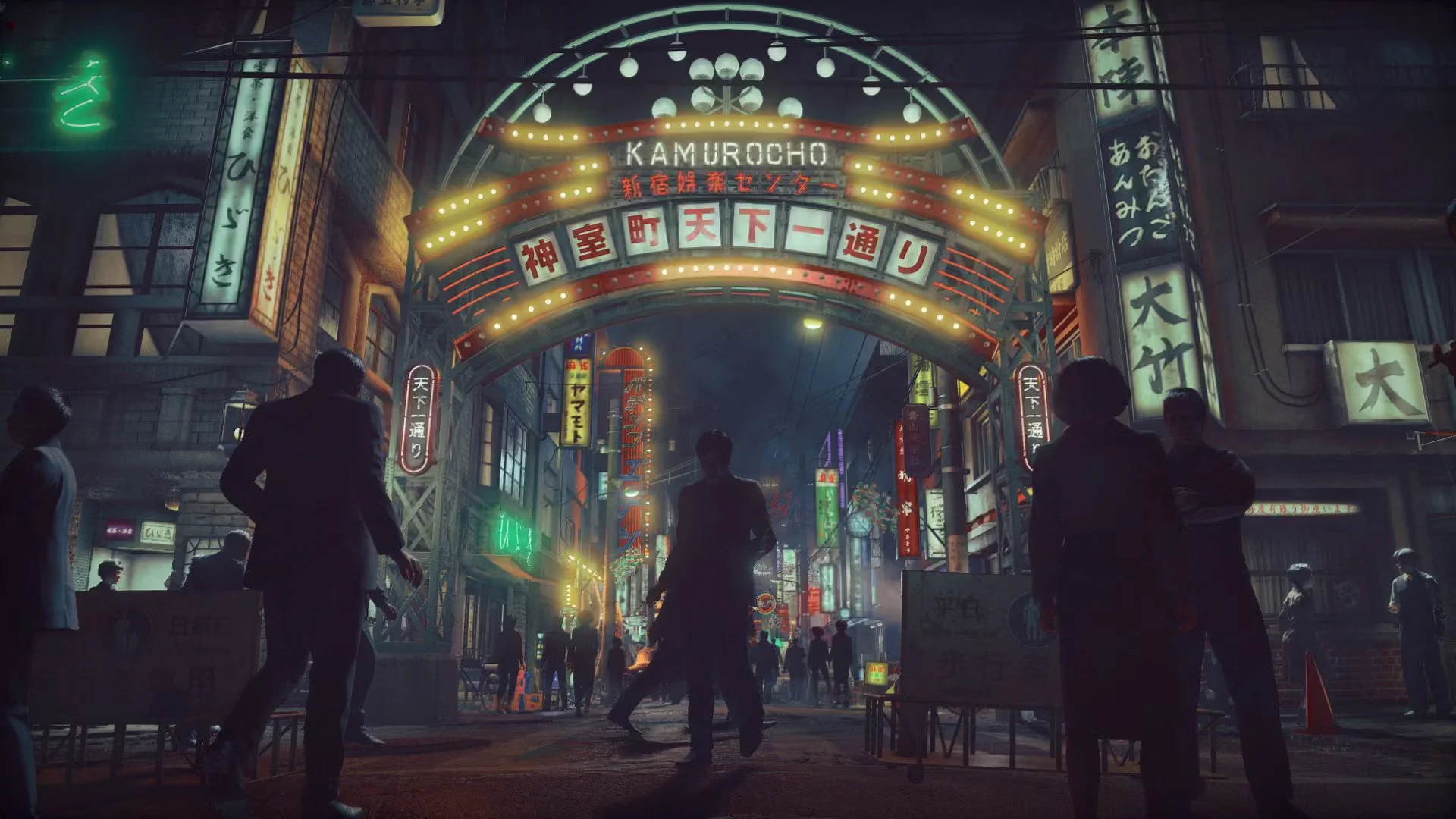
Kamurocho’s Tenkaichi Street gate in 1965, as seen in Stranger Than Heaven.
extend
The most unusual project on the slate is also the one built on the least finished game. Stranger Than Heaven comes from RGG Studio, the SEGA subsidiary that has produced every mainline Yakuza and Like a Dragon game since 2012’s Yakuza 5 and traces its own roots back to SEGA’s in-house CS1 team. It was first shown, under the placeholder title Project Century, at The Game Awards in December 2024, and RGG Studio spent most of 2026 confirming what fans had suspected: this is a direct prequel to the entire Yakuza mythology, dramatizing the founding of the Tojo Clan, the criminal organization at the center of nearly every game in the series. The story follows Makoto Daito, a young man of mixed American and Japanese heritage who leaves San Francisco as a stowaway in 1915 rather than stay in a country that won’t accept him, and the game tracks him across fifty years and five Japanese settings, from 1915 Kokura through 1929 Kure, 1943 Osaka, and 1951 Atami, ending in 1965 Shinjuku. RGG Studio has built an unusual combat system around independently controlling the left and right sides of Makoto’s body, and layered in a music-management side activity where sounds sampled from the city become songs performed by bands the player runs as an income stream. The most attention-grabbing detail so far is the cast: rapper Snoop Dogg voices Orpheus, a smuggler who guides Makoto through Japan and leans on his command of the language to expand his own operation, while Japanese singer Ado, who performed the theme for One Piece Film: Red, also joins the cast and shares the game’s own theme song with Snoop Dogg. It’s a casting choice that reaches well past RGG Studio’s usual audience, closer in spirit to how other Japanese franchises have used international musicians to broaden their reach than to the studio’s own prior voice work. Stranger Than Heaven is set to release in winter 2026 on PlayStation 5, Xbox Series X/S, and PC.
For a studio that built its identity on Kamurochō, its fictional stand-in for Tokyo’s Kabukichō district, Stranger Than Heaven is a bigger swing than it might first appear. The game moves the action through real cities across real decades, from Kokura and Kure to Osaka, Atami, and eventually Shinjuku, and it drops the series’ familiar brawler combat in favor of the two-handed system built around Makoto. It’s the first time RGG Studio has attempted an origin story for the Tojo Clan at all, after roughly two decades of games that treated the organization’s founding as settled backstory.
The movie adaptation, produced by Toru Nakahara, is a live-action crime drama rather than a straight retelling, and Netflix’s own description of it, a foreigner who claws his way from destitute stranger to feared yakuza to entertainment tycoon, tracks closely with Makoto’s arc in the game, music-industry side hustle included. What’s notable is the timing: this film was announced before most players will have even had a chance to finish the game it’s based on, a far tighter turnaround than the years-later adaptations that have defined most of the genre until now, including SEGA’s own Sonic movies, which arrived decades after the games that inspired them.
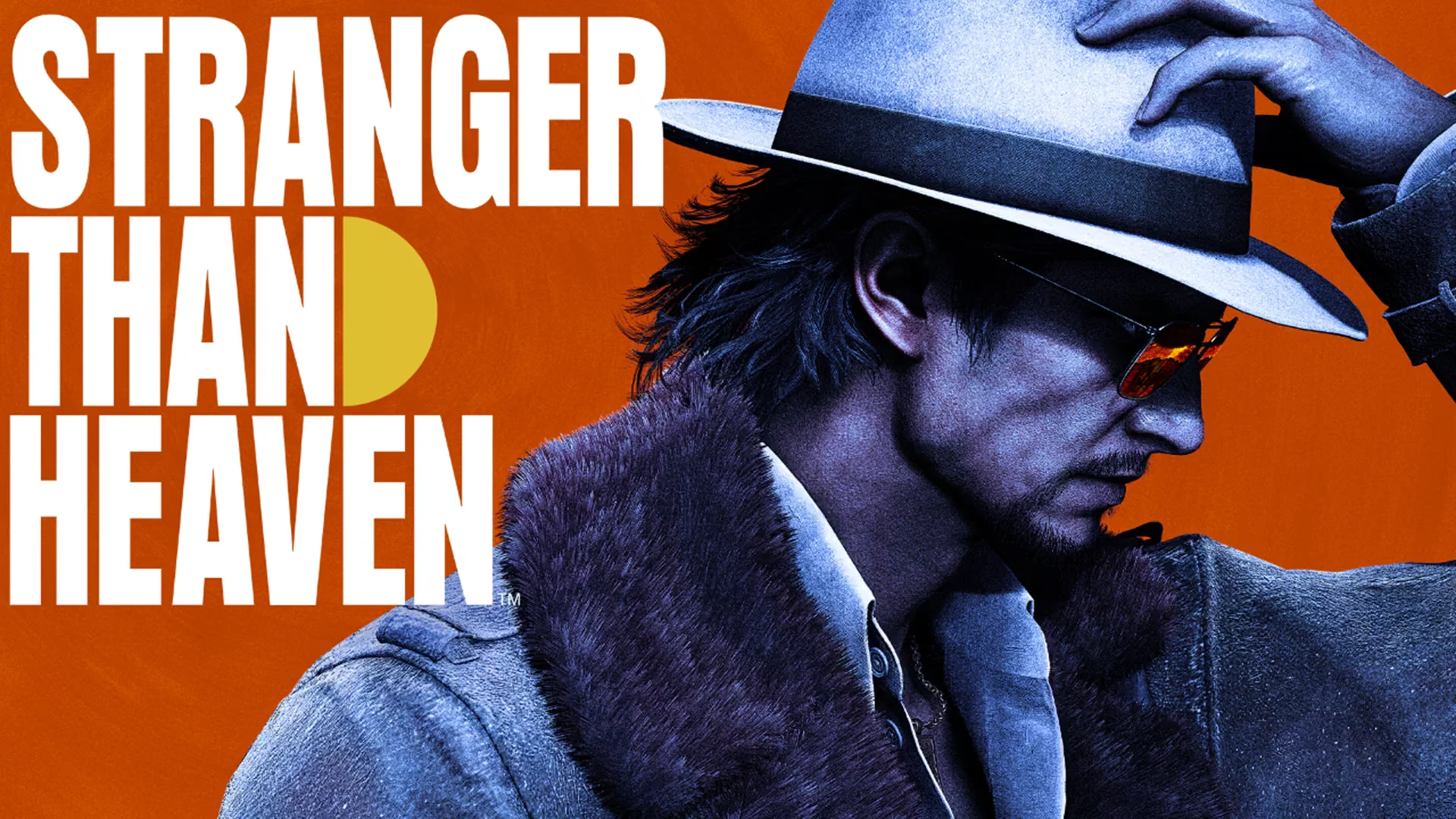
Official cover art for Stranger Than Heaven, the upcoming action-adventure game from Ryu Ga Gotoku Studio and SEGA.
fin
Netflix’s VP of Nonfiction and Transmedia, Brandon Riegg, framed the SEGA deal as a natural extension of what the platform already does well, saying great games already have “characters people love, worlds they know by heart, and fandoms that show up.” SEGA president and COO Shuji Utsumi struck a similar note in his own statement, calling the three projects only the beginning of what the partnership could produce, and Nakahara, speaking as SEGA’s head producer, described the tonal range across the slate as running from cute-but-cool for Sonic to hilariously chaotic for Crazy Taxi to a “badass action drama” for Stranger Than Heaven. None of that framing is unusual for a press announcement, but it does line up with how deliberately different the three actual projects are from one another.
The SEGA titles join a Netflix gaming slate that’s grown considerably even by the standards of a company that has spent the last few years pushing into interactive and game-adjacent content. Already in some stage of production are a live-action Assassin’s Creed series, a live-action Gears of War film, animated adaptations of Minecraft, Magic: The Gathering, and Clash of Clans, a competition series built around the cooking game Overcooked, second seasons of Cyberpunk: Edgerunners and Splinter Cell: Deathwatch, and the third and final season of Devil May Cry. That’s a genuinely wide spread of publishers and genres for one company to be juggling at once, covering a stealth franchise, a tabletop card game, a mobile strategy title, and a cooking party game alongside prestige anime and now three separate corners of SEGA’s catalog. Against that backdrop, the SEGA deal reads less like a single licensing agreement and more like Netflix filling out a genre spread it’s been assembling deliberately, one publisher and one format at a time, treating video games less as a novelty source of IP and more as a standing pipeline alongside books and comics. SEGA, for its part, gets to test whether Sonic’s screen success can be repeated with properties that have never had a mainstream audience outside the games themselves, using the exact producing team that already made that bet work once.
As of this writing, no release windows have been set for any of the three new projects. All three remain in active development, with Crazy Taxi described as the furthest along by virtue of already having writers and producers attached. What the announcement does establish clearly is sequencing rather than scheduling: Crazy Taxi first, with Sonic and Stranger Than Heaven following at a pace SEGA and Netflix haven’t specified.
Related Articles

Spotify Let Parents Omit Nursery Rhymes Out Of The Taste File
15 September 2026. Toggle off kids and family music. Wrapped, Discover Weekly, Daily Mix. Retroactive. […]