DRIFT AUDIO
Listen to this story
Choose a voice, then press play.
Ten kilowatts, rattan seats and a €85,000 starting price: Garage Italia’s 500 Spiaggina rebuilds Ghia’s 1958 beach car for the yacht crowd.
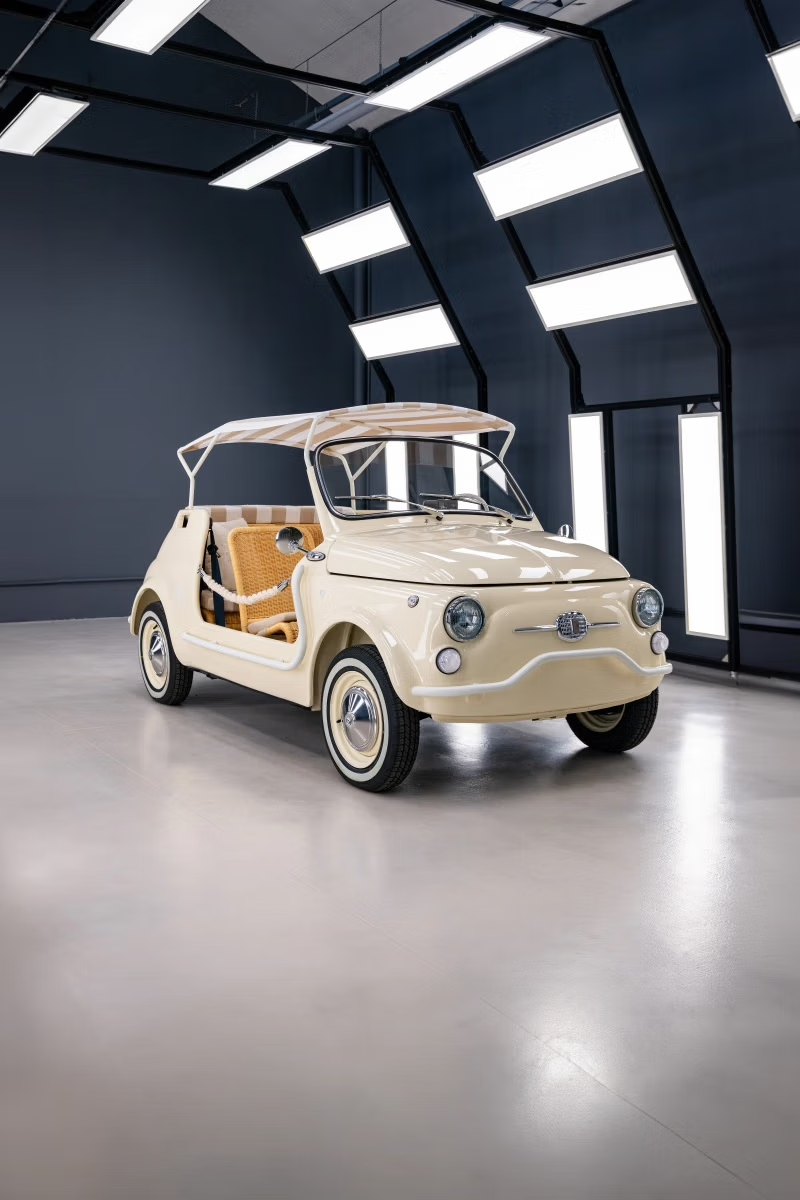
The problem Garage Italia set out to solve is a narrow one. A yacht ties up in a Mediterranean harbor, and the people aboard want to get from the quay to lunch without a scooter or a taxi. The Milan customization house’s answer is the 500 Spiaggina, a doorless, roofless electric runabout built on the body of the original Fiat 500 and sold, in its 2026 form, from €85,000 before tax. Will Sabel Courtney’s October 8 piece for Design Milk framed it in exactly those terms, as a way for the yachting set to get around town, and the car’s specification bears that out. This is a vehicle sized and geared for a seafront, not a motorway.
Signal. What happened: Garage Italia Customs has put the Model Year 2026 version of its electric 500 Spiaggina on sale, after debuting it at Milan Design Week in April and adding a yacht-themed edition with design studio Hot Lab in September. Exact object: the 500 Spiaggina MY26, a four-seat open beach car on a classic Fiat 500 body with a rear-mounted 10 kW motor, an 11 kWh LiFePO4 battery and a claimed 140 km WLTP range, priced from €85,000 excluding VAT. When and where: available to order now through Garage Italia’s online configurator and its Milan sales team, with worldwide shipping and delivery quoted at four to five months from contract. Source: Garage Italia’s own product page and specification sheet, with Design Week details from Italian motoring press. Why it matters: it turns one of the most democratic cars Italy ever built into a made-to-order luxury object, and pairs the Jolly’s original short-hop job with a powertrain suited to it.
stir
The numbers are modest on purpose. A three-phase asynchronous motor mounted at the rear makes 10 kW, roughly 13 horsepower, with 82 Nm of torque, and drives the rear wheels through a direct-drive transmission with electronic reverse. Top speed is 75 km/h, a little under 47 mph. The 11 kWh lithium iron phosphate pack, developed with conversion specialist Newtron, is rated for 140 km on the WLTP cycle and takes about four hours to fill from a 2.75 kW charger.
The chassis stays close to the 1950s car. The body is still self-supporting, the front suspension still pairs a lower transverse leaf spring with upper wishbones, the rear runs on oscillating arms and coil springs, and the car rolls on 12-inch rims with 125-section tires and inner tubes. Stopping falls to drum brakes, now helped by regeneration. It measures 2,945 mm long and 1,320 mm wide on an 1,840 mm wheelbase, and weighs between 520 and 600 kg depending on specification.
Those figures sit remarkably close to the car Fiat launched in 1957. The original Nuova 500 shared the same 1,840 mm wheelbase and 1,320 mm width, weighed 499 kg, and its rear-mounted 479 cc air-cooled twin made 13 horsepower, or 10 kW. Garage Italia’s electric motor matches that output exactly, sits in the same place at the back of the car and drives the same wheels. The difference is torque, which an electric motor delivers from a standstill, and silence, which suits a harbor front at dinner time better than a two-cylinder clatter.
Not every figure on the company’s own site agrees yet. Its FAQ still quotes a 70 km/h top speed, a range of roughly 100 km and a starting price of €90,000 plus VAT, matching figures that circulated in the Italian press when the car first appeared this spring. The headline price and the specification table on the same page carry the newer €85,000, 75 km/h and 140 km numbers.
mutable
Most of the model-year work happened inside. Garage Italia lengthened the cabin by 17 cm and rebuilt it around a new central tunnel with dedicated storage for phones and cups. A digital cluster now brings speed, range and vehicle information into one simple display, and a Bluetooth audio system has been added for the first time.
Safety got attention too. The update brings three-point front seat belts, a structural revision of the body and a new tubular side bumper, while electric power steering and a new parking brake round out the hardware. Every car carries front and rear belts and the classic central rear-view mirror. The Spiaggina is homologated in the L7 category, Europe’s heavy-quadricycle class, and Garage Italia offers it in configurations for public roads as well as for private settings such as resorts and estates.
show
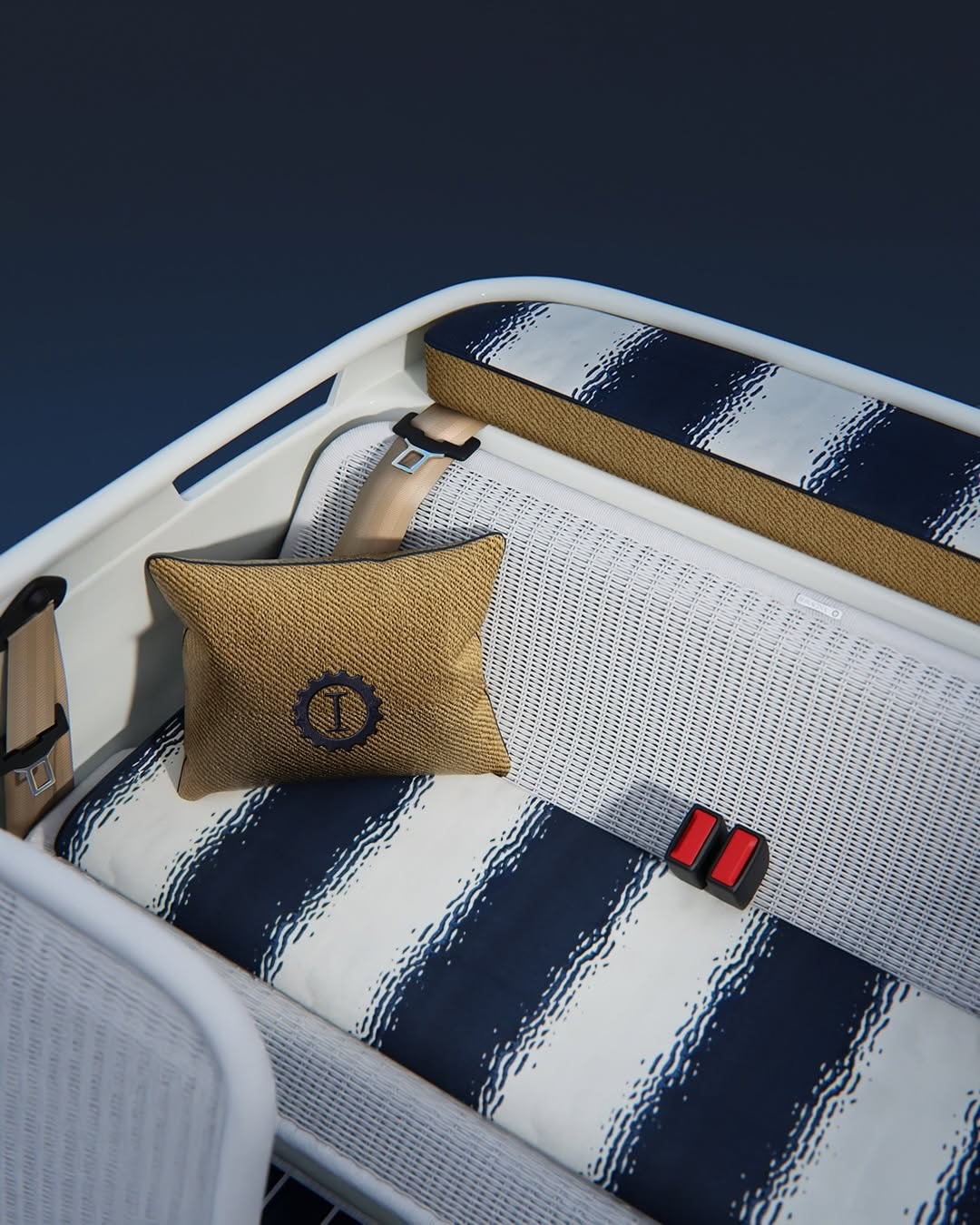
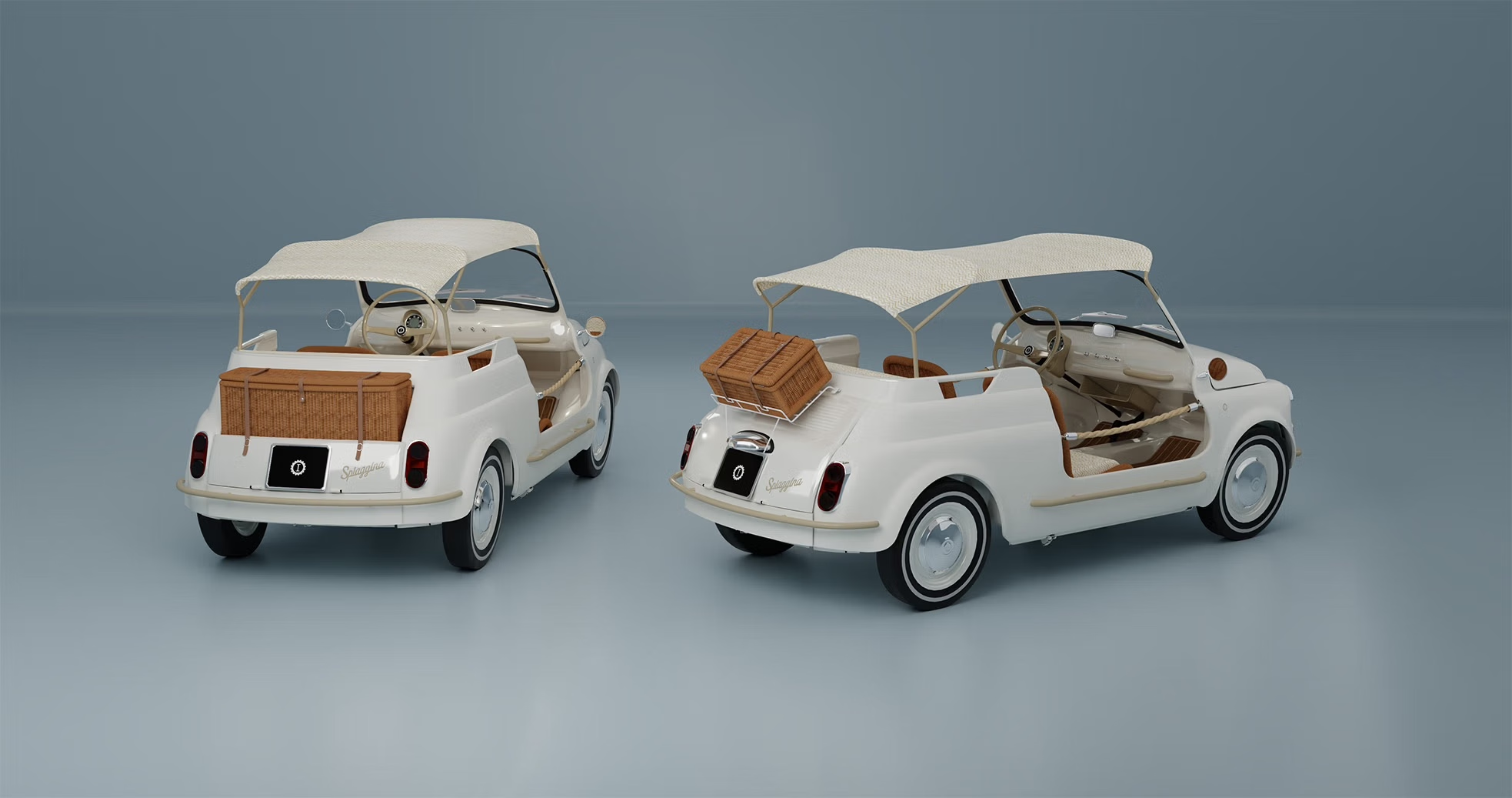
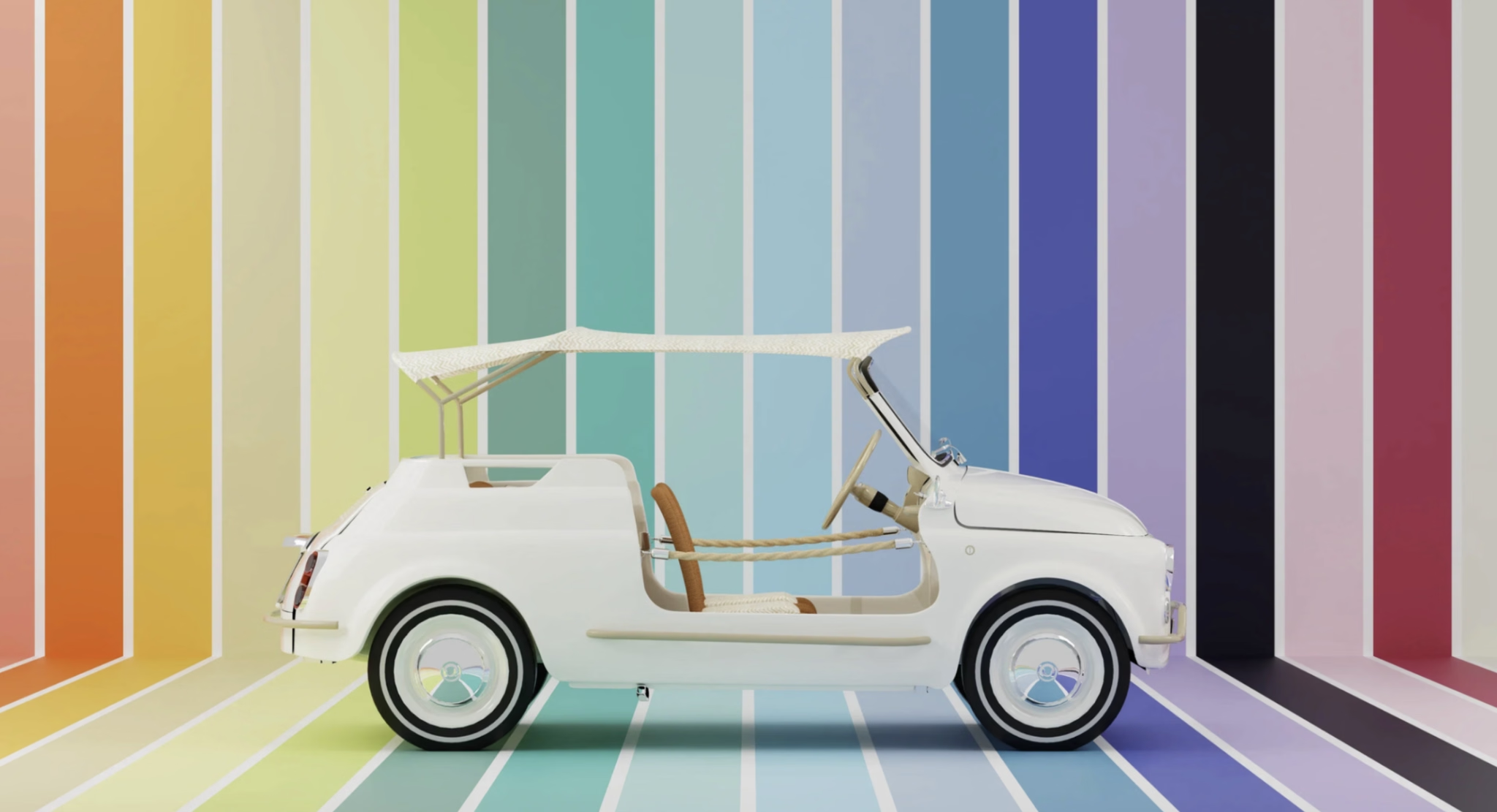
The material palette is where the Spiaggina earns its price. Seats come from Bonacina, which has made woven furniture since 1889, in natural or tinted rattan or in Polycore, an outdoor composite made to cope with sun and sea salt. The same workshop produces two matching accessories: a picnic trunk measuring 75 by 25 by 33 cm and a smaller picnic box at 47 by 28 by 20 cm.
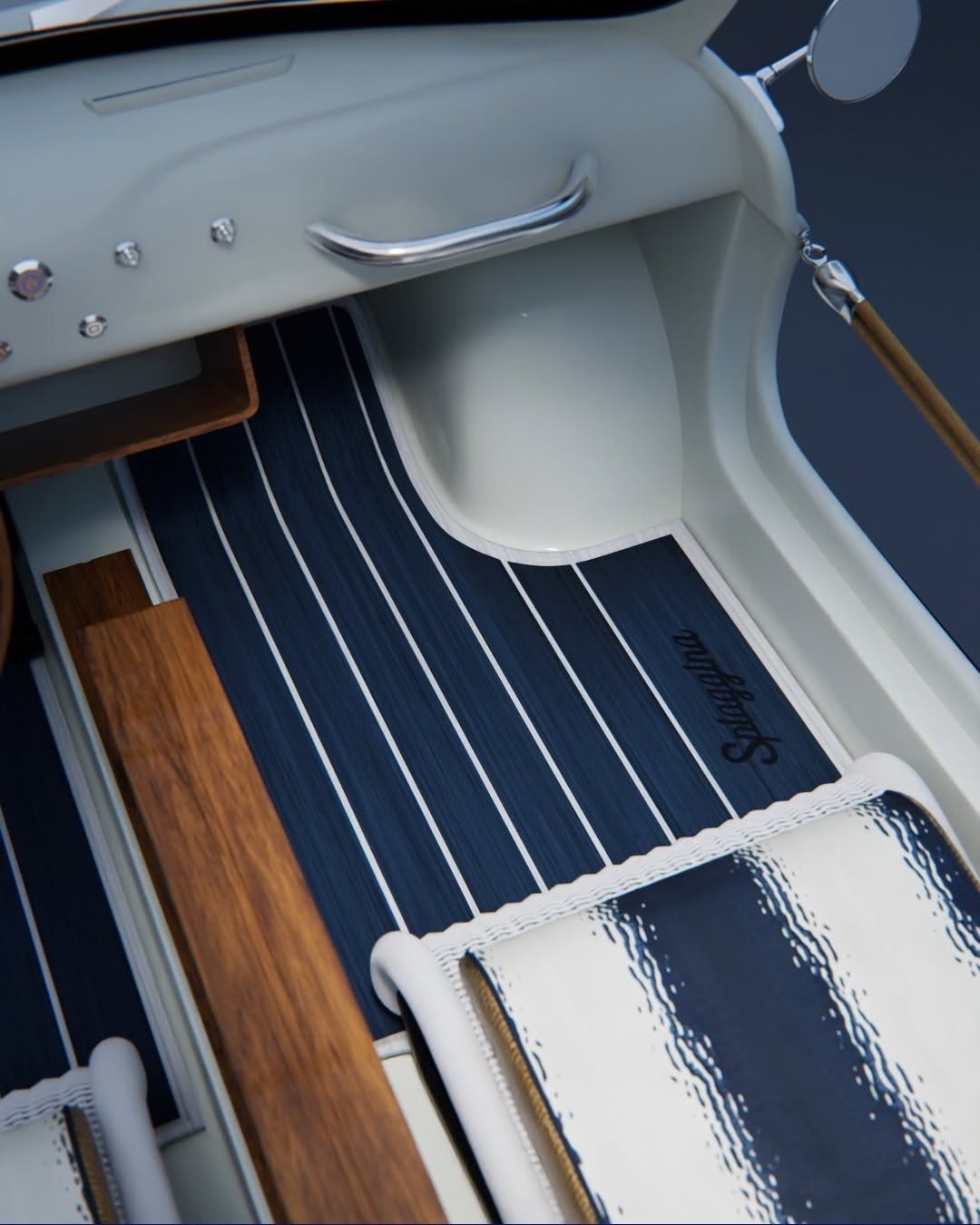
Fabric for the canopy, cushions and trim comes from Mariaflora, grouped on Garage Italia’s configurator into four pattern families named Fantasy, Geometrical, Fill and Stripes. Paint runs to 18 shades across two collections, with off-menu colors available on request. Underfoot, the floor uses Eva Ultra mats from ItalDek, a waterproof material borrowed from nautical decking. Every combination can be previewed in the company’s online configurator before a buyer speaks to the sales team, an approach more familiar from supercar makers than from beach cars.
three
The MY26 car went public in April at Milan Design Week, where Garage Italia showed it in three versions. The first, an installation called Urbano Mediterraneo at 10 Corso Como, centered on a one-off built for Palazzo Avino, the hotel in Ravello above the Amalfi Coast. It took its color from the hotel’s signature pink and its upholstery from “Pergola,” an ivy-patterned fabric drawn in-house and made by Mariaflora.
The second was an itinerant Spiaggina for 10 Corso Como itself, driven around the city in a livery drawn from the concept store’s graphic language and trimmed in a jacquard called “Pioggia,” again designed by Garage Italia and woven by Mariaflora. The third went to Superstudio Maxi, inside The City, an exhibition curated by Giulio Cappellini. That car wore Wimbledon White with a central red stripe flanked by two blue bands, and its natural rattan Bonacina seats were painted red, sitting on coordinated ItalDek mats.
new
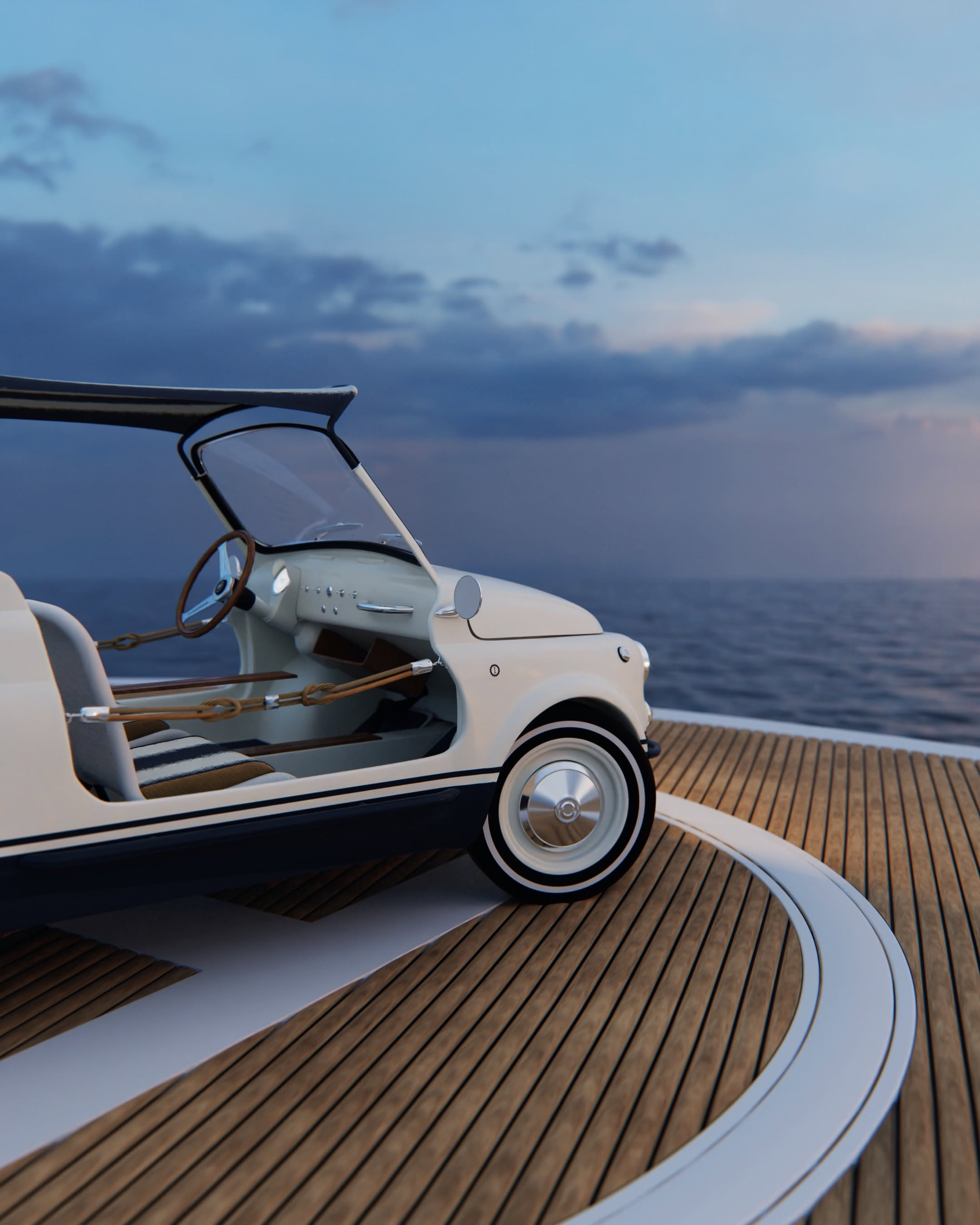
September brought the most literal take on the yacht idea. Garage Italia teamed up with Hot Lab, the yacht design studio founded in Milan in 2004 by Michele Dragoni, Enrico Lumini and Antonio Romano, on a Spiaggina conceived as a yacht toy, a piece of deck equipment as much as a car. The body is split into two tones along an imaginary waterline, white above and blue below, the way a hull meets the sea.
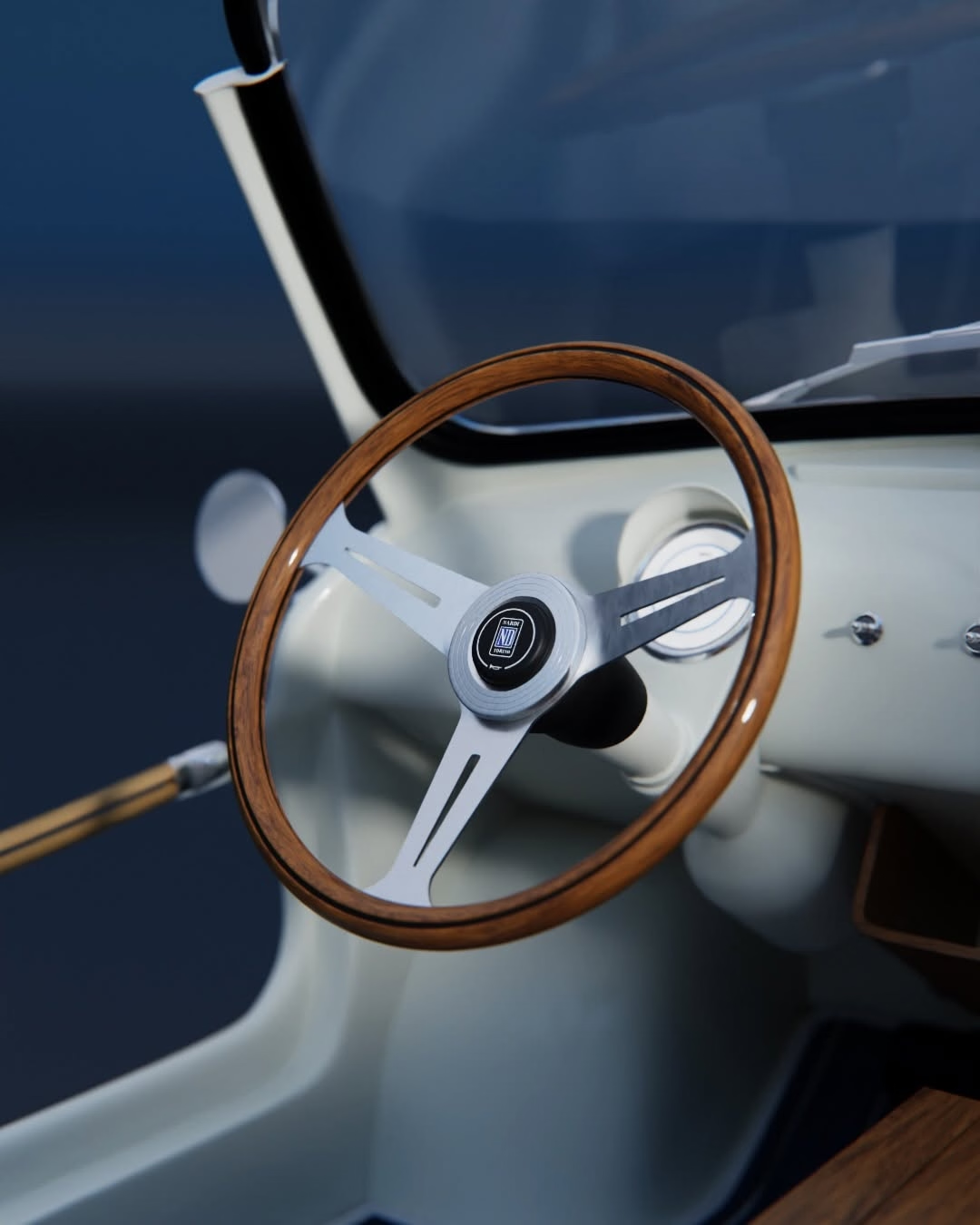
Inside, a wooden console Garage Italia calls the Heritage Tunnel nods to vintage speedboats and takes either a magazine rack or a bottle holder. A Nardi Classic wooden steering wheel adds to the period-boat feel, blue and white ItalDek mats and rope details along the sides carry the theme through, and the canopy and seats are trimmed in “Scia,” a new indoor-outdoor fabric developed with Mariaflora whose stripes are drawn to resemble the wake behind a boat. Garage Italia says Scia will grow into a dedicated collection beyond this car. The Hot Lab Spiaggina is presented as a concept, but it is production-ready and open for orders, with no separate price published.
extend
The car Garage Italia is reinterpreting was itself a luxury special built on a very ordinary base. Dante Giacosa’s Nuova 500 was designed as inexpensive, practical transport, and in 1959 it earned him a Compasso d’Oro, the first time Italy’s leading industrial design prize went to a carmaker. Fiat launched the car in July 1957, and within a year a topless, doorless version had appeared: the Jolly, known in Italy as the Spiaggina, or little beach car. Carrozzeria Ghia built it on the 500, and later on the Giardiniera wagon, from 1958 to 1965, selling it in Europe, the United States and South Africa at roughly twice the price of a standard 500. One ended up in the personal collection of President Lyndon B. Johnson. The idea had already been tried on the larger Fiat 600, whose own Jolly conversion inspired the 500 version.
The recipe was simple. Ghia cut away the roof and doors, swapped the seats for wicker or two-tone marine vinyl, and added a fringed canopy on poles. The result suited a Riviera crowd that used it to shuttle between yacht, beach club and villa. The base car went on to sell in enormous numbers, close to four million between 1957 and 1975, while the Jolly remained a niche coachbuilt offshoot.
View this post on Instagram
fin
Lapo Elkann, grandson of Gianni Agnelli, founded Garage Italia in 2015. In November 2017 the company opened its headquarters in the former Agip service station at Piazzale Accursio, a 1950s streamline building by Mario Bacciocchi, commissioned by Enrico Mattei and restored by Michele De Lucchi’s studio, with a restaurant overseen by chef Carlo Cracco. The station had been a 1950s landmark for Milanese motorists heading out to the lakes on weekends, with a carwash, a café, a repair shop and lodgings. Garage Italia’s version spread 1,700 square meters across two floors, hung a cloud of more than 1,100 model cars over the bar and turned the body of a Ferrari 250 GTO into a cocktail station upstairs. Elkann described the ambition at the opening as a kind of “Dolce Vita 4.0.”
The Spiaggina became a recurring project from there. For the Jolly’s 60th anniversary in 2018, Garage Italia and Pininfarina built a roofless one-off on the modern 500, with a lowered speedster windshield, a three-seat front bench in waterproof upholstery in place of the rear seats, and Sky Blue and Pearl White paint. Fiat, meanwhile, produced 1,958 examples of its own, far tamer 500 Spiaggina ’58 convertible, a figure chosen for the Jolly’s launch year. Elkann said at the time that he had personalized a 500 for himself every year since 2007.
Electrification came next. In 2019 the company launched Icon-e, a program for converting classic cars to electric power, starting with a Fiat 500 Jolly Icon-e that paired hand-woven natural rope seats with Michelin Vintage tires and an electric motor developed with Newtron, flanged straight to the original gearbox. The Fiat medallion on the nose flipped open to reveal the charging port, a trick the company carried onto its electrified vintage 500 sedan, which added a five-inch dashboard display and a gear lever marked with a tortoise and a hare. Carlo Borromeo, then director of the Garage Italia Style Centre, explained the program as a way to make much-loved historic cars genuinely usable again. In 2020 the company built a one-off electric 500 for a client in Lisbon, painted Blu Pozzi with whitewall tires and leopard-pattern upholstery. It also said in 2019 that an electric Panda was in development, and its site today lists a Panda 4×4 alongside the Spiaggina in its garage lineup. Hertz Italy later added an electric Jolly Spiaggina Icon-e to its Selezione Italia rental collection, putting the idea in front of travelers who would never buy one. Enrico Vitali, Garage Italia’s chief executive, presented that car as a meeting of craft production and electric redevelopment, while Hertz Italy framed it as part of its Italian hospitality pitch rather than a simple rental offer.
Garage Italia is not alone in this business. Officine Gentile, a workshop in Turin, converts 500s built between 1957 and 1975 into electric Jolly Lido models, hiding the charging socket behind the Fiat badge on the nose. Garage Italia’s own answer is scarcity. It caps output at 20 cars a year, and quotes delivery at about four to five months from contract and deposit.
Related Articles

Pocket-sized Xbox Ctrl
Xbox Nano Controller. Announced 14 October 2026 by James Hunter. $49.99. Rechargeable battery. Programmable Action Button. Xbox Wireless and Bluetooth.