DRIFT AUDIO
Listen to this story
Choose a voice, then press play.
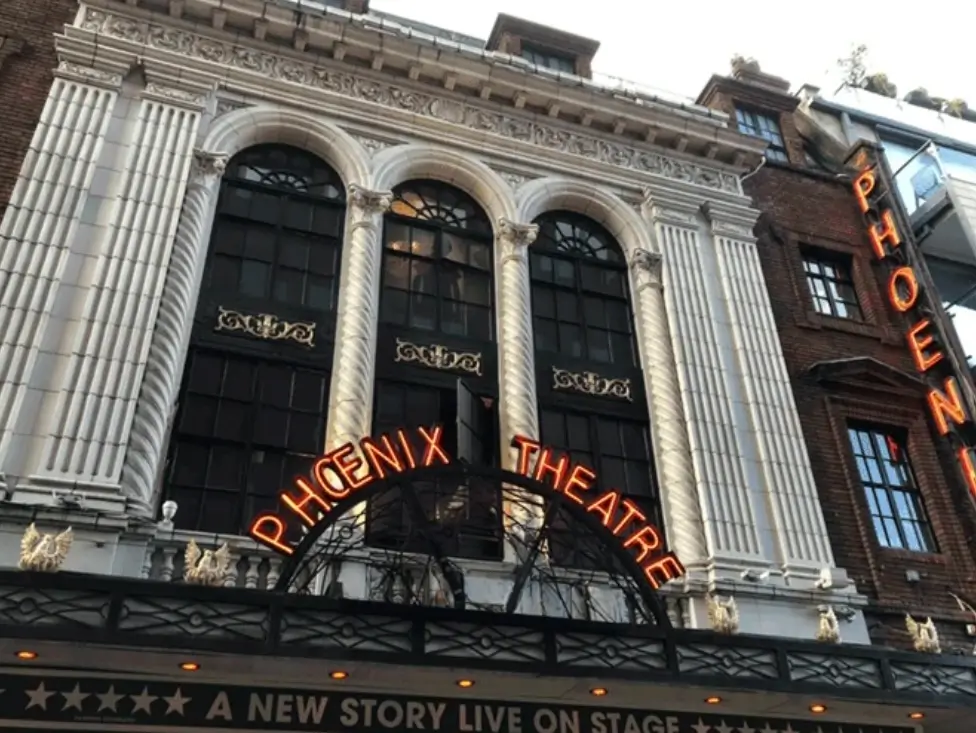
Previews begin February 23 at the Phoenix Theatre, the house that opened with Noël Coward in 1930. Tarantino directs his own swashbuckler, and Baron Cohen takes the title role.
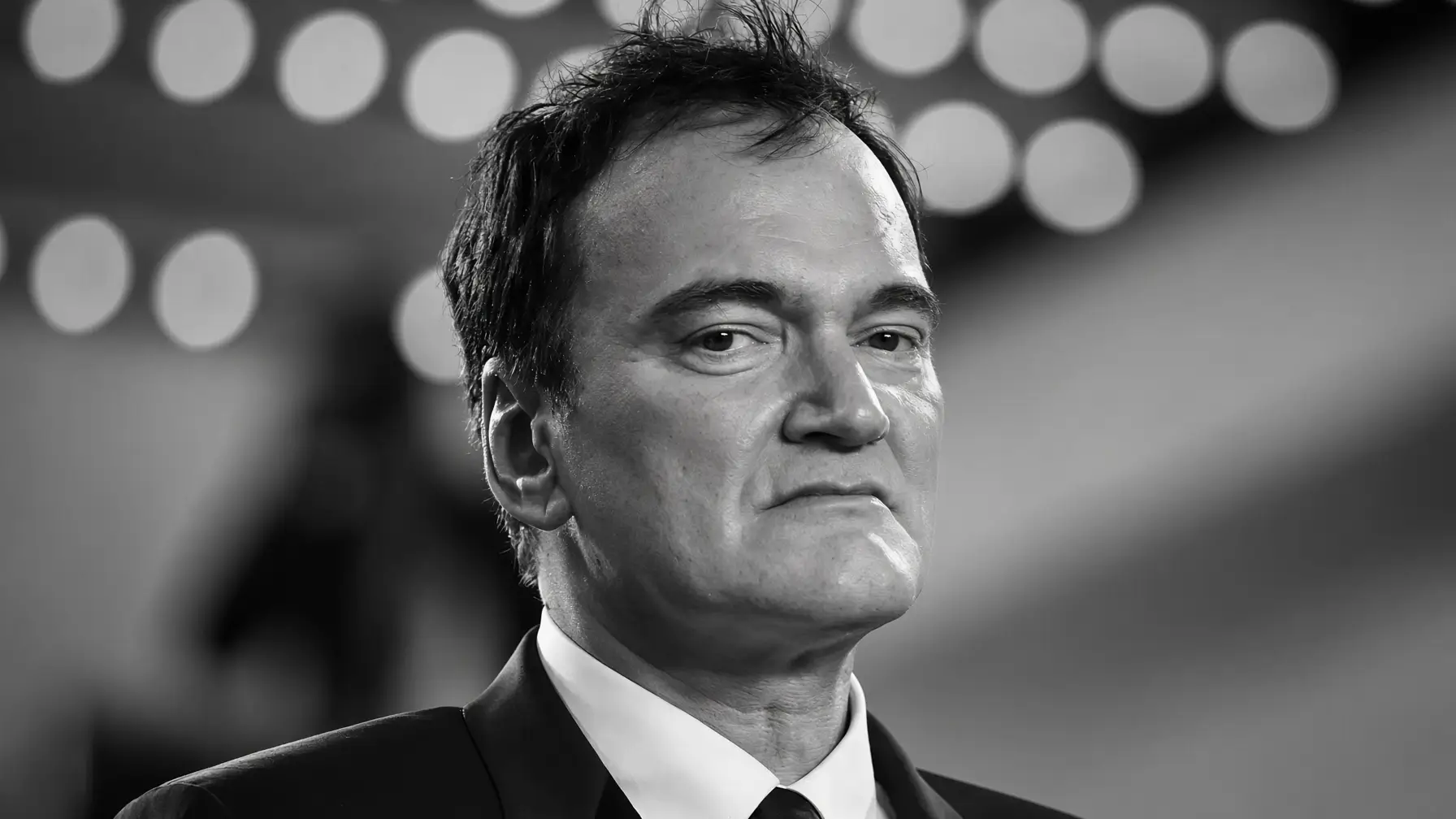
General booking opened at noon British time on Monday, October 12, for a show that less than two years ago existed mainly as a sentence Quentin Tarantino kept repeating to interviewers. Sonia Friedman Productions and Sony Pictures Entertainment used a Sunday announcement to fill in everything that had been missing since the title went public in March: a theatre, a calendar, a creative team and, officially, a star. Sacha Baron Cohen will play the title role in The Popinjay Cavalier, the first play Quentin Tarantino has written for the stage, and Tarantino will direct it himself.
Signal. What happened: on October 11, 2026, the producers confirmed what had been reported a month earlier about Baron Cohen’s casting, and named the venue, dates and creative team in the same release. Exact object: The Popinjay Cavalier, a swashbuckling comedy set in 1830s Europe, written and directed by Quentin Tarantino and starring Sacha Baron Cohen in the title role. When and where: the Phoenix Theatre on Charing Cross Road, London, with previews from February 23, 2027, opening night on March 18, 2027 and booking through June 13, 2027, with tickets from £25. Source: the joint announcement from Sonia Friedman Productions and Sony Pictures Entertainment, with booking handled through the production’s official site and its priority sign-up list. Why it matters: one of Hollywood’s most closely watched writers is making his playwriting debut in London before he has directed his long-promised tenth film, and he has said a hit run could turn into a movie.
stir
The dates are fixed for now. Previews start on February 23, opening night falls on March 18, and the box office is selling seats through June 13. Tickets start at £25, and the producers say more than 16,000 seats across the run are priced under £50. Priority access opened at 9am on Monday for people who had joined the production’s mailing list since March, and public sale followed three hours later.
The announcement also put names to the team building the show around Tarantino. Tom Pye designs both scenery and costumes, Natasha Chivers handles lighting and Ian Dickinson sound, with music by Tim Phillips, casting by Jim Carnahan and Jack Bradfield as associate director. Philip d’Orleans is the fight director and Sam Lyon-Behan the action co-ordinator, two separate credits that match the rehearsal room described by Sony Pictures’ motion picture chief Tom Rothman and by Friedman in their joint statement, where Tarantino is said to be working with fencers, acrobats and musicians as well as actors.
from
The first public hint came at the Sundance Film Festival in January 2025, when Tarantino told an audience he was writing a play and that it would probably be the next thing he did. By August that year, speaking on the Church of Tarantinopodcast, he said the script was finished, that work would start the following January and that it would take up a year and a half to two years of his life. He attached a condition that still hangs over the project: if the play proved popular, he said, he would probably make it into a film.
In early 2026, reports from London pegged the script as a throwback British farce, the genre of slammed doors, lost trousers and mistaken identities that Brian Rix and Ray Cooney turned into a West End staple, with Michael Frayn’s Noises Off offered as a reference point. Talk of big Hollywood names circling the lead followed close behind.
The official word on March 11, 2026 shifted the vocabulary. Sonia Friedman Productions and Sony announced the title and billed the play as a swashbuckling comedy set in 1830s Europe, “a rambunctious comedy of deception and disguise” inspired by the adventure epics of stage and screen, and a celebration of theatre and its heightened romance. There was no venue, no cast and no date beyond early 2027, only a sign-up page.
The two descriptions are closer than they first sound. Farce and swashbuckler both run on disguises, doubles, hidden doors and escapes timed to the second, and the producers’ language has consistently leaned on deception rather than duels. The title does some of the explaining too. A popinjay is an old word for a parrot that came to mean a vain, overdressed show-off, and a cavalier is a gallant on horseback, the word English history attached to the plumed royalists of the Civil War. A preening swordsman is exactly the kind of figure farce exists to deflate, and Baron Cohen has built a career on men who badly overestimate themselves.
show
Sunday’s rel added the most specific clue yet about what Tarantino has been watching. The play, the producers said, draws on the classic swashbuckler genre of old Hollywood, including the writing of George Bruce, Ernest Vajda and Jesse Lasky Jr. None of the three is a household name now, which makes the citation more telling than a nod to Errol Flynn would have been.
Bruce was a workhorse of the cape-and-sword picture. He wrote James Whale’s The Man in the Iron Mask in 1939 and The Son of Monte Cristo in 1940, both for the independent producer Edward Small, whose biggest hit had been the 1934 Count of Monte Cristo, and the second of those sends its hero through a run of assumed identities in a fictional European duchy. He also wrote on The Corsican Brothers in 1941, a story built entirely on twins.
Bruce and Lasky Jr. then overlapped on two Columbia Pictures adventures in the early 1950s. Mask of the Avenger, from 1951, is set during the upheavals of 1848 and has John Derek masking himself as a Monte Cristo figure to fight Anthony Quinn’s corrupt governor. The Brigand, a year later, has a Lasky Jr. screenplay from a Bruce story in which a soldier is pressed into impersonating a king he happens to resemble. Lasky Jr. is better known for his work on Cecil B. DeMille’s epics, but these two films come close to a template for the play’s billing. Columbia, the studio that released both, is now part of Sony Pictures Entertainment, one of the play’s two producers.
Vajda brings a different temperature. The Hungarian playwright joined Paramount as a contract writer in the mid-1920s and went on to write some of Ernst Lubitsch’s continental comedies, including The Love Parade in 1929 and The Merry Widow in 1934, films set in imaginary royal courts where romance is conducted as a series of polite deceptions. Put Vajda beside Bruce and Lasky Jr. and the mix comes into focus: the swordplay and stolen identities of the Columbia programmers, crossed with the drawing-room wit of Lubitsch. Friedman has described it in her own terms, telling an interviewer in July that she had not expected to love the script, found it very funny, and saw in it a nod to the Zorro and Monte Cristo pictures of the 1930s alongside an homage to theatre and to actors.
pair
Baron Cohen’s theatre history predates his fame. Reading history at Christ’s College, Cambridge, he joined the Cambridge University Amateur Dramatic Club and played Tevye in Fiddler on the Roof, alongside productions including Cyrano de Bergerac. After graduating in 1993 he went into television, introducing Ali G on Channel 4’s The 11 O’Clock Show in 1998 before Borat and Brüno took him global. He has sung on screen in Tim Burton’s Sweeney Todd and Tom Hooper’s Les Misérables, but The Popinjay Cavalier is his first professional stage role and his West End debut.
He and Tarantino nearly worked together once before. In late 2011 Baron Cohen was cast in Django Unchained as Scotty Harmony, the son of a plantation owner, in a storyline that set up part of Broomhilda’s backstory. By spring 2012 he had pulled out, pointing to the press tour for The Dictator and a schedule clash with Les Misérables, in which he played the crooked innkeeper Thénardier, and he later said the Django part amounted to roughly one scene. Without him, the Scotty Harmony thread was cut from the film altogether.
This time he answered faster. “Quentin called, I said yes before he even got to say his first ‘motherfxxxer’,” Baron Cohen said in the producers’ statement, adding that the pair would be making their West End debuts together and that he had made Tarantino promise not to go easy on him.
The casting lands less than two weeks before Baron Cohen returns to his oldest character. Ali G: Who Iz I?, shot in secret and marking his feature directing debut, opens in cinemas on October 23 through Amazon MGM Studios, reuniting him with the company that released Borat Subsequent Moviefilm in 2020. The film’s synopsis sends Ali G to America after he learns he is about to become a father, a long way from a plumed hat in 1830s Europe.
extend
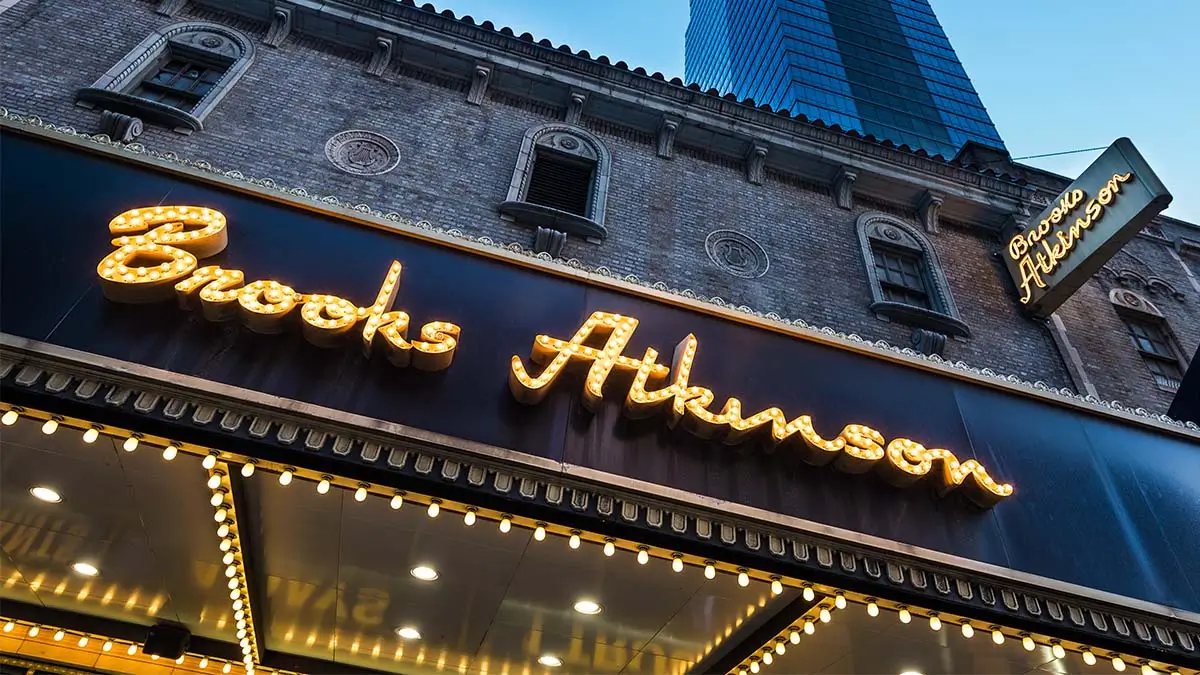
Tarantino has stood on a Broadway stage before, though not as a writer. In spring 1998, months after Jackie Brownreached cinemas, he made his Broadway debut acting in a revival of Frederick Knott’s thriller Wait Until Dark at the Brooks Atkinson Theatre, playing the psychopathic con man Harry Roat Jr. opposite Marisa Tomei, who was also new to Broadway, with Stephen Lang in the company. Leonard Foglia directed. The production opened on April 5 and closed on June 28 after 97 performances.
His other notable live outing was a one-night staged reading of The Hateful Eight in Los Angeles in 2014, mounted after his script leaked and before he decided to shoot the film after all. Neither experience involved writing for an audience that sits in the same room night after night, or steering a company through weeks of previews, which is the job he has now taken on.
His own comment on Sunday was characteristically brief. “I’m keen with anticipation to give the West End a great night out,” Tarantino said. The March announcement had promised a period of development through 2026, and the producers now describe that work as having reached the rehearsal room, more than four months before the first paying audience arrives.
fin
The venue carries its own history with comedy about performers. The Phoenix Theatre opened on September 24, 1930 with the premiere of Noël Coward’s Private Lives, starring Coward, Gertrude Lawrence, Adrienne Allen and a young Laurence Olivier, in a building with Theodore Komisarjevsky as art director. Willy Russell’s Blood Brothers later ran there for 21 years. Since November 2023 the theatre has housed Stranger Things: The First Shadow, another Sonia Friedman production, which is due to leave in December, so Friedman is in effect passing the Phoenix from one of her shows to the next.
Tarantino’s screenwriting, meanwhile, keeps moving without him behind the camera. The Adventures of Cliff Booth, directed by David Fincher from a Tarantino screenplay, brings Brad Pitt back as the stuntman from Once Upon a Time in Hollywood, now working as a fixer in 1977, and opens in IMAX for a two-week exclusive run on November 25 before arriving on Netflix on December 23. The film grew from a script Tarantino wrote and then chose not to direct himself, which leaves the tally of features he has directed where it has stood since 2019.
That gap is where The Popinjay Cavalier sits. Tarantino has already said a successful run could become a film, and the Phoenix booking gives that idea a test window of a little under four months, from the first preview on February 23 to the end of the current booking period on June 13. For now the only confirmed name on the cast list is Baron Cohen’s, and the producers say the rest of the company will be announced at a later date.
Related Articles
Twelve Albums on a Pharmacy Shelf
Damien Hirst has shelved Eminem's twelve albums beside pill packets, and one cabinet stocks every drug the rapper has named in a lyric.