DRIFT AUDIO
Listen to this story
Choose a voice, then press play.
In an era where fashion cycles accelerate toward near-instant obsolescence, where garments are produced, consumed, and discarded within the same seasonal breath, Goldwin 0 moves differently. It does not resist the system outright. It rewires it—quietly, methodically, without spectacle.
The second installment of its Spring–Summer 2026 Performance Capsule, releasing April 24, does not present itself as a collection in the traditional sense. It arrives instead as a continuation—an incremental evolution within a longer trajectory. A system update rather than a statement.
Here, clothing is not styled into relevance. It is engineered into necessity.
Science, sustainability, and silhouette converge with a level of restraint that feels almost radical in 2026. The result is not simply apparel. It is a proposal: the emergence of a new urban uniform—one that responds to the realities of contemporary life rather than the optics of trend cycles.
This is not fashion for fashion’s sake.
It is function, refined to its most articulate form.
View this post on Instagram
sys
Goldwin 0 begins from a premise that feels deceptively simple: what if clothing adapted to the body, instead of the body adapting to clothing?
This inversion destabilizes much of what defines contemporary fashion. Where most systems prioritize visual identity—branding, silhouette signaling, seasonal differentiation—Goldwin 0 prioritizes performance logic.
Rooted in the technical heritage of Goldwin Inc., the line strips away excess. Logos are absent. Color palettes are restrained. Surface-level expression is minimized in favor of structural intelligence.
What replaces traditional “collection” frameworks is something closer to iteration. Each release builds on the previous—adjusting, refining, correcting. There is no definitive endpoint. Only progression.
The methodology mirrors software development more than fashion design.
Feedback loops replace seasonal cycles. Environmental data informs construction. User experience—movement, wear, fatigue—becomes the core metric.
In this context, haute is redefined. It is no longer tied to rarity or price point. It is tied to longevity, to precision, to the ability of a garment to remain relevant across shifting conditions.
Goldwin 0 does not position itself outside fashion. It operates beyond its traditional constraints.
Not anti-fashion.
Post-fashion.
flow
In many contemporary collections, technical terminology functions as aesthetic shorthand—language used to imply performance rather than deliver it.
Goldwin 0 avoids this entirely.
Body-mapping, within this system, is not a view cue. It is the foundation.
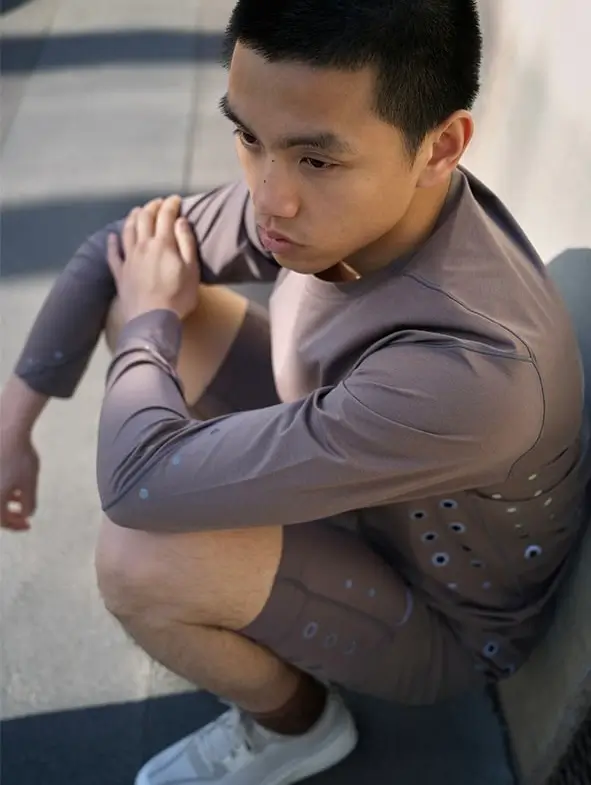
Originally developed for elite athletic environments, body-mapping draws on thermal imaging, sweat analysis, and biomechanical tracking to understand how the human body behaves under stress. It identifies zones of heat concentration, areas of friction, regions of exposure.
In performance sportswear, this data determines where to ventilate, where to insulate, where to reinforce.
Goldwin 0 translates this methodology into the urban environment.
The SS26 Drop 2 is informed by movement patterns specific to city life: prolonged walking, intermittent stillness, fluctuating climates, dense public transit. These are not extreme conditions—but they are constant.
The result is a recalibration of what “performance” means.
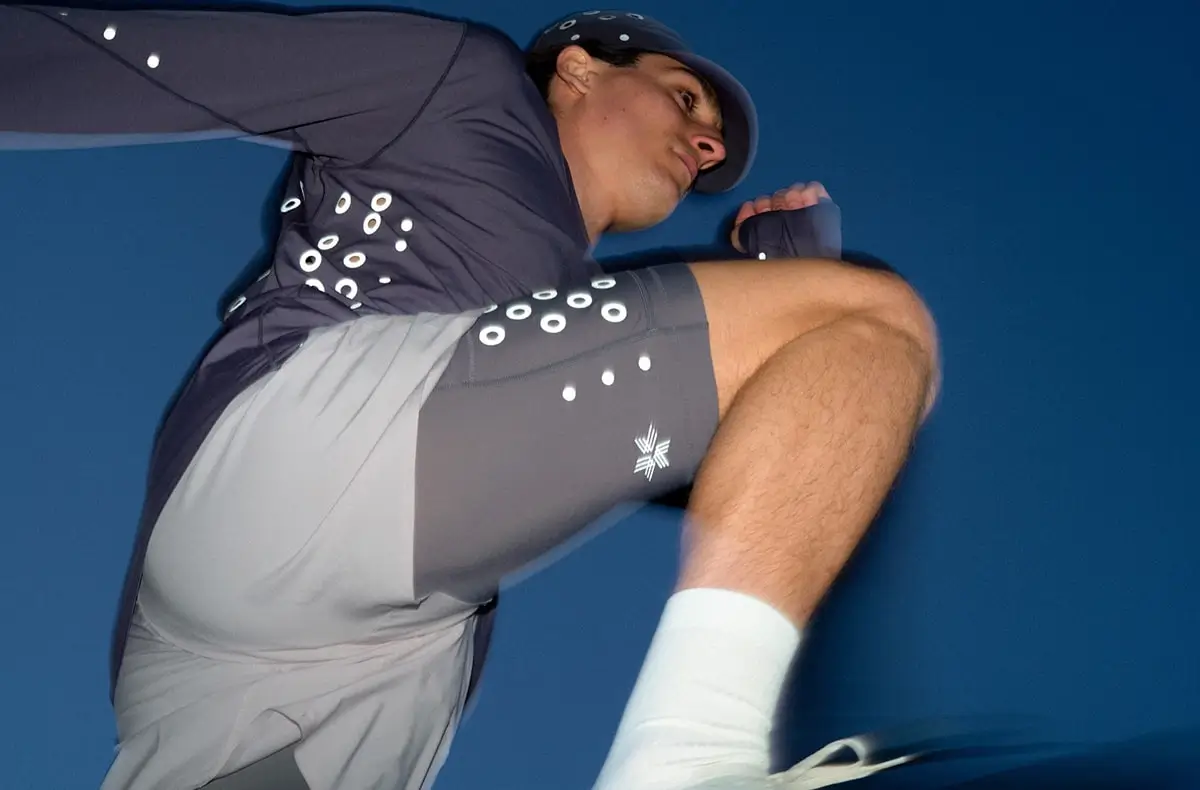
Ventilation is positioned precisely where heat accumulates during movement—not where it looks balanced. Reflective elements are embedded where view matters—not where they read as design accents. Structural reinforcements appear only where the body exerts stress.
Nothing is decorative. Everything is resolved.
The intelligence of the garment is not meant to be seen immediately. It reveals itself through use—over time, across movement, within repetition.
The wearer is not styled into the garment.
They are supported by it.
three
Rather than expand outward into a full wardrobe offering, Goldwin 0 compresses its SS26 Drop 2 into three core pieces.
Each exists independently.
Each functions as part of a larger system.
The reduction is deliberate. It forces clarity. It eliminates redundancy. It establishes a baseline for what an urban uniform might require—no more, no less.
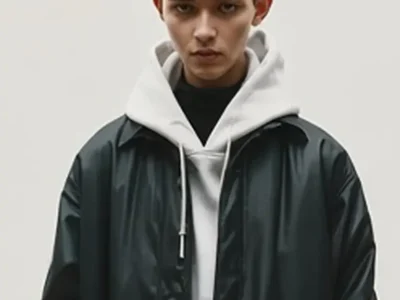
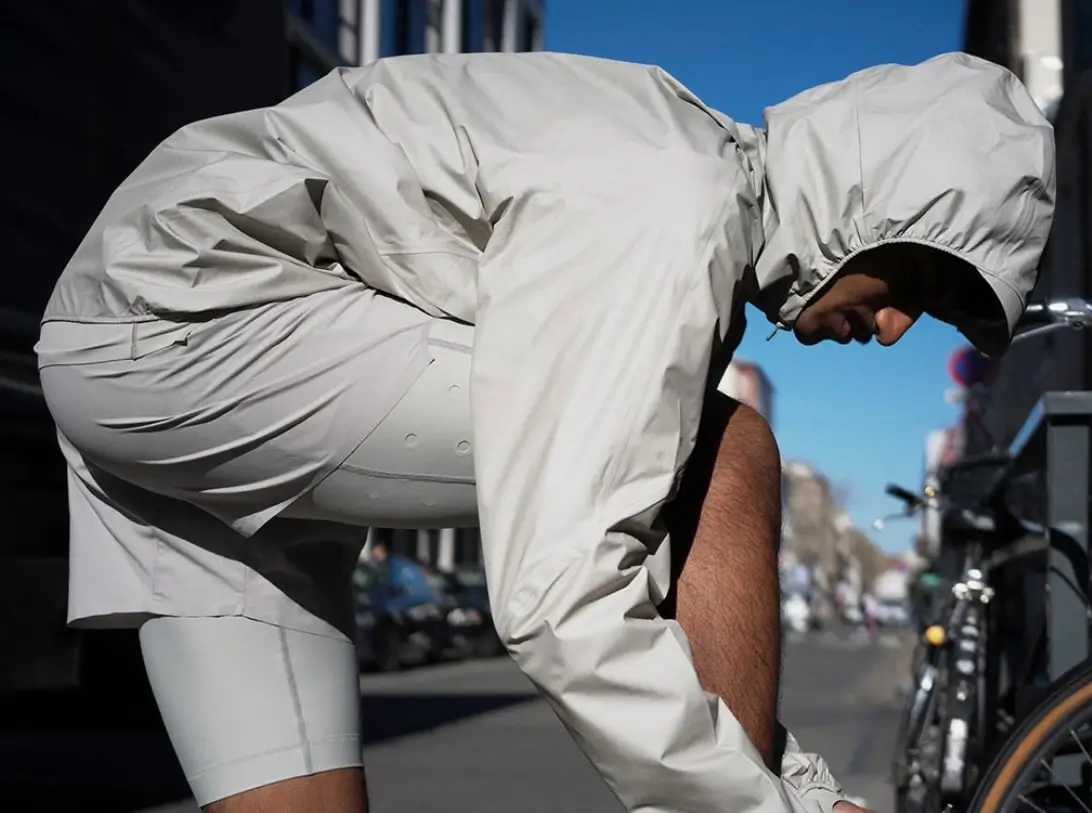
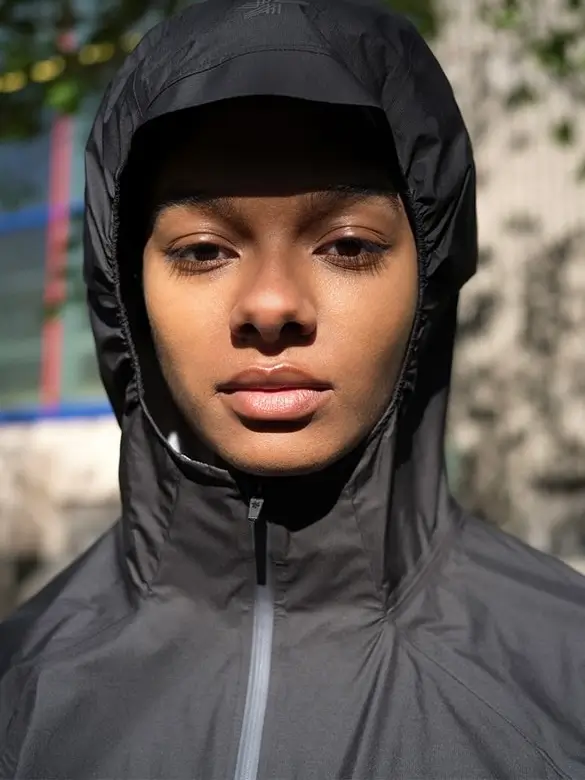
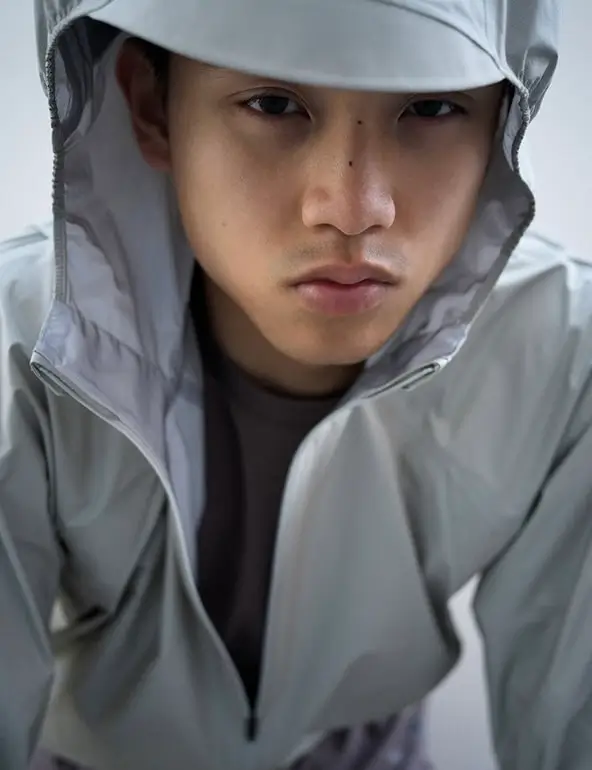
rip-stop hooded jacket
The outermost layer operates as the system’s protective shell.
Constructed from 100% recycled rip-stop nylon, the jacket addresses the unpredictability of the urban environment: sudden rainfall, shifting winds, abrasive surfaces. Yet its most defining qualities are not immediately in view.
Laser-cut ventilation zones are mapped along the underarms and upper back—areas identified through body-mapping as primary heat-release points. These openings are engineered with precision, lined with micro-mesh that elicits airflow while maintaining structural integrity.
The hood incorporates a three-point adjustment system, accommodating movement without obstruction. It collapses seamlessly into the collar when not in use, preserving the garment’s minimal profile.
Elasticated cuffs and hem create a contained silhouette, reducing air intrusion while maintaining flexibility. The jacket itself compresses into its own chest pocket, transforming into a compact, portable unit.
Reflective thread is integrated directly into seam lines—subtle in daylight, functional in low visibility.
Nothing about the jacket announces itself.
It responds instead—quietly, consistently—to the conditions surrounding it.
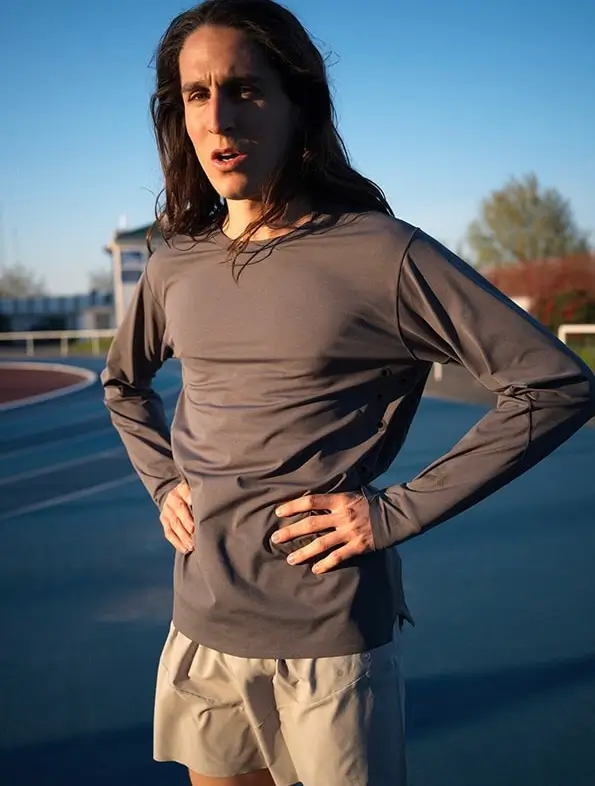
wf light l/s hoodie
If the jacket protects, the hoodie regulates.
Constructed from a wool–lyocell blend, the fabric balances softness with performance. It wicks moisture, resists odor, and maintains thermal stability across varying conditions.
The “WF” designation—weather-flexible—is not conceptual. It is embedded within the garment’s zoning.
Open-knit mesh panels are positioned across the underarms and upper back, facilitating heat release during movement. Denser knit structures across the chest and shoulders retain warmth during periods of rest.
The silhouette is slightly oversized, enabling layering without distortion. Thumbholes anchor the sleeves during motion. The kangaroo pocket functions both as storage and as a thermal buffer for the hands.
The hoodie operates in a state of transition.
It adjusts as the body shifts—from motion to stillness, from exterior to interior environments.
It does not dictate temperature.
It negotiates it.
one tuck tapered stretch pants
The foundation of the system resides in the pants—arguably the most understated yet most critical component.
Constructed from a four-way stretch fabric, the silhouette balances mobility with structure. Articulated knees and a gusseted seat enable extended movement without strain.
The “one tuck” detail introduces a hidden internal pocket at the waistband—scaled for essential items. A design choice that reduces dependency on external accessories.
The taper is gradual, allowing compatibility across multiple footwear styles without compromising the line of the garment. Reinforced stitching at stress points ensures long-term durability.
Breathable mesh panels along the inner thigh and lower back mitigate heat buildup during prolonged wear.
The pants do not overperform.
They resolve necessity at its most precise level.
idea
Performance, within Goldwin 0, is inseparable from responsibility.
The rip-stop nylon is derived entirely from recycled sources. The lyocell component of the hoodie originates from a closed-loop production system that minimizes water and chemical waste. Dyes are selected for reduced environmental impact.
But the deeper sustainability lies not in materials alone—it lies in longevity.
Each garment is constructed to endure. Seams are reinforced. Hardware is standardized to high-performance specifications. Fabrics undergo abrasion testing to ensure resilience over time.
The brand’s repair program reinforces this philosophy, encouraging users to maintain rather than replace.
Sustainability is reframed—not as a marketing position, but as a structural requirement.
A garment that lasts is inherently more responsible than one that does not.
View this post on Instagram
frame
Goldwin 0 does not define its wearer through demographic categories.
It defines them through behavior. The urban athlete is not an individual engaged in formal sport. It is anyone who navigates the city through continuous movement—walking, standing, carrying, adapting.
Their exertion is not episodic. It is constant. Clothing, within this context, becomes equipment. It must respond without requiring attention. It must support without restricting.
Goldwin 0 does not aestheticize this condition.
It acknowledges it—and builds for it.
contrive
Historically, the concept of a uniform suggests rigidity. Standardization. Constraint.
Goldwin 0 reframes it as liberation. A uniform, in this context, reduces friction. It eliminates unnecessary choice. It stabilizes the relationship between the wearer and their environment.
It allows focus to shift away from appearance and toward action. This is not about minimizing identity. It is about removing distraction.
The uniform becomes a system—one that operates consistently, regardless of context.
install
The April 24 release does not exist as a standalone event. It is part of an ongoing sequence—an iterative progression toward a more responsive form of dress.
Each drop refines the system. Each adjustment brings it closer to alignment with the realities of contemporary life: increased density, environmental unpredictability, continuous movement.
Goldwin 0 does not promise transformation. It delivers adaptation. The new urban uniform does not announce itself. It integrates. It persists. It evolves.
And in doing so, it suggests that the future of clothing may not be louder, faster, or more expressive.
It may simply be more intelligent.
n
From the DRIFT archive: Y-3 Sets the Tone for Its Spring/Summer 2026 Collection · Saint Laurent Unveils New Visuals For Its Spring 2026 Collection