DRIFT AUDIO
Listen to this story
Choose a voice, then press play.
A fresh graniph x Shigeru Mizuki collection lands July 28, 2026, bringing Kitaro and his ghostly cast back into the label’s rotation.
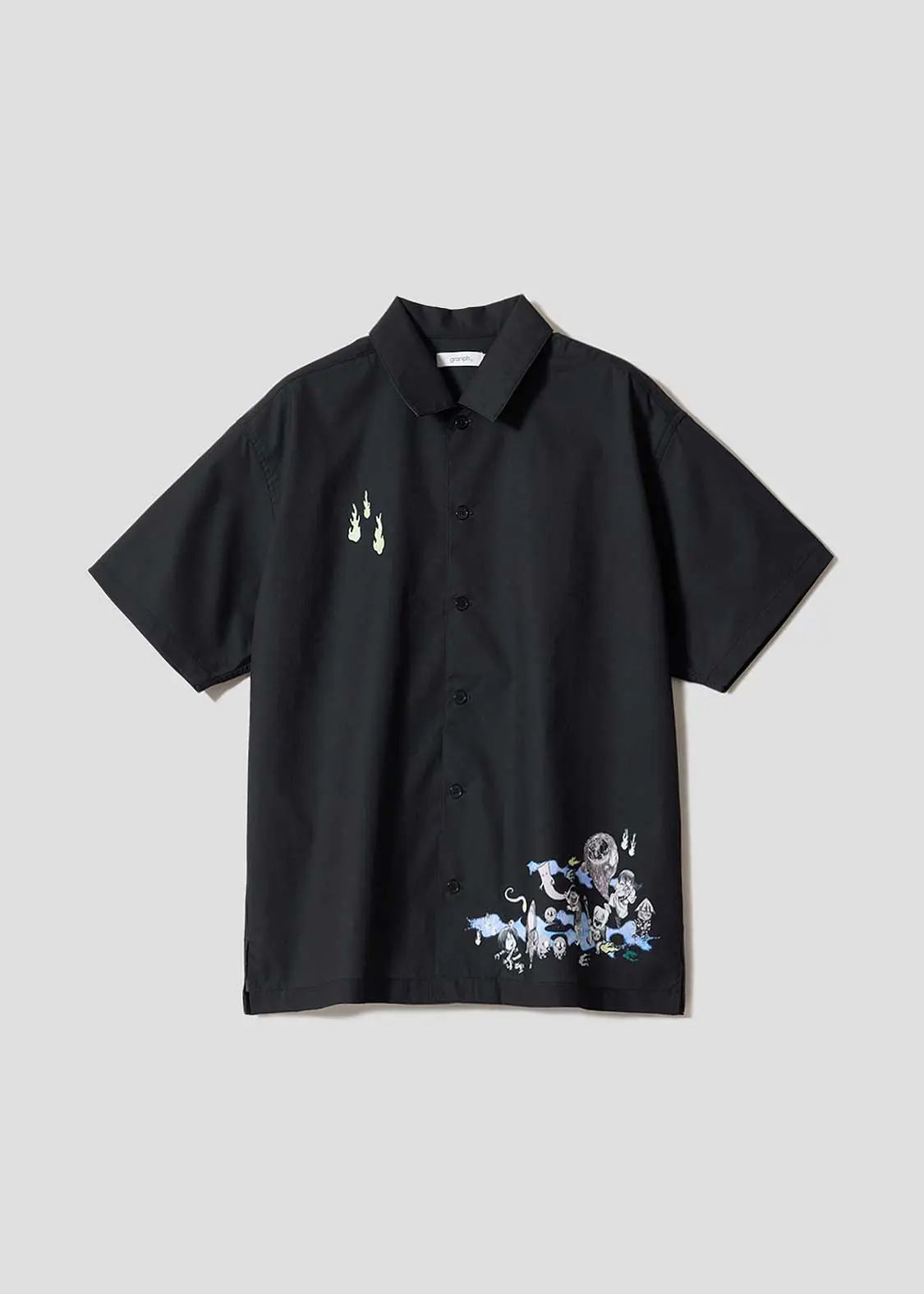
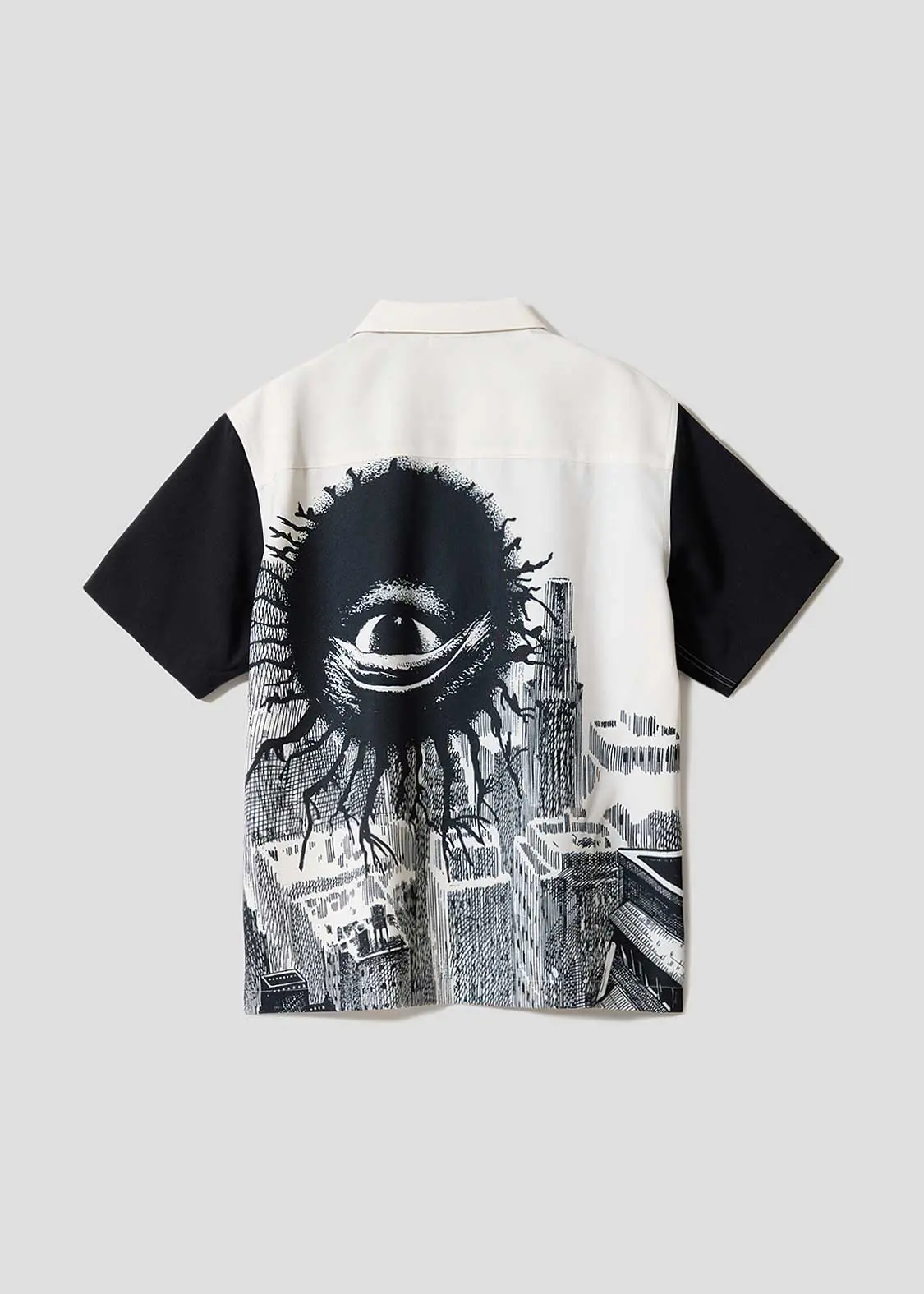
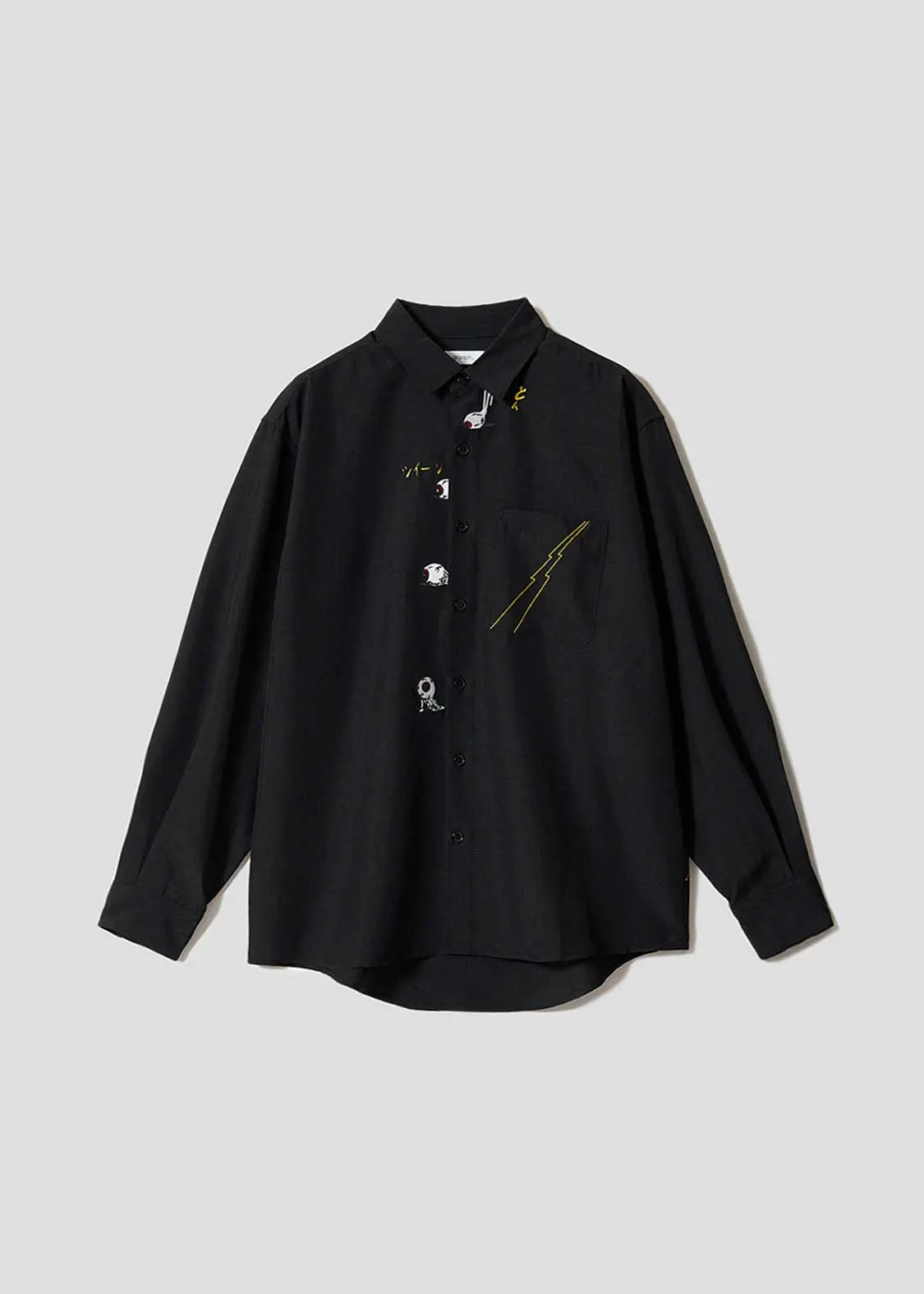
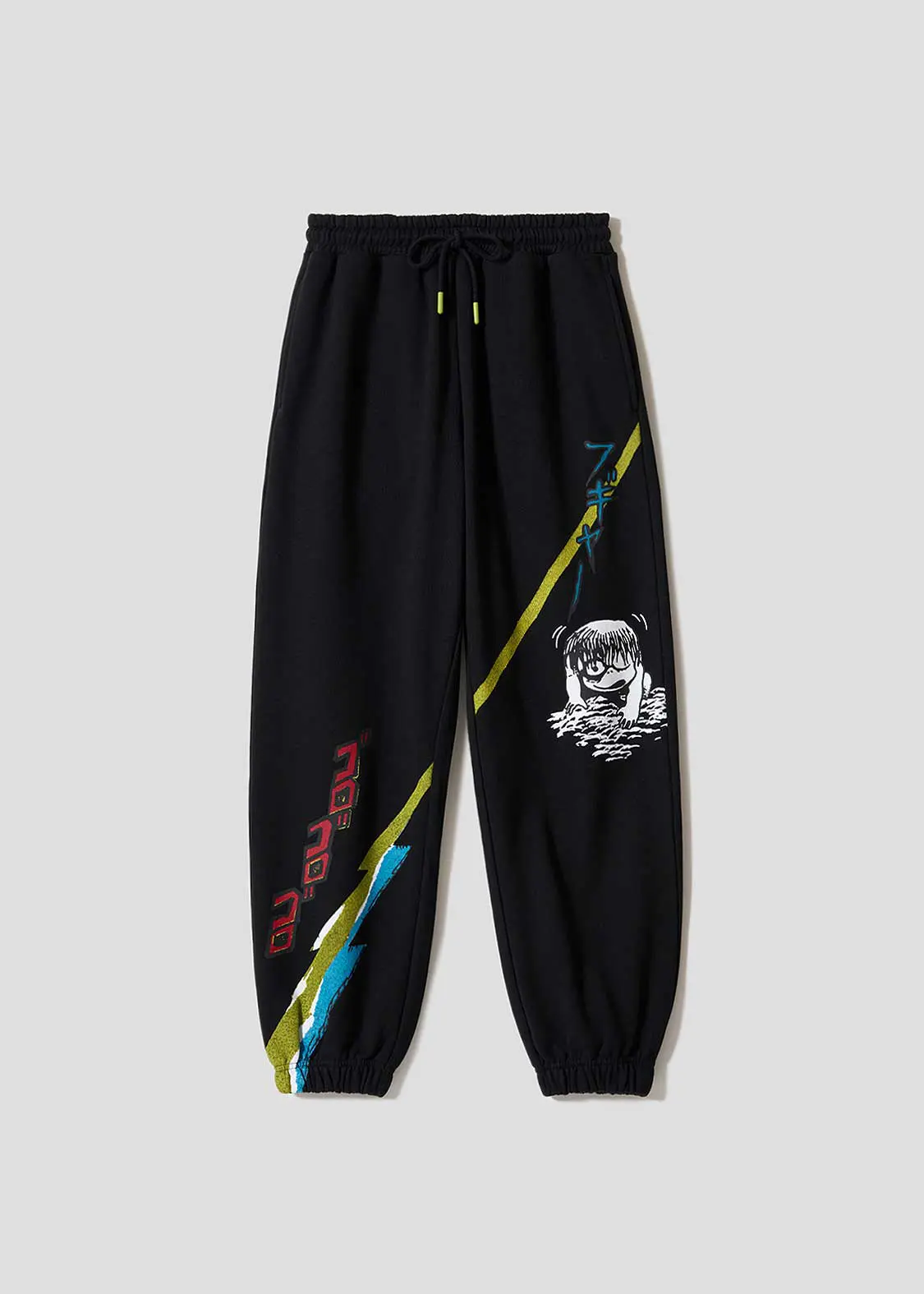
July 28, 2026 is when graniph brings its Shigeru Mizuki collaboration back into stores and onto its online shelves. For a label that runs a new collaboration announcement roughly every week, that single date carries a specific kind of weight. Mizuki is not a passing license the way a seasonal anime tie-in might be. He is closer to a house account, something graniph returns to every year or two the way a magazine returns to an anniversary issue. The brand ran a version of this partnership in March 2022 to mark the centenary of the artist’s birth, then again in the summer of 2025 with a twenty-one piece run built around GeGeGe no Kitaro and its cemetery-set predecessor. The 2026 restaging follows that same rhythm, arriving in the thick of a summer that has already seen graniph work through collaborations tied to Detective Conan, Kingdom Hearts, and Harry Potter.
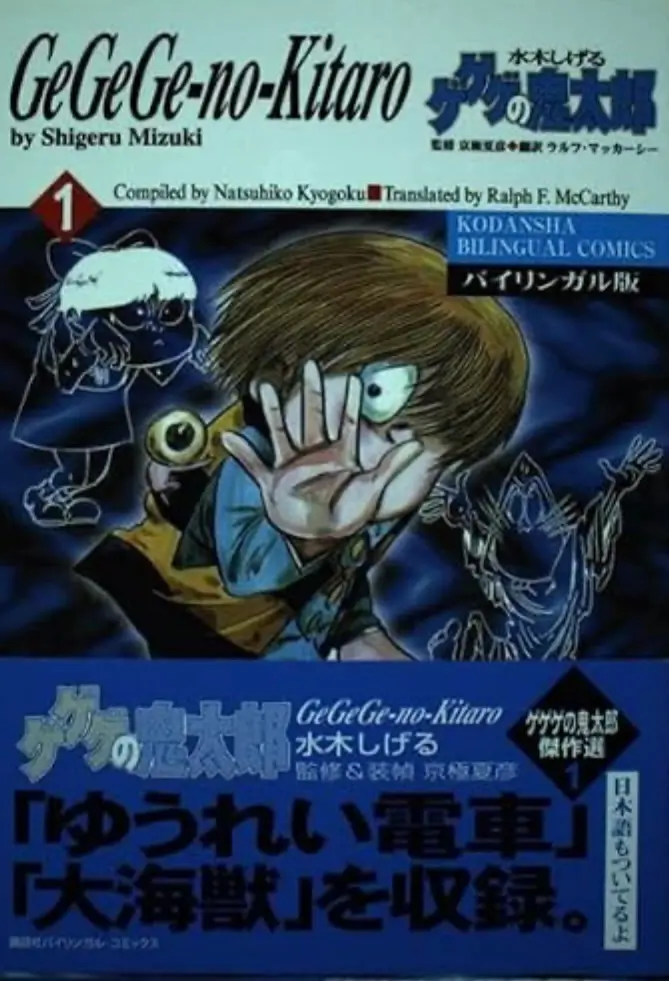
Cover of GeGeGe no Kitarō Volume 1, the bilingual Kodansha edition of Shigeru Mizuki’s classic yokai manga.
What makes the Mizuki drops different from the rest of that list is that there is no marketing campaign to build around, no theatrical release to synchronize with, no new season of a show to hype. The catalogue graniph draws from was finished decades ago. What changes each time is which corner of it gets pulled forward, and how the shirts, bags, and accessories translate line drawings that were originally built for cheap manga paper stock into something meant to survive a washing machine.
stir
Shigeru Mizuki was born in Osaka in March 1922 and raised in the port town of Sakaiminato, where he grew up absorbed by folklore told to him by a local woman he called Nonnonba. He was drafted during the Second World War and lost his left arm in combat at Rabaul, an injury that shaped the antimilitarist tone running through later work like Onward Towards Our Noble Deaths. After the war he worked in kamishibai, the street paper theater tradition, before moving into manga in the late 1950s, developing a style that set cartoonish, rubbery characters against backgrounds rendered in obsessive, almost documentary detail.
That contrast is what made GeGeGe no Kitaro land the way it did. Kitaro himself, the one-eyed boy born from a graveyard, reads as a simple, friendly design. The yokai around him, drawn from Mizuki’s own ethnographic digging into regional folklore, are rendered with the kind of care usually reserved for landscape painting. He spent decades cataloguing creatures that had mostly survived as oral tradition, effectively acting as both artist and folklorist for a category of Japanese ghost story that might otherwise have thinned out with each passing generation. He died in Tokyo in November 2015 at ninety-three, by which point Kitaro had already gone through several television series, a handful of films, and enough merchandise cycles that a clothing label picking the property back up in 2026 barely counts as a revival. It is closer to routine maintenance on a piece of cultural infrastructure.
The company that still manages that infrastructure, Mizuki Production, based in Chofu on the western edge of Tokyo, has kept a steady hand on how the work gets licensed since his death. Its own communications, run through an account posting under the handle @mizukipro, tend to mix commemorative material such as archival sketches from the Mizuki Shigeru Memorial Museum with the more routine business of announcing which brand has picked up the license next. That museum, opened in Mizuki’s childhood town of Sakaiminato, has become something like a pilgrimage stop for readers who grew up on the manga, and it runs its own rotating exhibitions drawn from the artist’s original pages, a reminder that the version of Kitaro showing up on a t-shirt is only one small slice of an archive that runs to thousands of drawings.
View this post on Instagram
license
Graniph has built its entire identity around this kind of pairing. The Tokyo label, formally Graniph Inc. and headquartered in Shibuya, describes its mission as bringing graphic design into daily wear, and in practice that has meant an unusually wide licensing net. In any given month it might be running collaborations with a manga classic, a Hollywood franchise, and a single illustrator all at once. Spring alone brought a Star Wars capsule built around the original trilogy, a first-ever tie-in with the video game NieR:Automata, and an Evangelion run timed to late January. By early summer the label had added Kingdom Hearts, Hunter x Hunter, and a run tied to the anime Baki. None of that variety is accidental. Graniph’s team has talked publicly about treating licensing as a kind of self-expression exercise for the customer, the idea being that what someone chooses to wear on a t-shirt says something about who they are, and the label wants enough range in its catalogue that almost any interest can find a shirt.
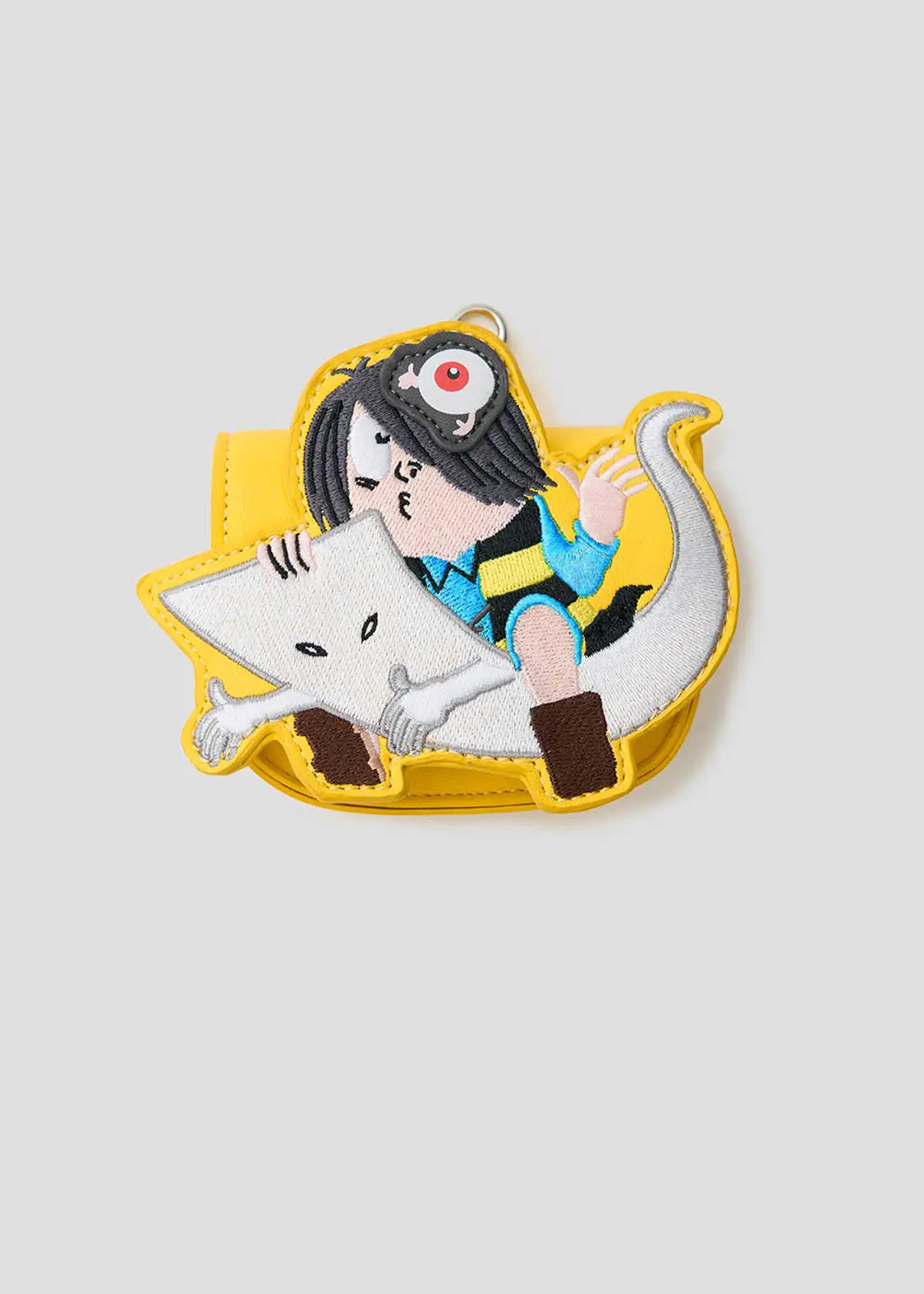
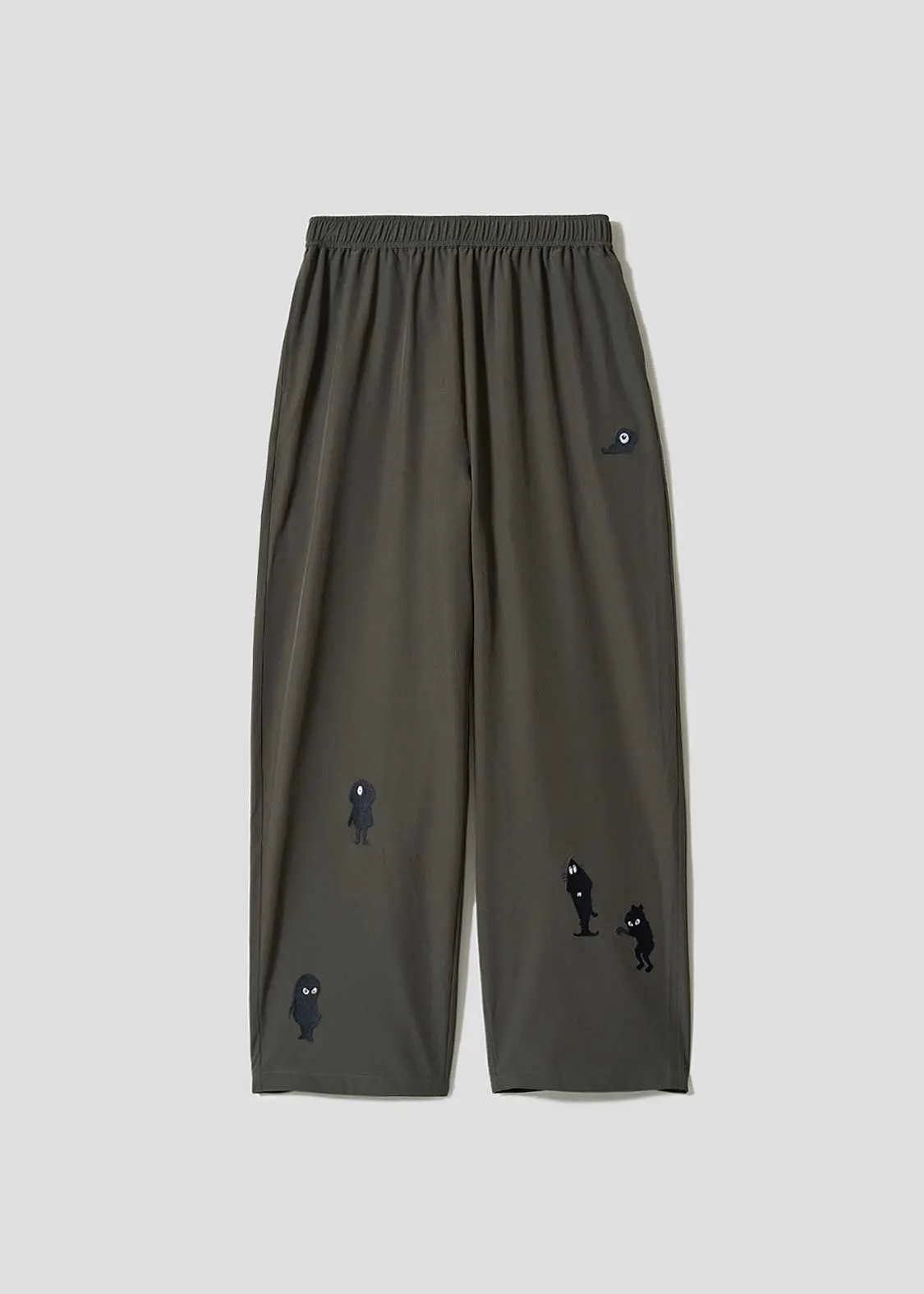
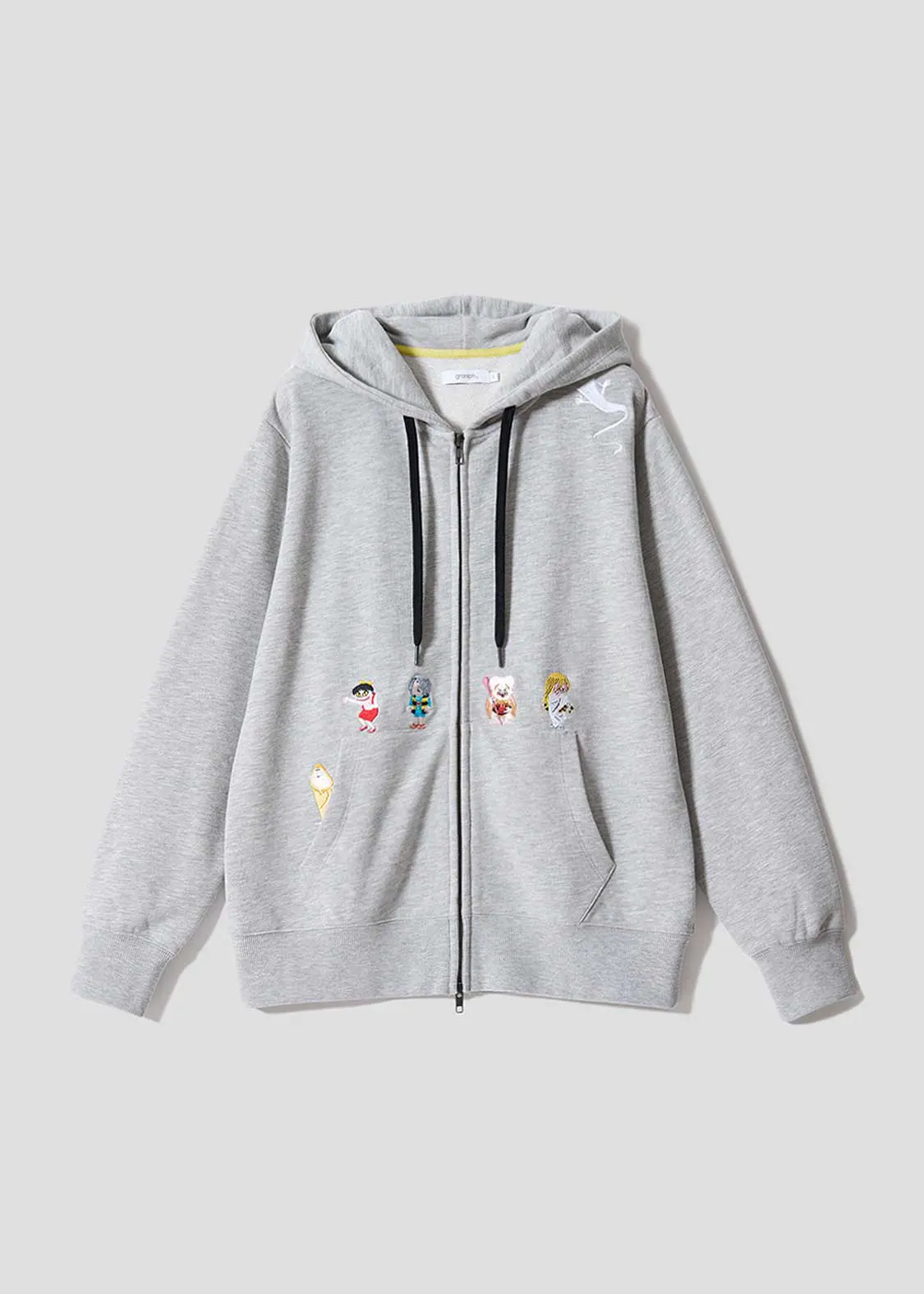
Mizuki’s catalogue fits neatly into that model because it is instantly recognizable in silhouette even to people who have never read a page of the original manga. Kitaro’s spiked hair, the single eyeball perched in a teacup that stands in for his late father, the cloth-draped Ittan Momen: these are shapes that work as embroidery or screen print without needing much explanation, which is exactly the kind of property graniph tends to gravitate toward.
The company itself has been open about how deliberate this variety is. Executives speaking to Japanese trade press earlier this year framed the licensing strategy as a way of making apparel that doubles as a form of self-expression, the reasoning being that a person’s answer to “what do you like” says something real about who they are, and that a wardrobe built entirely from a rotating cast of properties lets a customer wear that answer literally. It is a model that depends on volume and speed as much as taste. Graniph does not wait for a single collaboration to build slowly into a signature; it treats its calendar the way a magazine treats its editorial slate, filling nearly every week of the year with something new so that the overall brand identity comes from the pattern of releases rather than any one of them individually.
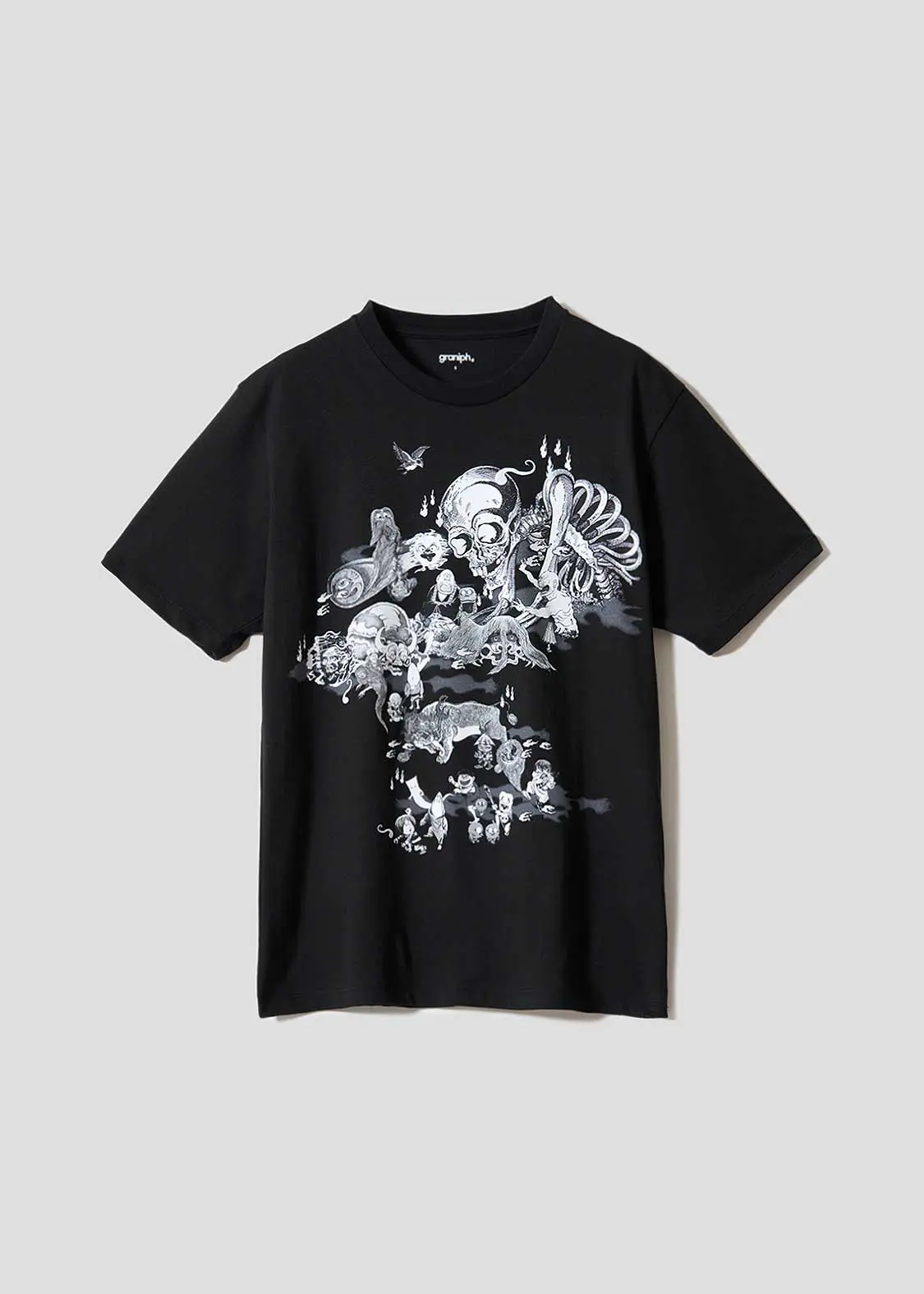
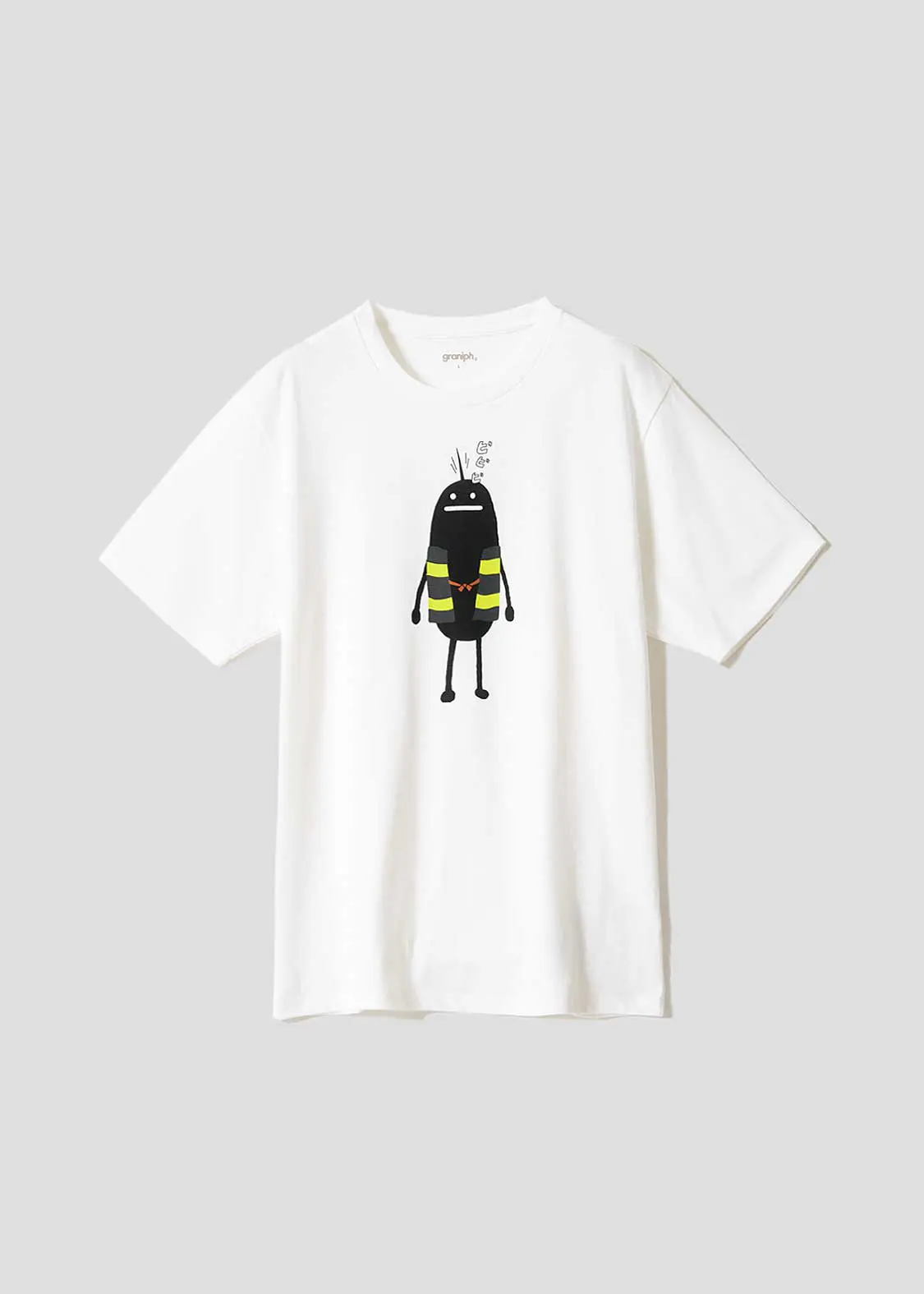
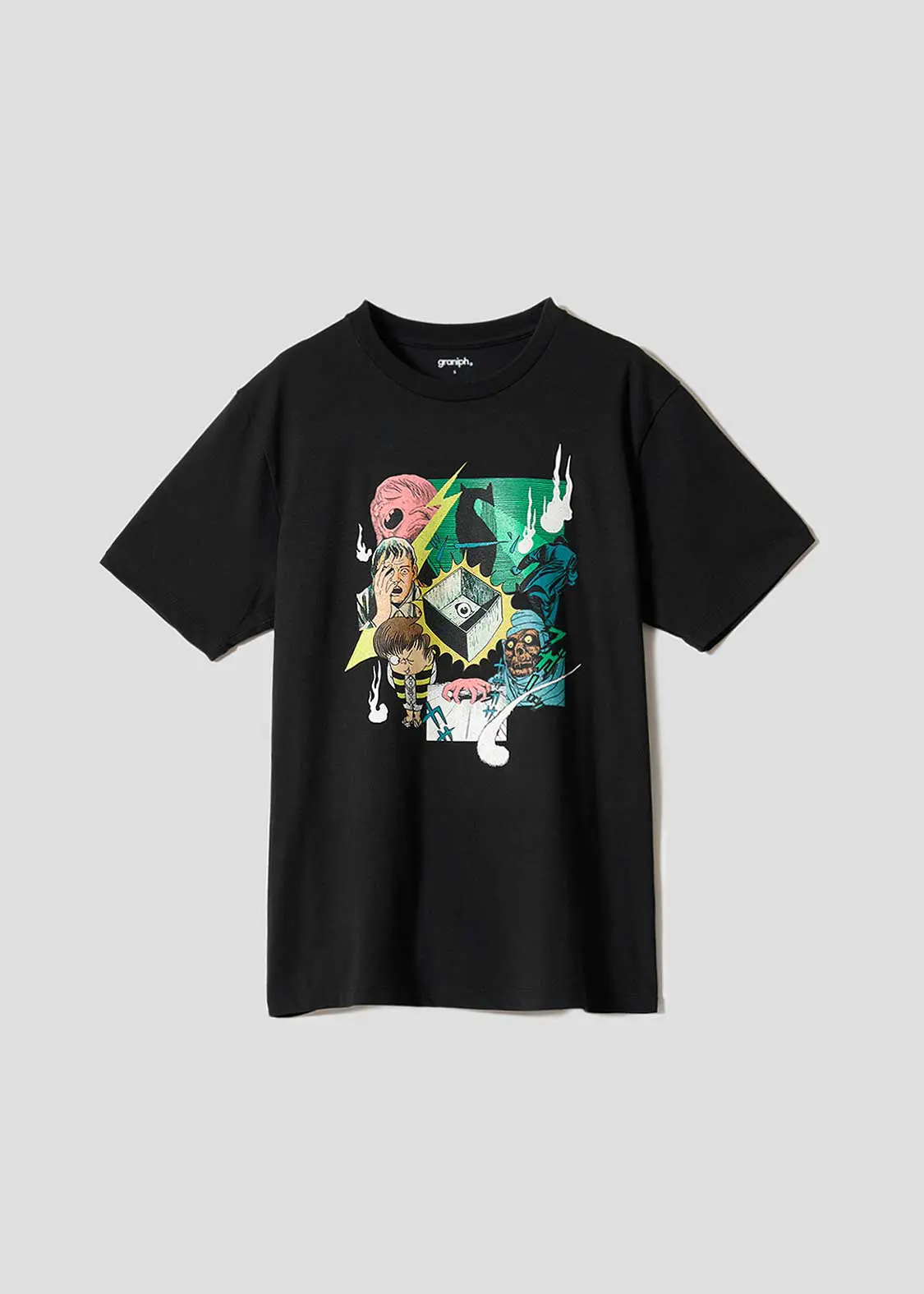
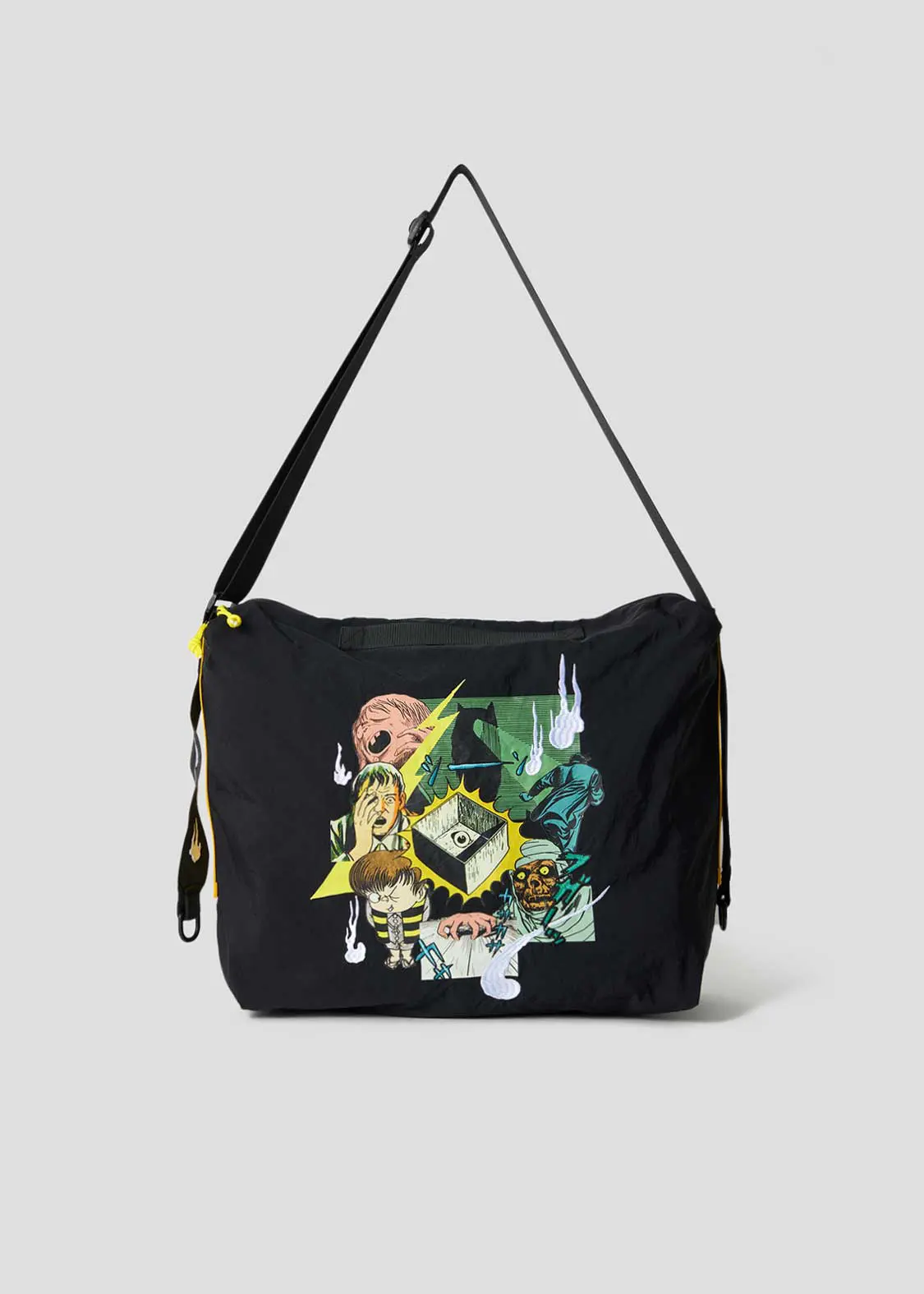
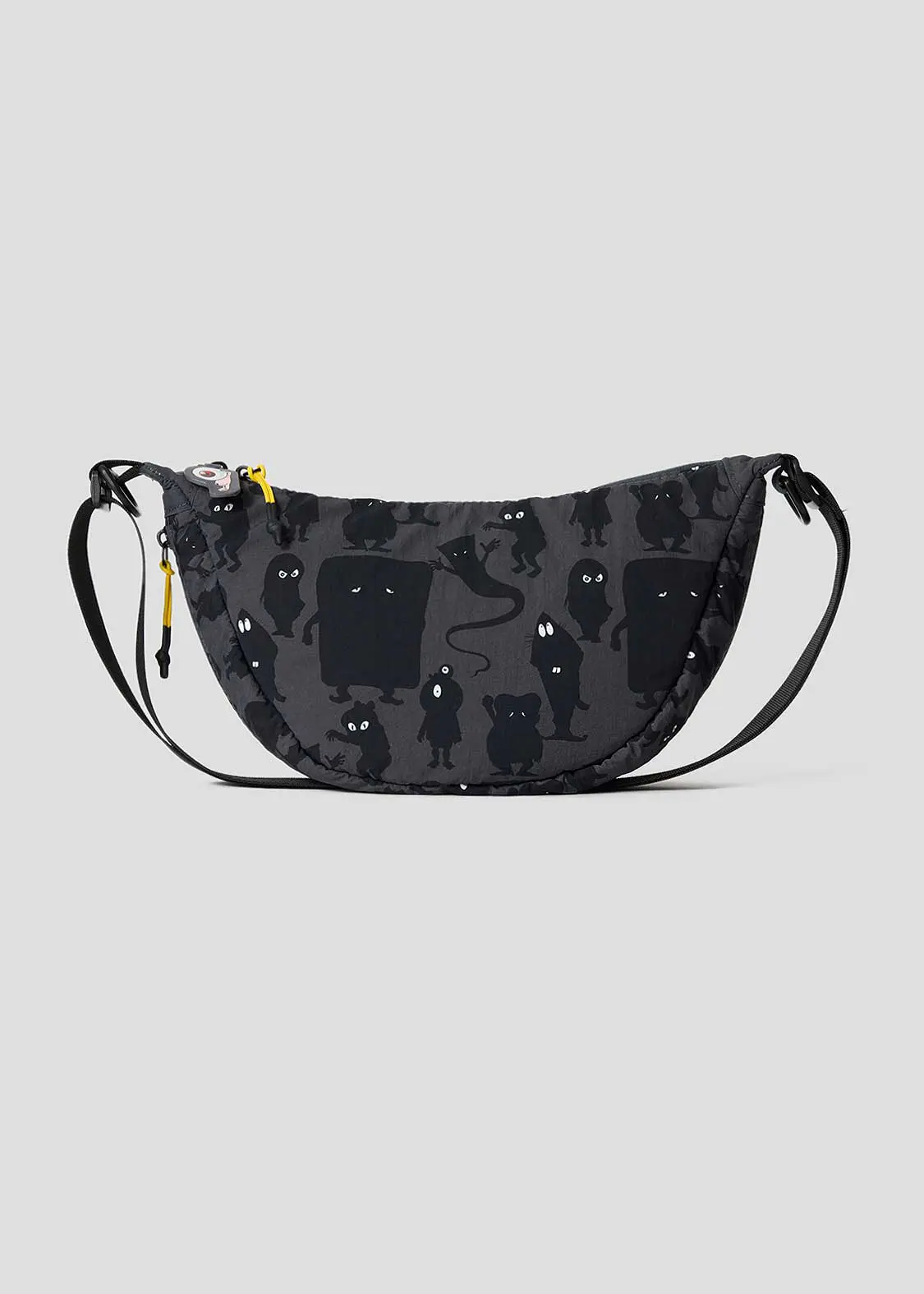
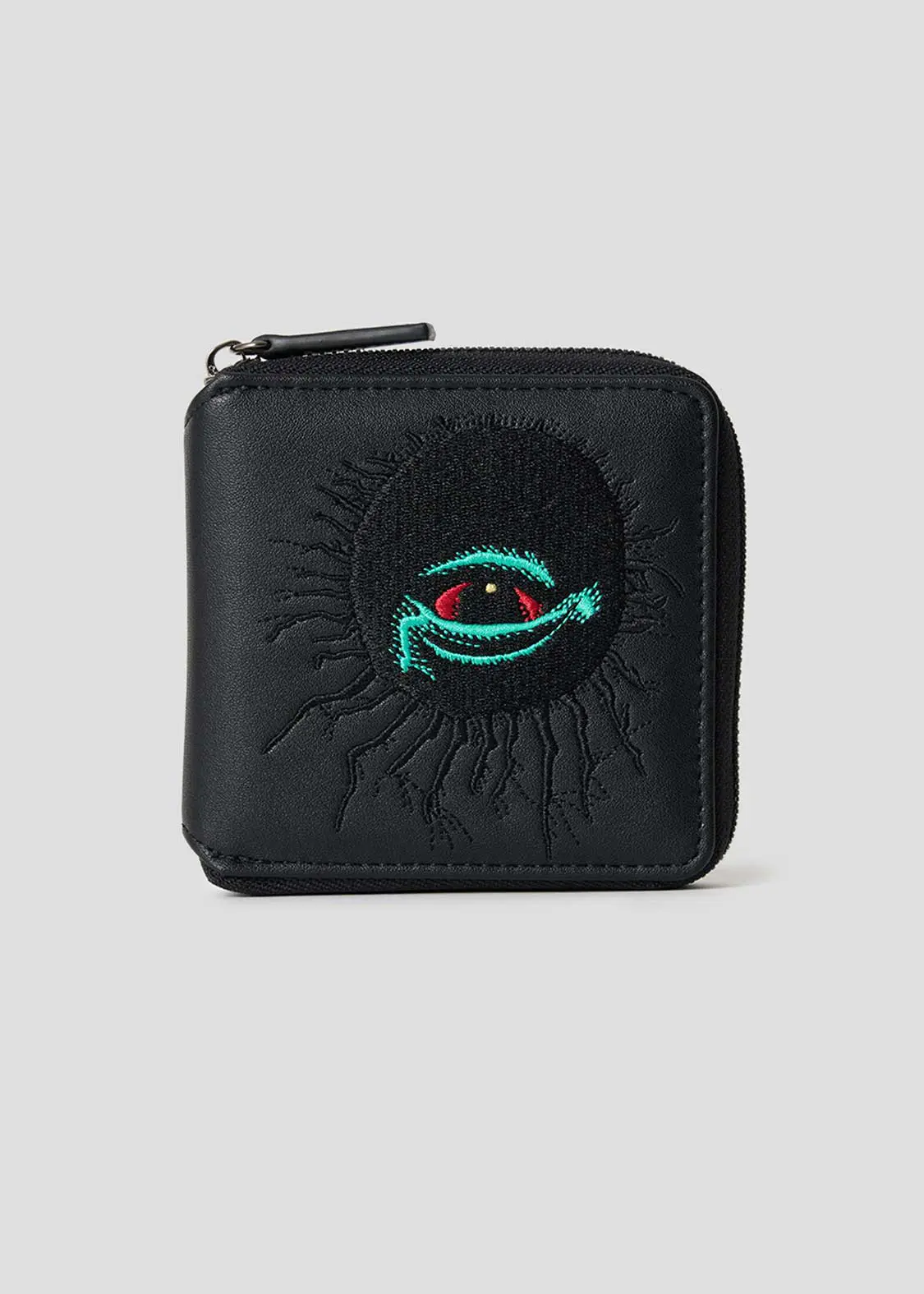
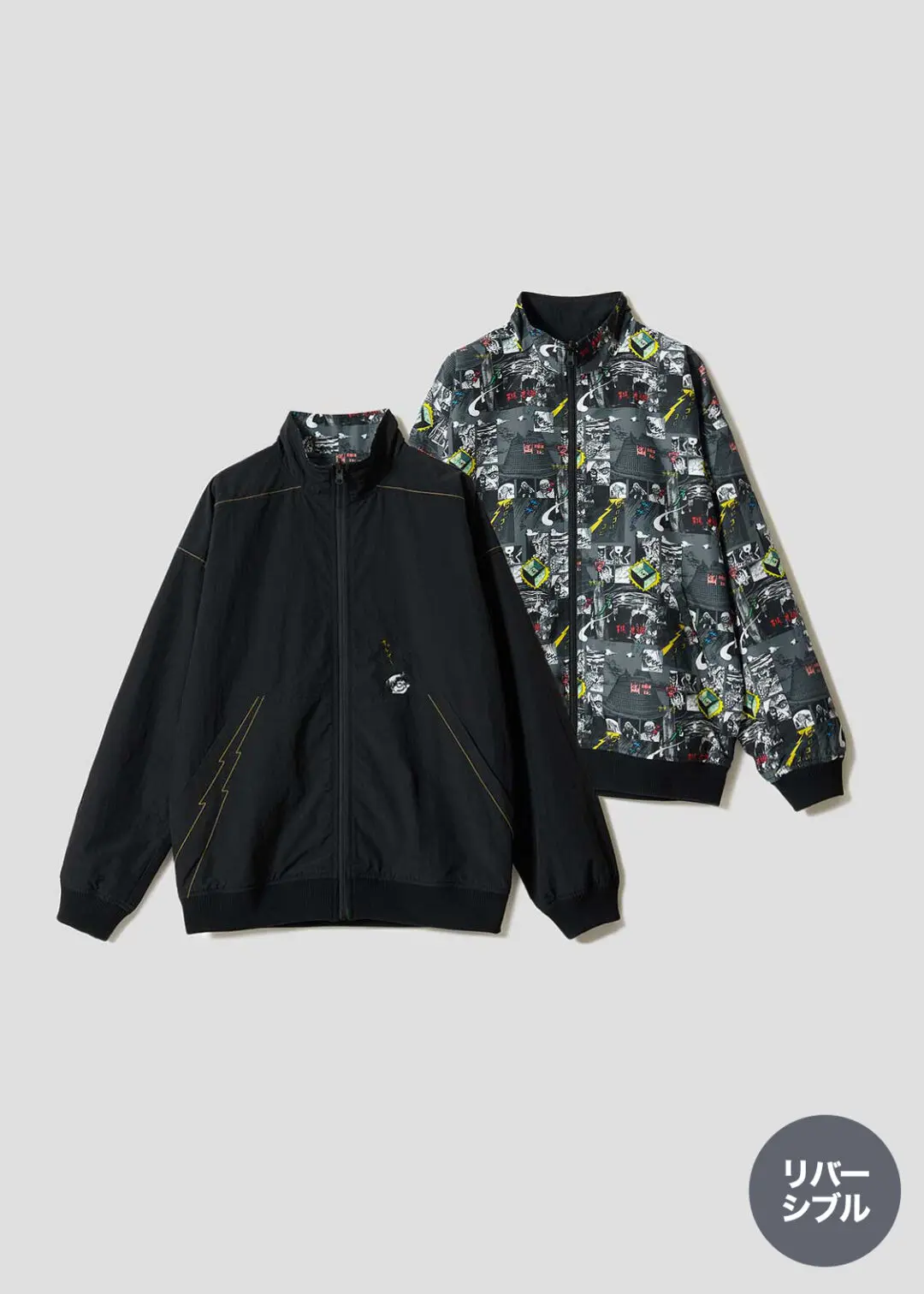
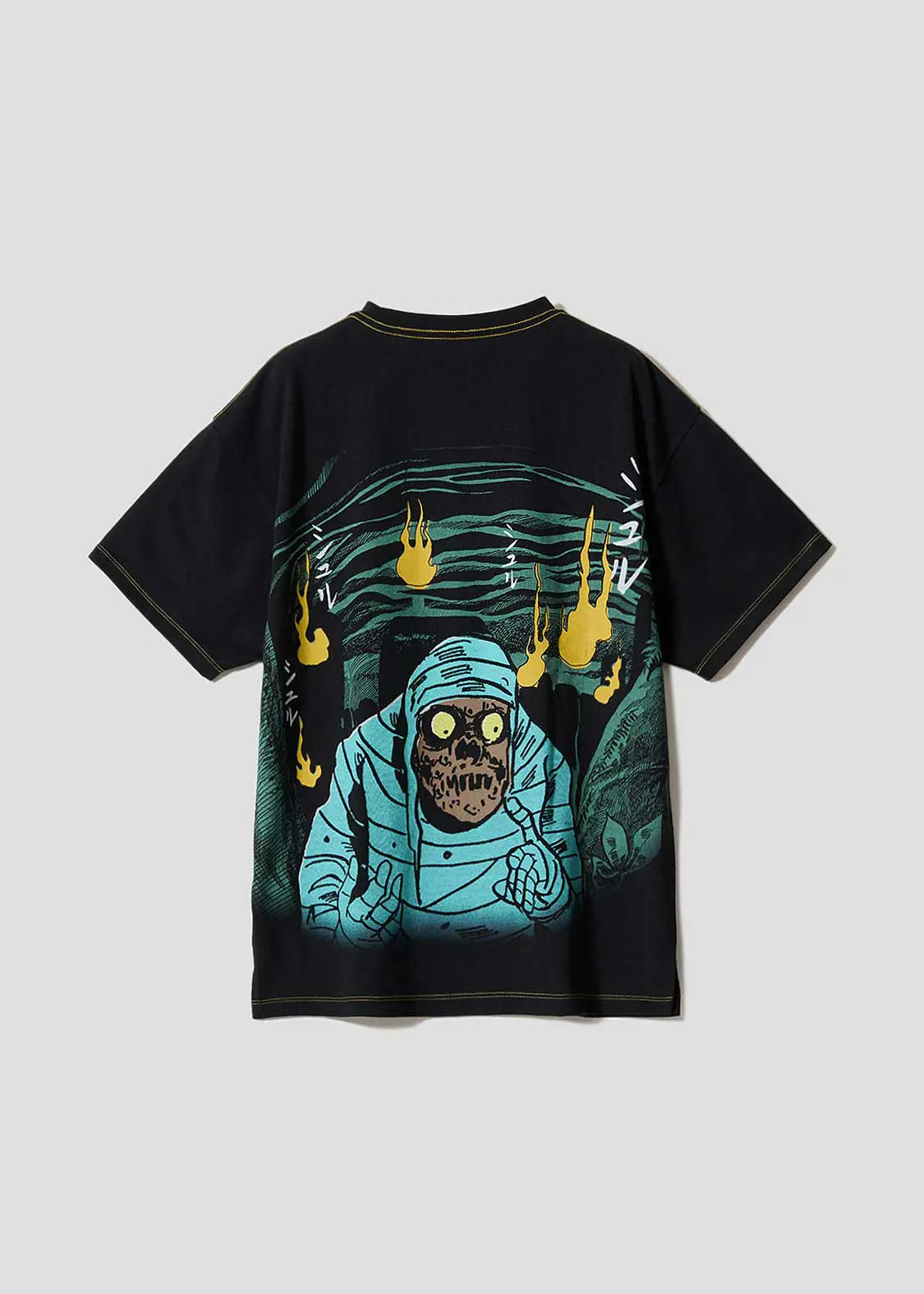
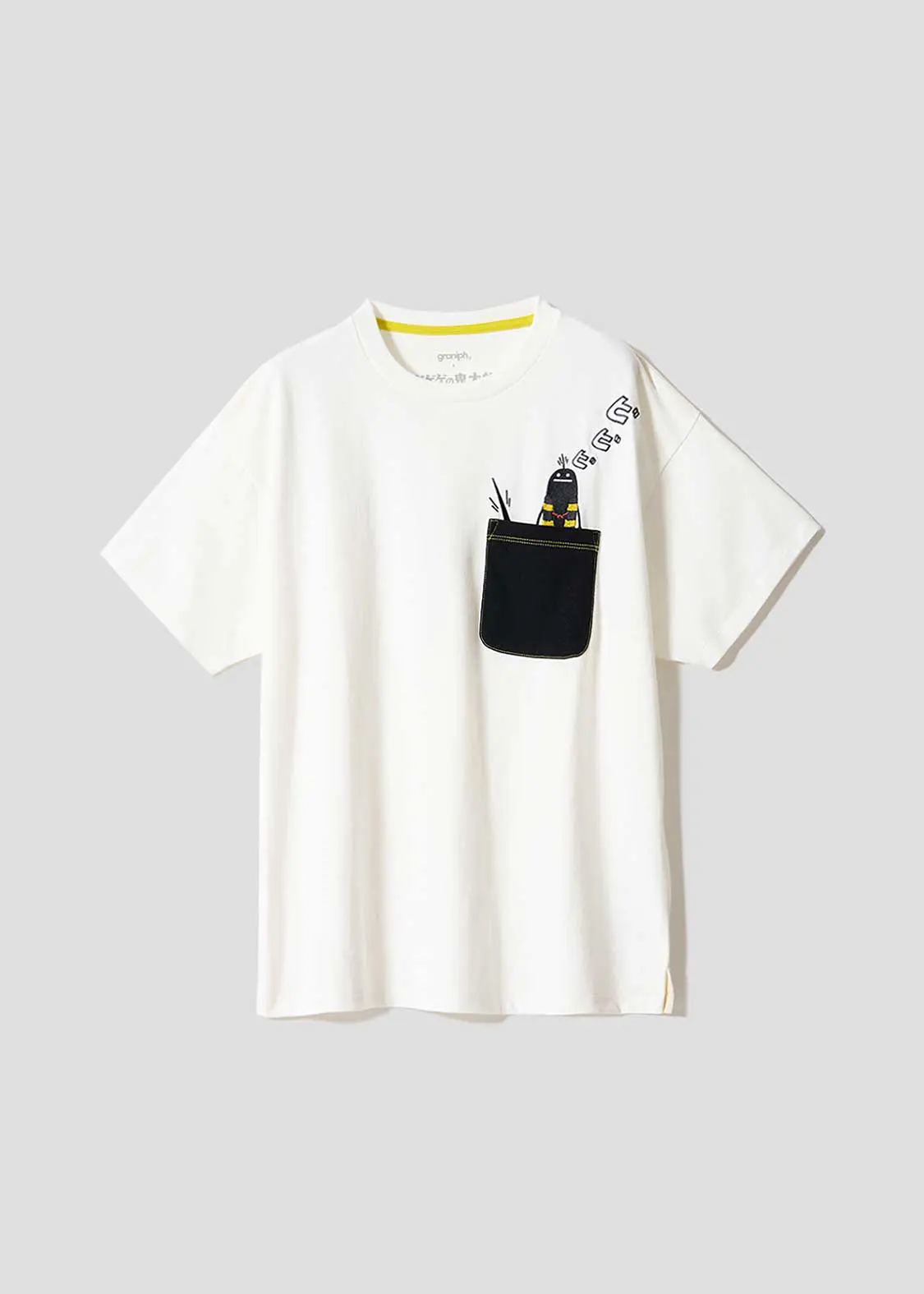
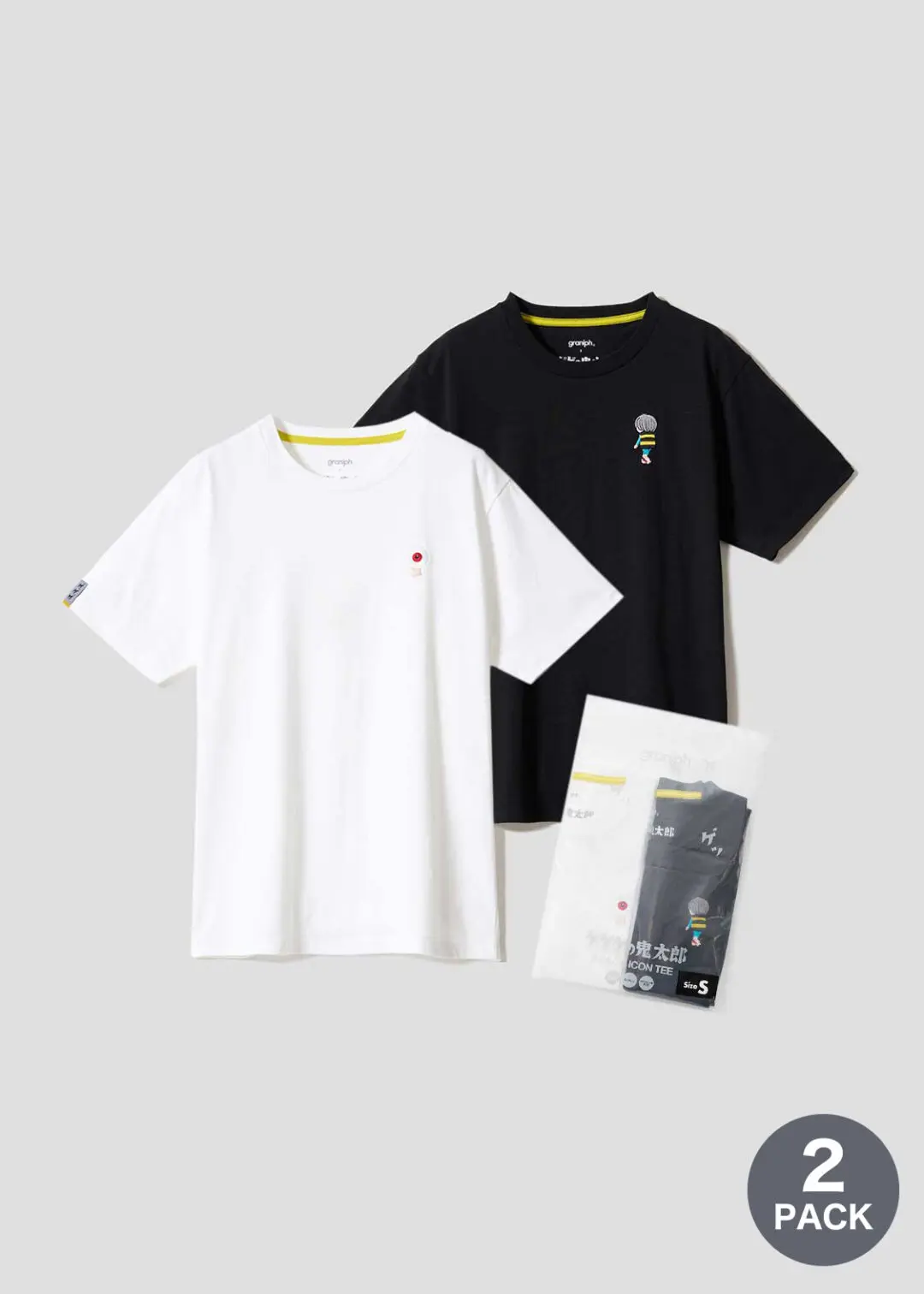
Graniph has not published a full item list for the July 28 assortment as of this writing, but the label’s own track record with this specific partnership gives a fairly reliable sense of what a Mizuki restaging usually includes. The 2022 centenary run spanned twenty-six pieces and leaned on embroidery, putting Kitaro riding on Ittan Momen’s back on one shirt and hiding a stitched Nurikabe eye inside a chest pocket on another. The 2025 edition trimmed that down to twenty-one items but kept the same instinct for small hidden details, plus a shirt built around a full cast “yokai gathering” print that graniph’s team specifically brought back for repeat customers. Recurring cast members across both runs include Kitaro, his father Medama Oyaji (rendered as the eyeball in a teacup), Nezumi Otoko the rat man, Ittan Momen the length of living cloth, and Nurikabe the wall spirit, alongside darker material pulled from Mizuki’s companion series Akuma-kun and the earlier, grimmer Hakaba Kitaro strips that predate the family-friendly version most people know.
/
本日よりスタート‼️
\妖怪たちが会場でお待ちしております✨ https://t.co/eAWWI4YNQs
— 株式会社水木プロダクション (@mizukipro) July 17, 2026
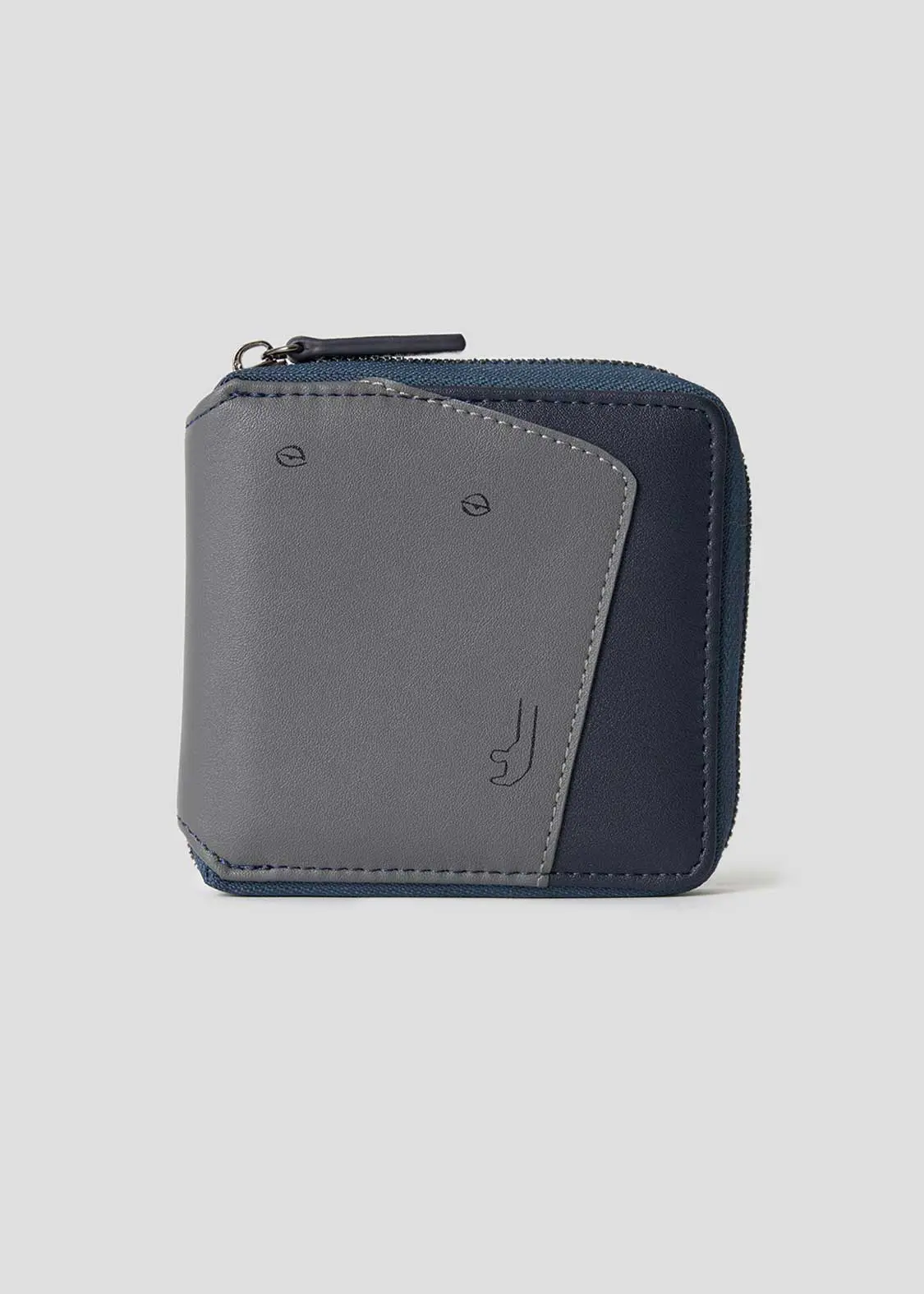
Given that pattern, the safest bet for July is a similarly sized run built around the same core cast, likely split across t-shirts, tote bags, and smaller accessories, with the collaboration’s own online storefront and in-store displays doing the heavy lifting once the assortment goes live. Graniph has historically also produced a short video segment through its in-house “collide origin story” content series for past Mizuki drops, walking through individual pieces with members of its collaboration team, and a similar explainer would not be a surprising addition this time around.
Pricing on the previous runs sat in a familiar band for the label, with individual tee landing in the low thousands of yen and heavier embroidered pieces pushing higher, a range consistent with graniph’s general positioning as an accessible design label rather than a premium streetwear house. That pricing has mattered to how the Mizuki collaborations get talked about among fans specifically because it keeps the entry point low. A shopper does not need to already be a committed manga collector to pick up a shirt built around a character they half recognize from childhood television reruns, and that low barrier has historically been part of what lets these drops perform well outside a narrower fan audience.
scope
There is a broader current running underneath this specific release. Yokai, the umbrella term Mizuki spent his career cataloguing, has had a genuinely strange second life in contemporary Japanese pop culture, one that runs well past manga and into gaming, tourism branding, and now recurring apparel drops. Part of that owes directly to Mizuki himself. Before his work, a lot of these creatures existed mostly as regional oral tradition, remembered by older residents of specific towns and largely absent from any unified visual reference. Mizuki’s decades of fieldwork and drawing effectively standardized what dozens of yokai looked like for a mass audience, and that view standard is what license holders like graniph are drawing from today, whether they credit it explicitly or not.
It also helps that the aesthetic sits comfortably next to streetwear’s existing appetite for the uncanny. A label whose catalogue already includes Evangelion’s biomechanical horror and NieR:Automata’s android melancholy has an easy time slotting in a wall spirit or a graveyard-born ghost boy. None of it needs much translation for an audience that already treats graphic tees as a way of signaling specific cultural fluency rather than generic fandom.
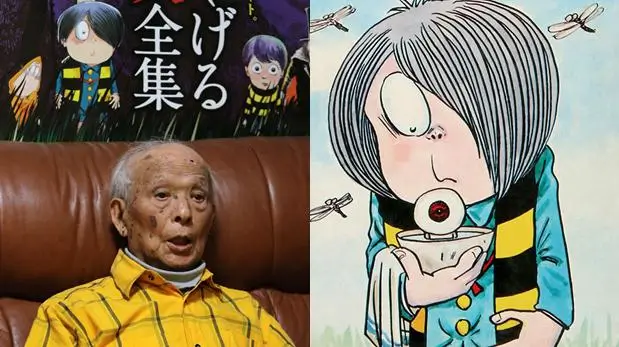
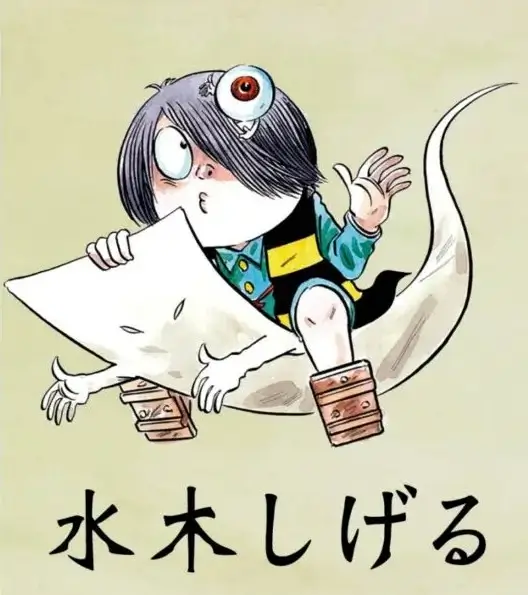
Shigeru Mizuki pictured alongside two iconic GeGeGe no Kitarō illustrations that helped define his enduring vision of Japan’s modern yokai folklore.
Sakaiminato itself offers a small case study in how far this can travel beyond apparel. The town has spent years building its tourism identity almost entirely around Mizuki, lining its main shopping street with bronze yokai statues and naming the road Mizuki Shigeru Road, a stretch that regularly draws visitors well beyond what a town of its size would otherwise expect. That same civic embrace shows up in smaller ways nationally too, in regional mascots, in seasonal festival branding, and now in a clothing label’s recurring calendar slot. None of it required Mizuki to still be alive to keep expanding. The visual language he built was thorough enough that it could keep generating new uses on its own.
where
Set against graniph’s own release calendar, July 28 lands in the middle of an unusually dense stretch. Detective Conan items went live on July 14. A collaboration tied to the anime Shin Samurai Legend Yaiba followed a week later. Harry Potter merchandise, timed to the franchise’s twenty-fifth theatrical anniversary, arrived in late June. The label opened a new flagship in Sendai in mid-June and marked the first anniversary of its Fukuoka Tenjin store in the same window. Against that backdrop, the Mizuki restaging reads less like a headline event and more like graniph doing what it has spent the past several years training its customers to expect: a rotating door of properties, arriving fast enough that missing one this month barely matters because another is already queued up behind it.
What is worth sitting with is how differently that model treats a figure like Mizuki compared with a studio franchise. Star Wars and Harry Potter arrive with built-in anniversary hooks and marketing budgets behind them. Mizuki’s material carries none of that machinery. It gets folded back into the rotation on its own, on the strength of drawings that are now closer to seventy years old in some cases, because graniph’s audience has apparently decided that a spiky-haired ghost boy and his eyeball father are still worth putting on a shirt. That is its own quiet kind of endurance, one that has nothing to do with a release calendar and everything to do with how thoroughly Mizuki’s version of yokai folklore settled into the culture that produced it.
n
From the DRIFT archive: Y-3 Sets the Tone for Its Spring/Summer 2026 Collection · DAVID CATALÁN Fall/Winter 2025 Campaign — Industrial Warmth, Urban, And The New Iberian Silhouette
Related Articles
FREAK’S STORE Puts Thirty Years of Wear Into a Champion Reverse Weave That’s Never Been Worn
A new Champion Reverse Weave lands at FREAK’S STORE this September already looking decades old, […]