DRIFT AUDIO
Listen to this story
Choose a voice, then press play.
“I Ain’t Like Everyone Else”
“It upset everyone, but what my family don’t understand is I ain’t like everyone else. I have a different way of thinking to everyone else.”
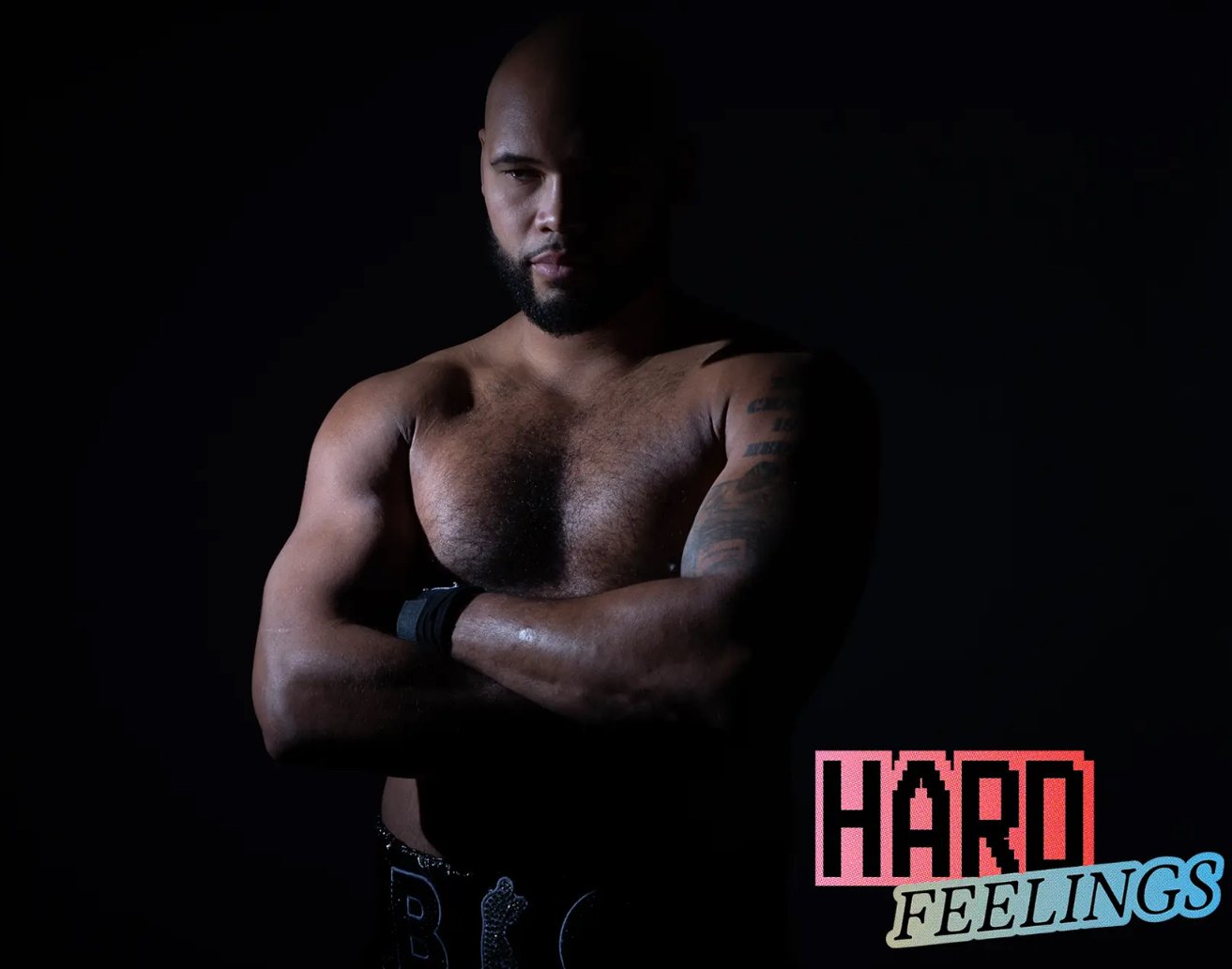
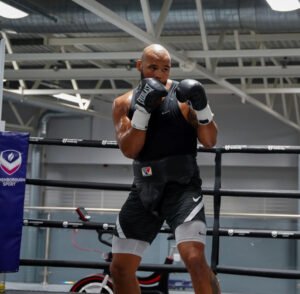
On a grainy Zoom call four weeks out from his April 20 bout against Ghanaian heavyweight Ebenezer Tetteh, Frazer Clarke speaks with a quiet fire. His voice is deep, steady, unmistakably Midlands. He is reflective, but never hesitant. These are the words of a fighter—measured, real, uncompromising. The 33-year-old Olympic bronze medallist is not only returning to the ring after a brutal double-cheekbone fracture in his October 2024 match against Fabio Wardley—he’s stepping back into the public eye with a point to prove.
And maybe more importantly: a story to tell.
Born into Grit
Born in Burton upon Trent, Clarke’s journey into boxing began at age eleven, when a coach at Burton Amateur Boxing Club introduced him to the gym as a means of staying out of trouble. Boxing, for Clarke, was never about ego or bravado—it was structure, survival, and eventually, self-worth. He never shies away from the truth: his career has been about hard graft, working through every obstacle one punch at a time.
As he tells me, “Boxing gave me a life I’d never imagined. I owe it everything. But I had to give everything back. That’s the balance.”
From Club Fights to Olympic Bronze
Clarke became one of Great Britain’s standout amateur boxers, earning a reputation as a focused, strategic super-heavyweight. His professional demeanor, technical control, and resilience saw him rise through the ranks. At the Tokyo 2020 Olympics (held in 2021 due to COVID-19), Clarke clinched a bronze medal, capping off more than a decade of international amateur experience.
“People see the medal, but not the years behind it,” he says. “Sleeping in tiny hotels. Fighting guys with twice your backing. Being away from your kids. All of it. You carry it.”
A Night Out, A Knife, A Turning Point
But not all of Clarke’s battles happened in the ring. In 2016, while out celebrating the birth of his daughter, he was stabbed multiple times in a random act of violence. He doesn’t sensationalize it. “A hole in my leg, mate. I’m lucky to be here.”
The attack left him with severe injuries, a reality check that could’ve ended his career. But Clarke’s response wasn’t retreat—it was redirection. He rehabbed, refocused, and returned to boxing with deeper resolve.
That same year, Clarke was a witness to the Westminster Bridge terror attack, giving first aid to the wounded. These moments shaped him not only as a fighter but as a father, son, and man in a volatile world. “Seeing all that—death, fear, panic—it doesn’t make you cold. It makes you understand the value of staying calm.”
Fatherhood and Fear
Clarke doesn’t flinch when discussing the impact of boxing on his role as a father. His voice slows. “I hate that they’ve seen me go through that,” he says, referencing his injury against Wardley. “But I’ve got this thing inside of me—this pride, this fight—and I’ve been doing this since I was eleven years old.”
His children are never far from his thoughts. He talks about them the way he talks about boxing: with equal parts love and weight. “I want to teach them strength. But not the loud kind. The quiet kind. Strength of showing up. Of healing.”
The Wardley Fight: A Clash and a Break
In October 2024, Clarke faced Fabio Wardley in a highly anticipated British title fight. It ended in the first round—a devastating technical knockout, with Clarke sustaining a double fracture to his cheekbone. Doctors warned him of long-term damage. Critics whispered questions about his durability. Clarke went silent, retreated from media, and focused on recovery.
“When it’s a fair fight, it’s fair game,” he says now. “That happened to me. I hate it. But it’s part of this life.”
He doesn’t deny the psychological toll. “You start asking yourself: do I still have it? Can I still take a shot? Do I want my kids seeing me like that again?” But those questions have only made him more certain about the next chapter. “I ain’t done.”
The Comeback: Birmingham and Beyond
His fight against Tetteh on April 20 at Resorts World Arena, Birmingham is more than a comeback. It’s a resurrection. And Clarke knows the eyes are on him—not just as a boxer, but as a public figure who represents grit, recovery, and working-class pride.
“People think boxers don’t think deep,” he says. “But we feel everything. We remember every injury, every lesson, every voice that doubted us.”
With his cheekbones reinforced, his camp tight, and his conditioning back on track, Clarke is ready. “This isn’t about titles yet. It’s about showing I’m still me. Maybe better.”
Masculinity in Motion
We ask Clarke what being a man means today. He doesn’t hesitate. “It’s not about how hard you hit. It’s about how real you are with yourself. Don’t mean I’m soft, though. I’m just… not fake.”
Masculinity, for Clarke, isn’t about traditional stoicism. It’s about vulnerability wrapped in resolve. “Men don’t talk, yeah? I get that. But if you don’t talk, the pressure builds up. And one day, boom—it all comes out sideways.”
That’s part of why he’s speaking now. “Maybe if someone hears me say this stuff, they’ll think, ‘Alright, I can say it too.’ Even if it’s just to themselves.”
On Role Models, Legacy, and Leaving Something Behind
Clarke is wary of the “role model” label. “I’m not perfect. Never have been. But I try to live with purpose. I show up for my family. I own my mistakes. That’s enough for me.”
Still, he knows he occupies a symbolic space, especially for young Black men navigating British life through sport. He’s vocal about racism in boxing, systemic neglect, and the underrepresentation of working-class athletes.
His mission now isn’t just belts. It’s legacy. “If I can build something for my family, my kids’ kids—then cool. But I also want to leave a blueprint. That you can be from where I’m from, go through what I’ve gone through, and still fight back.”
Final Rounds
As we wrap up, Clarke’s tone remains unchanged: calm, focused, thoughtful. The kind of voice that could narrate an audiobook on war, or tuck a toddler in for bed. The kind of voice that knows both pain and pride.
“Hard feelings don’t break me. They build me.”
He smiles, just a little. “But I still prefer the fair fights.”
Hard Feelings is more than just a boxing column—it’s a meditation on what strength looks like in 2025. And for Frazer Clarke, that strength isn’t just in the fists. It’s in showing up, again and again, no matter how bruised—ready to swing.
Related Articles
Two Chicago Lifers, One Wave: Kaicrewsade and Luke Titus on ‘#SWAG SURF’
Kaicrewsade's new album RAINBOW_ arrived on October 14, and its second track pulls in Chicago drummer and singer Luke Titus.