DRIFT AUDIO
Listen to this story
Choose a voice, then press play.
After years of silence and mounting anticipation, Bong Joon-ho returns with Mickey 17—a bold, cerebral science fiction film that probes the eternal paradox of being human: how do you matter when you can be replaced?
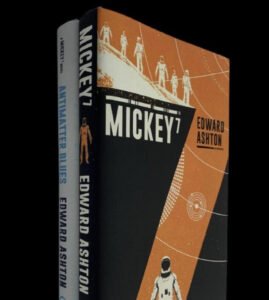
Based loosely on Edward Ashton’s 2022 novel Mickey7, Bong’s film arrives not simply as an adaptation but as an entirely new narrative grown from the DNA of Ashton’s original idea.
Fronted by a compelling Robert Pattinson and co-starring rising force Naomi Ackie, Mickey 17 takes a genre known for spectacle and fuses it with intimate melancholy, black humor, and philosophical depth. It’s Blade Runner with a broken heart. Groundhog Day in deep space.
As Mickey 17 prepares to hit theaters tomorrow, audiences should prepare for a journey into one of the strangest, funniest, and most poignant films Bong has ever made.
The Premise: Meet the Expendable
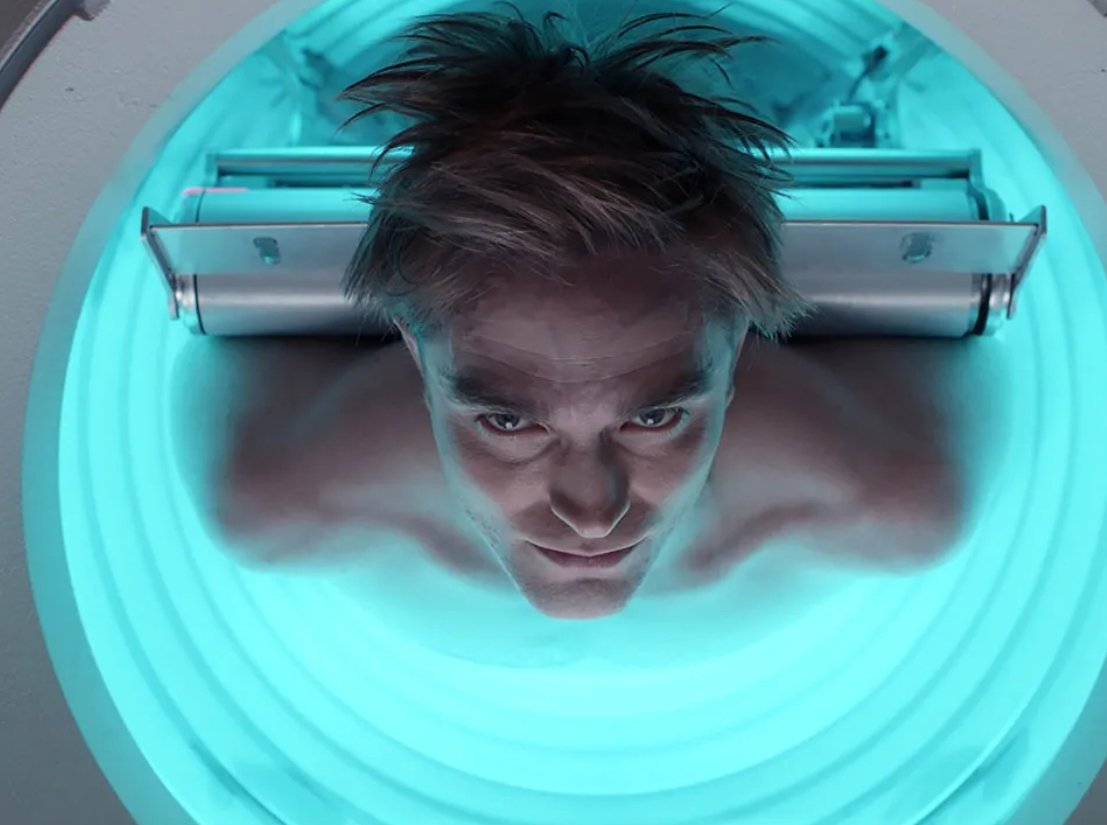
In a distant future of galactic colonization and corporate exploration, Pattinson plays Mickey, a seemingly ordinary technician who agrees to become an Expendable—a disposable human assigned to dangerous missions that are almost always fatal. But Mickey isn’t just any expendable. Each time he dies, his consciousness is downloaded into a new clone body, complete with the memories of previous iterations.
This cloning loop, theoretically endless, creates not just a sense of immortality but a fractured sense of identity. What happens to your self-worth when you’re built to die over and over again? At what point does your existence become performance?
Mickey 17 (the 17th clone) begins to ask these questions as his memory collides with trauma, secrecy, and rebellion. What begins as a logistical solution to labor scarcity becomes a profound meditation on sentience, sacrifice, and survival.
Bong’s Direction: Genre Alchemy
Fans of Bong Joon-ho know his genius lies in genre disruption—turning traditional narratives into social commentaries through tonal pivoting. Snowpiercer brought class struggle to a train circling the globe. Parasite turned a home invasion into an Oscar-winning sociopolitical thriller. With Mickey 17, Bong bends the sci-fi framework to explore the cost of repeatability.
Instead of relying on interstellar action, the film embraces dry humor, unsettling pacing, and claustrophobic set design. Cloning in Mickey 17 isn’t sleek or idealized—it’s cold, bureaucratic, and depressing. Even the futuristic base where the film is set feels intentionally underwhelming: part brutalist architecture, part techno-dystopian Kafka nightmare.
And that’s the point. Bong uses scale to shrink the human spirit—only to explode it through narrative revelation.
Pattinson’s Duality
As the central figure—or rather, the recurring one—Robert Pattinson gives a performance that’s both restrained and riotous. His Mickey(s) embody fear, detachment, humor, and a deep existential fatigue. It’s his most anti-charismatic role since Good Time or High Life, yet Pattinson’s ability to shift affect and mood across each iteration adds emotional dimension to what could’ve been pure sci-fi gimmickry.
In some moments, Mickey 17 is a confused cog. In others, he’s rebellious, romantic, or near-collapse. In every case, Pattinson’s portrayal delivers the most human version of inhumanity: endlessly replicated, never fulfilled.
Naomi Ackie’s Commanding Presence
As Mickey’s superior officer and potential ally (or adversary), Naomi Ackie steals scenes with a performance that oscillates between warmth and militaristic coldness. Her character, Colonel Kwon, has seen dozens of Mickeys die—and carries the kind of moral detachment born from necessary leadership. But Ackie allows glimmers of empathy to fracture that armor.
In a pivotal scene, she confronts Mickey 17 with the line: “You think pain makes you special. I think it makes you forgettable.” It’s not just a moment of character conflict—it’s a commentary on modern desensitization, corporate ethics, and personal boundaries in high-functioning dystopias.
Themes: Death, Identity, and Bureaucracy
Mickey 17 uses its sci-fi scaffolding to wrestle with questions that have haunted philosophers and technologists alike:
- If you’re replaceable, are you still meaningful?
- Is memory continuity enough to define identity?
- Can rebellion exist in systems designed for reset?
The film’s humor is often bleak: think Dr. Strangelove meets Severance. Mickey is celebrated for dying. Each iteration is awarded with meaningless tokens—merit pins, breakfast upgrades, sanitized applause. His coworkers treat him like a mascot, while his own self-worth erodes with each resurrection.
Cloning here isn’t utopia. It’s corporate cost-cutting disguised as progress.
The Source Material: Edward Ashton’s
Mickey7
Though the film shares a title and premise with Edward Ashton’s 2022 novel, it’s important to note that Bong’s version is not a strict adaptation. In interviews, Bong has said he used an early draft of the novel as inspiration, then created his own script from it. Ashton’s Mickey7 reads more like classic pulp sci-fi with noir humor and breakneck pacing. It’s a solid, entertaining book—but Bong takes the seed and grows something weirder and more philosophical.
Reading the book after watching the film reveals the creative liberties taken: character arcs diverge, tone shifts dramatically, and the ending is wholly original. Still, for fans who want a double dip into the Expendable’s psyche, Mickey7 remains a worthwhile companion text.
Flow
In Mickey 17, Bong Joon-ho proves once again that science fiction need not rely on lasers and explosions to shock and awe. Sometimes, the most chilling thing is the banality of endless existence. Sometimes, the bravest rebellion is claiming your own soul—one death at a time.
This is a film that balances dark comedy with existential dread, visual spectacle with sterile absurdity, and a clone’s despair with the director’s unmistakable humanity.
Mickey 17 is not about the future. It’s about the systems we’ve already built—and the parts of ourselves we’re willing to sacrifice for survival.
Related Articles
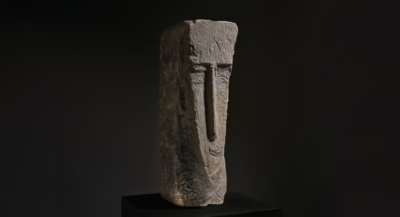
Modigliani’s Limestone ‘Tête’
Carved from a single block of limestone in Montparnasse more than a century ago, one of Modigliani's rare stone heads goes to auction for the first time…