DRIFT AUDIO
Listen to this story
Choose a voice, then press play.
In an unexpected turn of events that has sent ripples across the luxury sector, Hermès has officially overtaken LVMH Moët Hennessy Louis Vuitton to become Europe’s most valuable luxury company by market capitalization. The milestone, confirmed on April 15, 2025, marks a seismic shift in the high-end fashion and accessories world, reflecting not just market performance, but a deeper transformation in consumer values, brand resilience, and investor priorities.
The announcement follows a mixed earnings report from LVMH that fell short of analysts’ expectations, compounded by macroeconomic pressures, currency fluctuations, and cooling demand in China. In contrast, Hermès delivered a stellar first-quarter update, underpinned by strong demand for its iconic accessories, leather goods, and controlled distribution model.
LVMH: THE GIANT UNDER PRESSURE
For over a decade, LVMH has been the dominant force in luxury—a diversified powerhouse with holdings across fashion (Louis Vuitton, Fendi), jewelry (Bulgari, Tiffany & Co.), cosmetics (Sephora, Benefit), spirits (Hennessy, Moët & Chandon), and hospitality (Cheval Blanc, Belmond).
But the first quarter of 2025 revealed cracks in its previously invincible armor. While the company continues to pull billions in revenue, growth slowed to just 2.4% compared to the same period last year. Most notably, LVMH saw:
- Weakened performance in Asia, particularly China, where younger consumers are gravitating toward niche labels.
- Muted sales in North America, linked to inflationary caution and the shifting priorities of Gen Z.
- Luxury fatigue at flagship houses like Louis Vuitton and Dior, where high price points no longer guarantee the same prestige allure.
Investors, long used to LVMH’s rapid expansion, are beginning to worry about over-diversification and market saturation, prompting a sell-off that shaved billions from the group’s valuation.
HERMÈS: DISCIPLINED, DELIBERATE, DOMINANT
Hermès, by contrast, has operated with near-clinical precision. Its slow-and-steady strategy—centered around scarcity, exclusivity, and timeless design—is proving to be one of the most resilient models in luxury history.
Rather than racing to expand store counts or aggressively diversify product lines, Hermès has:
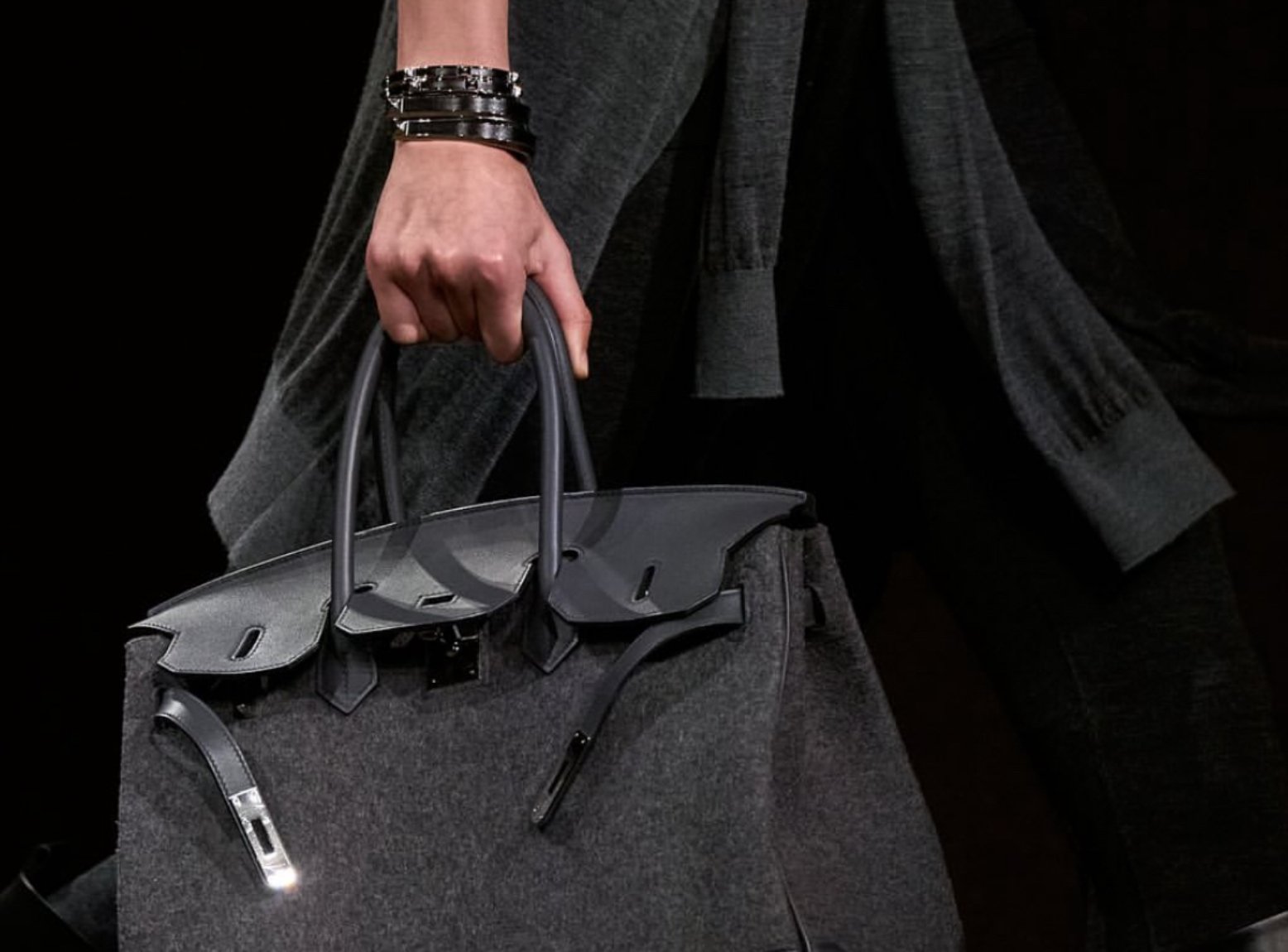
- Maintained tight control over distribution: Its Birkin and Kelly bags remain impossible to buy off the shelf, fueling desirability.
- Invested heavily in workshops and artisanship: Production is never rushed, and quality is non-negotiable.
- Cultivated multi-generational brand loyalty without leaning on celebrity saturation or digital gimmicks.
As a result, Hermès reported an 11% rise in sales for Q1 2025, led by continued strength in leather goods, jewelry, and ready-to-wear. Its limited exposure to cosmetics and perfumes—unlike LVMH—also shields it from macro volatility in consumer sentiment.
Most importantly, Hermès is virtually debt-free, operating on pure organic growth, and paying dividends that reflect quiet confidence rather than brand bravado.
The shift isn’t just symbolic. It marks investor sentiment re-aligning toward companies that prioritize long-term brand equity and operating discipline over acquisition-driven expansion and aggressive marketing.
LUXURY’S NEW PSYCHOLOGY
What does it mean for the broader luxury industry? The answer lies in what consumers want now—and what they’re tired of.
Recent market studies by Bain & Co. and McKinsey suggest the 2020s luxury consumer is:
- Less brand-obsessed and more quality-conscious.
- Drawn to quiet luxury and low-key symbols over logos.
- Interested in provenance, heritage, and craftsmanship, not just hype.
In this climate, Hermès’ model shines. The brand’s refusal to chase trends, its embrace of analog charm in an increasingly digital world, and its emphasis on time-honored making rather than time-limited marketing all resonate deeply.
Meanwhile, LVMH’s conglomerate structure—long considered its greatest strength—is now seen by some as its Achilles’ heel. Multiple brands competing under one corporate umbrella risk internal cannibalization and diluted storytelling.
ANALYST INSIGHTS: QUOTES FROM THE FLOOR
Carla Bruni, Luxury Market Analyst at HSBC, tells us:
“Hermès represents the ‘gold standard’ of luxury right now—steady growth, no overexposure, and pure desirability. Investors are responding to discipline over dazzle.”
Etienne Falco, European Retail Equity Strategist:
“LVMH is still a juggernaut, but the market is signaling something important—quality over quantity, authenticity over algorithms.”
Lena Mendez, Head of Fashion Futures at CCI Paris:
“The luxury narrative is no longer about how much you can sell, but how little you need to sell to stay relevant. Hermès understands that better than anyone.”
RISING BRANDS, SHIFTING WINDS
While Hermès climbs and LVMH reassesses, several other luxury players are watching closely. Chanel remains privately held and highly profitable, though it faces succession questions and e-commerce hesitation. Kering, which owns Gucci, Balenciaga, and Saint Laurent, continues to restructure its portfolio following a turbulent 2024.
Meanwhile, smaller houses like Loro Piana, Brunello Cucinelli, and Berluti are experiencing renewed investor interest, driven by the same consumer desire for restraint, sustainability, and timelessness.
It’s a new age of understated wealth—and brands who understand this are poised to thrive.
BEYOND THE CHARTS: THE EMOTIONAL VALUE OF HERMÈS
Behind Hermès’ stock performance lies a deeper, emotional resonance. Owning an Hermès bag, scarf, or belt isn’t about status—it’s about succession. These items are passed down, worn into memory, and increasingly treated like family heirlooms.
Consumers now want items that last—not just physically, but culturally. And that’s exactly what Hermès delivers: a wearable memory bank of tradition, utility, and artistry.
In a time of increasing digital acceleration, Hermès is a sanctuary of slowness. And the market is listening.
LOOKING AHEAD: A NEW DECADE OF DISCRETION
So what happens next?
LVMH is expected to implement internal changes, possibly slowing acquisitions and revisiting brand focus strategies, particularly at Louis Vuitton and Givenchy. Investors are calling for more curated storytelling and less reliance on celebrity campaigns.
Hermès, meanwhile, will likely stay its course—deliberate expansion, elevated in-house training of artisans, and continued investment in workshops across France. Its challenge will be preserving mystique as its visibility—and stock—rises.
But if the past few years are any indication, Hermès is more than up for the challenge.
Impression
In 2025, Hermès didn’t just surpass LVMH in market value—it redefined what modern luxury looks like. In a post-pandemic world increasingly shaped by minimalism, ethics, and value, the French maison has proven that growth doesn’t require velocity. It requires vision.
From the ateliers of Lyon to the digital dashboards of global investors, Hermès has reminded the world that luxury isn’t about having more—it’s about being more.
And in the eyes of the market, that’s worth everything.
Related Articles
Miffy Gets Her Ceremony Best: United Arrows Dresses Dick Bruna’s Rabbit for KIDDY LAND’s 80th
A Miffy mascot in United Arrows’ formal-occasion wardrobe, and a pouch where she peeks out […]