Inside CJ McCollum’s $300 Million Budget: The One He Never Updated

July 27, 2026
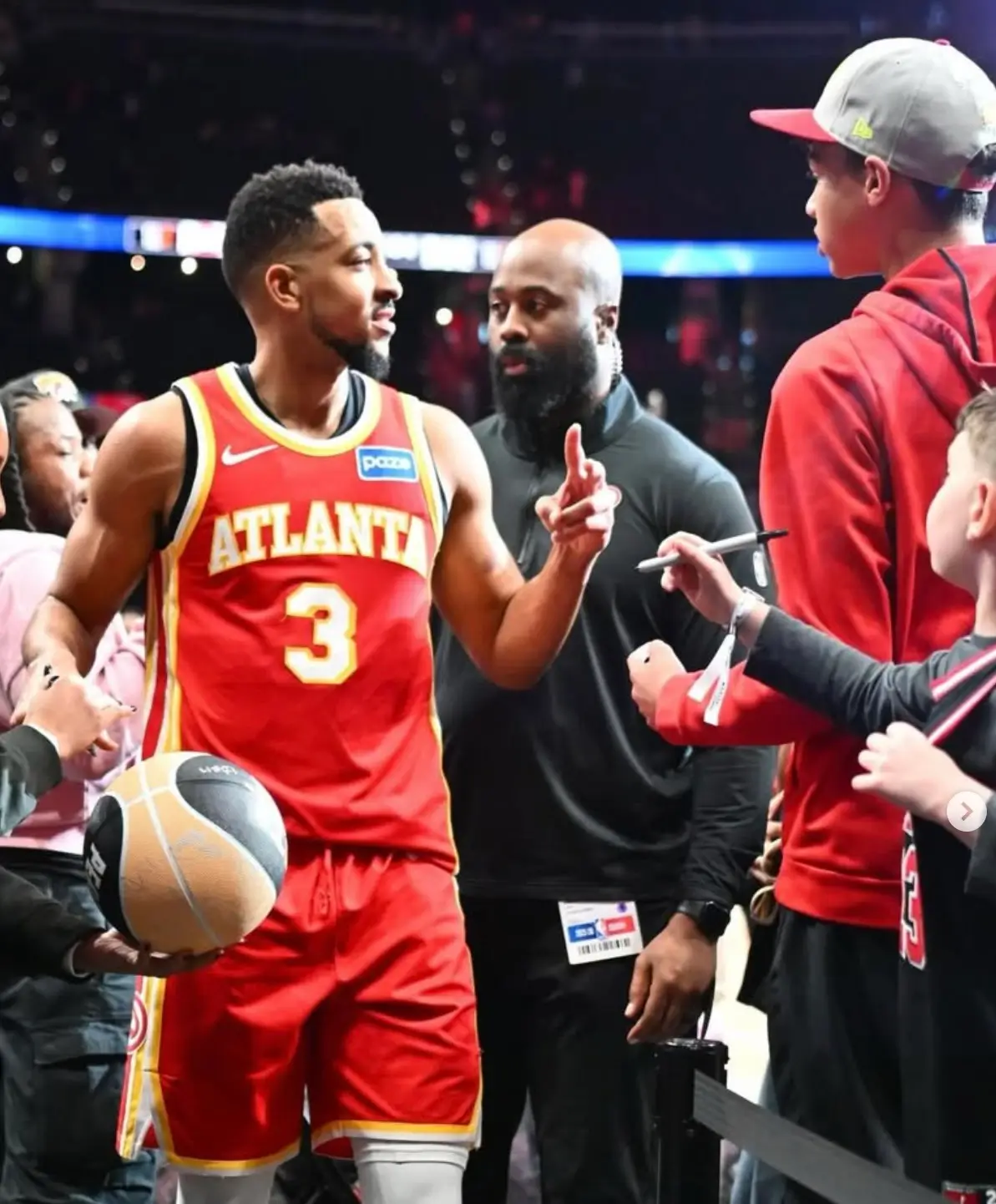
He’s earned nearly $300 million across a 13 year NBA career. He still books flights with credit card points, and he says that’s on purpose.
Professional athletes talk about money constantly, but usually in one of two registers: the cautionary tale about someone who lost it all, or the highlight reel of a car collection. CJ McCollum offered something rarer when he sat down for Forbes‘ The Enterprise Zone podcast. He described, plainly and without much self congratulation, why a man who has earned close to 300 million dollars in career NBA salary still checks his miles balance before booking a flight.
“I had a fear and a paranoia that I was going to go broke,” McCollum said on the podcast. “I always just feared like everybody goes broke, so I was just like, I’m not gonna spend money.”
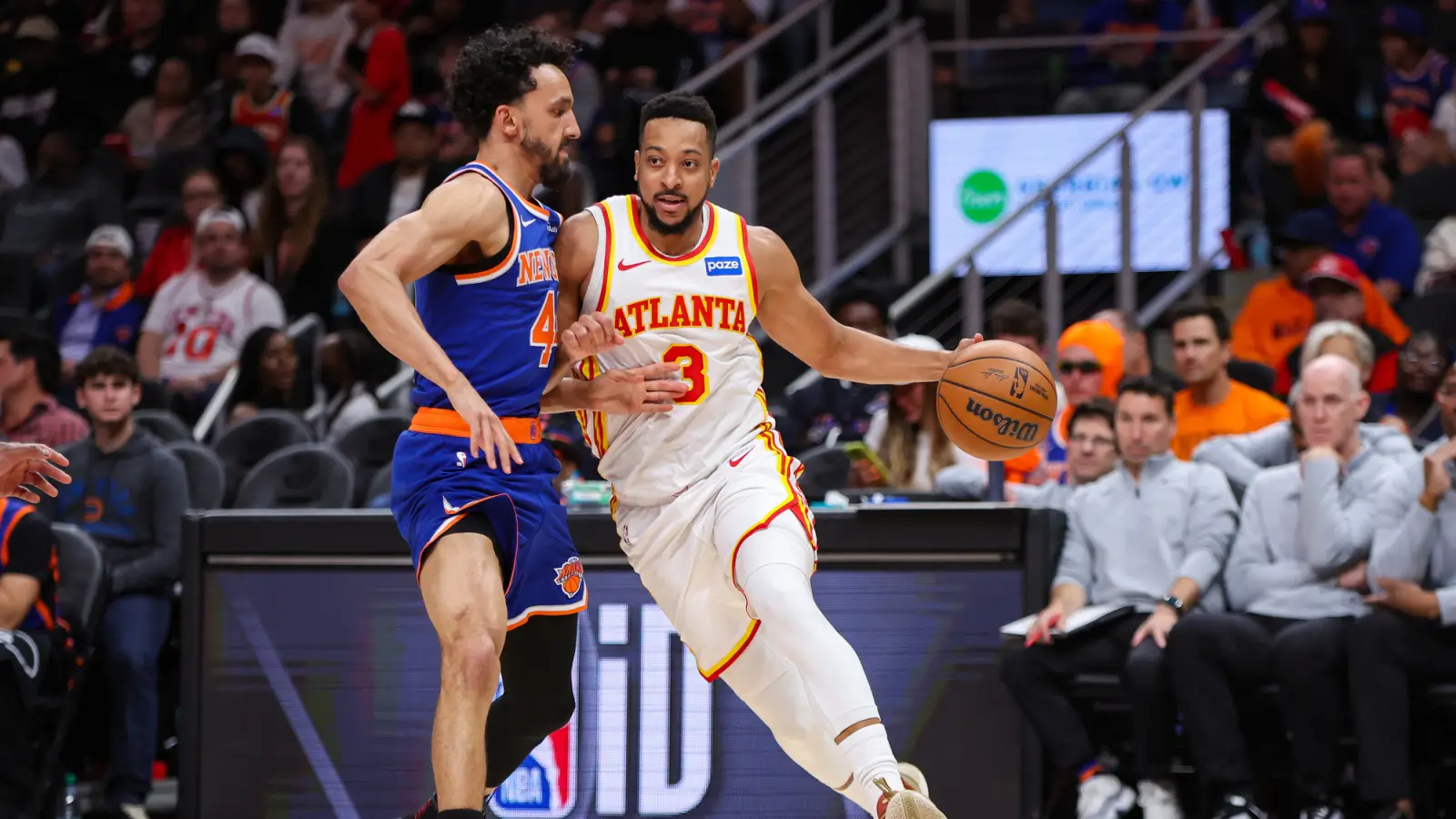
Atlanta Hawks guard CJ McCollum drives to the basket against the New York Knicks during an NBA regular-season game, showcasing his ball-handling and scoring ability in front of the home crowd at State Farm Arena.
It’s a specific kind of admission. Not regret, not a warning issued after the fact, but a habit he built early and never fully let go of, even as his paychecks grew by orders of magnitude.
stir
McCollum was drafted 10th overall by the Portland Trail Blazers in 2013, and his rookie contract, worth roughly 10.5 million dollars across four years, looked nothing like the rookie deals players sign today. By the time taxes, agency fees, and marketing cuts came out, McCollum has said the checks he actually saw were modest. Before that money even arrived, he was living off a 12,000 dollar energy drink sponsorship, since NBA rookies traditionally aren’t paid until November of their first season.
“My checks were small compared to what rookies make today,” McCollum has said, describing that period. He used the sponsorship money to cover rent on a four bedroom house in Portland, running about 2,700 dollars a month, and bought his mother a Mercedes Benz CLA 250, a car he then spent seven years shh paying off in installments specifically to build his own credit history rather than pay it off outright. He leased a car for his father too. Beyond that, spending stayed minimal. He wasn’t buying much clothing, largely wearing the Jordan Brand product Nike supplied him with as part of his early sponsorship deal, and the one indulgence he’s pointed to from that period is a 6,000 dollar chain.
None of that reads like scarcity. It reads like a young player already building a system, one where the fear of losing everything shaped decisions before there was much to lose in the first place.
scope
What makes McCollum’s account stand out isn’t the frugality itself. Plenty of athletes describe early caution. It’s that he says the same budget has survived every subsequent raise. When he signed his first major extension with Portland in 2016, a four year, 106.6 million dollar deal that followed his NBA Most Improved Player season, he says he and his family didn’t recalibrate their spending upward to match it.
“The budget that we have in place now for my family and I is the same budget that I had when I signed my first extension,” McCollum has explained, describing the household approach as treating each new contract as though it might be the last dollar he ever earns. Portland extended him again in 2019, a three year, 100 million dollar deal that began with the 2021 to 2022 season, and by his account, that raise didn’t move the baseline either.
The credit card points detail is where this know shows up most viewable today. Despite a career that has paid him somewhere in the range of 300 million dollars, McCollum has said he still flies using points and airline miles rather than defaulting to cash purchases, treating travel the same way he treated that first Mercedes payment plan: as an opportunity to optimize rather than simply spend.
rank
McCollum’s financial instincts trace back further than his rookie contract. He attended Lehigh University on a journalism major rather than a basketball factory pedigree, becoming the Patriot League’s all time leading scorer and helping Lehigh pull off a 15 over 2 upset of Duke in the 2012 NCAA Tournament. He broke his foot during his final season, a serious injury for a prospect heading into a draft, and still went 10th overall to Portland in 2013, becoming the first Lehigh player ever selected in the first round.
He spent his rookie season and part of his second arriving off the bench behind Damian Lillard before a shift to shooting guard let the two form one of the more productive backcourts in Portland Trail Blazers history. McCollum’s breakout 2015 to 2016 season, in which he averaged 20.8 points and 4.3 assists a game, earned him the league’s Most Improved Player award and set up the first of the extensions that would define his career earnings.
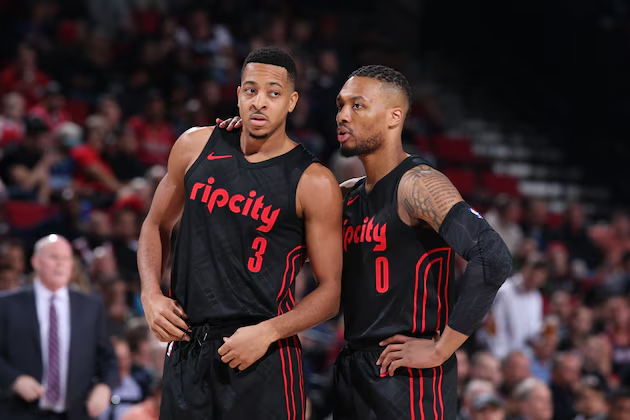
CJ McCollum and Damian Lillard confer on the court during their time as the Portland Trail Blazers’ standout backcourt, one of the NBA’s most productive guard pairings of the era.
extent
Over 13 NBA seasons, McCollum has played for four franchises: nine years in Portland, a stretch with the New Orleans Pelicans after a 2023 trade, a season with the Washington Wizards, and now the Atlanta Hawks, where he signed a one year, 21 million dollar deal in the summer of 2026. Across five contracts, his career earnings sit at roughly 300 million dollars, a figure that places him among the more durable earners at his position rather than a single max contract outlier.
What’s notable is how McCollum has described applying that money once it arrived. Beyond real estate, he’s talked about investments in the wine industry and other ventures on the same Forbes podcast appearance, framing his post NBA planning less around lifestyle upgrades and more around the same instinct that shaped his rookie year: assume the money could stop, and build accordingly. He’s also pointed to conversations with established business figures as shaping how he approaches deals, describing an approach where new ventures get proven out cautiously before he commits further.
narr
Athlete bankruptcy has been documented enough, across enough sports, that it’s become something close to a genre unto itself. McCollum’s account works partly because it inverts the expected arc. There’s no rock bottom in this story, no cautionary reversal. It’s a player who set a rule as a rookie living off sponsorship checks and simply never revised it upward, even once the number attached to his name grew into the hundreds of millions.
McCollum has acknowledged that the era he came up in looked different from today’s rookie landscape, where NIL income now reaches players well before their first NBA paycheck and rookie scale contracts have grown substantially since 2013. Even accounting for that shift, the underlying logic he’s described, treating each new contract as though no further money is coming, is the kind of principle that doesn’t require a max deal to apply. It’s less a story about being a pro athlete than about a specific, stubborn discipline that happened to survive contact with several hundred million dollars.
Related Articles
LeBron James Makes His “Last Decision,” Choosing Philadelphia for One More Run
A two-year, $8 million deal places the NBA’s all-time leading scorer beside Joel Embiid, Tyrese […]