DRIFT

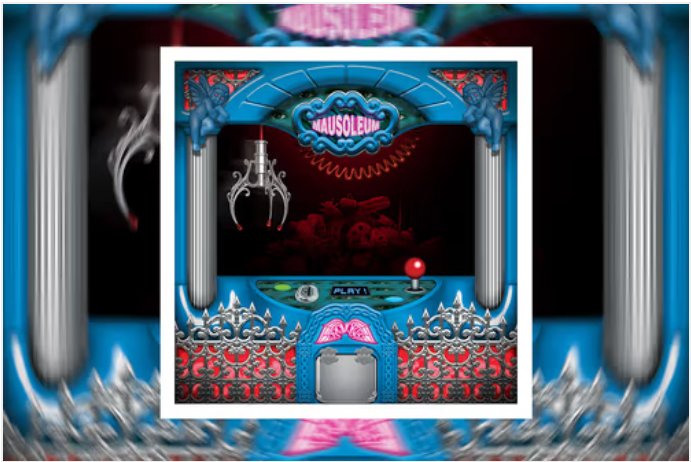
It begins in silence, as mausoleums often do. Then the first synths creep in — a slow, spectral undulation that builds without demanding attention, like light leaking under a sealed door. Jonathon Lopez, Christian Crow Petty, and Wil Palacios—collectively known as Provoker—have always trafficked in emotional atmosphere. But with Mausoleum, their third studio album and most haunting body of work to date, they move deeper into the subterranean—through corridors of grief, fantasy, obsession, and possession. At thirty minutes and eleven tracks, Mausoleum is a polished sarcophagus: compact, ornate, and carefully interred. Published by Stockholm’s enigmatic YEAR0001 label, the album finds Provoker refining the cinematic horror synth language they’ve long mastered, not to tell ghost stories, but to become the ghosts.

To understand Mausoleum is to understand the origins of Provoker. Jonathon Lopez first founded the project in solitude, scoring short films and genre projects—sci-fi, horror, and lo-fi psychological thrillers. From the outset, Provoker was less a band than a shadow project, making use of visual language and film structure to build music that felt haunted by image. That changed when Christian Crow Petty entered the frame. A former hardcore frontman with a velvet sneer and a knack for torch song melancholy, Crow Petty brought not only vocals but a sense of narrative shape. Wil Palacios later joined on bass, anchoring their swelling compositions in groove and form, tightening their aesthetic while deepening its emotional stakes.

Their 2021 debut album Body Jumper emerged during a period in which virtual realities and psychological isolation defined daily life. The project was concerned with alterity—other selves, fractured realities, digital hauntings. It was a soundtrack for a world half-lived through screens. Then came Demon Compass in 2023, a work steeped in fantasy tropes and roleplay, a record that wore its escapism on its sleeve while suggesting, through its baroque arrangements and mythic references, that perhaps escapism was the truest form of confession. But Mausoleum takes another route entirely: inward, downward, toward a vault where nothing escapes unburied.

An Aesthetic of Collapse and Control

From the first notes of “Deathwish,” Mausoleum signals a shift. The production is tighter, crisper—glassier, even. Lopez’s synth textures no longer shimmer; they pierce. The track opens with cold arpeggios, followed by a heartbeat bassline that pulses beneath Crow Petty’s whispered invocation. He sings less like a narrator than a seer, or a patient mid-seizure. There is a vertiginous sense of being between states, trapped in limbo not of death, but of obsessive desire.

This mode continues on “Pantomime,” perhaps the most emotionally generous track on the album. Lyrically, it touches on themes of romantic madness, the decay of trust, the suffocating presence of an imagined other. “Loving you is like falling through mirrors,” Crow Petty intones, his voice modulating into a brittle falsetto before descending into something gnarled. The track plays like a haunted cabaret number, as if delivered by a broken animatronic lounge singer performing for ghosts.

The band has said that Mausoleum should be understood as an anthology—a structure that borrows from both horror literature and genre cinema. In this light, each track becomes a short film or episode: self-contained yet linked thematically, if not narratively. This strategy allows for sonic variation without sacrificing mood. “Lavender Blood” leans into post-punk propulsion, with Palacios’ bass leading a kinetic charge that momentarily breaks the album’s funerary pace. Meanwhile, “Your Father’s Teeth” is all murk and menace, a slow-burning funeral march with lyrics that suggest ancestral trauma and monstrous inheritance.

Making the Mausoleum: Process as Ritual

In conversation with Crow Petty and Lopez before the album’s release, it becomes clear that Mausoleum was not just an artistic progression—it was a compulsion. “We didn’t want to make another Body Jumper,” Lopez notes. “That album was about transformation, about fluidity. This one’s about enclosure. About permanence.”

Crow Petty adds: “It felt like writing from a crypt. Like, what happens after the mask falls off? What happens after you escape the dream world? We kept coming back to this image of a building filled with grief, but also grace. A mausoleum isn’t just where things go to die—it’s where they’re preserved.”

That sense of preservation manifests in the band’s studio approach. The trio leaned heavily into analog hardware this time around, including vintage synthesizers, modular setups, and reel-to-reel recording. The aim, according to Lopez, was to make something “that felt touchable. Like you could feel the texture of the sound under your fingers.” This tactile quality runs through the record—each hi-hat crack, synth squelch, and vocal echo feels placed, as if the band were physically laying bricks in the walls of their sonic crypt.

And yet, the album never feels overproduced. There’s space here—air. Tracks like “Myopia” and “Skin Game” stretch their legs without overextending, leaving room for the listener to wander, get lost, and be haunted.

Fandom, Fantasy, and Fractured Worlds

When asked about their downtime, Crow Petty lights up—not about songwriting, but about gaming. Specifically, Oblivion Remastered, a community-made update of the 2006 fantasy RPG, which he’s been playing on tour. “That game’s always been a refuge for me,” he says. “The music, the world-building, the strangeness—it’s like returning to a subconscious place. It kind of mirrors what we were doing with Demon Compass, but in this case, we wanted to explore what happens after the fantasy collapses. Like, when the player logs off.”

This metaphor is apt. Mausoleum often feels like a post-fantasy album. Not in the sense of rejecting fantasy, but of examining the aftermath of immersion. It’s what lingers when the story ends—like credits rolling over a corpse.

YEAR0001, the enigmatic Swedish label behind acts like Yung Lean, Bladee, and Ecco2k, was the natural home for a project like Mausoleum. Known for blurring lines between genres and aesthetics, the label provides a framework for Provoker’s gothic experimentalism without confining it. The result is an album that feels both entirely singular and perfectly at home within a broader movement of internet-borne, emotion-heavy underground pop.

From Cult to Cathedral

While Provoker may still be something of a cult favorite, Mausoleum makes a compelling case for their elevation to a broader echelon. The album is confident, even stately, without sacrificing intimacy or risk. Its brevity is deceptive; in half an hour, Provoker paints entire murals—cracked, weeping, radiant with rot.

Crow Petty’s vocal evolution also deserves special note. Where earlier records leaned into new wave detachment, Mausoleum grants him a broader palette. On “Paint Eater,” he mutters, he weeps, he roars—his voice bending like molten wax across the track’s mournful synth architecture. There’s theatricality here, sure, but never camp. Every gesture is grounded in emotional urgency.

Lopez, too, comes into his own on Mausoleum. His compositions, though compact, are richly detailed. Each track feels hand-forged, drawn from a cinematic mind fluent in atmosphere and horror iconography. His work here recalls not just synth pioneers like John Carpenter or Goblin, but more recent post-industrial stylists like Alessandro Cortini and Yves Tumor. And yet, it never feels derivative.

Impression

To step into Mausoleum is not to confront death, but to walk beside it. It is not a horror album, though it is terrifying. It is not a love album, though it aches with longing. It is, in essence, a threshold—a space between memory and forgetting, image and echo.

Provoker has made something rare with Mausoleum: a concise epic, a fractured dream, a soundtracked séance. For those willing to enter, the reward is profound—a confrontation with the ghosts we carry, the fantasies we bury, and the voices we hear in our heads long after the music fades.

And as Crow Petty might whisper in that final track: “It’s not the end. It’s the waiting that kills you.”


Related Articles

Modern data center facility with a solar-panel-clad exterior, bright green administrative offices, and secure perimeter fencing, showcasing sustainable digital infrastructure and renewable energy integration

Lombardy’s Data Center Boom: Balancing Digital Ambition with Environmental Responsible

Lombardy has emerged as Italy’s primary hub for new digital infrastructures, particularly data centers—vast complexes […]

In a highly anticipated reunion after 24 years, Adidas Originals and Coca-Cola have joined forces once again to celebrate the FIFA World Cup 2026™. The collaboration revives their iconic 2002 partnership from the Japan-South Korea tournament, now reimagined for the biggest global sporting event of 2026, co-hosted by the United States, Canada, and Mexico. Set to launch on June 6, 2026, this collection masterfully blends Adidas' streetwear heritage with Coca-Cola's timeless branding, creating a vibrant fusion of football culture, nostalgia, and modern style. The drop arrives at a perfect moment. With the World Cup kicking off on June 11, 2026, fans worldwide are gearing up for a summer of football excitement. This collaboration isn't just merch—it's a cultural statement that merges two legendary brands under the banner of "Originals are the Real Thing," a clever twist on Coca-Cola's famous slogan. Historical Context: A Reunion 24 Years in the Making Adidas and Coca-Cola first collaborated during the 2002 FIFA World Cup, producing limited-edition pieces that captured the era's energy. That partnership helped define early 2000s football-streetwear crossover culture. Fast-forward to 2026, and the brands are back with fresh energy, leveraging Adidas' deep FIFA ties (as an official partner) and Coca-Cola's long-standing sponsorship of the tournament. The 2026 edition promises to be historic as the first 48-team World Cup, spanning three countries and generating unprecedented global hype. This collab taps into that momentum, offering fans wearable pieces that celebrate both brands' legacies while looking forward to the future of football fashion. Collection Overview and Design Philosophy The Adidas Originals x Coca-Cola collection fuses 2000s street style with classic sporting aesthetics. Expect bold reds, creams, whites, and silver accents inspired by Coca-Cola's iconic packaging—think classic script logos, droplet detailing, and can-inspired motifs. The lineup spans footwear, apparel, and accessories, divided into two visual directions: one logo-heavy and graphic-forward, the other drawing from vintage advertising aesthetics. Designs pay homage to Coca-Cola's visual language while staying true to Adidas Originals' archival roots. High-quality materials, attention to detail, and versatile silhouettes make these pieces suitable for both match-day wear and everyday street style. The campaign, featuring young football star Lamine Yamal and a diverse cast in everyday scenes building anticipation for the tournament, reinforces themes of originality and shared cultural moments. Footwear Highlights Footwear takes center stage in this collaboration, with reimagined takes on iconic 2000s Adidas silhouettes: Samba and Superstar Models: These classics get Coca-Cola treatment with white/cream/red colorways and prominent script branding. The Samba blends street heritage with football roots, while the Superstar II features weathered bases and bold side panels. Expected pricing around $110–$130. Adistar Control 5: A standout with droplet detailing mimicking condensation on a cold Coke can. This model brings performance-inspired design into lifestyle territory. Predator Sala: Indoor/hybrid style with silver-and-red accents, nodding to predatory precision on the pitch and Coca-Cola's bold energy. Climacool 1: Revived with breathable tech and Coke-inspired graphics, perfect for warm summer days. Megaride F50: A highlight paying tribute to the iconic Coca-Cola glass bottle, with unique contours and refreshing design cues. Each pair incorporates thoughtful details like embroidered logos, custom insoles, and packaging that mimics vintage Coke crates or cans. These shoes are built for durability and comfort, appealing to sneakerheads, football fans, and casual wearers alike. Apparel and Accessories Beyond kicks, the collection offers a full lifestyle range: Track Tops and Jerseys: Standout jerseys fuse retro Coca-Cola advertising from different eras into cohesive football designs. Track jackets feature signature three stripes alongside Coke branding, in vibrant reds and classic whites. Shorts and T-Shirts: Relaxed fits with graphic prints, ideal for casual wear or layering. Expect motivational football motifs blended with refreshing beverage references. Accessories: A bright red airliner bag stands out as a functional statement piece. Additional items may include caps, socks, and tote bags carrying the collaborative spirit. The apparel emphasizes comfort with premium cotton blends, mesh panels for breathability, and oversized silhouettes popular in contemporary streetwear. Unisex sizing and inclusive fits make the collection accessible to a broad audience. Cultural Impact and Fan Appeal This collaboration resonates on multiple levels. For football fans, it represents national pride and global unity ahead of the 2026 tournament. Sneaker enthusiasts will appreciate the nostalgic 2000s revival mixed with modern execution. Streetwear collectors see it as a prime example of how heritage brands can innovate through partnerships. In an era where sports and fashion increasingly intersect, Adidas and Coca-Cola deliver pieces that transcend the pitch. Wear them to watch matches at home, attend watch parties, or hit the streets in any host city—New York, Los Angeles, Toronto, or beyond. The designs are versatile enough for gym sessions, festivals, or daily commutes. The timing aligns perfectly with rising interest in football in North America, boosted by the co-hosting nations. Young talents like Lamine Yamal in the campaign help bridge generational gaps, attracting newer fans while satisfying longtime supporters. Where to Buy and Release Details The collection launches globally on June 6, 2026, via: Adidas CONFIRMED app (for early access and raffles) Adidas.com Select retailers and flagship stores worldwide Some regions may see staggered drops, with Japan and other markets getting early access. Prices are expected to range from $50–$150 depending on the item, making it relatively accessible compared to ultra-limited drops. Pro Tips for Copping: Enable notifications on the CONFIRMED app. Check local stock at Adidas stores in major cities. Monitor resale platforms post-drop for exclusive colorways, but be wary of markups. Size up slightly for oversized apparel fits. Given the World Cup hype, popular items like the Sambas and jerseys are likely to sell out quickly. International shipping is available, but factor in potential customs delays. Styling Suggestions Match Day Look: Pair a collaborative jersey with classic black shorts and Samba sneakers for effortless fan style. Streetwear Rotation: Layer a track top over a graphic tee with wide-leg pants and the Megaride F50 for a bold urban ensemble. Casual Summer: White Superstar with denim shorts and the airliner bag for a refreshing, vacation-ready vibe. These pieces mix seamlessly with existing Adidas or neutral wardrobes, maximizing versatility. Broader Context in 2026 Fashion and Sports The Adidas x Coca-Cola drop is part of a larger wave of high-profile collaborations tied to the World Cup. Adidas continues its dominance in football kit design, while Coca-Cola leverages its sponsorship with collectibles, bottles, and experiential activations like the Trophy Tour. In the sneaker industry, this collab exemplifies the ongoing trend of lifestyle reinterpretations of performance silhouettes. It also highlights how global brands use major events to drive cultural conversations around unity, originality, and joy—core values for both companies. Sustainability notes (based on Adidas' broader initiatives) suggest some pieces may incorporate recycled materials, aligning with modern consumer expectations. Looking Forward: Legacy and Excitement As the countdown to kickoff continues, this collection serves as the perfect prelude to an unforgettable summer of football. Whether you're a die-hard supporter, a fashion-forward collector, or someone seeking motivation through style, the Adidas Originals x Coca-Cola FIFA World Cup 2026 lineup delivers. Expect potential restocks, special event exclusives in host cities, and continued campaign content featuring more athletes. This isn't just clothing—it's a ticket to participate in the global celebration of the beautiful game. Mark your calendars for June 6, 2026. Refresh your wardrobe, lace up those Sambas, and get ready to cheer on your team in style. The "Real Thing" meets the Originals in what promises to be one of the most talked-about releases of the year. This collaboration captures the essence of football's universal appeal: bringing people together through shared passion, iconic brands, and unforgettable moments. As the world prepares for 2026's expanded tournament, Adidas and Coca-Cola remind us that some partnerships are truly timeless.

Adidas Originals x Coca-Cola Collection: FIFA World Cup 2026

In a highly anticipated reunion after 24 years, Adidas Originals and Coca-Cola have joined forces […]

Loewe shoulder bag crafted in brown and black leather with minimalist lion face detailing and a matching fur tail charm

180 Years Unfolded: The Full Story Behind Loewe’s New Campaign

The year was 1846. Queen Victoria was on the British throne and the telephone, the […]