DRIFT

Somewhere between the glow of a cathode-ray hotel TV in the early 2000s and the numbing carousel of streaming tiles in 2025, something was lost. Call it serendipity, call it surfing, call it that comforting feeling of stumbling onto the middle of Bring It On in a Marriott while your family gets ready for dinner. In its early golden age, Netflix gave viewers the illusion of control and convenience—choice unbounded, time-shifted freedom. But now, after colonizing our leisure hours with bottomless content, it’s reckoning with its own excess. Yesterday’s announcement of Netflix’s most significant TV redesign in over a decade signals something profound: the platform is no longer just chasing retention. It wants to feel right again.

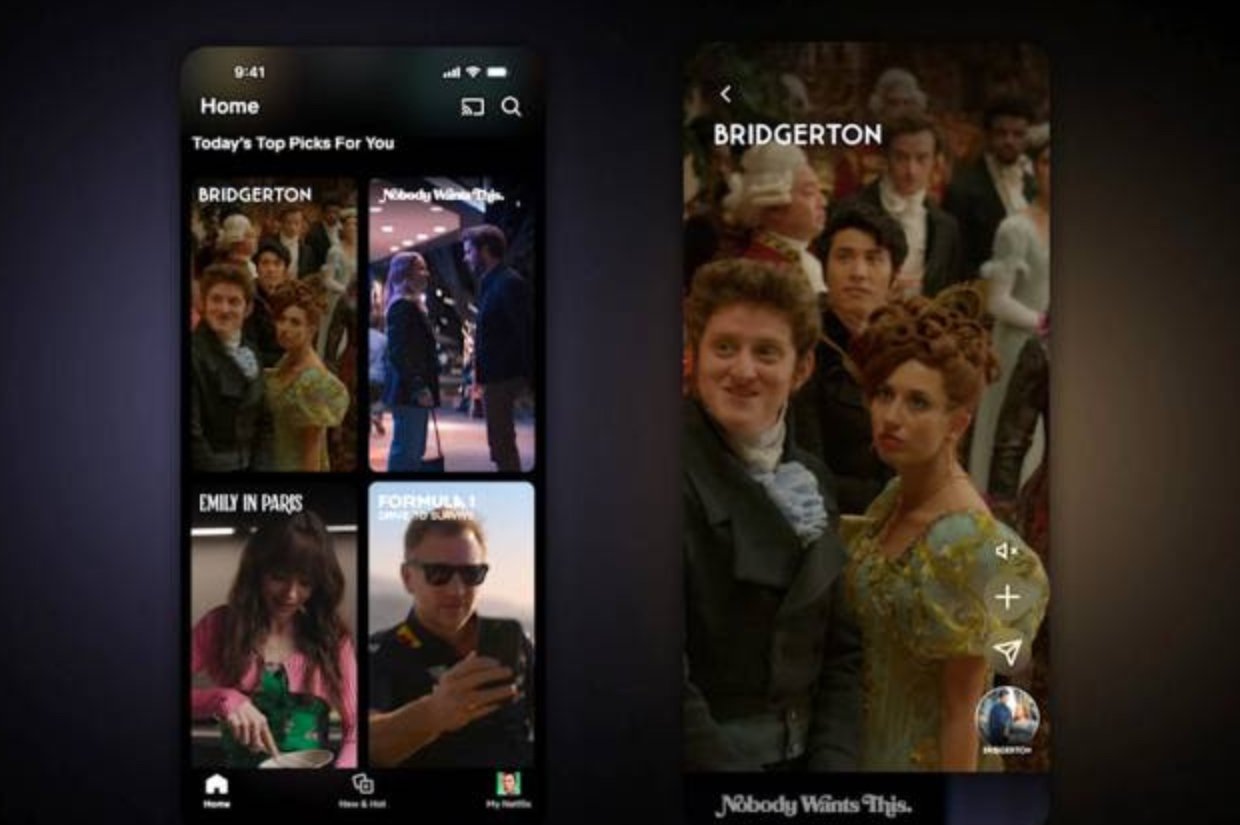
The new TV homepage, launching globally next week, marks a shift from the infinite scroll of passive thumbnails to something more intentional, even cinematic. Gone are the rows of silent, static previews—a format every competitor dutifully copied. In their place: a reduced number of titles, each brought to life with short video previews reminiscent of YouTube, or more precisely, the lo-fi immediacy of TikTok. This may sound like a minor UX tweak, but in the architecture of modern entertainment, it’s tantamount to rebuilding the foyer of a billion-dollar palace.

The Death of Choice Paralysis

Netflix’s Chief Product Officer Eunice Kim was candid: “Half of our 300 million members open the app without knowing what to watch.” This isn’t laziness—it’s overstimulation. As platforms multiplied and catalogues ballooned, the modern viewer became trapped in an eternal prologue of decision. You open Netflix. You scroll. You watch trailers. Maybe you add a few things to your list. Then, exhausted, you watch The Office for the fifth time. This behavioral loop, known in tech parlance as choice paralysis, is a byproduct of Netflix’s own algorithmic bravado.

In its early days, Netflix’s interface was simple—a digital video store organized by genre and star power. It felt navigable. As algorithms evolved and personalization became the holy grail, Netflix’s design inflated, like a map layered with too many routes. The new homepage is a response not just to user fatigue, but to cultural fatigue. People don’t want to scroll. They want a sense of discovery, something the old interface subtly discouraged.

YouTube, TikTok, and the New Visual Grammar

The influence of TikTok and YouTube here cannot be overstated. Both platforms ushered in a visual grammar of motion and brevity. TikTok’s For You Page, especially, functions like a digital oracle: a hyperactive feed of perfectly-timed content pulses, tuned to your mood, behavior, even your blink rate. By integrating video previews into its homepage, Netflix is attempting to infuse its library with that same kinetic liveness. It’s no longer just about what you want to watch. It’s about catching your peripheral curiosity—a flashing glimpse of a crime doc, a few seconds of a romantic monologue, a scene of chaos in a zombie drama.

This dynamic is already native to younger viewers, who don’t “browse” the way older generations did. They glimpse, swipe, hover. For Gen Z, the expectation is not just to find entertainment—it’s to be found by it. Netflix’s redesign recognizes this shift. Every title preview now becomes a micro-hook, an invitation. The medium has changed. So must the interface.

Reclaiming the TV as a Ritual Space

One of the deeper implications of Netflix’s redesign is its reassertion of the television screen as a primary site of narrative engagement. In recent years, smartphones have eaten away at the television’s cultural centrality, especially for casual browsing. TikTok, Instagram Reels, and YouTube Shorts redefined entertainment as something intimate, vertical, and mobile. But Netflix’s redesign, paradoxically inspired by mobile platforms, is a reclamation of the TV screen.

The living room used to be a ritual space—a place of collective watching, accidental discoveries, shared evenings. Netflix’s new homepage, with its focus on fewer, more prominent selections, aims to revive that ritual. By guiding viewers more decisively and showcasing content in motion, it nudges us to sit down, stop browsing, and watch. There’s a return to spectacle here, to programming as event, rather than background noise.

Algorithmic Precision, Emotional Intuition

The redesigned homepage also tightens the algorithmic feedback loop. Traditionally, Netflix’s recommendation engine was based on broader viewing history, with some lag in real-time responsiveness. Now, the system reacts immediately to your searches, mimicking the instant gratification of TikTok’s For You feed. The goal: to feel like the interface is learning you not just over months, but by the minute.

But perhaps more intriguingly, Netflix is also experimenting with emotional specificity. On mobile, a new vertical video feed will preview selections in a TikTok-like scroll, offering a curated sample of Netflix’s catalog. More experimental still is a beta rollout of an OpenAI-powered chatbot, which allows users to request content by vibe. Think: “Find me something that feels like Practical Magic on the first cold day of fall—but gorier.” This is not genre recommendation. It’s emotional simulation—a language that blends nostalgia, mood, and synesthetic memory.

In doing so, Netflix is acknowledging what streaming algorithms have long struggled with: people often want to feel something they can’t name. The old system—genre tags, star rankings, similar-to-this-title trees—was a poor translator of emotional nuance. But large language models, trained on cultural associations, are surprisingly fluent in vibe. The promise here is intoxicating: an interface that doesn’t just respond to your viewing history, but to your subconscious.

The Cultural Stakes of Interface Design

We tend to treat streaming interfaces as mundane tech problems. But they are, in truth, cultural blueprints. How we find, select, and experience stories is shaped at the atomic level by UI decisions. Netflix’s original scroll model wasn’t just efficient—it rewired how people consume narrative. It encouraged sampling, bingeing, and a strange intimacy with thumbnails. The new model could usher in a different era: one of guided flow, of curated immersion, of emotional targeting.

This is more than design. It’s an argument about what entertainment should feel like.

Will the redesign work? That depends on how much Netflix can learn from its own mistakes. Personalization can be a trap. When it overcorrects—showing you only what you’ve already liked—it creates an echo chamber, a walled garden of sameness. The challenge is to be precise without being predictable. To reintroduce mystery. To leave space for the unexpected.

The Hotel TV Theory of Streaming

At the heart of this shift is a longing that Netflix itself may have underestimated: the desire to stumble. The most memorable media moments often don’t come from targeted algorithms, but from ambient exposure—walking in on a friend watching something incredible, catching the end of a movie you’d never have chosen. This is what the “hotel TV” metaphor gets at. It’s not just nostalgia. It’s a philosophy.

When you flip on a hotel television and land in the middle of Bring It On, you’re entering a story already in progress. You’re not curating—you’re surrendering. You’re letting the medium choose for you, and in that act, you rediscover something we’ve lost in the streaming age: wonder.

If Netflix’s new interface can bring back even a sliver of that surrender—if it can replace paralysis with intuition, browsing with immersion—it may not just lead the industry again. It may help us fall in love with watching all over.

Main Ideologue

A homepage isn’t just a screen. It’s a narrative engine. With this redesign, Netflix is attempting to turn back time—not to undo streaming’s evolution, but to reintroduce delight into its experience. The future of streaming will not belong to the platform with the most content. It will belong to the one that understands how people feel when they sit down to watch something, unsure of what they want, but hoping to be surprised.

That’s not just innovation. That’s storytelling. And Netflix, finally, seems ready to tell a new one.

Related Articles

Modern data center facility with a solar-panel-clad exterior, bright green administrative offices, and secure perimeter fencing, showcasing sustainable digital infrastructure and renewable energy integration

Lombardy’s Data Center Boom: Balancing Digital Ambition with Environmental Responsible

Lombardy has emerged as Italy’s primary hub for new digital infrastructures, particularly data centers—vast complexes […]

In a highly anticipated reunion after 24 years, Adidas Originals and Coca-Cola have joined forces once again to celebrate the FIFA World Cup 2026™. The collaboration revives their iconic 2002 partnership from the Japan-South Korea tournament, now reimagined for the biggest global sporting event of 2026, co-hosted by the United States, Canada, and Mexico. Set to launch on June 6, 2026, this collection masterfully blends Adidas' streetwear heritage with Coca-Cola's timeless branding, creating a vibrant fusion of football culture, nostalgia, and modern style. The drop arrives at a perfect moment. With the World Cup kicking off on June 11, 2026, fans worldwide are gearing up for a summer of football excitement. This collaboration isn't just merch—it's a cultural statement that merges two legendary brands under the banner of "Originals are the Real Thing," a clever twist on Coca-Cola's famous slogan. Historical Context: A Reunion 24 Years in the Making Adidas and Coca-Cola first collaborated during the 2002 FIFA World Cup, producing limited-edition pieces that captured the era's energy. That partnership helped define early 2000s football-streetwear crossover culture. Fast-forward to 2026, and the brands are back with fresh energy, leveraging Adidas' deep FIFA ties (as an official partner) and Coca-Cola's long-standing sponsorship of the tournament. The 2026 edition promises to be historic as the first 48-team World Cup, spanning three countries and generating unprecedented global hype. This collab taps into that momentum, offering fans wearable pieces that celebrate both brands' legacies while looking forward to the future of football fashion. Collection Overview and Design Philosophy The Adidas Originals x Coca-Cola collection fuses 2000s street style with classic sporting aesthetics. Expect bold reds, creams, whites, and silver accents inspired by Coca-Cola's iconic packaging—think classic script logos, droplet detailing, and can-inspired motifs. The lineup spans footwear, apparel, and accessories, divided into two visual directions: one logo-heavy and graphic-forward, the other drawing from vintage advertising aesthetics. Designs pay homage to Coca-Cola's visual language while staying true to Adidas Originals' archival roots. High-quality materials, attention to detail, and versatile silhouettes make these pieces suitable for both match-day wear and everyday street style. The campaign, featuring young football star Lamine Yamal and a diverse cast in everyday scenes building anticipation for the tournament, reinforces themes of originality and shared cultural moments. Footwear Highlights Footwear takes center stage in this collaboration, with reimagined takes on iconic 2000s Adidas silhouettes: Samba and Superstar Models: These classics get Coca-Cola treatment with white/cream/red colorways and prominent script branding. The Samba blends street heritage with football roots, while the Superstar II features weathered bases and bold side panels. Expected pricing around $110–$130. Adistar Control 5: A standout with droplet detailing mimicking condensation on a cold Coke can. This model brings performance-inspired design into lifestyle territory. Predator Sala: Indoor/hybrid style with silver-and-red accents, nodding to predatory precision on the pitch and Coca-Cola's bold energy. Climacool 1: Revived with breathable tech and Coke-inspired graphics, perfect for warm summer days. Megaride F50: A highlight paying tribute to the iconic Coca-Cola glass bottle, with unique contours and refreshing design cues. Each pair incorporates thoughtful details like embroidered logos, custom insoles, and packaging that mimics vintage Coke crates or cans. These shoes are built for durability and comfort, appealing to sneakerheads, football fans, and casual wearers alike. Apparel and Accessories Beyond kicks, the collection offers a full lifestyle range: Track Tops and Jerseys: Standout jerseys fuse retro Coca-Cola advertising from different eras into cohesive football designs. Track jackets feature signature three stripes alongside Coke branding, in vibrant reds and classic whites. Shorts and T-Shirts: Relaxed fits with graphic prints, ideal for casual wear or layering. Expect motivational football motifs blended with refreshing beverage references. Accessories: A bright red airliner bag stands out as a functional statement piece. Additional items may include caps, socks, and tote bags carrying the collaborative spirit. The apparel emphasizes comfort with premium cotton blends, mesh panels for breathability, and oversized silhouettes popular in contemporary streetwear. Unisex sizing and inclusive fits make the collection accessible to a broad audience. Cultural Impact and Fan Appeal This collaboration resonates on multiple levels. For football fans, it represents national pride and global unity ahead of the 2026 tournament. Sneaker enthusiasts will appreciate the nostalgic 2000s revival mixed with modern execution. Streetwear collectors see it as a prime example of how heritage brands can innovate through partnerships. In an era where sports and fashion increasingly intersect, Adidas and Coca-Cola deliver pieces that transcend the pitch. Wear them to watch matches at home, attend watch parties, or hit the streets in any host city—New York, Los Angeles, Toronto, or beyond. The designs are versatile enough for gym sessions, festivals, or daily commutes. The timing aligns perfectly with rising interest in football in North America, boosted by the co-hosting nations. Young talents like Lamine Yamal in the campaign help bridge generational gaps, attracting newer fans while satisfying longtime supporters. Where to Buy and Release Details The collection launches globally on June 6, 2026, via: Adidas CONFIRMED app (for early access and raffles) Adidas.com Select retailers and flagship stores worldwide Some regions may see staggered drops, with Japan and other markets getting early access. Prices are expected to range from $50–$150 depending on the item, making it relatively accessible compared to ultra-limited drops. Pro Tips for Copping: Enable notifications on the CONFIRMED app. Check local stock at Adidas stores in major cities. Monitor resale platforms post-drop for exclusive colorways, but be wary of markups. Size up slightly for oversized apparel fits. Given the World Cup hype, popular items like the Sambas and jerseys are likely to sell out quickly. International shipping is available, but factor in potential customs delays. Styling Suggestions Match Day Look: Pair a collaborative jersey with classic black shorts and Samba sneakers for effortless fan style. Streetwear Rotation: Layer a track top over a graphic tee with wide-leg pants and the Megaride F50 for a bold urban ensemble. Casual Summer: White Superstar with denim shorts and the airliner bag for a refreshing, vacation-ready vibe. These pieces mix seamlessly with existing Adidas or neutral wardrobes, maximizing versatility. Broader Context in 2026 Fashion and Sports The Adidas x Coca-Cola drop is part of a larger wave of high-profile collaborations tied to the World Cup. Adidas continues its dominance in football kit design, while Coca-Cola leverages its sponsorship with collectibles, bottles, and experiential activations like the Trophy Tour. In the sneaker industry, this collab exemplifies the ongoing trend of lifestyle reinterpretations of performance silhouettes. It also highlights how global brands use major events to drive cultural conversations around unity, originality, and joy—core values for both companies. Sustainability notes (based on Adidas' broader initiatives) suggest some pieces may incorporate recycled materials, aligning with modern consumer expectations. Looking Forward: Legacy and Excitement As the countdown to kickoff continues, this collection serves as the perfect prelude to an unforgettable summer of football. Whether you're a die-hard supporter, a fashion-forward collector, or someone seeking motivation through style, the Adidas Originals x Coca-Cola FIFA World Cup 2026 lineup delivers. Expect potential restocks, special event exclusives in host cities, and continued campaign content featuring more athletes. This isn't just clothing—it's a ticket to participate in the global celebration of the beautiful game. Mark your calendars for June 6, 2026. Refresh your wardrobe, lace up those Sambas, and get ready to cheer on your team in style. The "Real Thing" meets the Originals in what promises to be one of the most talked-about releases of the year. This collaboration captures the essence of football's universal appeal: bringing people together through shared passion, iconic brands, and unforgettable moments. As the world prepares for 2026's expanded tournament, Adidas and Coca-Cola remind us that some partnerships are truly timeless.

Adidas Originals x Coca-Cola Collection: FIFA World Cup 2026

In a highly anticipated reunion after 24 years, Adidas Originals and Coca-Cola have joined forces […]

Loewe shoulder bag crafted in brown and black leather with minimalist lion face detailing and a matching fur tail charm

180 Years Unfolded: The Full Story Behind Loewe’s New Campaign

The year was 1846. Queen Victoria was on the British throne and the telephone, the […]