DRIFT AUDIO
Listen to this story
Choose a voice, then press play.
On Hainan Island, Ian Schrager’s EDITION brand built a horseshoe shaped resort around 20,000 square meters of private, tidal water.
recall
- A Resort That Starts With the Sea
- The Ocean Itself
- A Horseshoe Built for Views
- Villas on the Hillside
- Materials Doing the Talking
- Feeding a Resort This Size
- Where It Sits, and Why That Matters
- What the Numbers Actually Say
Most beach resorts treat the ocean as a backdrop, something to frame from a balcony or a restaurant terrace. The Sanya EDITION treats it as a building material. Set on 50 acres in Haitang Bay, on the northeastern coast of Hainan Island, the property was conceived by Ian Schrager, the hotelier behind EDITION’s partnership with Marriott International, as his first venture in China and the brand’s first outpost in Asia. It opened in late 2016, and nearly a decade later it is still one of the more structure strange hotels built anywhere in the past twenty years, because so much of its identity is organized around a body of water that does not occur natural on site.
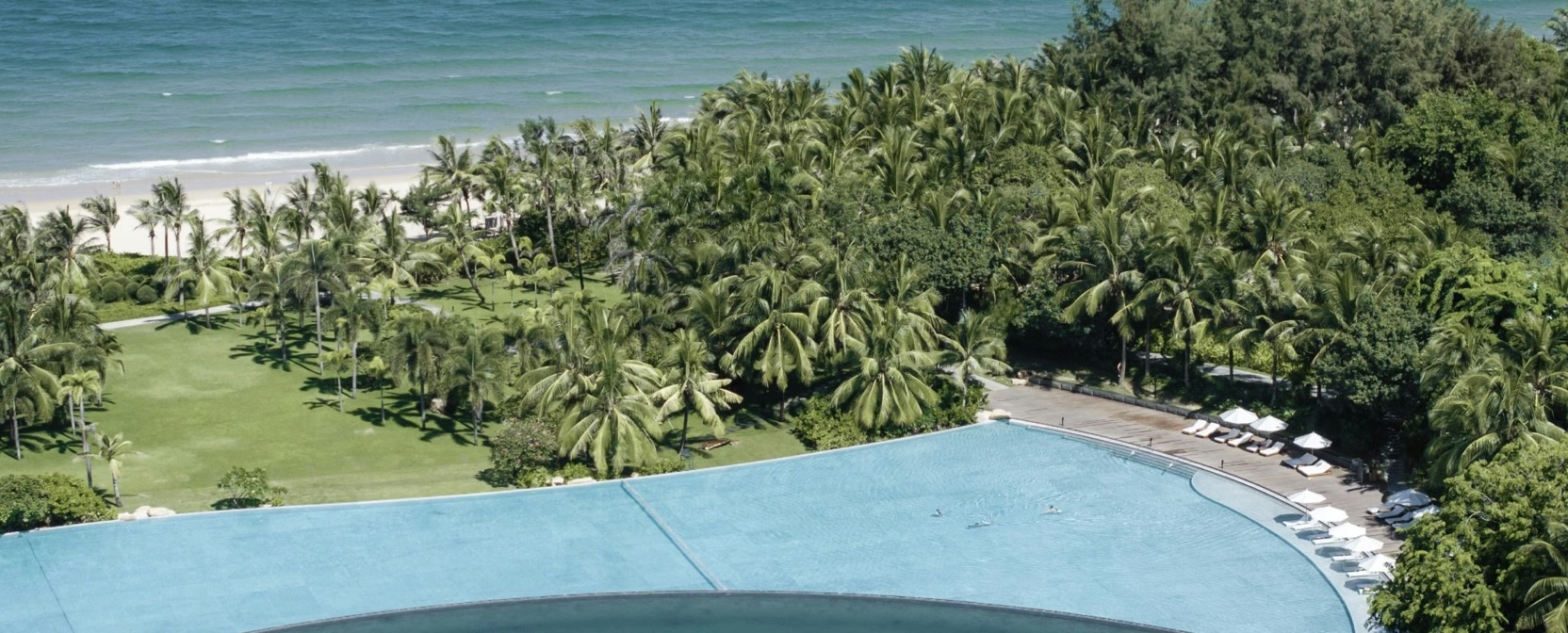
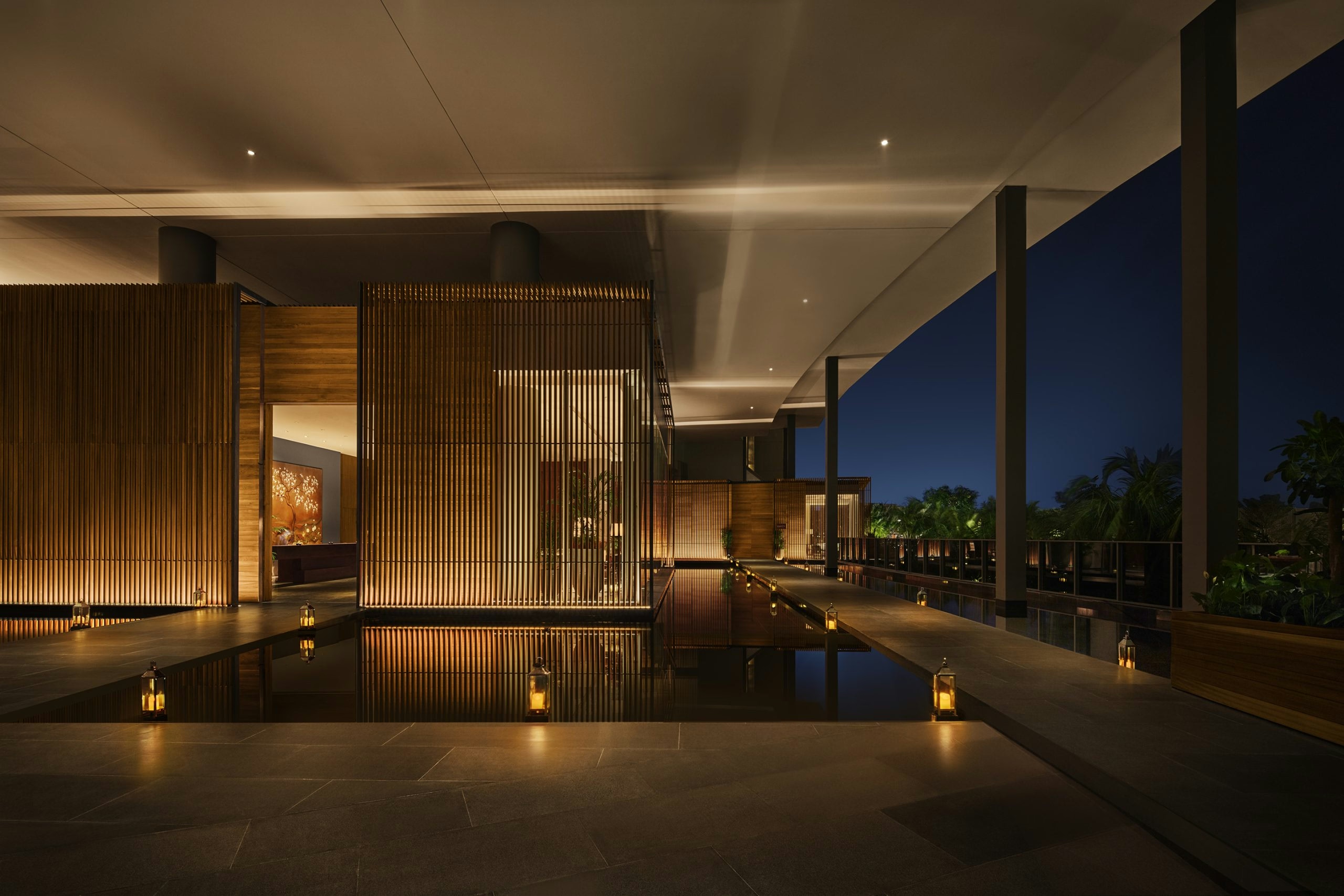
That water is the resort’s private ocean, a 20,000 square meter saltwater lagoon fed directly from the South China Sea and cycled through roughly every 32 hours to keep it fresh. It is not a lap pool dressed up in marketing lang.
View this post on Instagram
Building a private ocean sounds like the kind of thing a hotel brand invents for a press release, and in a sense it was, since EDITION has marketed the feature as a world first for a hotel property. But the mechanics behind it are genuinely unusual. Ten million gallons of seawater are drawn in and recirculated, which means the “ocean” behaves less like a static pool and more like a managed tidal system, subject to its own filtration and turnover cycle rather than simple chlorination.
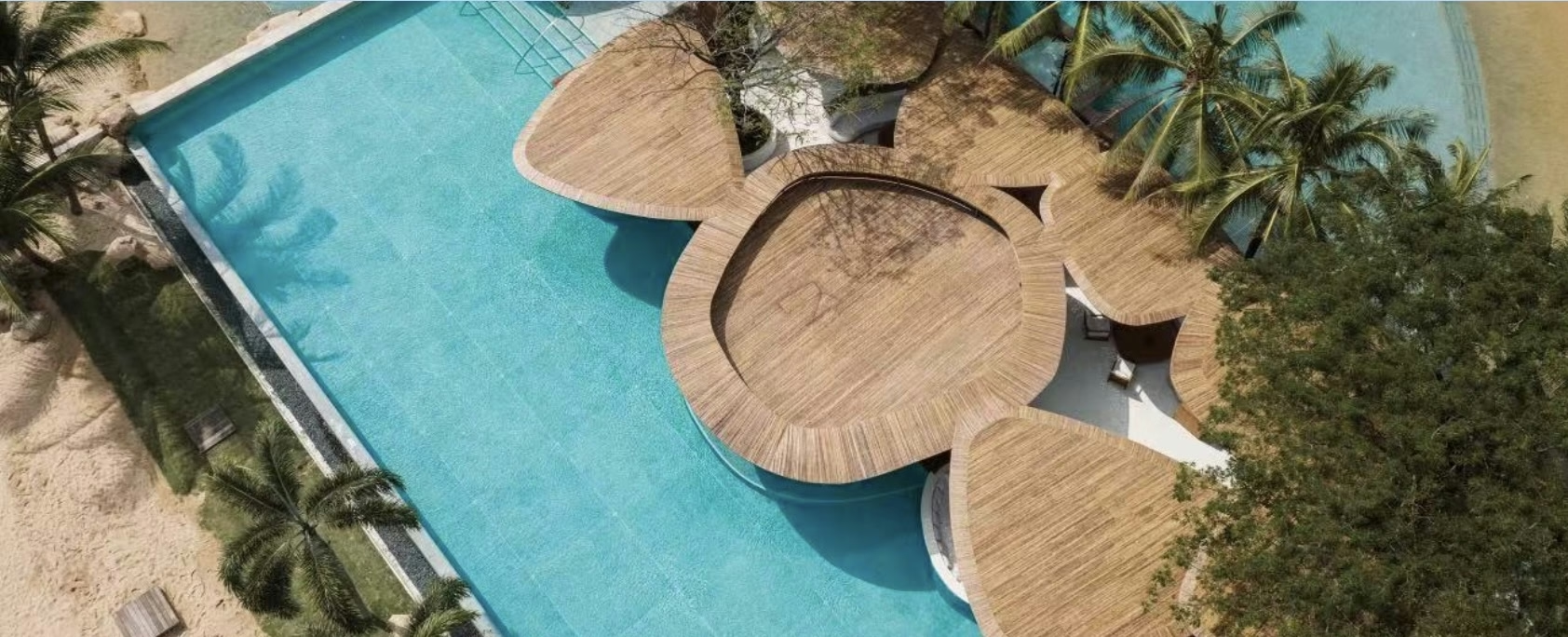
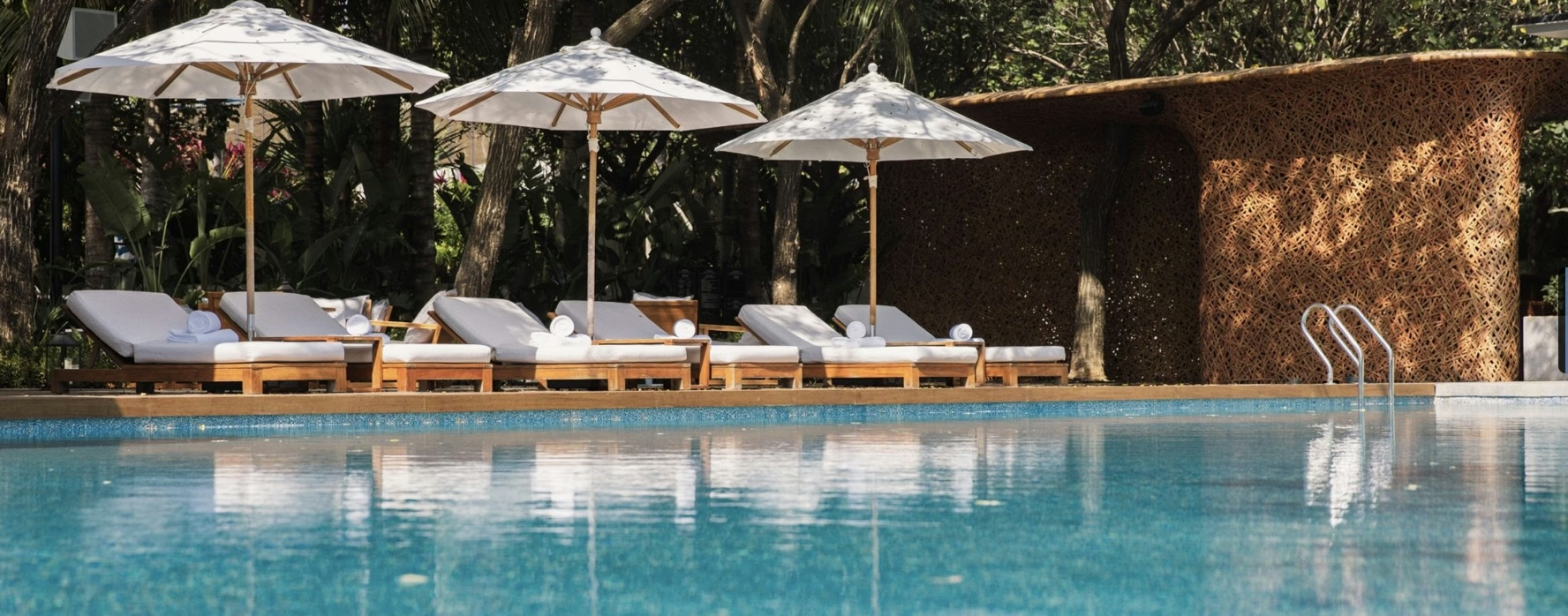
A portion of that lagoon is set aside as a saltwater swimming area, while the rest supports the boating activity the resort promotes as one of its central experiences. Two additional freshwater pools sit elsewhere on the property for guests who want a more conventional swim, but the private ocean is clearly the feature the architecture and the marketing both organize themselves around. It is also, practically speaking, the reason the resort’s layout looks the way it does, since nearly every guest room and public space on the property was planned to face it.
stir
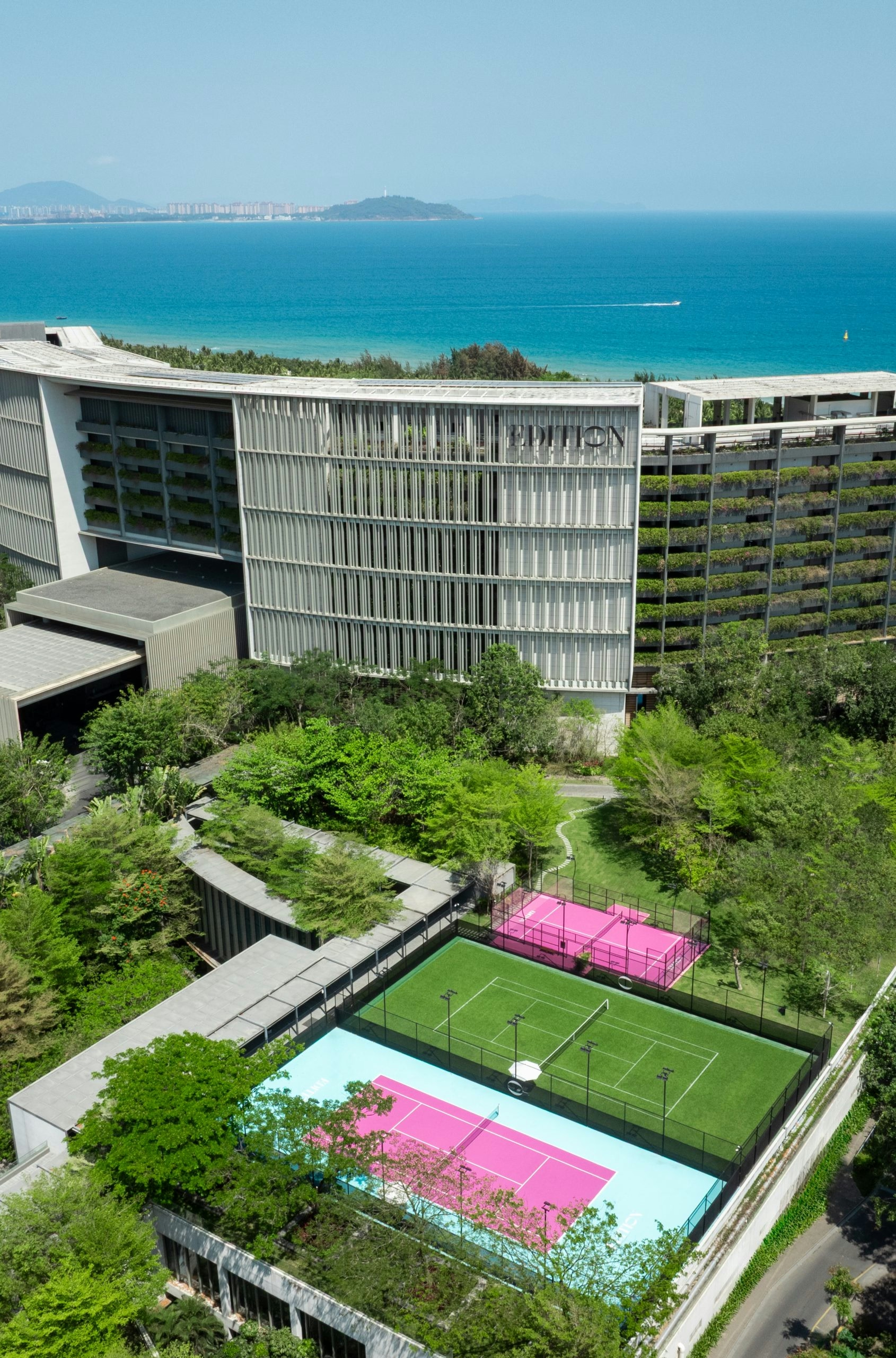
The main hotel building takes the shape of a horseshoe, curving around the lagoon so that the vast majority of its rooms open onto water rather than parking lots or service areas. Room counts have shifted slightly across different accounts over the years, with figures ranging from 501 to roughly 512 depending on the source and the year cited, but the design intent behind that number has stayed consistent. Nearly every guestroom in the horseshoe faces the ocean, whether the private lagoon in front of the hotel or the open South China Sea beyond it.
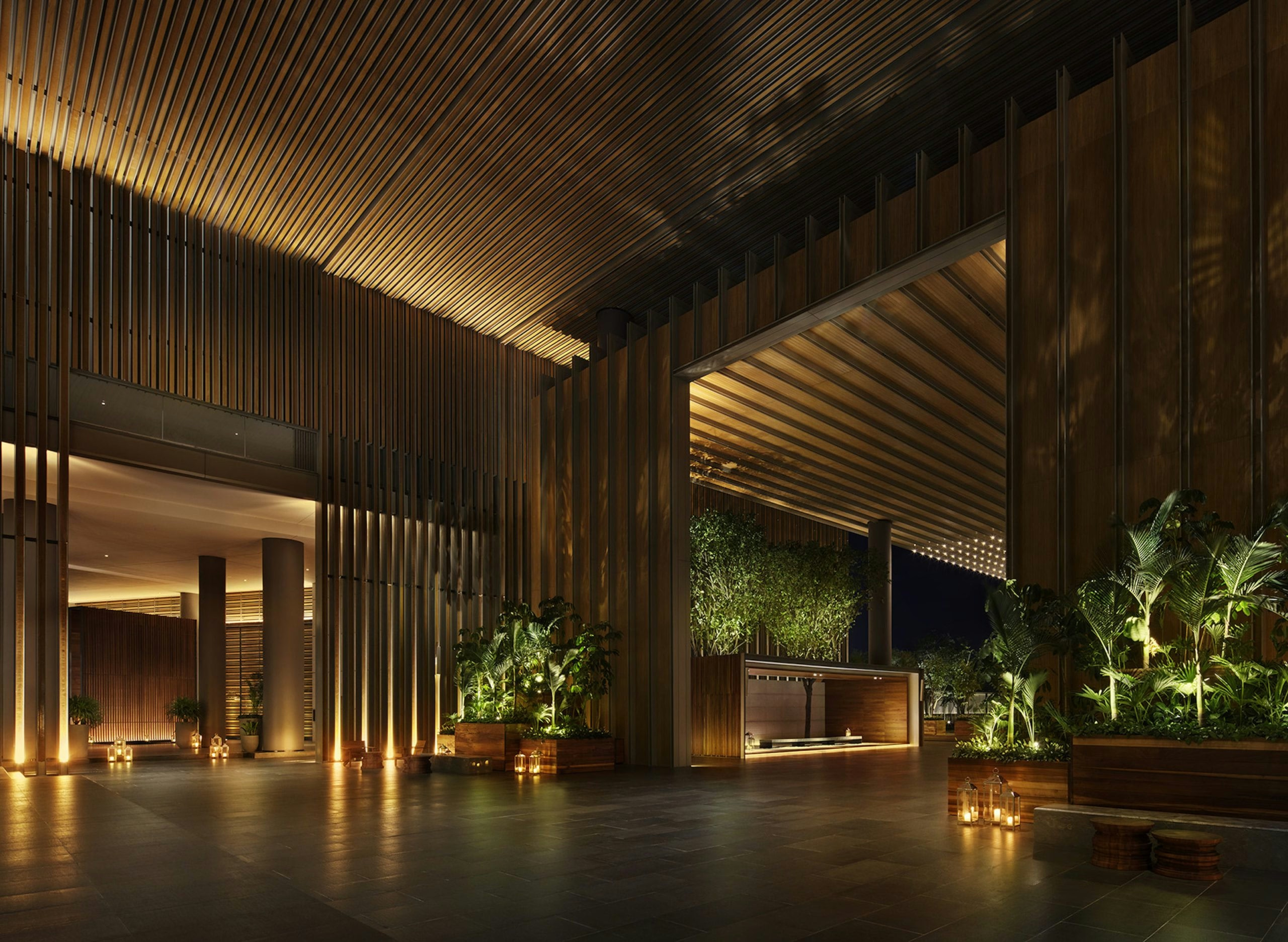
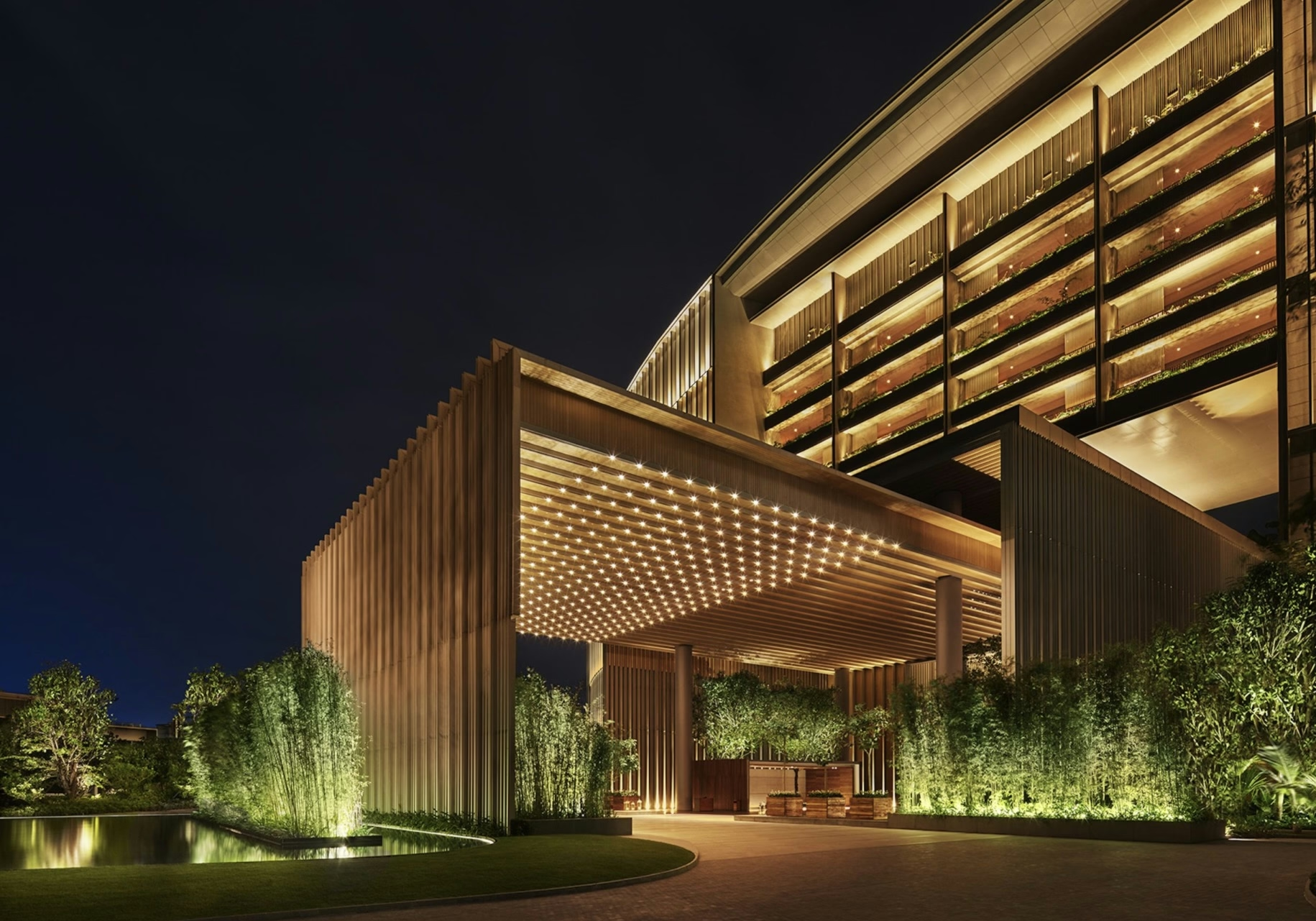
That horseshoe shape does more than maximize sightlines. It also creates a natural sense of enclosure, wrapping guests around a shared body of water in a way that makes a 50 acre resort feel more intimate than its footprint suggests. Reviewers who have stayed at the property have described the entrance sequence as almost theatrical, with a soaring, breeze filled lobby that opens straight onto the water, flanked by wooden pavilions and long stone benches that give the arrival experience a deliberately unhurried pace, closer in spirit to a courtyard than a check in desk.
villa
Beyond the main horseshoe, a separate cluster of villas is built into a terraced hillside overlooking the same private ocean. Depending on the source, the villa count has been reported anywhere from 12 to 17 units, each with its own plunge pool and outdoor pavilion space, positioned to take advantage of the elevation change rather than fighting it. Building into a slope instead of flattening it is a small decision with a large visual payoff, since it lets each villa claim its own unobstructed sightline down to the water without stacking guests on top of one another the way a flat, low rise layout would require.
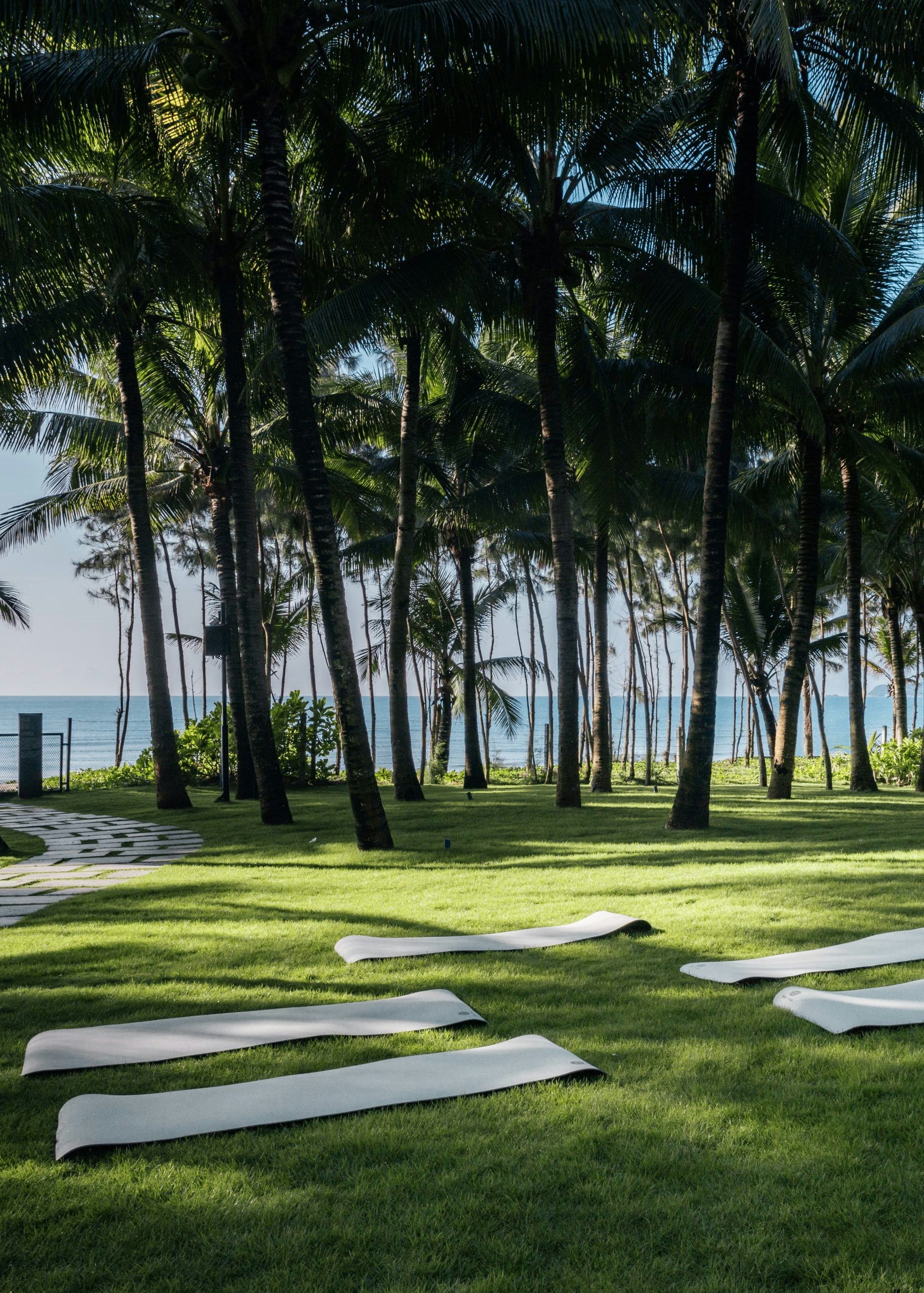
The hillside placement also does something more subtle. It separates the villa guests from the main horseshoe’s foot traffic without removing them from the experience entirely, since the water and the candlelit evenings remain visible from above even when the villas themselves are tucked into greenery. Roughly 900 trees, most sourced from elsewhere on Hainan Island rather than imported internationally, were planted across the property to soften that hillside and give the villas privacy without walling them off from the view that justifies their price point in the first place.
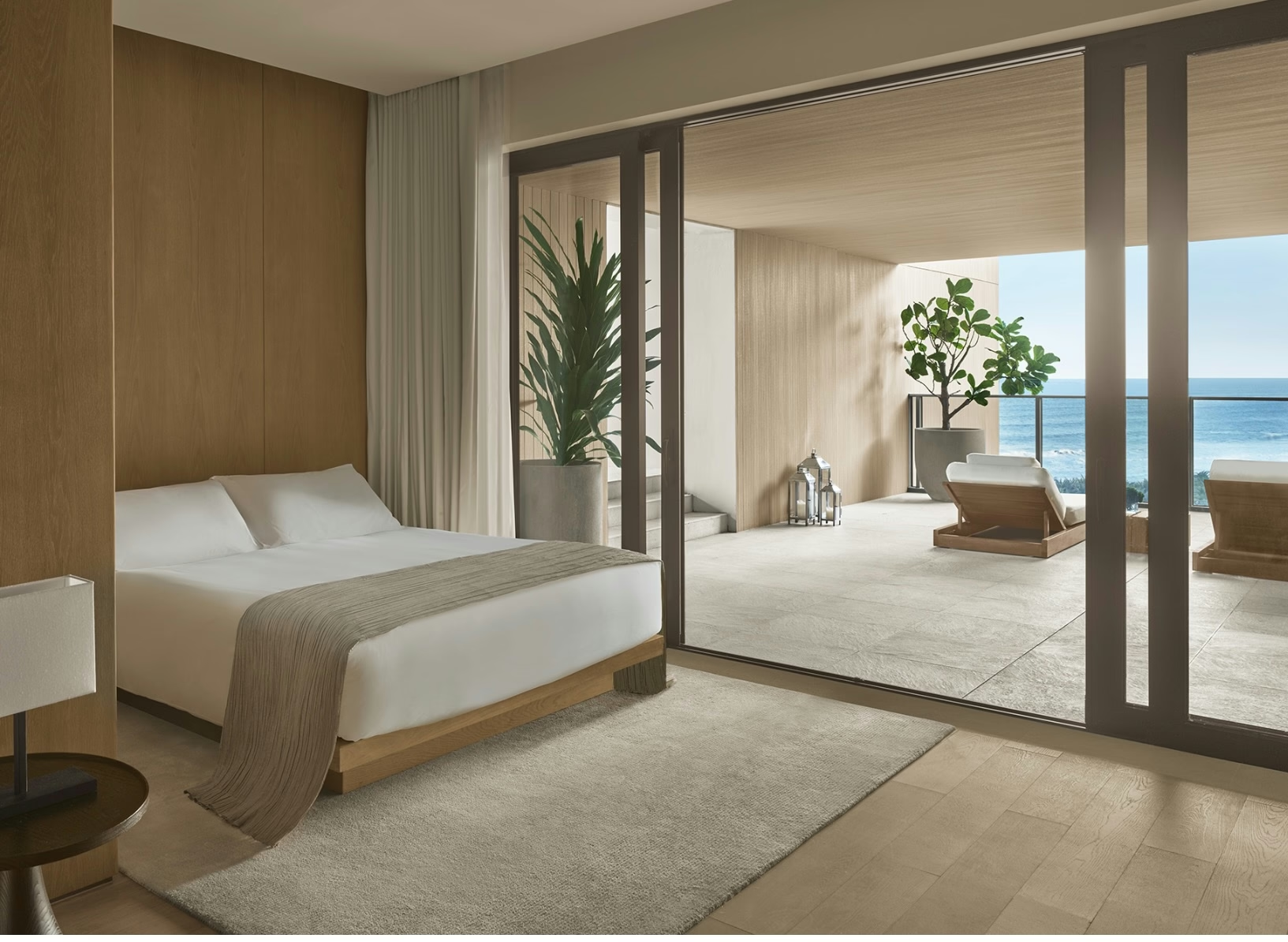
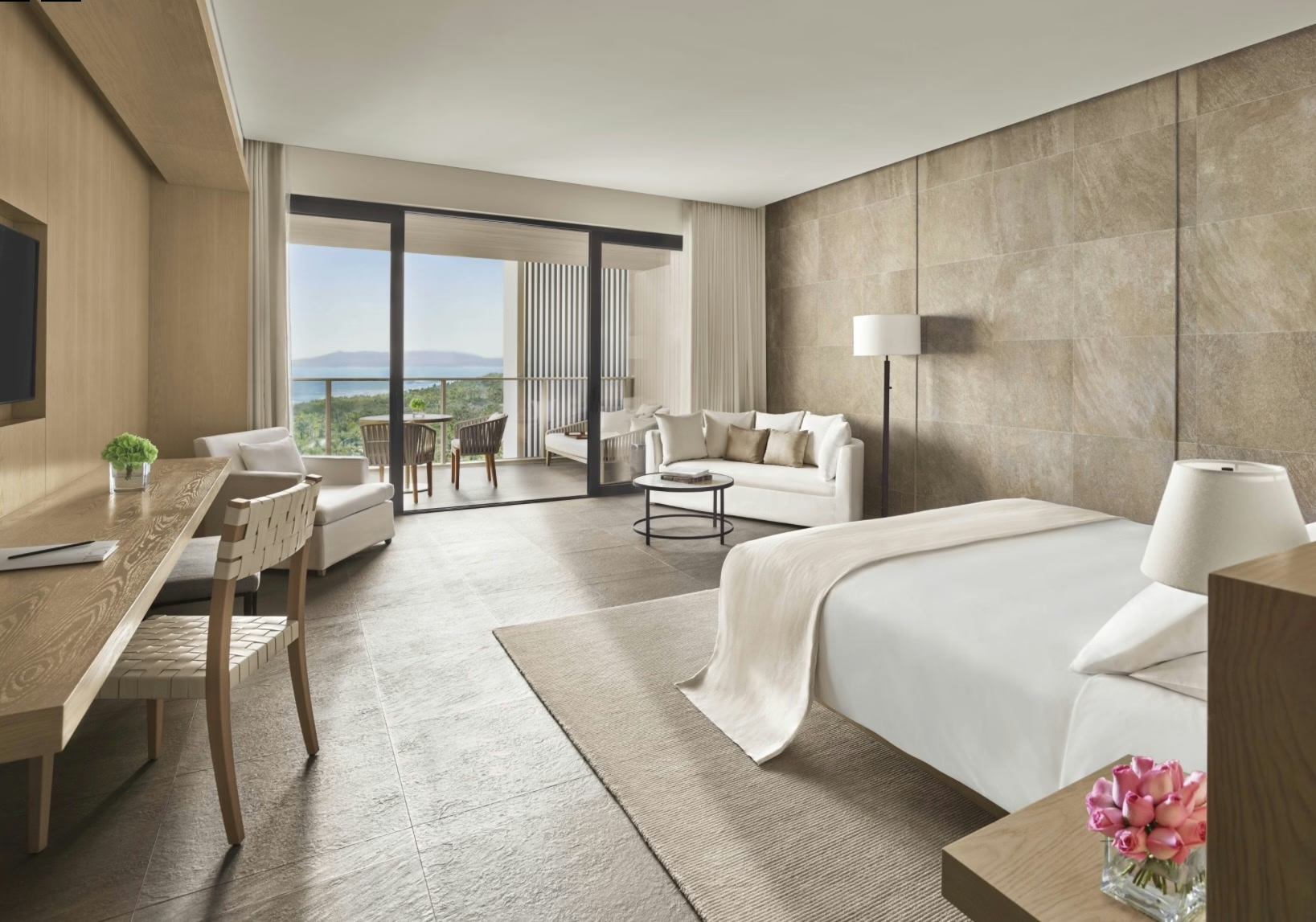
A serene oceanfront guest room blending natural materials, indoor-outdoor living, and panoramic coastal views.
ammeni
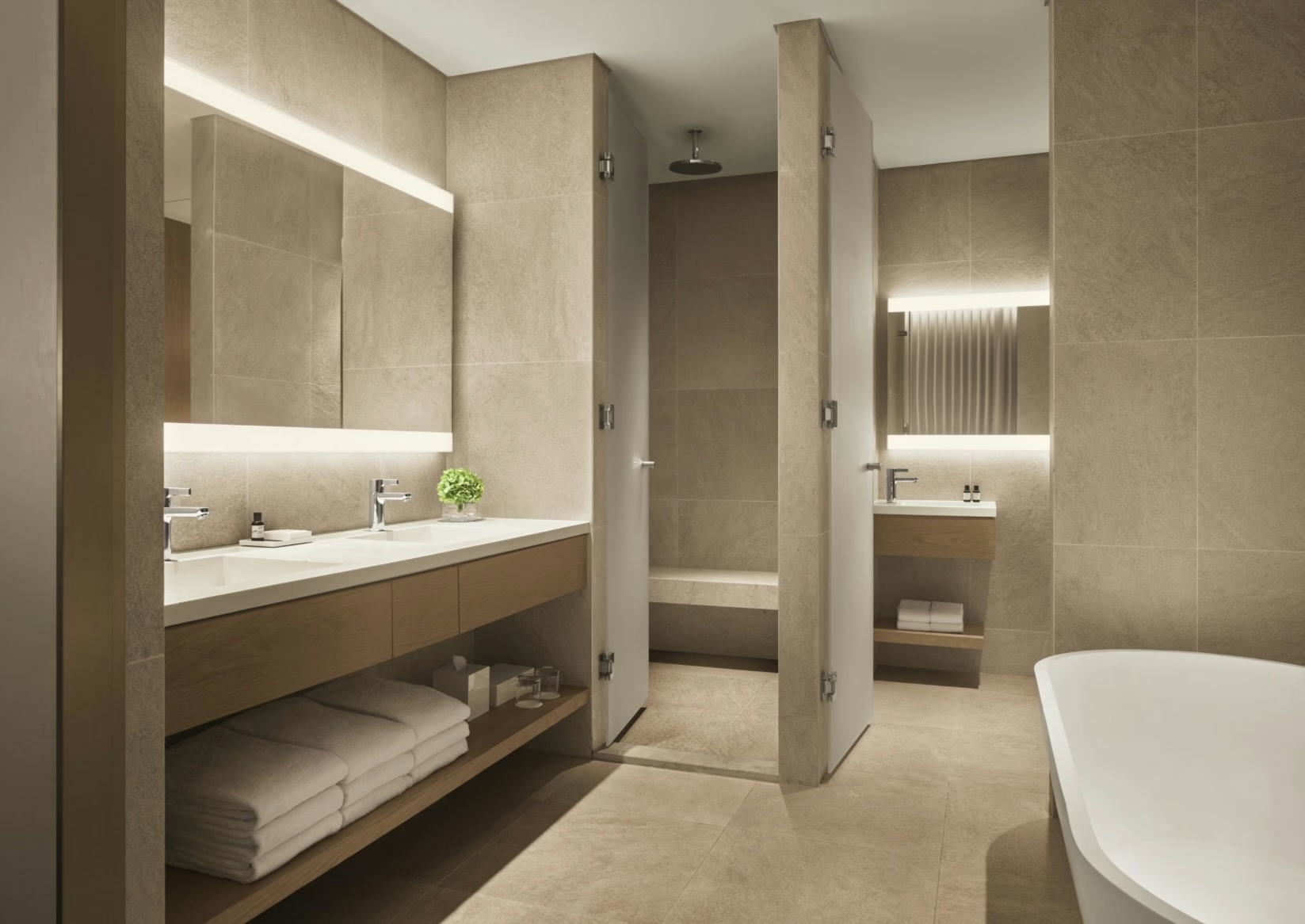
Inside, the design leans on a fairly restrained material palette for a resort this large. Light oak finishes, airy fabrics and a clean, pale color scheme run through the guest rooms, an approach that reads more like a deliberately understated beach house than the ornate, gilded aesthetic that a lot of large scale Chinese resort hotels still default to. Limestone floors imported from Indonesia continue that same beach adjacent material language into the public spaces, while teak flooring and louvered wood panels define the meeting center, where the boundary between indoor and outdoor space is treated as something to blur rather than reinforce.
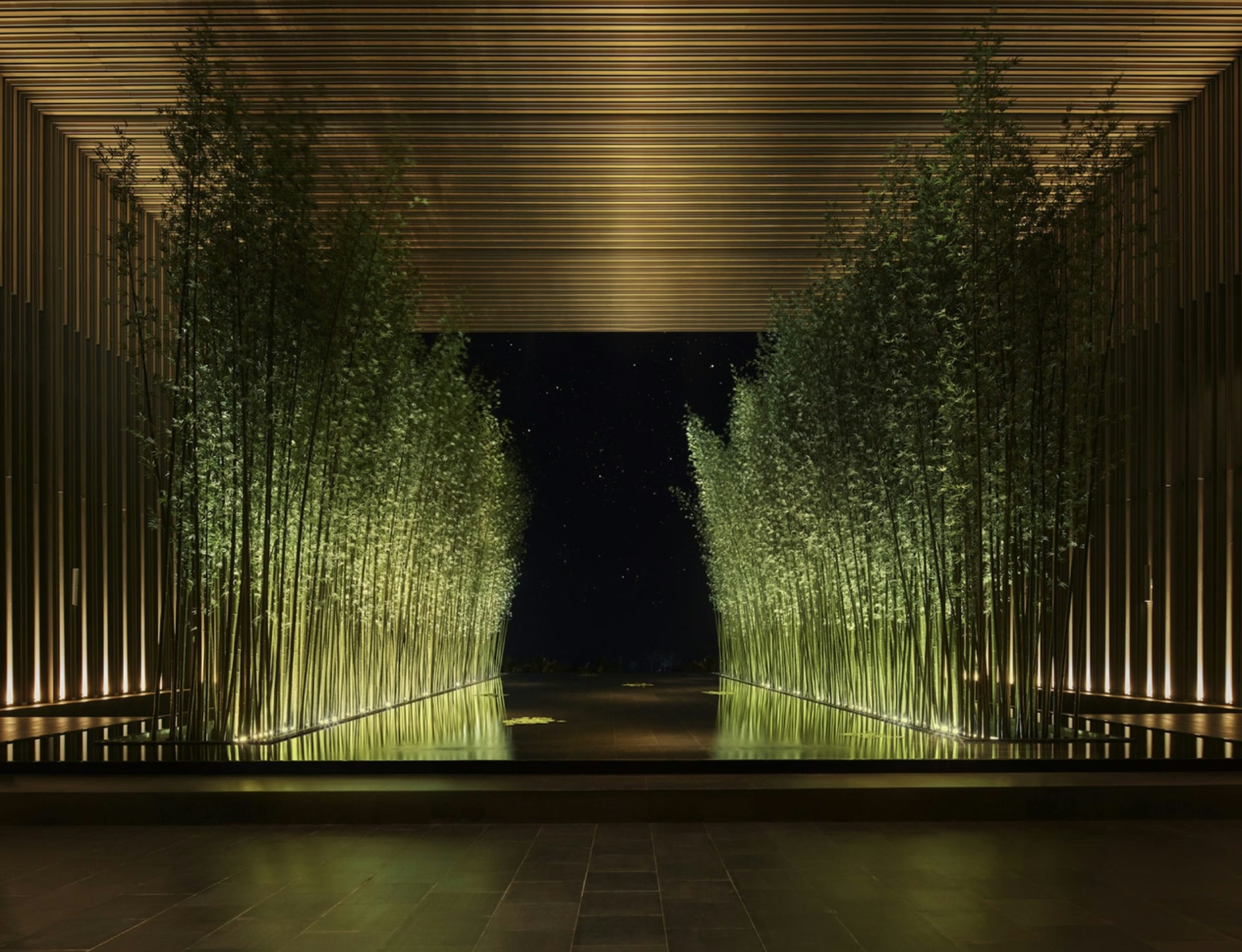
The lobby carries its own small internal contrast. A lotus pool and a live bamboo grove sit near a curated art gallery displaying work from Chinese artists, pairing a fairly traditional set of natural elements with a more contemporary curatorial gesture. That pairing, traditional materials and plantings set against a modern art program, shows up throughout the resort in smaller ways, part of what EDITION has described as a deliberate balance between respecting Hainan Island’s cultural history and pushing the design somewhere more forward facing.
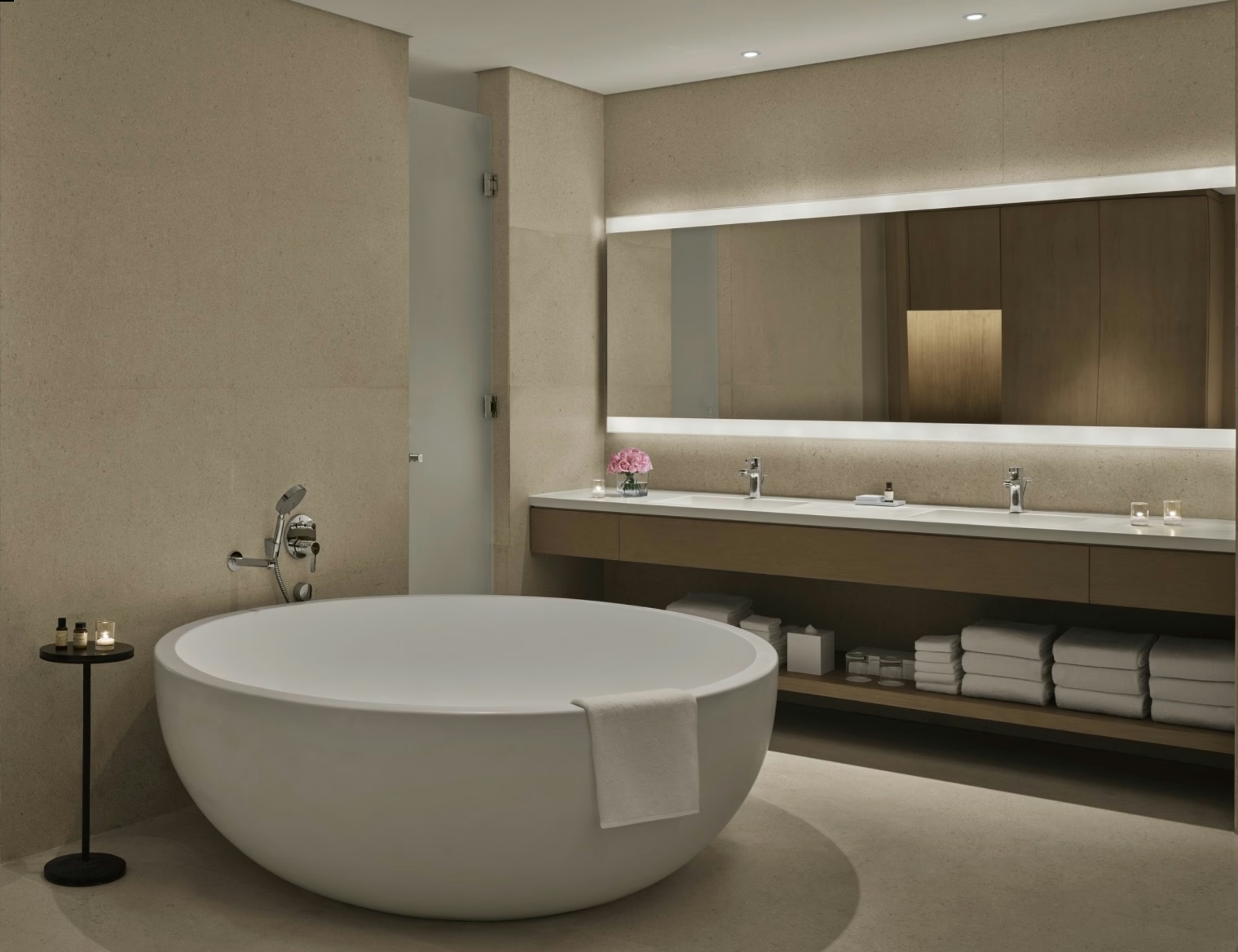
Bathrooms follow the same understated logic as the rest of the guest rooms, with soaking tubs placed inside the main room rather than tucked behind a separate door, so the ocean view guests pay for on arrival stays visible even during the most mundane parts of a stay. Reviewers have singled this detail out repeatedly, less because a bathtub with a view is a novel idea in luxury hospitality generally, and more because the placement fits so naturally into a design language that treats water, whether in a tub, a pool or the lagoon outside, as the organizing idea for the entire property rather than a single standout amenity.
trade
A resort built around a private ocean also has room to get play with its food and beverage program, and The Sanya EDITION uses that room fully. Market at EDITION, the all day dining venue, is designed to evoke an old Chinese trading warehouse, a nod to Sanya’s history as a port city rather than a purely decorative theme. The Jade Egret handles cocktails and lighter European leaning dishes with Asian accents, while Beach Barbacoa leans into Indonesian flavors served in a more casual, beachfront setting, with guests able to select fresh seafood, meat and vegetables for charcoal grilling on site.
The most distinctive of the dining venues, though, is Xian Hai By the Sea, the resort’s signature seafood restaurant, which guests reach by a short boat ride across the private ocean itself. Dining takes place on illuminated platforms out on the water while lanterns drift by, turning what could have been a fairly standard seafood dinner into one of the more talked about parts of a stay. It is also the clearest example of how the resort’s central architectural gesture, the ocean, gets used operationally rather than sitting there as a static amenity.
stance
Haitang Bay, where the resort sits, is a newer development corridor than Sanya’s more established Yalong Bay, and it has grown up largely around large scale luxury resorts and duty free retail rather than the smaller, older hospitality clusters found elsewhere on the island. The property is roughly forty minutes from Sanya Phoenix International Airport and only a few minutes from the Sanya International Duty Free Shopping Complex, one of the largest duty free retail centers in China, which has become a significant draw for domestic Chinese travelers taking advantage of Hainan’s free trade port status.
That geography places The Sanya EDITION in an interesting position. It is close enough to serious shopping infrastructure to pull in travelers who came to the island primarily for retail, but its own design deliberately pulls guests away from that instinct once they arrive, positioning the resort itself as a self contained destination rather than a base camp for excursions. Whether that tension resolves in the guest’s favor likely depends on what kind of trip they came for in the first place, though the resort’s own programming, from the private ocean to the boat access restaurant, is clearly built to keep people on property rather than sending them back out toward the shops.
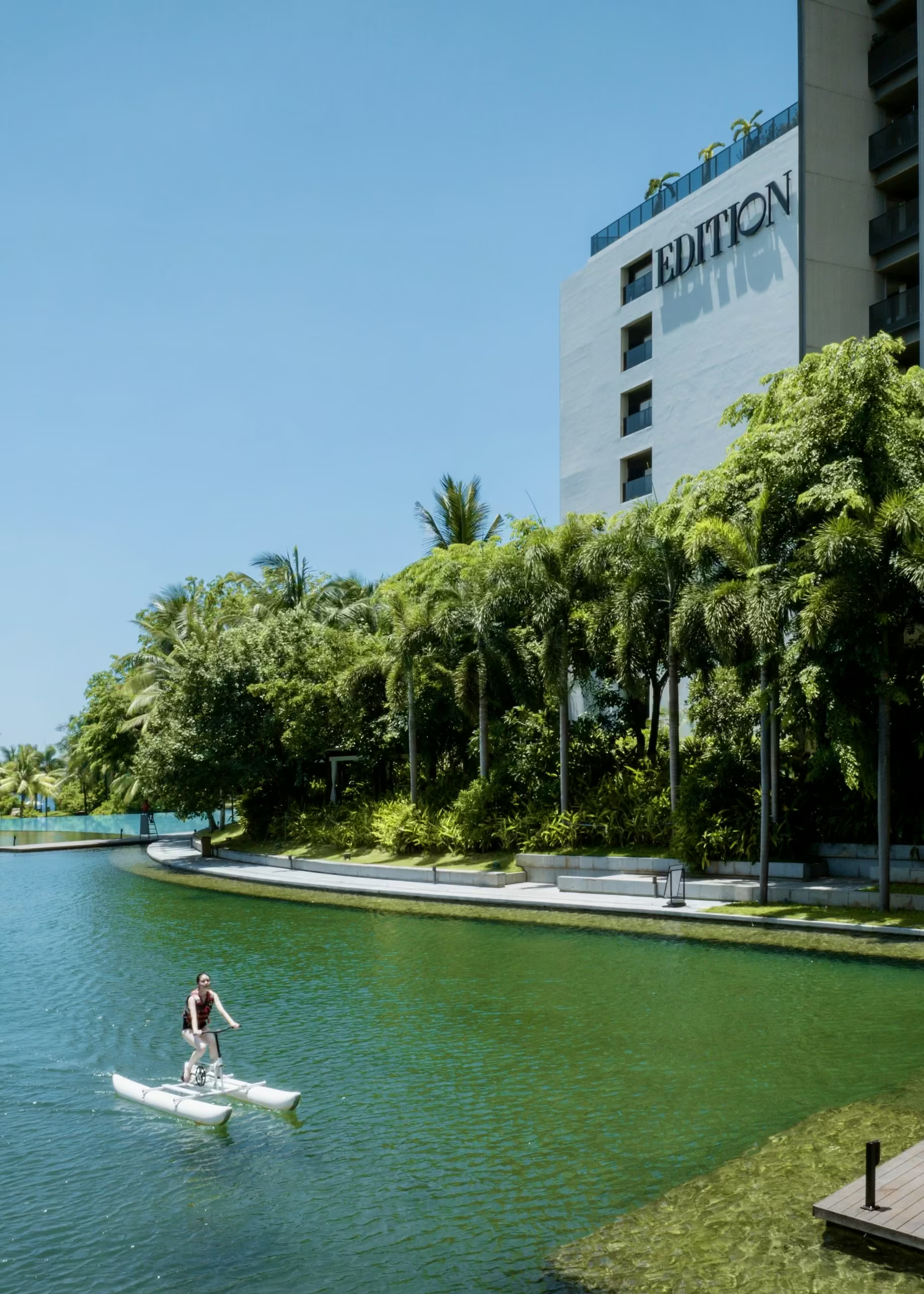
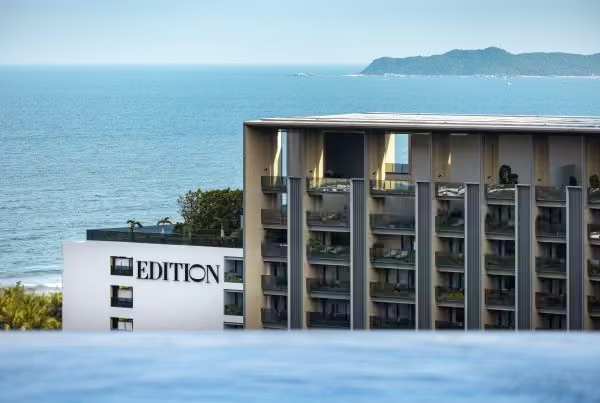
A peaceful lagoon experience where tropical landscaping, waterfront recreation, and the EDITION resort meet under clear coastal skies.
The Sanya EDITION also occupies a distinct place within its own brand family. By the time it opened, EDITION already had properties running in London, Miami Beach and New York, each one built around a very different kind of urban energy, closer to a boutique nightlife hotel than a sprawling beach resort. Sanya broke that pattern almost entirely. Instead of a compact city footprint, EDITION was suddenly working with 50 acres of tropical coastline and a guest base drawn largely from mainland Chinese travelers rather than the international nightlife crowd its earlier hotels had cultivated. That shift forced the brand to translate its design language, sophisticated restraint paired with a slightly theatrical sense of hospitality, into an entirely different physical scale and cultural context, without losing the identity that made EDITION recognizable in the first place.
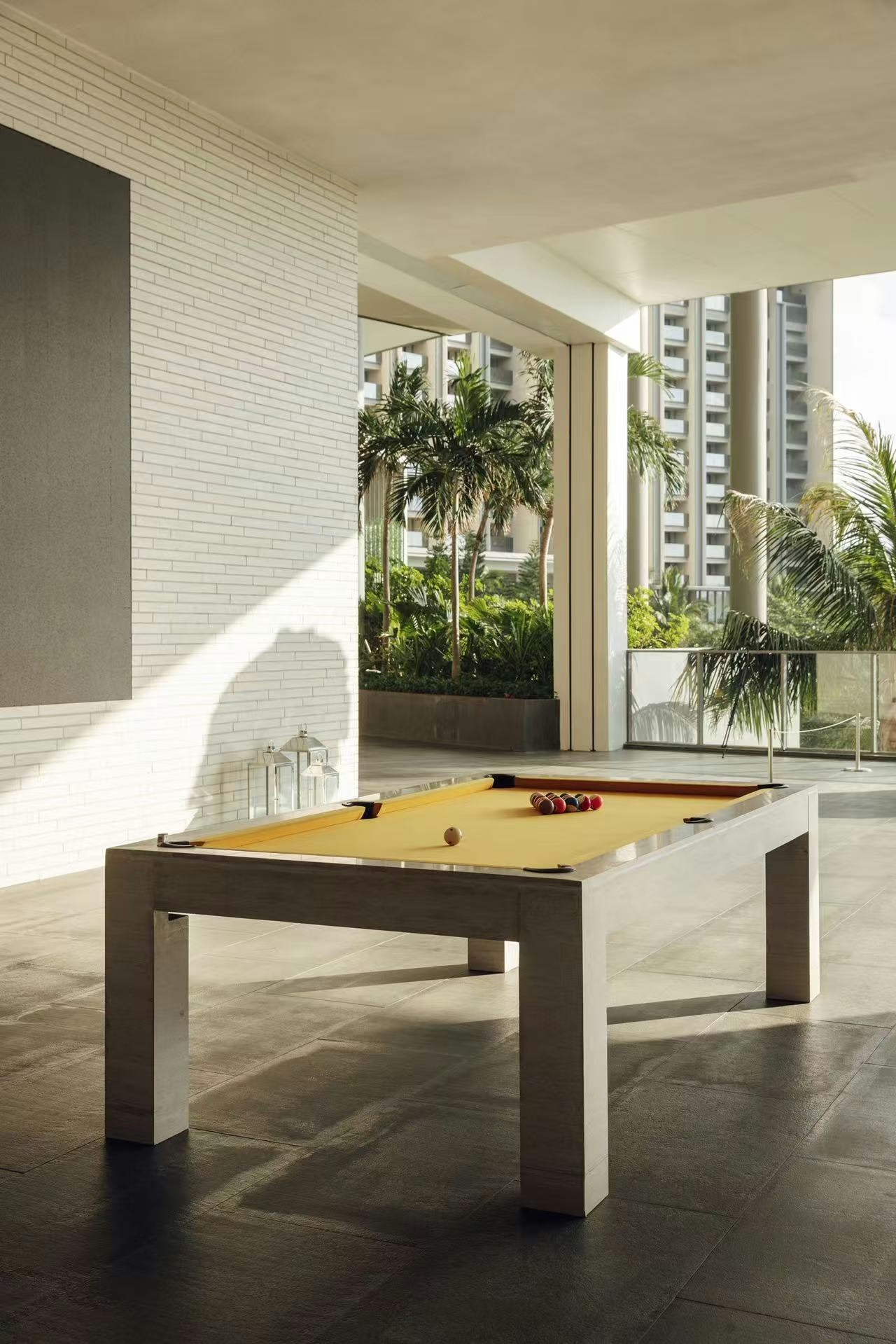
The resort’s family programming reflects that same translation. Playland, the resort’s multi generational entertainment zone, includes bumper cars, a rock climbing wall, arcade games and a treehouse structure large enough to function as its own attraction, a set of amenities aimed squarely at the extended, multi generational family groups that are far more common among Chinese domestic travelers than among the solo or couple oriented guests EDITION’s earlier city hotels were built around. Layering that kind of family infrastructure onto a design brand known for adult oriented sophistication could easily have felt like a mismatch. Instead, EDITION kept Playland spatially separate from the main lobby and pool areas, a zoning decision that lets both audiences coexist on the same property without constantly running into each other.
comp
Strip away the marketing language and the underlying numbers still tell a fairly remarkable story on their own. A single hotel property spanning 50 acres, built around a purpose engineered 20,000 square meter saltwater lagoon, housing somewhere in the range of 500 guest rooms plus more than a dozen hillside villas, with a 1,300 square meter ballroom large enough to seat 900 people, sits at a scale that few resort projects anywhere attempt in one phase. It was, by most industry accounts, one of the largest single hospitality investments EDITION had undertaken at the time of its opening, and its role as the brand’s first Asian property gave it an outsized signaling function beyond its own guest count.
The spa carries a similar scale of ambition. Spread across two stories, it houses twelve treatment rooms and suite pavilions along with hydrotherapy rooms, a sauna, a steam room and a tea bar lounge, all connected to extensive gardens designed to keep the wellness experience tied to the same natural material language running through the rest of the property. That level of buildout for a spa alone would be unusual at a standalone wellness resort, let alone as one amenity among many at a property already anchored by an engineered ocean, a ballroom sized for hundreds of guests and a family entertainment zone.
Nearly a decade after opening, the property remains a reference point for what a hotel brand can do when it treats a natural feature, in this case an entire coastline, as something to be engineered rather than simply admired from a balcony. Whether other resorts on Hainan Island or elsewhere in Asia eventually attempt something similar at this scale remains an open question, but for now The Sanya EDITION’s private ocean is still one of a kind.
Related Articles
Pocket-sized Xbox Ctrl
Xbox Nano Controller. Announced 14 October 2026 by James Hunter. $49.99. Rechargeable battery. Programmable Action Button. Xbox Wireless and Bluetooth.