DRIFT AUDIO
Listen to this story
Choose a voice, then press play.
Thirty years after its release, Nas’ sophomore album still splits Hip-Hop fans down the middle — and that argument is exactly why it endures.
In This Story
- A Second Album With Everything to Prove
- Trading Queensbridge Grit for Cinematic Scale
- The Producers Behind the Shift
- A Commercial Breakthrough, and the Backlash That Came With It
- The Illmatic Argument That Still Won’t Die
- The Firm and a Widening Orbit
- Why the Debate Still Matters Thirty Years On
Nas released his second studio album, It Was Written, on July 2, 1996, through Columbia Records — just over two years after his debut, Illmatic, had been anointed by critics as one of the defining records in East Coast Hip-Hop. Follow-up albums to a universally praised debut rarely escape comparison, and It Was Written has spent three decades living directly inside that shadow, argued over in barbershops, forums and podcasts in exactly the way the genre tends to settle its canon.
What makes the record’s staying power notable is that the sophomore-slump narrative never really attached to it. Where Illmatic had debuted modestly at No. 12 on the Billboard 200 and needed years to accumulate its platinum certification, It Was Written did the opposite: it arrived fully formed as a commercial statement, moving roughly 270,000 copies in its first week and debuting at No. 1. That immediate success gave the album a different kind of pressure to answer for — not whether Nas could still write, but whether a rapper this technically gifted should be chasing radio play at all.
The two-year gap between albums also mattered in ways that are easy to underestimate now. Hip-Hop in 1996 was moving fast: the genre’s commercial ceiling had risen dramatically since 1994, radio formats had opened up considerably to rap singles, and the East Coast–West Coast rivalry was near its peak intensity. A record this ambitious, arriving into that specific moment, was never going to be judged purely on its own merits — it was always going to be read against both Nas’ own debut and the shifting commercial landscape the entire genre was navigating that year.
flow
Illmatic was built on tight, sample-driven production and unflinching, first-person portraits of Queensbridge life. It Was Written widens the aperture considerably, trading some of that documentary rawness for a more cinematic, mafioso-inflected register — narrative rap steeped in crime-film imagery, layered plotting and a version of Nas’ persona that felt closer to a character study than a diary entry.

Atmospheric artwork captures Nas through a layered double-exposure portrait that merges his iconic profile with the urban landscape of New York City, creating a nostalgic visual that reflects the storytelling, heritage, and cinematic mood associated with his legendary hip-hop legacy.
That tonal shift is where much of the ongoing debate actually lives. Critics and fans who prize Illmatic‘s austerity tend to hear the follow-up’s polish as a retreat from what made the debut singular. But taken on its own terms, It Was Written is arguably the more ambitious writing exercise: sustaining a mafioso concept across a full album, threading recurring characters and imagery through multiple songs, and doing it without losing the internal rhyme schemes and multisyllabic density that made Illmatic a technical benchmark in the first place. Either that amounts to a step forward or a compromise remains the exact fault line the anniversary conversation keeps returning to.
Part of what makes that fault line so durable is that both readings are defensible from the same evidence. The cinematic ambition that detractors read as gloss is the same quality that supporters point to as evidence of growth — a rapper stretching his instincts for narrative and character beyond the tightly autobiographical frame of his debut. Nas himself has never fully resolved that tension in interviews over the years, generally describing the record as a natural evolution rather than a concession, which has done little to settle an argument that seems to thrive on staying unresolved.
engine
Much of that expanded sound traces directly back to the production room. Executive producer Steve Stoute worked alongside Trackmasters, who produced the bulk of the album, to build a track list that could carry both street-level records and radio-ready singles without the seams showing. Dr. Dre contributed a beat during a brief, much-discussed West Coast–East Coast collide, arriving in the middle of the era’s regional rivalry and drawing criticism from both camps for the pairing.

Steve Stoute is photographed in New York City, capturing the entrepreneur, music executive, and UnitedMasters founder against the city’s iconic skyline. The portrait reflects his influential role in bridging hip-hop, technology, marketing, and brand innovation while highlighting his relaxed, confident style.
The rest of the production credits read like a cross-section of mid-’90s New York rap’s sharpest ears: DJ Premier, Havoc of Mobb Deep, L.E.S. and Live Squad all contributed, alongside Trackmasters’ seven-song run. That breadth is arguably the album’s real innovation — not any single beat, but the range of sonic textures Nas moves through while keeping his writing consistent across all of them, something few rap albums of the period attempted at this scale.
That range also explains why It Was Written holds up as a listening experience even for people who prefer Illmatic‘s tighter sonic identity. A single-producer album lives or dies on that producer’s specific palette; a multi-producer album this cohesive requires an artist capable of adapting his delivery and cadence from track to track without losing a consistent voice underneath it. That’s a harder trick to pull off than it looks, and it’s part of why the production choices on this record get relitigated as often as the lyrical content does whenever the anniversary conversation resurfaces.
respect
The commercial numbers back up just how large a leap It Was Written represented. The album debuted at No. 1 on the Billboard 200, held the top spot for four consecutive weeks, and spent thirty-four total weeks inside the chart’s top 200. It was certified double platinum by the RIAA within two months of release and has since been upgraded to triple platinum, with total worldwide sales estimated at more than 3 million copies — making it, by raw sales, Nas’ best-selling album to date.
Singles were central to that success. “If I Ruled the World (Imagine That),” featuring Lauryn Hill, became the album’s signature crossover moment, while “Street Dreams” gave Nas a Hot Rap Singles No. 1 and reinforced the album’s more melodic, hook-driven direction. Both songs also became the flashpoint for the era’s central criticism: that Nas, in reaching for radio, had sanded down the edges that made him essential in the first place. Accusations of selling out followed the album through 1996 and into the years after, even as its commercial performance made the case that Nas had simply found a second audience without losing the first.
That criticism sits uneasily against the actual chart data, which shows an album that outperformed its debut on essentially every commercial measure while still landing regularly on best-of-decade and best-rap-album lists in the years since. The “selling out” frame, common enough in 1996 that it shaped early reviews, has aged less well than the album itself — a pattern that tends to repeat whenever a critically adored underground artist’s follow-up finds a mainstream audience, and one that later reassessments of It Was Written have largely walked back.
follow
Ranking It Was Written against Illmatic has become something close to a rite of passage for Hip-Hop discourse, and the terms of that argument have stayed remarkably stable across three decades. Illmatic‘s camp points to its critical consensus as arguably the greatest rap album ever recorded, its influence on the New York scene’s revival, and the way its rawness has aged into a kind of permanent authenticity. The case for It Was Written rests on scale: a more ambitious concept, a wider production palette, technical writing that many listeners argue never actually dipped in quality, and commercial numbers that dwarf the debut’s.
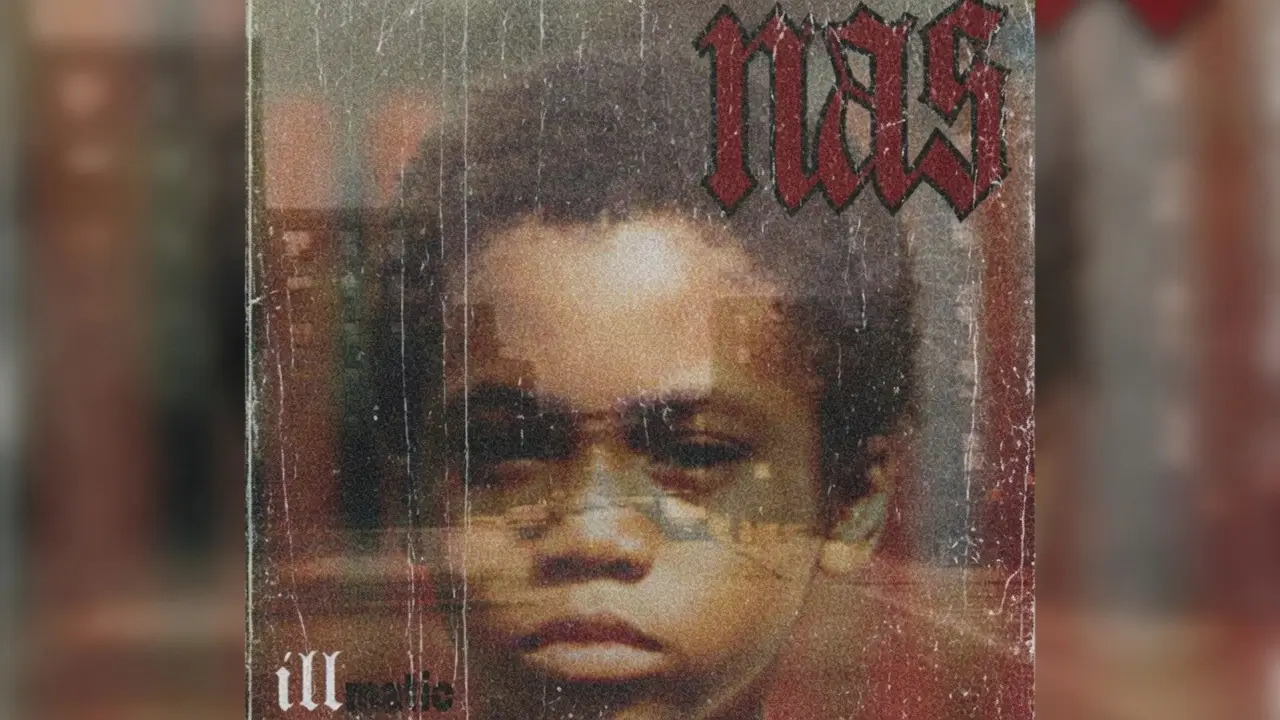
Nostalgic artwork centers on a childhood portrait of Nas, blending archival photography with layered urban imagery, distressed textures, and vintage-inspired typography. The composition evokes the rapper’s New York roots and enduring legacy, reflecting themes of memory, identity, and storytelling that have defined his influential career in hip-hop.
Neither side has ever fully won, which is precisely why the conversation keeps resurfacing at every anniversary. What’s less contested is the writing itself — even critics skeptical of the album’s commercial packaging have generally agreed that Nas’ bar-for-bar lyricism on It Was Written holds up against anything in his catalog, mafioso theatrics included.
There’s also a generational split worth noting in how this debate plays out. Listeners who came to Nas through Illmatic, particularly critics who covered both albums on release, tend to default to the debut as the definitive statement almost reflexively. Younger fans discovering the catalog decades later, without that same release-order context, often engage with both albums on more equal footing — sometimes preferring It Was Written‘s scale and replay value precisely because they aren’t measuring it against the cultural weight Illmatic had already accumulated by the time they heard it. That shift in how new listeners approach the two records is arguably reshaping the debate as much as any new critical reassessment has.
group
It Was Written also functions as the launching point for The Firm, the short-lived supergroup Nas formed with Foxy Brown, AZ and Cormega, who make their collective debut on the album’s “Affirmative Action.” The group’s sole studio album followed in 1997, and while it never matched It Was Written‘s commercial run, its existence speaks to how much creative and commercial momentum the album generated in the months after release — enough to spin off an entire secondary project built around its cast of collaborators.
That same period also produced one of the more consequential feuds in the album’s orbit: the opening line of “The Message” drew a pointed response from Tupac Shakur, whose posthumously released The Don Killuminati: The 7 Day Theory included a retaliatory verse aimed at Nas later that year — a reminder of how tightly It Was Written was woven into the wider tensions defining Hip-Hop in 1996.
Taken together, The Firm’s formation and the Tupac exchange illustrate just how much cultural gravity the album generated beyond its own track list. Few rap albums from any era manage to spin off a supergroup, ignite a coastal feud subplot, and anchor a mainstream crossover single all within the same release cycle. That density of consequence is easy to lose sight of thirty years later, when the album tends to get discussed purely in terms of its sales figures or its standing next to Illmatic, but it’s a significant part of why 1996 remains such a heavily documented year in the genre’s history.
fin
Three decades on, It Was Written occupies an unusual position in Nas’ catalog: simultaneously his most commercially successful album and his most argued-over. That tension is arguably the clearest evidence of its quality rather than a mark against it — an album that expanded a generational lyricist’s audience without asking him to write down to it. If Illmaticbuilt Nas’ reputation as a technician, It Was Written is the record that proved his writing could survive contact with the mainstream, a distinction that still shapes how the two albums get talked about every time the comparison resurfaces.
It’s also worth noting how rarely an artist’s second album ends up carrying this much of their commercial legacy thirty years later. Nas has released more than a dozen studio albums since, several of them chart-toppers in their own right, yet It Was Written remains the sales benchmark against which nearly all of them are measured. That staying power isn’t an accident of timing or a fluke of 1996’s commercial climate — it reflects an album that widened its author’s audience while keeping the technical rigor that had already made him a legend, which may be the closest thing to a settled verdict this particular debate is ever going to produce.
From the DRIFT archive: Jodie Foster Narrates Morgan Neville’s Breakdown: 1975: A Cultural Autopsy of the Most Radical Year in American Cinema