DRIFT AUDIO
Listen to this story
Choose a voice, then press play.
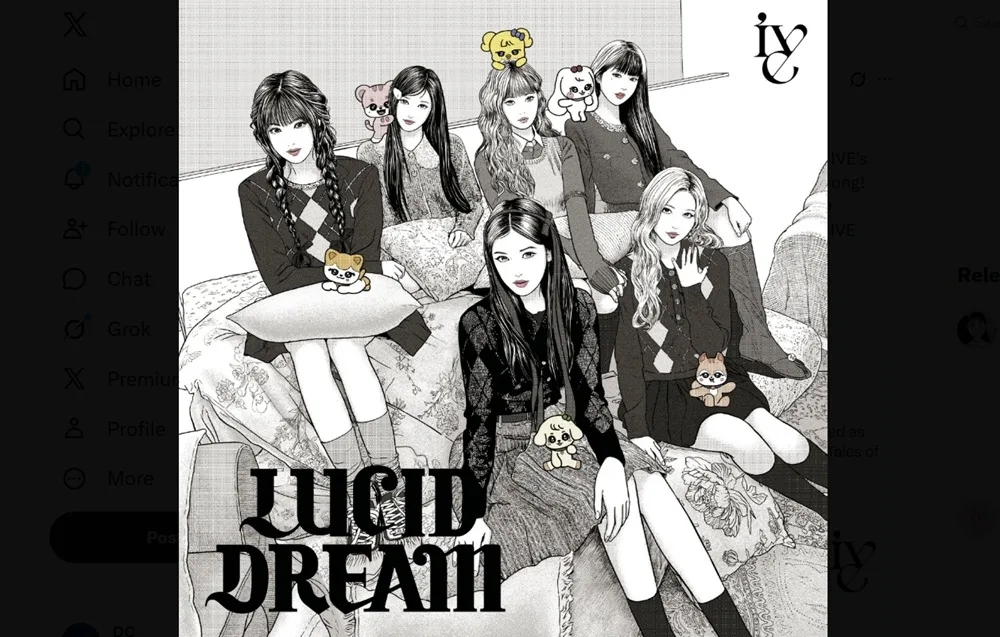
In the rarefied strata of ultra-end fashion and culture, where boundaries dissolve between high art, street energy, and subversive beauty, few collision strike with the precision of a scalpel quite like IVE’s union with Junji Ito. The South Korean sextet—known for crystalline view, impeccable styling, and chart-dominating elegance—has plunged headfirst into the abyss of Japanese horror manga. The result is the limited-edition cover for their fourth Japanese EP LUCID DREAM, illustrated by the undisputed master of cosmic dread himself. Released amid a carefully orchestrated rollout in April 2026, the artwork is not mere promotional ephemera. It is a cultural suture: sewing together the pristine, hyper-feminine idol aesthetic with Ito’s signature spirals of unease, elongated silhouettes, and beauty that seems moments away from devouring itself.
For Ultra-End’s evolving conversation around image, identity, and performance, the connection feels unusually precise. IVE have always existed at the intersection of polished femininity and luxury-fashion discipline. Their campaigns, styling direction, and stage presentation already flirt with editorial extremity. But LUCID DREAM pushes them into stranger territory. The Junji Ito cover reframes perfection itself as something uncanny—still beautiful, but unstable around the edges.
stir
Since debuting under Starship Entertainment in 2021, IVE have constructed one of fourth-generation K-pop’s most controlled visual identities. The members—Jang Wonyoung, An Yujin, Gaeul, Rei, Liz, and Leeseo—operate almost like individual fashion archetypes brought into collective alignment. Their styling language consistently oscillates between polished minimalism and hyper-luxury fantasy: archival references, tailored silhouettes, crystal embellishment, soft couture layering, and runway-informed proportions.
What separates IVE from many contemporaries is not simply styling budget or visual consistency, but their understanding of image as narrative. They rarely appear as passive ambassadors wearing clothing. Instead, they embody entire aesthetic systems. Past eras balanced innocence with severity, softness with architectural control, creating an atmosphere where beauty always carried a faint edge of distance. That tension becomes essential to why the Junji Ito collaboration works so effectively.
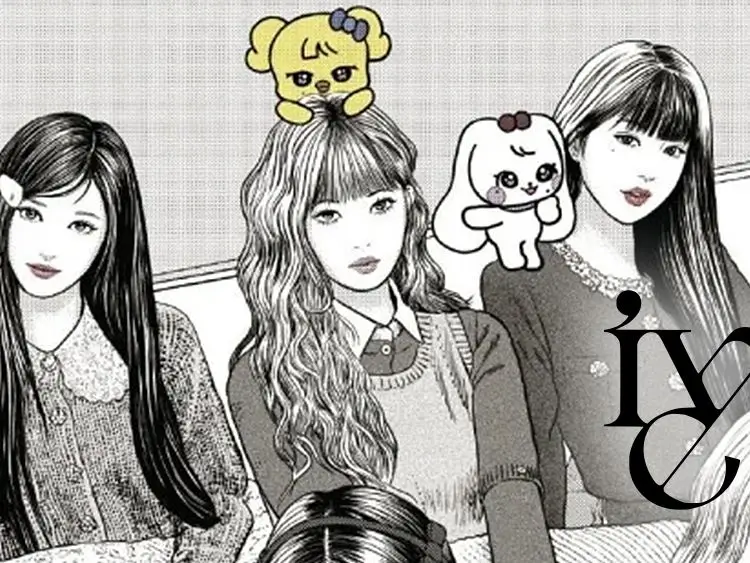
The LUCID DREAM cover itself stages the members inside an almost domestic tableau—braided hair, knit textures, argyle motifs, plush MINIVE mascots scattered throughout. Yet under Ito’s pen, the atmosphere curdles. Faces remain elegant but feel too still. Eyes deepen unnaturally. Smiles hover between comfort and threat. The image rewards obsessive scrutiny in the same way Ito’s manga panels do, revealing subtle discomfort through repetition and detail rather than overt shock.
flow
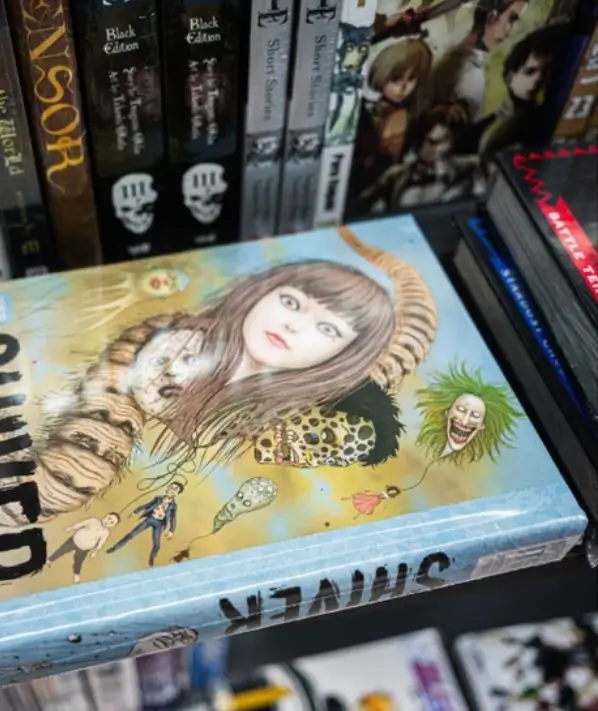
Junji Ito’s cultural relevance extends far beyond manga. Works like Uzumaki, Tomie, and Gyo transformed horror illustration into something almost architectural. His drawings often explore beauty under pressure—bodies stretched by obsession, vanity turning parasitic, desire mutating into violence. That thematic fixation on perfection feels uncannily aligned with the mechanics of contemporary idol culture.
The parallels become especially striking through Wonyoung, whose porcelain visuals and near-doll-like proportions already inspire intense fascination online. Rendered through Ito’s linework, she begins to resemble a modern Tomie figure: elegant, magnetic, impossible to fully contain. Ito does not caricature the members. Instead, he amplifies latent qualities already present within their public image.
Importantly, the collaboration expands beyond static artwork. IVE’s track “JIGSAW” serves as the opening theme for Strange – Junji Ito’s Strange Tales to Keep You Up At Night, further connecting the group to Ito’s cinematic world of fragmentation and psychological unease. Even the project’s collectible packaging—booklets, photocards, illustrated inserts—transforms the album into a luxury object rather than disposable merchandise.
View this post on Instagram
idea
The collection also reinforces an ongoing shift within luxury culture itself: horror aesthetics are no longer niche or oppositional. They have become embedded within contemporary fashion language. Houses like Balenciaga, Rick Owens, and Comme des Garçons have long explored distortion, unease, and theatrical darkness. IVE x Junji Ito translates those same impulses into a pop-cultural framework accessible to a global audience.
What makes the imagery compelling is its refusal to abandon elegance while embracing discomfort. The styling remains soft, composed, and carefully coordinated, yet Ito’s intervention destabilizes everything. Fabric folds appear heavier. Negative space feels alive. Innocent motifs begin to read like omens. The result mirrors broader 2026 aesthetics, where gothic revival, technical fashion, and emotionally fractured digital identities increasingly overlap.
There is also an underlying commentary on performance itself. K-pop’s demand for flawless beauty often creates an atmosphere where idols appear almost superhuman—always polished, always emotionally available, always visually immaculate. Ito’s artwork subtly exposes the anxiety beneath that perfection. The horror is not ugliness. The horror is the impossibility of remaining endlessly beautiful without consequence.
impression
The response online has been immediate because the collaboration feels conceptually complete rather than gimmicky. Fans are not reacting solely to novelty. They recognize that Ito’s visual language exposes something already present within idol culture: obsession, projection, repetition, and beauty elevated to surreal extremes.
For IVE, the project signals evolution. They are no longer confined to straightforward luxury-pop archetypes. LUCID DREAM introduces a darker, more psychologically layered direction without sacrificing the group’s elegance or commercial precision. Their image remains pristine, but now that perfection carries shadow and tension.
In many ways, Junji Ito did not transform IVE into horror figures. He simply revealed the faint unease already embedded beneath contemporary beauty culture. That is why the artwork lingers. It understands that in 2026, the most compelling luxury imagery no longer aims merely to look beautiful. It aims to disturb softly, elegantly, and permanently.
n
From the DRIFT archive: Dyson x PORTER: Engineering Meets Urban Craft in the OnTrac Limited Edition · Tactical Elegance: Inside Bramford London Aqua Blue Three-Pocket Watch Roll
Related Articles
BAPE Opened An iPhone 18 Order Window And Put Camo On The New Last
Four cases. Shark with a magnetic mini pouch. Glow solid camo. City camo. Color camo. […]