DRIFT AUDIO
Listen to this story
Choose a voice, then press play.
In a landmark moment for contemporary ceramics, South Korean artist Jongjin Park has been named the winner of the 2026 LOEWE FOUNDATION Craft Prize for his groundbreaking work Strata of Illusion (2025). The announcement, made at National Gallery Singapore, reinforces the prize’s growing influence as one of the most important global recognitions for contemporary craft and material innovation. Park receives the prestigious €50,000 award, while the exhibition featuring all 30 finalists runs from May 13 through June 14, marking the first time the event has been staged in Southeast Asia.
The victory signals more than personal achievement. It highlights the increasing prominence of Korean artists within international craft discourse while reflecting the broader resurgence of hand-based material practices in an era increasingly dominated by digital systems, automation, and artificial intelligence. Selected from more than 5,100 submissions across 133 countries and regions, Park’s work emerged as a standout for its remarkable balance of technical mastery, conceptual depth, and sculptural presence.
sculpt
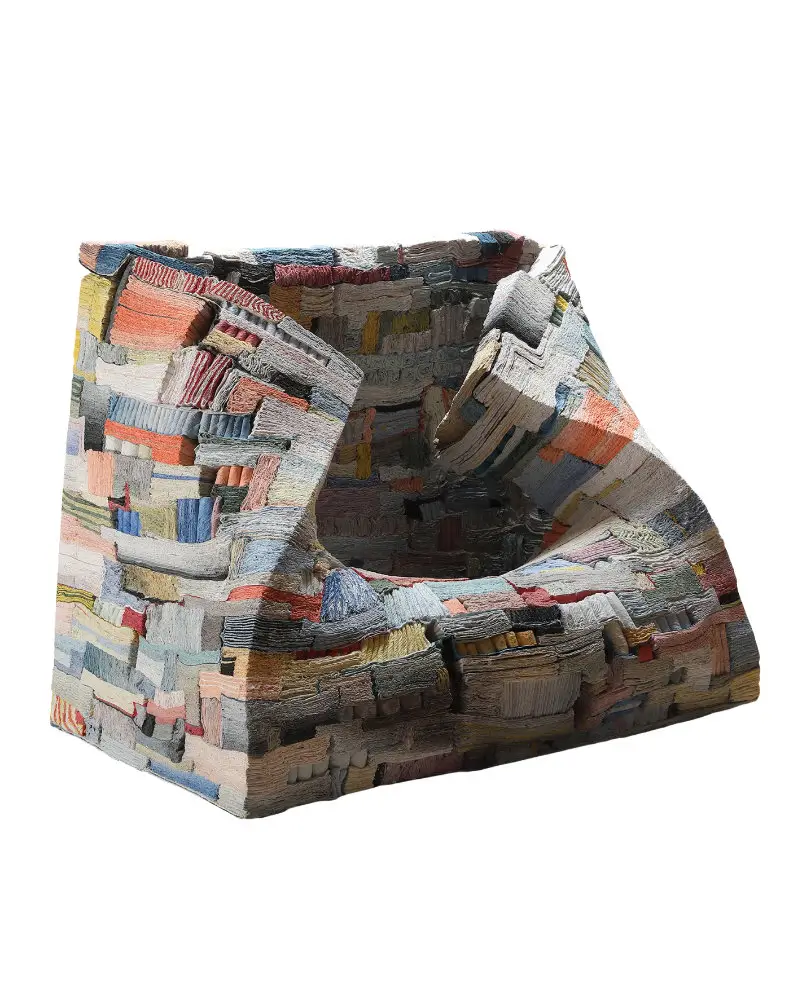
At first glance, Strata of Illusion appears almost geological. The rectilinear form resembles a compressed section of weathered rock, partially collapsed architecture, or a discarded piece of furniture eroded by time itself. Yet the object’s visual heaviness masks an extraordinarily delicate creation process rooted in layering, fragility, and controlled transformation.
Park constructs the work through thousands of individual sheets of paper coated meticulously in porcelain slip mixed with hand-developed pigments. Each layer is folded, stacked, compressed, and manipulated into a dense sculptural mass that preserves every crease, wrinkle, compression, and shift introduced during handling.
The real transformation occurs during firing. Heated to approximately 1280°C, the paper combusts entirely within the kiln, disappearing from the finished object while leaving behind a single ceramic body that permanently records every physical trace of the vanished material. The result is paradoxical: a sculpture that appears fragile enough to crumble yet possesses the permanence and durability of porcelain.
This tension between illusion and truth defines the work’s emotional impression. The ceramic surface mimics the softness of folded paper so convincingly that the eye initially resists accepting its permanence. Park effectively traps impermanence inside ceramic form, preserving moments of collapse and instability as structural memory.
material
What makes Strata of Illusion resonate so powerfully within contemporary craft culture is the way it transforms process itself into narrative. Every wrinkle, compression line, and warped edge functions as a visible record of physical interaction between hand, material, gravity, and heat.
Park’s practice exists at the intersection of discipline and surrender. The artist carefully controls layering, pigmentation, moisture, compression, and kiln conditions, yet the firing process introduces unavoidable unpredictability. Shrinkage, tension, and distortion become collaborators rather than technical failures. The final sculpture therefore feels less manufactured than discovered—as though geological time itself participated in its formation.
This philosophy connects deeply to Korean ceramic traditions where imperfection, asymmetry, and material honesty are often treated not as flaws but as expressions of life itself. Park’s work echoes historical techniques associated with Joseon-era craft practices while simultaneously speaking the language of contemporary sculpture and conceptual design.
There is also a profound psychological dimension embedded within the work. Strata of Illusion reflects themes of endurance, memory, and coexistence: paper and porcelain, softness and rigidity, destruction and permanence. The sculpture appears frozen in the exact moment where collapse becomes resilience.
evolve
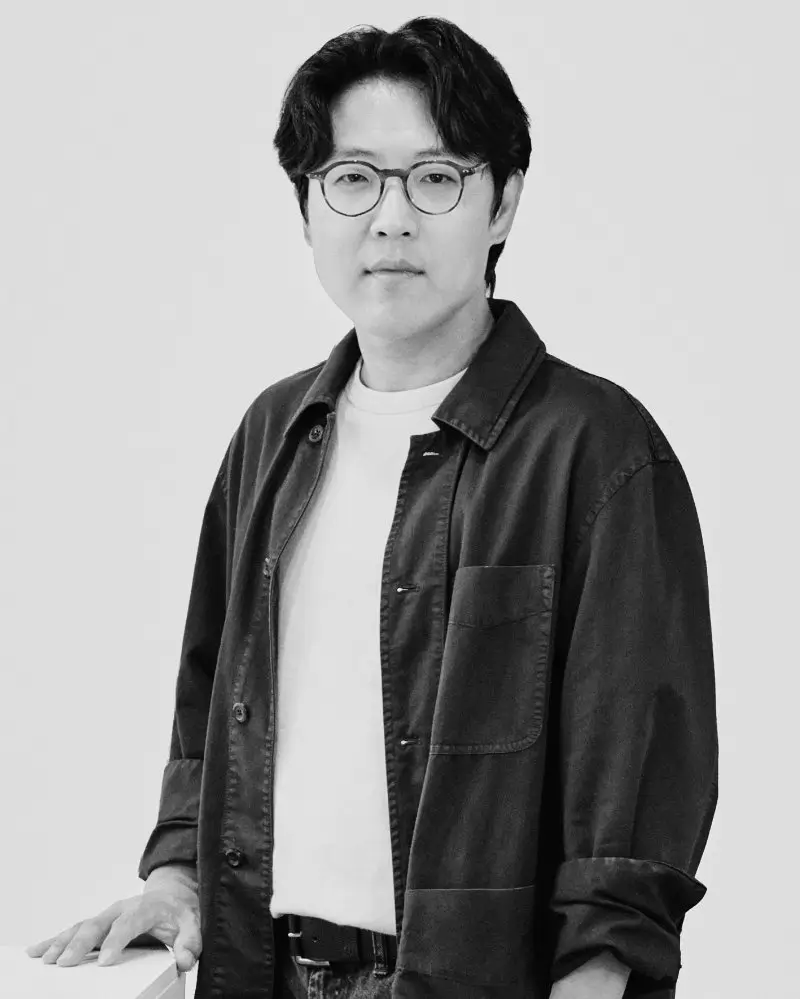
Born in 1982 in South Korea, Jongjin Park represents a generation of makers navigating both local craft heritage and global contemporary art discourse. He earned both his BFA and MFA in Ceramics from Kookmin University in Seoul before continuing his studies at Cardiff Metropolitan University in Wales, where exposure to broader international craft traditions significantly expanded his experimental approach.
Early in his career, Park focused heavily on traditional Korean porcelain techniques. Over time, however, he began integrating unconventional materials such as tissue paper and kitchen paper towels into his ceramic processes, developing layered forms that blurred distinctions between permanence and ephemerality. These experiments eventually evolved into his signature “strata” works, where ceramic surfaces replicate the softness and imperfection of folded paper.
His studio practice in Guri, South Korea, operates almost like a material laboratory. Park frequently works in iterative series, refining compression techniques while allowing firing conditions to introduce controlled chaos into each outcome. In an era increasingly shaped by precision technologies and AI-assisted design, this embrace of tactile uncertainty feels both radical and deeply human.
That human presence becomes central to the emotional force of Strata of Illusion. Unlike digitally generated surfaces optimized toward flawlessness, Park’s ceramics preserve evidence of labor, resistance, and vulnerability. The work insists that intelligence can exist not only in algorithms but also in touch, repetition, patience, and material sensitivity.
influ
Since its launch in 2016 under the presidency of Sheila Loewe, the LOEWE FOUNDATION Craft Prize has evolved into one of the most respected awards in contemporary craft. Rather than treating craft as secondary to fine art, the prize positions artisanal practice as a critical site for innovation, experimentation, and culture dialogue.
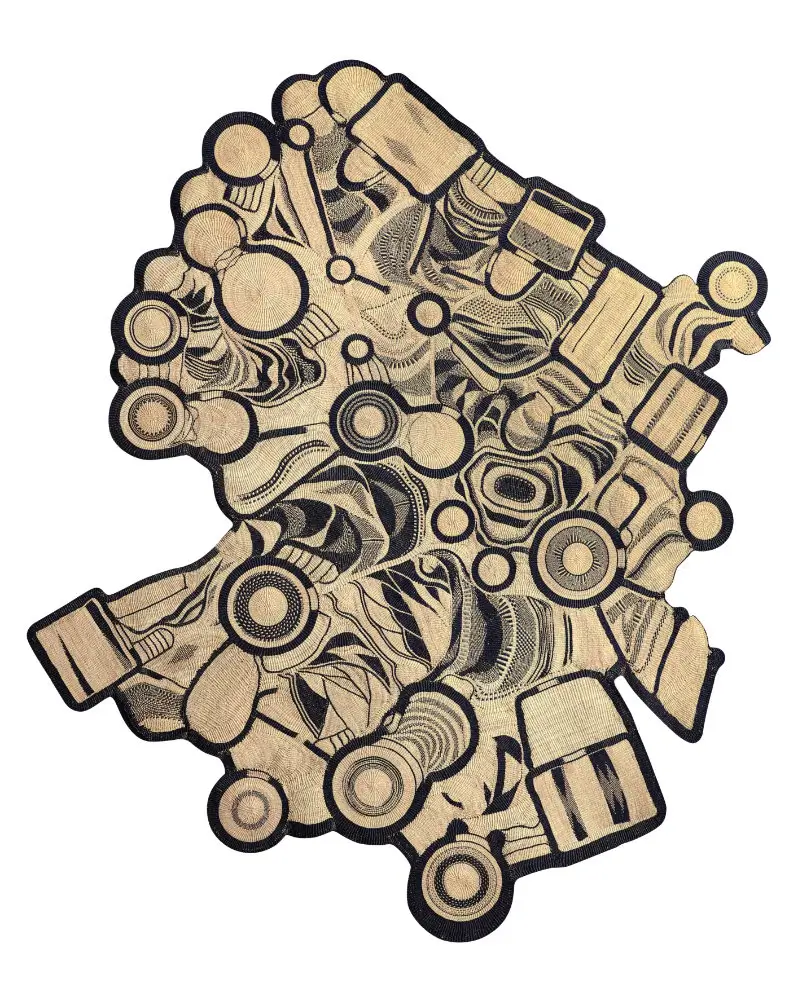
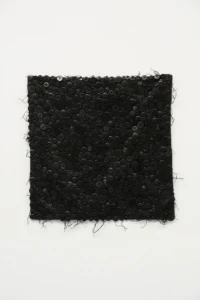
LOEWE FOUNDATION CRAFT PRIZE – ALVARO CATALAN DE OCON – SPECIAL MENTION
The 2026 edition attracted a record number of submissions, reflecting the rapidly growing global appetite for material-based practices that challenge distinctions between sculpture, design, and functional object-making. Finalists represented 20 countries, spanning ceramics, textiles, weaving, metalwork, and jewelry.
The jury included internationally respected figures such as architect Frida Escobedo, designer Patricia Urquiola, and LOEWE creative directors Jack McCollough and Lázaro Hernández. Their selection of Park’s work suggests a growing preference for pieces that merge rigorous craftsmanship with broader philosophical and emotional resonance.
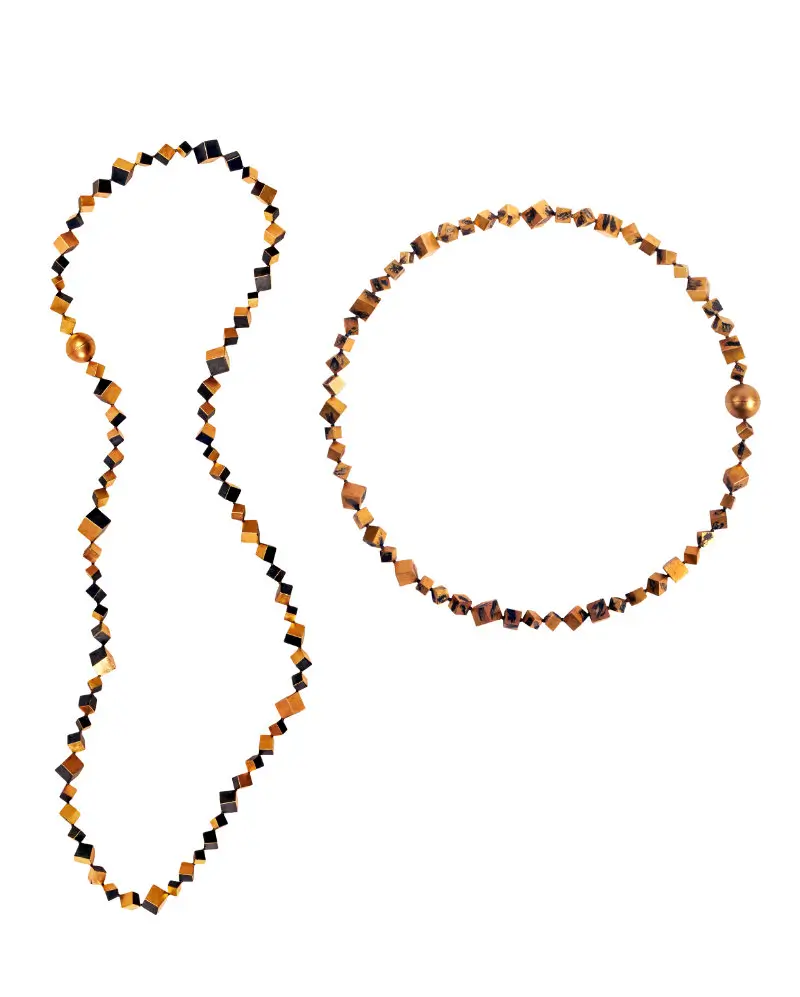
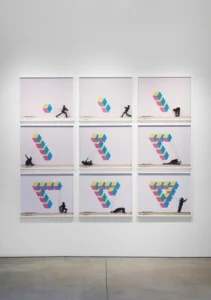
LOEWE FOUNDATION CRAFT PRIZE – GRAZIANO VISINTIN – SPECIAL MENTION
The decision to host the exhibition in Singapore adds additional cultural significance. Long positioned as a bridge between East and West, Singapore provides an ideal context for a prize increasingly shaped by cross-cultural material exchange and contemporary Asian craft innovation.
why
Part of the sculpture’s power lies in how directly it speaks to the anxieties and contradictions of the present moment. In a world defined by instability—environmental uncertainty, technological acceleration, economic volatility, and information overload—Park’s layered ceramic object becomes a meditation on endurance itself.
The work’s compressed strata evoke geological accumulation, memory storage, urban decay, and emotional pressure simultaneously. Its collapsed structure suggests fragility, yet the fired ceramic body endures. This duality gives the sculpture an almost existential quality. It becomes a physical metaphor for survival through tension.
Importantly, Strata of Illusion also reflects contemporary shifts within luxury culture itself. Increasingly, brands and collectors seek objects carrying narrative depth, material authenticity, and evidence of human process rather than mass-produced perfection. LOEWE’s ongoing investment in craft aligns directly with this movement, positioning artisanal knowledge as a cornerstone of future luxury rather than merely a nostalgic reference point.
The sculpture’s scale and furniture-adjacent form further blur the lines between collectible design, contemporary art, and functional object. It is easy to imagine Park’s visual language influencing future interiors, limited-edition design collaborations, or architectural installations.
Ceramic Artist Jongjin Park Wins the 2026 Loewe Craft Prize – See more here: https://t.co/FgYz52iajl
South Korean ceramic artist #JongjinPark has won the 2026 #LoeweCraftPrize, announced during a ceremony at the National Gallery Singapore on May 12. Park received the award for… pic.twitter.com/OuRbM7LooW
— DSCENE Magazine (@designscene) May 13, 2026
contempo
Park’s victory also represents a broader cultural moment for Korean craft practices internationally. South Korea’s global creative influence has expanded dramatically across fashion, music, film, architecture, and design over the past decade, yet contemporary ceramics and artisanal disciplines are increasingly receiving similar international recognition.
Artists like Jongjin Park are redefining how traditional material histories can exist within contemporary global conversations without losing cultural specificity. Rather than reproducing historical techniques nostalgically, Park transforms them into living systems capable of addressing modern concerns surrounding impermanence, labor, identity, and technological change.
His success may also inspire younger generations of makers to pursue experimental craft practices with greater ambition. The LOEWE prize offers not only financial support but also enormous institutional visibility, creating pathways toward exhibitions, commissions, connections, and museum acquisition opportunities worldwide.
look
With the international spotlight now firmly on him, Jongjin Park enters a transformative new chapter. Future developments could include expanded sculptural installations, collectible furniture works, architectural collections, or partnerships with design and luxury houses interested in his material language.
Yet the significance of Strata of Illusion extends far beyond career momentum alone. The work ultimately serves as a powerful reminder of what hand-based practices continue to offer in an increasingly synthetic age. While technology accelerates toward frictionless production, Park’s sculpture insists on the value of slowness, unpredictability, and tactile dialogue with material itself.
In many ways, Strata of Illusion embodies the future of contemporary craft precisely because it embraces contradiction. It is fragile yet permanent, accidental yet controlled, ancient yet futuristic. It does not reject innovation; instead, it argues that true innovation still emerges most powerfully through direct engagement between human hands, physical materials, and transformative process.
Jongjin Park’s 2026 LOEWE FOUNDATION Craft Prize win therefore feels larger than a single award. It marks a cultural reaffirmation of craftsmanship as intellectual, emotional, and philosophical practice. In an era increasingly defined by simulations and digital surfaces, Strata of Illusion reminds us that depth, imperfection, and material memory still possess extraordinary power.
From the DRIFT archive: Eddie Murphy to Receive the AFI Life Achievement Award in 2026 · The Hold-Up: Inside the Delayed Kendrick Lamar × South Park Comedy Project
Related Articles
Where the Face Should Be, Rafael Silveira Paints Open Sky
A pink shirt, shoulder-length hair, then no face at all: in “Surprise,” Rafael Silveira lets flowers and a clear blue sky stand in for the person.