DRIFT AUDIO
Listen to this story
Choose a voice, then press play.
Taiyo Matsumoto’s Treasure Town gets the hand-distressed treatment on September 5, when two Harajuku labels debut their latest anime triple collaboration.
Every retelling of Tekkonkinkreet‘s title starts with a mispronunciation. As a child, Taiyo Matsumoto reportedly could never quite get his mouth around tekkin konkurito, the Japanese term for reinforced concrete. What came out instead was a garbled tekkon kinkureeto, a phrase that stuck with him into adulthood and eventually became the title of his breakout manga. It’s a fit piece of trivia for a series that spends its 33 chapters taking a city apart and putting it back together, treating language the way its two young leads treat rooftops and telephone poles: as something to bend rather than something fixed.
Matsumoto was born in Tokyo in 1967 and original wanted to be a professional soccer player before he started drawing seriously. The body of work he’s built since, including Ping Pong, No. 5, GoGo Monster, Sunny and 2020’s Cats of the Louvre, shares a rough, expressive line and a genre-blending instinct that critics have traced to Katsuhiro Otomo and French bande dessinée. The English translation of Tekkonkinkreet itself won an Eisner Award in 2008, and Matsumoto picked up a second Eisner in July 2025 for Tokyo These Days. In April 2026 he announced a new collective project, Nanbanjin, with French cartoonist Cyril Pedrosa. None of that later output changes what Tekkonkinkreet still represents for most readers: the work that made his name, and the one still generating new licensing life more than thirty years on.
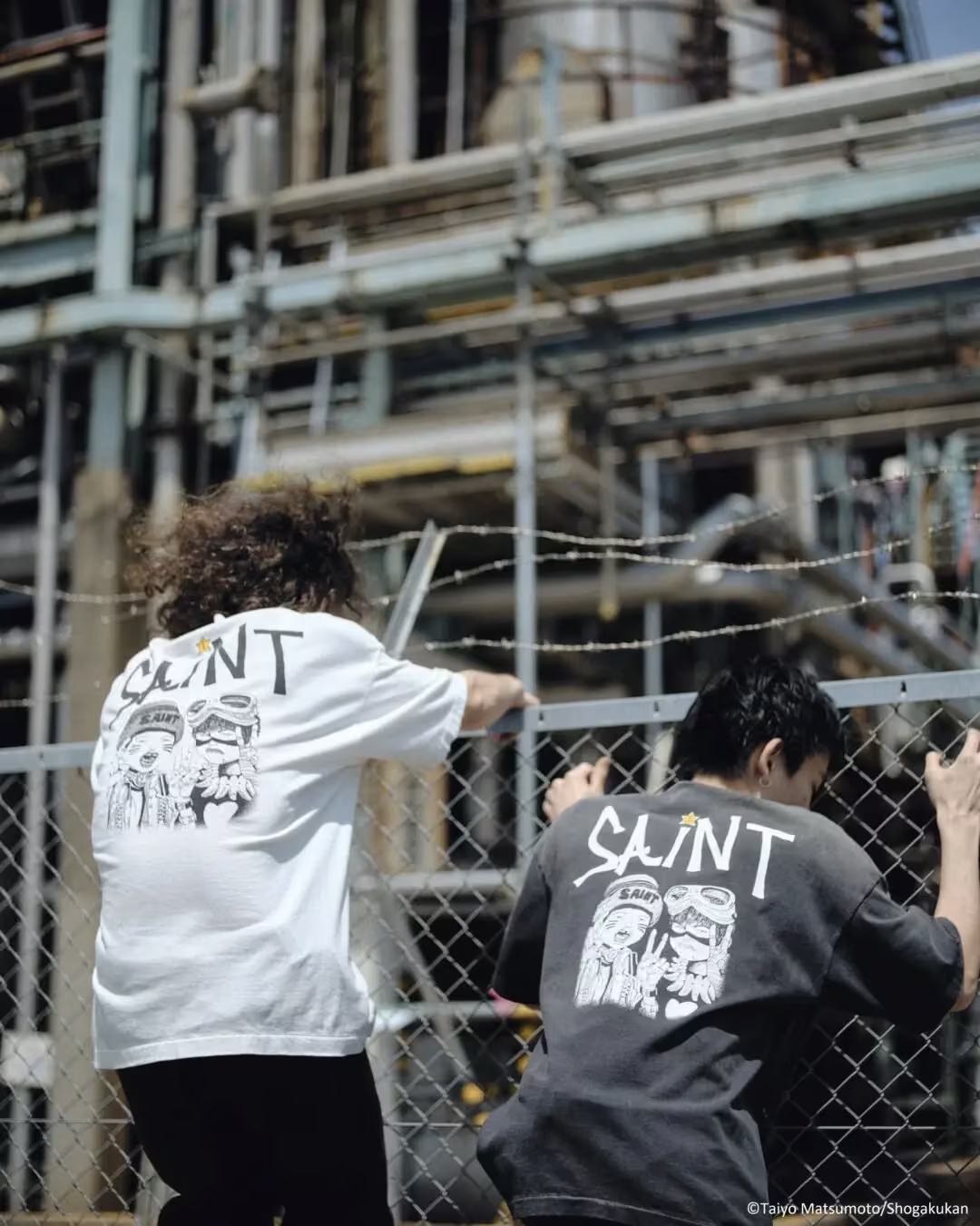
Two people wearing Saint Michael graphic tees leaning against a chain-link fence in an industrial setting.
flow
Tekkonkinkreet ran in Shogakukan‘s Big Comic Spirits from July 1993 to March 1994, a compact run collected into three volumes. Cumulative sales have passed 1.3 million copies as of 2025, a considerable number for a series that never spun off a long-running sequel to pad the total. The story follows Kuro and Shiro, two orphaned street kids known together as “the Cats,” who have appointed themselves guardians of the fictional Takaramachi, or Treasure Town, a crumbling, no-nationality sprawl of rooftops and back alleys. Their claim on the city gets tested when yakuza-backed developers move to remake it, forcing the pair, one hardened and street-smart, the other childlike and porous to the world around him, to work out what they’re actually trying to protect. VIZ Media has kept the manga in print in English for close to two decades under the title Tekkonkinkreet: Black & White, and released a 30th-anniversary edition restoring the original right-to-left page order along with a new afterword from Matsumoto himself.
The push and pull between Kuro and Shiro, self-sufficiency versus vulnerable, violence versus tenderness, is what critics and readers keep returning to, and it’s part of why the property has kept finding new forms beyond the page. A 2018 stage production brought the story to Japanese theaters with a cast that included Nogizaka46 member Yumi Wakatsuki, decades after the manga’s original run ended. That kind of staying power is unusual for a 1990s seinen title that was never part of a franchise machine, and it’s a large part of what makes Tekkonkinkreet a recognizable enough name to anchor a streetwear collaboration thirty-plus years later rather than a deep-cut reference aimed only at longtime readers.
transition
The manga’s most visible afterlife is its 2006 feature film, directed by Michael Arias, a VFX specialist making his directorial debut after more than a decade in Hollywood visual effects. He’d go on, years later, to supervise montage sequences on Godzilla Minus One and to sign on as director of an upcoming animated adaptation of Matsumoto’s Sunny, a project announced in 2025 that extends the pair’s working relationship well past Treasure Town. Studio 4°C, the Tokyo animation house co-founded by producer Eiko Tanaka and director Koji Morimoto in 1986 and known for Memories, Spriggan and segments of The Animatrix, made the film after a reported thirteen years of development, pairing then-cutting-edge 3D CGI backgrounds with hand-drawn character animation under chief animation director Shojiro Nishimi and art director Shinji Kimura. Kazunari Ninomiya and Yu Aoi voiced Kuro and Shiro, backed by a cast that included Yusuke Iseya, Kankuro Kudo, Nao Omori and Masahiro Motoki. Distributor Asmik Ace released the film in Japanese theaters on December 22, 2006, at 111 minutes. Sony Pictures handled international licensing, and the film reached North American audiences through GKIDS, giving it a long shelf life on the festival and home-video circuit well outside Japan.
View this post on Instagram
The soundtrack picked up its own piece of the film’s legend. UK electronic duo Plaid scored it, and Ibaraki rock band ASIAN KUNG-FU GENERATION, reportedly longtime fans of the manga themselves, wrote and recorded the theme song “Aru Machi no Gunjou” specifically for the project, releasing it as a single about three weeks ahead of the film’s theatrical run. It remains one of the band’s most frequently cited soundtrack contributions and the first film theme they wrote from scratch.
flow
December 2026 marks two decades since the film’s original rel and the anniversary has already been surface in Japan this year indie of any apparel news. A two-week nationwide revive theatric run began May 8, 2026, part of a Filmarks-organized revive-screen initiative that brought the film back to Shinjuku Piccadilly and other theater with new admission bonuses, including a clear card featuring Kuro, and a second wave of limited merchandise built around the screening itself, among it a reproduction of Kuro’s Tee from the film and a set of tote bags. The September 5 apparel collaboration covered here is a separate commercial project rather than an official extension of that theatrical campaign, but it lands in the same calendar year the franchise is otherwise marking a milestone, and the two are hard to fully separate in terms of timing.
two
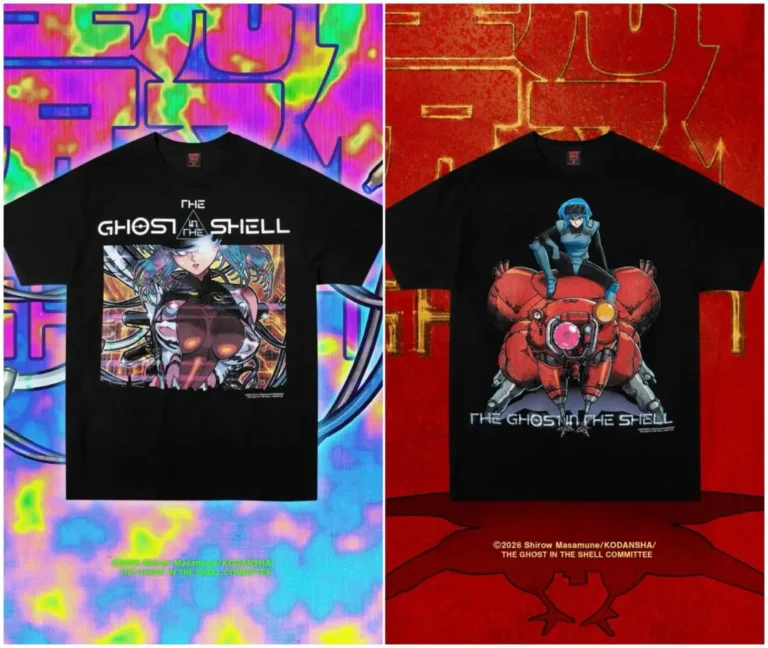
SAINT Mxxxxxx, styled with the brand’s now-signature run of x’s standing in for the back half of “Michael,” launched in 2020 as a partnership between READYMADE designer Yuta Hosokawa and Los Angeles artist Cali Thornhill DeWitt. Hosokawa built his name upcycling military surplus into runway-adjacent streetwear under an explicitly anti-war banner, while DeWitt’s résumé runs through Kanye West’s Life of Pablo tour merchandise, the record label Teenage Teardrops and a long list of design and photography side projects. The two were introduced in part through DeWitt’s prior relationship with a figure known as Kubo at Tokyo’s GR8, the same Harajuku retailer whose storefront now regularly carries SAINT Mxxxxxx’s collections. That connection matters more than it might first appear: it’s the thread tying SAINT Mxxxxxx’s hand-distressed, vintage-military aesthetic directly back to the shop now hosting its Tekkonkinkreet collaboration. Since its 2020 debut, the label has built out an aggressive collide calendar spanning Fear of God, NEIGHBORHOOD, P.A.M and Jordan Brand, a Spring/Summer 2026 capsule with BOUNTY HUNTER, and photography-driven pieces built around Robert Mapplethorpe’s archive, alongside a run of pop culture tie-ins, Ghost in the Shell, Summer Wars, Neon Genesis Evangelion and serial experiments lain among them, that have made it one of the more prolific crossover artists in Japanese streetwear. Retail pricing across the label typically lands in the $200 to $800 range depending on the piece, with outerwear and IP-driven capsules sitting at the higher end, which tracks with what past GEEKS RULE triple collaborations have charged for the same kind of product.
View this post on Instagram
extend
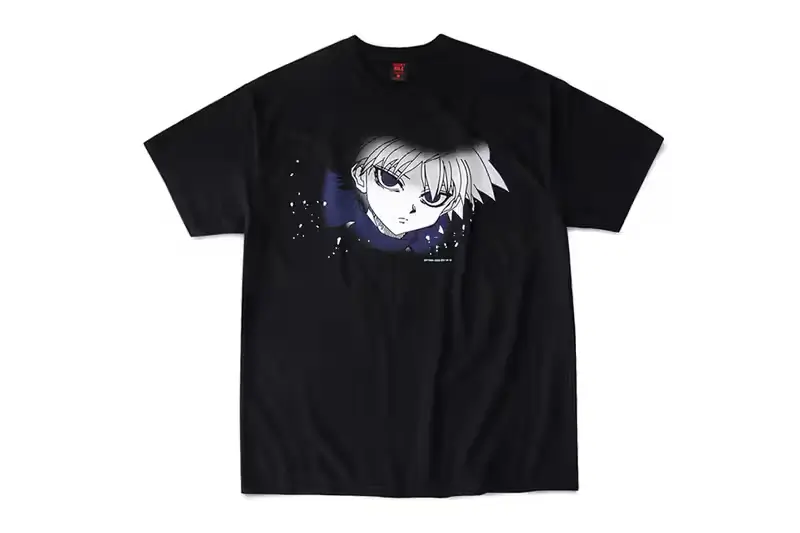
GEEKS RULE is the younger of the two labels, launched in 2023 as a project built specific around 1990s tee culture, the decade the brand considers the medium’s golden age. Its shirts use original heavyweight cloth fabric bodies and multicolor silkscreen printing design to age and fade the way genuine vintage does, finished by hand piece by piece rather than run through automated processing. The label’s own stated mission is translating Japan’s geek and otaku culture, primarily anime and games, into something a global audience can wear. Operating out of GR8’s Harajuku storefront, GEEKS RULE has run solo connection with Ghost in the Shell (director Mamoru Oshii appeared in the campaign wearing one of the shirts himself, and the label rel a second Ghost in the Shell capsule the following year), Cowboy Bebop, Kill la Kill, Hellsing and Chainsaw Man: The Movie, the last of those sold under a numbered “15 Silkscreen Printing T-Shirt” series that GEEKS RULE also used for its serial experiments lain release, timed to a 30th-anniversary retrospective exhibition of character designer Yoshitoshi ABe’s work. An ongoing multi-volume Hunter x Hunter series has run from July 2025 through a planned March 2026 conclusion across ten separate designs, and a Sonic the Hedgehog pop-up took over Laforet Harajuku’s first-floor entrance space for a week in December. Most recently, a capsule tied to the August 14, 2026 theatre rel of Patlabor EZY File 2 reprint the key view from the original 1989 Patlabor film. Its recurring triple-billed drops with SAINT Mxxxxxx have become one of the more reliable fixtures on that same calendar, typically land every few months around a different piece of anime or film history.
in
The Tekkonkinkreet release follows the format of those earlier triple collide closely. The front carry Kuro and Shiro’s characters alongside a bold render of the manga’s title, while the back feature a separate graphic depicting the pair together. The most specific detail in the design lives in a small accessory rather than the main print: the patchwork knit cap Shiro wears throughout the manga and film gets the SAINT wordmark worked directly into its pattern, a detail unique to this collaboration rather than lifted from the source art. The whole piece is finished in the hand-applied vintage processing SAINT Mxxxxxx built its name on, aging a brand-new garment to look like it has already lived a decade of wear.
View this post on Instagram
That one bespoke touch per release has become something of a signature move across these triple connections. The Summer Wars capsule built its entire visual concept around a new photograph shot on location in Ueda, the Nagano city that inspired the film’s setting, rather than reusing existing promotional stills. The Evangelion release paired poster art from Evangelion: 3.0+1.0 Thrice Upon a Time with a small musical-note motif marking the franchise’s conclusion after nearly thirty years. Shiro’s reworked knit cap follows that same logic: rather than simply reprinting a panel or a poster, each SAINT Mxxxxxx x GEEKS RULE release finds one small, source-specific detail to physically alter, which is arguably what separates these from a standard licensed graphic tee.
Related Articles
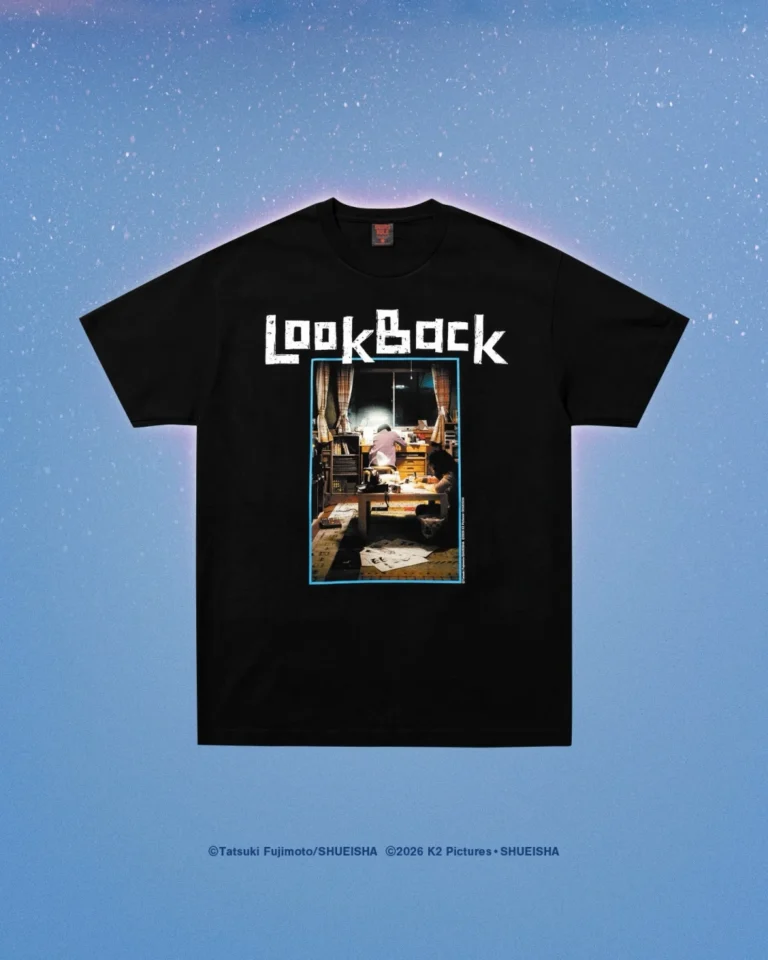
GEEKS RULE Presses Kore-eda’s Look Back Poster Into Fifteen Passes of Silkscreen Ink
A Palme d’Or director’s first live-action manga adaptation gets a vintage-tee treatment, timed down to […]