DRIFT AUDIO
Listen to this story
Choose a voice, then press play.
Travis Knight’s stop-motion adaptation of Colin Meloy’s Wildwood finally opens October 23, ending Laika’s longest gap yet between films.
Laika optioned Colin Meloy’s novel Wildwood in 2011, the same year it was published, and then spent the next decade and a half actually getting the movie made. Wildwood opens in US theaters on October 23, directed by Travis Knight from a screenplay by Chris Butler, and it’s the Hillsboro, Oregon studio’s first film since 2019’s Missing Link, the longest gap between rel in the company’s history. The story follows Prue McKeel and her classmate Curtis Mehlberg as they chase Prue’s kidnapped infant brother into a hidden forest at the edge of Portland, a wilderness the locals have learned not to enter and everyone else has learned not to believe in.
Signal. What happened: Laika confirmed October 23, 2026 as the US theatrical rel date for Wildwood, its sixth stop-motion feature and first film in seven years. Exact object: a feature-length adaptation of Colin Meloy and Carson Ellis’s 2011 novel Wildwood, directed by Travis Knight, written by Chris Butler, running 132 minutes. When and where: premiering at the BFI London Film Festival on October 11 ahead of a full US wide rel on October 23, distributed domestic by Fathom Entertainment. Source: Laika’s own January 2026 press release, corroborated by Wikipedia’s production history and trade coverage from Cartoon Brew and Animation World Network. Why it matters: it closes the longest production and release gap in Laika’s history and marks the first time the studio has distributed a new film itself rather than through a major studio partner.
Fifteen years is an unusual span even by animation standards, and most of it wasn’t spent animating anything. Laika didn’t formally commit to the project until September 2021, a full decade after optioning it, and didn’t reveal a cast until August 2022. Knight told Empire in 2023 that the film was then targeting a 2025 rel, which slipped a year from there. None of it reads as a troubled production so much as Laika simply being Laika, a studio that has never released more than one film every two years and has, this time, let seven pass between them.
The story itself doesn’t sprawl the way its production timeline did. Prue and Curtis follow a murder of crows into the Impassable Wilderness, find a manor at its center, and get pulled into a territorial war run by Alexandra, a woman whose own grief over a lost son turns out to be tangled up in the fate of Prue’s kidnapped brother. It’s the plot of just the first of Meloy and Ellis’s three books, with Under Wildwood and Wildwood Imperium left for another day, if Laika ever gets around to them.

Forest Park, Portland
stir
Wildwood’s whole premise started as a map. Colin Meloy, lead singer and songwriter for The Decemberists, and his wife Carson Ellis, an illustrator whose own credits include a Caldecott Honor and years as the band’s de facto art director, live beside Forest Park, a roughly 5,000-acre wilderness inside Portland’s own city limits. Long before either of them wrote a word of the book, Ellis drew a map of the park, and the two of them built a fictional country on top of it: the Impassable Wilderness, home to talking animals, warring factions, and a girl named Prue who has to go rescue her baby brother from somewhere inside it.
The couple had been circling the idea since around 2000, not long after they met, when they were living in what Meloy has described as a shared, nearly broke Portland warehouse. Wildwood, the first of what became a trilogy, came out in August 2011 and landed on the New York Times children’s bestseller list almost immediately, followed by Under Wildwood in 2012 and a third book, Wildwood Imperium, rounding out the series. It’s a family project in the fullest sense. Ellis illustrated all three books, and the pair had already spent years building an artistic partnership through The Decemberists’ own Grammy-nominated album packaging before either of them ever touched Prue McKeel’s story.
Ellis’s own résumé extends well past Wildwood: a Caldecott Honor and E.B. White Read-Aloud Award for her own picture book Du Iz Tak?, Society of Illustrators medals, illustration work for The Mysterious Benedict Society and Lemony Snicket’s The Composer Is Dead, and pieces that have run in The New Yorker and The New York Times. She and Meloy live on a farm outside Portland these days, not far from the same forest that started all of this.
anim
Laika’s own origin story runs almost as long as Wildwood’s development did. The studio grew out of Will Vinton Studios, the Portland claymation house behind the old California Raisins commercials, after Phil Knight, the Nike co-founder, made an initial investment in 1998 and then bought the financially struggling company outright in 2002. Knight’s son Travis, who had been working there as an animator, helped steer the studio through a 2005 rename and relaunch as Laika, named after the Soviet space dog, with Henry Selick, fresh off The Nightmare Before Christmas, brought on as a supervising director.
Laika has released five features since Coraline in 2009: ParaNorman, The Boxtrolls, Kubo and the Two Strings, and Missing Link, the last of them in 2019. Every single one was nominated for the Academy Award for Best Animated Feature, and none of them has actually won it. Kubo took the BAFTA instead, Missing Link the Golden Globe, and in 2016 the studio collected a Scientific and Technical Oscar for developing a 3D printing process that let its animators swap a puppet’s facial expression thousands of times over without hand-sculpting each one. Travis Knight, who directed Kubo himself, has been the company’s president and CEO since well before he started directing, working his way up from lead animator inside a studio his own father owns.
That tactile side of the studio’s process has become part of its public identity. For Laika’s fifteenth anniversary, the company put puppets, sets, and props from its Oscar-nominated films on display at Portland’s Oregon Museum of Science and Industry, letting visitors see up close the sculpting, rigging, and 3D-printed face work behind a single frame of movement most audiences blink past in under a second.
Knight’s own range underlines how unusual a fit he is for a studio built on painstaking, frame-by-frame animation. The same year Wildwood arrives, he also has a live-action blockbuster, Masters of the Universe, in theaters, a big-budget swing about as far from a Hillsboro puppet stage as a director can get. Laika itself is developing further afield too, with an adaptation of Susanna Clarke’s novel Piranesi and an original project called The Night Gardener from Ozark creator Bill Dubuque both somewhere in the pipeline behind Wildwood.
Seven Years, One Ensemble Cast
The long wait between films let Laika assemble one of its biggest casts yet. Peyton Elizabeth Lee voices Prue, opposite Jacob Tremblay as Curtis, with Carey Mulligan as Alexandra, the mysterious woman leading the story’s antagonist faction, and Mahershala Ali, Awkwafina, Angela Bassett, Jake Johnson, Charlie Day, Amandla Stenberg, Jemaine Clement, Maya Erskine, Tantoo Cardinal, Tom Waits, and Richard E. Grant rounding out the ensemble, all announced together in August 2022. It’s the kind of lineup that would anchor a live-action tentpole, assembled instead for a stop-motion puppet film that most of its cast will never physically appear in themselves.
Jake Johnson and Maya Erskine play Prue and Mac’s own parents, the McKeels, left behind in the ordinary Portland the story keeps cutting back to, while Ali, Awkwafina, and the rest fill out the Wildwood side of the map with the kind of vocal talent usually saved for a film’s marquee names rather than its supporting cast.
Caleb Deschanel shot it, which is its own small anomaly. A six-time Oscar nominee for cinematography, on films running from The Right Stuff to The Passion of the Christ to Disney’s 2019 Lion King remake, Deschanel isn’t an animation specialist by trade, and putting him on a stop-motion set says something about how much overlap Laika sees between its own medium and conventional live-action filmmaking.
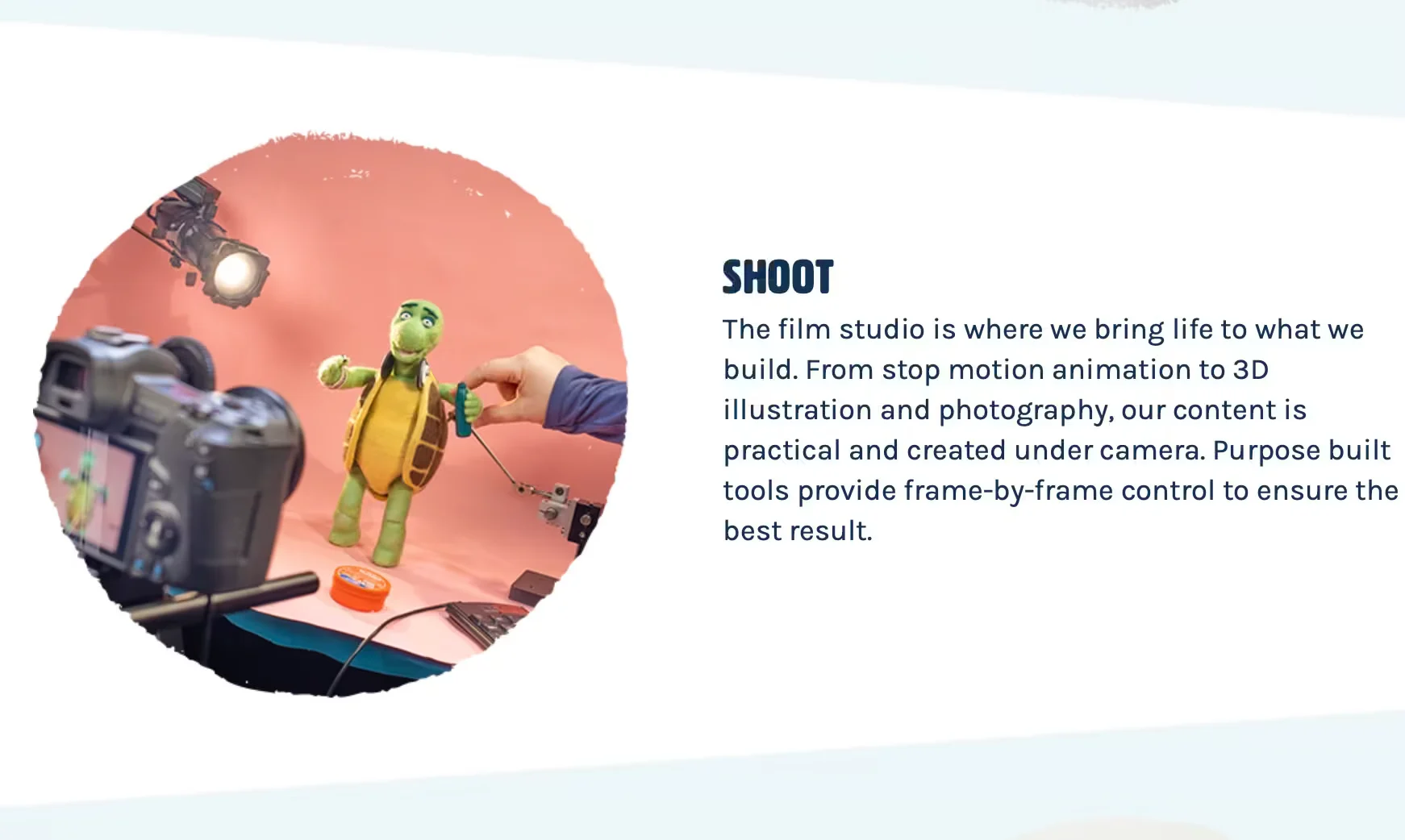
The Puppet’s Stage: A Study in Frame-by-Frame Devotion
Laika announced in January 2026 that Wildwood wouldn’t follow its previous films into a traditional studio release. Instead, the studio partnered with Fathom Entertainment for US theatrical distribution and FilmNation Entertainment for international sales, handling the rollout itself rather than routing the film through Focus Features, Universal, or Annapurna, the partners behind its five earlier movies. It’s a bet running in both directions at once. Fathom, a Denver-based distributor best known for one-day event screenings, had never handled a full nationwide release for a brand-new film before, though it had already steered Laika’s own Coraline through a 2024 theatrical re-release that made $56 million. That number matters more than it might look. A fifteen-year-old animated film pulling in tens of millions of dollars on a limited-run re-rel is the kind of built-in audience most brand-new titles would envy, and it’s part of why a company built around one-day anniversary screenings and simulcast concert films felt ready to take on a full nationwide rollout for the first time.
“Wildwood is…a landmark achievement in handcrafted cinematic artistry,” Fathom CEO Ray Nutt said announcing the deal, framing the partnership as a step toward the company becoming a full-service theatrical distributor rather than only an event-cinema outfit. Producer Sam Wilson put the choice in more personal terms, telling Variety that “Travis has himself described the film as a love letter to Portland,” which makes a smaller, hometown-adjacent release feel less like a risk and more like a continuation of the same instinct that sent Meloy and Ellis walking through Forest Park in the first place.
Opening at the BFI London Film Festival first, rather than going straight into a wide release, puts Wildwood on a path usually reserved for awards-season contenders rather than family franchise launches, one more sign that Laika and its new partners are positioning the film as prestige counterprogram rather than a straightforward kids’ movie. It arrives nationwide across the US on October 23, at 132 minutes, closing out the longest gap of Laika’s career with the biggest ensemble cast the studio has ever assembled.
Related Articles
American Horror Story Opens the Vault for a Thirteen-Episode Reunion of Its Own Ghosts
Three half-hour episodes land September 24 on FX and Hulu, with Jessica Lange, Sarah Paulson […]