DRIFT AUDIO
Listen to this story
Choose a voice, then press play.
In This Story
- The Opulent Allure
- Marie Antoinette’s Endure
- Maison de Fleur
- The Bag: Structure and Sentiment
- The Pouch: Intimate Companion
- Where Heritage Meets Accessibility
- Why This Aesthetic Endures
- Style Versatility and Personal Expression
- Beyond the Bag
- A Timeless Carryall for the Modern Courtier
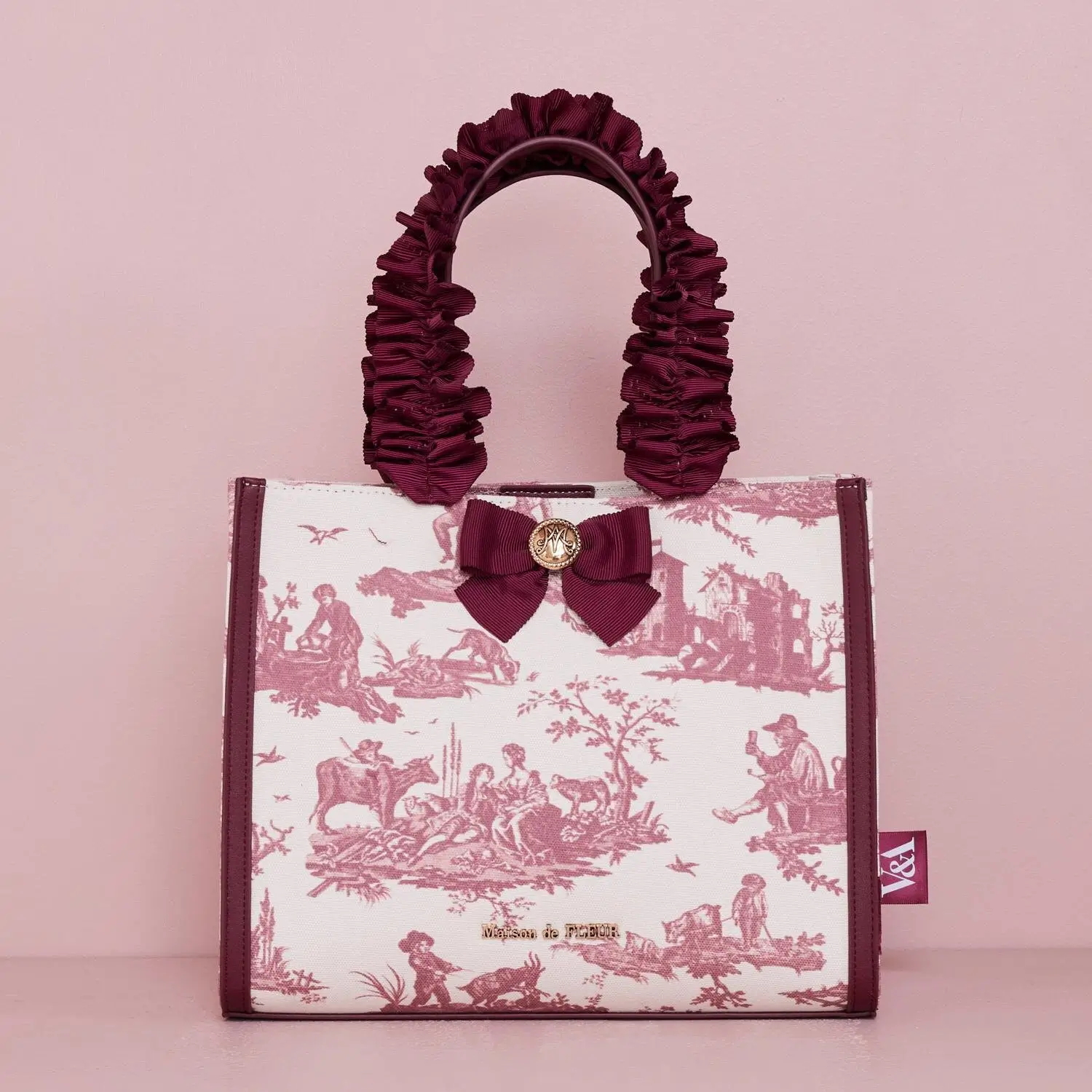
In the delicate interplay of heritage and whimsy, few contemporary accessories capture the romantic excess of 18th-century French court life quite like Maison de Fleur’s “Marie Antoinette” inspired collection. This Japanese brand, founded in 2012 under Mark Styler Co., Ltd., has carved a niche for itself by blending kawaii sensibility with sophisticated, ribbon-laden designs that feel both everyday practical and heirloom-worthy. The standout pieces—a versatile tote-style bag and its coordinating pouch—draw explicit inspiration from the ill-fated yet eternally stylish Queen of France, reimagined through a lens of soft pastels, luxurious textures, and a signature Bordeaux ribbon that adds depth and drama.
stir
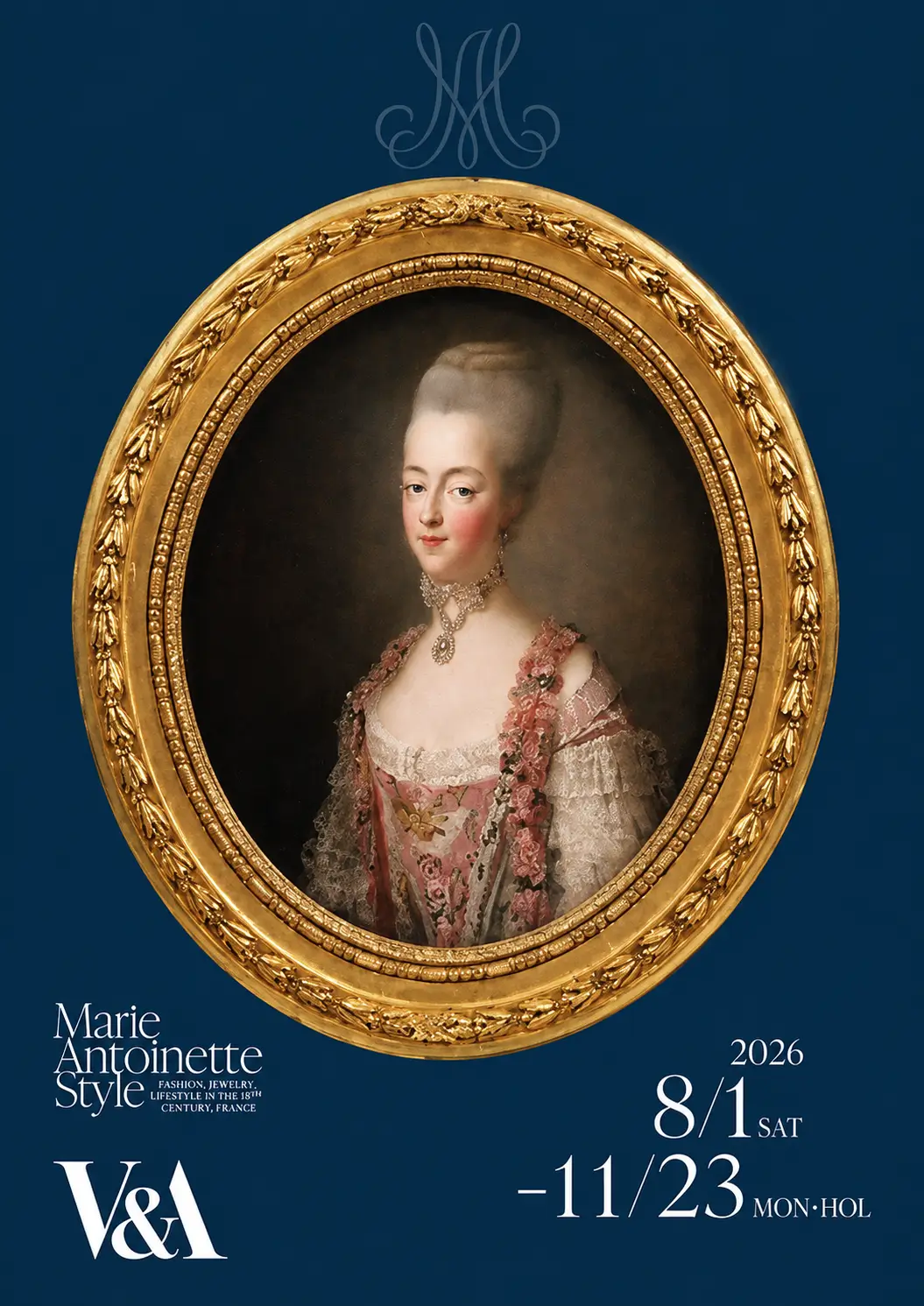
Marie Antoinette, born Maria Antonia Josepha Johanna in 1755, arrived at the French court as a teenager and quickly became synonymous with opulence. Her wardrobe, meticulously documented by suppliers like Rose Bertin (often called the “Minister of Fashion”), featured panniers, corsets, pastel silks, floral motifs, and an abundance of ribbons and bows. Far from frivolous excess alone, her style was a performance of power, femininity, and innovation in an era when fashion served as both diplomacy and distraction.
The queen favored the Trianon, her private retreat, where she embraced a pastoral aesthetic—simple muslin gowns paired with extravagant accessories. Ribbons featured prominently: tied in hair, adorning shoes, trimming gowns, and securing pouches. These elements symbolized both restraint and release, much like the Bordeaux ribbon in Maison de Fleur’s design—a deep, wine-hued accent evoking the rich reds of Versailles tapestries and the queen’s own rumored fondness for luxurious, jewel-toned details.
Bordeaux, with its sophisticated blend of crimson and violet undertones, carries symbolic weight. It speaks of luxury, maturity, and the fine wines of the French region—itself a nod to courtly indulgence. In fashion, it conveys confidence without ostentation, warmth with elegance. On a bag, it transforms a sweet silhouette into something more contemplative, bridging the queen’s youthful exuberance with the gravity of her later years.
Modern revivals of Antoinette’s aesthetic abound: from Sofia Coppola’s 2006 film, which popularized pastel-punk interpretations, to runway nods by designers like John Galliano and Vivienne Westwood, who mined the era’s drama for corsetry and excess. Accessories, however, offer the most intimate entry point. A bag or pouch becomes a portable “wardrobe trunk,” echoing the queen’s traveling cases filled with linens, jewels, and secrets.
flow
Maison de Fleur excels at “mature cute”—girlish without being infantile. Their signature ribbon totes, often in satin or jacquard, feature generous bows, floral embroidery, and structured yet lightweight forms ideal for daily carry. Collaborations with Disney (including the Aristocats’ Marie, whose name play echoes the queen) and Sanrio underscore their expertise in character-driven yet elevated designs. The “Marie Antoinette” inspired line extends this ethos, likely incorporating elements like floral prints reminiscent of the queen’s beloved gardens, pearl-like accents, and that pivotal Bordeaux ribbon.
The Bag: Structure and Sentiment
Imagine a square or rectangular tote of medium size—perhaps 30-40 cm in height—crafted from a soft, matte fabric with a subtle sheen, evoking silk taffeta or fine cotton sateen. The body might feature a delicate toile de Jouy print: pastoral scenes of shepherdesses and châteaux, updated in muted pinks, ivories, and golds. Large, double-faced satin ribbons in rich Bordeaux frame the sides or form oversized bows at the handles, allowing the bag to be cinched or worn loosely for different silhouettes.
Interior details elevate it: a gingham or floral lining for a touch of picnic-at-Versailles charm, multiple pockets for organization (echoing the compartmentalized lives of court ladies), and a magnetic closure or drawstring pouch insert. Gold-tone hardware—miniature keys or fleur-de-lis motifs—adds authenticity without heaviness. The result is a bag that transitions seamlessly: morning market runs (practical capacity for books, laptop, or picnic essentials) to afternoon tea or evening soirées.
Its “Marie Antoinette” inspiration shines in the details. A small embroidered patch or printed medallion might depict a stylized portrait or rose bouquet, nodding to Vigée Le Brun’s famous paintings. The Bordeaux ribbon isn’t decorative fluff; it’s functional and symbolic—adjustable straps or a detachable charm that can be worn as a hair accessory or scarf tie, extending the queen’s love of versatile adornment.
The Pouch: Intimate Companion
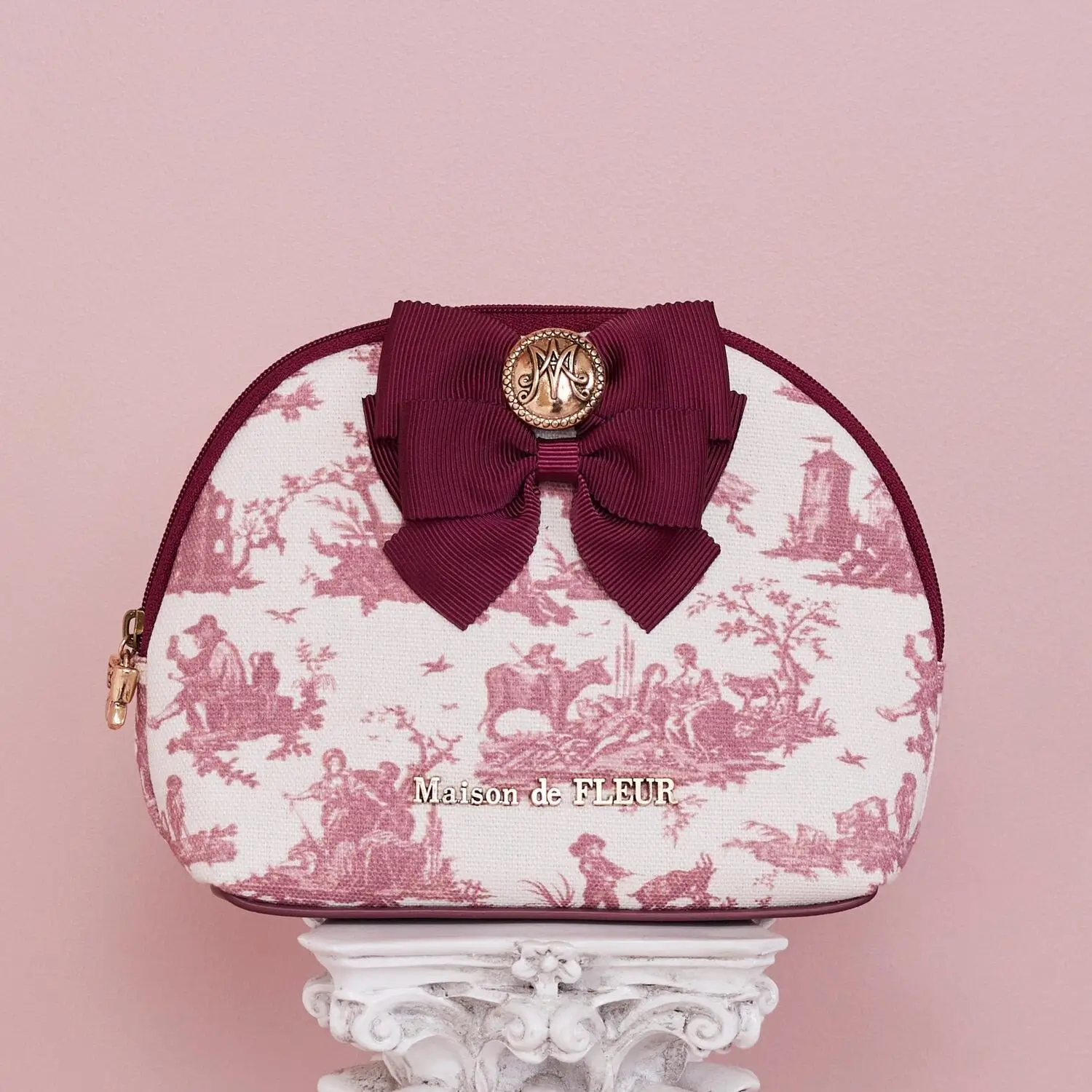
No royal ensemble was complete without a reticule or drawstring pouch for necessities—scents, handkerchiefs, coins. Maison de Fleur’s version is a scaled-down echo: perhaps 20×15 cm, in matching fabric with a ruched top and the same Bordeaux ribbon drawstrings or bow closure. It clips neatly inside the tote or onto the exterior via a discreet chain or lobster clasp, creating a layered look.
This pouch embodies practicality with poetry. Lined in a contrasting soft hue, it might include a mirror pocket or card slots, perfect for lip rouge (the queen was known for her beauty rituals) or modern equivalents. Its standalone appeal makes it ideal as a clutch for evenings or a makeup bag, reinforcing the collection’s ethos of thoughtful multiplicity.
craft
While Maison de Fleur operates in the accessible luxury space—prices typically ranging from accessible to mid-tier for quality Japanese design—the attention to detail rivals higher-end maisons. Fabrics are chosen for durability and drape: water-resistant exteriors for real-world use, yet with the tactile softness that invites touch. Ribbons are substantial, not flimsy, holding shape through repeated tying. Stitching is precise, with reinforced seams for longevity.
This balance addresses a key tension in contemporary fashion: the desire for beauty that endures. In an age of fast fashion fatigue, such pieces encourage mindful consumption. Owning one feels like curating a personal cabinet of curiosities, much as Antoinette did with her collections of fans, shoes, and bijoux.
Sustainable angles emerge too. Brands like this increasingly favor ethical sourcing; one envisions vegetable-dyed ribbons or recycled polyester blends that maintain the luxe hand-feel. The Bordeaux tone, timeless rather than trend-driven, ensures the set remains relevant across seasons—pairing with autumn wools, spring linens, or winter velvets.
View this post on Instagram
huh
The “Marie Antoinette” inspired bag resonates because it navigates contradictions that define modern womanhood: strength and softness, public persona and private delight, tradition and rebellion. The queen herself was both victim of circumstance and architect of her image—vilified for extravagance yet pioneering personal branding.
In 2026, amid digital overload and calls for authenticity, such romantic accessories offer escapism grounded in history. They align with broader trends: coquette revival, bow mania (seen on runways and TikTok), and a renewed interest in historical fiction and costume dramas. Sports-fashion crossovers, streetwear’s embrace of femininity, and horology’s vintage nods all find harmony here. A Bordeaux-ribboned bag complements an ASICS sneaker or Cartier-inspired watch with unexpected harmony.
scope
- Daytime Elegance: Pair the tote with wide-leg trousers in neutral tones and a cashmere sweater. The Bordeaux ribbon pops against camel or cream, adding warmth.
- Evening Drama: Use the pouch as a clutch with a slip dress; let ribbons trail for movement.
- Travel Companion: Its lightweight nature and organized interior suit jet-setting, echoing the queen’s own peripatetic court life.
- Seasonal Adaptations: In fall, the deep ribbon complements leather jackets; in summer, it softens denim.
Accessories like pearl earrings or a subtle floral hair clip complete the narrative without costume-y excess.
extent
This collection exemplifies how Japanese design interprets Western heritage—with precision, cuteness, and emotional resonance. Maison de Fleur avoids caricature, instead distilling essence: the joy of adornment, the power of details.
It also prompts reflection on consumption and legacy. Antoinette’s story warns of unchecked excess, yet her creativity inspires. Today’s consumer seeks pieces with soul—beautiful objects that spark joy and conversation while being functional.
In the realm of fashion crossovers, this fits neatly alongside music and art influences. Imagine it gracing an A$AP Rocky-inspired street look or complementing a Charli XCX concert outfit: rebellious romance for the now.
sum
Maison de Fleur’s “Marie Antoinette” inspired bag and pouch, crowned with that signature Bordeaux ribbon, transcend accessory status. They are wear history lessons, daily affirmations of elegance, and shh rebellions against the mundane. In a world craving beauty amid uncertainty, they remind us that femininity—adorned, thoughtful, multifaceted—remains a potent force.
Whether slung over the shoulder en route to a café or carefully placed on a vanity, these pieces invite you to channel your inner queen: creative, resilient, and unapologetically stylish. In their ribbons lies a thread connecting Versailles’ halls to today’s streets—a celebration of life’s finer, more flavorful moments.
n
From the DRIFT archive: Y-3 Sets the Tone for Its Spring/Summer 2026 Collection · House of Bruar Ladies Sheepskin Earmuffs: Where Highland Warmth Meets Everyday Frigid
Related Articles

Fragment and Mammut Bring the Barryvox Back in Glacier Blue
Hiroshi Fujiwara’s second Mammut avalanche beacon leaves the Barryvox S2’s rescue brain untouched and changes […]