DRIFT AUDIO
Listen to this story
Choose a voice, then press play.
BEAMS folds the Monster Parka and Denali Jacket into a single asymmetric special order, its latest entry in a WILD THINGS partner that has run for years, arriving in late November.
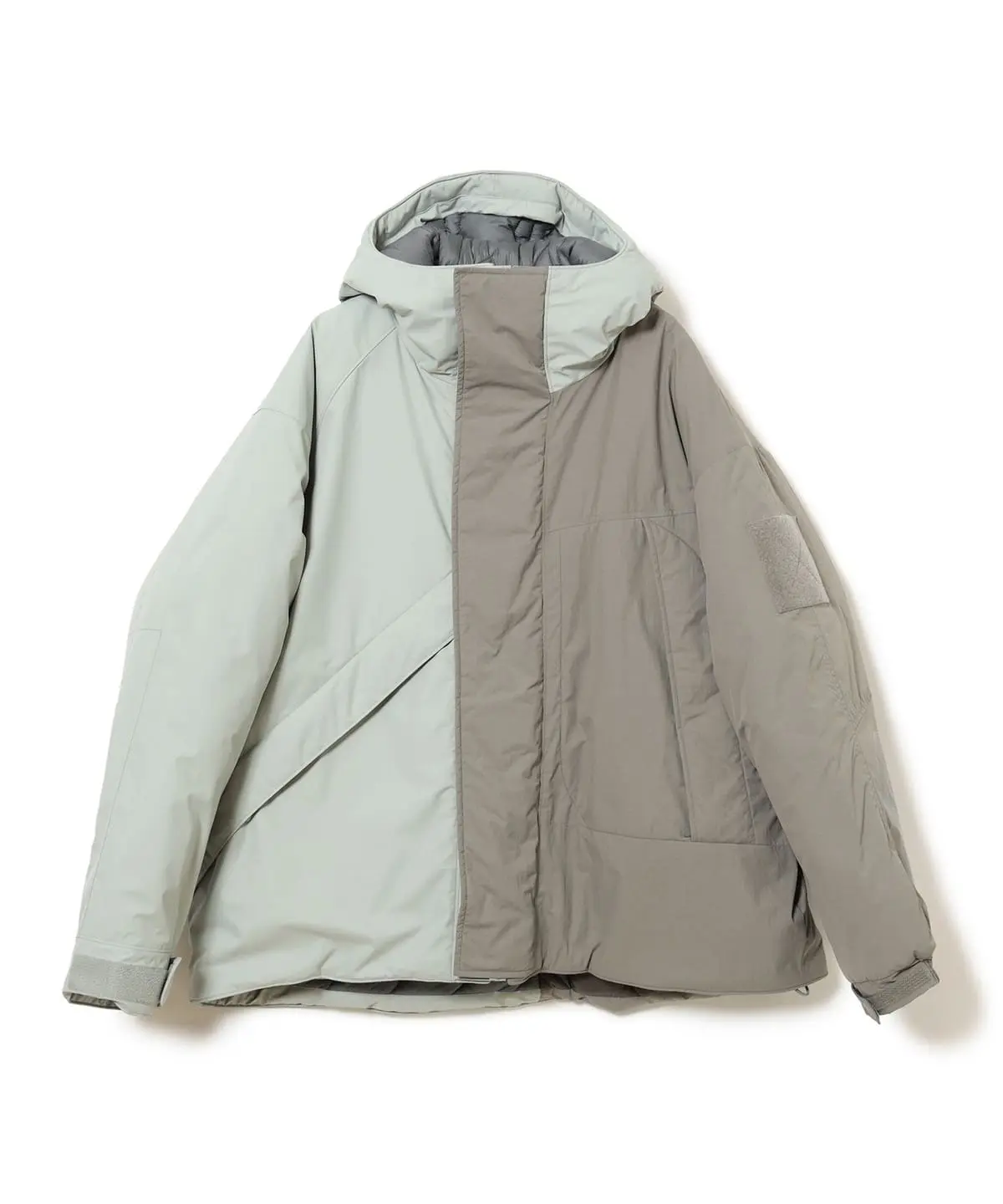
Cutting a jacket down the middle and giving each half a different identity is a design move that either looks like an accident or looks completely intentional, with very little room in between. BEAMS and WILD THINGS are betting on the second reading with a special order landing in late November, one that takes two of the outdoor brand’s most recognizable jackets and stitches them together into a single asymmetric piece rather than releasing them as separate items the way the two companies usually do.
two
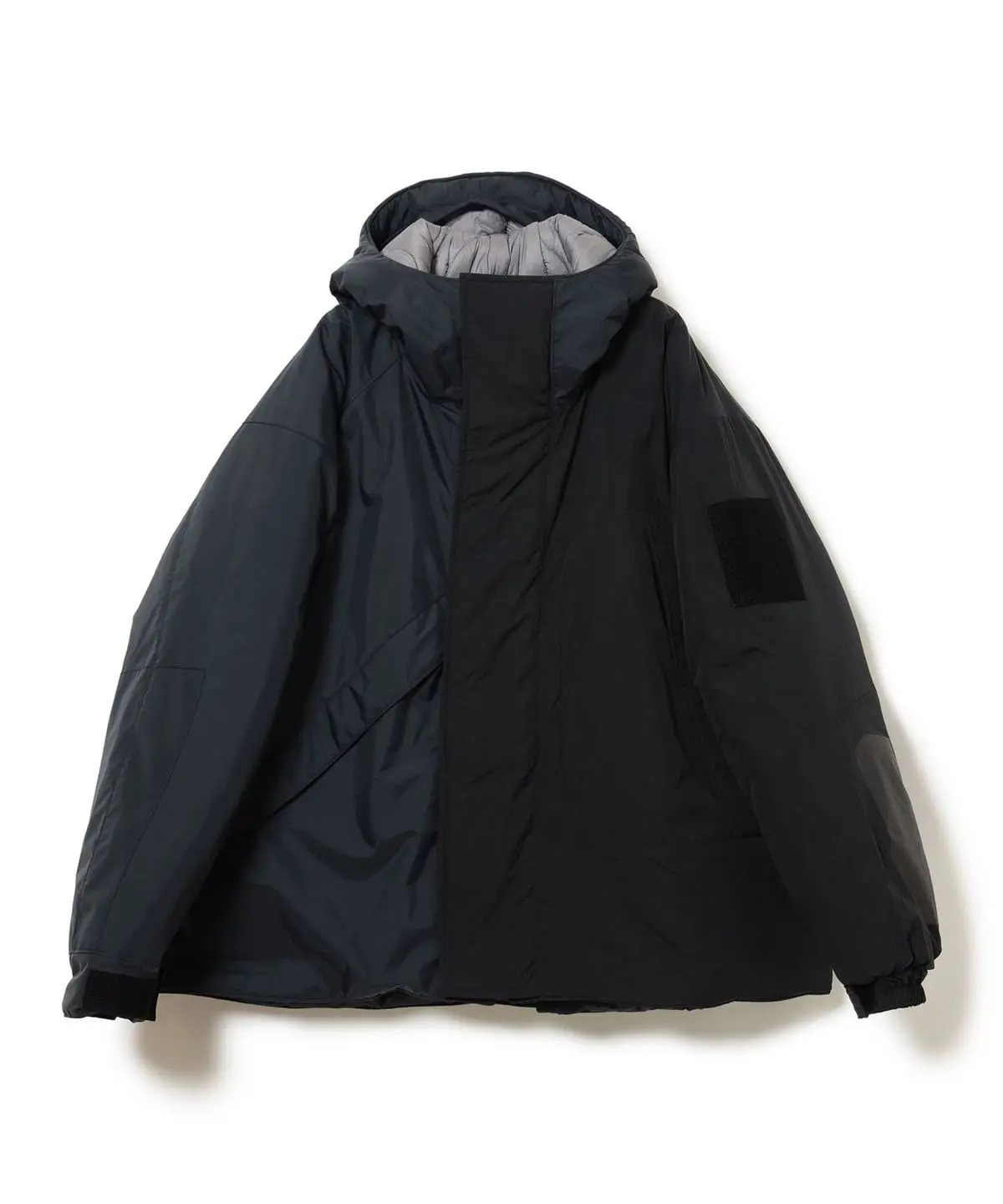
The piece takes its structure from the Monster Parka, WILD THINGS’ heavily insulated, hip length outer layer built for straightforward cold weather bulk, and the Denali Jacket, the brand’s technical mountaineering standard that has anchored its outerwear lineup since 1983. Rather than choosing one outline and apply the other’s detail as an accent, the special order splits the two down a vertical line, giving the left and right sides of the jacket genuinely different designs rather than a matched, symmetrical garment with a novelty seam running down it.
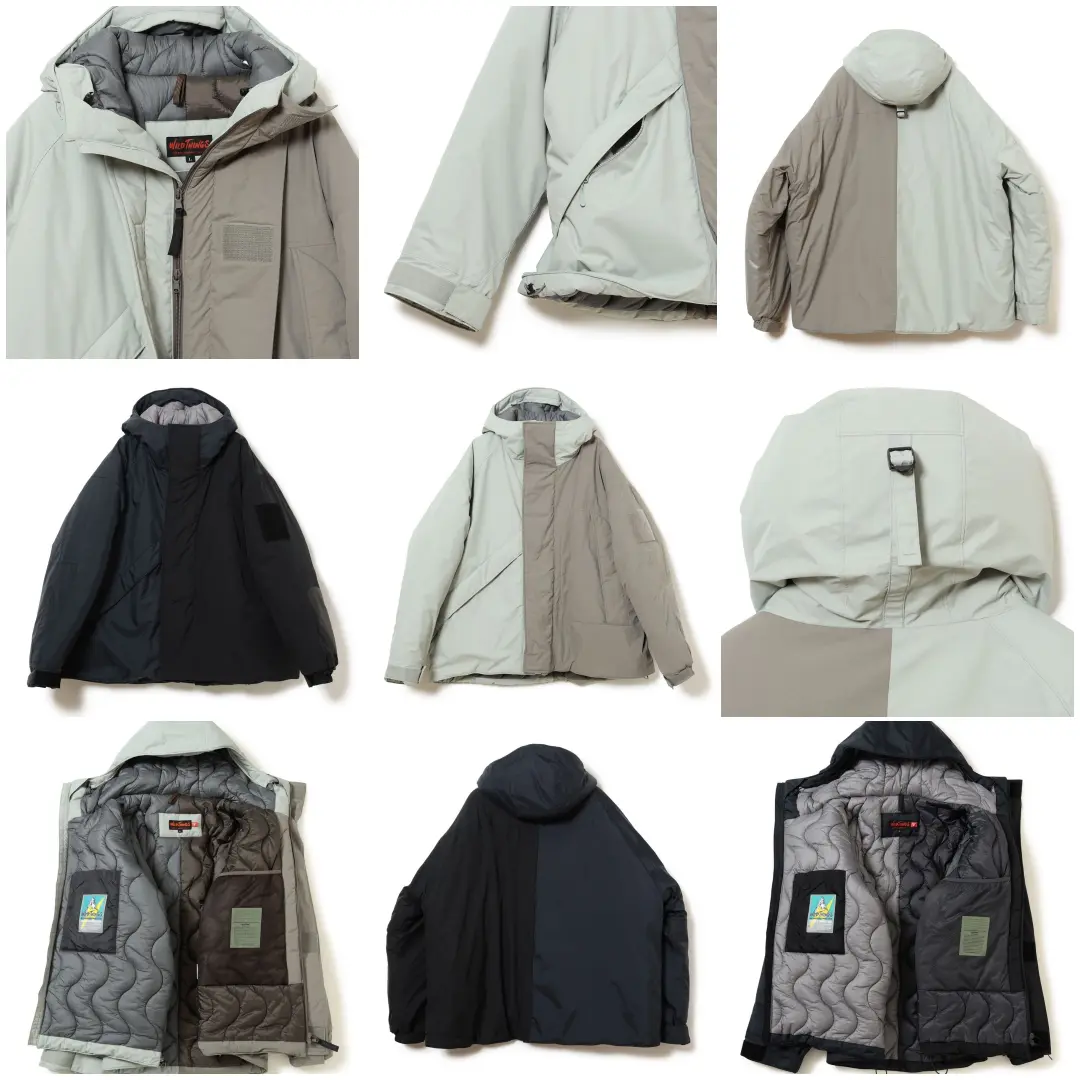
Collage showing hooded technical jackets in black and two-tone pale gray and taupe, with front, back, interior, hood, and construction detail views.
That is a more ambitious construction than most special orders attempt, since it means pattern-making two distinct jacket logics into a single wearable shape rather than simply reworking one garment’s fabric or colorway. It is also very specifically a BEAMS idea rather than something pulled from WILD THINGS’ own archive. WILD THINGS has never split the Monster Parka and Denali Jacket this way in its own mainline collections, which places the concept itself, not just the fabric or the colorway, as the actual special order.
Most special orders, at BEAMS or anywhere else in Japan’s selectshop landscape, work by taking an existing garment and adjusting something within its own boundaries: a new colorway, a swapped fabric, a resized fit, a relocated logo. This release works differently because it treats two separate, already-finished products as raw material for a third design, which is a heavier lift on the production side. Pattern pieces from two different jackets have to be reconciled at a shared centerline, seam allowances have to match up despite coming from garments that were never engineered to meet there, and the finished piece still has to hang and move like a single coherent jacket rather than two halves sewn together. None of that complexity is view to a customer trying the finished piece on, which is generally the point of good technical construction: the difficulty disappears into the result.
stir
This is not a first meeting between the two companies, and that context matters for reading how ambitious a release like this one actually is. BEAMS ran a Denali Jacket special order for spring and summer 2026 in three colors, built on a stiffer bonded material chosen specifically to give the jacket a softer, sweatshirt-like surface while keeping the single-layer construction light for warmer months. Before that, the two had worked through a reversible quilted parka built on a nineties wave-quilting pattern, a Denali pullover and Gecko Light Parka, tape belts, a patchwork shirt done in Supplex nylon, and a kids-friendly Monster Parka and Happy Jacket pairing sized down to XS through S specifically so smaller frames could wear the same silhouette adults do. WILD THINGS has also worked with BEAMS’ B:MING sub-line separately, putting its own Monster Parka and a Cold Weather Parka through that line’s specific special order treatment.
Read together, that is a genuinely active, multi-season partner rather than an occasional one-off collaboration, and it explains why a concept as structure involved as an asymmetric jacket merge would land here specifically. A brand relationship with that much runway behind it has more room to attempt something like splitting two jackets down the middle than a first-time pairing would, since both sides already understand what the other’s product can actually support in production. It also means this release sits inside BEAMS’ Fashion coverage as a continuation of an ongoing story rather than as an introduction that needs to explain who WILD THINGS is from scratch.
BEAMS runs special orders across dozens of brands every season, spanning everything from British heritage tailoring houses to French workwear labels to Japanese denim mills, and the retailer has built its own identity in large part around knowing exactly how far a given brand can be pushed before a special order stops feeling like that brand and starts feeling like a costume. WILD THINGS has consistently earned some of BEAMS’ more ambitious treatment within that system, not just recoloring but genuine construction changes, which tracks with how technically literate WILD THINGS’ own product already is. A brand whose core catalog already includes eVent membranes and Primaloft insulation gives a selectshop more to actually work with than a brand whose value proposition begins and ends with a logo.
fetch
WILD THINGS was founded in 1981 in North Conway, Massachusetts, by mountaineers John Bouchard and Marie Meunier, and the brand has kept a foot in genuine technical climbing gear ever since rather than drifting entirely into lifestyle territory the way some outdoor labels eventually do. Its tactical line, built from the same philosophy as its mountaineering pieces, has actually been supplied to the United States military, which is not a claim every streetwear-adjacent outdoor brand can make and is a meaningful part of why the brand carries the credibility it does among people who actually wear this category of jacket outdoors rather than just around town.
The Denali Jacket is the clearest expression of that credibility. Since its 1983 debut it has gone through repeated material updates while keeping its core identity intact, currently built with a waterproof, breathable eVent face fabric over a Primaloft insulation layer chosen for warmth that holds up even when wet, a combination that has earned it a reputation as the brand’s flagship outer layer among people who track WILD THINGS’ catalog closely. The Monster Parka takes a more straightforward approach, prioritizing insulation volume and a longer, hip-covering cut over the Denali’s more technical detailing, which is part of why pairing the two in one garment creates a genuine contrast rather than a redundant one. One side of this jacket is built around technical performance layering. The other is built around simple, heavy warmth. Splitting them down the middle puts both philosophies on the same piece rather than forcing a customer to choose between them.
That contrast also happens to map onto two different ways people actually shop for cold weather outerwear in Japan going into winter. Some buyers want a jacket built for genuine mountain conditions, judged by fabric specification and insulation performance the way a climber would judge it, even if the jacket ultimately spends most of its life walking between a train platform and an office. Others want maximum warmth and visual presence with less concern for technical minutiae, the kind of jacket that reads as a statement piece from across a room before anyone gets close enough to check the fabric tag. A special order that visibly carries both identities on the same body, rather than asking a customer to pick a side before they even try it on, is a fairly direct answer to that split in how the audience actually thinks about the category. Whether the finished garment reads as a clean resolution of those two instincts or as a genuinely divided piece is going to depend heavily on execution details that have not been shown publicly yet.
rel
BEAMS has set the release for late November 2026, without yet narrowing that down to a specific date, distributed through the brand’s usual channels once it goes live. Given the pattern of prior WILD THINGS special orders, that most likely means BEAMS’ own physical stores alongside its official online shop, the same distribution BEAMS has used for the brand’s past collaborative outerwear rather than anything more limited or exclusive.
For a piece built around a genuinely unusual construction idea, an asymmetric merge of two jackets that have never shared a body before, the wider rel approach makes sense. Special, structurally ambitious designs do not always need scarcity built into their distribution to stand out; sometimes the design itself is doing that work on its own, and a customer simply needs the chance to see it in person before deciding whether the concept works as well on a body as it does on paper.
Late November also puts the release right at the point in the season when Japan’s outerwear buying actually accelerates, well past the early autumn window when people are still reaching for light jackets and squarely into the stretch where a genuinely heavy, insulated piece becomes a daily necessity rather than a style choice. Positioning a piece this technically loaded, and this expensive relative to the rest of a typical special order lineup, right at that seasonal inflection point is not an accident of scheduling so much as a deliberate read of when a customer is actually ready to commit to a jacket at this price and at this level of construction ambition. A lighter, more novelty-driven merge might have survived an earlier or later release date without losing much. A jacket built around real cold weather show benefits from landing exactly when people need one.
n
From the DRIFT archive: Ssstufff Reversible Shirt Down Puffer: A Dual-Identity Layer Redefine
Related Articles
Fragment and Mammut Bring the Barryvox Back in Glacier Blue
Hiroshi Fujiwara’s second Mammut avalanche beacon leaves the Barryvox S2’s rescue brain untouched and changes […]