
DRIFT AUDIO
Listen to this story
Choose a voice, then press play.
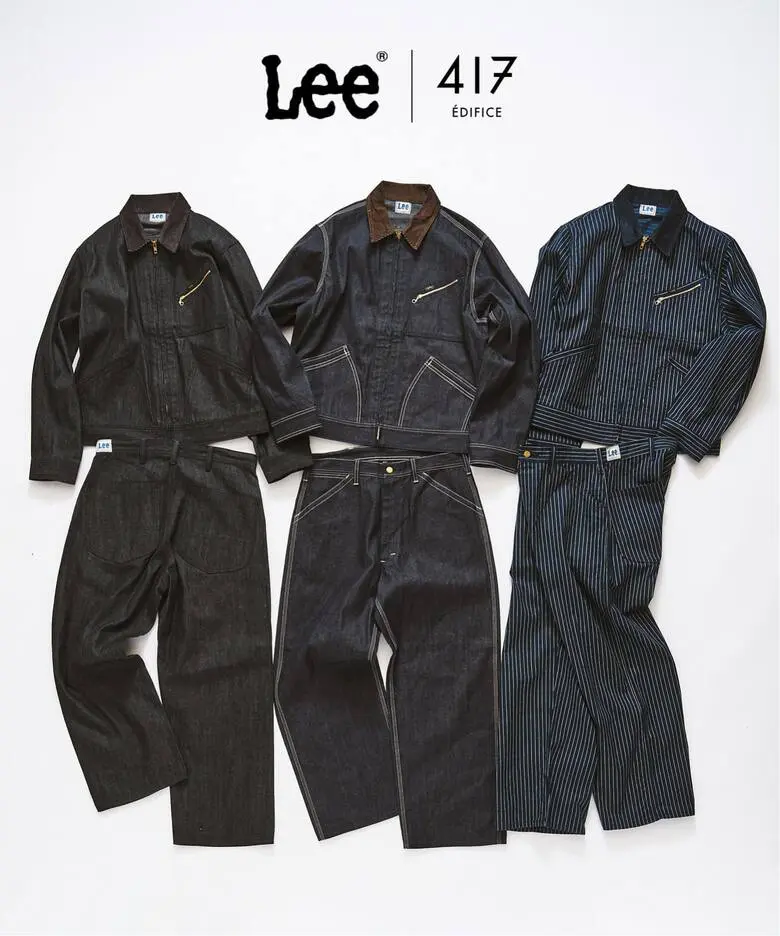
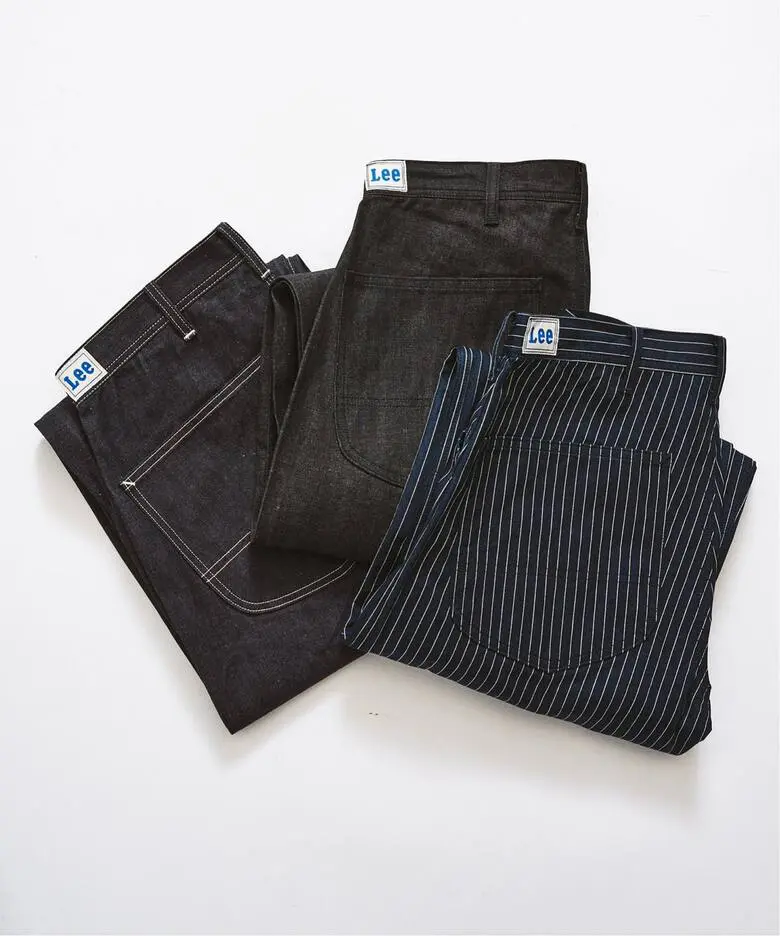
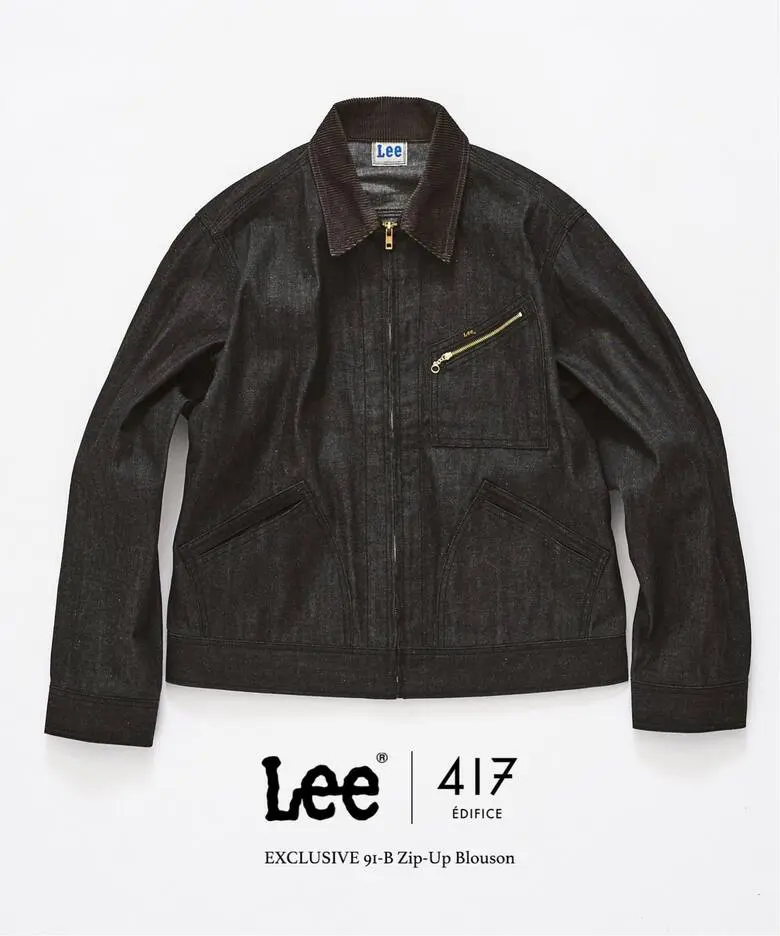
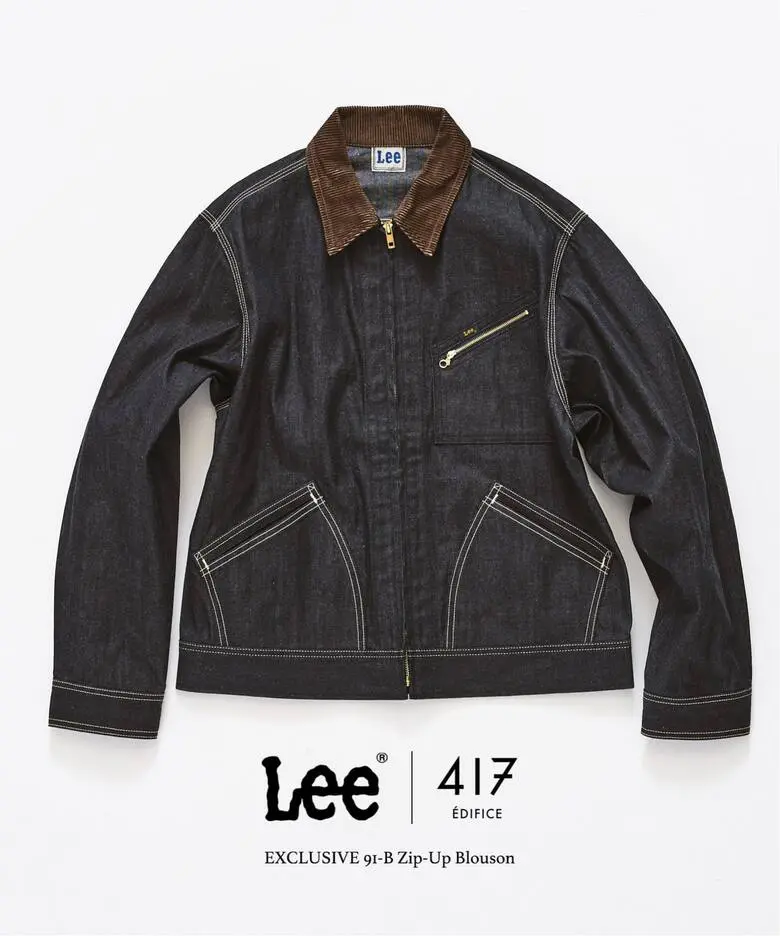
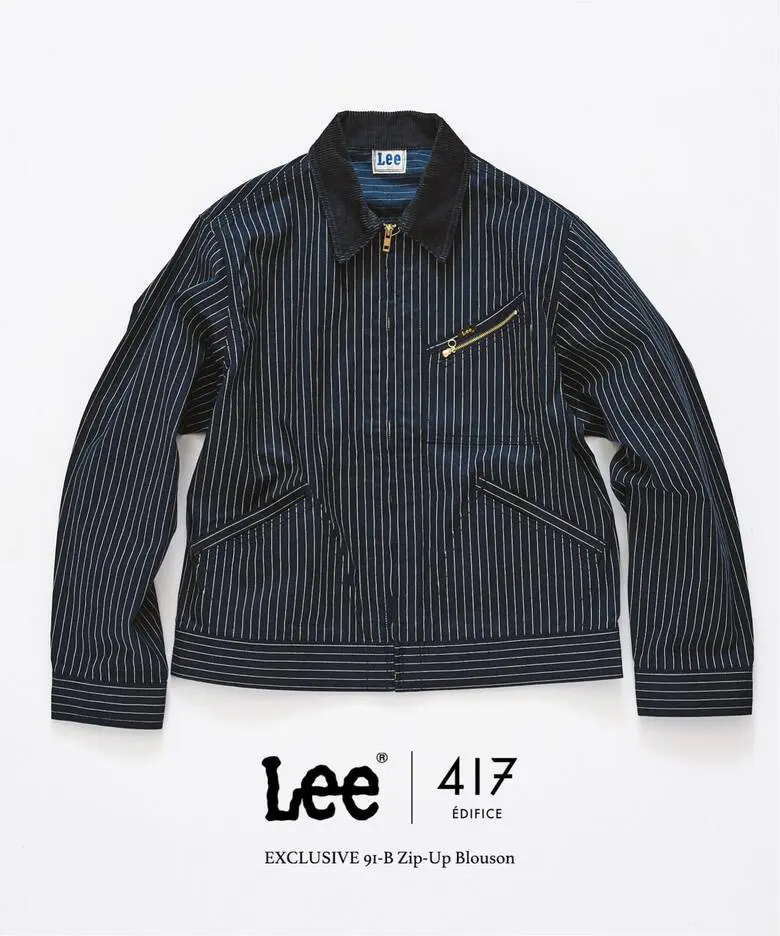
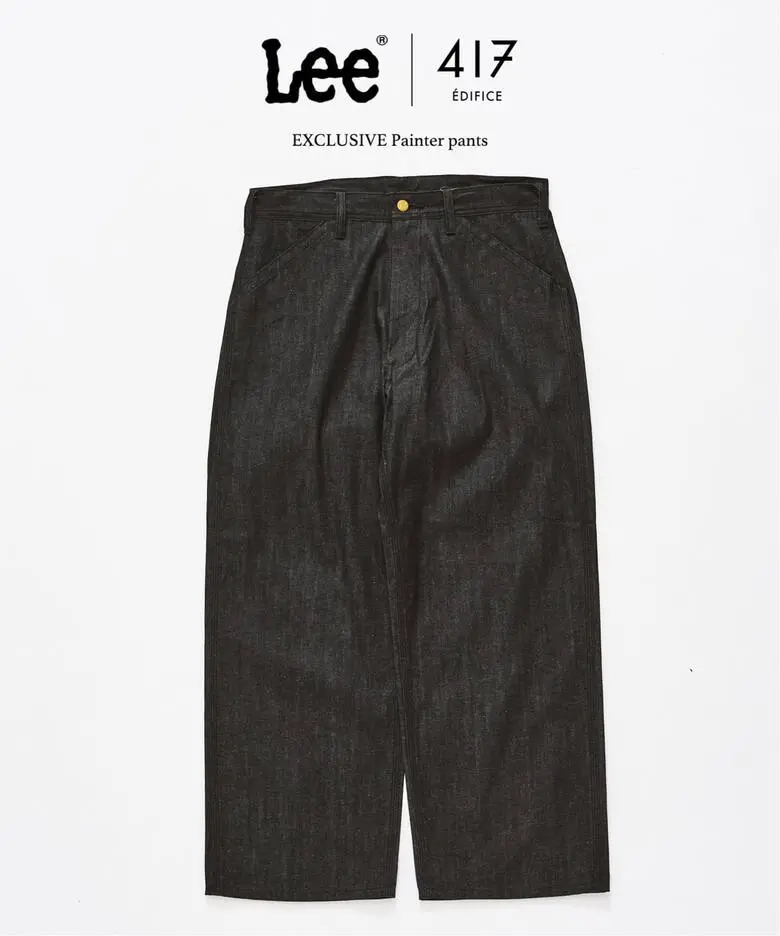
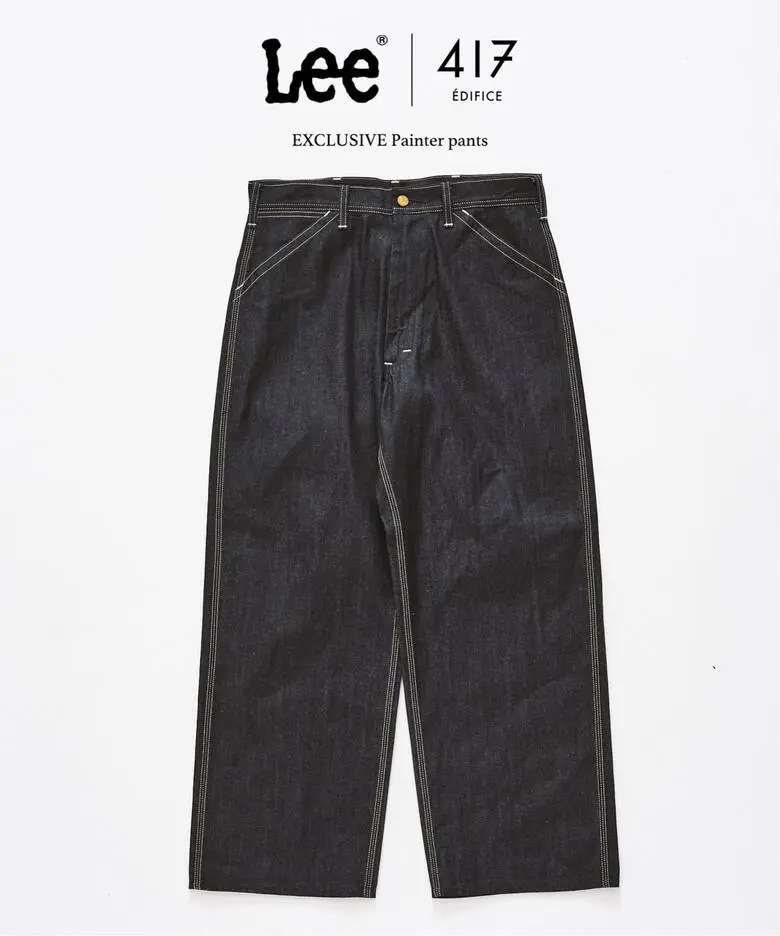
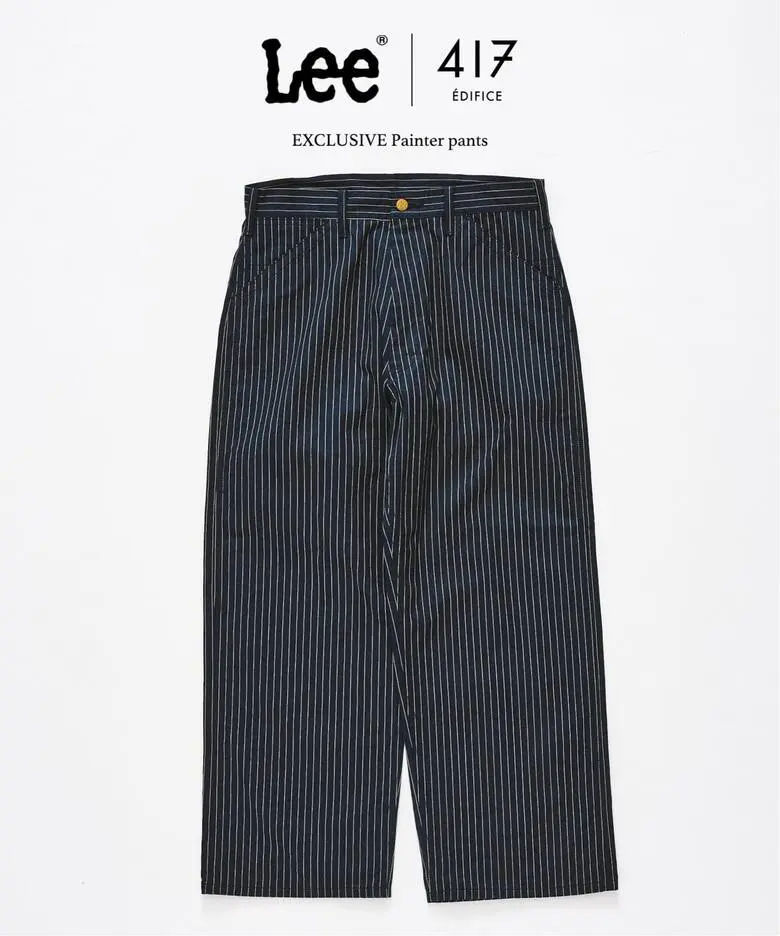
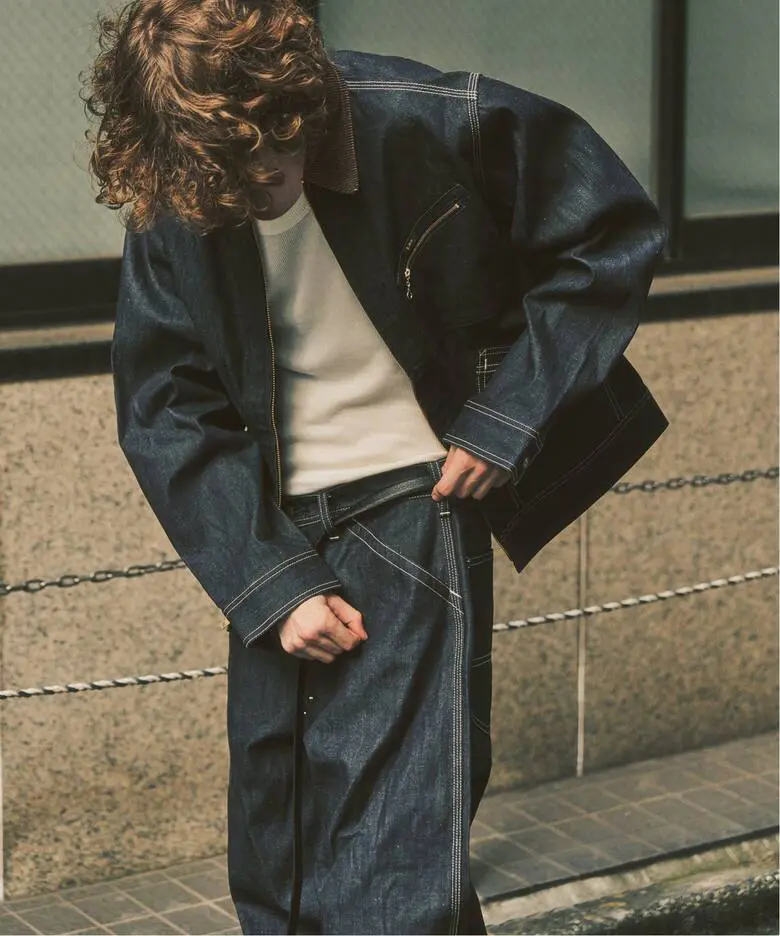
Lee and Tokyo’s 417 EDIFICE are reissuing the 91-B zip blouson and a stripped-down painter pant in early October, built from the same denim, cut to be worn together.
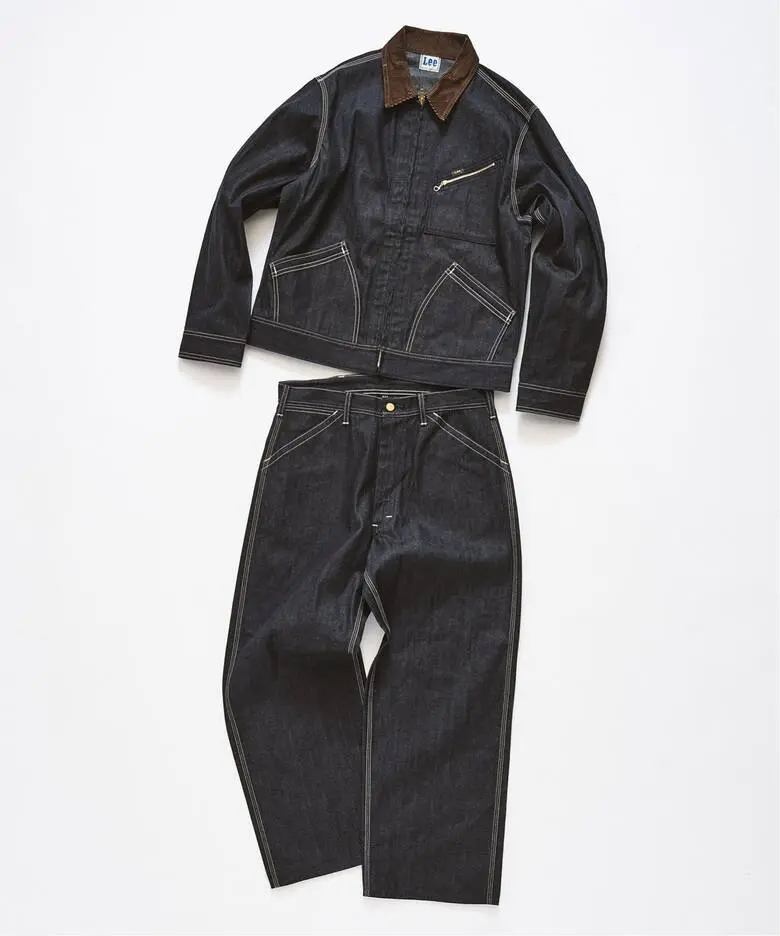
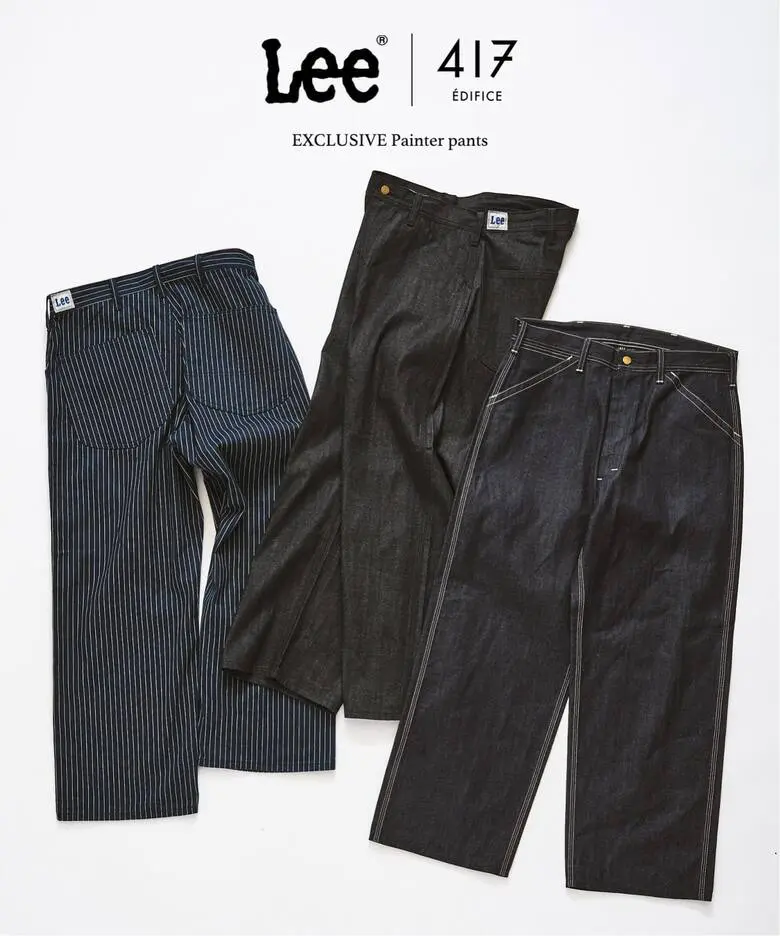
Somewhere in Lee’s pattern archive is a jacket that stopped selling in 1982 and never really went away. The 91-B, a waist length, zip front work jacket with angled pockets, is getting reissued again this fall, this time by 417 EDIFICE, the Tokyo select shop known for treating other brands’ back catalogs like source material. Alongside it comes a painter pant cut from the same cloth, stripped of the tool loops and pocket hardware that used to define the style. Both pieces are scheduled to ship in early October, priced at 19,800 yen for the blouson and 17,600 yen for the pants, sold as a set that is meant to be worn as one.
View this post on Instagram
It is a modest rel by the standards of a market that treats deadstock denim like scripture, but it says something that a nearly ninety year old work jacket still has enough pull to anchor a Tokyo select shop’s fall lineup. Lee has been making the 91-B, in one form or another, since before most of the brands current borrow its outline.
stir
Lee traces back to 1889, when H.D. Lee started the company in Salina, Kansas, eventually building a name on the kind of rugged, function clothing worn by cowboys, railroad crews, and the people who built the American West’s infrastructure by hand. The fabric behind the 91-B has its own origin story separate from the jacket itself. Lee introduced Jelt denim in 1925 as an overlay for its overalls, a dense woven fabric prized for hold up under condition that shredded ordinary denim. In the 1930s, Lee ran ad campaigns with cartoonist Robert Ripley built entirely around the fabric’s refusal to tear, and the company leaned hard into that reputation for the rest of the decade.
The 91-B itself followed in 1940, using that same Jelt denim in a waist length contour with a zippered front and slanted pockets, a departure from the button front jackets that dominated workwear at the time. It stayed in Lee’s catalog for over four decades before the line was discontinued in 1982, by which point it had already picked up a nickname among collectors: some call it the Eisenhower, for its resemblance to the cropped military jacket popularized around the same era. Vintage examples from the 1940s through the 1970s still circulate on the resale market today, usually stamped with Lee’s old union tags and worn down to a shine that no amount of modern finishing can fake.
417 EDIFICE is not the first to bring the model back. Lee’s own archive-driven lines have reissued the 91-B for the European market in recent years, and Japanese labels in particular have leaned on the silhouette for decades, given how much of Japan’s denim culture is built around American workwear reproduction in the first place. What makes this version notable is less the jacket than what 417 EDIFICE chose to change about it, and what it chose to leave alone.
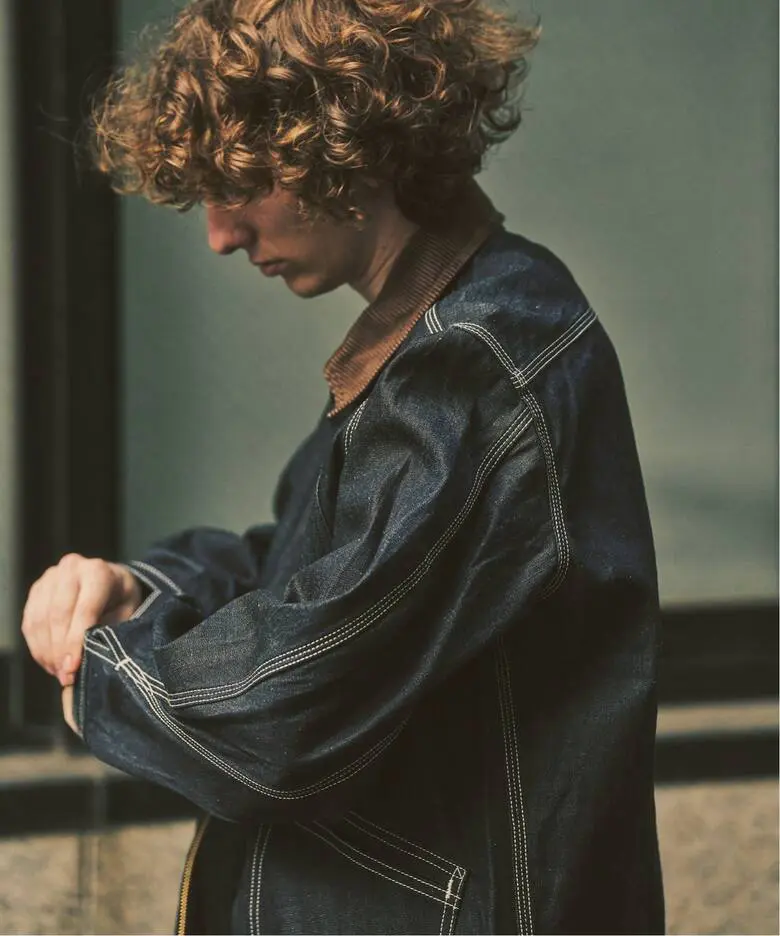
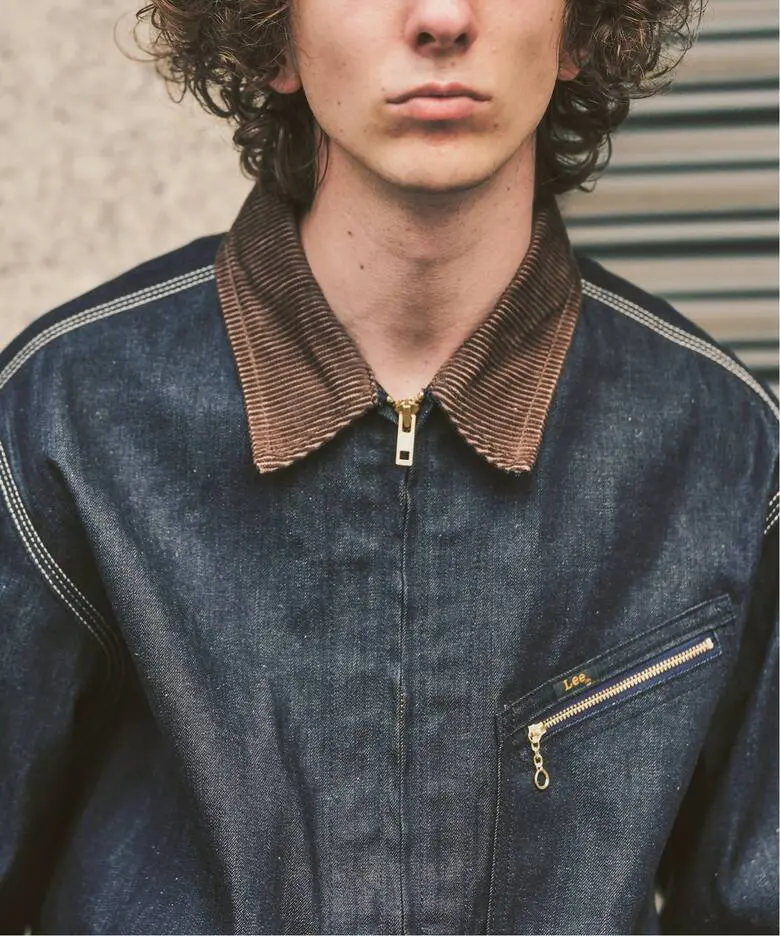
Side view of model wearing a dark indigo Lee work jacket with brown corduroy collar and prominent white contrast stitching.
huh
Painter pants have their own, separate lineage, and it runs in a different direction than most people assume. The style did not start as a fashion statement. It grew out of European trade uniforms, adapted from double knee bib overalls that painters’ unions had worn since the 1830s, and it crossed the Atlantic sometime in the early twentieth century, picking up the details that still define it today: a hammer loop on one leg, a deep tool pocket on the other, a wide enough seat and thigh to kneel and climb a ladder without splitting a seam. Nearly every major American workwear maker eventual produced a version, including a company called Boss of the Road, which Lee later acquired and folded into its own line.
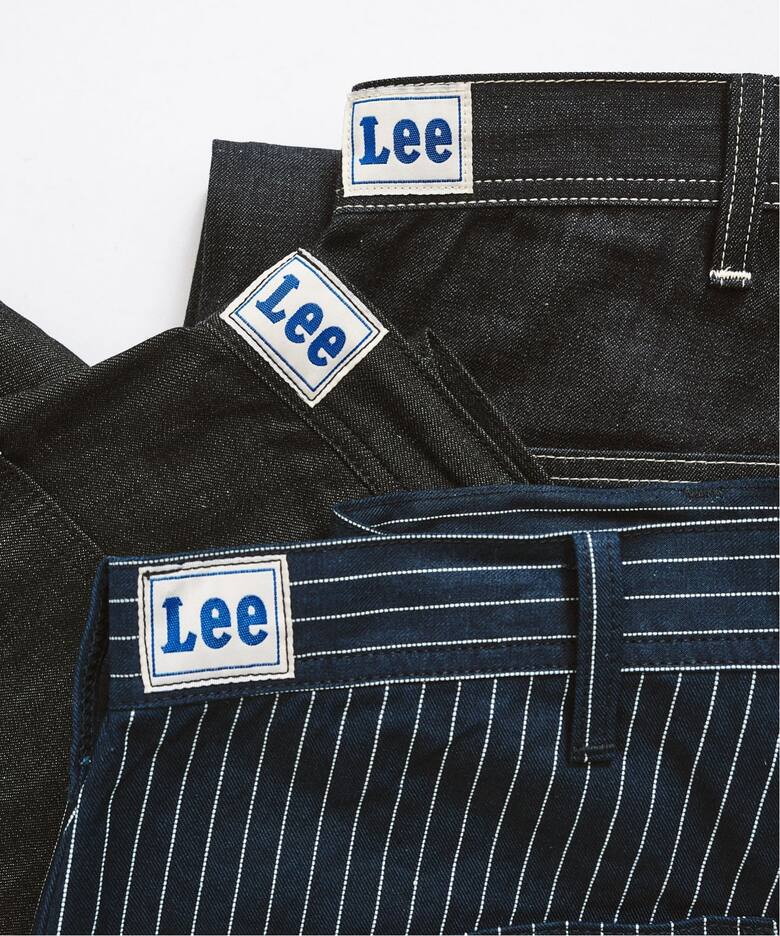
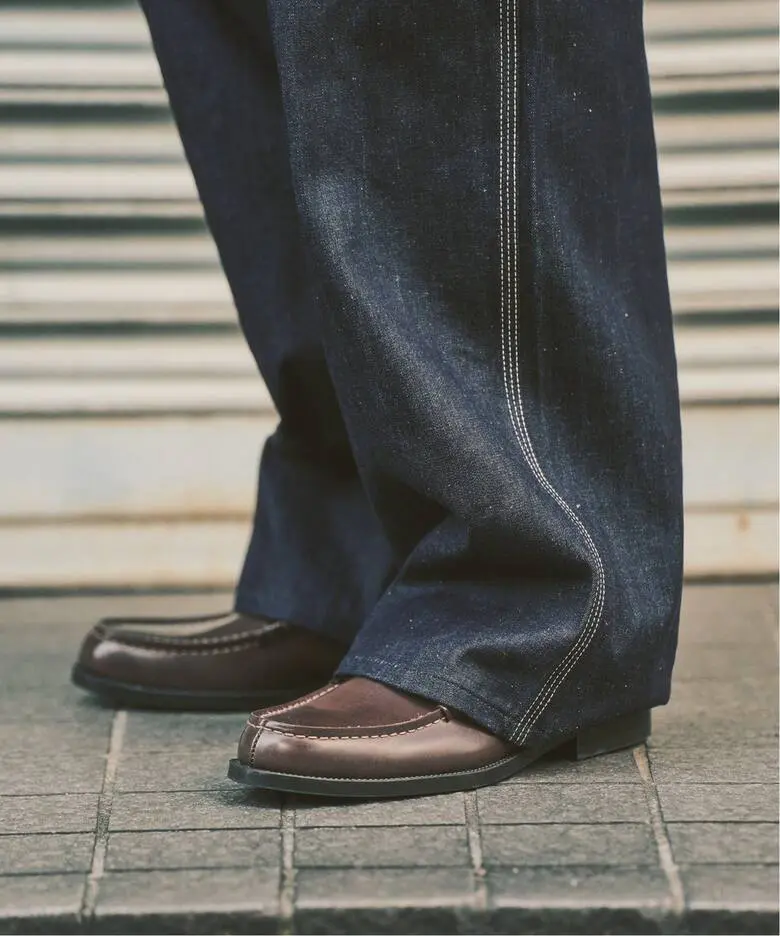
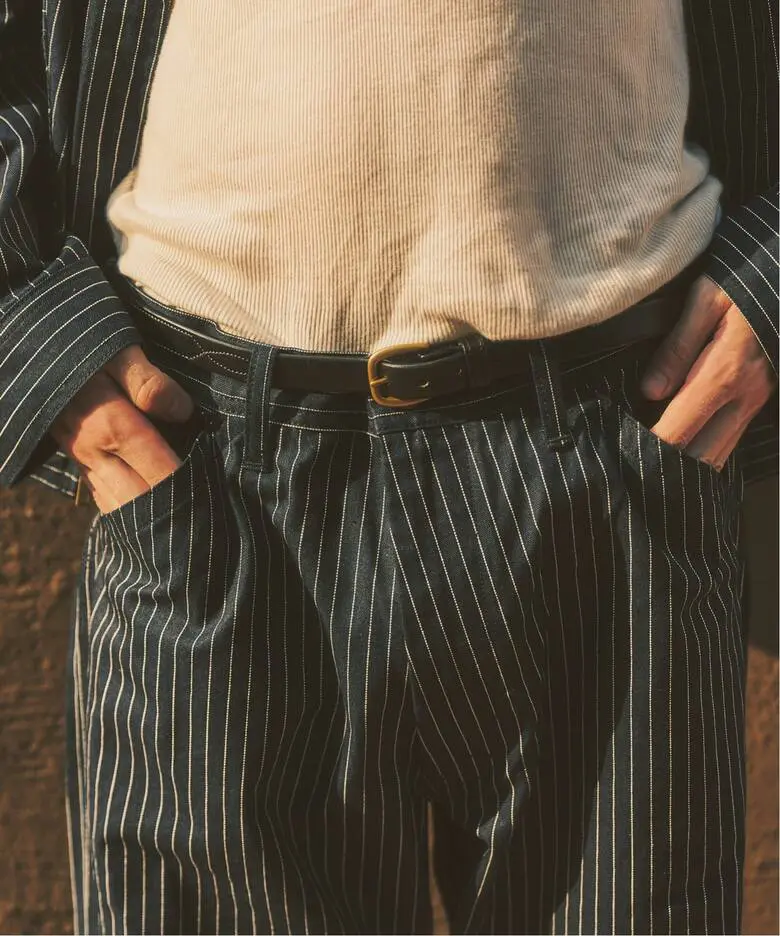
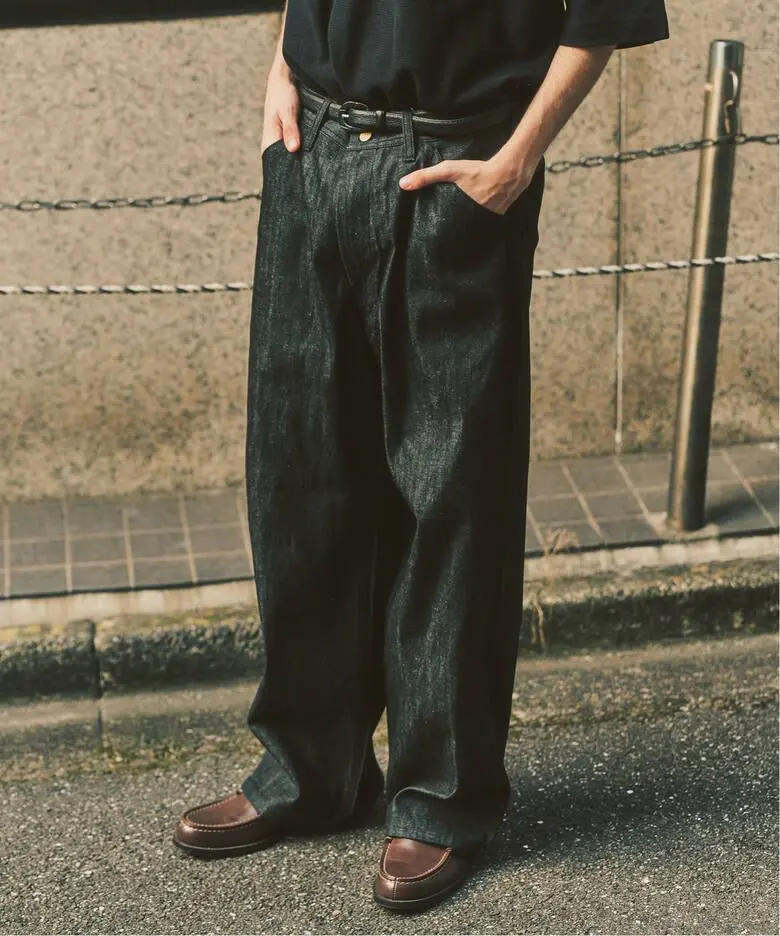
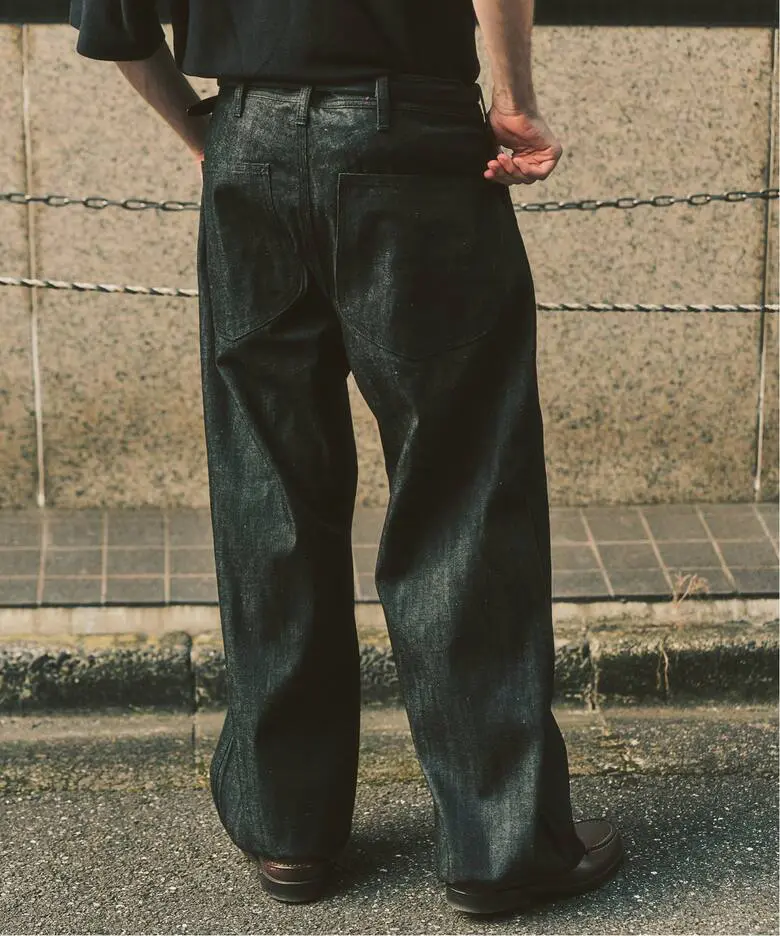
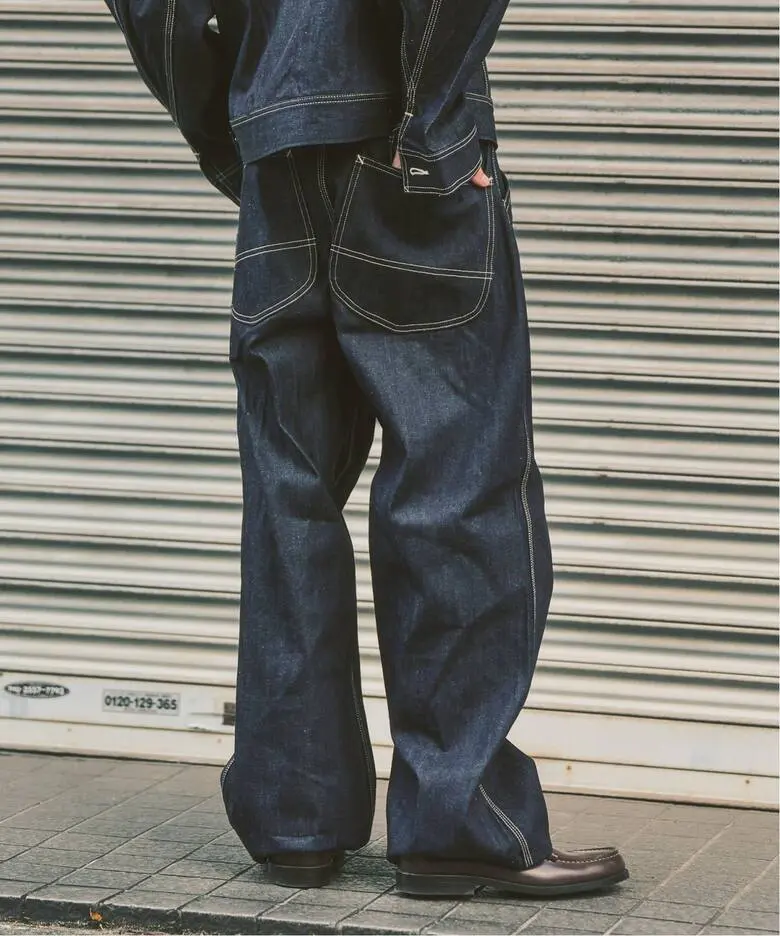
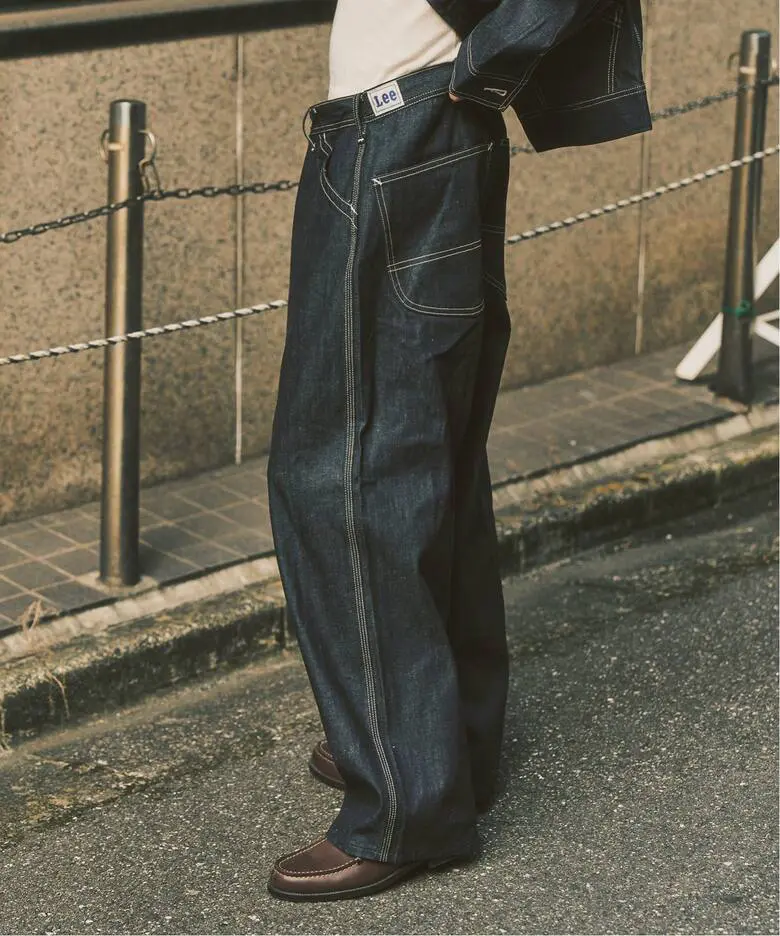
That functional bulk is exactly what 417 EDIFICE removed. The painter pants in this release drop the hammer loop and the spanner pocket entirely, along with most of the hardware that would mark them as a genuine tool belt in earlier form. The rear name tag, traditionally stitched at the hip, has been relocated to the left side of the waistband instead, a placement the brand has said it pulled directly from a 1940s archive example rather than inventing from scratch. The result is a pant that keeps the sil boxiness and its workwear proportions while shedding almost everything that made the original pants actually useful on a job site. It is a fitting companion to a jacket that has not seen real labor in over forty years.
Both pieces share the same 10.5 ounce Jelt denim, given a single wash and comparatively little additional finishing, so the fabric reads clean and largely even rather than deliberately distressed. That restraint is a departure from a lot of Japanese workwear reproduction, which tends to lean hard into fade, whisker, and other signs of wear baked in before a single item ever gets worn.
The painter pant’s path into fashion is a familiar one in menswear circles, and it usually runs through a handful of specific people rather than any single brand decision. Daiki Suzuki, the designer behind Engineered Garments, has talked about growing up in Japan with a fondness for Lee’s Can’t Bust ‘Em logger pants before later working as a buyer for the New York shop Nepenthes. On one buying trip to New London, Connecticut, he found close to eighty pairs of deadstock Lee painter pants sitting untouched and picked up the entire stack for around ten dollars a pair, a haul that eventually shaped Engineered Garments’ own painter pant line years later. Stories like that one are part of why the style carries the weight it does among people who take denim seriously, and why a Tokyo select shop reissuing a stripped down version of it in 2026 reads as continuity rather than novelty.
View this post on Instagram
archive
417 EDIFICE’s name comes from an address, not a concept: its first standalone store opened at 4-1-7 Shinjuku, and the numbers stuck. The label started life as a lower priced diffusion line inside EDIFICE, the older, more tailoring focused brand that Baycrew’s opened in Shibuya back in 1994, offering entry level basics like shirts and chinos before customer demand pushed it into its own standalone stores. Baycrew’s itself dates back to 1977 and now runs a wide portfolio of Japanese retail concepts, including JOURNAL STANDARD, SLOBE IENA, and Plage, with 417 EDIFICE carving out a reputation as the group’s most collaboration heavy label.
The shop’s physical stores lean into that identity too. Several 417 EDIFICE locations operate as joint spaces alongside other Baycrew’s brands like SLOBE IENA, and the stores regularly host pop-up events built around vintage sourcing partners or one-off themed installations, giving the shop a treasure hunt quality that a straightforward retail floor does not usually offer. It is the kind of environment where a customer might walk in for a t-shirt and leave having learned more about a defunct 1940s work jacket than they expected to that day, which is more or less the point.
That reputation is not incidental. In past interviews, the buyers behind 417 EDIFICE have described building out entire internal catalogs just for special order projects, pulling in brands like Gramicci, Champion, Dickies, Wild Things, Umbro, Ortega, Pendleton, and, repeatedly, Lee. The Lee partnership in particular has become something close to a standing fixture, with 417 EDIFICE returning to different corners of Lee’s archive on a near annual basis rather than treating any single collaboration as a one-off. This 91-B and painter pant pairing follows a version released last year with a similar construction, suggesting the brand sees enough demand in the format to keep running it back with small adjustments each season, rather than reinventing the concept from scratch.
fin
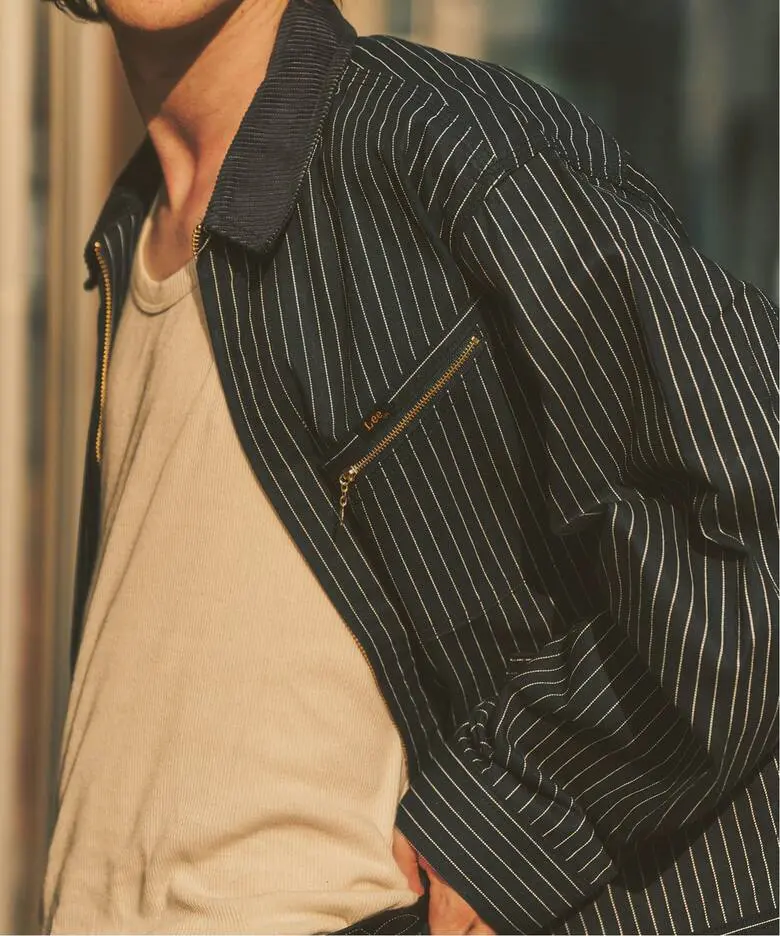
Both the 91-B zip blouson and the matching painter pants are set to ship in early October, priced at 19,800 yen and 17,600 yen respectively, and built to be worn as a set, though the minimal design on both pieces means they read just as easily as standalone items paired with a plain tee or a chino. A prior rel under the same collide offered the set in black and a lighter blue, sold in M, L, and XL, made from 100 percent cotton and produced in Vietnam. Either this fall’s version repeats those exact colorways has not been independently confirmed at the time of writing, and interested buyers should check 417 EDIFICE’s own channels closer to release for the final colorway and sizing breakdown.
What is confirmed is the timing and the price point, both consistent with how 417 EDIFICE has historically handled its Lee collide: modest cost, limited run, sold through the brand’s own stores and its Baycrew’s e-commerce presence rather than any wider retail push. Past releases in this same line have gone up for online pre-order in limited quantities before shipping, typically through 417 EDIFICE’s own e-commerce channel, with in-store stock following once the initial run ships, and there is no indication this fall’s release will deviate from that pattern.
For a jacket that Lee stopped making over forty years ago, that is a fairly quiet way to keep it in circulation. But quiet has generally worked in 417 EDIFICE’s favor. The shop has built its Lee relation, and its broader rep, one small archive revive at a time, betting that a customer who already understands why a discontinued zip front jacket from 1940 is worth wearing again does not need much convincing beyond the jacket itself.
Related Articles

Fragment and Mammut Bring the Barryvox Back in Glacier Blue
Hiroshi Fujiwara’s second Mammut avalanche beacon leaves the Barryvox S2’s rescue brain untouched and changes […]