DRIFT AUDIO
Listen to this story
Choose a voice, then press play.
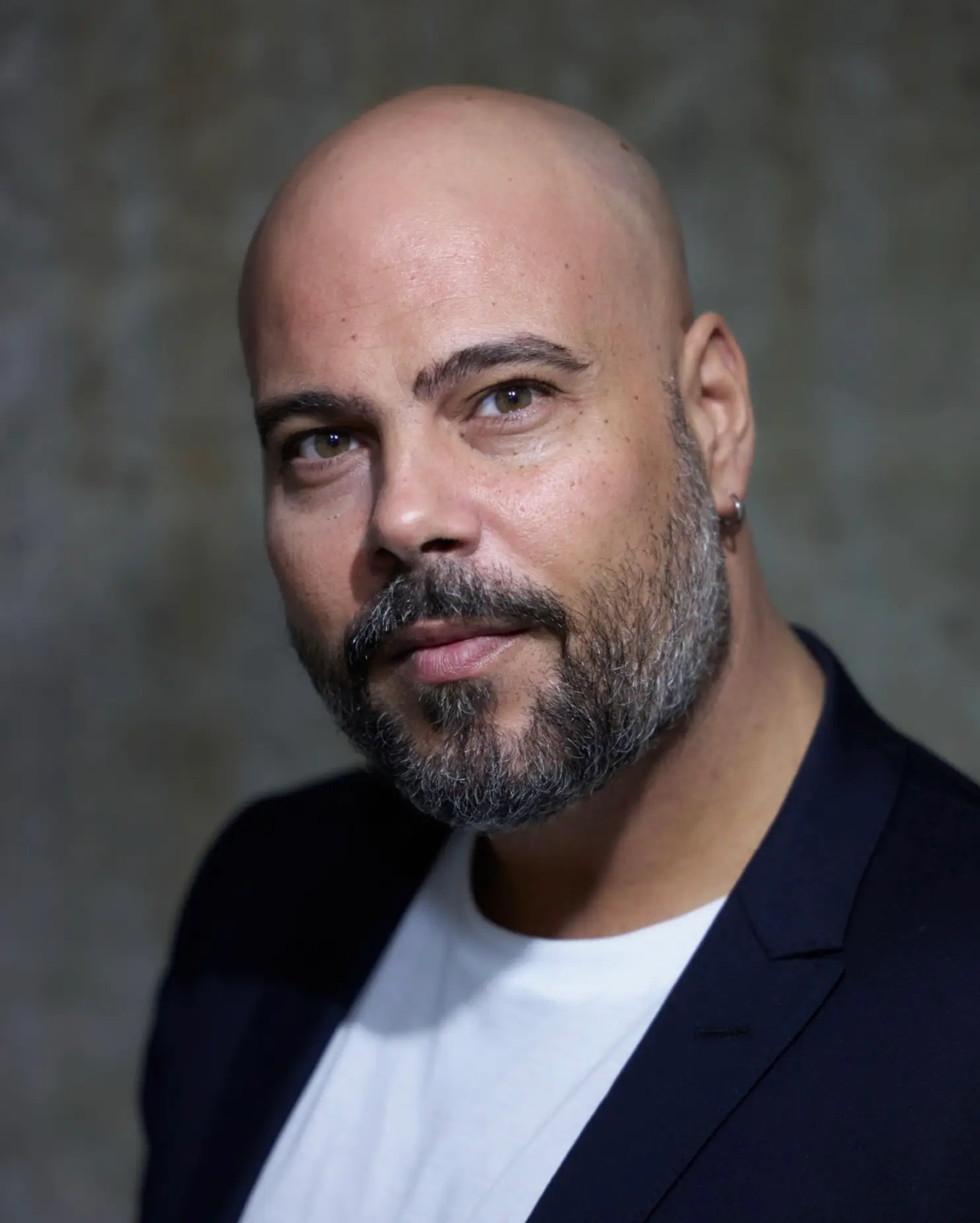
Twenty-four years after its explosive debut, Giorgio Faletti’s Io Uccido (translated as I Kill) continues to captivate audiences. In 2026, Audible has transformed this Italian publishing phenomenon into an eight-episode audio series. The project features a stellar cast: Filippo Nigro as FBI agent Frank Ottobre, Marco D’Amore as the enigmatic Radio Monte Carlo DJ Jean-Loup Verdier, and Barbara Ronchi in a pivotal supporting role.
This adaptation revives Faletti’s thriller not merely as a narrated audiobook but as a fully dramatized audio drama. It blends high-production sound design, original music, and immersive Dolby Atmos audio. Marco D’Amore’s reflections on voicing Jean-Loup Verdier offer a window into the challenges and joys of voice-only performance in the streaming era.
View this post on Instagram
stir
Giorgio Faletti (1950–2014) was a multifaceted Italian talent—comedian, singer, actor, and later novelist. Born in Asti, he studied law but pursued show business. He gained fame as a comedian on Italian TV and scored a hit with the song Signor Tenente at the Sanremo Festival. His literary breakthrough came in 2002 with Io Uccido, his debut novel. It became one of Italy’s longest-running bestsellers, selling millions of copies worldwide and translated into many languages.
The book is a psychological thriller set in the glittering yet sinister world of Monte Carlo. An unidentified killer, who signs his crimes with the taunting phrase “I kill,” contacts a popular radio show before each murder. He leaves cryptic clues tied to music. The investigation involves Frank Ottobre, an FBI profiler grieving personal loss, and local authorities. The story mixes police procedural elements with psychological depth, shocking violence (including facial mutilations), and a cast of eccentric characters.
Critics have mixed views. Some praise its page-turning suspense and inventive clues, while others note its length (nearly 600 pages) and occasional over-the-top twists. Regardless, it helped popularize Italian crime fiction internationally, influencing a gen of thriller writers. Faletti passed away in 2014 from lung cancer at age 63, but his legacy endures through reprints and now this audio revival.
flow
Audible’s version departs from a straightforward narration. Adapted by Ludovico Bessegato, Giuseppe Paternò Raddusa, and Chiara Tripaldi, it structures the story as an episodic audio series akin to a premium podcast or radio drama. It respects the novel’s core plot while expanding character interactions and dramatizing scenes that the book describes.
Key innovations include:
- Dramatized dialogue over heavy narration.
- Distinct vocal performances for layered characters.
- Music as a narrative driver (echoing the killer’s clues).
- Advanced sound design added in post-production.
The series runs approximately across eight episodes, making it binge-friendly yet paced for tension. It features original scoring by Quintorigo, enhancing the noir atmosphere.
scope
Marco D’Amore, born in 1981 in Caserta, rose to international fame as Ciro Di Marzio in the acclaimed series Gomorrah (and its spin-off film The Immortal, which he also directed). Trained at the Paolo Grassi Dramatic Arts Academy and with roots in theater alongside Toni Servillo, D’Amore brings intensity and nuance to roles. His work spans stage, screen, and now pure voice performance.
In the interview, D’Amore expresses a “primitive joy” in reading aloud, independent of his on-screen fame. He was drawn to Io Uccido for its cultural weight and the chance to honor Faletti while introducing the story to new listeners.
Jean-Loup Verdier is a complex role. As the smooth-voiced DJ at Radio Monte Carlo, he exists primarily through sound. D’Amore explains: “He has a dimension essentially linked to the voice… there is a loop of sound and voice.” The character has multiple “manifestations,” requiring D’Amore to craft distinct vocal profiles—varying rhythm, density, tone, and volume—to convey psychological layers without view cues.
This demanded precision to avoid mannerism. Director guidance helped refine his initial proposals. The result is a performance that splits one identity into multifaceted profiles, highlighting the actor’s craft in an audio-only medium.
challenge
D’Amore contrasts this with his screen and stage experience. In film or theater, the body, face, and physical presence convey meaning. Here, the voice carries everything, yet the actor’s body still “acts” internally. Listeners become co-creators, building mental images from the audio—an “osmosis” between performer and audience.
He notes the boom in podcasts and audio thrillers, positioning this as a timely return to radio’s “primordial dimension.” Unlike theater’s live exchange or cinema’s shared viewing, audio offers intimate, solitary consumption—quite for headphones during commutes or evenings at home.
Sound design is post-production only; actors record without hearing effects or music. D’Amore discovered the full atmosphere upon listening back, underscoring the collab nature of audio drama.
Music conjures a vital role. Jean-Loup’s show uses songs as clues and character insights. D’Amore highlights how selections narrate the DJ’s personality and drive the plot, adding emotional and thematic depth.

Barabara Ronchi: ‘Still Time’ – All The Time In The World
amb
D’Amore describes the series as noir with broader complexity: thriller suspense meets emotional and psychological exploration. Characters confront “something that is barely real,” inviting listeners on an inner journey. The dramatized interactions expand the novel’s scope, making relationships more dynamic.
This format suits the story’s strengths—taunting radio messages, musical riddles, and mounting paranoia—while mitigating criticisms of the book’s length or procedural quirks through tighter pacing and vocal intensity.
gen
D’Amore hopes the project encourages reading. At the 2026 Salone del Libro in Turin, he, Nigro, and Ronchi performed live readings. He laments declining reading habits but sees audio as a gateway: “Our first contact with reading is through someone else’s voice.” Listeners may start with the series and return to Faletti’s pages.
In an era of short attention spans, high-quality audio fiction revives long-form storytelling. Io Uccido’s themes—identity, voice, hidden darkness beneath glamour—resonate powerfully through sound alone.
ascend
Podcasts have exploded, with true crime and fiction dominating charts. Audible invests in originals that feel cinematic yet personal. This adaptation joins a trend where voices create worlds more vividly than some view, leveraging imagination.
For D’Amore, it’s liberating: “The pleasure of disappearing, of hiding and letting another vector travel, which is the voice.”
why
Faletti’s novel captured early-2000s anxieties about media, celebrity, and random violence. Today, with podcasts, social media taunts, and digital anonymity, its premise feels prescient. The audio series updates it for modern ears without losing the original’s grip.
D’Amore’s performance as Verdier anchors the tension. His vocal dexterity turns the DJ into a mesmerizing, unsettling presence—charming on air, enigmatic off it.
Listeners will find suspense, psychological insight, and the thrill of piecing together clues. The one-to-one intimacy D’Amore describes makes it ideal for immersive listening.
fin
Marco D’Amore’s work on Io Uccido exemplifies voice acting’s power. By lending nuance to Jean-Loup Verdier, he helps breathe new life into Faletti’s classic. The series honors the past while embracing audio’s future—where listeners co-construct “the imaginary world in which our voices move.”
Whether you’re a longtime fan of the novel or new to Faletti, this Audible Original promises edge-of-your-seat entertainment. In a noisy world, it reminds us of storytelling’s simplest, most potent form: one voice reaching another in the dark.
(Word count: approximately 1,980. This piece draws directly from D’Amore’s insights, enriched with context on Faletti, the book, and the adaptation for a complete exploration.)