Martin Scorsese Backs AI Storyboarding Tool FLUX and Says Cinema Must Evolve

June 4, 2026
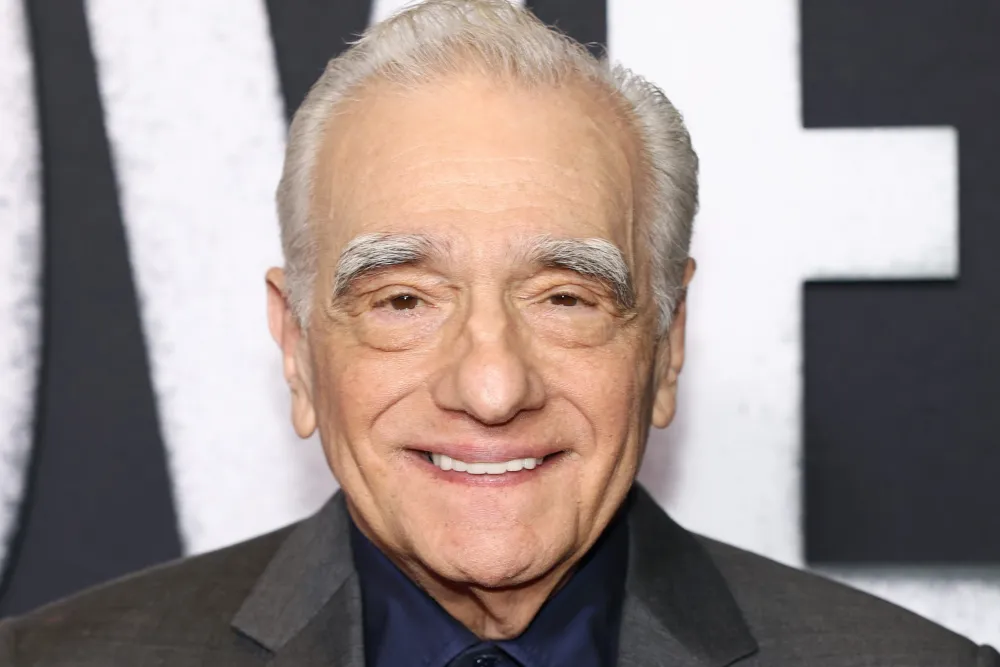
In a statement released via the company’s website and widely covered by outlets like Variety, The Hollywood Reporter, and The New York Times, Scorsese framed the move as a natural extension of his lifelong curiosity about technology and storytelling. “I’m interested in the intersection of technology and storytelling, and seeing how that can push the bounds of creativity to create deeper and richer experiences for audiences,” he said. “Cinema is a young medium, only around 125 years old, so we have to be open to how it can evolve.”
This announcement arrives amid intense debates over gen AI’s role in Hollywood. While some view it as a pragmatic tool for efficiency, others see it as a threat to human artists, particularly in pre-production roles like storyboarding. Scorsese’s endorsement carries significant weight, given his stature as a champion of cinematic craft and preservation.
Et tu, Marty?
Film Community Aghast as Martin Scorsese Extolls AI Startup, Says He Now Uses AI for Storyboardshttps://t.co/Ohumf6pLwD
— Gabriel Reid (@DrGabrielReid) June 4, 2026
stir
Martin Scorsese has never been a Luddite. Throughout his six-decade career, he has embraced technological advancements when they served his artistic view. For Hugo (2011), he dove into 3D filmmaking, using it not as a gimmick but to immerse audiences in a story about the magic of early cinema. In The Irishman (2019), he employed extensive de-aging CGI on stars Robert De Niro, Al Pacino, and Joe Pesci to span decades in a single narrative—a technically demanding process that required years of refinement.
Scorsese has also been vocal about film preservation, digital restoration, and the importance of cinema as an art form distinct from streaming content or franchise blockbusters. His 2019 essay criticizing Marvel movies as “theme parks” sparked heated discussions about what constitutes true cinema. Yet here he is, in 2026, publicly aligning with generative AI.
In the promotional video released by Black Forest Labs, filmed in his New York office, Scorsese demonstrates the tool live. He inputs prompts describing a scene, and FLUX generates storyboard panels almost instantly. He emphasizes the speed: ideas that once took days of sketching or briefing artists can now be visualized and shared with production designers, art directors, and cinematographers in minutes. “The great thing about this tool is it conveys a cinematic intelligence,” he notes in one clip. “Not necessarily painting, not necessarily literature. It’s cinema.”
He describes the process as “creatively freeing.” Rather than replacing human connectors, Scorsese positions AI as an intermediary that helps him communicate his internal view more precisely. This aligns with his collective style—he has long relied on trusted department heads like production designer Dante Ferretti or editor Thelma Schoonmaker to interpret and elevate his ideas.
flow
Black Forest Labs, founded with roots in Germany (Freiburg) and operations in San Francisco, describes itself as a “frontier AI research lab for visual intelligence.” Their FLUX family of models gained attention for high-quality text-to-image generation, emphasizing reasoning about physical worlds, consistency, and artistic control.
Scorsese’s involvement reportedly began in 2025 through investment vehicle Broadlight Capital. His role isn’t merely promotional; he’s advising on how these tools can better serve narrative filmmakers. The company highlights “cinematic intelligence”—models trained to understand lighting, composition, camera movement implications, and emotional tone beyond static images.
For storyboarding specifically, this represents a leap. Traditional storyboards are hand-drawn or digitally illustrated sequences that map out shots, pacing, and action. They are labor-intensive, requiring skilled artists who interpret a director’s often vague descriptions. AI tools like FLUX can iterate rapidly on prompts like “low-angle tracking shot of a silhouette figure in a rain-soaked 1970s New York alley, neon reflections, tense atmosphere in the style of Gordon Willis cinematography.”
Scorsese stresses this is pre-production support. There is no indication he plans to use AI for writing scripts, directing actors, or generating final footage. The focus remains on view and communication.
straddle
The response has been polarized. Supporters praise Scorsese for pragmatism. At 83, with decades of experience wrangling massive productions, anything that streamlines pre-production without compromising view is welcome. Filmmakers like James Cameron have explored AI for similar efficiency gains. Younger directors and indie creators see it as democratizing access—reducing barriers for those without big studio resources.
Critics, however, feel betrayed. Storyboard artists and concept illustrators worry about job displacement. Social media erupted with accusations of “selling out.” Director Boots Riley and artist Karla Ortiz questioned the ethics, particularly around training data and the displacement of human labor. Some accused Scorsese of hypocrisy, given his defense of artistic integrity.
One Instagram comment captured a common sentiment: “Scorsese might be a great director but that doesn’t make him any kind of moral beacon… He sure don’t give a fuck, he is 84.” Others defended him: “AI as a tool to help you is okay, but AI as all-in-one is a big no.”
Guilds like the Art Directors Guild and Writers Guild, which negotiated AI protections in recent contracts, are watching closely. While storyboarding isn’t fully covered in the same way as writing or acting, the precedent matters. Hollywood’s 2023 strikes highlighted fears that AI could hollow out creative middle layers.
scope
By mid-2026, AI integration in film is no longer hypothetical. Tools assist with VFX rotoscoping, background gen, ADR, music scoring, and even script analysis. Major studios experiment with AI for marketing and test screenings. OpenAI, Midjourney, Runway, and others offer video gen prototypes, though quality for final output remains inconsistent.
Scorsese’s limited, transparent use—storyboarding only—contrasts with more aggressive applications. Some fear a slippery slope: today storyboards, tomorrow deepfake actors or fully AI-generated scenes. Others argue resistance is futile; cinema has always absorbed technology, from sound to color to CGI.
Film historian perspectives add nuance. Early cinema pioneers like D.W. Griffith and Sergei Eisenstein experimented with new techniques. The French New Wave broke rules with handheld cameras and jump cuts. Digital editing in the 1990s faced skepticism but enabled complex narratives. Scorsese’s “125 years old” remark reminds us cinema is still evolving as an art form and industry.
Economically, AI addresses rising costs. Blockbuster budgets balloon while mid-budget adult dramas struggle. Tools that cut pre-production time could help greenlight more personal films—ironically aligning with Scorsese’s advocacy for auteur-driven cinema.
length
Benefits:
- Speed and Iteration: Directors can test dozens of visual approaches quickly.
- Accessibility: Emerging filmmakers without large teams gain powerful view.
- Precision: Better communication reduces misunderstandings on set, potentially saving time and money.
- Creative Sparks: Unexpected AI outputs might inspire new ideas, much like how location scouting or mood boards work.
Risks:
- Job Loss: Professional storyboard artists could see reduced demand for entry-level work.
- Homogenization: If models are trained on existing film libraries, outputs might favor conventional styles over bold innovation.
- Intellectual Property: Questions linger about data sources—were artists’ works used without consent?
- Loss of Craft: Over-reliance might atrophy skills in visual thinking and connection.
- Ethical Concerns: At scale, AI could further concentrate power in tech companies and big studios.
Scorsese seems aware of these tensions. His approach—using AI as a bridge to human collaborators rather than a replacement—offers a middle path. He has not suggested replacing Thelma Schoonmaker with an algorithm.
fwd
Scorsese’s move signals a shift. Even gatekeepers of traditional craft are exploring AI. This could normalize thoughtful adoption, encouraging guidelines that protect artists while harnessing benefits.
For audiences, the impact may be subtle. Better pre-production could lead to tighter, more visually coherent films. Or it could enable bolder experimentation—surreal sequences once too expensive to storyboard extensively.
Critics of Scorsese argue he underestimates long-term disruption. Proponents say he models responsible use. The truth likely lies in execution. Tools are neutral; how humans wield them determines outcomes.
As cinema enters its second century-plus, questions of authenticity persist. Is a film “cinematic” if AI assists visualization? Scorsese’s answer seems yes, provided human intention drives it. His career testifies to deep humanism—flawed characters, moral ambiguity, culture memory. Technology has always been a means to those ends.
verd
At an age when many rest on laurels, Scorsese remains engaged. His partnership with Black Forest Labs reflects curiosity over complacency. Whether this leads to remarkable new work or proves a minor footnote remains to be seen. What’s clear is the conversation he’s ignited.
Cinema evolves not through resistance or blind embrace, but deliberate integration. Scorsese invites us to stay open while insisting on craft, emotion, and human truth as constants. In an industry grappling with streaming economics, franchise fatigue, and technological upheaval, his voice carries authority—even when controversial.
The coming years will test whether AI enriches the medium’s “cinematic intelligence” or dilutes it. For now, one of its greatest living practitioners believes there is room for both tradition and innovation. As he might say, quoting his beloved films: the story continues.
Related Articles

Rose Byrne and Mary Bronstein Are Doing It Again, and This Time They Brought Jenna Ortega
A coach and her prodigy are about to become the most dangerous relationship in a […]