DRIFT AUDIO
Listen to this story
Choose a voice, then press play.
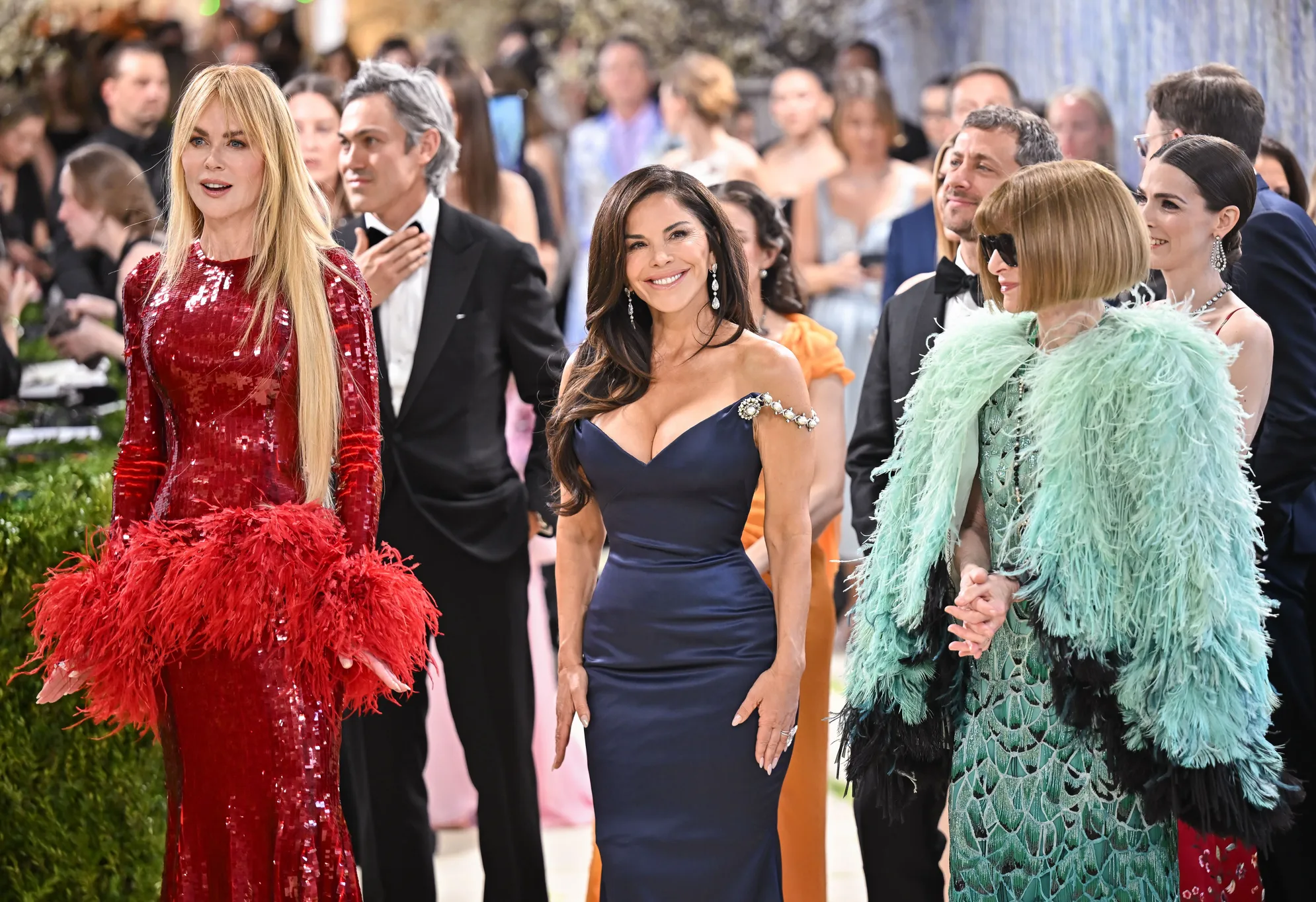
Yesterday’s Met Gala in Manhattan delivered its usual stream of opulence, beauty, and outfits you couldn’t wear to an office without getting a call from HR. The 2026 edition, themed “Fashion is Art” (with the Costume Institute exhibition titled “Costume Art”), was meant to celebrate fashion as an embodied artistic form. Instead, it became one of the most politically charged nights in the event’s modern history, dominated by protests against lead sponsors and honorary co-chairs Jeff Bezos and Lauren Sánchez.
While the red carpet still glittered with stars like Rihanna, Heidi Klum, and Mark Zuckerberg, the evening was overwhelmed by intense scrutiny, celebrity absences, and activist stunts that turned the Metropolitan Museum of Art into a battleground over wealth, labor rights, and billionaire influence.
stir
For the first time, a private individual—Jeff Bezos, the world’s fourth-richest person—and his wife served as lead sponsors and honorary co-chairs of the $100,000-per-ticket fundraiser. The decision by longtime organizer Anna Wintour sparked immediate backlash. Critics accused the event of enabling “gala-washing,” eliciting one of the planet’s most powerful billionaires to polish his image amid ongoing controversies surrounding Amazon, The Washington Post (which Bezos owns), and political donations.
The ire was swift and highly view. An activist collective called Everyone Hates Elon—a UK-based anti-billionaire group originally focused on Elon Musk but now targeting oligarchic wealth more broadly—led a sustained campaign. Their actions included wheat-pasting “Boycott the Bezos Met Gala” posters across New York City subways, bus stops, and streets; placing approximately 300 bottles of fake urine inside the Met Museum on Friday—a direct reference to longstanding allegations that Amazon warehouse and delivery workers have been forced to urinate in bottles due to intense productivity demands and limited bathroom breaks; and projecting videos of Amazon workers and anti-Bezos messages onto the Empire State Building, Chrysler Building, and the Bezoses’ Manhattan penthouse on Sunday night.
These stunts drew widespread media attention and amplified online calls to boycott what many dubbed the “Amazon Prime Gala” or “Bezos Ball.”
flow
Critics leveled several key accusations against Bezos and Amazon. Worker conditions remain central: Amazon has faced repeated scrutiny over warehouse safety, surveillance, union-busting allegations, and extreme performance metrics, with the urine-bottle protest becoming the campaign’s most visceral symbol. Tax practices have also drawn criticism, with Bezos and Amazon long accused of aggressive tax minimization despite enormous profits. Media influence has come under review as well; under Bezos’ ownership, The Washington Post has undergone significant layoffs and editorial shifts, raising concerns about journalistic independence. Political ties further complicated perceptions, with Amazon’s reported $50 million contribution toward a documentary on Melania Trump, alongside links to Donald Trump’s inauguration, fueling narratives of alignment with conservative power.
These issues resonated in a city where one in four residents lives in poverty, making the ultra-elite nature of the Met Gala—already a symbol of excess—feel particularly tone-deaf this year.
Activists troll Jeff Bezos and call for the boycott of The Bezos Met Gala.
Bezos is the main benefactor of the Gala.
Highlighting Amazon’s treatment of workers. pic.twitter.com/fke7RoT83A
— Unplug The Empire (@UnplugTheEmpire) May 5, 2026
anticip
Several high-profile figures made their positions known through absence. Zendaya, a former Met Gala co-chair and red-carpet regular, reportedly skipped the event. Her stylist Law Roach confirmed he would attend alone, citing her packed schedule, though many interpreted the timing as deliberate. Bella Hadid liked an Instagram post criticizing Bezos’ sponsorship, signaling her own decision to stay away for the fourth consecutive year.
New York City Mayor Zohran Mamdani broke with longstanding tradition by declining his invitation. The socialist mayor, often seen in Carhartt and emphasizing affordability, told reporters he preferred to focus on making New York livable rather than attending extravagant galas.
Other rumored or confirmed no-shows included Meryl Streep and Blake Lively (the latter amid her own legal matters). Their absences amplified the narrative that even within elite circles, the Bezos sponsorship created discomfort.
Yet the show went on. Rihanna delivered one of her signature show-stopping looks, Heidi Klum embraced theatrical glamour, and Mark Zuckerberg made a rare red-carpet appearance, underscoring that tech power remains well represented despite the protests.
flow
Protesters didn’t stop at symbolic actions. Hours before the gala, a “Ball Without Billionaires” runway show in the Meatpacking District featured union workers, activists, and performers in homemade couture. Signs reading “Labor Is Art” and “You Can’t Buy Cool” directly challenged the Met’s theme. Organizers including fashion stylist Gabriella Karefa-Johnson and actress Lisa Ann Walter used the platform to highlight Amazon labor issues, AI concerns, and wealth inequality.
The Everyone Hates Elon group, which has previously targeted Bezos’ Venice wedding, framed the Met Gala as a symbol of unchecked billionaire power. A spokesperson noted that honoring figures like Bezos distracts from the struggles of workers whose labor makes such wealth possible.
dilemma
As Vogue’s global editorial director and the Met Gala’s de facto architect for decades, Anna Wintour faces renewed questions about balancing the event’s fundraising goals with its cultural credibility. The Costume Institute relies heavily on corporate and high-net-worth sponsors. Defenders argue that wealthy patrons have always underwritten such institutions, supporting exhibitions and preservation work. Critics counter that this year’s choice crossed a line, turning the gala into a reputational shield for controversial figures.
broad
The 2026 Met Gala controversy reflects deeper tensions in contemporary culture. Fashion has long been intertwined with wealth and spectacle, but in an era of heightened awareness around inequality, labor rights, and billionaire influence, the optics matter more than ever.
Social media amplified every angle. Livestream viewers debated outfits alongside boycott calls, turning the red carpet into a Rorschach test for views on capitalism. Hashtags like #BezosMetGala and #BoycottMetGala trended alongside traditional fashion commentary.
For supporters of the event, the protests represent performative activism that distracts from the gala’s charitable mission. For detractors, they highlight how cultural institutions can inadvertently legitimize problematic power structures.
fin
The Met Gala raised significant funds for the Costume Institute, as it does every year. A permanent gallery tied to the “Costume Art” exhibition will open to the public soon after. Yet the conversation has shifted. This year’s event may be remembered less for specific looks and more as a flashpoint in the ongoing debate over extreme wealth, corporate accountability, and the role of celebrity in politics and culture.
In the end, the Met Gala did what it always does: it sparkled, provoked, and dominated the cultural conversation. This time, however, the spotlight illuminated not just the clothes, but the uncomfortable questions behind the curtain.
n
From the DRIFT archive: Inside the World’s Most Iconic Ski Experiences