DRIFT AUDIO
Listen to this story
Choose a voice, then press play.
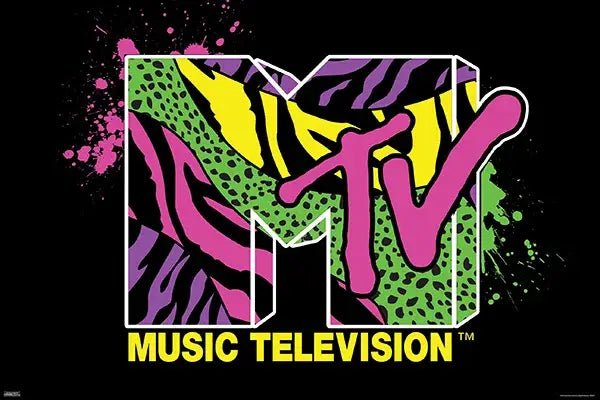
The television screens that once defined youth culture are going dark. After four decades of revolutionizing how the world discovered music, MTV will close five of its UK channels by the end of 2025—including MTV Music, MTV 80s, MTV 90s, Club MTV, and MTV Live. For a generation that grew up waiting for TRL countdowns and late-night video blocks, this feels like the closing chapter of an era that once dictated what was cool before social media had the word for it.
This isn’t merely the story of a brand pruning its assets. It’s the symbolic culmination of a broader digital reordering—an acknowledgement that the way audiences discover and consume music has moved beyond linear broadcasting. In a landscape ruled by YouTube, TikTok, and streaming services, the concept of a scheduled music-video channel feels like an anachronism. MTV, once the pulse of youth, is now adapting to survive in a post-television ecosystem.
the announcement
Paramount Global, MTV’s parent company, confirmed in early October 2025 that it will cease operations of its five remaining music-focused UK channels by December 31. The move follows the earlier shutdown of MTV Hits in April and marks a definitive withdrawal from the linear music format that built the network’s global identity.
The affected channels represent the remnants of MTV’s diversified approach to niche broadcasting:
MTV Music — The flagship for chart hits and music video rotation.
MTV 80s & MTV 90s — Nostalgic time capsules for decades that defined pop culture.
Club MTV — A late-night haven for dance and house music fans.
MTV Live (HD) — A showcase for live performances and concert recordings.
After December, MTV’s UK presence will consist primarily of entertainment and reality programming—shows like Catfish, Ridiculousness, and Geordie Shore reruns. It’s a shift that has long been visible in the network’s strategy, but the formal closure of these stations marks a full embrace of what MTV has already become: a lifestyle brand rather than a music broadcaster.
when music television changed everything
When MTV launched in 1981 in the U.S. (and 1987 in the UK), its arrival rewired the relationship between artists, visuals, and audiences. The network didn’t just broadcast music videos—it created a new cultural medium. Songs became stories. Artists became icons. Visual aesthetics became as important as melody.
From the first video ever aired (“Video Killed the Radio Star” by The Buggles) to the global premieres of Michael Jackson’s “Thriller” and Madonna’s “Like a Prayer,” MTV dictated cultural momentum. By the early 2000s, MTV UK and its spin-offs were synonymous with youth identity—mixing British indie bands, American pop stars, and global trends into one revolving broadcast of possibility.
Yet as the 2010s unfolded, the network’s original mission collided with a changing digital world. Music videos migrated online. Playlists replaced schedules. Algorithms replaced VJs. MTV pivoted toward reality shows to sustain ratings—and in doing so, began a long, complicated divorce from its first love.
why paramount is pulling the plug
The closure of MTV’s UK music channels isn’t just a cultural concession—it’s a financial strategy.
Paramount Global, like other legacy media giants, has spent the past few years cutting costs and consolidating its global operations. Linear television viewership continues to decline across Europe, and maintaining multiple niche channels—each with its own infrastructure, licensing, and staffing—no longer makes economic sense.
Advertising revenue for music TV has plummeted as brands redirect budgets toward programmatic digital ads, influencer partnerships, and streaming sponsorships. The cost-per-viewer on MTV’s linear channels can’t compete with the measurable, targeted precision of online marketing.
The company’s internal memo reportedly described the closures as part of a “strategic simplification and digital redirection,” freeing resources for its streaming ventures, including Paramount+ and Pluto TV. MTV’s music content, where it survives, will likely appear in these on-demand spaces rather than through traditional broadcast.
culture
There’s an emotional undercurrent to this story that transcends corporate logic. For many, MTV represented a shared cultural ritual—a place where fans discovered new artists, argued over chart rankings, and waited for world premieres. The closure of these channels feels like losing a public square in an age of private feeds.
from collective viewing to algorithmic isolation
In MTV’s golden age, everyone was watching the same thing at the same time. Today, digital fragmentation means that no two people experience music the same way. Personalized feeds encourage niche discovery but erode shared moments. MTV’s demise is the visual manifestation of this shift—from mass culture to micro-culture.
the loss of curation
MTV’s VJs were once tastemakers—trusted guides who connected audiences to the music world. In the algorithmic era, recommendation engines have taken over that role, but they lack the personality, context, and narrative connection that MTV once provided. The loss of those human curators symbolizes the broader automation of culture.
a changed stage
For musicians, MTV’s retreat from music television is both nostalgic and pragmatic. Few artists today depend on television airplay for exposure. Instead, they engineer their digital presence: optimizing video thumbnails for YouTube, crafting shareable hooks for TikTok, and collaborating with online creators for reach.
Still, the symbolic power of MTV mattered. A premiere on MTV once validated an artist’s arrival. To be “on rotation” meant something concrete—it conferred legitimacy in a pre-streaming era. Now, virality determines success, and the validation comes not from a TV slot but from the algorithm’s embrace.
Labels, too, have adjusted. Marketing budgets that once covered broadcast promotion are now invested in digital advertising, influencer campaigns, and short-form content creation. The economics of exposure have inverted—from few-to-many broadcasting to many-to-many sharing.
mtv as a digital lifestyle brand
Despite the closures, MTV isn’t disappearing—it’s metamorphosing. The company is now positioning itself as a multiplatform youth culture brand rather than a television network. The MTV name still carries weight in reality TV (The Challenge, Jersey Shore Family Vacation), live events (MTV VMAs, EMAs), and digital collaborations.
Expect MTV to reinvest in digital storytelling, perhaps through partnerships with streaming platforms, social networks, and emerging formats like vertical video content and interactive live events. Its brand equity lies not in broadcasting but in cultural association—the ability to curate the intersection of music, fashion, and lifestyle for younger audiences.
Paramount’s streaming arms, particularly Pluto TV, already offer curated “MTV” playlists and digital channels accessible globally. The MTV aesthetic will survive—just not through the cable box.
the bigger picture
MTV’s move is part of a broader industry contraction. Across Europe, other music and entertainment networks—VH1, 4Music, Kiss TV, and Box Hits—have undergone similar transformations or closures. The logic is consistent: audiences have left the living room, and linear channels can no longer follow them profitably.
Television is no longer the dominant discovery mechanism it once was. The term “watching TV” now means opening a streaming app. The entertainment industry’s future lies in on-demand ecosystems—where data, engagement, and interactivity determine success.
Even legacy media companies have begun to embrace a paradox: to preserve their brands, they must dismantle their original structures. MTV closing its music channels is therefore not an act of surrender but an act of reinvention—a pivot that acknowledges reality.
nostalgia and reinvention
It’s tempting to view MTV’s closures as a funeral for the past, but in another sense, it’s a rebirth of format. The spirit of MTV—visual storytelling, youth expression, and the marriage of sound and image—hasn’t vanished; it’s simply migrated to new mediums.
From broadcast to feed
Where MTV once dictated trends, TikTok now incubates them. The raw, DIY energy of early music television lives on in user-generated content. Every teen editing clips on a phone today is, in essence, a modern-day VJ—curating, remixing, and re-interpreting culture in real time.
impression
The closure of MTV’s UK channels signals the final disconnection between music television and music culture. In the 1980s and 1990s, the two were inseparable. Today, music culture thrives without it—distributed across platforms, hashtags, and livestreams.
However, something intangible is lost in that transition: the slow discovery, the anticipation, the sense of collective immersion. MTV’s linear format encouraged patience; the internet rewards immediacy. One invited participation; the other, reaction.
As AI-driven curation and synthetic music production continue to rise, the nostalgia for human-curated music spaces—like MTV once was—may grow stronger. Paradoxically, MTV’s legacy could become a template for the next generation of digital curators who wish to restore context to chaos.
Related Articles
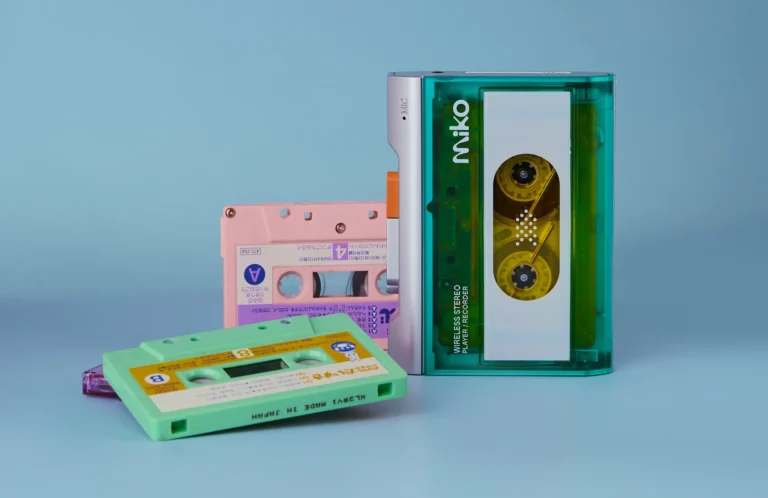
Rewind the Revolution: The Resurgence of Analog in a Digital Age
For something so small, the cassette tape carries an outsized presence. It doesn’t glow, doesn’t […]