DRIFT AUDIO
Listen to this story
Choose a voice, then press play.
engine
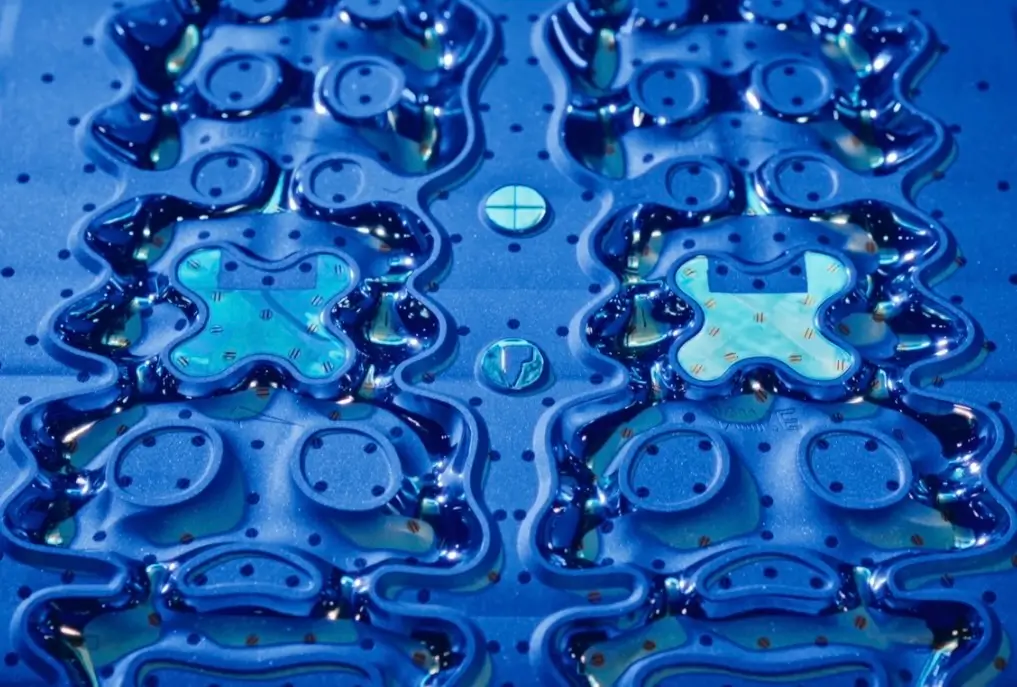
On the bustling machinery floor of Nike’s Air Manufacturing Innovation facility in Beaverton, Oregon, a team of engineers huddles around an inflated prototype. The Air unit before them is strikingly technical yet deceptively simple in its ambition: a “clover”-shaped bag that would eventually bloom into the minimalist pithy of the Nike Air Liquid Max. Curved to promote a seamless glide from heel to toe, it promises the smoothest ride Nike Air has ever delivered.
But elegance masks complexity. This is the first Air Max unit to feature internal cut-outs. Its perimeter is intricate. And because Air is elastomeric — meaning it responds dynamically to temperature, humidity, and pressure — replicating this precise shape consistently across hundreds of thousands of pairs is extraordinarily difficult.
View this post on Instagram
High complexity. High precision. All in service of a shoe designed to feel like the most “nothing” Max ever made.
This is the story of how Nike’s designers, engineers, and manufacturing technicians collaborated to push Air Max into a new era — one defined not by bigger bubbles, but by smarter, more fluid innovation.
endure
Since Tinker Hatfield first revealed the Air Max 1 in 1987, the view Air bag has symbolized possibility. That transparent window offered consumers a literal window into the future of cushioning: a pressurized gas unit that could absorb impact while returning energy. Over nearly four decades, Air Max evolved through bold experiments — from the towering Air Max 95 to the maximalist Air Max Scorpion. Yet the core question remained: What does it truly mean to walk on Nike Air?
Comfort is the obvious answer. Every step should feel effortless. But beyond plushness lies something more elusive — a precisely tuned sensation of fluidity and responsiveness. Creating that feeling consistently, across sizes and conditions, demands rigorous science beneath the inspiration.
By 2019, Nike designers were briefed on a radical new direction: “The Most Nothing Max.” The goal was an Air Max that felt light, flexible, and barely detectable underfoot — a paradox for a platform historically defined by its view, voluminous cushioning.
straddle
Early development drew inspiration from an unexpected source: the 2021 Air Max Scorpion. That shoe represented maximalist extremes — the largest Air unit ever created by volume. While visually overwhelming, the Scorpion taught the team valuable lessons about “point loading”: the strategic mapping of cushioning zones to align with how the foot naturally distributes weight.
“We learned new techniques that could help us tune the bag for flexibility across different zones,” explains Wade Flanagan, Director of Nike Air Innovation. “Comparing the Scorpion bag to Liquid Max, we wanted to make something lighter, more flexible, more minimalist, but just as responsive.”
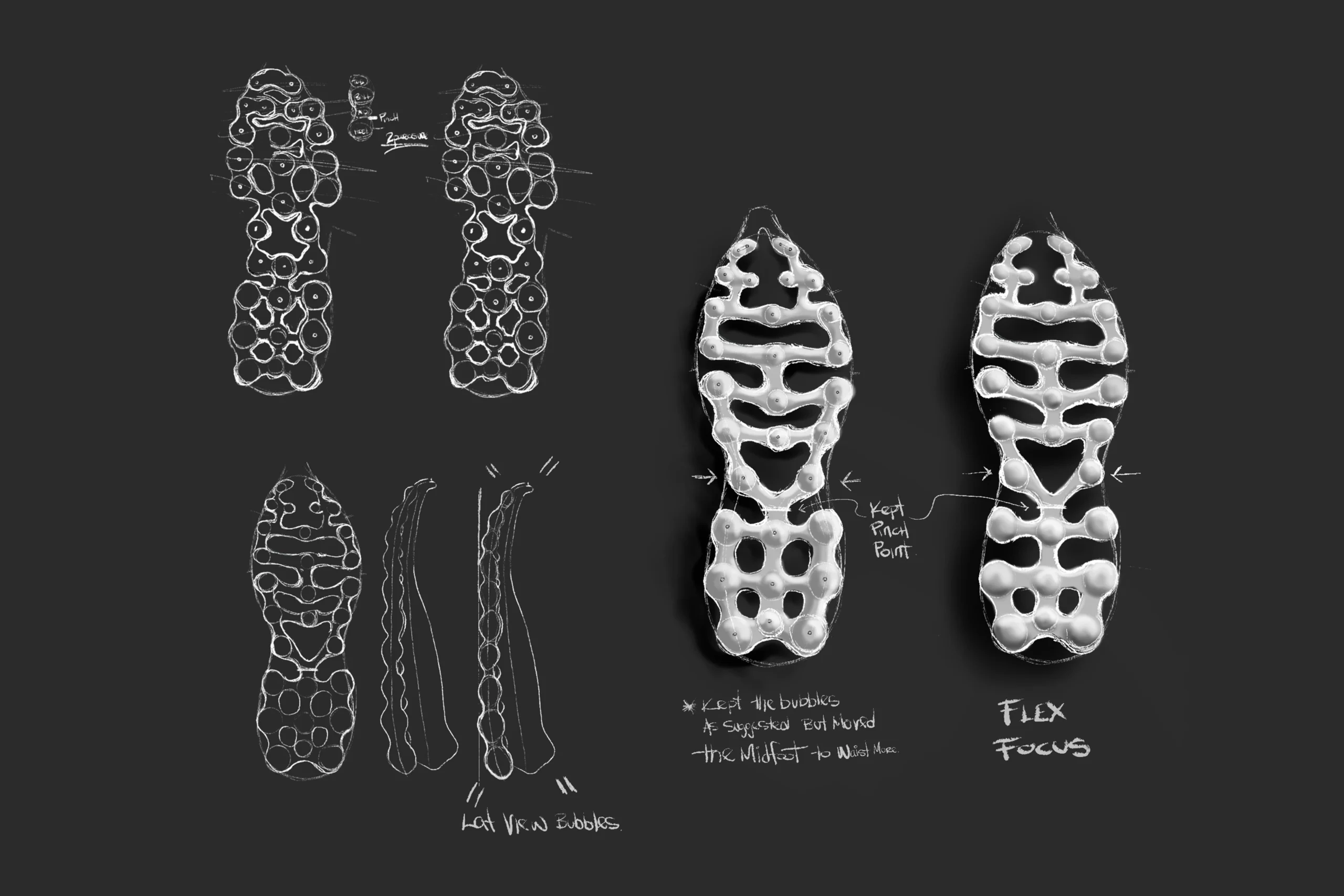
Underfoot pressure mapping from the Nike Sport Research Lab (NSRL) guided the exploration. LED camera footage revealed exactly how feet interacted with various Air bag shapes. Prototypes ranged from organic, flowing forms to more industrial geometries. Some experiments even turned visual details into functional advantages, such as outsole patterns that could create trampoline-like effects.
Digital tools like Finite Element Analysis (FEA) simulated real-world walking forces, allowing the team to test pressure distribution and responsiveness virtually before physical prototypes.
flow
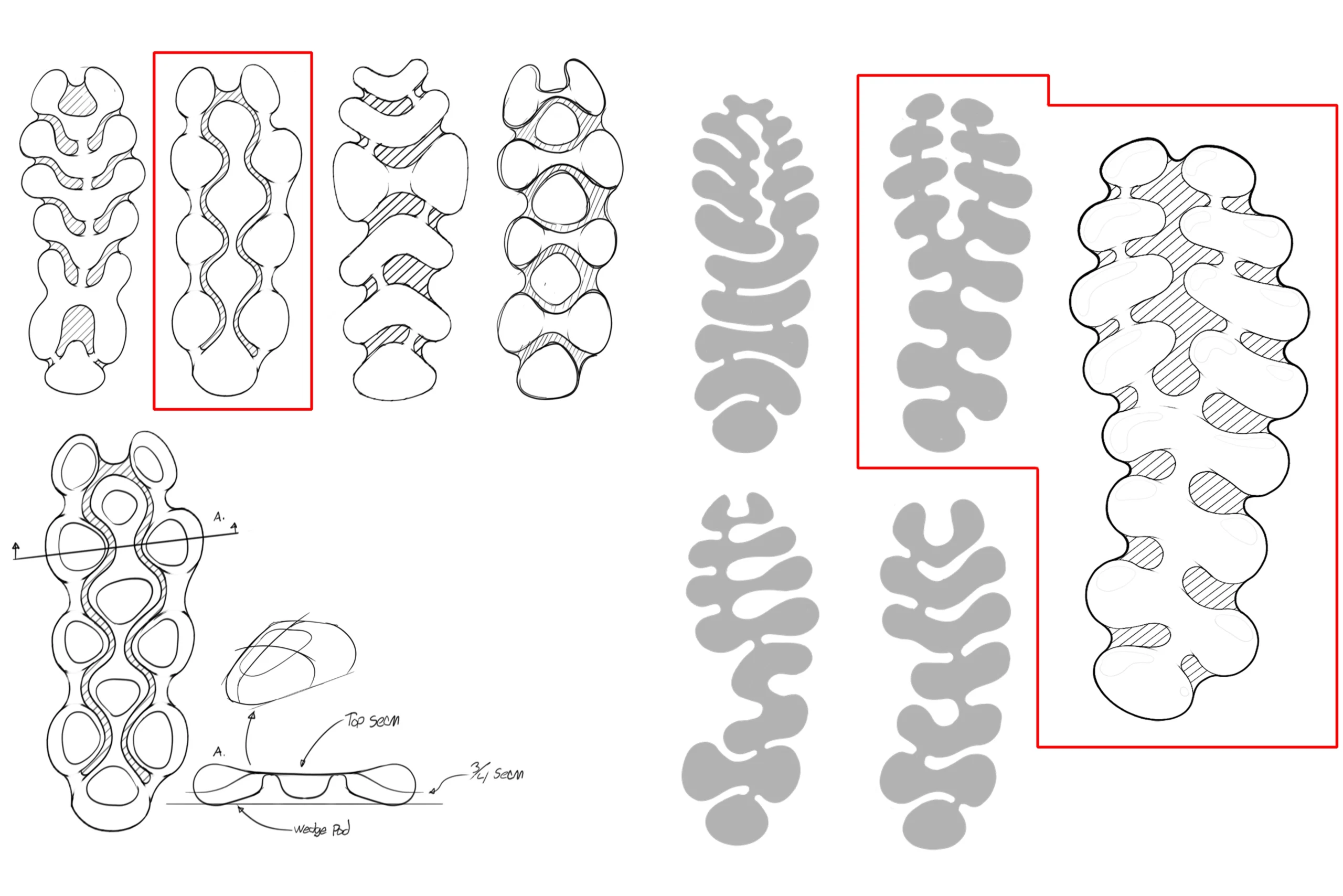
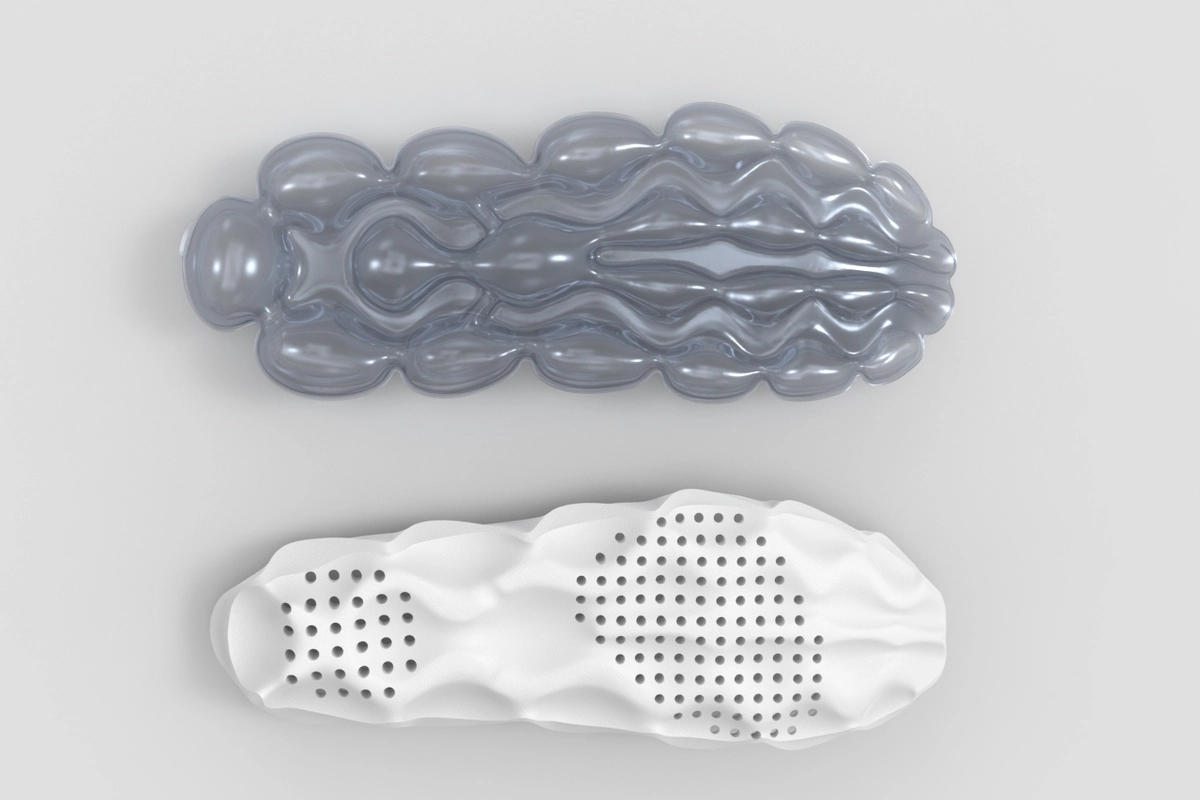
The final Liquid Max unit is a two-chambered, full-length design with a rockered, curved profile. Its most technically demanding features are the internal cut-outs and the precision trimming required around complex curves. Traditional Air bag manufacturing struggles with such intricacy — any variation in temperature or humidity can cause the elastomeric material to shift, making consistent production feel like “hitting a moving target,” as Flanagan describes it.
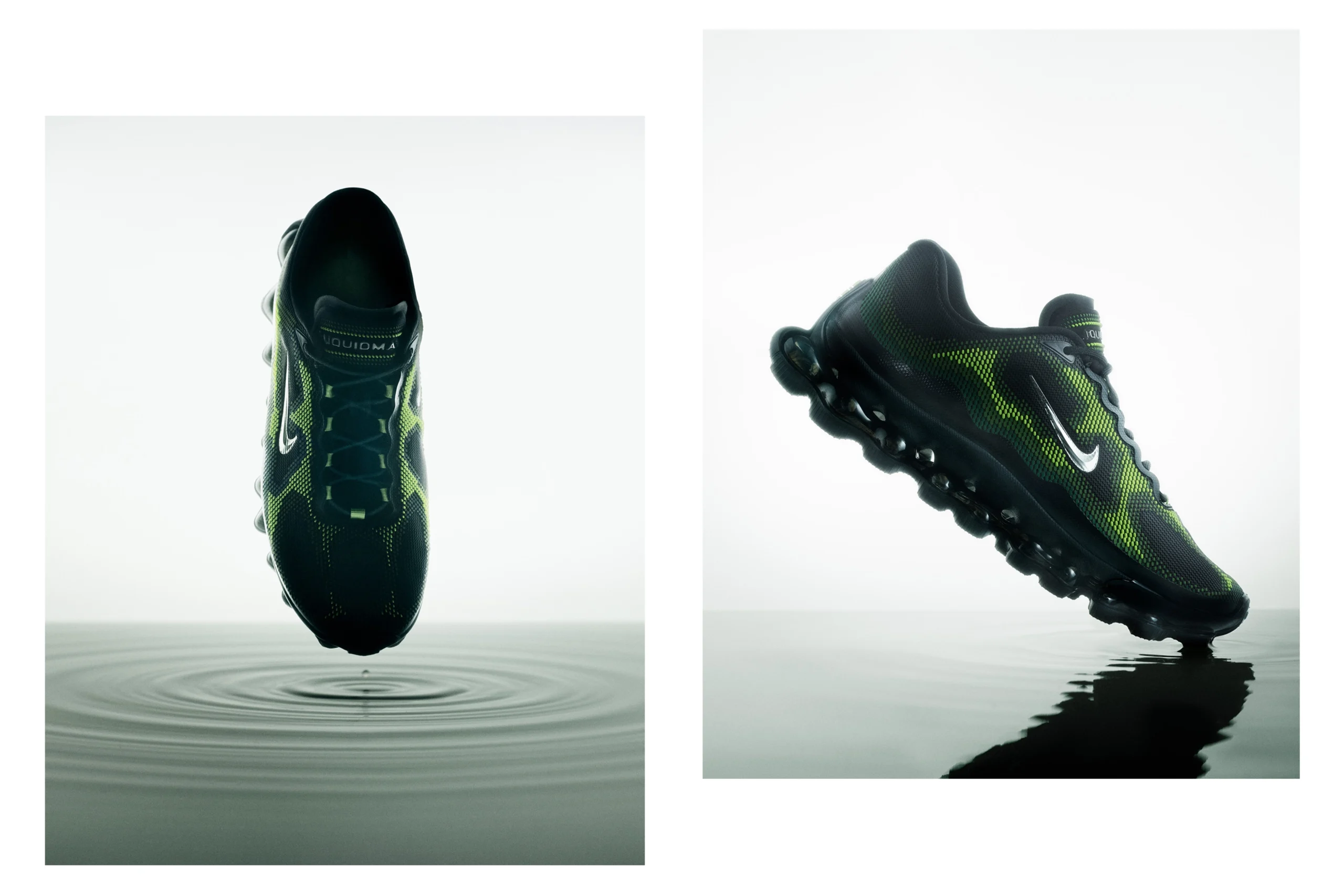
To solve this, the team developed an entirely new molding and trimming process in partnership with technicians at the Air Manufacturing Innovation facility. The result is a unit that delivers an undetectably smooth, liquid-like transition — hence the name.
Ditte Kuijpers, Design Director for Nike Sportswear Innovation Footwear, articulates the dual challenge: “Liquid Max had to set a new visual precedent, but the Air unit also had to give a new sensation for walking on Air. People needed to both feel and see how it was different. Every component of the shoe had to work together for this to happen.”
Early concepts explored stacking modified Air Max DN8-style tubular units or experimenting with drop-in midsoles featuring grooved foam patterns matched to foot pressure maps. The final drop-in construction reduces parts while enhancing contouring and flexibility.
The Liquid Max unit is lighter and more flexible than previous generations, yet it maintains the responsive, energy-returning properties that define Nike Air. It represents a philosophical shift: from the big, bold bubbles that announced innovation to a quieter, more sophisticated expression of technical mastery.
precision
Producing the Liquid Max unit at volume required overcoming manufacturing challenges that border on the artisanal. Air units are sensitive creations — akin to baking a perfect soufflé under industrial conditions. A poor cut can cause the bag to rupture. Inconsistent trimming leaves unsightly flanges. Environmental factors can alter dimensions mid-process.
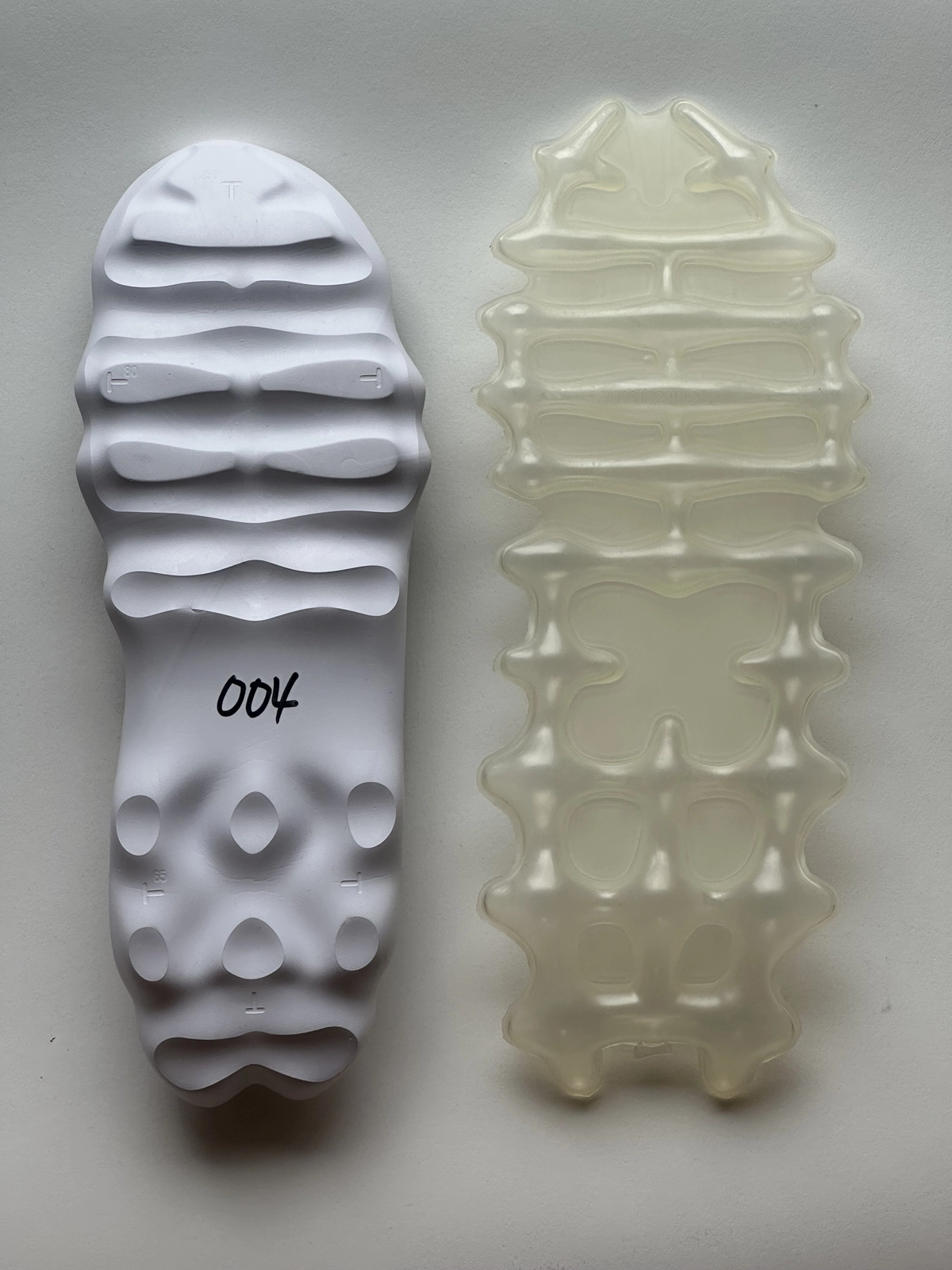
The solution involved combining deep tactile expertise with advanced tooling. Technicians at the Air MI facility refined processes to ensure every unit met exacting standards, regardless of production variables. This level of precision not only enabled the Liquid Max but established new capabilities that can be applied across future Air innovations.
“The Liquid Max unit is an example of when our designers, engineers and Air MI technicians set their sight on a challenge and overcome it,” says Flanagan. “A lot of that comes from being inspired to challenge limitations and push Air Max to a new place so we can provide new benefits to people who wear it.”
lang
The Liquid Max does more than improve cushioning — it redefines the visual identity of Air Max. The clover-inspired unit creates a sleek, minimalist silhouette that feels modern and refined. Early sketches showed how the new unit could refresh classic Air Max models while giving the platform a cohesive new direction.
This “less-is-more” philosophy extended to every element: lighter materials, streamlined construction, and a focus on seamless integration between the Air unit, foam, and outsole. The result is a shoe that looks quiet but performs with sophistication.
View this post on Instagram
why
In an era of increasingly loud product launches, Liquid Max stands out through restraint. It doesn’t shout innovation — it embodies it through thoughtful engineering. For everyday wearers, this translates to shoes that feel natural and effortless, whether navigating city streets or logging miles on varied surfaces.
The project also highlights Nike’s broader approach to innovation: deep collaboration across disciplines, willingness to revisit assumptions, and investment in manufacturing capabilities that match creative ambition.
As consumers demand both performance and simplicity, Liquid Max offers a compelling answer. It honors the heritage of Air Max while evolving it for a new generation that values fluidity and subtlety.
The journey from initial brief to finished product spanned years of experimentation, failure, refinement, and breakthrough. It required designers to imagine the impossible, engineers to quantify the intangible, and manufacturing experts to achieve consistency at scale.
In the end, Nike Liquid Max delivers on its ambitious promise: an Air Max that feels like nothing — yet changes everything about how we experience walking on air.
Related Articles
Nike A’Two “Potion No. 22” Gives A’ja Wilson a Mismatched Horror Double Bill
Two shoes, two monsters: A’ja Wilson’s Halloween A’Two splits blood splatter and honeycomb across a […]