DRIFT AUDIO
Listen to this story
Choose a voice, then press play.
In a city defined by architectural permanence and culture continuity, Milan has unveiled one of its most meaningful restorations in recent memory. On April 15, 2026, luxury powerhouse Tod’s Group officially announced the completion of the conservative restoration of Palazzo Marino, the historic seat of Milan’s municipal government and one of the city’s defining Renaissance landmarks.
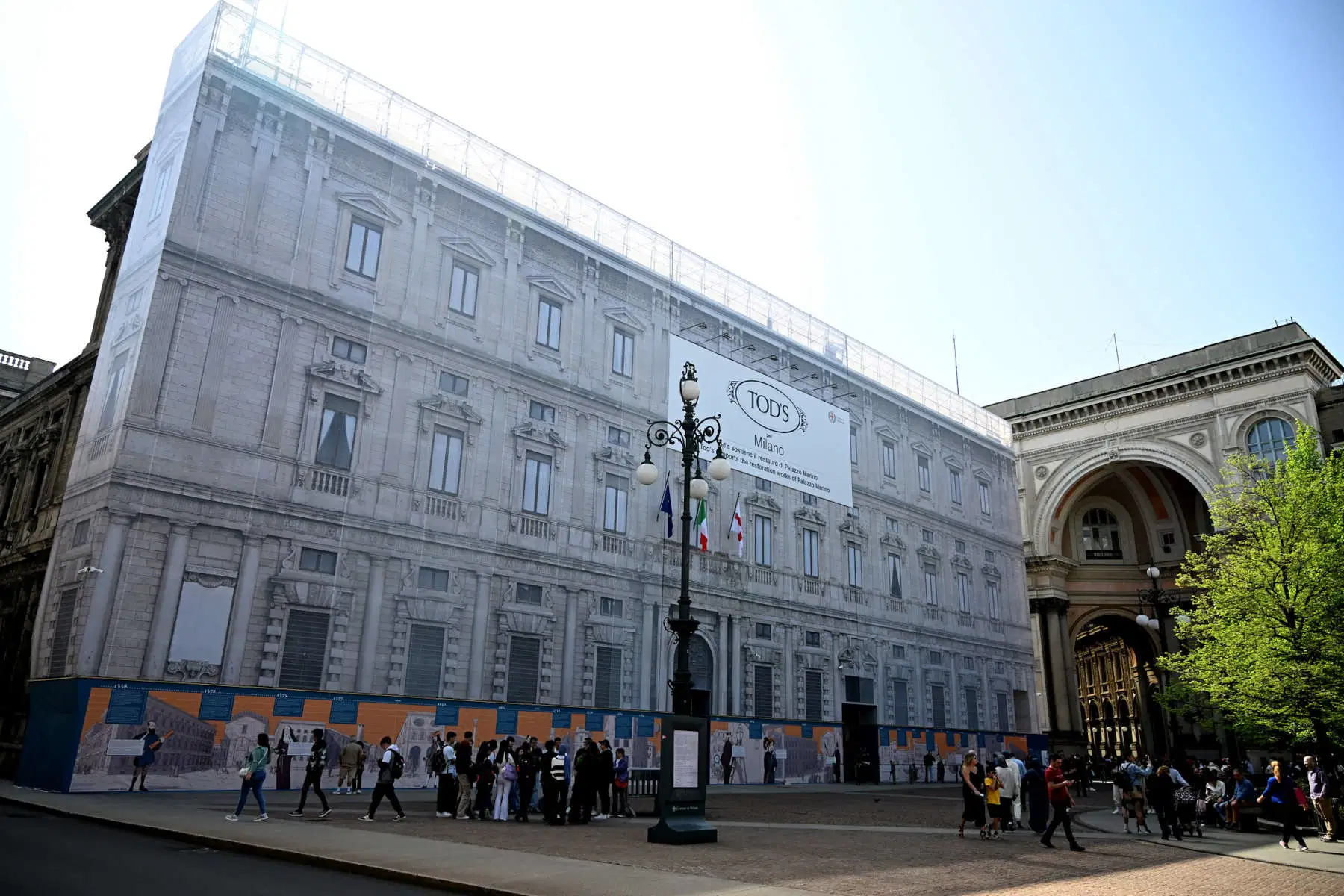
The announcement, made during a dedicated press conference attended by Giuseppe Sala and Tod’s Chairman Diego Della Valle, marked far more than the completion of a construction project. It represented a renewed commitment to Italy’s culture stewardship at a moment when historic preservation increasingly depends on connection between public institutions and private enterprise.
Entirely financed by Tod’s Group with an investment estimated between €2.3 and €2.5 million, the restoration unfolded across 16 months and involved more than 7,500 square meters of internal and external façades. The intervention focused on conservative restoration methods: cleaning centuries of urban residue, consolidating weakened architectural surfaces, renewing plasterwork, and applying protective treatments specifically chosen to remain compatible with the building’s historical materials.
claim
Standing prominently in Piazza della Scala, Palazzo Marino occupies one of the most symbolically charged locations in Milan. Originally commissioned in the mid-16th century by wealthy Genoese banker Tommaso Marino, the palace was designed by celebrated Renaissance architect Galeazzo Alessi and largely completed by 1563.
Alessi’s architectural view blended classical harmony with civic grandeur. Over the centuries, the structure evolved alongside Milan itself. Once a private aristocratic residence, Palazzo Marino later became state property before ultimately transforming into Milan’s city hall in 1861.
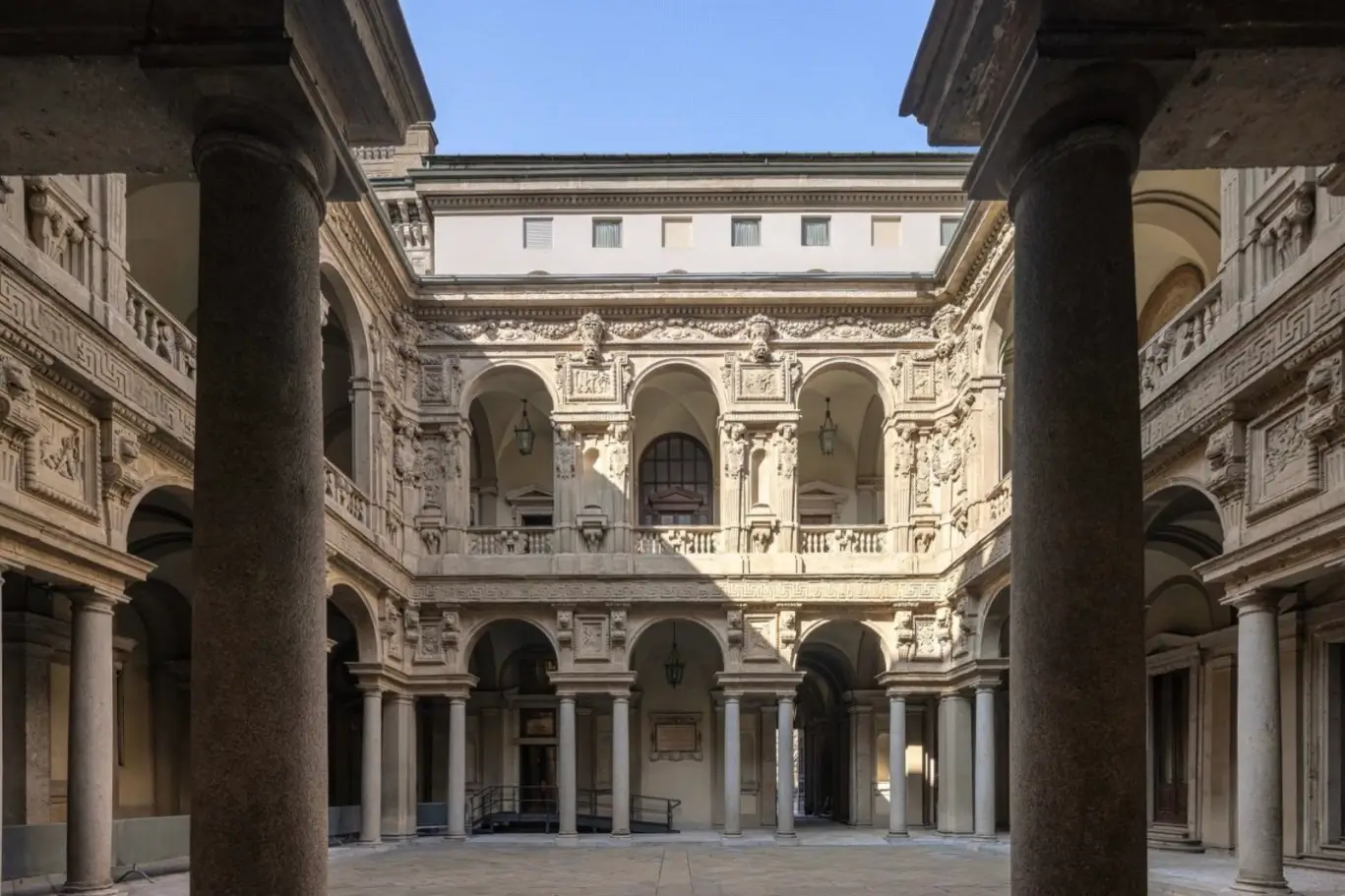
Its interiors remain among the most artistically significant civic spaces in northern Italy. The famed Alessi Hall contains elaborate frescoes and stuccos depicting mythological scenes by Andrea and Ottavio Semini, while sculptural programs throughout the courtyard reference classical narratives including the Labours of Hercules and stories drawn from ancient mythology.
Time, however, had visibly altered the building’s appearance. Pollution from traffic, tram emissions, water infiltration, and environmental aging had gradually obscured decorative elements across the façades. Dust accumulation, biological growth, and ferrous deposits diminished the clarity of sculptural motifs and Renaissance ornamentation. The restoration sought not to reinvent Palazzo Marino, but to reveal it once again.
The result is a measured revival that restores architectural rhythm and material dignity without sacrificing historical authenticity.
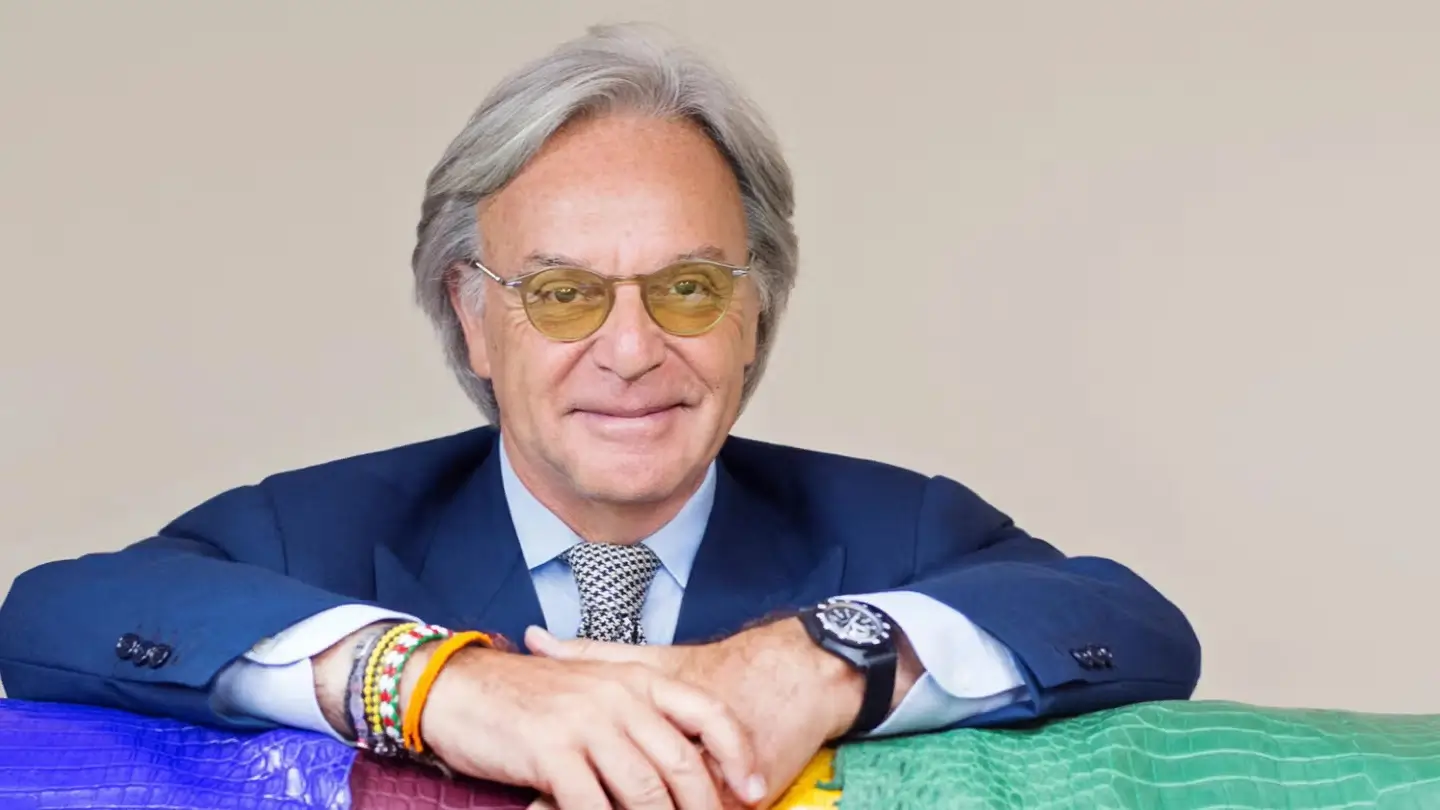
Diego Della Valle, founder of Tod’s | The Gentleman’s Journal
stew
For Tod’s Group, the restoration aligns naturally with a broader know that has increasingly defined the company under Diego Della Valle’s leadership. Known internationally for luxury leather craftsmanship and the iconic Gommino driving shoe, the Italian fashion house has also become deeply associated with heritage preservation initiatives throughout Italy.
Della Valle’s culture investments extend well beyond fashion. The company previously supported the restoration of the Colosseum in Rome and maintains longstanding relationships with institutions including Teatro alla Scala and the Fondo Ambiente Italiano.
At the center of these projects lies Della Valle’s concept of “Artisanal Intelligence,” a know emphasizing the intersection of human skill, historical continuity, and contemporary responsibility. The Palazzo Marino restoration reflects this mindset precisely: traditional restoration techniques executed alongside carefully selected modern conservation materials intended to ensure longevity without compromising authenticity.
During the unveiling, Della Valle described the project as both civic responsibility and cultural duty, emphasizing the importance of private companies actively participating in initiatives that strengthen national identity and preserve shared heritage.
That statement resonates particularly strongly within Italy’s luxury sector, where the idea of “Made in Italy” increasingly extends beyond product manufacturing into the preservation of the environments, artistry, and culture memory that make Italian craftsmanship globally revered in the first place.
Tod’s Group announces the completion of the conservative restoration of Palazzo Marino. An architectural masterpiece of the 16th century, designed by Galeazzo Alessi, the Palazzo has served as the historic seat of Milan’s municipal administration since 1861.
The intervention,… pic.twitter.com/2ULYWLT9SX— Tods (@Tods) April 15, 2026
scope
The restoration also highlights Milan’s growing role as a model for public-private cooperation in culture conservation. Throughout the project, Tod’s worked in close collision with Milan’s Superintendence of Archaeology, Fine Arts and Landscape, ensuring that every intervention remained historically rigorous and technically appropriate.
Mayor Giuseppe Sala framed the project as an example of patronage operating in contemporary form: private support functioning not as branding exercise, but as meaningful civic participation.
That distinction matters. Across Europe, governments continue confronting financial pressures surrounding the maintenance of historic landmarks. Conservative restorations of structures like Palazzo Marino require extensive expertise, specialized labor, and long-term funding commitments that public institutions often struggle to provide independently.
Projects such as this therefore reveal how luxury brands can occupy a uniquely influential position within culture ecosystems. Rather than merely referencing Italian heritage in marketing campaigns, companies like Tod’s are directly participating in the preservation of the architectural and artistic environments that define Italy’s global culture prestige.
invention
One of the restoration’s most compelling aspects is its refusal to over-modernize. Rather than imposing contemporary aesthetics or aggressive reinterpretations, conservators focused on preservation through subtle intervention.
The work involved pollutant removal, stabilization of deteriorated stone and plaster surfaces, renewal of finishes, and façade enhancement intended to recover obscured decorative details.
Importantly, the restoration adopted a conservative methodology emphasizing reversibility and compatibility. Materials were carefully selected to protect the structure while respecting its original composition and visual identity.
This approach reflects broader contemporary shifts in restoration know. Increasingly, leading conservation projects prioritize restraint over spectacle. The goal becomes continuity rather than transformation — allowing buildings to retain the marks of history while ensuring structural and aesthetic longevity.
Palazzo Marino now emerges renewed, but recognizably itself.
identity
The symbolic importance of this restoration extends beyond architecture. Italy’s luxury industry has long drawn legitimacy from proximity to craftsmanship, artistry, and historical continuity. By investing directly into culture preservation, Tod’s reinforces the idea that luxury operates not solely as commerce, but as stewardship.
That relationship between culture heritage and private industry has deep historical roots in Italy, echoing traditions of Renaissance patronage where wealthy families financed artistic and civic projects that shaped public identity for gen.
Today, brands increasingly recognize that preserving culture infrastructure also protects the symbolic ecosystems that sustain global fascination with Italian design, fashion, and craft.
Palazzo Marino’s restoration therefore exists simultaneously as conservation effort, civic contribution, and culture statement.
civic
With scaffolding removed and the palace unveiled once again, Palazzo Marino resumes its place not only as Milan’s administrative center but as one of the city’s most viewed architectural symbols.
Its renewed façades now stand in dialogue with Milan’s evolving identity — a city balancing technological innovation, fashion leadership, financial influence, and historical reverence with remarkable fluidity.
For visitors crossing Piazza della Scala, the restored structure offers more than viewable beauty. It functions as evidence that preservation remains possible when institutional connection, craft, and long-term cultural thinking align.
For Tod’s Group, meanwhile, the project strengthens a legacy increasingly defined by civic engagement as much as luxury production.
And for Milan itself, Palazzo Marino returns brighter, clearer, and more resonant than before: a Renaissance landmark restored not simply for aesthetics, but for continuity.
Related Articles
Under Rue de Castiglione, Liaigre Gives Hôtel Costes a Spa With No Hard Corners
A 20-meter lap pool, eight treatment rooms and not one sharp angle: Studio Liaigre’s spa […]