DRIFT AUDIO
Listen to this story
Choose a voice, then press play.
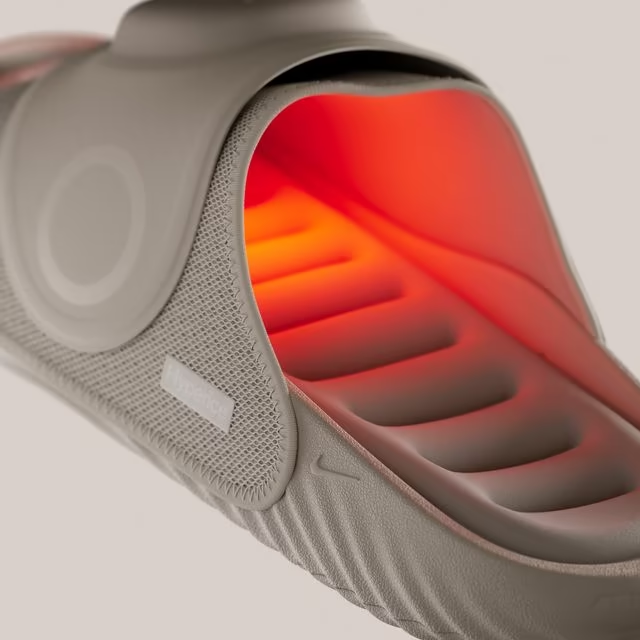
A magnetic heat and vibration pod meets Nike Air Zoom cushion in a $250 slide built for the hours after competition ends.
On July 27, Nike and Hyperice introduced the Air Zoom Hyperslide, a wearable recovery slide that folds heat and vibration therapy into a piece of footwear people can put on the moment training ends. It’s the second product to come out of the two companies’ partnership, following last year’s Hyperboot, and it arrives priced for a far wider audience than that $900 compression boot ever could be.
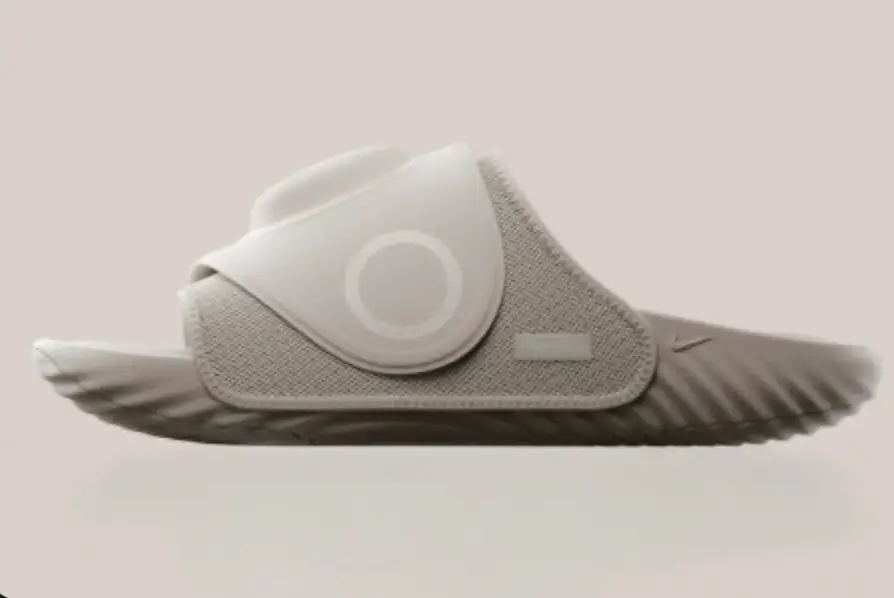
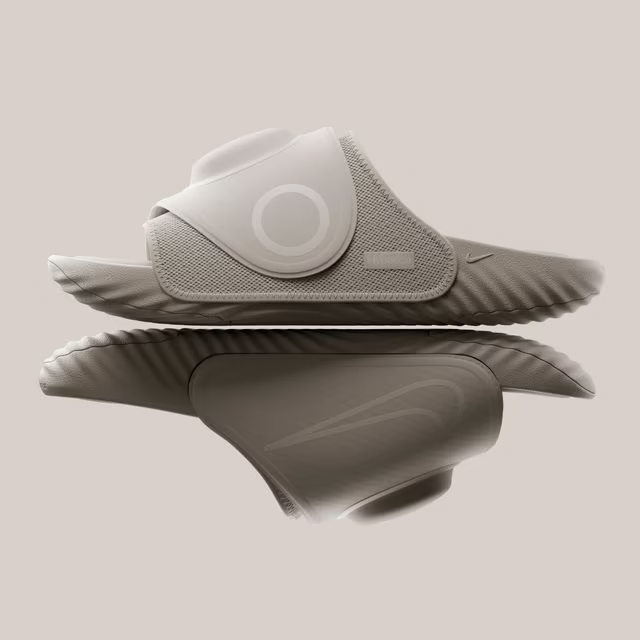
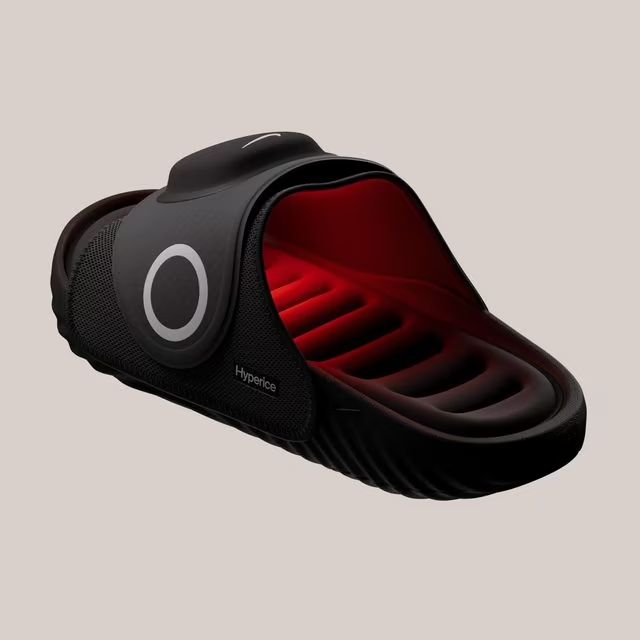
Light gray Nike Air Zoom Hyperslide recovery slide shown in side profile, featuring a wide cushion strap, breathable mesh construction, circular Hyperice detail, subtle Nike Swoosh, and sculpted ripple sole.
The slide combines Nike’s footwear engineer with Hyperice’s recovery hardware, aim the combination specific at the top of the foot rather than the whole leg. Nike frame the rel as part of a broader shift in how athletes think about recovery, treating it as a built-in stage of train rather than something bolted on afterward with separate tools and separate time.
in
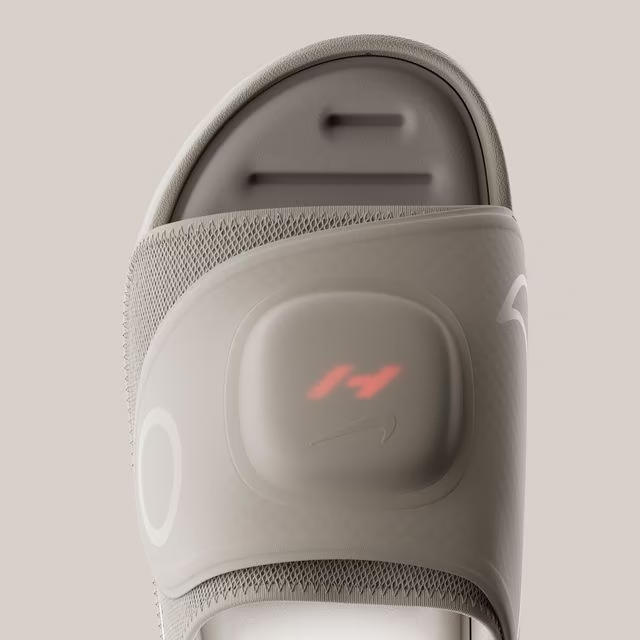
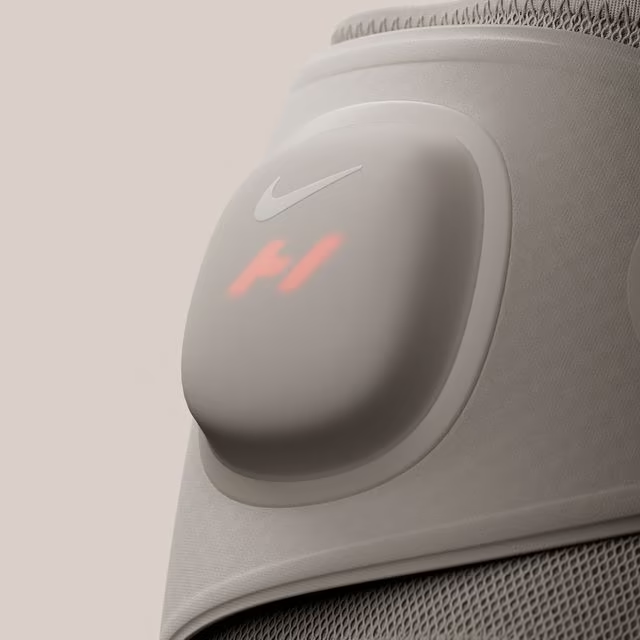
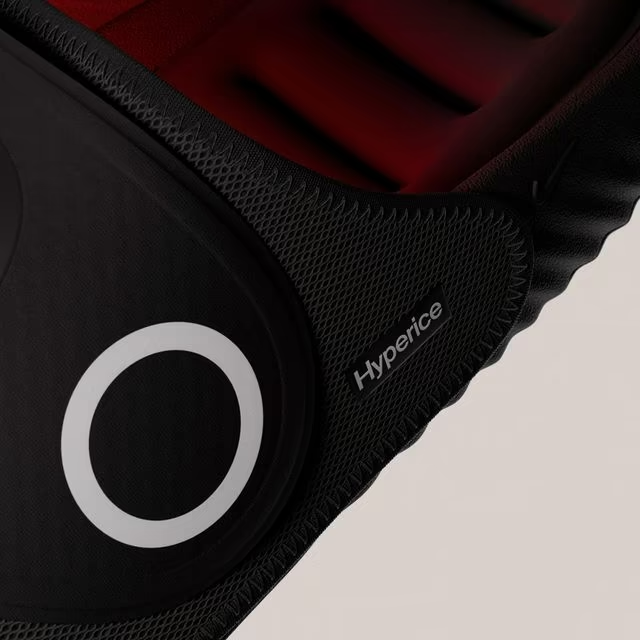
The centerpiece is the Hyperslide Pod, a removable, magnetically mounted unit housed inside the slide’s adjustable strap. It runs three heat settings, climbing from 109 F to a top level of 117 C (47 C), and three vibration settings moving between roughly 50 and 100 Hz, cycling through 15-minute recovery sessions. Riders can control the pod directly on the device or hand it off to the Hyperice app over Bluetooth, which also tracks battery life.
Nike and Hyperice say the heat and vibration combination borrows from Hyperice’s Venom line, the percussive heat products the company already sells to athletes and physical therapists. Packing that into a slide strap rather than a wrap or sleeve is the design leap: it turns a recovery tool into something an athlete can just walk around in.
build
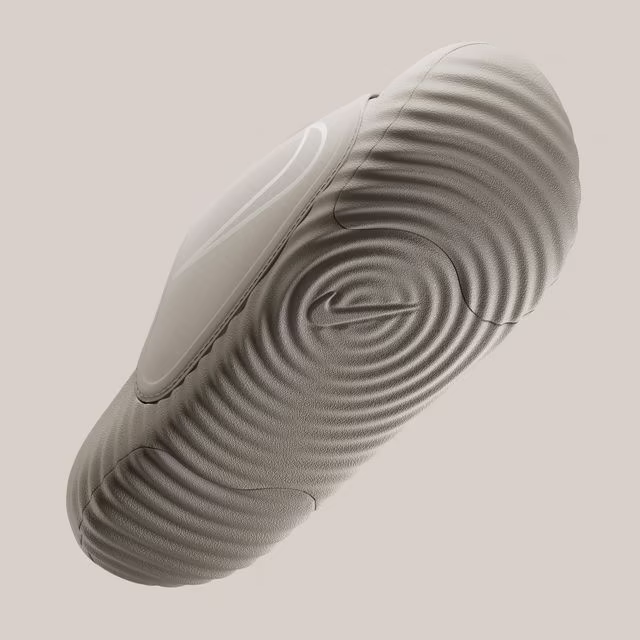
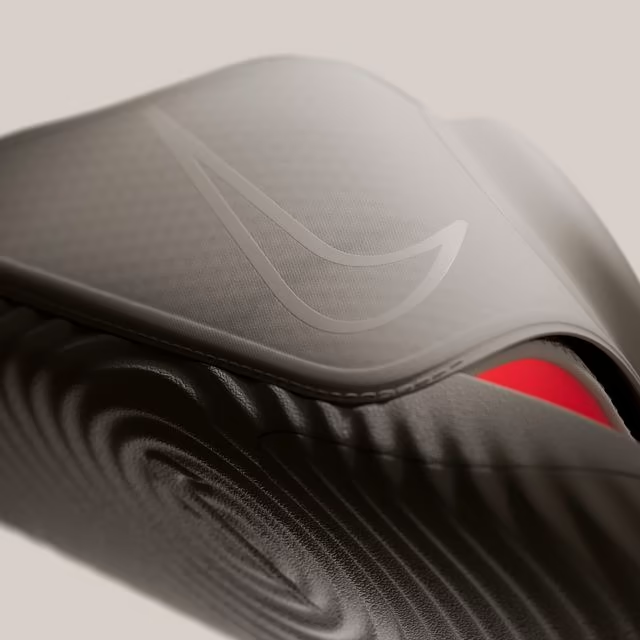
Underneath the pod sits a full-length, low-profile Nike Air Zoom unit, the same cushioning family used across Nike’s running and basketball lines, though tuned differently here. Where Air Zoom units in performance shoes typically run 12 to 20 psi to transfer energy through a stride, the Hyperslide’s unit is set to roughly 5 psi. That softer pressure was reportedly a deliberate choice: a denser foam slide would dampen the pod’s vibration before it reached the foot, so the Air Zoom air chamber doubles as both cushion and a conductor for the pod’s output.
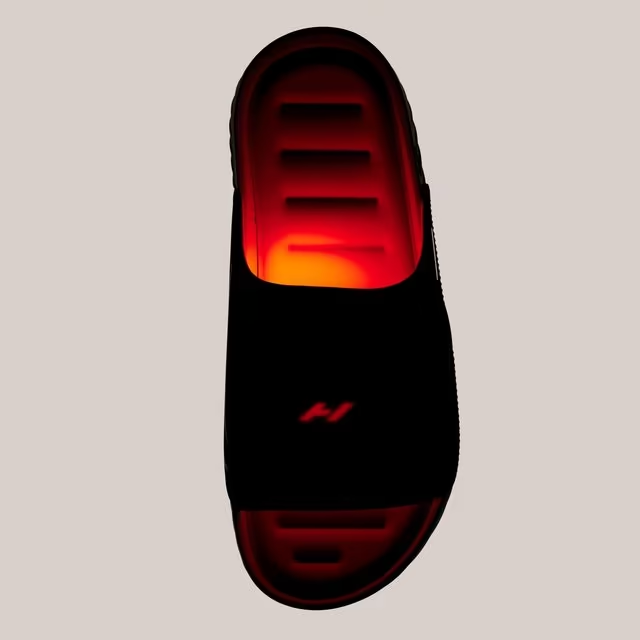
Top-down view of the black Nike Air Zoom Hyperslide featuring a wide strap with a glowing Hyperice symbol and an illuminated red-orange recovery footbed.
“Athletes leave everything on the field, and the approach to recovery needs to meet them at the same level,” said Tinker Hatfield, Nike’s Senior Director of Athlete Innovation, in the brands’ joint announcement. He described the goal as building something that starts working the moment it’s powered on, aiming to get athletes back to feeling ready rather than simply comfortable.
straddle
The Air Zoom Hyperslide is priced at $250, a fraction of the Hyperboot’s $900 and pitched deliberately at a mainstream buyer rather than an elite training room. Hyperice founder Anthony Katz has framed the pricing as the point of the product, positioning it as premium recovery technology made reachable for people who would never consider the boot. The slide launches globally on September 29 through nike.com, hyperice.com and select retail partners.
Where the Hyperboot leaned on Hyperice’s Normatec-derived compression bladders across a full high-top sil, the Hyperslide compresses that ambition into a single pod and a slide shape, betting that people will actually wear it more often precisely because it asks so much less of them. Nike has described the slide as something meant for the gap moments: after a workout, during travel, or at the end of an ordinary day, not only inside a locker room.
fin
Both companies say the design responded directly to feedback from elite and day athletes who tested it, with the combination of cushion, heat and vibration singled out repeatedly as the differentiator. Liverpool defender Virgil van Dijk, a Nike and Hyperice athlete, is quoted in the release calling the combination the standout feature, saying the heat and vibration speed his feet’s recovery while the Air Zoom cushion keeps the slide comfortable enough to wear for the full session.
View this post on Instagram
The Hyperslide follows the Hyperboot as the second product in an ongoing connection Nike and Hyperice describe as long-term rather than a one-off drop, with both companies position it as part of a wider strategy of building recovery into the moments around competition, not just the competition itself.
The slide also lands inside a period Nike has leaned hard into the slide category more broadly, expanding well past the pool-deck basics that used to define the segment. Recovery-specific footwear has been one of the more active corners of that expansion, sitting alongside a wider industry push, from foam-based massage slides to app-connected wearables, toward treating the feet as a legitimate recovery zone rather than an afterthought behind compression sleeves and ice baths. What separates the Hyperslide from most of that field is the pairing of a name-brand cushion platform with hardware built specific for therapeutic output, rather than a slide simply marketed as recovery-adjacent without the technology to back it.
Report around the launch has also pointed to the Hyperslide’s price as the more consequential story than its feature set. At $250, it sits closer to a premium perform shoe than a recovery device, a gap the Hyperboot never closed at $900. Hyperice has frame that pricing decision as central to the product’s purpose: proving that heat-and-vibration recovery hardware doesn’t have to stay confine to train facility and professional locker rooms to be worth building.
n
From the DRIFT archive: Palace x Nike Air Max DN8 “Safety Orange”: High-Visibility Energy Meets London Street Logic · The Jordan MVP 92 ‘Black Infrared’: A Hybrid Built On Legacy, Engineer